Hydration & Dachshunds: Why Water Intake Matters
Hydration & Dachshunds: Why Water Intake Matters
Too much water? Not enough? Dachshund water intake can signal more than thirst. Here’s what to watch for and how to gently stay on track.
James
Posted on September 16, 2025.
Updated on July 21, 2026.
Table of Contents
- 1.Key Takeaways on Dachshund Water Intake
- 2.How Much Water Should a Dachshund Drink Daily?
- •What the Experts Say
- •Harvey’s Baseline
- •Daily Water Intake Estimates for Dachshunds
- •A Tip on Measuring
- 3.What Affects a Dachshund’s Water Intake?
- •1. Food Type
- •2. Weather and Environment
- •3. Activity Level
- •4. Health Conditions or Medication
- •5. Age
- 4.Signs Your Dachshund Might Be Dehydrated
- •Don’t Wait to Intervene
- 5.How to Encourage Your Dachshund to Drink More Water
- •1. Offer Water in Multiple Locations
- •2. Refresh Bowls Often
- •3. Use Stainless Steel or Ceramic Bowls
- •4. Add Water to Meals
- •5. Try a Pet Water Fountain (With Caution)
- •6. Freeze Hydration Treats
- •7. Create Water Routines
- 6.When to See a Vet About Your Dachshund’s Hydration
- •1. Persistent Decrease in Drinking
- •2. Excessive Thirst or Urination
- •3. Accompanying Symptoms
- •4. Hydration During Recovery or Medication
- •5. Recurring UTIs or Crystals
- -More from This Series
- -Disclaimer
Share

We didn’t give much thought to water when Harvey was a pup. Food? Obsessed over it. Toys? Trial and error. But hydration? That just… happened. Bowl down. Job done.
Then one humid afternoon near Shelly Park, Harvey flat-out refused his evening walk. He was panting harder than usual, sprawled out on the bathroom tiles, and turned his nose up at dinner — which, for him, is a red-alert moment.
A quick vet check later: mild dehydration. Dehydration is fairly common in small dogs like dachshunds, especially during hot weather or after exercise.
Nothing critical, but enough to reset our thinking. Since then, water’s become a daily focus — not just during summer, not just after fetch. Every day, all year round.
Here’s what most dachshund owners miss: water needs shift constantly. And because dachshunds are small dogs — small, heat-sensitive, and long-bodied — even slight dehydration can hit harder, affecting digestion, joints, and overall energy.
According to the American Kennel Club, dogs generally need about one ounce of water per pound of body weight daily — but that can double depending on activity, weather, or health status.
This guide covers how much your dachshund should drink, how to tell if they’re dehydrated, and what’s actually worked for us — including the subtle ways we’ve built better hydration habits into Harvey’s day.
Key Takeaways on Dachshund Water Intake
Topic | Summary |
|---|---|
Water Needs Are Not Static | Dachshunds need ~1 oz of water per pound of body weight daily — but this changes with weather, food, and activity. Dachshunds do not inherently drink more than other breeds. |
Dehydration Can Escalate Fast | Even mild dehydration can affect energy, digestion, and joint health in small, long-backed dogs. |
Signs Can Be Subtle | Lethargy, sunken eyes, sticky gums, skipping meals, or noticeable changes in your dog's water intake can all point to early-stage dehydration or underlying health issues. Extreme thirst could indicate diabetes or kidney disease. Signs of dehydration include sticky, dry gums, loss of skin elasticity, or lethargy. |
Prevention > Reaction | Frequent refills, multiple bowls, water-rich food, and monitoring your dog's water consumption help catch issues early and build better hydration habits. |
Vet Advice Backed This | According to the AKC, hydration needs can double in hot weather or illness. |
Why It Matters | Maintaining proper hydration is vital for a Dachshund's kidney function, digestion, and overall health. Dachshunds are prone to obesity and urinary issues, requiring consistent, proper hydration. |
How Much Water Should a Dachshund Drink Daily?
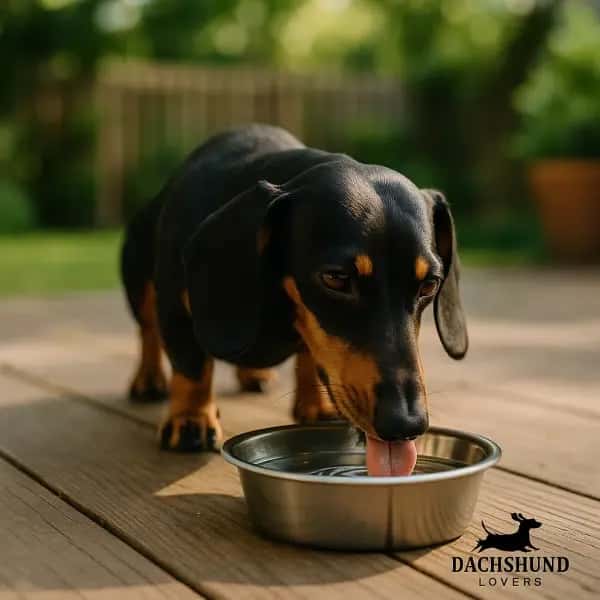
Dachshunds do not inherently drink more than other breeds. A Dachshund should typically drink about 1 ounce of water per pound of body weight daily. For a standard 16-32 lb Dachshund, this is roughly 1 to 2 cups, or for a 10 lb mini, about 10 ounces. It's important to monitor your dog's drinking habits to ensure they are within this recommended range. Observing how much water your dachshund drinks from their dog's water bowl each day can help you spot any sudden changes in thirst or drinking behavior.
Most dog owners have heard the 1-ounce-per-pound rule. But if you’ve lived with a dachshund for more than five minutes, you’ll know they don’t exactly follow generic guidelines.
For reference, that rule means:
- A 10-pound mini dachshund should drink around 300 mL (1¼ cups) daily (about 10 ounces).
- A 25-pound standard dachshund would need closer to 750 mL (3 cups).
It's important to monitor your dog's drinking habits to ensure they are within this recommended range. Observing how much water your dachshund drinks from their dog's water bowl each day can help you spot any sudden changes in thirst or drinking behavior.
But here’s where it gets more specific. Dachshunds — with their compact build, long spine, and variable energy bursts — often need more nuanced care. And when it comes to hydration, the margin for error is small.
Using a measuring jug to refill Harvey’s bowl lets you track exactly how much water is being consumed. Regularly checking your dog's water bowl for changes in water level can alert you to increased or decreased intake. Always keep your dog's bowl clean and filled with fresh water to encourage healthy hydration and support your dachshund’s overall well-being.
What the Experts Say
The American Kennel Club notes that dogs may need double their baseline water intake in hotter weather, when nursing, or after exercise. They also emphasize that “fresh, clean water should always be available,” not just at mealtimes.
A 2023 review in Veterinary Clinics: Small Animal Practice highlights that even mild, consistent dehydration can have a ripple effect on kidney function, digestion, joint health, and temperature regulation — all critical for dachshunds, especially those prone to spinal issues or urinary tract problems. In cases where dehydration or abnormal thirst is observed, veterinarians may recommend lab work to assess hydration status and check organ function. If your dog is drinking more than usual, it is important to discover the reason behind it before taking action.
Harvey’s Baseline
We did our own trial during the hot Sydney summer. Harvey weighs just over 5 kg, and on a mild day, he drinks around 300–350 mL across three bowl top-ups. But on hot days or after beach runs, it climbs to 500+ mL easily.
When we switched him to mostly dry food, we noticed his thirst shot up — which makes sense, considering kibble is only about 10% moisture (vs. ~70–80% in wet or raw food). Our experience comparing raw vs cooked food for dachshunds also showed how different diets can affect digestion and hydration. Canned food is another option with high moisture content, and adding it to your dachshund's diet can help increase their water intake and support urinary health. If your dog is drinking more than usual, it is important to discover the reason behind it before taking action.
Daily Water Intake Estimates for Dachshunds
Dachshund Type | Weight Range | Daily Water (Typical) | Hot Days / High Activity |
|---|---|---|---|
Miniature Puppy | 2–5 kg (4–11 lbs) | 150–300 mL (½–1¼ cups) | 300–500 mL |
Standard Puppy | 5–10 kg (11–22 lbs) | 300–500 mL (1¼–2 cups) | 500–700 mL |
Miniature Adult | 4–6 kg (9–13 lbs) | 250–400 mL (1–1½ cups) | 400–600 mL |
Standard Adult | 7–14 kg (15–30 lbs) | 350–600 mL (1½–2½ cups) | 600–800 mL |
Senior Doxies (All Sizes) | – | Monitor closely | Encourage frequent sips |
Note: These are guidelines, not strict rules. Always adjust based on age, health, food type, and environment.
A Tip on Measuring
You don’t need a fancy tracker. We use a simple Pyrex measuring jug and refill Harvey’s bowl three times a day — morning, late afternoon, and just before bed. That routine helps us keep an eye on patterns. If his intake drops, it’s usually our first clue that something’s off.
Some owners use a daily water station with built-in volume markers. Others freeze low-sodium broth into ice cubes as hydration treats during hotter weeks. Tracking your dachshund's water intake can also help you notice if they are drinking excessively, which may be a sign of an underlying health issue that should be discussed with your veterinarian.
What Affects a Dachshund’s Water Intake?
Most people assume thirst kicks in when needed — but dachshunds don’t always self-regulate well. Some will drain a bowl in one go. Others, like Harvey, get distracted by literally anything and need encouragement to sip throughout the day.
Several factors directly influence how much water your dachshund actually needs — and drinks. Underlying health issues can also cause changes in your dachshund's water intake.
1. Food Type
This is one of the biggest drivers, and tailoring how you feed a dachshund to their size and activity level plays a big role in both nutrition and hydration.
- Dry kibble contains about 10% moisture, meaning your doxie will need to drink more separately to stay hydrated. Dogs eating dry kibble need significantly more water than those eating wet food due to the moisture content.
- Wet or raw food can contain up to 80% water, which naturally contributes to daily intake.
- If you feed a mix, expect water needs to vary.
- Feeding your dachshund human food, especially salty or processed items, can increase their thirst and should be avoided.
We noticed a major difference when we transitioned Harvey to a mostly raw diet — his bowl stayed fuller longer, but his hydration levels were still solid, much like when we later experimented with homemade meals specifically balanced for dachshunds.
🩺 According to PetMD, “Dogs on dry food need access to fresh water at all times to compensate for the low moisture content in kibble.”
2. Weather and Environment
Dachshunds are low to the ground. On hot or humid days, that means they feel the heat faster than taller breeds. Even indoors, dry air from heaters or aircon can increase water needs.
If your dachshund pants more than usual or avoids movement in warmer months, dehydration might be creeping in before you notice.
We keep a second water bowl near Harvey’s cool-down zone — the bathroom tiles. It’s made a noticeable difference in how much he drinks on warm afternoons.
3. Activity Level
Active dachshunds — especially those with daily walks, enrichment games, or zoomie sessions — burn through more water. That loss isn’t always obvious, but it adds up quickly through panting and evaporation.
After park days or fetch at the beach, we offer small water breaks during the activity, not just afterward.
4. Health Conditions or Medication
Some dachshunds — especially seniors — may deal with medical issues that affect thirst. Certain medications, including diuretics or steroids, can increase water loss; dogs taking steroids may experience increased thirst and should be monitored closely.
Hormonal diseases such as Cushing's disease or Addison's disease can also cause increased water intake in dachshunds.
Conversely, pain, anxiety, or illness might reduce their natural urge to drink.
Always track any sudden changes in your dog’s water intake and check with your vet if it seems out of character. If your dog is diagnosed with a medical condition affecting thirst, your vet will recommend a treatment plan tailored to their needs.
5. Age
- Puppies need frequent hydration to support growth and regulate temperature. Growing puppies have higher water needs relative to their size, while senior dachshunds may drink less due to reduced thirst drives.
- Adults usually settle into a rhythm but still need adjustments in warmer seasons.
- Seniors may drink less — even when they need more — so it's important to monitor and encourage steady sips.
Signs Your Dachshund Might Be Dehydrated
Dachshunds are expressive little creatures — they’ll bark at a leaf or pout when ignored. But when it comes to dehydration, the signs are surprisingly subtle. Dry gums are a classic sign of dehydration in dogs and should be checked regularly.
Because of their small size and unique body shape, dachshunds can become dehydrated more quickly than larger breeds. A bit of panting or skipped water on a hot day might not seem like a big deal — until it snowballs into fatigue, appetite loss, or digestive issues.
We didn’t see it coming with Harvey. One hot week, paired with a switch to drier kibble and fewer walks, and suddenly he was flat, uninterested in food, and not quite himself. The vet visit confirmed what we suspected: mild but significant dehydration.
Here’s what to look for — early and often. Be sure to watch for other symptoms that may accompany dehydration, such as vomiting or diarrhea.
Common Signs of Dehydration in Dachshunds:
- Lethargy or Sudden Fatigue: A hydrated dachshund is usually on the move: exploring, nudging, barking, sunbathing, then shifting positions six times. If yours suddenly seems tired, listless, or uninterested in play, it could be more than just “a slow day.” Fatigue is one of the first — and most overlooked — signs of dehydration. Your pup might move slower, sleep longer, or avoid stairs or jumping up to the couch.
- Sticky or Pale Gums: Lift your dachshund's lip and touch their gums. Healthy gums should be moist, smooth, and pink. Dehydrated dogs often have dry, sticky, or tacky gums — and they may feel warmer than usual. A healthy capillary refill time (when you press on the gums and they return to pink) should be under 2 seconds. Anything longer could indicate dehydration or poor circulation.
- Sunken or Dull Eyes: Dehydration can cause the tissue around your dog's eyes to lose volume. In dachshunds, you might notice their eyes look more recessed or dull — particularly in older dogs. If your pup's gaze seems tired or their eyes appear less bright than usual, it's worth checking their water intake.
- Loss of Appetite: Dachshunds rarely skip a meal without good reason. Dehydration can reduce saliva production, make food less appealing, and trigger subtle nausea. It also slows digestion, making your pup feel “off” before they show other signs. If your doxie is suddenly picking at their food or skipping meals, dehydration should be one of the first things you consider, alongside reviewing their overall dachshund feeding routine and portions.
- Heavy Panting Without Exercise: Panting is normal after activity or when it's warm out — but if your dachshund is panting heavily while indoors, resting, or during mild weather, it may be a red flag. Panting is one way dogs regulate body temperature, but it also contributes to fluid loss. If they're panting more and drinking less, they may fall into a hydration deficit quickly.
- Reduced Skin Elasticity: Gently lift a fold of skin between your dog's shoulder blades. If they're hydrated, it should snap back into place almost immediately. If it stays “tented” or returns slowly, it could mean they're dehydrated. While this test isn't always accurate in older dogs or those with loose skin, it's a good early check for most adult dachshunds.
- Changes in Urination: Dark yellow urine or strong odor usually indicates dehydration. Small, infrequent urination may mean your dog isn’t drinking enough. Clear or pale urine is a sign of healthy hydration. Increased urination can be a sign of certain health conditions, such as diabetes mellitus, kidney disease, or Cushing's Disease, and should be monitored closely.
Extreme thirst could indicate diabetes or kidney disease. Signs of dehydration include sticky, dry gums, loss of skin elasticity, or lethargy.
According to VCA Animal Hospitals, “Even a 5–6% drop in body water can lead to early signs of dehydration. In small breeds like dachshunds, this can happen faster than expected — particularly in heat or illness.”
Don’t Wait to Intervene
Mild dehydration can often be reversed at home with increased water access and rest — but if left unchecked, it can escalate to heat exhaustion, urinary tract infections, or worse.
If your dachshund is showing two or more of the above signs — especially during hot weather, illness, or travel — get in touch with your vet. If you notice signs of severe dehydration or heatstroke, contact your vet immediately. It’s not worth guessing, and broader dachshund health and nutrition foundations can also help you spot problems earlier.
How to Encourage Your Dachshund to Drink More Water

If you’ve ever caught yourself nudging your dachshund toward the water bowl like a stubborn toddler toward broccoli, you’re not alone. Some dachshunds drink instinctively. Others — like Harvey — need a little prompting.
To ensure proper hydration, provide constant access to fresh water in multiple, easily accessible clean bowls. It’s important to watch how your dog drinks water, as changes in drinking behavior or coughing while your dog drinks water can sometimes signal underlying health issues.
Hydration doesn’t have to be forced. But it does need to be intentional, just like getting dachshund nutrition and everyday feeding choices right for their long-term health.
Here’s what we’ve found works (and what didn’t):
1. Offer Water in Multiple Locations
- Place additional bowls near their favorite nap spot, outside if they spend time in the yard, and in the bathroom (cool tile + quiet = prime sipping real estate). This alone boosted Harvey's daily intake by ~20%. Sometimes it's not about reluctance — it's about convenience.
2. Refresh Bowls Often
- Change your dachshund's water 2–3 times a day, especially in summer. Cold, fresh water seems to entice them more — especially when poured while they're watching. For picky drinkers, try a few ice cubes added in the afternoon. Bonus: they can double as enrichment treats.
3. Use Stainless Steel or Ceramic Bowls
- Plastic can retain odors and bacteria, which might put off sensitive-nosed pups. Switch to a heavy ceramic or stainless steel bowl with a wide base for better hygiene and to prevent spills.
4. Add Water to Meals
- If your dachshund eats dry kibble, add moisture by soaking kibble in warm water for 5 minutes, mixing in a spoonful of low-sodium broth, or offering wet food or raw food a few times a week. We started adding 50–100 mL of water to Harvey's evening meal during warmer months, which improved digestion and stool consistency.
5. Try a Pet Water Fountain (With Caution)
- Some dogs prefer moving water — but not all. If your dachshund is naturally curious, a fountain could increase interest. Just make sure it's cleaned regularly and doesn't add noise to an already anxious pup's environment.
6. Freeze Hydration Treats
- On hot days, freeze low-sodium broth in silicone trays, small pieces of watermelon or cucumber, or goat's milk cubes. These are not just treats — they're water delivery systems, perfect for enrichment, training, or travel.
7. Create Water Routines
- Dachshunds are creatures of habit. Encourage sips after meals, after play, and before bed, especially for minis on a carefully portioned feeding plan. Use a soft “drink up” cue and gently guide your dachshund to their bowl — especially on days when they're distracted, overtired, or recovering from a big outing.
When to See a Vet About Your Dachshund’s Hydration
Most of the time, hydration issues are simple. A hot day. A dry kibble diet. A distracted dachshund who forgets to sip.
But sometimes, changes in water intake — either too little or too much — are a primary concern and may indicate an underlying health issue that requires veterinary attention. With a breed as compact and sensitive as a dachshund, early intervention really matters.
Here’s when it’s time to stop tracking bowls and start talking to your vet.
1. Persistent Decrease in Drinking
If your dachshund consistently refuses water for more than 24 hours, even with encouragement, don’t wait it out. Sudden drops in water intake can signal:
- Nausea
- Mouth pain (like dental infections)
- Stress or anxiety
- Underlying illness
It’s especially important in puppies, senior dogs, and those on dry food. Dehydration can escalate quickly in small breeds.
2. Excessive Thirst or Urination
On the flip side, if your doxie starts drinking significantly more than usual, that could point to:
- Diabetes (high blood sugar can cause increased thirst and urination)
- Chronic kidney disease
- Liver disease
- Kidney disease
- Urinary tract infections
- Cushing’s disease (Cushing’s disease is more prevalent in Dachshunds and often presents as increased drinking and urination.)
Increased thirst and increased urination are classic symptoms of these conditions. Drinking too much or drinking excessive amounts of water can be a sign of an underlying problem. If they’re draining their bowl multiple times a day, waking at night to drink, or having more urinary accidents in the house, it’s important to monitor these behaviors and book a check-up.
According to VCA Animal Hospitals, “Excessive drinking and urination may be the earliest signs of disease in dogs, especially in middle-aged or older pets.”
3. Accompanying Symptoms
If changes in water intake are paired with lethargy, vomiting, diarrhea, shaking, loss of appetite, or any other symptoms, don’t try to treat it at home.
These can be signs of:
- Gastrointestinal upset
- Heatstroke
- Urinary obstruction
- Infection
Your vet can run blood tests such as a complete blood count (CBC) or urinalysis to pinpoint what’s going on — and rule out anything serious. A CBC evaluates red and white blood cells and platelets; abnormal white blood cells may indicate infection, inflammation, or other underlying health issues.
4. Hydration During Recovery or Medication
If your dachshund is recovering from surgery, injury (like IVDD), or is taking medication that affects kidney function, hydration becomes even more critical.
Ask your vet how much fluid your dog should be taking in — and whether water intake needs to be tracked or supplemented with subcutaneous fluids or wet food.
5. Recurring UTIs or Crystals
Harvey had a mild UTI last year — the vet traced it back to low fluid intake during a run of dry days. Since then, we’ve paid more attention to his hydration, especially when his food leans dry or he’s under the weather.
If your dachshund has had bladder stones, crystals, or frequent UTIs, water intake needs to be a core part of their prevention plan.
Don't wait for symptoms to pile up. If your instincts say something's off, trust them — and get a professional opinion; in some cases, targeted dachshund supplements for joints, digestion, and overall health may also be part of your vet’s long-term plan.
Frequently Asked Questions (FAQs)
More from This Series
Looking to build the ultimate supplement and feeding routine for your doxie?
- What Can Dachshunds Eat? Safe & Unsafe Foods Explained
- Best Dog Food for Dachshunds in 2025
- Dachshund Feeding Guide: How Much & How Often?
- Top Supplements for Dachshunds: What’s Worth It?
- Hydration & Dachshunds: Why Water Intake Matters
- Homemade Dog Food for Dachshunds
- Dachshund Weight Loss: A Vet-Approved Guide
- Best Treats for Dachshunds
- Best Dog Food for Miniature Dachshunds vs Standard Dachshunds
- Raw vs Cooked Food for Dachshunds
Authored by
James
James is the founder of Dachshund Lovers and the proud human of Harvey, a mini dapple with a big personality. He writes to empower and connect the dachshund community, blending founder insights with honest, experience-based stories about life with this incredible and special breed. James brings candid, experience-backed opinions to the community and always focused on fewer, better products and ideas that genuinely improve life for dachshunds and their people.
Read moreJames is the founder of Dachshund Lovers and the proud human of Harvey, a mini dapple with a big personality. He writes to empower and connect the dachshund community, blending founder insights with honest, experience-based stories about life with this incredible and special breed. James brings candid, experience-backed opinions to the community and always focused on fewer, better products and ideas that genuinely improve life for dachshunds and their people.
Read moreDisclaimer
This content is for informational purposes only and should not be considered veterinary advice. Always consult with a licensed veterinarian regarding your dog’s health and wellbeing.
There are no comments yet
Leave a comment