Are Dachshunds Aggressive
Are Dachshunds Aggressive
They’re small, but are dachshunds secretly aggressive? I dive into real behavior patterns, what triggers bad habits, and how to raise a well-adjusted doxie,

Ellie
Posted on October 22, 2025.
Updated on July 13, 2026.
Table of Contents
- 1.Key Takeaways on Dachshund Aggression
- 2.Understanding Aggression in Dachshunds
- •The Hunting Heritage — Why Instinct Matters
- •Aggression vs Assertiveness — Spotting the Difference
- •Behaviour Often Mistaken for Aggression
- •How Personality Shapes Behaviour
- •The Role of Environment — City vs Suburb vs Countryside
- •Why Early Intervention Matters
- •Aggression in Context
- 3.Common Triggers for Aggressive Behaviour in Dachshunds
- •1. Strangers Approaching — At Home and in Public
- •2. Other Dogs — On-Leash, Off-Leash, and Dog Parks
- •3. Cats and Small Animals — Prey Drive vs Co-Living
- •4. Handling and Grooming Sensitivity
- •5. Resource Guarding — Food, Toys, People
- •6. Pain and Medical Causes
- •7. Overstimulation and Excitement
- •Trigger Table — At a Glance
- 4.Aggression vs Fear vs Play — Reading Body Language
- •The Three Core States
- •The Importance of Context
- •How Fear Can Look Like Aggression
- •Play That Tips Into Trouble
- •Why Reading Signals Matters
- 5.Training & Management Strategies
- •Step 1: Identify and Control Triggers
- •Step 2: Teach Reliable Focus Cues
- •Step 3: Positive Association Training
- •Step 4: Use Barriers and Controlled Access
- •Step 5: Address Underlying Health Issues
- •Step 6: Socialisation Done Right
- •Step 7: Seek Professional Help When Needed
- •Step 8: Medication as a Support Tool
- •Step 9: Consistency is Non-Negotiable
- 6.Living Peacefully with a Dachshund — Home, Public Spaces, and Social Life
- •At Home: Setting the Tone for Calm
- •In Public: Navigating Crowds and Confined Spaces
- •Around Other Dogs: Choosing the Right Social Circles
- •Around People: Building Trust Through Exposure
- •In Mixed-Pet Homes: Keeping Harmony
- •Travel and New Environments
- •Balancing Independence and Togetherness
- -More from This Series — Dachshund Behaviour & Personality
- -Disclaimer
Share

If you’ve ever Googled are dachshunds aggressive, you’ve probably seen conflicting answers. Some people say they’re the sweetest little dogs you’ll ever meet, others insist they’re snappy, barky, and prone to guarding.
For me, the truth is somewhere in the middle. Harvey is affectionate and loyal, but I’ve seen him react sharply if a stranger leans over him too quickly or if another dog tries to push him off his favourite sunny spot in the yard. It’s not about him being “mean” — it’s about how he perceives his environment and what he’s been taught to expect.
Dachshunds were bred to hunt independently and face down animals larger than themselves. That bravery sometimes translates into assertive behaviour in everyday life. Without the right training and socialisation, it can tip into unwanted behaviours like growling, snapping, or guarding food and toys.
This isn’t just a AUS concern — in apartment living, a single aggressive incident can cause neighbour complaints or even restrictions. In the UK and USA, repeated reports of aggressive behaviour can lead to legal action or breed-specific scrutiny.
The goal of this guide is to help you understand what’s driving your dachshund’s behaviour, how to spot the difference between normal assertiveness and true aggression, and what steps you can take to keep both your dog and the people (and pets) around them safe.
Key Takeaways on Dachshund Aggression
Question | Quick Answer |
|---|---|
Are dachshunds aggressive? | They can be assertive, but true aggression often stems from fear, lack of training, or poor socialisation. |
Why is my dachshund aggressive? | Common causes include guarding, fear, pain, or overstimulation. |
Are dachshunds aggressive to strangers? | Sometimes, especially if under-socialised or protective of their space. |
Are dachshunds aggressive to other dogs? | Can happen without early, positive socialisation. |
Are dachshunds aggressive to cats? | Depends on their prey drive and introductions. |
How to reduce aggression? | Training, socialisation, positive reinforcement, and environmental management. |
When should I seek help? | If behaviour escalates, becomes unpredictable, or causes injury. |
Understanding Aggression in Dachshunds

When you ask, Are dachshunds aggressive?, you’re really asking about a mix of instinct, personality, and environment. The word “aggression” carries a lot of weight, often conjuring images of unpredictable or dangerous dogs. But in reality, dachshund behaviour sits on a wide spectrum — and much of what’s labelled as aggression is, in fact, communication.
In my experience with Harvey, I’ve seen that what some might interpret as “bad behaviour” is often a combination of his natural instincts, his confidence, and how we’ve shaped his environment. Some moments are genuine reactivity that we’ve needed to work on. Others are him simply saying, “I’m uncomfortable with what’s happening right now.”
The Hunting Heritage — Why Instinct Matters
To understand why a dachshund might show signs of assertiveness or even aggression, you have to go back to their roots. Originally bred in Germany for hunting badgers (the name “dachshund” literally translates to “badger dog”), these dogs had to be fearless, persistent, and capable of making decisions without constant human guidance. They weren’t just following orders — they were bred to think for themselves.
That independence meant they needed a strong will. Facing down an animal in a dark burrow demanded confidence bordering on stubbornness. While most modern dachshunds will never see a badger, the drive to defend themselves and their space is still part of their DNA.
Even today, many owners notice that their dachshund has no hesitation in confronting a much larger dog at the park or barking at strangers passing the fence. To a dachshund, size is irrelevant. Their ancestors were bred to stand their ground, and they still carry that legacy.
Aggression vs Assertiveness — Spotting the Difference
A big part of the “are dachshunds aggressive?” debate comes down to misinterpretation. Assertiveness is not the same as aggression.
When Harvey barks at someone approaching our gate, his tail is wagging, his ears are relaxed, and his body is loose. That’s alert behaviour — not a threat. He’s telling us, “Someone’s here,” rather than “I’m about to attack.”
True aggression often involves:
- Stiff body posture
- Fixed, hard stare
- Ears pinned back
- Raised hackles (the fur along the back standing up)
- Low growl or snarl
- Lunging or snapping with intent to make contact
Understanding the difference can prevent overreactions from owners and help you address the right issue. A dog who is simply being vocal or watchful doesn’t necessarily need “aggression training” — they might just need better direction on when that alertness is appropriate.
Behaviour Often Mistaken for Aggression
There are several behaviours in dachshunds that get unfairly labelled as aggressive:
- Protective Barking
Many dachshunds will position themselves as “home security.” A few sharp barks at a knock on the door are entirely natural. - Fear-Based Reactivity
If a dachshund feels cornered or startled, they may snap to create space. This isn’t malicious — it’s defensive. - Resource Guarding
Growling or snapping when someone approaches their food, toy, or even favourite human is an instinctive behaviour in many breeds. It’s not acceptable, but it’s also trainable. - Overstimulation
Some dachshunds get carried away during rough play and may nip unintentionally. - Pain Response
Dachshunds are prone to back problems (IVDD), and sudden touches in a sore spot can trigger a sharp reaction.
How Personality Shapes Behaviour
Dachshunds have strong personalities. While they’re often affectionate, funny, and fiercely loyal, some lines lean more towards high alertness and suspicion of strangers. Early life experiences, socialisation, and genetics all play a role.
For example, a dachshund raised in a busy household with visitors, children, and other pets is likely to have a different response to strangers than one raised in a quiet environment with little outside interaction.
Harvey is naturally curious, but he also has moments of caution. If a stranger leans over him suddenly, he’ll back away. This isn’t because he’s aggressive — it’s because he needs time to assess the situation. We’ve learned to advocate for him by asking people to let him approach on his terms.
The Role of Environment — City vs Suburb vs Countryside
Where you live can influence both your dachshund’s behaviour and how it’s perceived:
- Suburban living (e.g., Sutherland Shire)
In quieter, more spread-out neighbourhoods, barking at the fence or gate might go largely unnoticed unless it’s excessive. There’s often more space for dogs to retreat and fewer close encounters with strangers. - Urban UK settings
In busy city environments, particularly in terraced streets, neighbours are much closer. A dog who barks at passersby or growls at visitors may be seen as a bigger nuisance, and local councils can investigate if there are repeated complaints. - US apartment complexes
In shared living spaces, sound carries easily. A dog who reacts aggressively towards other dogs in hallways or common areas can quickly become the subject of HOA complaints or even eviction threats for the owner.
Why Early Intervention Matters
One of the biggest mistakes dachshund owners make is waiting until a behaviour escalates before addressing it. If a puppy growls over a toy and you laugh it off because it’s “cute,” that behaviour can harden into a habit.
Early, positive exposure to different people, dogs, sounds, and environments teaches your dachshund that new experiences are not threats. For rescues, this process may need to be more gradual — starting at a distance and rewarding calm curiosity before closing the gap.
Aggression in Context
It’s worth noting that dachshunds are not, statistically, the most aggressive breed — but they are often perceived as more reactive because of their size and vocal nature. A small dog lunging or snapping tends to be noticed more because people don’t expect it from a “cute” breed.
The reality is that most dachshunds are loyal, loving companions who simply have a strong protective instinct and a low tolerance for feeling threatened. Understanding that their behaviour is often communication — not malice — is key to living peacefully with them.
Common Triggers for Aggressive Behaviour in Dachshunds

Even the calmest dachshund has limits. Understanding what sets them off — and why — is one of the most powerful tools you have as an owner. It’s not about excusing the behaviour but about knowing when you need to step in, redirect, or change the environment so your dog doesn’t feel the need to escalate.
The triggers I’m about to cover aren’t unique to dachshunds, but their hunting heritage and big personalities often make the reactions more noticeable. These examples come from my own life with Harvey, years of conversations with other owners, and specialist advice from trainers like Emily at olehound.com.au, who focuses on veterinary behaviour here in Sydney.
1. Strangers Approaching — At Home and in Public
Dachshunds tend to be deeply loyal to their owners, which is why they’re sometimes labelled “one-person dogs.” This loyalty can tip into suspicion of strangers, especially if they approach quickly or without warning.
At home:
In suburban areas like the Sutherland Shire, Harvey will bark at anyone coming to the gate. This is protective alerting, which ties directly to his instinct to guard his territory. Some barking is normal, but if the reaction escalates into lunging or snapping, it’s a sign he’s moved from alert mode into defensive behaviour.
In public:
In busy UK city streets or US apartment lobbies, a stranger bending down to “say hi” can feel like an invasion of space. For some dachshunds, the safest option feels like a warning growl. If you’ve read our article on Do Dachshunds Like to Cuddle, you’ll know that not all doxies enjoy physical contact from people they don’t know.
Management tip: Teach a “watch me” cue so your dog can focus on you when strangers are near. This turns a potentially tense moment into a training opportunity.
2. Other Dogs — On-Leash, Off-Leash, and Dog Parks
For a breed with short legs, dachshunds can have surprisingly high confidence levels around bigger dogs. Sometimes, that bravery is a blessing; other times, it leads to over-the-top confrontations.
On-leash:
Leash reactivity — barking, lunging, or growling at passing dogs — is common. The leash limits their ability to move away, so they compensate by making themselves seem more intimidating. Our Dachshund Dog Park Socialisation article covers strategies for gradually improving these encounters.
Off-leash:
Even in open spaces, some dachshunds can be pushy with unfamiliar dogs. They may guard toys, chase smaller breeds, or challenge bigger ones.
Dog parks:
High-energy environments like dog parks can be overwhelming, leading to overstimulation or defensive behaviour. If Harvey’s had a long week, I skip the park altogether and opt for a quiet walk — less chance of miscommunication.
3. Cats and Small Animals — Prey Drive vs Co-Living
Not all dachshunds can live peacefully with cats. Some do, especially if raised together, but many still have a strong prey drive. The key difference is whether the “chase” instinct is playful or serious.
If you’ve read our Are Dachshunds Good with Cats guide, you’ll know that a slow, structured introduction is essential. In multi-pet households, manage access during high-energy times and never assume they’ll “work it out themselves.”
4. Handling and Grooming Sensitivity
Dachshunds’ long backs make them prone to spinal issues, meaning handling must be careful and deliberate. A dog in pain may growl or snap when picked up, groomed, or touched in certain spots.
I first noticed Harvey’s discomfort when clipping his nails — he’d pull his paw away sharply. This wasn’t stubbornness; he had a sore spot from overgrown nails pressing into the pad. Now, grooming is broken into short, positive sessions.
Our Dachshund Digging article touches on how physical activity and paw use can affect comfort during grooming.
5. Resource Guarding — Food, Toys, People
Resource guarding is one of the most common causes of dachshund growling or snapping. It can extend beyond food and toys to include “guarding” a person.
Harvey once positioned himself between Caitlin and a visiting friend, growling softly if the friend leaned too close. That was our cue to step in and redirect him with a treat in another room.
If you’re seeing guarding behaviour, it’s worth revisiting training foundations — particularly trading games where your dachshund learns that giving something up results in something even better.
6. Pain and Medical Causes
Never underestimate how much pain can change behaviour. Dachshunds are prone to back issues, arthritis, and dental problems — all of which can make them more irritable.
A dog with undiagnosed pain might seem to “suddenly” develop aggression when touched, picked up, or even approached. Before assuming it’s purely behavioural, always rule out medical causes with a vet check.
7. Overstimulation and Excitement
Sometimes, aggression-like behaviour is simply a result of too much excitement. High-pitched barking, nipping during play, or snapping at fast-moving objects (like scooters or joggers) can all be signs your dachshund is over threshold.
Living in high-stimulation environments like London streets or New York parks means you need more “cool down” strategies than you might in quieter suburbs like Cronulla or Miranda in the Sutherland Shire.
Trigger Table — At a Glance
Trigger | Behaviour | Prevention/Management |
|---|---|---|
Strangers approaching | Barking, growling | Teach “watch me,” control approach speed |
Other dogs | Leash lunging, snapping | Controlled exposure, calm walks |
Cats/small animals | Chasing, barking | Slow introductions, supervision |
Handling/grooming | Growling, pulling away | Gentle handling, short sessions |
Resource guarding | Growling over food/toys | Trading games, positive reinforcement |
Pain | Snapping when touched | Vet check, pain management |
Overstimulation | Nipping, hyper barking | Structured exercise, quiet time |
Aggression vs Fear vs Play — Reading Body Language
One of the biggest challenges dachshund owners face is correctly interpreting what their dog is trying to communicate. Not every growl means aggression, and not every bark means excitement. Misreading the situation can lead to overreactions, unnecessary tension, and in some cases, making the behaviour worse.
Harvey has taught me this lesson more than once. There was a day at Gunnamatta Bay in the Sutherland Shire where another dog bounded up to him, tail wagging furiously. Harvey barked sharply, but his body stayed loose and his ears forward — he wasn’t looking for a fight; he just wanted a bit more space.
The Three Core States
While every dog is unique, most behaviour that looks “aggressive” actually falls into one of three categories: aggression, fear, or play.
State | Key Signs | What It Means | What to Do |
|---|---|---|---|
Aggression | Stiff posture, hard stare, lips curled, low growl, hackles raised | The dog is warning or preparing to defend themselves or their space | Increase distance, avoid punishment, assess trigger |
Fear | Cowering, ears back, tucked tail, avoidance, lip licking, yawning | The dog feels unsafe or overwhelmed | Remove pressure, create safe space, build confidence slowly |
Play | Loose body, play bows, relaxed open mouth, wagging tail | The dog is inviting interaction | Monitor for escalation, give breaks if energy spikes |
The Importance of Context
If Harvey barks when a delivery driver approaches, I look at the full picture — is his body loose or stiff? Is he moving forward to investigate or backing away? The surrounding environment matters too.
For example:
- Barking at the window while lying down might be territorial alerting.
- Barking with a forward-leaning stance, teeth showing, and low growl is closer to true aggression.
- Barking while bouncing around with tail wagging could be play.
This is where our article on Dachshund Barking can help — it explains why the sound alone isn’t enough to diagnose the intent.
How Fear Can Look Like Aggression
One of the most misunderstood behaviours in dachshunds is fear-based reactivity. A fearful dog may lunge, growl, or snap if they feel trapped, which to the untrained eye looks exactly like aggression.
In Harvey’s early days, before we worked with Emily at olehound.com.au, he would snap if a stranger bent down too quickly to pat him. He wasn’t trying to “attack” — he was trying to create distance in a way that had worked for him before.
Play That Tips Into Trouble
Play between dogs can sometimes escalate into conflict if one gets overstimulated or the play style doesn’t match. Dachshunds, being tenacious, may not always back down when play gets rough.
If you’ve read our Dachshund Dog Park Socialisation piece, you’ll know that managing energy levels and choosing the right play partners is just as important as the play itself.
Why Reading Signals Matters
Being able to correctly read your dachshund’s body language means you can intervene before things escalate. It also builds trust — your dog learns that you’ll protect them when they’re uncomfortable, reducing the need for them to defend themselves.
This is a skill that’s valuable no matter where you live. In suburban NSW, it helps you manage fence-line barking without neighbour tension. In the UK, it can prevent confrontations on narrow footpaths. In the USA, it’s invaluable for apartment hallway encounters.
Training & Management Strategies

Aggression in dachshunds is rarely a hopeless case. In fact, with consistent training, environmental adjustments, and a bit of patience, most owners can see significant improvements. The key is to work with your dog’s natural instincts, not against them.
Harvey’s journey is proof of this. Before we worked with Emily at olehound.com.au, his stranger reactivity and guarding behaviours felt exhausting. But once we focused on clear routines, structured training, and small daily wins, the change in his confidence — and ours — was undeniable.
Step 1: Identify and Control Triggers
You can’t train away a behaviour you don’t understand. Spend a week observing your dachshund:
- When does the behaviour happen? (specific time of day, in certain locations)
- What’s the trigger? (strangers, other dogs, sudden noises)
- How intense is the reaction? (mild bark vs snapping)
If you notice patterns, you can start with controlled exposures to reduce the emotional charge behind them.
Step 2: Teach Reliable Focus Cues
Commands like “watch me” or “look” are essential in redirecting your dog before they react.
- Hold a treat near your face.
- Say “watch me.”
- When your dog makes eye contact, reward immediately.
- Gradually increase distractions.
This is especially useful in busy UK high streets or US apartment corridors where space is limited and encounters are inevitable.
Step 3: Positive Association Training
If your dachshund reacts to a specific trigger — like strangers or other dogs — pair the presence of that trigger with something they love (high-value treats, play). Over time, their brain starts to associate the trigger with good things, reducing negative reactions.
Example: Harvey used to bark at the postie every single day. Now, I give him a treat when the mail arrives. The barking has dropped significantly because he’s learned the sound means something positive is coming.
For barking-specific solutions, our Dachshund Barking article covers more targeted tips.
Step 4: Use Barriers and Controlled Access
Sometimes, the easiest way to manage behaviour is to remove the temptation altogether:
- Frosted window film to block street views (reduces window barking).
- Baby gates to limit access to the front door.
- Quiet rooms for downtime when guests arrive.
In NSW, strata and council noise regulations mean that excessive barking can lead to official complaints. In the UK, councils can issue a “noise abatement notice,” and in the USA, HOAs or local ordinances can set limits on noise. Being proactive with barriers can keep you well clear of legal trouble.
Step 5: Address Underlying Health Issues
If aggression appears suddenly, rule out pain as a cause. Back problems, arthritis, and dental pain are all common in dachshunds and can cause defensive snapping. A vet check should always be your first step before starting intensive behaviour modification.
Socialisation isn’t just about exposure — it’s about controlled, positive exposure.
- Arrange calm meetups with friendly, well-mannered dogs.
- Let your dachshund watch from a safe distance before interacting.
- Gradually reduce the distance as comfort grows.
This is where our Dachshund Dog Park Socialisation article comes in — it offers a full breakdown of building confidence around other dogs.
Step 7: Seek Professional Help When Needed
A qualified trainer or veterinary behaviourist can create a tailored plan for your dachshund’s specific triggers. Look for:
- NSW: Delta-accredited trainers or vet behaviourists in Sydney and surrounding areas.
- UK: APBC or IMDT-certified trainers.
- USA: CCPDT or IAABC-certified professionals.
Having someone observe your dachshund in real time can uncover subtle triggers you might miss.
Step 8: Medication as a Support Tool
For severe cases, medication prescribed by a vet can help lower anxiety levels, making behaviour modification more effective. This isn’t about “sedating” your dog — it’s about giving them enough emotional space to learn.
We saw this firsthand with Harvey. Before medication, his separation anxiety and reactivity fed off each other. Once we combined the right medication with consistent training, he became more independent, happier, and far less likely to resort to defensive behaviours.
Step 9: Consistency is Non-Negotiable
Aggression management isn’t about “fixing” your dachshund in a week. It’s about committing to daily practice, setting boundaries, and celebrating small improvements. Every time you respond consistently, you’re helping your dachshund feel safer — and safe dogs have less need to be aggressive.
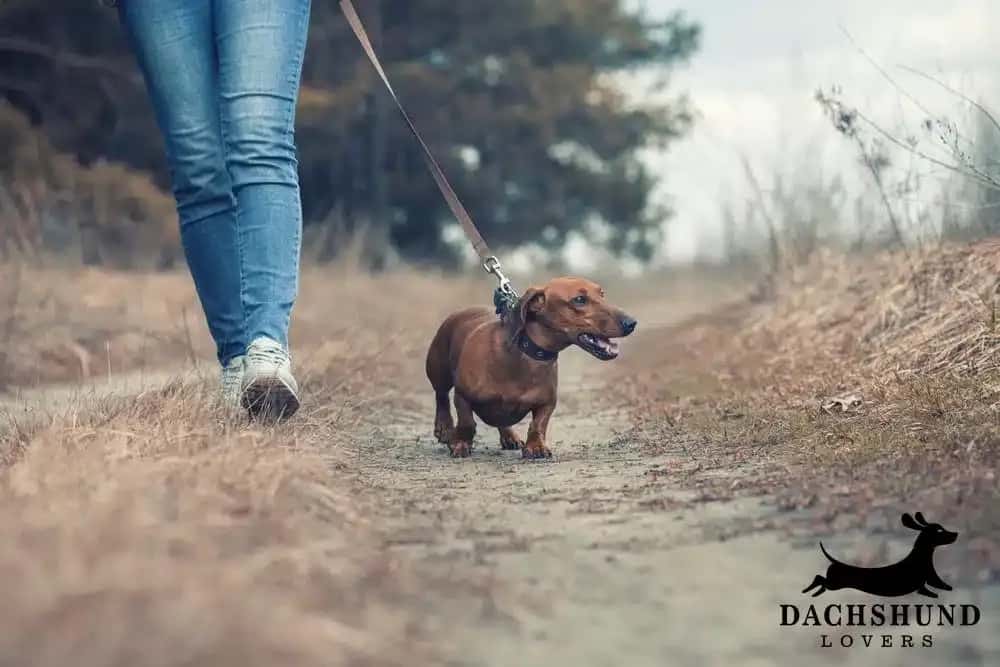
Living with a dachshund means embracing their quirks while managing their more challenging instincts. Once you’ve identified triggers and started training, the next step is weaving those skills into real life — whether that’s relaxing at home, strolling through a busy market, or introducing them to new people and pets.
At Home: Setting the Tone for Calm
Your home environment sets the baseline for your dachshund’s behaviour. If life inside is noisy, chaotic, and unpredictable, your dog may stay on high alert — which makes them more likely to react aggressively to everyday events.
- Predictable routines: Regular feeding, walking, and rest times help reduce anxiety.
- Safe spaces: Create a quiet area (like a crate or corner bed) where your dachshund can retreat undisturbed.
- Controlled greetings: If visitors trigger barking or guarding, keep your dachshund behind a gate until everyone is settled.
If you’ve read our article on Are Dachshunds Good with Kids, you’ll know that structured interactions at home are just as important as outdoor training.
From the Sutherland Shire foreshore to London’s bustling Borough Market or New York’s dog-friendly cafés, public outings are a test of your dachshund’s training.
For NSW apartment or strata living: Be mindful of barking laws — repeated noise complaints can lead to fines or orders to remove a pet. The same applies in UK council flats or US condos with HOA rules.
Practical tips for public spaces:
- Keep your dog on a short leash in busy areas to prevent lunging.
- Avoid head-on approaches with unfamiliar dogs — circle around instead.
- Offer high-value treats to maintain focus in high-distraction zones.
Not all dogs are a good match for a dachshund’s play style. Some enjoy the chase-and-tumble routine; others find it too intense.
The safest socialising often happens in smaller, controlled groups rather than chaotic dog parks. If your dachshund has had issues in the past, consider structured classes or one-on-one meetups before heading back into free-play environments. Our Do Dachshunds Get Along with Other Dogs article goes deeper into matching personalities for smoother introductions.
Around People: Building Trust Through Exposure
A dachshund who’s been gradually exposed to a variety of people is less likely to resort to defensive behaviour. This includes:
- Adults of different ages and appearances
- Children (with supervision and boundaries)
- People wearing hats, carrying umbrellas, or pushing prams
In the USA, many pet stores and hardware chains allow leashed dogs inside, making them excellent controlled environments for people-watching sessions. In the UK, many pubs welcome dogs, and in NSW, café footpaths are often pet-friendly.
In Mixed-Pet Homes: Keeping Harmony
If your dachshund lives with cats, rabbits, or other small pets, ongoing management is essential — even if they’ve coexisted peacefully for years. Feeding animals in separate spaces and supervising play can prevent resource guarding or prey-drive flare-ups. Our Are Dachshunds Good with Cats article outlines safe introduction methods and long-term strategies.
Travel and New Environments
Some dachshunds handle travel with ease; others see it as a disruption to routine. If you’re heading to a pet-friendly stay in Kiama or crossing the Atlantic to a dog-welcoming UK holiday cottage, bring familiar bedding, toys, and feeding bowls to help them settle. Short trial trips before a big holiday can help build resilience.
Balancing Independence and Togetherness
One of the best ways to reduce aggressive or defensive behaviours is to strike a balance between your dachshund’s natural loyalty and their ability to be independent. That means:
- Practising short separations at home so they’re comfortable alone.
- Encouraging independent play (with puzzle toys or chews).
- Avoiding constant carrying or cuddling, which can reinforce clinginess.
This ties back to our Dachshund Separation Anxiety article, where we talk about how emotional security reduces stress-driven behaviour.
FAQs — Are Dachshunds Aggressive?
More from This Series — Dachshund Behaviour & Personality
- Why Are Dachshunds So Stubborn
- When Do Dachshunds Calm Down
- Dachshund Separation Anxiety
- Dachshund Personality
- Dachshund Barking
- Do Dachshunds Get Along with Other Dogs
- Are Dachshunds Good with Kids
- Do Dachshunds Like to Cuddle
- Dachshund Digging
- Dachshund Sleeping
- Are Dachshunds Good with Cats
- Why Do Dachshunds Shake

Authored by
James
James is the founder of Dachshund Lovers and the proud human of Harvey, a mini dapple with a big personality. He writes to empower and connect the dachshund community, blending founder insights with honest, experience-based stories about life with this incredible and special breed. James brings candid, experience-backed opinions to the community and always focused on fewer, better products and ideas that genuinely improve life for dachshunds and their people.
Read moreJames is the founder of Dachshund Lovers and the proud human of Harvey, a mini dapple with a big personality. He writes to empower and connect the dachshund community, blending founder insights with honest, experience-based stories about life with this incredible and special breed. James brings candid, experience-backed opinions to the community and always focused on fewer, better products and ideas that genuinely improve life for dachshunds and their people.
Read moreDisclaimer
This content is for informational purposes only and should not be considered veterinary advice. Always consult with a licensed veterinarian regarding your dog’s health and wellbeing.
There are no comments yet
Leave a comment