Homemade Dog Food for Dachshunds: What We Learned from Cooking for Harvey
Homemade Dog Food for Dachshunds: What We Learned from Cooking for Harvey
Looking to try homemade dog food for your dachshund? Here’s what we feed ours — with tips, vet-backed basics, and what we learned the hard way.
James
Posted on September 18, 2025.
Updated on July 21, 2026.
Table of Contents
- 1.Key Takeaways on Homemade Dog Food For Dachshunds
- 2.Why Consider Homemade Food for Your Dachshund?
- •1. Picky Eating
- •2. Food Sensitivities or Allergies
- •3. Medical Needs and Aging
- •4. Better Ingredient Quality
- •5. Increased Energy, Health, and Appearance
- 3.Risks of Homemade Dog Food (and What We Got Wrong)
- •Nutritional Imbalance Is the #1 Risk
- •Common Mistakes (That We Made)
- •Don’t DIY Without Guidance
- 4.What Ingredients Work Best for Dachshunds?
- •Proteins That Worked Well
- •Carbohydrates for Steady Energy
- •Veggies Harvey Actually Ate
- •Healthy Fats That Help (Not Harm)
- 5.Sample Weekly Meal Plan (Vet-Guided + Real-World Tested)
- •Weekly Meal Plan Overview
- •Batch Prep Tips
- 6.Supplements & Add-Ins: What We Use and Why
- •Calcium (Non-Negotiable)
- •Multivitamin for Homemade Diets
- •Omega-3 (Joint + Coat Support)
- •Probiotics (Optional But Helpful)
- •What Didn’t Work for Us
- 7.When to Avoid Homemade Diets (Important Caveats)
- •1. Puppies Under 12 Months
- •2. Dogs with Chronic Medical Conditions
- •3. If You Can’t Commit Long-Term
- •4. If You’re Not Supplementing Properly
- -More from This Series
- -Disclaimer
Share

We didn’t set out to become home-cooked dog food people.
It started with Harvey skipping meals — not dramatically, just nibbling at his kibble, then walking off. We tried a premium brand, then another. We adjusted feeding times. We added toppers. Nothing stuck.
Eventually, we asked: what if we just made it ourselves?
Not forever. Just a test. A week of real food, cooked at home. We picked up chicken thighs from Southgate Shopping Centre’s butcher, steamed some sweet potato, and followed a basic vet-approved ratio we’d read about online.
That first week changed everything. Harvey finished every meal. His stools were firmer. His coat — which had started to look a little dull — had a bit more shine. And the big one? His energy returned. Not in a manic way, but the light-switch kind of energy you notice when your dog’s finally feeling good again.
We weren’t the only ones curious about making this switch. According to PetMD, “Homemade dog food can be healthy and cost-effective — but it requires careful planning to ensure dogs receive all the essential nutrients.”
And they’re right. Homemade food isn’t automatically better. It’s easy to get wrong. And for a breed like the dachshund — small body, long spine, sensitive digestion — balance matters more than novelty.
This guide breaks down the exact approach we used: what worked, what didn’t, what we wish we’d known sooner, and how to cook safely and consistently for your dachshund if you’re ready to try it.
We’re not vets — but we are meticulous, dachshund-obsessed, and honest about what it takes.
Key Takeaways on Homemade Dog Food For Dachshunds
Topic | Summary |
|---|---|
Not a One-Size-Fits-All Solution | Homemade food can improve appetite, digestion, and coat health — but only if it’s nutritionally balanced. |
Vet Guidance Is Essential | Always consult a vet or canine nutritionist before switching to homemade meals. Dachshunds have unique needs. |
Ingredients Must Be Tailored | High-quality protein, digestible carbs, and joint-supportive fats are key for dachshunds’ long-term health. |
It’s More Work — But More Control | Making your dog’s food means managing ingredients, sourcing, and prep — but you control every element. |
Trusted Sources Back It Up | PetMD states: “Homemade diets can be healthy and cost-effective — but require careful planning and supplementation.” |
Why Consider Homemade Food for Your Dachshund?
There’s a difference between feeding your dog and knowing what you’re feeding your dog.
For us, that difference became clear the day we compared the ingredient label on a premium kibble with the short list on our kitchen counter: chicken thigh, pumpkin, oats, a splash of olive oil. No fillers. No artificial colors. No by-product meal vaguely labelled “meat.”
And Harvey noticed too.
Making food at home isn’t about trendy diets or guilt. It’s about control, transparency, and adapting meals to your dachshund’s actual needs — especially when those needs change with age, health, or lifestyle.
Here are the main reasons owners — including us — make the switch:
1. Picky Eating
Dachshunds are notoriously opinionated. What smells great to one might be totally ignored by another. Homemade food gives you flexibility to adjust textures, protein sources, and even temperature to match your doxie’s preferences.
2. Food Sensitivities or Allergies
We first explored homemade meals after Harvey had back-to-back flare-ups of itchy skin and mild gut upset. Commercial foods can contain hidden allergens or low-grade ingredients that irritate sensitive stomachs.
Homemade food lets you isolate variables and avoid common triggers like corn, wheat, soy, or synthetic additives.
3. Medical Needs and Aging
From supporting joint health in IVDD-prone dachshunds to maintaining weight in seniors, homemade food offers tailored nutrition. You can include omega-3s, glucosamine-rich cuts, and anti-inflammatory ingredients — without needing a prescription formula.
According to the American Kennel Club, “Homemade diets can provide the exact balance of nutrients needed for dogs with specific medical conditions — but they must be properly formulated and reviewed by a veterinary professional.”
4. Better Ingredient Quality
Let’s be honest — there’s kibble, and then there’s actual food. When you’re sourcing meat from a local butcher (like Southgate Quality Meats) and chopping vegetables yourself, you know exactly what’s going into the bowl.
You’re also skipping the high-heat processing and synthetic preservatives used in many shelf-stable commercial diets.
5. Increased Energy, Health, and Appearance
Within two weeks of switching, Harvey’s stools were smaller and firmer. His coat looked better. His energy was steady — not hyper, just on again.
These aren’t miracle changes. They’re what happens when food starts serving the dog, not the other way around.
Risks of Homemade Dog Food (and What We Got Wrong)
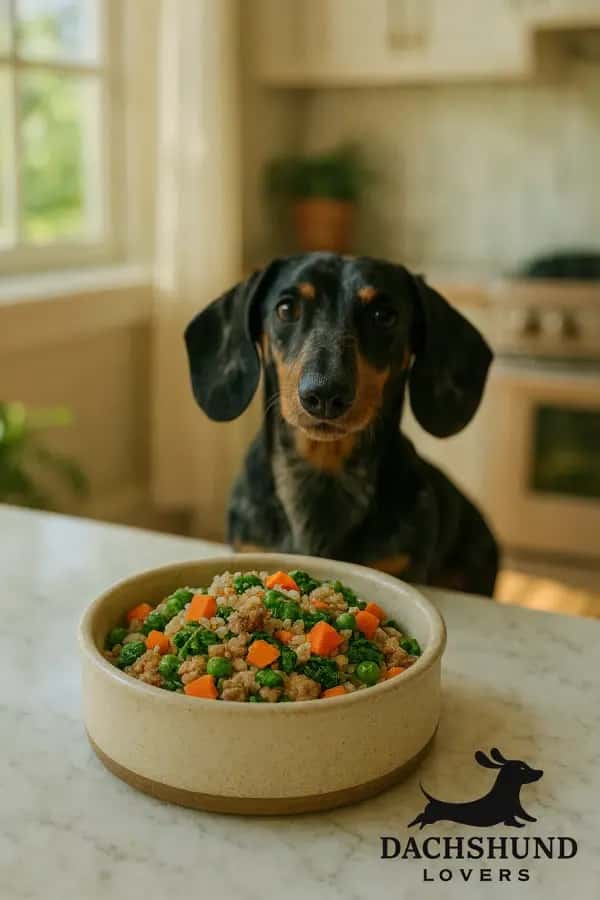
Let’s get this out of the way: homemade doesn’t automatically mean healthy.
In our first few weeks of cooking for Harvey, we made three classic mistakes:
- Too much protein
- No calcium source
- Not enough fat
We thought we were doing the right thing — gently cooked chicken, rice, some steamed veg. It looked clean. It smelled great. Harvey devoured it.
But within a few weeks, we noticed changes: softer stools, a duller coat, and more afternoon sleepiness than usual. A quick chat with our vet confirmed it — his diet was out of balance.
Nutritional Imbalance Is the #1 Risk
According to the American Veterinary Medical Association, “Home-prepared diets are associated with nutritional imbalances, especially in calcium, vitamin D, zinc, and essential fatty acids.”
This isn’t about effort. It’s about precision.
Most dogs — especially smaller breeds like dachshunds — have narrow margins for error. Too much phosphorus (from muscle meat) and not enough calcium? You risk bone loss. Skipping healthy fats? Their skin and coat suffer. Forget B vitamins? You may see fatigue or nerve issues.
Common Mistakes (That We Made)
Mistake | What It Caused | How We Fixed It |
|---|---|---|
Over-reliance on muscle meat | Imbalanced calcium/phosphorus ratio | Added ground eggshell + sardines 2x/week |
No added fat | Dry skin, low energy | Introduced olive oil and tinned salmon |
Bland or repetitive veggies | Low micronutrient variety | Rotated in spinach, pumpkin, broccoli |
No supplementation plan | Missing key vitamins and minerals | Started using a vet-recommended multi* |
*More on that in our Top Supplements for Dachshunds guide.
Don’t DIY Without Guidance
We’re builders — we like solving problems ourselves. But we’ve learned that cooking for your dog isn’t like baking for your kid. A few missing nutrients here and there can lead to serious long-term issues — especially for a small dog with a long spine and fragile joints.
That’s why we now use a vet-formulated ratio, rotate ingredients carefully, and run our meal plans past a qualified canine nutritionist every few months.
Pro tip: If you’re even considering going full-time with homemade meals, consult your vet or use a service like BalanceIT to generate vet-approved recipes for your dog’s age, weight, and condition.
What Ingredients Work Best for Dachshunds?
Dachshunds aren’t just small — they’re sensitive. Sensitive to fat. To fillers. To ingredients that larger breeds might tolerate without a second thought.
So when you’re building a homemade diet, it’s not just about choosing “healthy” foods — it’s about choosing what your dachshund’s body can digest, absorb, and thrive on.
We tested over 20 combinations with Harvey before finding a rotation that worked. Here’s what made the cut — and what didn’t.
Proteins That Worked Well
Protein forms the base of most homemade dog meals, but not all cuts are created equal.
Protein Source | Notes for Dachshunds |
|---|---|
Lean chicken thigh | Affordable, well-tolerated, easy to prep |
Turkey mince | Low fat, great for dogs with sensitive stomachs |
Tinned salmon (in springwater) | Omega-3 rich, supports coat and joints |
Eggs (cooked) | High bioavailability, good for dogs with mild allergies |
Sardines (no salt, in water) | Excellent calcium + omega-3 source (2–3x/week max) |
Beef mince (lean) | Higher iron; best used in rotation |
Avoid high-fat cuts (like lamb shoulder) and processed meats. Dachshunds are prone to pancreatitis.
More detail on protein safety in our What Can Dachshunds Eat? guide.
Carbohydrates for Steady Energy
Not all carbs are evil. In fact, dachshunds benefit from digestible sources that support energy, digestion, and satiety.
Carb Source | Why It Works |
|---|---|
Brown rice | Easy on digestion, good fiber source |
Rolled oats | Soothes the gut, low glycemic index |
Sweet potato | Rich in beta-carotene, supports healthy stool consistency |
Pumpkin (cooked or canned, no sugar) | Great for digestion, helps with loose stools |
Quinoa (rinsed + cooked) | High protein, but serve in small amounts |
Avoid wheat-heavy grains and white potatoes. They often cause gas or skin irritation.
Veggies Harvey Actually Ate
Vegetable | Benefits |
|---|---|
Zucchini | Mild, hydrating, easy to digest |
Carrots (cooked or shredded raw) | Crunchy, naturally sweet |
Green beans | High in fiber, low-calorie filler |
Broccoli (steamed, in moderation) | Rich in antioxidants |
Spinach (lightly steamed) | Good iron source, but rotate with care due to oxalates |
We avoid onions, garlic, leeks, and mushrooms — all toxic to dogs.
For a full list of yes/no foods, check What Can Dachshunds Eat? — it’s our go-to reference when we’re prepping batches.
Healthy Fats That Help (Not Harm)
Dachshunds need fat — especially for brain, skin, and joint health. But too much, or the wrong kind, can lead to weight gain or pancreatitis.
Fat Source | Use It For |
|---|---|
Extra virgin olive oil | Supports coat, adds flavor |
Coconut oil (small doses) | Antimicrobial properties, but calorie-dense |
Tinned salmon or sardines | Natural omega-3 boost |
Ground flaxseed | Great plant-based omega option (1–2 tsp/week) |
Avoid butter, bacon fat, or cooking oils that haven’t been vet-cleared.
Sample Weekly Meal Plan (Vet-Guided + Real-World Tested)
This is the framework we landed on after three rounds of testing, one chat with our vet, and a spreadsheet that logged every meal Harvey ate for over a month.
It’s not fancy. It’s not perfect. But it’s balanced, repeatable, and works for a miniature dachshund who weighs just over 5 kg and is moderately active (two 20-minute walks daily + occasional zoomies).
We rotate protein and veg to reduce the risk of sensitivity and nutrient gaps — but stick to consistent ratios:
- 40% protein
- 30% carbs
- 20% veg
- 10% extras (fats, supplements, toppers)
Portions:
Most mini dachshunds need ~200–300 kcal/day. This plan is portioned for that range. Adjust up for standard doxies or more active dogs (see our Dachshund Feeding Guide for calorie needs).
Weekly Meal Plan Overview
Day | Protein | Carb | Veg | Extras |
|---|---|---|---|---|
Mon | Chicken thigh (boiled) | Brown Rice | Carrots + zucchini | ½ tsp olive oil + calcium powder |
Tue | Turkey mince (lightly cooked) | Sweet potato | Green beans | Sardines (2 tsp) + probiotic* |
Wed | Scrambled egg + salmon | Oats | Pumpkin | Ground flaxseed + multivitamin* |
Thu | Chicken thigh | Quinoa | Broccoli (steamed) | Coconut oil (¼ tsp) + turmeric |
Fri | Tinned sardines (in water) | Brown rice | Carrots + spinach | Bone broth cube |
Sat | Turkey mince | Sweet potato | Zucchini | Olive oil + probiotic |
Sun | Chicken & egg mix | Oats | Pumpkin + green beans | Salmon topper + calcium powder |
*Supplements from our Top Supplements for Dachshunds guide.
Batch Prep Tips
- Cook proteins in bulk and freeze in silicone molds (Harvey-sized portions = ~75g per meal)
- Steam veg together and store in glass containers, rotating every 3 days
- Mix in oils and supplements fresh — don’t pre-mix those in large batches
- Label containers by day so you’re not guessing midweek
We prep every Sunday morning. It takes about 90 minutes and covers the full week, with a couple of fresh top-ups midweek
Supplements & Add-Ins: What We Use and Why
Even with the best ingredients, a homemade diet for dachshunds almost always needs supplementation. That was the part we underestimated early on — and Harvey’s digestion and coat paid for it.
Once we added the right supplements, things leveled out fast: firmer stools, more energy, and no more dry skin flare-ups.
We now follow a short, reliable list — based on vet input and what actually made a difference.
Calcium (Non-Negotiable)
Muscle meat is naturally high in phosphorus but low in calcium. Without supplementation, that imbalance can lead to bone loss, especially dangerous for dachshunds with long backs and joint strain.
We rotate between:
- Ground eggshell powder (½ tsp per 100g of meat)
- Dog-specific calcium powder (vet-recommended dosage)
No dairy. No bone meal. Just clean, simple calcium.
Multivitamin for Homemade Diets
We use a once-daily supplement designed for home-cooked meals (not just a generic chew).
It fills in the gaps for:
- B vitamins (especially B12)
- Vitamin D
- Zinc
- Magnesium
See our full picks in the Top Supplements for Dachshunds guide.
Omega-3 (Joint + Coat Support)
Dachshunds are prone to inflammation, IVDD, and dull coats — all of which respond well to omega-3s.
We use:
- Tinned sardines (in water, no salt) 2–3x per week
- Fish oil or salmon oil (vet-approved brand, small daily pump)
If we skip this, Harvey’s coat dulls within 2 weeks. It’s subtle but clear.
Probiotics (Optional But Helpful)
We’ve trialed three. Only one actually improved stool consistency without bloating.
We now use a plain, no-flavor probiotic powder 2x per week, stirred into meals — especially after stressful events or vet visits.
What Didn’t Work for Us
- Coconut oil daily: caused loose stools
- Turmeric paste: no clear benefit, hard to dose
Human supplements: not recommended — always choose dog-formulated versions with correct dosing
When to Avoid Homemade Diets (Important Caveats)

Homemade food can be a powerful tool. But it’s not right for every dachshund — or every household.
We believe in clear-eyed decisions, not trends. So here’s when we don’t recommend switching to a fully home-cooked diet (at least, not without professional support).
1. Puppies Under 12 Months
Growing dachshunds need precisely balanced calcium, phosphorus, and DHA to support bone and brain development. An unbalanced homemade diet can cause long-term skeletal problems — and for a breed prone to IVDD, that’s a risk not worth taking.
If you’re dead set on cooking for your puppy, do it under the guidance of a board-certified veterinary nutritionist. Full stop.
2. Dogs with Chronic Medical Conditions
Some conditions like diabetes, kidney disease, or pancreatitis require strict nutritional management. That doesn’t mean homemade food is off the table — but it means you must formulate meals with your vet’s direct input.
Don’t guess. Don’t Google. Don’t use TikTok recipes with pumpkin and vibes.
If your dachshund is gaining or losing weight unexpectedly, visit our Dachshund Weight Loss Guide for structured support.
3. If You Can’t Commit Long-Term
Consistency is key. A great meal here and there won’t undo a poorly balanced diet overall. If prepping and portioning isn’t sustainable for your routine — that’s okay. Many high-quality commercial diets exist.
(We still rotate in The Farmer’s Dog and select air-dried meals for backup weeks when life gets too full.)
4. If You’re Not Supplementing Properly
This is where most homemade diets fail. Without added calcium, vitamins, and omega-3s, even a beautiful bowl can cause long-term health issues.
If you’re unsure where to start, our Top Supplements for Dachshunds guide walks through exactly what we use — and why.
Frequently Asked Questions (FAQs)
More from This Series
Looking to build the ultimate supplement and feeding routine for your doxie?
- What Can Dachshunds Eat? Safe & Unsafe Foods Explained
- Best Dog Food for Dachshunds in 2025
- Dachshund Feeding Guide: How Much & How Often?
- Top Supplements for Dachshunds: What’s Worth It?
- Hydration & Dachshunds: Why Water Intake Matters
- Homemade Dog Food for Dachshunds
- Dachshund Weight Loss: A Vet-Approved Guide
- Best Treats for Dachshunds
- Best Dog Food for Miniature Dachshunds vs Standard Dachshunds
- Raw vs Cooked Food for Dachshunds
Authored by
James
James is the founder of Dachshund Lovers and the proud human of Harvey, a mini dapple with a big personality. He writes to empower and connect the dachshund community, blending founder insights with honest, experience-based stories about life with this incredible and special breed. James brings candid, experience-backed opinions to the community and always focused on fewer, better products and ideas that genuinely improve life for dachshunds and their people.
Read moreJames is the founder of Dachshund Lovers and the proud human of Harvey, a mini dapple with a big personality. He writes to empower and connect the dachshund community, blending founder insights with honest, experience-based stories about life with this incredible and special breed. James brings candid, experience-backed opinions to the community and always focused on fewer, better products and ideas that genuinely improve life for dachshunds and their people.
Read moreDisclaimer
This content is for informational purposes only and should not be considered veterinary advice. Always consult with a licensed veterinarian regarding your dog’s health and wellbeing.
There are no comments yet
Leave a comment