Choosing the Right Food for a Dachshund in 2026
Choosing the Right Food for a Dachshund in 2026
Best dog food for Dachshunds in 2025! Discover our top-rated picks to keep your Doxie healthy, happy, and full of energy.
James
Posted on September 12, 2025.
Updated on July 11, 2026.
Table of Contents
- 1.Key Takeaways
- 2.What to Look for in Dachshund Dog Food
- •Protein and Fat Requirements
- •Fillers and Additives to Avoid
- •Joint and Spine Health Support
- •1. High-Quality Protein as the First Ingredient
- •2. Moderate Fat Levels
- •3. Limited Fillers and Artificial Additives
- •4. Joint and Spine Support
- •5. Breed-Specific or Small Breed Formulas
- •6. Life Stage Nutrition
- •What to Look for in Dachshund Dog Food: Vet-Backed Guidelines
- •Best Dog Food for Dachshunds by Life Stage
- -Puppy (0–12 Months)
- -Adult (1–7 Years)
- -Senior (8+ Years)
- •Breed-Specific Nutritional Considerations for Dachshunds
- -Caloric Density for a Compact Body
- •Joint and Spine Health Support
- •Digestive Sensitivity
- •Small Kibble Size & Dental Health
- 3.Gut-Friendly Options for Dachshunds
- •Dry Dog Food (Kibble)
- •Fresh Dog Food
- •Raw Dog Food
- •Wet Dog Food
- 4.Our Top Picks: Best Dog Food for Dachshunds in 2026
- •1. Royal Canin Dachshund Adult Dry Dog Food
- •2. Hill's Science Diet Adult Small & Mini Breed
- 5.Best Dog Food for Miniature Dachshunds vs Standard Dachshunds
- 6.Raw vs Kibble vs Fresh Food: What's Best for Dachshunds?
- •Raw Food Diet
- •Dry Kibble
- •Fresh Cooked Food
- 7.How to Read a Dog Food Label (Without Getting Fooled by Marketing)
- 8.Switching Dog Foods Safely: Tips for Transitioning
- •Why Gradual Transition Matters
- •The 7-Day Transition Schedule
- •Bonus Tip: Mix-Ins Can Help
- 9.Signs Your Dachshund’s Food Isn’t Working
- •What to Do If You Spot Issues
- -More from This Series
- -Disclaimer
Share

When we first brought Harvey home, we were so focused on toys, harnesses, and finding the perfect bed that food felt like a checkbox item. “Just grab whatever looks premium,” we told ourselves, a phrase I’d later regret after our first vet visit revealed Harvey was slightly overweight and on a food too rich for his sensitive tummy. If only we had focused on finding the best dog food for dachshunds from the start!
This guide is for dachshund owners who want to choose the best dog food for their pet’s unique needs. In 2026, pet nutrition has come a long way, but with hundreds of dog food options on shelves and Amazon reviews that sound more like marketing than truth, it’s hard to know what actually works for dachshunds.
Dachshunds aren’t like every other small dog. Their long spine means weight management is critical. Their high energy and big personalities need fuel but not in excess. And because of their compact digestive tract, they can be especially sensitive to poor-quality ingredients or rapid dietary changes.
Whether you’re feeding a senior standard dachshund with joint concerns or a picky mini doxie that turns their nose up at kibble, the right dog food matters. Choosing the best food is crucial for supporting your dog's health, not just for energy and coat shine, but for their overall well-being, including digestion, food sensitivities, and long-term health outcomes. It affects energy levels, stool consistency, coat shine, long-term health and yep, your vet bills.
In this guide, I’ll walk you through the best dog food for dachshunds in 2026 based on the latest veterinary research, expert reviews, and what’s actually worked for our Harvey. From top-rated dry foods available on Amazon to nutrition tips for weight loss or sensitive stomachs, you’ll get clarity, not confusion.
If you’re also exploring feeding schedules or homemade options, check out our Dachshund Feeding Guide and Homemade Dog Food for Dachshunds to round out your doxie’s mealtime routine.
Key Takeaways
Topic | Summary |
|---|---|
Breed-Specific Needs | Dachshunds have unique requirements due to their long backs and small frames — not all premium dog foods are suitable. |
Weight Management | Even a little extra weight can put pressure on their spine, increasing the risk of IVDD and joint problems. |
Digestive Sensitivity | Dachshunds often have trouble digesting high-fat or low-quality foods; ingredients matter. |
Life Stage Consideration | Choose food based on age (puppy, adult, senior), size (mini vs standard), and health status (e.g. active vs overweight) |
Recommended Sources | Amazon carries a wide selection of high-quality dachshund-approved dog food options. |
Amazon carries a wide selection of high-quality dachshund-approved dog food options. | Amazon carries a wide selection of high-quality dachshund-approved dog food options. |
Feeding Guidance | For detailed portioning tips, visit our Dachshund Feeding Guide. |
Now, let's dive deeper into what makes a dog food ideal for dachshunds.
What to Look for in Dachshund Dog Food
When shopping for the best dog food for your dachshund, the bag or label can be confusing—buzzwords like “grain-free,” “high protein,” or “all-natural” are thrown around without much clarity. But what really matters for dachshunds are ingredients and formulas tailored to their size, structure, and sensitive digestive system. A balanced diet and balanced nutrition are key for dachshunds, and the best dog foods are formulated to provide all essential nutrients in the right proportions for optimal health.
Brands like Royal Canin, Hill's Science Diet, and Purina Pro Plan are often recommended for dachshund diets.
I learned this the hard way with Harvey. We started him on a popular supermarket brand when he was a puppy—big mistake. Within days, he was bloated, gassy, and refused to finish his meals. Our vet pointed out that while the brand looked “premium,” it was overloaded with fillers like corn and soy, which are common triggers for food sensitivities in dachshunds. Ingredients in dog food are listed in descending order by weight before cooking, so the first few ingredients are the most important to check.
Protein and Fat Requirements
Here’s what to prioritise when choosing food for your sausage dog:
- High-quality animal protein as the first ingredient (like chicken, turkey, or fish)
- Moderate fat content to support energy without excess weight gain
- Easily digestible carbohydrates (sweet potato, brown rice, oats)
- No artificial colours, flavours, or preservatives
- Limited fillers (avoid corn, soy, and wheat)
- Added nutrients for joint, skin, and coat health
Check the nutrient profiles—such as those set by AAFCO—to ensure the food meets comprehensive nutritional requirements for your dachshund’s life stage. Essential nutrients like protein and fat are especially important for supporting your dachshund’s muscle maintenance, energy, and overall health.
Fillers and Additives to Avoid
Dachshunds should avoid fillers like corn, soy, and by-products, which provide little to no nutritional value. These ingredients can also trigger food sensitivities and digestive issues in dachshunds, so always look for foods with clean, recognizable ingredients.
Joint and Spine Health Support
Given their long backs and risk of intervertebral disc disease (IVDD), foods that include glucosamine and chondroitin can help maintain spine and joint health. Dachshunds benefit from diets that include glucosamine and chondroitin to support joint and spine health. These nutrients are also important for bone health, especially in dachshunds, as they help maintain strong bones and proper skeletal function. Omega-3 fatty acids (from fish oil) are also beneficial.
At the end of the day, choosing the right food is about matching your dachshund’s unique needs with a formula that supports their health at every stage. Next, let’s break down the specific nutritional guidelines and recommended brands for dachshunds.
1. High-Quality Protein as the First Ingredient
Dachshunds thrive on animal-based proteins like chicken, turkey, or salmon. Look for foods where a high-quality protein source, such as real meat (not meat meal or by-products), is the first listed ingredient. High-quality proteins should be the first ingredient in dog food. Protein builds muscle, supports a healthy coat, and gives them energy for all those zoomies.
2. Moderate Fat Levels
While fat is essential for energy and nutrient absorption, too much can lead to pancreatitis—a risk dachshunds are prone to. Aim for 10–15% fat content unless your vet recommends otherwise.
Quote from VCA Animal Hospitals:
“Small breeds are at a higher risk for pancreatitis, especially when fed high-fat diets.”
VCA: Pancreatitis in Dogs
3. Limited Fillers and Artificial Additives
Avoid foods with corn, wheat, soy, artificial colors, and preservatives. These can irritate your dachshund’s stomach or lead to allergies. Look for clean ingredient lists with recognizable, whole foods. Some dachshunds do well on diets containing whole grains like oats and brown rice, which can aid digestion and provide essential nutrients.
4. Joint and Spine Support
Given their long backs and risk of intervertebral disc disease (IVDD), foods that include glucosamine and chondroitin can help maintain spine and joint health. Dachshunds benefit from diets that include glucosamine and chondroitin to support joint and spine health. These nutrients are also important for bone health, especially in dachshunds, as they help maintain strong bones and proper skeletal function. Omega-3 fatty acids (from fish oil) are also beneficial.
5. Breed-Specific or Small Breed Formulas
Some brands offer formulas specifically designed for dachshunds or small breeds, which have smaller kibble sizes and tailored macronutrient balances.
6. Life Stage Nutrition
Puppies, adults, and seniors all have different needs. Dachshund puppies require a higher protein and fat intake compared to adult dogs to support their rapid growth and energy needs. For adult dogs, look for foods that meet minimum protein (at least 18%) and fat (at least 5%) percentages to maintain healthy muscle and energy levels. Seniors may benefit from lower fat and extra joint support. Always match food to your dog’s age.
What to Look for in Dachshund Dog Food: Vet-Backed Guidelines
When it comes to dachshunds, not just any kibble will do. With their long spines, small frames, and big personalities, these dogs require a diet that supports everything from joint health to energy regulation. The right food supports growth, digestion, immune system, and joint health, helping to ensure your dachshund thrives at every stage of life. If you’re feeding a dachshund — especially one that’s aging, overweight, or sensitive to certain ingredients — the quality of their food becomes one of the most important long-term health investments you can make.
We learned this firsthand with Harvey. For a while, we were using a generic supermarket brand with “chicken” listed vaguely on the bag. But Harvey’s coat started looking dull, he was gassy more often than usual, and he gained weight fast — even though we were feeding the suggested amount. It wasn’t until we switched to a vet-recommended small breed formula (more on that below) that we saw a dramatic improvement in his energy levels, coat shine, and digestion.
Here’s what vets and dachshund experts say you should look for in your dog’s food:
Brand | Why It’s Great for Dachshunds | Shop |
|---|---|---|
Royal Canin Dachshund Adult | Specifically formulated for dachshunds. Includes joint support, highly digestible proteins, and a shape made for small jaws. | |
Hill’s Science Diet Small Paws | Vet-trusted formula for small breeds. Includes high-quality protein, omega-6, and vitamin E for skin and coat health. | |
Wellness CORE Small Breed | Grain-free, high-protein formula with no artificial additives. Features probiotics and antioxidants for gut and immune support. | |
Blue Buffalo Life Protection Small Breed | Real meat as the first ingredient, joint-supporting glucosamine, and healthy carbs like oatmeal and brown rice. | |
Merrick Lil’ Plates Grain-Free | Great for picky eaters. Features small kibble size, real deboned meat, and freeze-dried raw toppers in select formulas. |
Avoid: Generic brands with vague meat sources (“animal by-products”), artificial coloring, or corn-heavy fillers. These are common triggers for digestive upset and skin allergies in dachshunds.
Real-World Feedback: We made the switch to Royal Canin Dachshund Adult after Harvey struggled with loose stools and inconsistent appetite. Within two weeks, we noticed more solid bowel movements, less bloating, and his coat was noticeably shinier. The breed-specific shape also slowed down his eating — no more gulping!
Veterinary Endorsements: According to PetMD, “Small breed dogs like dachshunds benefit from energy-dense food with added support for bones, joints, and coat.” The site emphasizes choosing food with named proteins, low-fat content, and additional supplements like glucosamine and omega-3s — all found in the brands above.
Best Dog Food for Dachshunds by Life Stage
Dachshunds have distinct nutritional needs at each life stage — and what works for a puppy can be totally unsuitable for a senior. Choosing the best food for your dachshund means looking for high-quality, nutritious options that support their unique needs, including energy, digestion, and overall health. Their long backs, unique metabolism, and tendency to gain weight quickly mean we need to be intentional with what we feed them, not just in quality but in timing too.
Tip: When selecting the best food, always check the first five ingredients on the dog food label—they provide a good snapshot of the overall quality and type of ingredients used.
Feeding a doxie properly through each phase of life doesn’t just support growth or longevity — it can help prevent some of the breed’s most common health issues, like Intervertebral Disc Disease (IVDD), obesity, and dental problems. Below, we break down what to look for in puppy, adult, and senior formulas, along with the best options available on Amazon today.
Puppy (0–12 Months)
Key Needs:
- Extra protein and fat for development
- DHA for cognitive and visual function
- Small, easy-to-chew kibble
- Calcium and phosphorus for strong bones
Dachshund puppies grow fast — but not for long. They typically reach full height by 6–8 months, so early nutrition plays a major role in building muscle tone and supporting bone density. Adequate protein is especially important for muscle development in growing dachshund puppies. Dachshund puppies require a higher protein and fat intake compared to adult dogs to support their rapid growth and energy needs. Because of their small size and tiny jaws, a puppy formula with breed-appropriate kibble is essential.
Brand | Why It’s a Fit for Dachshund Puppies | Shop |
|---|---|---|
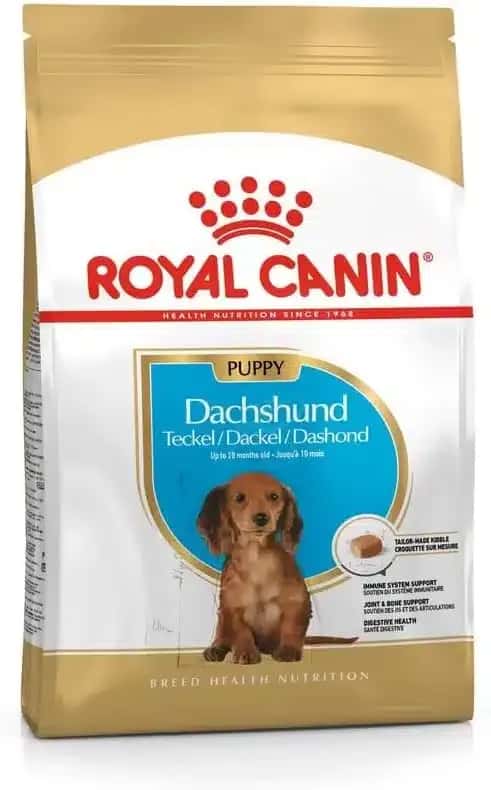
Royal Canin Dachshund Puppy | Tailored to mini doxies. Includes digestible proteins, prebiotics, and precise minerals for healthy growth. | |
Wellness CORE Puppy | High-protein, grain-free formula with DHA from salmon oil. Small kibble for easy chewing. |
Heads-Up: Doxie puppies are known for their enthusiasm around food, which can quickly lead to overfeeding. Stick to a set schedule and use tools like measuring cups or a slow-feeder bowl to slow them down — especially important if you’re also using training treats.
Adult (1–7 Years)
Key Needs:
- Controlled calories to avoid weight gain
- Protein for lean muscle maintenance
- Omega-3 and 6 for joints and skin
- Digestive support
Once your dachshund has hit adulthood, the nutritional focus shifts to maintenance — maintaining energy levels, skin and coat health, digestive regularity, and of course, weight. Choosing foods with moderate calories is important to help prevent weight gain in adult dachshunds, who are active but prone to obesity. Adult dachshunds that eat too much (or eat food too rich in fats) are at serious risk of developing back issues like IVDD or pancreatitis.
Brand | Why It’s a Fit for Adult Dachshunds | Shop |
|---|---|---|
Hill’s Science Diet Small Paws | Designed for small-breed adults. Supports energy, lean muscle, and skin health. Easy-to-digest blend. | |
Royal Canin Dachshund Adult | Crafted with shape-specific kibble to encourage chewing. Includes EPA/DHA for spinal support. |
Veterinary Insight:
“Breed-specific adult diets help target common issues, from joint stress to dental health. Small dogs like dachshunds benefit from formulas that support metabolism and spine health over time.”
— American Kennel Club
For doxies that need to lose a little weight, see our Dachshund Weight Loss Guide, which includes recommended low-fat foods and feeding adjustments.
Senior (8+ Years)
Key Needs:
- Fewer calories, more fibre
- High digestibility to avoid GI upset
- Added antioxidants for immune function
- Nutrients that support cognitive and joint health
As dachshunds age, their metabolism slows, but their need for high-quality nutrition doesn't. Older doxies are also more prone to constipation, weight gain, and arthritis, so look for formulas that offer support without unnecessary calories. If they've lost teeth or have dental sensitivity, soft kibble or moistened dry food can help.
Brand | Why It’s a Fit for Senior Dachshunds | Shop |
|---|---|---|
Blue Buffalo Life Protection Senior | Includes L-carnitine for metabolism and glucosamine/chondroitin for joints. Good flavour retention. | |
Hill’s Science Diet Adult 7+ Small Paws | Great for sensitive digestion. Supports kidney function and includes high levels of vitamin E |
From Our circle:
Our close friends whose Dachshund just turned 9, they noticed he does best with foods that are both flavorful and gentle on the stomach. They now alternate between Blue Buffalo Senior and lightly moistened home-cooked meals (see our Homemade Dog Food for Dachshunds guide) to keep him excited about dinner time without upsetting his tummy.
Breed-Specific Nutritional Considerations for Dachshunds
Not all dog food is created equal — especially when it comes to dachshunds. With their long torsos, short legs, and small frames, doxies have unique needs that go far beyond what’s written on the back of a kibble bag. From back health to calorie control, what you feed your dachshund can have a lasting impact on their quality of life.
Caloric Density for a Compact Body
Dachshunds may be small, but they’re mighty — and often, very food motivated. That makes them especially prone to overeating and weight gain. According to VCA Animal Hospitals:
“Obesity is the most common preventable disease in dogs, and dachshunds are one of the most at-risk breeds. Their short legs and long backs make excess weight a serious risk factor for orthopedic issues.” Source: VCA Animal Hospitals
Even a few extra treats a day can push your dachshund into a caloric surplus. That’s why it’s crucial to choose food with balanced energy density — rich in nutrients, moderate in calories. Providing balanced nutrition is essential for maintaining a healthy weight in dachshunds, as it ensures they receive all the necessary nutrients without excess calories. If you’re trying to manage their intake, visit our Dachshund Weight Loss Guide for tips and treat swaps.
Joint and Spine Health Support
The dachshund's iconic long back comes with a price: they're genetically predisposed to intervertebral disc disease (IVDD). Nutrition plays a huge role in prevention. Look for foods that include joint-supportive nutrients like:
- Glucosamine & Chondroitin – for cartilage repair and mobility
- Omega-3 fatty acids – for reducing inflammation
- Vitamin D & Calcium – for bone strength and spine health
Our top pick for joint support is the Wuffles Dog Hip & Joint Supplement, a vet-recommended supplement that can be added to your dachshund's food. You can also see more joint support products in our Top Supplements for Dachshunds guide.
Digestive Sensitivity
Dachshunds are known for their sensitive stomachs. Whether it's from table scraps, fatty treats, or food intolerances, GI upset is one of the most common vet visit causes for the breed.
A 2019 study in the Journal of Veterinary Internal Medicine found:
“Small breed dogs showed increased frequency of gastrointestinal signs when fed high-fat commercial diets.”
Source: J Vet Intern Med, 2019
That means sticking to high-quality proteins, moderate fat, and easily digestible ingredients is key. Foods with probiotics and prebiotics — such as Hill's Science Diet Sensitive Stomach & Skin — can help support gut health while avoiding flare-ups.
Small Kibble Size & Dental Health
Due to their smaller mouths, dachshunds do better with bite-sized kibble. Look for brands that offer small-breed formulas or specifically mention “mini bites” or “toy breed” on the label. This makes chewing easier and reduces the risk of choking.
As a bonus, some small-breed foods are designed with dental support in mind. Crunchy textures can help reduce tartar buildup — a major issue for dachshunds, who are prone to periodontal disease. You can reinforce this benefit with dental treats like Greenies Original Teenie Dental Treats
Gut-Friendly Options for Dachshunds
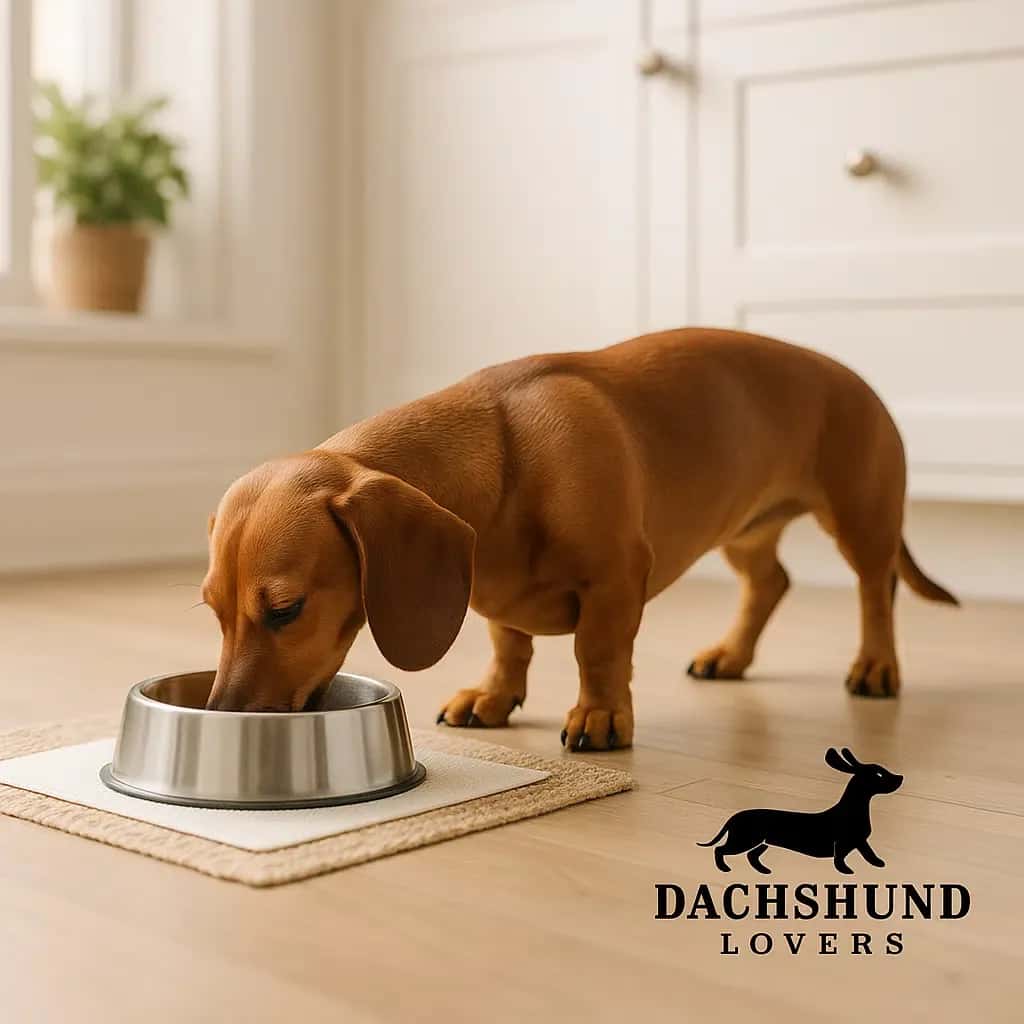
Dachshunds are notorious for their sensitive stomachs, so finding gut-friendly dog food isn’t just a luxury—it’s a necessity for their long-term health and happiness. Whether your doxie is prone to food allergies, has a history of digestive upsets, or you simply want to support a healthy gut, choosing the right food for dachshunds can make a significant difference in their daily comfort and overall well-being.
Why Gut Health Matters: A healthy digestive system helps your Dachshund absorb essential nutrients, maintain a shiny coat, and keep their immune system strong. When their gut is happy, you’ll notice firmer stools, less gas, and a more energetic, content pup. On the flip side, poor-quality food or the wrong ingredients can lead to food sensitivities, itchy skin, and frequent vet visits.
Dry Dog Food (Kibble)
Many of the best dog food options for Dachshunds come in dry kibble form, especially those designed for sensitive stomachs. Look for dry dog food that features high-quality protein, easily digestible grains like brown rice, and added probiotics or prebiotics. These ingredients help promote a healthy gut flora and reduce the risk of food allergies. Small-breed formulas with limited ingredients are often a safe bet for food for dachshunds with sensitive tummies.
Fresh Dog Food
Fresh dog food, whether homemade or delivered from a reputable service, is gaining popularity among pet owners who want to avoid preservatives and fillers. Meals made with real meat, fresh vegetables like green beans and carrot sticks, and gentle carbs such as sweet potatoes can be easier on your Dachshund’s digestive system. Fresh food is also a great way to avoid common triggers for food sensitivities, as you have more control over every ingredient/.
Raw Dog Food
Raw dog food diets can be beneficial for some Dachshunds, especially those with food allergies or chronic digestive issues. Raw food typically includes fresh meat, organs, and sometimes bone, offering a nutrient-dense, minimally processed option. However, it’s crucial to ensure the raw diet is nutritionally balanced and safe—consult your vet or a dog food advisor before making the switch to raw food for dachshunds.
Wet Dog Food
Wet dog food is often easier to digest for Dachshunds with dental issues or very sensitive stomachs. The higher moisture content supports hydration and can help prevent constipation, a common issue in small dogs. Choose wet dog food with real, named protein sources and minimal artificial additives for the best results.
Our Top Picks: Best Dog Food for Dachshunds in 2026
Finding the perfect food for your dachshund can feel like navigating a maze of marketing buzzwords — grain-free, breed-specific, raw-infused, fresh-frozen… we’ve been there. When Harvey was a pup, we tried five different brands before we landed on something that didn’t upset his stomach or drain our wallets.
The best dry dog food options for dachshunds are those that support their unique needs for healthy weight, joint care, and gut health. Our recommendations are shaped by experience working at a pet store and consulting with knowledgeable pet store staff, which can be invaluable when selecting high-quality dog food for dachshunds.
This list is based on our experience, conversations with vets, and up-to-date research on small breed nutrition. Each of the below picks supports what dachshunds need most: a healthy weight, joint support, gut balance, and picky-eater approval.
We’ve also prioritised options that pair well with our recommendations across the full nutrition cluster — from supplements to hydration strategies and homemade toppers
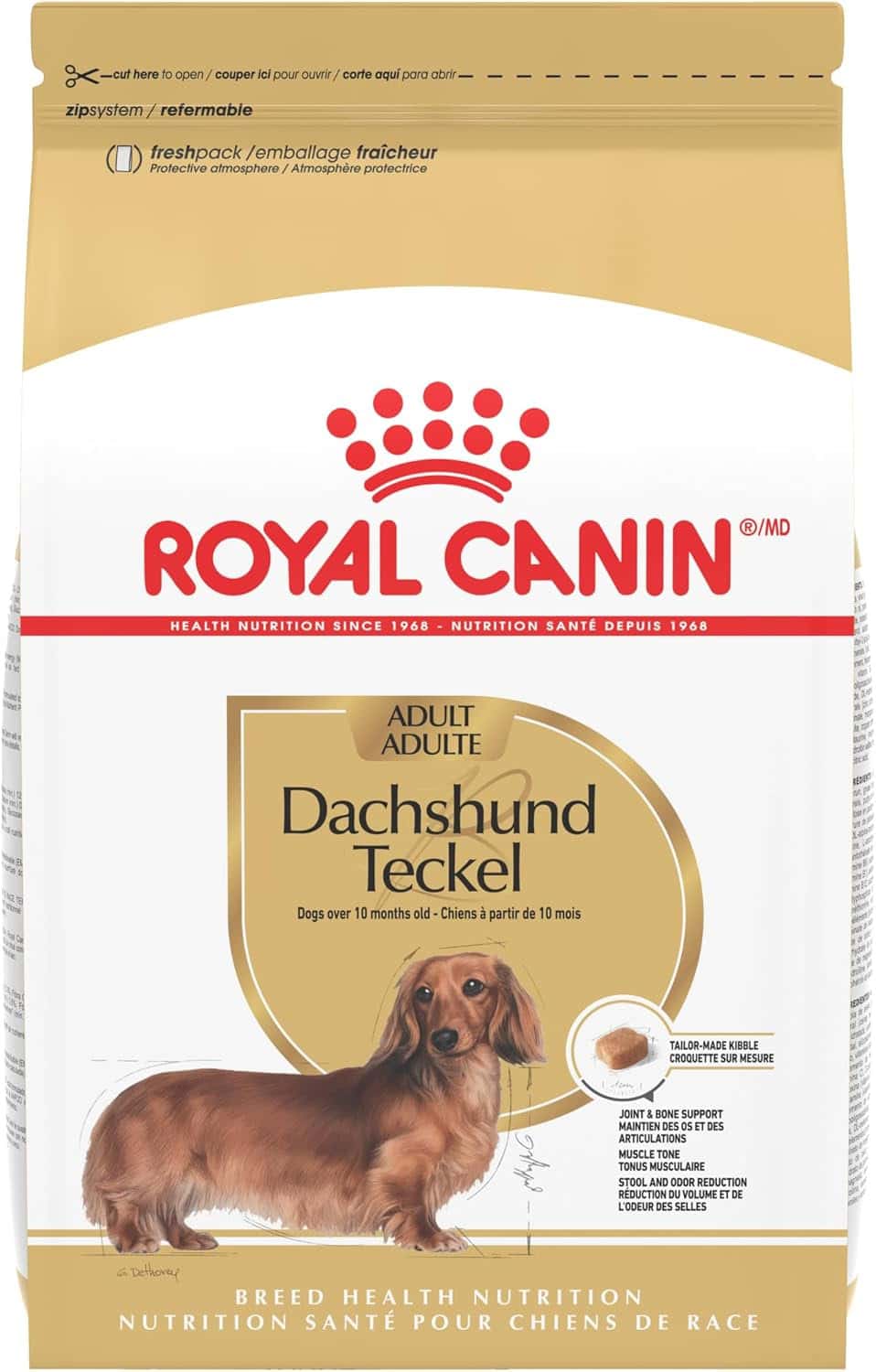
1. Royal Canin Dachshund Adult Dry Dog Food
Why we love it: This vet-recommended, breed-specific formula is our top overall pick. The kibble is shaped for small jaws and chewing efficiency, which encourages slower eating (helpful for digestion and reducing bloat risk). It supports muscle tone, protects spinal and joint health, and even helps reduce stool odor. If deboned turkey is included in the ingredient list, it provides a high-quality, easily digestible protein source that supports healthy growth and balanced nutrition for dachshunds.
Harvey’s coat looked glossier, and his stools were easier to manage after two weeks on this.
- Pros: Tailored for dachshunds, promotes ideal weight, highly palatable.
- Cons: Higher price point; not grain-free (which some owners avoid).
- Perfect for: Adult standard or mini dachshunds with no grain sensitivities.
2. Hill's Science Diet Adult Small & Mini Breed
Why it's a strong pick:
Hill's is a household name for good reason — this formula is backed by science, easy on sensitive tummies, and ideal for everyday feeding. It includes antioxidants, omega-6 fatty acids, and vitamin E to support immune health and skin function.
We noticed less paw licking and dry skin flare-ups after transitioning Harvey to this in winter.
- Pros: Digestible, good for skin and coat health, vet-approved.
- Cons: Contains grains, which may not suit all doxies.
- Perfect for: Dachshunds prone to mild allergies or seasonal dry skin.
Best Dog Food for Miniature Dachshunds vs Standard Dachshunds
Miniature and standard dachshunds may come from the same adorable sausage mold, but when it comes to food, one size definitely doesn’t fit all. Between calorie needs, kibble size, and common health concerns, feeding the right formula for your dachshund’s size can make all the difference.
We found this out the hard way. Harvey — our little long-haired mini — was happily chomping through a kibble that worked great for a friend’s standard doxie… until we noticed the slow creep of weight gain, soft stools, and a sudden drop in energy. Turns out, minis often need lower calories per cup, gentler carbs, and much smaller kibble.
So how do the two sizes stack up nutritionally?
Feature | Miniature Dachshunds | Standard Dachshunds |
|---|---|---|
Average Weight | 3.5–5 kg (7–11 lbs) | 7–15 kg (16–32 lbs) |
Daily Calorie Needs | ~200–300 kcal | ~400–600 kcal |
Kibble Size | Extra-small | Small to medium |
Ideal Protein % | 22–25% | 24–28% |
Watchouts | Obesity, hypoglycemia | Joint strain, dental tartar |
High protein kibble is especially beneficial for both miniature and standard dachshunds, as the added protein supports muscle maintenance and overall health. Many formulas also include probiotics and omega oils for digestive and skin support.
Vet Tip: According to VCA Hospitals,
“Small breed dogs are prone to obesity due to their lower energy requirements. Controlling portion size and feeding calorie-appropriate meals is essential for long-term health.”
Note: Dachshunds are built to thrive on a raw diet due to their digestive systems being similar to those of wolves. This makes raw or minimally processed foods a natural fit for their nutritional needs.
And remember — the feeding guide you follow matters just as much as the food itself. Our Dachshund Feeding Guide walks you through how much to feed based on age, weight, and activity level — whether you’ve got a pint-sized pup or a full-sized floof.
Raw vs Kibble vs Fresh Food: What's Best for Dachshunds?
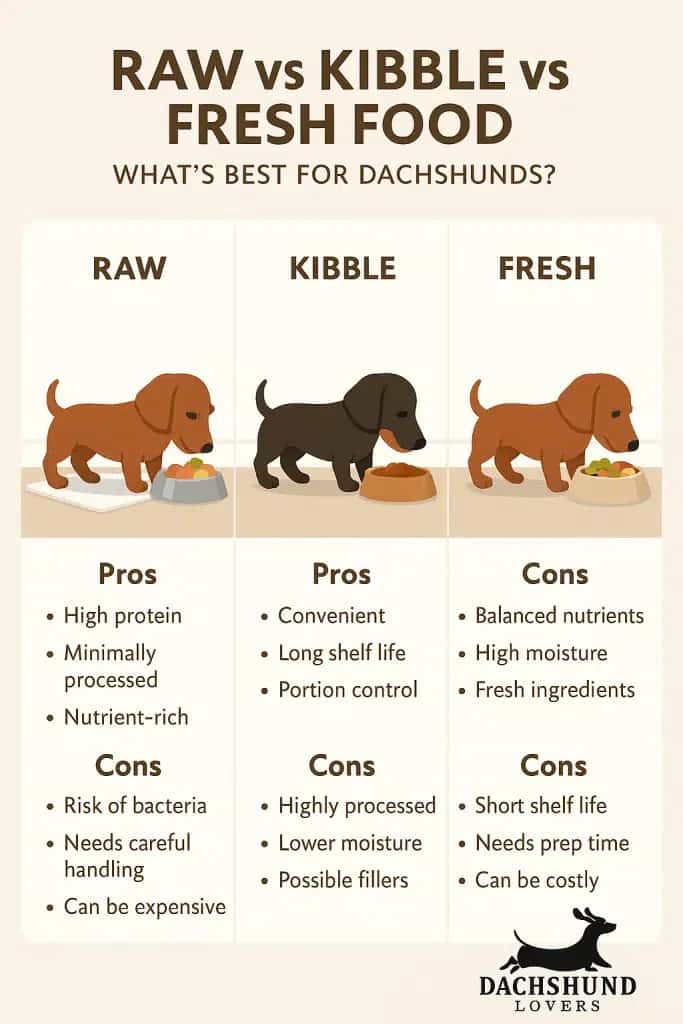
There’s no one-size-fits-all answer when it comes to feeding your dachshund — especially with so many food styles out there. Between raw, kibble, and fresh diets, it can feel overwhelming figuring out which is truly best. Each option comes with its pros, cons, and dachshund-specific watchouts. Grain free diets are also an option, particularly for dachshunds with allergies or sensitivities to common ingredients like corn and wheat.
We actually trialed all three with Harvey — starting with kibble, switching to fresh delivery, and even dabbling in raw for a short stint. What we found? It wasn’t just about the food — it was about what worked for his digestion, weight, and our lifestyle. For raw diets, it’s important to ensure the food is high in meat-based protein and low in carbohydrates, fillers, and preservatives.
Raw Food Diet
A raw food diet usually includes raw meat, organs, bones, and sometimes vegetables or supplements. Advocates say it mimics a dog's ancestral diet, but it's not always that simple — especially with dachshunds.
Pros:
- High protein and moisture content
- Great for skin, coat, and dental health
- Can be customized to avoid allergens
Cons:
- Risk of bacterial contamination (like Salmonella or E. coli)
- Unbalanced nutrition if not done carefully
- Can be expensive and time-consuming to prepare
Vet Caution: According to VCA Hospitals,
“Feeding raw diets can carry significant risk of nutritional imbalances and microbial contamination. Pets fed raw diets can shed dangerous bacteria in their feces and saliva.”
If you go raw, it's best to consult a veterinary nutritionist and use pre-formulated raw meals.
Dry Kibble
Dry kibble is still the most popular option for its convenience, affordability, and storage life. But not all kibble is created equal — especially when it comes to ingredients and calorie density.
Pros:
- Easy to store and measure
- Affordable and widely available
- Often fortified with vitamins and joint support
Cons:
- Often contains fillers or by-products
- Lower moisture content (can affect hydration)
- Some dogs may develop allergies or digestive sensitivity
Fresh Cooked Food
Fresh food subscriptions like The Farmer's Dog or PetPlate have exploded in popularity. Meals are cooked, pre-portioned, and delivered — often tailored to your dog's size, age, and energy levels.
Pros:
- Gently cooked, human-grade ingredients
- Easy portion control and clear labeling
- Great for picky eaters or dogs with GI issues
Cons:
- More expensive than kibble
- Requires freezer/fridge space
- May not suit dogs with specific ingredient allergies
So, which is best for your doxie?
That depends on their needs, age, and what you're comfortable managing. Some owners even opt for a hybrid approach — combining kibble with fresh toppers or rotating in raw meals occasionally. If you're experimenting, introduce changes slowly and track your dachshund's stool quality, weight, and energy levels over 2–3 weeks.
How to Read a Dog Food Label (Without Getting Fooled by Marketing)
Standing in the pet food aisle can feel like decoding a foreign language. Between “grain-free,” “natural,” and “premium” claims plastered across the bags, it’s hard to know what actually matters for your dachshund’s health—and what’s just clever branding.
When we first brought Harvey home, I assumed anything labeled “vet recommended” or “small breed formula” was automatically good. Spoiler: not always true. After a few bouts of soft stools and food rejection, we learned to dig deeper—beyond the flashy packaging and straight into the ingredients panel.
When choosing a brand, look for those with specialized formulas and clear ingredient labeling—Purina Pro Plan, for example, offers options tailored for small breeds and puppies, making it easier to understand what you’re feeding your dachshund.
Ingredients in dog food are listed in descending order by weight before cooking.
Here’s how to spot the good stuff—and avoid the gimmicks:
Label Element | What to Look For | What to Avoid |
|---|---|---|
Ingredients List | Named proteins like “chicken,” “lamb,” or “salmon” listed first. Whole veggies, grains, and added vitamins are good signs. | “Meat by-product,” “animal meal,” artificial dyes (like Red 40), or vague terms like “animal fat.” |
Guaranteed Analysis | Protein between 22–28%, fat around 12–18%. Fiber around 4–5% is ideal for digestion. | Super-high protein (30%+) with poor-quality fat sources or very low fiber (under 2%). |
AAFCO Statement | Look for “complete and balanced” and life-stage appropriate (e.g. adult maintenance or all life stages). | “Intended for intermittent or supplemental feeding” — not a complete diet. |
Marketing Claims | “Grain-free” is not automatically healthier. Focus on ingredient quality, not absence. | Don’t be swayed by terms like “holistic,” “natural,” or “premium” — they’re unregulated. |
Vet Insight: According to the PetMD nutrition guide, many marketing claims don’t reflect the nutritional value of a food. Instead, “dogs thrive on balanced diets tailored to their breed, size, and life stage—not on buzzwords.”
If you’re ever unsure, compare labels using our Dachshund Feeding Guide or check in with your vet. The right food will always match your doxie’s specific needs—not a brand’s slogan.
Switching Dog Foods Safely: Tips for Transitioning
If you’ve ever tried to switch your dachshund’s food overnight, chances are you’ve seen the fallout—literally. Runny stools, tummy gurgles, and a very confused sausage dog staring at their bowl like it betrayed them.
It’s important to remember that just because your dachshund will happily eat a new food, it doesn’t mean it’s the best dog food for their health or nutritional needs. Willingness to eat is not a reliable indicator of quality or safety.
Harvey taught us this lesson the hard way. We once swapped his kibble cold turkey after reading glowing reviews about a “superfood blend.” Within 48 hours, we were scrubbing carpets and apologising to the neighbours. Since then, we’ve followed a strict transition schedule—and we haven’t looked back.
Why Gradual Transition Matters
Dachshunds have sensitive digestive systems, partly due to their small size and long intestines. A sudden change in food can disrupt their gut flora and lead to digestive upset. That's why vets recommend a 7–10 day gradual transition, especially when changing brands, protein sources, or food types (e.g., kibble to raw).
Vet-Backed Tip: “Any changes in diet should be made gradually to avoid gastrointestinal upset,” says VCA Animal Hospitals. “Even high-quality foods can cause issues if introduced too quickly.”
The 7-Day Transition Schedule
Day | Old Food | New Food |
|---|---|---|
Day 1-2 | 75% | 25% |
Day 3-4 | 50% | 50% |
Day 5-6 | 25% | 75% |
Day 7+ | 0% | 100% |
You can adjust this schedule depending on how sensitive your dog is. If you notice soft stools, extend each step by a day or two.
Bonus Tip: Mix-Ins Can Help
If your dachshund is hesitant to try the new food, mix in warm water, a spoonful of unsalted pumpkin, or a bit of low-sodium bone broth
And remember: once you've found the right food, consistency is your best friend. It's not about chasing trends—it's about building a reliable routine your doxie can trust.
Signs Your Dachshund’s Food Isn’t Working
Even if the packaging says “premium” or “veterinarian recommended,” not every dog food works for every dachshund. Their unique body shape, metabolism, and predisposition to digestive sensitivity mean they’ll often show signs when something’s off.
We’ve been there. Harvey once started shedding excessively and had dull, itchy skin after switching to a “skin and coat” formula that didn’t sit right with his system. The branding was slick, but the ingredients didn’t match his needs.
Here are the most common red flags to watch out for:
- Itchy skin, hotspots, or dull coat: Food sensitivities or lack of omega-3s
- Soft stools or frequent diarrhoea: Poor digestibility or low fiber content
- Excessive shedding: Imbalanced nutrients or poor protein quality
- Bad breath: Dental issues or high-carb fillers
- Gas or bloating: Difficulty digesting grains or fats
- Sudden weight gain: Too many calories or poor portion control
- Constant hunger: Not enough protein or poor nutrient density
- Lethargy or low energy: Inadequate calorie content or missing key vitamins
Vet Insight: According to PetMD, “Food allergies and intolerances can manifest in symptoms like chronic ear infections, gastrointestinal upset, and itchy skin. The only way to diagnose them properly is with an elimination diet under veterinary supervision.”
What to Do If You Spot Issues
- Check the ingredient list: Look for known allergens like chicken, corn, wheat, or soy, which can be problematic for some dachshunds.
- Reassess your portions: Even the best dog food can cause issues if overfed.
- Talk to your vet: Especially if symptoms persist beyond 1–2 weeks after transitioning to a new food.
If you're noticing any of these signs, don't panic—it doesn't mean the food is “bad,” just that it might not be the right fit for your unique little sausage. Trial and observation are your best tools.
FAQs: Best Dog Food for Dachshunds
More from This Series
If you found this article helpful, you’ll love the rest of our Dachshund Feeding & Nutrition series:
- What Can Dachshunds Eat? Safe & Unsafe Foods Explained
- Dachshund Feeding Guide: How Much & How Often?
- Top Supplements for Dachshunds: What’s Worth It?
- Hydration & Dachshunds: Why Water Intake Matters
- Homemade Dog Food for Dachshunds: A Guide for Beginners
- Dachshund Weight Loss: A Vet-Approved Guide to Safe Fat Loss
- Best Treats for Dachshunds: Healthy, Training-Friendly Options
- Raw vs Cooked Food for Dachshunds: What the Research Says
Best Dog Food for Miniature Dachshunds vs Standard Dachshunds
Authored by
James
James is the founder of Dachshund Lovers and the proud human of Harvey, a mini dapple with a big personality. He writes to empower and connect the dachshund community, blending founder insights with honest, experience-based stories about life with this incredible and special breed. James brings candid, experience-backed opinions to the community and always focused on fewer, better products and ideas that genuinely improve life for dachshunds and their people.
Read moreJames is the founder of Dachshund Lovers and the proud human of Harvey, a mini dapple with a big personality. He writes to empower and connect the dachshund community, blending founder insights with honest, experience-based stories about life with this incredible and special breed. James brings candid, experience-backed opinions to the community and always focused on fewer, better products and ideas that genuinely improve life for dachshunds and their people.
Read moreDisclaimer
This content is for informational purposes only and should not be considered veterinary advice. Always consult with a licensed veterinarian regarding your dog’s health and wellbeing.
There are no comments yet
Leave a comment