Dachshund Dog Park Socialization
Dachshund Dog Park Socialization
Before you unclip the lead, let’s talk dachshund body language, overstimulation, and what “socialising” really means for this breed.
James
Posted on October 22, 2025.
Updated on July 12, 2026.
Table of Contents
- 1.Key Takeaways on Dachshund Dog Park Socialization
- 2.Why Socialisation Matters for Dachshunds
- •Benefits of Proper Socialisation
- 3.Preparing Your Dachshund for the Dog Park
- •1. Assess Your Dachshund’s Temperament
- •2. Health & Vaccination Check
- •3. Brush Up on Basic Obedience
- •4. Choose the Right Park
- •5. Timing is Everything
- 4.First-Time Dog Park Tips
- •1. Observe Before Entering
- •2. Start with a Controlled Introduction
- •3. Read Your Dog’s Signals
- •4. Manage Play Proactively
- •5. Keep Interactions Varied
- •6. End on a High Note
- 5.Managing Interactions with Other Dogs
- •1. Match Play Styles and Sizes
- •2. Step In When Needed
- •3. Manage Energy Mismatches
- •4. Keep Humans in the Loop
- •5. Build Positive Associations
- 6.Safety Considerations
- •1. Protecting the Dachshund Back
- •2. Heat and Weather Awareness
- •3. Know the Rules
- •4. Disease and Parasite Prevention
- •5. Conflict Management
- 7.Alternatives to Dog Parks
- •1. Structured Playdates
- •2. Obedience Classes and Social Clubs
- •3. Urban Socialisation Walks
- •4. Small Dog Meetup Groups
- •5. Doggy Daycare (Small Group Sessions)
- -More from This Series
- -Disclaimer
Share

The first time we took Harvey to a dog park, it was at Centennial Parklands on a warm Sunday morning. Caitlin and I had been talking about it for weeks — wondering if our confident-at-home, king-of-the-sofa dachshund would be just as brave in a sea of wagging tails and strangers. Harvey’s reaction was… diplomatic. He trotted in with his chest puffed out, surveyed the scene like a mayor inspecting his town, and then made a beeline for the smallest, calmest dog in the park.
Dachshunds are social in their own way. They can be playful and friendly, but they’re also cautious, quick to assess, and not shy about letting you know when they feel overwhelmed. If you’ve ever wondered how to socialize a dachshund or if taking them to a dog park is a good idea, the answer is: it depends on the dog, the park, and your approach.
Socialising a dachshund safely in public means reading their temperament signals, choosing environments that match their confidence level, and introducing them gradually. That might mean starting in a quieter spot like Rushcutters Bay Park before tackling the busier, wide-open fields of Centennial. The right setup not only helps your dachshund enjoy themselves, but also keeps interactions safe and positive for everyone — humans and dogs alike.
Key Takeaways on Dachshund Dog Park Socialization
Tip | Why It Matters | How To Apply It |
|---|---|---|
Start Small | Busy parks can overwhelm dachshunds, especially first-timers. | Begin at quiet times or choose smaller, fenced areas like Rushcutters Bay Park. |
Watch Body Language | Reading temperament signals prevents negative encounters. | Look for loose, wiggly movement (relaxed) vs stiff posture, tucked tail, or growling (stress). |
Match Energy Levels | Play style mismatches can lead to conflicts. | Pair with similar-sized dogs or calm personalities; avoid high-impact chasers if your dachshund prefers gentle play. |
Have an Exit Plan | Sometimes leaving early is the best option. | Keep treats and leash handy; if your dog shows signs of stress, step out and try again another day. |
Use Positive Reinforcement | Builds confidence and good associations with the park. | Reward calm greetings, recall, and disengaging from overly pushy dogs. |
Respect Park Etiquette | Keeps everyone safe and happy. | Follow local leash rules, pick up after your dog, and supervise closely at all times. |
Know Your Alternatives | Dog parks aren’t the only way to socialise. | Consider training classes, structured playdates, or quiet walks in dog-friendly areas. |

Dachshunds might be small, but their personalities are anything but. They were bred to hunt in packs, tracking and flushing out badgers, so socialisation — learning how to interact appropriately with other dogs and people — is in their DNA. Without it, a dachshund can become wary, territorial, or even defensive in public spaces.
A well-socialised dachshund tends to be more adaptable, whether they’re strolling through Centennial Parklands, visiting a café in the Sutherland Shire, or navigating the off-leash areas of London’s Hampstead Heath. This adaptability reduces the risk of fear-based reactivity, which is one of the most common issues in poorly socialised dachshunds.
If you’ve read our Are Dachshunds Aggressive article, you’ll know that aggression is often a symptom of insecurity. Regular, positive exposure to different dogs, people, sounds, and environments helps build that all-important confidence.
- Improved confidence — less startle or fear in new situations.
- Better communication — learns canine body language, reducing misunderstandings.
- Lower stress levels — adapts more easily to new people, pets, and places.
- Safer play — understands acceptable play styles and boundaries.
- Public comfort — easier vet visits, café stops, and holiday travel.
Socialisation isn’t just for puppies, either. While early exposure between 8–16 weeks is ideal, adult dachshunds can still learn new social skills with patience and consistency. In fact, older rescues often blossom once they’re given structured opportunities to interact at their own pace.
In the USA, small dog meetups in local parks are a safe way to build these skills without the intensity of a large, mixed-size dog park. In the UK, many community-run fields offer “small dog hours” — something NSW could borrow from to give breeds like dachshunds the perfect starter environment.
Preparing Your Dachshund for the Dog Park
Before Harvey’s first visit to Rushcutters Bay Park, Caitlin and I went through a checklist that I now recommend to every dachshund owner. It’s not just about turning up and unclipping the lead — preparing your dog properly is the difference between a great social outing and a stressful one.
1. Assess Your Dachshund’s Temperament
Not all dachshunds are ready for the dog park straight away. Ask yourself:
- Are dachshunds social? Your individual dog might be cautious, excitable, or somewhere in between.
- Independent or needy? Clingy dogs might shadow you at the park, while independent ones may wander too far without checking in.
- Does your dachshund enjoy meeting new dogs, or do they prefer people?
If you’re unsure, start with one-on-one playdates before moving to group settings.
2. Health & Vaccination Check
Most councils — including the Sutherland Shire — require dogs in public spaces to be vaccinated and registered. Check your dachshund’s:
- Core vaccinations (C3 or C5 in Australia; equivalent protocols in the UK and USA)
- Flea, tick, and worm prevention
- General fitness to ensure they can keep up with play
3. Brush Up on Basic Obedience
A solid recall and a “leave it” command can be lifesavers in the park.
- Practise recall with high-value treats at home first.
- Introduce distractions gradually — like walking near other dogs on-leash before trying an off-leash environment.
- Our Dachshund Barking article covers how to keep vocal enthusiasm under control.
4. Choose the Right Park
Look for features that make first visits less overwhelming:
- Separate small-dog enclosures
- Fenced areas with double-gate entry
- Water stations and shaded seating
- Flat, open visibility (important for monitoring a short dog like a dachshund)
In Sydney, Centennial Parklands has multiple off-leash areas, but for smaller or more cautious dachshunds, quieter neighbourhood parks can be a better first step. In the UK, many city parks have dedicated “small dog social hours,” and in the USA, well-managed off-leash areas often post peak and quiet times online.
5. Timing is Everything
First visits should be short and sweet. Go during off-peak times (weekday mornings or late afternoons) so your dachshund can explore without being swarmed by a crowd of excited dogs.
First-Time Dog Park Tips
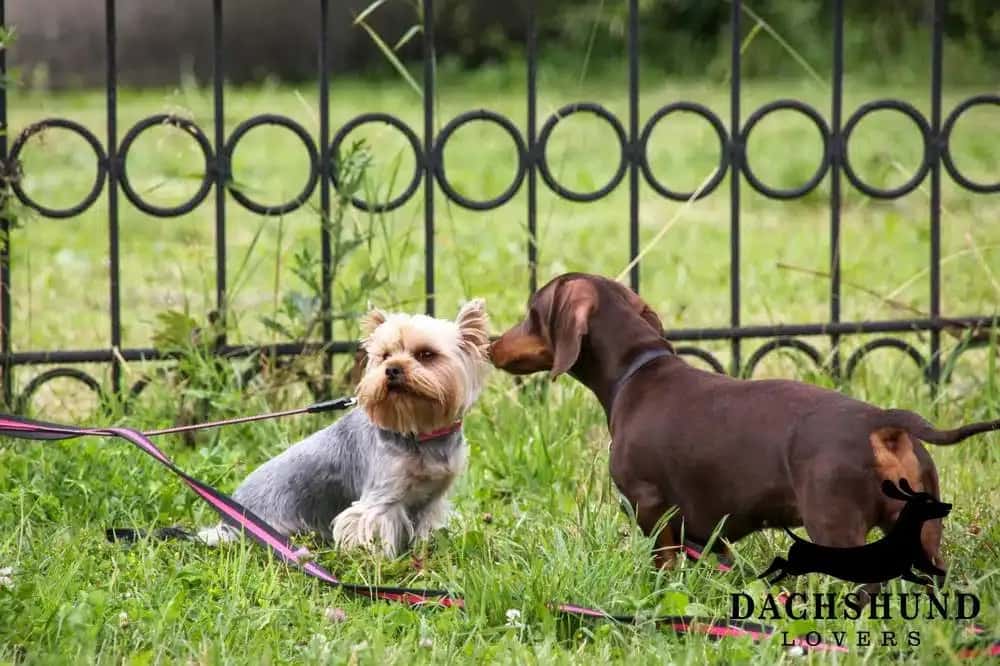
Harvey’s first dog park visit was a mix of curiosity and caution. He trotted in like he owned the place, but when a boisterous Labrador bounded over, he froze and gave me that unmistakable “Dad, this is a bit much” look. The first visit can set the tone for how your dachshund feels about parks in the future, so it pays to make it a calm and positive experience.
1. Observe Before Entering
Before stepping inside, spend a few minutes watching the dogs already there.
- Are they playing gently or engaging in rough, high-speed chases?
- Is the size mix safe for a small dog like a dachshund?
- Does the park have separate small-dog or quiet areas?
If the vibe feels off, wait until it’s quieter or try a different park.
2. Start with a Controlled Introduction
When entering, give your dachshund a moment to acclimatise inside the gate before unleashing.
- This allows them to read the scene without the pressure of immediate play.
- Keep initial greetings short and positive; you can extend time as confidence grows.
3. Read Your Dog’s Signals
Body language tells you everything:
- Relaxed & social: loose wagging tail, soft eyes, bouncy movements.
- Uncomfortable: tail tucked, head lowered, ears pinned back, lip licking.
If stress signals appear, calmly guide your dachshund to a quieter spot.
4. Manage Play Proactively
Dachshunds often prefer short bursts of play over long wrestling matches.
- Intervene early if another dog is too rough.
- Use recall to create breaks in play, rewarding your dachshund for coming back to you.
For help reading play dynamics, our Do Dachshunds Get Along with Other Dogs article explains compatibility in more depth.
5. Keep Interactions Varied
Don’t expect your dachshund to play with every dog. Some days they’ll want to run with the pack, other days they’ll prefer sniffing the fence line.
- Respect their pace — socialisation isn’t about forcing interaction but building confidence.
6. End on a High Note
Leave while your dachshund is still happy and engaged, rather than overtired or stressed. Ending on a positive note makes them more likely to look forward to the next visit.
Managing Interactions with Other Dogs
If there’s one truth about dog parks, it’s that you can’t predict every interaction — but you can manage your dachshund’s experience to keep it positive. Harvey’s social strategy is simple: make friends with the gentle spaniel, avoid the overly bouncy collie, and completely ignore the dog wearing a raincoat.
1. Match Play Styles and Sizes
While many dachshunds are bold enough to approach larger dogs, their small size and long backs make them more vulnerable to injury from rough play.
- Seek out calm, similarly sized dogs for the first few play sessions.
- In parks with a separate small-dog area, use it until your dachshund’s confidence and recall are solid.
2. Step In When Needed
Good socialisation isn’t “let dogs sort it out.” Intervene if:
- Play escalates to repeated mounting or pinning.
- Your dachshund seems cornered or overwhelmed.
- Another dog ignores clear signals like a growl or walking away.
A cheerful “Let’s go!” combined with a recall cue can redirect both dogs without causing tension.
3. Manage Energy Mismatches
Some dachshunds thrive in the chaos of a busy park, while others shut down or become reactive.
- Pairing with high-speed chasers can overwhelm a dachshund who prefers slower play.
- Look for dogs with compatible play preferences — gentle wrestling, parallel chasing, or sniff-and-strolls.
4. Keep Humans in the Loop
Dog parks are as much about managing people as dogs. Politely communicating with other owners can prevent misunderstandings.
- In NSW, leash laws and council park rules (like those at Sutherland Shire) give you the right to ask for space.
- In the UK and USA, many parks operate on unspoken etiquette — respect for space, quick intervention if play escalates, and keeping a lead handy.
5. Build Positive Associations
Reward your dachshund for calm greetings, ignoring barking, and responding to recall even mid-play. Over time, this creates a cycle where the park feels like a rewarding, safe place rather than a chaotic free-for-all.
For more on reading your dachshund’s temperament cues, see our Dachshund Personality article, which breaks down the difference between confident playfulness and defensive posturing.
Safety Considerations
Even the friendliest dachshund can run into trouble if a dog park visit isn’t managed with safety in mind. Harvey’s love of a good sniff-and-stroll can turn risky if a bigger dog barrels past at full speed — one misstep and that long back is at risk.
1. Protecting the Dachshund Back
Dachshunds are prone to intervertebral disc disease (IVDD), so high-impact collisions, rough play, or excessive jumping can be dangerous.
- Avoid parks with steep embankments, agility equipment meant for larger breeds, or areas where dogs are playing high-speed fetch right through the crowd.
- Keep play sessions short to prevent overexertion.
2. Heat and Weather Awareness
In Sydney summers, shaded areas like those in Centennial Parklands can make a huge difference.
- Always bring water and take breaks in the shade.
- In the UK and USA, colder climates pose a different challenge — smaller dogs like dachshunds can get chilled quickly, especially in wet weather, so limit time outdoors and consider a coat.
3. Know the Rules
Each location has its own regulations:
- NSW: Councils like the Sutherland Shire enforce leash laws outside designated off-leash areas and expect immediate owner intervention during conflicts.
- UK: Many parks allow off-leash play but require dogs to be “under control at all times,” which can mean leashing mid-play if behaviour gets too rowdy.
- USA: Rules vary by city, but most formal dog parks require proof of vaccination and may have separate hours or areas for small dogs.
4. Disease and Parasite Prevention
Dog parks are high-traffic areas, so the risk of picking up fleas, ticks, or contagious illnesses like kennel cough is higher.
- Keep vaccinations up-to-date.
- Maintain flea and tick prevention year-round, especially in warmer regions like Sydney or the southern USA.
- Avoid the park entirely if your dachshund is unwell or recovering from illness.
5. Conflict Management
Even with preparation, scuffles can happen.
- Stay calm, avoid yelling, and remove your dog swiftly but gently from the situation.
- If another dog persistently targets your dachshund, it’s time to leave and try again another day.
For a more detailed look at keeping interactions safe and positive, see our Do Dachshunds Get Along with Other Dogs article, which covers compatibility and reading other dogs’ body language.
Alternatives to Dog Parks

Dog parks can be wonderful for the right dog, but they’re not the only way to keep your dachshund social and confident. In fact, Harvey enjoys a mix of structured activities and casual meetups far more than a crowded weekend park. These alternatives can be safer, calmer, and just as enriching — especially for dachshunds who are cautious or still building confidence.
1. Structured Playdates
Setting up one-on-one or small group playdates lets you control the environment and the energy level.
- Invite friends with dogs of similar size and temperament.
- Rotate between homes, backyards, or fenced public spaces.
- Start with short sessions to avoid overexcitement or fatigue.
Training environments can be perfect for gradual socialisation.
- In the UK, Kennel Club–affiliated training schools often combine obedience with social play.
- In the USA, AKC Canine Good Citizen programs are designed to produce well-mannered, socially adaptable dogs.
Simply walking through a dog-friendly area exposes your dachshund to sights, smells, and sounds without the unpredictability of a free-play environment.
- In Sydney, the Cronulla Esplanade walk offers wide pathways and dog-friendly cafés.
- In London, Regent’s Park is a great place for leash socialisation with dogs and people alike.
- In New York, the Hudson River Greenway offers long, scenic walks with plenty of dog-friendly stops.
4. Small Dog Meetup Groups
Online communities (Facebook, Meetup.com) are full of breed-specific or small-dog events.
- Many NSW dachshund groups organise monthly beach walks or café meetups.
- UK and USA groups often meet in enclosed fields or private venues, reducing the risk of accidents with larger breeds.
5. Doggy Daycare (Small Group Sessions)
Not all daycares are suitable for dachshunds, but small-dog–only sessions can provide structured, supervised play.
- Choose facilities with clear size separation and experienced staff.
- Use daycare as an occasional supplement, not a daily necessity.
For more on understanding your dachshund’s comfort level and boundaries, our Dachshund Personality article can help you identify whether they’re ready for more social activity or need a slower approach.
FAQs — Dachshund Dog Park Socialization
More from This Series
Explore more insights into dachshund behaviour and personality:
- Why Are Dachshunds So Stubborn
- When Do Dachshunds Calm Down
- Dachshund Separation Anxiety
- Dachshund Personality
- Dachshund Barking
- Are Dachshunds Aggressive
- Do Dachshunds Get Along with Other Dogs
- Are Dachshunds Good with Kids
- Do Dachshunds Like to Cuddle
- Dachshund Digging
- Dachshund Sleeping
- Are Dachshunds Good with Cats
- Why Do Dachshunds Shake
Authored by
James
James is the founder of Dachshund Lovers and the proud human of Harvey, a mini dapple with a big personality. He writes to empower and connect the dachshund community, blending founder insights with honest, experience-based stories about life with this incredible and special breed. James brings candid, experience-backed opinions to the community and always focused on fewer, better products and ideas that genuinely improve life for dachshunds and their people.
Read moreJames is the founder of Dachshund Lovers and the proud human of Harvey, a mini dapple with a big personality. He writes to empower and connect the dachshund community, blending founder insights with honest, experience-based stories about life with this incredible and special breed. James brings candid, experience-backed opinions to the community and always focused on fewer, better products and ideas that genuinely improve life for dachshunds and their people.
Read moreDisclaimer
This content is for informational purposes only and should not be considered veterinary advice. Always consult with a licensed veterinarian regarding your dog’s health and wellbeing.
There are no comments yet
Leave a comment