Why Are Dachshunds So Stubborn
Why Are Dachshunds So Stubborn
A stubborn dachshund at South Cronulla Beach perfectly captures what every doxie owner knows — their determination is no flaw, but a feature rooted in history, instinct, and personality.
James
Posted on October 21, 2025.
Updated on July 11, 2026.
Table of Contents
- 1.Key Takeaways on Dachshund Stubbornness
- 2.The Roots of Dachshund Stubbornness
- 3.How Stubbornness Shows Up in Everyday Life
- 4.The Difference Between Stubbornness and Disobedience
- 5.Training Techniques That Work With a Stubborn Dachshund
- 6.Common Mistakes Owners Make With Stubborn Dachshunds
- 7.How to Channel Stubbornness Into Positive Behaviour
- -1. Make them think it’s their idea
- -2. Use stubbornness as training fuel
- -3. Give them a job
- -4. Keep sessions short but rewarding
- -5. Match the reward to the effort
- -6. Build flexibility into routines
- -7. Socialise with purpose
- -8. Turn “no” moments into “yes” moments
- -9. Teach patience through structured delay
- -10. Respect their limits
- -11. Make training part of life
- •The big picture
- -More from This Series
- -Disclaimer
Share

There’s a moment every dachshund owner will recognise — you’re standing on the grass outside, leash in hand, calling your dog’s name, and they’re looking at you like you’ve just suggested something utterly ridiculous. For me, it happened on a crisp morning at South Cronulla Beach. Harvey had decided that the scent trail of some long-gone seagull was far more compelling than my request to head back to the car. Caitlin stood beside me with that knowing smile — the one that says, “Good luck convincing him.”
That single standoff captured what every doxie owner eventually learns: stubbornness isn’t a bug in their personality. It’s a feature, woven into their history, instincts, and even their anatomy. Understanding where it comes from — and how to work with it — is the key to a smoother life with your dachshund.
Key Takeaways on Dachshund Stubbornness
Question | Quick Answer |
|---|---|
Why are dachshunds stubborn? | Bred for independent hunting, dachshunds have a natural drive to make their own decisions. |
Is stubbornness bad behaviour? | Not inherently — it’s instinctual and can be channelled with the right training. |
Can stubborn dachshunds be trained? | Yes, but it requires patience, consistency, and positive reinforcement. |
Does stubbornness mean they’re disobedient? | Not exactly — they respond best when they see value in the request. |
What’s the best way to manage it? | Short, engaging training sessions and activities that satisfy their hunting instincts. |
The Roots of Dachshund Stubbornness

When you live with a dachshund, you quickly learn they weren’t designed to be passive companions. Their stubborn streak is written into their DNA — a byproduct of centuries spent working independently underground.
Bred for independent hunting
Dachshunds originated in Germany, bred to track and flush out badgers, rabbits, and other burrowing animals. Once they disappeared into a tunnel, there was no human voice guiding them. They had to think, problem-solve, and decide their next move on their own. That independence was essential for survival, and it’s still there today — even if the only “burrow” in sight is the space under your couch.
Genetic self-reliance
Unlike breeds developed for close handler direction, dachshunds evolved to trust their own instincts over human cues. This is why Harvey will happily ignore me if he’s found an interesting scent at Shelly Beach. It’s not rudeness — it’s an ancient wiring that says, “I’ve got this.”
Environmental shaping
Even modern dachshunds carry those working dog tendencies into everyday life. They’re quick to assess situations for themselves, which can feel like resistance if you’re expecting immediate compliance. But this is also what makes them such sharp problem-solvers, whether it’s figuring out how to get a toy out from under the couch or finding the exact spot in the yard where you hid a treat.
Read more about dachshund breed history from the American Kennel Club.
How Stubbornness Shows Up in Everyday Life
Living with a dachshund means you become fluent in micro-expressions — the sideways glance, the slow blink, the deliberate turn away when you ask them to do something they’ve decided isn’t worth their time. To the untrained eye, it might look like defiance. To a dachshund owner, it’s simply a language you learn to read.
Selective hearing
This is the classic dachshund move. You’ll call them from across the yard, and they’ll freeze for half a second — just enough to register your voice — before resuming their personal mission. Harvey’s version usually happens at Greenhills Beach, where every grain of sand apparently holds critical information. The sound of a treat bag might override it, but only if the tide of curiosity is in your favour.
Delayed compliance
Dachshunds often pause before responding to a command. It’s not because they don’t understand — they’re weighing whether the request aligns with their own agenda. Call them inside when the sun is streaming across the lawn, and you’ll see the gears turn: stay in the warmth or head indoors? If they do come, it’s usually at a pace that makes it clear it was their decision, not yours.
Persistent focus
When a dachshund locks onto something — a scent, a sound, or the possibility of food — breaking that concentration is like trying to interrupt a movie at its climax. Their bodies go still, ears tilt forward, and the outside world fades into the background. This single-mindedness served them well as hunters, but at home it can make them seem wilfully obstinate. Harvey once trailed the scent of a stray possum across the yard for twenty minutes straight, ignoring every call until he had “completed” his investigation.
Creative problem-solving
Sometimes stubbornness looks like ingenuity. If they can’t get through a baby gate, they’ll test every gap, lean on it to check for weakness, and — if you’re Harvey — attempt a low crawl that’s half ambition, half wishful thinking. I’ve watched him push a cushion across the lounge to create a step up to the coffee table, just to reach a toy he had already ignored for days. Stubbornness, in this case, was just determination wearing a different coat.
Routine resistance
Ask a dachshund to do something they know is coming — like a bath or nail trim — and you’ll often see the stubborn streak in its purest form. They know the cues. They’ve mapped the process. And they’ll take every opportunity to insert a delay, whether it’s detouring behind the couch or lying down just out of reach. This isn’t a lack of training; it’s a strategic stall.
In each of these scenarios, the common thread is self-direction. They’re not waiting for approval; they’re deciding what makes sense to them in that moment. It’s not always convenient, but it’s pure dachshund.
Learn more about canine body language from the RSPCA.
The Difference Between Stubbornness and Disobedience
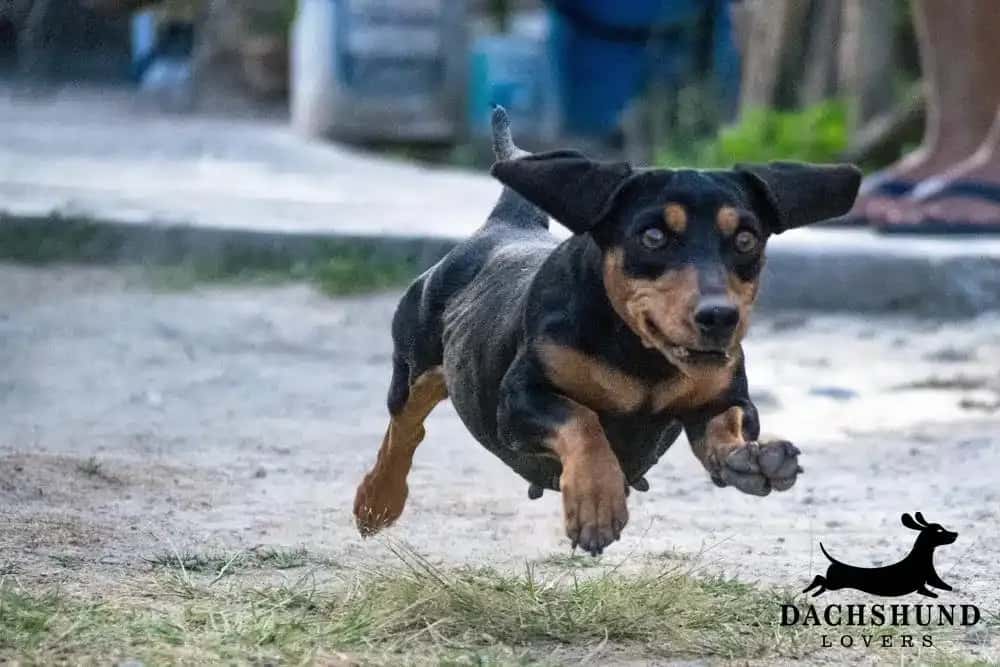
One of the quickest ways to misunderstand a dachshund is to lump stubbornness and disobedience together. They may look the same when you’re standing in the park, leash in hand, wondering why your dog hasn’t moved — but they come from two very different places.
Stubbornness is instinct
Dachshunds were bred for independent hunting, which means they’ll often follow their nose before they follow your voice. This is what you see when your dog ignores a recall to keep tracking a scent or decides that the sunny patch in the yard is worth staying put for. It’s the same self-direction that explains why some dachshunds take their time to mature into calmer companions — something we explore in When Do Dachshunds Calm Down.
Disobedience is learned
Disobedience happens when a dog figures out that ignoring a command works in their favour. If you call them once, give up, and they continue their chosen activity, you’re effectively teaching them that your requests are optional. Over time, this pattern can extend into other behaviours, from dachshund barking that goes unchecked to a reluctance to engage in dog park socialisation.
Why the difference matters
Treating instinctual stubbornness like wilful disobedience can harm trust, while ignoring actual disobedience can allow bad habits to stick. The balance lies in redirecting natural instincts without stifling their personality. For example, if your dachshund is resisting a recall because they’re deeply engaged in scent work, offering an alternative reward — like a short play session — can bridge that gap.
Real-world example
At Shelly Beach, Harvey will often freeze mid-walk when a seabird catches his attention. If I simply call him back, he’ll assess the situation, weigh up his options, and often continue watching the bird. But if I shift the context — “come here” followed by a quick throw of his ball — he responds instantly. This aligns with research from the American Veterinary Society of Animal Behavior showing that positive reinforcement consistently yields stronger, longer-lasting results than punishment.
Where they overlap
Sometimes stubbornness evolves into disobedience if it’s repeatedly rewarded. A dachshund that refuses to come inside because they know you’ll eventually bring their dinner outside isn’t just being independent — they’re running their own system. Consistency is the safeguard here, as explored further in our Dachshund Personality guide.
Training Techniques That Work With a Stubborn Dachshund
If you expect a dachshund to respond like a golden retriever, you’re setting yourself up for frustration. Training a stubborn doxie is less about breaking their will and more about working with the grain — using the instincts they already have to your advantage.
Keep it short and focused
Dachshunds have sharp minds but short patience for repetitive drills. Instead of long training marathons, aim for five-to-ten-minute sessions a few times a day. This prevents them from losing interest and drifting into their own agenda. We cover more on this approach in Dachshund Personality because temperament plays a huge role in how well your dog learns.
Use rewards that actually matter
Not all treats are created equal in a dachshund’s eyes. Find the reward they value most — whether it’s a high-value food, a favourite toy, or a chance to dig — and use it strategically. If you’re dealing with dachshund barking, pairing a “quiet” cue with an immediate reward can be far more effective than scolding.
Leverage natural instincts
Your dachshund was bred to chase, dig, and track scents. Training that incorporates these drives works better than training that ignores them. For example, practising recalls during a scent-tracking game can satisfy their hunting instinct while reinforcing obedience. For more on managing their natural digging tendencies, see our guide on Dachshund Digging.
Socialise with purpose
If your dachshund tends to dig in their heels in unfamiliar environments, structured socialisation can help. Introducing them gradually to new dogs, environments, and sounds — like we outline in Dachshund Dog Park Socialization — builds confidence and reduces stubborn resistance to change.
Stay consistent
Stubborn dogs thrive when the rules are clear and enforced the same way every time. If you sometimes allow them on the couch and other times tell them off, you’re creating space for negotiation — and dachshunds are master negotiators. The RSPCA’s guide to reward-based training reinforces this, noting that consistency is key for building predictable behaviour.
Know when to let them win
Sometimes the best approach is to give them a controlled victory. Let them choose the walking route once in a while or decide which toy to play with. This satisfies their need for autonomy without undermining your training.
Common Mistakes Owners Make With Stubborn Dachshunds
Some owners see stubbornness as a flaw to be corrected. Others let it slide completely. Both approaches miss the mark. The goal isn’t to erase their independence — it’s to shape it so you can live together without constant negotiation.
Using punishment instead of guidance
Dachshunds don’t respond well to harsh discipline. Punishment often backfires, making them more defensive or disengaged. Research from the American Veterinary Society of Animal Behavior supports this, showing that positive reinforcement creates stronger, longer-lasting behaviour changes.
Being inconsistent with rules
If you sometimes allow them to jump on guests and other times don’t, you’re giving them room to test boundaries. Stubborn breeds thrive on consistency — if the rules are always the same, there’s nothing to argue about.
Underestimating their need for mental stimulation
A bored dachshund will create their own entertainment, often in ways you won’t appreciate. Lack of stimulation can make them more resistant to training, more prone to dachshund digging, and more likely to push limits just to keep life interesting.
Skipping socialisation
Some owners assume stubborn dogs don’t benefit from socialisation, but exposure to new environments, dogs, and people can make them more adaptable and less reactive. Skipping this step can lead to avoidable behavioural challenges down the line.
Expecting instant results
Training a dachshund takes patience. Progress can be subtle — like a slightly quicker recall or a shorter hesitation before sitting on command. Celebrate those small wins. They add up.
How to Channel Stubbornness Into Positive Behaviour
If stubbornness is part of a dachshund’s DNA, the aim isn’t to erase it — it’s to harness it. The same independence that can frustrate you in the backyard can be turned into focus, persistence, and problem-solving when it’s pointed in the right direction.
Over the years, living with Harvey has taught me that stubbornness is often just determination without a plan. Give it a plan, and you start to see real transformation.
1. Make them think it’s their idea
One of the easiest ways to get a dachshund to cooperate is to frame your request so it feels like a choice they made, not a command you issued. Instead of calling them away from a scent, set up an alternative that’s equally enticing. At Darook Park, I’ve used a ball toss or a sudden change in walking direction to redirect Harvey’s focus. He gets to “decide” to follow — and in his mind, he’s still in charge.
This doesn’t mean letting them dictate every situation. It means recognising when you can leverage their decision-making drive instead of fighting it.
2. Use stubbornness as training fuel
Dachshunds have a natural persistence. If they’ve decided they want something — a treat, a toy, a spot on the couch — they’ll try a dozen different ways to get it. You can use this persistence in structured training.
Puzzle toys, scent trails, and “find it” games reward that problem-solving instinct while building patience and focus. You’re essentially turning stubbornness into a mental workout. Over time, the skills they develop here — persistence, concentration, delayed gratification — spill over into obedience.
3. Give them a job
Bored dachshunds are more likely to push boundaries. Giving them a job satisfies their need for purpose and helps direct that independent spirit. Jobs don’t have to be formal tasks like service work — they can be as simple as carrying a toy from room to room, joining you in the garden to “help” dig in a designated spot, or practising basic commands before each meal.
If your dachshund loves to dig, set up a digging box filled with sand and toys. If they’re food-motivated, use mealtime as a training session instead of free-feeding. Our guide on dachshund digging has more ideas for creating outlets that work with their instincts rather than against them.
4. Keep sessions short but rewarding
You can’t out-stubborn a dachshund in a long, drawn-out training session. They’ll switch off before you’ve made any real progress. Five-to-ten-minute sessions, repeated throughout the day, work far better. End each one on a win — even a small one — so they leave the session feeling like they succeeded.
At home, this might mean stopping after they nail a recall once or twice, even if you were planning on doing more. The momentum they carry from that success can make the next session easier.
5. Match the reward to the effort
High-effort tasks deserve high-value rewards. If you’ve just asked your dachshund to abandon an exciting game of chase with another dog at Gunnamatta Park, a dry biscuit won’t cut it. Bring out something they rarely get — a favourite treat, a squeaky toy, or permission to immediately engage in another activity they enjoy.
According to the RSPCA’s reward-based training guidelines, matching the reward to the difficulty of the task increases motivation and builds positive associations faster.
6. Build flexibility into routines
Dachshunds thrive on routine, but rigid schedules can sometimes make them resistant to change. Introducing controlled variety — changing the walking route, adding a new command, or playing a different type of game — teaches them that change can be positive.
This approach has helped Harvey adapt more easily to unexpected shifts, whether it’s a sudden weather change or a visit to a new park. If your dachshund is overly attached to a single routine, they may push back harder when something disrupts it.
If your dachshund’s stubbornness shows up around other dogs or in public settings, structured socialisation can reduce resistance. It’s not just about meeting other dogs — it’s about creating positive experiences in varied environments.
Short visits to quieter dog parks, like those we outline in dachshund dog park socialization, can help your dog feel more in control. Gradually increasing exposure builds confidence, making them less likely to dig in their heels in new situations.
8. Turn “no” moments into “yes” moments
A stubborn dog will fixate on what they can’t have. Rather than focusing on denial, redirect them to something they can have. If Harvey’s trying to nose into the pantry, I redirect him into the lounge with a toy that squeaks when tossed. The trick is to make the alternative more compelling than the original target.
This technique works particularly well for managing resource guarding, over-barking, or food begging. You’re not just distracting them — you’re shifting their focus to a behaviour that earns a reward.
9. Teach patience through structured delay
Many dachshunds are impatient, which feeds into stubborn behaviour when they don’t get what they want instantly. Teaching a “wait” command before meals, walks, or play sessions can build tolerance for delayed gratification.
Start small — just a few seconds — and gradually increase the wait time. This doesn’t just make them more patient; it reinforces your role as the decision-maker without constant confrontation.
10. Respect their limits
Not every stubborn moment is a training challenge. Sometimes it’s communication. If your dachshund refuses to go up a flight of stairs or stops mid-walk, it might be due to pain, fatigue, or environmental discomfort. Knowing the difference between resistance and genuine discomfort is part of responsible ownership.
If you notice repeated reluctance in a specific context, it’s worth consulting your vet to rule out health issues. We cover this more in when do dachshunds calm down, which touches on how physical maturity and health affect behaviour.
11. Make training part of life
The most effective way to work with a stubborn dachshund is to make training a seamless part of your daily routine rather than a separate “event.” This can be as simple as asking for a sit before opening the door, practising a recall in the yard, or rewarding calm behaviour during mealtimes.
When training is woven into the fabric of daily life, it becomes second nature for both you and your dog. They start to see following cues as part of normal interaction, not a disruption to it.
The big picture
Stubbornness is only a problem if it’s unmanaged. Left unchecked, it can turn into habits you’ll spend months undoing. But channelled correctly, it becomes the backbone of a confident, engaged, and adaptable dachshund.
It’s not about winning every moment — it’s about building a shared language. The more you work with their nature instead of against it, the more you’ll find that stubbornness becomes something you rely on. Persistence, after all, is a trait worth having — as long as you’re both pulling in the same direction.
FAQs
More from This Series
- When Do Dachshunds Calm Down
- Dachshund Separation Anxiety
- Dachshund Personality
- Dachshund Barking
- Are Dachshunds Aggressive
- Dachshund Dog Park Socialization
- Do Dachshunds Get Along with Other Dogs
- Are Dachshunds Good with Kids
- Do Dachshunds Like to Cuddle
- Dachshund Digging
- Dachshund Sleeping
- Are Dachshunds Good with Cats
- Why Do Dachshunds Shake
Authored by
James
James is the founder of Dachshund Lovers and the proud human of Harvey, a mini dapple with a big personality. He writes to empower and connect the dachshund community, blending founder insights with honest, experience-based stories about life with this incredible and special breed. James brings candid, experience-backed opinions to the community and always focused on fewer, better products and ideas that genuinely improve life for dachshunds and their people.
Read moreJames is the founder of Dachshund Lovers and the proud human of Harvey, a mini dapple with a big personality. He writes to empower and connect the dachshund community, blending founder insights with honest, experience-based stories about life with this incredible and special breed. James brings candid, experience-backed opinions to the community and always focused on fewer, better products and ideas that genuinely improve life for dachshunds and their people.
Read moreDisclaimer
This content is for informational purposes only and should not be considered veterinary advice. Always consult with a licensed veterinarian regarding your dog’s health and wellbeing.
There are no comments yet
Leave a comment