When Do Dachshunds Calm Down
When Do Dachshunds Calm Down
From zoomies to stubborn streaks, here’s when dachshunds start mellowing out, and what you can do to support their journey and what Harvey taught us.

James
Posted on October 21, 2025.
Updated on July 12, 2026.
Table of Contents
- 1.Key Takeaways on When Dachshunds Calm Down
- 2.The Early Years – Why Puppies Feel Like a Hurricane
- 3.The Shift – Signs They’re Starting to Settle
- 4.Factors That Influence When (or If) They Calm Down
- 5.How to Help Your Dachshund Reach Their Calmer Phase Sooner
- 6.How to Help Your Dachshund Reach Their Calmer Phase Sooner
- -1. Make exercise intentional
- -2. Prioritise mental enrichment
- •3. Build a predictable routine
- -4. Teach impulse control early
- -5. Manage overstimulation
- -6. Encourage rest as a skill
- -Recommended Daily Structure for Calming Energy
- •The big picture
- 7.When Calming Down Doesn’t Happen — Managing a Lifelong Livewire
- -Keep the routine, but adjust the outlets
- -Maintain mental challenges
- -Watch for hidden health drivers
- -Use energy to strengthen bonds
- -Know when to pivot to calm
- -More from This Series
- -Disclaimer
Share

Some dachshunds seem to enter the world at full speed and stay there for years. Harvey was one of them. In his first eighteen months, it felt like every day was powered by a hidden stash of espresso beans — zoomies through the lounge, relentless toy squeaks, and late-night “security checks” out the back.
I remember one afternoon at Wanda Beach, watching him dart back and forth in the sand with no sign of slowing down, while Caitlin and I tried to guess when he’d ever grow out of this constant buzz. Like most dachshund owners, we were asking the same question: when does this breed actually settle?
The answer isn’t a simple age range. It’s a mix of genetics, lifestyle, training, and health — and knowing what influences it can make those high-energy years more manageable.
Key Takeaways on When Dachshunds Calm Down
Question | Quick Answer |
|---|---|
What age do dachshunds calm down? | Many start to mellow between 2–3 years, but some stay active well into adulthood. |
Does neutering or spaying help? | It can reduce hormone-driven behaviours but won’t change core energy levels. |
How does training affect energy? | Consistent mental and physical exercise helps regulate energy and behaviour. |
Do long-haired dachshunds calm sooner than short-haired? | Coat type has little impact — personality and environment matter more. |
Can high-energy dachshunds be calmer indoors? | Yes, with structured exercise, mental stimulation, and consistent routines. |
The Early Years – Why Puppies Feel Like a Hurricane
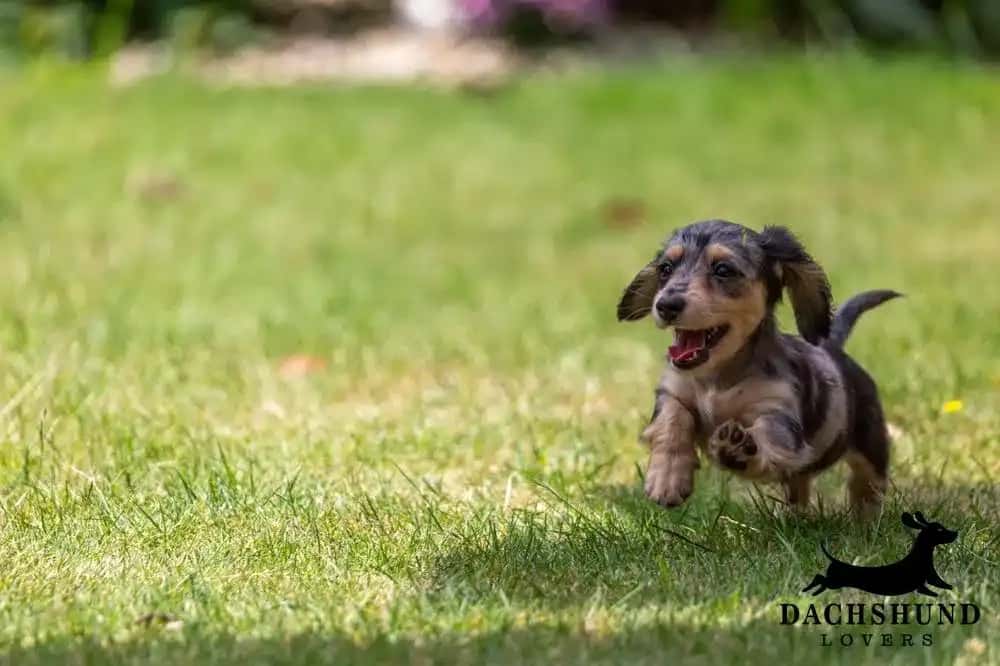
Dachshund puppies are a lesson in perpetual motion. From the moment they wake up, it’s a cycle of chasing, chewing, digging, and demanding attention. This isn’t misbehaviour — it’s biology.
In their first 18 months, their brains and bodies are developing rapidly. Like most working breeds, they have energy reserves designed for problem-solving, exploration, and constant engagement. This is why a “short” walk rarely takes the edge off — they’re built to go again and again.
Harvey’s early months felt like living with a furry pinball machine. One moment he’d be launching himself across the lounge, the next tunnelling under a blanket like it was a badger hole. At Wanda Beach, he could sprint back and forth for a full hour and still look at me like, “What’s next?”
The reality is that high-energy puppy behaviour is completely normal. Their stubborn curiosity, which we explore more in Why Are Dachshunds So Stubborn, is amplified in these years by sheer physical energy. Without an outlet, that energy can spill into behaviours like excessive barking, digging, or chewing — all of which are easier to manage if addressed early.
Puppyhood is the time to establish patterns. Structured exercise, short training sessions, and mental enrichment games create a foundation for calmer behaviour later on. Without them, you risk raising a dachshund who thinks constant chaos is the norm.
The Shift – Signs They’re Starting to Settle
Somewhere between 18 months and three years, most dachshunds begin to show signs of slowing down. It doesn’t happen overnight — it’s more like the volume dial being turned down a notch at a time.
You might notice they take longer naps during the day, spend more time observing before jumping into play, or show less urgency in reacting to every sound. Harvey’s turning point came around his second birthday. One afternoon at Gunnamatta Park, instead of charging straight into the shallows like he always did, he sat beside me on the grass for a full five minutes, just watching the water. It wasn’t that he’d lost interest — he’d simply learned there was no rush.
This shift is partly physical. As their bodies mature, they can pace themselves better. But it’s also behavioural. By now, they’ve had time to learn household routines, understand which activities lead to rewards, and recognise when rest is an option.
The change can be subtle at first. They may still have bursts of puppy-level energy, but recovery comes faster. Training, especially if you’ve worked on impulse control, makes a huge difference here. Commands like “wait” or “settle” become more reliable because they’ve been reinforced over time, not because the dachshund’s personality has completely transformed.
It’s worth remembering that some individuals will always lean more energetic. A naturally high-drive dachshund might need more management than one with a laid-back temperament, even in adulthood — something we also touch on in Dachshund Personality.
Factors That Influence When (or If) They Calm Down
Not every dachshund follows the same timeline. While many will mellow between two and three years old, others keep their spark well into middle age. The difference often comes down to a mix of genetics, environment, health, and training.
Genetics
Some dachshunds are simply wired to be more active. Breeding lines focused on hunting or field work tend to produce higher-energy dogs. If your dachshund comes from a line that was regularly used for scent tracking or agility sports, expect a longer runway before they slow down.
Environment
A busy household with children, other pets, and constant movement can keep a dachshund’s energy higher for longer. In quieter homes, they may adapt to a calmer lifestyle sooner. Harvey is proof of this — on quiet weekdays at home, he’s content to nap in a sunbeam, but when Caitlin’s nieces visit, his energy level triples.
Training and stimulation
Dogs with consistent training and structured enrichment tend to regulate their own energy better. This isn’t just about long walks — it’s about mental exercise too. Puzzle feeders, scent games, and short obedience drills all contribute to a calmer baseline. Without them, that extra energy often spills into behaviours like excessive dachshund barking or furniture digging.
Health
Underlying health issues can mask or mimic hyperactivity. Pain, anxiety, and even poor diet can keep a dachshund more restless than usual. A vet check-up can rule out anything physical if their behaviour suddenly shifts. The American Kennel Club’s dachshund care guide offers a solid overview of common breed health considerations.
Hormones
Neutering or spaying can reduce certain hormone-driven behaviours, such as roaming or mounting, but it won’t fundamentally change a dachshund’s energy level. Any calming effect is often indirect, coming from reduced distractions rather than a personality shift.
How to Help Your Dachshund Reach Their Calmer Phase Sooner

You can’t change genetics, but you can influence how your dachshund develops self-control and adapts to a calmer lifestyle. The goal isn’t to “burn them out” with endless activity — it’s to create a balance between stimulation and rest.
- Make exercise intentional
A dachshund doesn’t just need physical activity — they need purposeful activity. A brisk walk at Shelly Beach with moments to sniff and explore is more valuable than a high-speed chase that ends in exhaustion. Short bursts of scent games or recall practice mid-walk can work their body and mind at the same time. - Prioritise mental enrichment
Mental fatigue often leads to quicker settling than physical fatigue alone. Interactive toys, puzzle feeders, and hide-and-seek games are excellent ways to channel energy into problem-solving. As we touch on in Why Are Dachshunds So Stubborn, working with their independent thinking rather than against it makes these activities more effective. - Build a predictable routine
Consistency helps regulate a dachshund’s energy. Feeding, walking, and play times that follow a pattern make it easier for them to anticipate when it’s time to be active and when it’s time to rest. The RSPCA’s guide to dog training emphasises routine as a key tool for behaviour management. - Teach impulse control early
Commands like “wait,” “leave it,” and “settle” are invaluable for transitioning from high-energy to calm states. Start with very short durations and build gradually. Reinforce calm behaviour just as much as active play — especially during the first two years. - Manage overstimulation
Sometimes, it’s not that they have too much energy — it’s that they can’t switch off. If your dachshund gets wound up by visitors, loud noises, or too much play, give them a safe, quiet space to decompress. A crate, a designated bed, or even a calm walk can reset their energy levels. - Encourage rest as a skill
Calm behaviour doesn’t just happen — it’s learned. Reward moments of self-settling, whether they’ve curled up on the couch or taken themselves to bed. Over time, they begin to associate resting with positive outcomes.
How to Help Your Dachshund Reach Their Calmer Phase Sooner
You can’t change genetics, but you can influence how your dachshund develops self-control and adapts to a calmer lifestyle. The goal isn’t to “burn them out” with endless activity — it’s to create a balance between stimulation and rest so they learn when to switch off.
Harvey was never going to be a couch-only dog, but by shaping his days, we helped him move from constant motion to a more balanced rhythm by the time he was three. Here’s how we did it — and how you can apply the same principles.
1. Make exercise intentional
A dachshund doesn’t just need physical activity — they need purposeful activity. That means exercise that taps into their instincts and satisfies their curiosity. A brisk walk at Shelly Beach with time to sniff and explore is more valuable than a repetitive high-speed chase. Sniffing burns mental energy, making them more likely to settle afterwards. Throw in a few recall drills mid-walk, and you’re working obedience alongside stamina.
2. Prioritise mental enrichment
Mental fatigue often leads to quicker settling than physical fatigue alone. Interactive toys, puzzle feeders, and hide-and-seek games turn their problem-solving drive into an asset. As we cover in Why Are Dachshunds So Stubborn, working with their independent nature instead of against it makes training more effective.
3. Build a predictable routine
Consistency helps regulate a dachshund’s energy. Predictable feeding, walking, and play times make it easier for them to anticipate active periods and rest periods. The RSPCA’s guide to dog training highlights routine as one of the simplest behaviour-management tools.
4. Teach impulse control early
Commands like “wait,” “leave it,” and “settle” teach your dachshund how to transition from high energy to calm on cue. Start with seconds, then work up to minutes. Reinforce calm behaviour just as much as active play. These skills are easiest to teach in the first two years, but they can be learned at any age.
5. Manage overstimulation
Overstimulation isn’t the same as excess energy — it’s the inability to switch off after excitement. If your dachshund spins up during visitors, noisy events, or long play sessions, create a safe, quiet space where they can decompress. This could be a crate with a blanket, a quiet room, or a walk away from the action.
6. Encourage rest as a skill
Calm behaviour doesn’t just happen. You need to notice and reward it. If your dachshund curls up on their bed instead of pacing or barking, mark that behaviour with praise or a small treat. Over time, they’ll associate resting with positive outcomes.
Recommended Daily Structure for Calming Energy
Time of Day | Activity | Purpose | Example |
|---|---|---|---|
Morning | 20–30 min walk with sniffing breaks | Burn initial energy, satisfy scent drive | alk around Shelly Beach with recall games |
Midday | 10 min training or puzzle game | Mental stimulation | “Find it” scent game indoors |
Afternoon | Short play session | Physical outlet | Tug or fetch in the yard |
Evening | Gentle enrichment or cuddling | Wind-down before rest | Chew toy on bed, quiet brushing |
Night | Rest in a safe space | Encourage downtime | Crate or bed in quiet room |
The big picture
Helping a dachshund calm down isn’t about exhausting them — it’s about teaching self-regulation. The right mix of mental and physical engagement, predictable routines, and downtime creates a rhythm they can carry into adulthood. Over time, this structure turns “constant motion” into a balanced, adaptable companion.
When Calming Down Doesn’t Happen — Managing a Lifelong Livewire
Some dachshunds never really slow down. Even at eight or nine years old, they still wake up ready to take on the world. This isn’t necessarily a bad thing — high energy can mean excellent physical health and sharp cognitive function. But it does mean you need to adapt your approach.
Harvey has a friend, Milo, a short-haired dachshund from around Burraneer, who’s living proof of this. At seven years old, Milo still starts every day with the same enthusiasm he had as a puppy. His owners have learned that the secret isn’t “calming him down” — it’s channeling that energy so it works for everyone.
Keep the routine, but adjust the outlets
Older high-energy dachshunds may have less stamina for all-day activity, but they still need structured outlets. Swap longer, high-impact sessions for more frequent, moderate ones. Shorter walks with multiple sniffing opportunities can satisfy their curiosity without wearing them out physically.
Maintain mental challenges
Just because a dachshund is older doesn’t mean they stop needing mental stimulation. In fact, the American Kennel Club notes that puzzle-solving and training games are excellent for keeping older dogs engaged and slowing cognitive decline. This can be as simple as introducing new tricks, playing hide-and-seek with treats, or rotating toys to keep things fresh.
Excessive restlessness in older dogs can sometimes be linked to discomfort, anxiety, or medical issues. Pain from joint problems, for example, can make them more irritable and harder to settle. If your dachshund’s energy feels frantic rather than joyful, a vet check is essential.
Use energy to strengthen bonds
For some lifelong livewires, energy is their way of interacting with the world — and with you. Turn this into an advantage by making that energy part of your connection. Fetch in the backyard, gentle tug games, or structured training walks can keep them happy and strengthen your relationship.
Know when to pivot to calm
Even the most energetic dachshunds benefit from learning how to switch off. Use cues like “settle” or “bed” after high-energy play, and reward them for making the transition. If separation stress fuels their restlessness, strategies from Dachshund Separation Anxiety can help create more balanced downtime.
Managing a lifelong livewire is about accepting who they are while steering their energy toward positive, manageable outlets. The right balance of activity, enrichment, and rest doesn’t just make life easier for you — it makes it better for them, too.
FAQs
More from This Series
- Why Are Dachshunds So Stubborn
- Dachshund Separation Anxiety
- Dachshund Personality
- Dachshund Barking
- Are Dachshunds Aggressive
- Dachshund Dog Park Socialization
- Do Dachshunds Get Along with Other Dogs
- Are Dachshunds Good with Kids
- Do Dachshunds Like to Cuddle
- Dachshund Digging
- Dachshund Sleeping
- Are Dachshunds Good with Cats
- Why Do Dachshunds Shake
Authored by
James
James is the founder of Dachshund Lovers and the proud human of Harvey, a mini dapple with a big personality. He writes to empower and connect the dachshund community, blending founder insights with honest, experience-based stories about life with this incredible and special breed. James brings candid, experience-backed opinions to the community and always focused on fewer, better products and ideas that genuinely improve life for dachshunds and their people.
Read moreJames is the founder of Dachshund Lovers and the proud human of Harvey, a mini dapple with a big personality. He writes to empower and connect the dachshund community, blending founder insights with honest, experience-based stories about life with this incredible and special breed. James brings candid, experience-backed opinions to the community and always focused on fewer, better products and ideas that genuinely improve life for dachshunds and their people.
Read moreDisclaimer
This content is for informational purposes only and should not be considered veterinary advice. Always consult with a licensed veterinarian regarding your dog’s health and wellbeing.
There are no comments yet
Leave a comment