Flying with a Dachshund
Flying with a Dachshund
Travelling with a doxie is a journey in itself. I share my go-to gear, airline links, and real-life hacks that saved us mid-flight.
James
Posted on November 5, 2025.
Updated on July 12, 2026.
Table of Contents
- 1.Key Takeaways on Flying With A Dachshund
- 2.Airline Rules & Carrier Requirements for Dachshunds
- •Why Carrier Requirements Matter
- 3.Comparison of Airline Pet Policies
- •Cabin vs Cargo
- •Costs & Fees
- •Owner Insight
- 4.Pre-Flight Preparation & Day-of-Travel Tips
- •Weeks Before the Flight
- •A Few Days Before the Flight
- •On Travel Day
- 5.Step-by-Step Pre-Flight Checklist
- 6.In-Flight Experience & Post-Flight Care
- •In-Flight Comfort Strategies
- 7.Comfort Strategies Table
- •Dealing with Anxiety in the Air
- •After Landing
- •Owner Insight
- 8.Flying with Dachshunds Across Life Stages
- -More from This Series
- -Disclaimer
Share

I’ll be honest, the idea of flying with Harvey gave me more anxiety than booking the flights themselves. He’s fine in the car, loves road trips to places like Mudgee, Newcastle, and the Southern Highlands, but the thought of putting him on a plane? That felt like another level of planning altogether. The first time I started researching, I realised just how many rules, carrier requirements, and airline policies there were to navigate.
According to the American Kennel Club, most small dogs can travel in-cabin on domestic flights if they meet the airline’s size and weight restrictions. That sounds simple enough, but for dachshunds, there are extra considerations: their long backs, their tendency toward anxiety, and their absolute dislike of being separated from their humans. The good news is, with preparation, dachshunds can fly comfortably and safely but it requires planning well before travel day.
This guide will walk you through everything I’ve learned about preparing a dachshund for air travel, from understanding airline policies to carrier choices, pre-flight prep, and in-flight comfort.
Key Takeaways on Flying With A Dachshund
Question | Quick Answer | Why It Matters for Dachshunds |
|---|---|---|
Can dachshunds fly in-cabin? | Yes, on many airlines if under weight limits | Their size makes them eligible, but carriers must fit under seats |
Are dachshunds allowed in cargo? | Sometimes, but not recommended | Risky for anxious breeds prone to back injuries |
What’s the best carrier for flights? | Airline-approved soft-sided carrier with reinforced base | Protects spine and fits under seat |
Do dachshunds need sedation to fly? | No, vets usually discourage it | Sedation can affect breathing at altitude |
How do I prepare my dachshund for a flight? | Carrier training, familiar bedding, light meals before travel | Reduces anxiety and motion sickness |
Which airlines are dachshund-friendly? | Qantas, Virgin Australia, some US/EU carriers | Policies vary — always confirm before booking |
Airline Rules & Carrier Requirements for Dachshunds
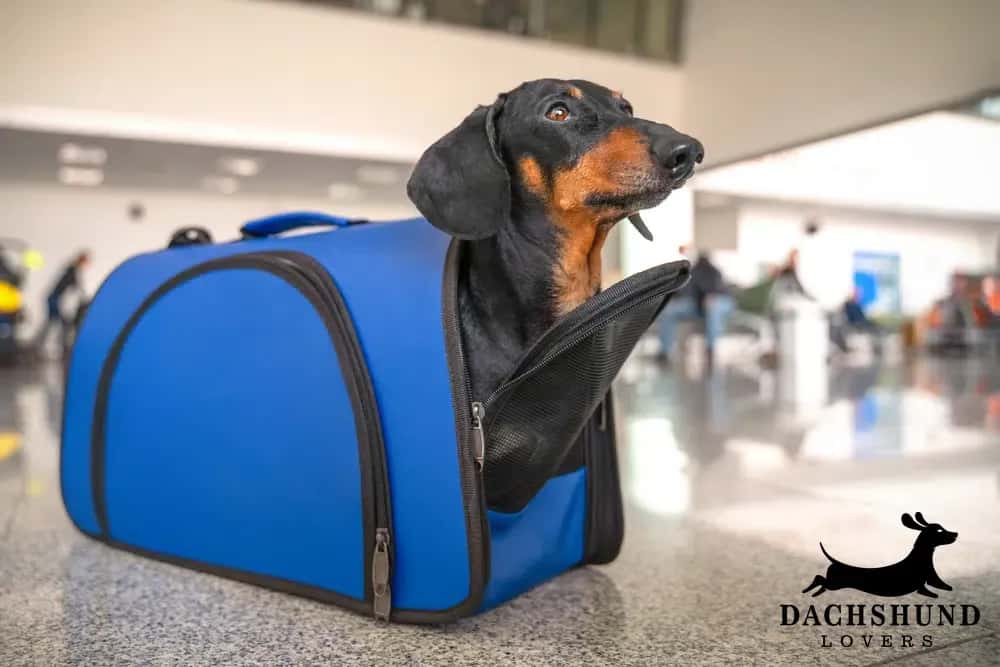
Flying with a dachshund isn’t as simple as showing up at the airport with a carrier. Each airline has its own policies on pets, covering everything from weight limits to carrier dimensions, and they can vary widely depending on where you’re flying. For dachshunds, whose long backs make sizing tricky, checking these details early is the difference between a smooth trip and a stressful one.
When I first looked into flying with Harvey, I quickly realised how much fine print there was. Some airlines allowed small dogs in-cabin, but only if the carrier fit under the seat in front of you. Others required pets to travel as checked baggage or cargo. In Australia, Qantas and Virgin Australia have stricter limits than many US airlines, while in the US, carriers like Delta and United offer clearer in-cabin options.
The good news? Dachshunds, being small enough to fit under the seat, are often eligible for in-cabin travel on many airlines — provided their carrier meets the requirements.
Why Carrier Requirements Matter
A dachshund’s comfort on a flight depends largely on the carrier. Most airlines specify dimensions that fit under-seat storage, usually around 45cm x 30cm x 20cm. The challenge is that dachshunds often need a bit more length than other small breeds. That’s where a soft-sided, airline-approved carrier (see Dachshund Travel Carrier Guide) helps — its flexible design can fit under the seat while still giving your dachshund room to stretch.
Carriers also need:
- Ventilation panels on multiple sides.
- Secure zippers (no flimsy closures).
- Waterproof or lined base (accidents happen).
- Ability to fully close while still letting the dog see and breathe.
Comparison of Airline Pet Policies
Airline | In-Cabin Pet Policy | Carrier Size Limit | Notes for Dachshunds |
|---|---|---|---|
Pets cannot travel in-cabin. Must fly as checked baggage or cargo. | N/A | Dachshunds must travel in cargo; higher stress risk. | |
Pets travel as checked baggage or cargo only. | N/A | No in-cabin option — plan carefully for longer flights. | |
Small pets allowed in-cabin for domestic flights. | ~45 x 30 x 20 cm | Dachshunds usually fit in soft-sided carriers; fees apply. | |
In-cabin pets allowed, must remain under seat. | ~45 x 30 x 25 cm | Good option for dachshunds, but confirm weight limits. | |
Small pets allowed in-cabin for domestic flights | ~48 x 30 x 20 cm | Slightly more flexible with dimensions; one pet per passenger. | |
Pets under 8kg (incl. carrier) allowed in-cabin. | ~55 x 40 x 23 cm | Generous dimensions; dachshunds often eligible. | |
Does not allow pets in-cabin. | N/A | Cargo-only option; less dachshund-friendly. |
Note: Always check the airline’s official website before booking, as policies can change.
Cabin vs Cargo
Most dachshund owners prefer in-cabin travel where possible. Being in the same cabin reduces anxiety for a breed prone to separation stress. Cargo or checked baggage travel is riskier, especially for dachshunds with back problems or anxiety. If cargo is unavoidable (as with Qantas and Virgin), it’s worth considering whether air travel is the right option, or whether a road trip might be more humane (see Dachshund Road Trip Guide).
Costs & Fees
Airlines also charge pet fees for in-cabin travel. These usually range from USD $100–$200 per flight segment in the US and Europe. In Australia, because pets must go cargo, fees are higher and depend on weight, carrier size, and destination.
Owner Insight
For Harvey, I haven’t booked a flight yet because of the Australian rules. The fact that Qantas and Virgin Australia don’t allow in-cabin travel makes me hesitant, cargo just feels too stressful for him. If we lived in the US or Europe, I’d be far more confident booking in-cabin with an airline like Lufthansa, where the policies are dachshund-friendly. For now, our adventures stay on the road, but I know the carrier training we’ve done will make flying easier when we finally take that step.
Pre-Flight Preparation & Day-of-Travel Tips
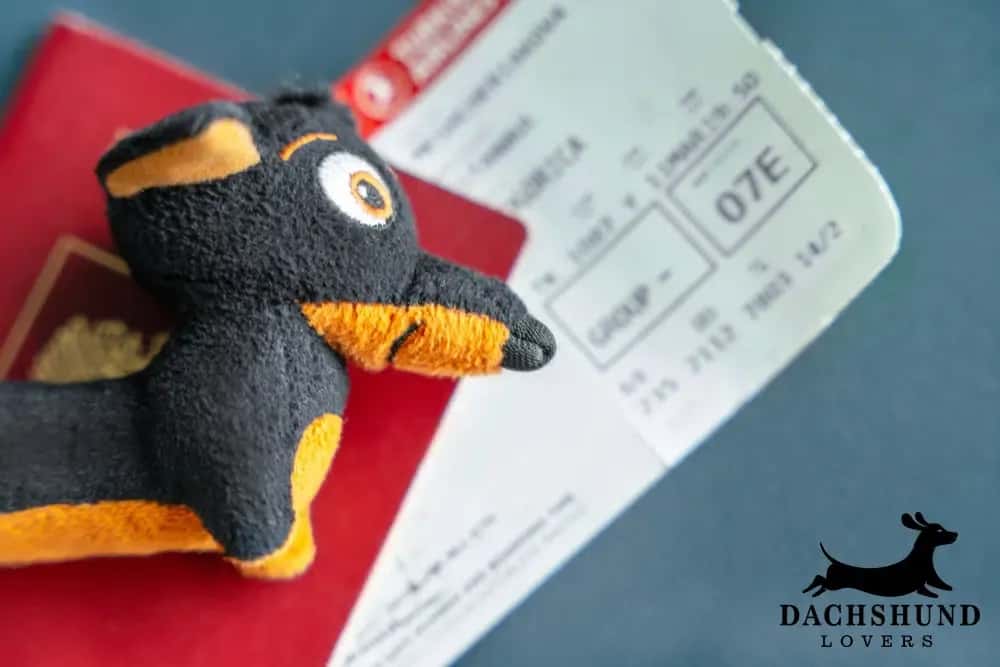
Flying with a dachshund takes more than showing up at the airport with a carrier. Because dachshunds are prone to anxiety and spinal issues, preparation is everything. From weeks before departure to the moment you step into the terminal, each step helps reduce stress for both you and your doxie.
When we first considered flying with Harvey, I quickly realised the real work isn’t on the day of the flight it’s in the training, the packing, and the routines you set in place long before.
Weeks Before the Flight
- Check Airline Pet Policies
Every airline has different requirements. For example, Qantas and Virgin Australia do not allow in-cabin travel, meaning dachshunds must travel in cargo. By contrast, Delta and United Airlines allow in-cabin travel if the carrier fits under the seat. Confirming this early will shape your entire plan.
- Book Direct Flights
The fewer stopovers, the less stressful for your dachshund. For nervous breeds like dachshunds, one smooth flight is always better than two shorter ones.
- Carrier Training
Introduce the airline-approved carrier well in advance. Leave it open at home with treats and bedding inside. Let your dachshund build a positive association so the carrier feels like a safe den.
- Vet Check-Up
Schedule a vet visit at least two weeks before flying. Your vet can confirm your dachshund is fit to travel, provide necessary vaccination certificates, and discuss motion sickness or calming aids if needed.
A Few Days Before the Flight
- Pack Familiar Items – Bring your dachshund’s blanket, favourite toy, and some kibble. Familiar smells help ease stress.
- Confirm Requirements – Double-check carrier size rules with your airline. For instance, American Airlines lists specific under-seat carrier dimensions. Lufthansa allows slightly larger carriers (up to 55cm long), which can be helpful for dachshunds.
- Prepare Food & Water – Feed lightly the day before. Avoid heavy meals right before flying as dachshunds are prone to nausea.
On Travel Day
- Exercise Before Leaving
A short walk or play session helps burn off energy, making it easier for your dachshund to settle during the flight.
- Limit Pre-Flight Feeding
Give only a light meal 3–4 hours before departure. This reduces the risk of motion sickness or accidents in the carrier.
- Arrive Early
Arriving at the airport with plenty of time allows you to check in calmly without rushing — dachshunds pick up on stress quickly.
- Security Screening
At most airports, you’ll be asked to remove your dachshund from the carrier while the carrier goes through the scanner. Keep a harness and leash on to prevent escapes. - Boarding & Settling
Place the carrier under the seat in front of you. Talk softly to your dachshund to reassure them but avoid opening the carrier mid-flight (airlines like Delta and United require pets to remain inside at all times).
Step-by-Step Pre-Flight Checklist
Stage | What to Do | Why It Matters for Dachshunds |
|---|---|---|
4+ Weeks Before | Rules vary — dachshunds need carriers that fit strict dimensions | |
2–3 Weeks Before | Carrier training at home | Builds positive association, reduces anxiety |
2 Weeks Before | Vet check & vaccination papers | Airlines may request proof of health |
3–4 Days Before | Pack food, bedding, documents | Familiar smells reduce stress; paperwork avoids delays |
Day Before | Reduce heavy feeding, prep travel snacks | Prevents nausea during flight |
Day Of | Walk, hydrate lightly, arrive early | Keeps dachshund calm, avoids rushing |
In-Flight Experience & Post-Flight Care
Even with all the preparation in the world, the flight itself can feel daunting for dachshund owners. These little dogs are sensitive, alert, and deeply bonded to their families — which makes being confined in a carrier under an airline seat a real challenge. The good news is, with the right setup and mindset, your dachshund can travel safely and comfortably. The key is anticipating their needs in the cabin and then caring for them properly once you land.
In-Flight Comfort Strategies
Once you’re seated, your dachshund must remain in the carrier for the duration of the flight (per policies like Delta, American Airlines, and Lufthansa). That doesn’t mean they have to be miserable.
Here’s what helps:
- Familiar bedding: Line the carrier with a blanket or mat that smells like home. Harvey always settles faster with a fleece he uses at night.
- Comfort items: A chew toy or dental stick keeps them occupied. Avoid anything too messy or noisy.
- Temperature regulation: Planes can be cold; a light fleece inside helps. In hotter climates, a cooling mat is better.
- Reassurance: Your calm presence is crucial. Speaking softly or resting a hand near the carrier reassures them without breaking airline rules.
- Hydration breaks: Offer ice cubes or small sips of water if the flight is long. Don’t overdo it, as bathroom breaks aren’t possible mid-flight.
Comfort Strategies Table
Strategy | Why It Matters | Dachshund-Specific Note |
|---|---|---|
Familiar Bedding | Reduces anxiety through scent | Helps dachshunds feel “at home” in new environments |
Familiar Bedding | Reduces anxiety through scent | Helps dachshunds feel “at home” in new environments |
Chew/Toy | Provides distraction and relief from stress | Avoid squeakers to keep flight peaceful |
Temperature Control | Prevents overheating or chills | Dachshunds are prone to both heat stress and cold |
Owner Reassurance | Keeps anxiety down | Sensitive to owner mood; stay calm |
Hydration (light) | Prevents dehydration | Offer ice cubes, not full bowls |
Dealing with Anxiety in the Air
Dachshunds prone to barking or whining may need extra help. Some vets recommend calming sprays or pheromone wipes inside the carrier. Sedation is not advised (per American Veterinary Medical Association), as it can affect breathing at altitude. If your dachshund is severely anxious, talk to your vet about safe calming supplements.
After Landing
The moment you touch down, your dachshund will be eager to stretch, toilet, and reset. Post-flight care is just as important as the flight itself:
- Bathroom Break First
Head straight to the designated pet relief area. Dachshunds have small bladders and holding it in for hours can be uncomfortable. - Gentle Stretching
Let them walk at their own pace. Avoid stairs, escalators, or jumping on arrival to protect their back. - Hydration & Light Feeding
Offer water and a small meal. Don’t feed heavily until you’re at your destination — their stomach may still be unsettled. - Calm Transition
Give them time to settle. In our road trips to Mudgee and Newcastle, Harvey always needed a half-hour of sniffing around the garden or cottage before relaxing indoors. Expect the same post-flight. - Check for Stress Symptoms
Watch for excessive panting, drooling, or lethargy. If anything feels off, consult a local vet.
Post-Flight Recovery Timeline
- First Hour – Bathroom, water, short walk.
- First Day – Stick to routine feeding and naps. Keep exercise light.
- First Night – Provide familiar bedding for sleep; avoid overexcitement.
Owner Insight
While Harvey hasn’t flown yet due to Australian in-cabin restrictions, our long road trips gave me a preview of what post-travel dachshunds need: patience and familiarity. After hours in a confined space, they don’t want stimulation — they want water, fresh air, and something that smells like home. That’s the golden rule for both road and air travel.
Perfect — let’s close Flying with a Dachshund with Life Stage Travel Needs, FAQs, and the More from This Series block, so it aligns with the rest of your Travel cluster.
Flying with Dachshunds Across Life Stages
Life Stage | What to Expect | Risks | Travel Tips |
|---|---|---|---|
Puppy (0–12 months) | Puppy (0–12 months) | Puppy (0–12 months) | Puppy (0–12 months) |
Adult (1–7 years) | Prime stage for air travel; adaptable with preparation | Anxiety from routine disruption | Use airline-approved carriers, book direct flights, bring comfort items |
Senior (8+ years) | More sensitive to long journeys | Arthritis, breathing changes, stress | Vet check is essential; focus on comfort padding, hydration, shorter flights when possible |
If Harvey ever takes his first flight, it will be as an adult — when he’s confident in his carrier and less likely to panic. For seniors, I’d think twice before booking unless it was absolutely necessary. With dachshunds, life stage planning makes all the difference between a smooth trip and a stressful one.
FAQs on Traveling with a Dachshund
More from This Series
Explore more guides in our Dachshund Travel Series:
- Traveling with a Dachshund
- Dachshund Travel Carrier Guide
- Flying with a Dachshund
- Dachshund Road Trip Guide
- Dachshund Travel Packing List
Authored by
James
James is the founder of Dachshund Lovers and the proud human of Harvey, a mini dapple with a big personality. He writes to empower and connect the dachshund community, blending founder insights with honest, experience-based stories about life with this incredible and special breed. James brings candid, experience-backed opinions to the community and always focused on fewer, better products and ideas that genuinely improve life for dachshunds and their people.
Read moreJames is the founder of Dachshund Lovers and the proud human of Harvey, a mini dapple with a big personality. He writes to empower and connect the dachshund community, blending founder insights with honest, experience-based stories about life with this incredible and special breed. James brings candid, experience-backed opinions to the community and always focused on fewer, better products and ideas that genuinely improve life for dachshunds and their people.
Read moreDisclaimer
This content is for informational purposes only and should not be considered veterinary advice. Always consult with a licensed veterinarian regarding your dog’s health and wellbeing.
There are no comments yet
Leave a comment