Dachshund Feeding Guide: How Much & How Often?
Dachshund Feeding Guide: How Much & How Often?
Not sure how much your dachshund should eat? This feeding guide includes daily portions, life-stage advice, and signs to watch for over- or underfeeding.
James
Posted on September 13, 2025.
Updated on July 12, 2026.
Table of Contents
- 1.Miniature Dachshund Feeding Guide: Quick Reference
- 2.Glossary: Key Terms for Miniature Dachshund Owners
- 3.Why Proper Feeding Matters for Miniature Dachshunds
- 4.Key Takeaways on Dachshund Feeding Guide
- 5.Unique Dietary Needs of Miniature Dachshunds
- 6.Dachshund Feeding Guide: How Much & How Often?
- 7.How Much Should You Feed a Dachshund?
- •Factors Affecting Portion Size
- •Sample Feeding Chart
- •Tips for Measuring Portions
- 8.Dachshund Meal Schedule: What’s Ideal?
- •Meal Frequency by Age
- 9.Choosing the Best Food for Your Dachshund
- •Puppy Nutrition
- •Adult Nutrition
- •Senior Nutrition
- •Special Diets
- 10.Essential Nutrients for Optimal Health
- •Key Nutrients
- 11.Feeding Miniature vs Standard Dachshunds
- •Mini vs Standard: Quick Comparison
- •Mini-Specific Considerations:
- •Standard-Specific Considerations:
- 12.How to Adjust for Activity, Age & Health Conditions
- •Age-Based Adjustments
- •Adjusting for Activity Level
- •For Dachshunds with Health Conditions
- 13.Transitioning to a New Food
- 14.Treats, Snacks & Human Food: What Counts Toward Calories
- •Feeding Tips
- •Smart Treat Choices for Doxies
- 15.Foods to Avoid
- 16.Signs You’re Overfeeding or Underfeeding Your Dachshund
- •Body Condition Score (BCS)
- •Signs of Overfeeding
- •Signs of Underfeeding
- -More from This Series
- -Disclaimer
Share

Miniature Dachshund Feeding Guide: Quick Reference
Welcome to our Miniature Dachshund Feeding Guide, where you’ll learn exactly how much and how often to feed your mini doxie for optimal health. This guide is designed for miniature dachshund owners who want to ensure their dogs receive the right nutrition at every life stage. We cover portion sizes, meal schedules, food choices, treats, and tips for maintaining a healthy weight. Proper feeding is crucial for this breed because miniature dachshunds are prone to obesity, joint issues, and back problems due to their unique body structure.
Here’s a quick summary of the most important feeding recommendations for miniature dachshunds:
- Portion Sizes: Adjust based on your dog’s individual metabolism and activity level. Most miniature dachshunds need 200–300 kcal per day, split into two meals.
- Meal Frequency: Puppies should be fed 3–4 small meals per day; adults should transition to 2 meals per day by one year old.
- Food Type: Choose high-quality food with 20–24% protein and 8–12% fat. Avoid foods with corn, soy, or artificial colors.
- Treats: Treats should not exceed 10% of daily calories.
- Joint Support: Look for foods with Omega-3 fatty acids, glucosamine, and chondroitin to support joint health.
- Weight Management: Monitor your dog’s weight and adjust portions as needed. Specialized small-breed weight management formulas are recommended for dogs prone to weight gain.
- Transitioning Food: Make changes gradually over 7–10 days to avoid digestive upset.
- Hydration: Fresh water should be available at all times.
- Consistency: Stick to a regular feeding schedule to promote healthy digestion and habits.
Fact References:
- High-quality animal protein should be the first ingredient in dog food for miniature dachshunds, with protein content of 20–24% and fat content of 8–12%.
- Miniature Dachshunds benefit from a diet that is low in carbohydrates and high in protein.
- Miniature dachshunds should avoid foods with corn, soy, or artificial colors due to lack of nutritional value and potential for weight gain.
- Joint support foods for miniature dachshunds should include ingredients like Omega-3 fatty acids, glucosamine, and chondroitin.
- Dachshunds are particularly prone to Intervertebral Disc Disease (IVDD) due to their elongated spine, which can lead to pain and mobility issues.
- Dachshunds are prone to obesity, so it is crucial to monitor their food intake and adjust portions accordingly to maintain a healthy weight.
- For dogs prone to weight gain, specialized small-breed weight management formulas are recommended, such as Eukanuba Fit Body and Hill's Science Diet Small Paws.
- Puppies should be fed 3–4 smaller meals per day, while adults should transition to 2 meals per day by the time they are one year old.
- Transitioning food should be done gradually over 7–10 days to avoid diarrhea or vomiting.
- Adults should be fed twice daily to maintain stable energy and prevent overeating.
- Hydration is essential for Miniature Dachshunds, and fresh water should be available at all times.
- Treats for miniature dachshunds should not exceed 10% of their total daily calories.
- Portion sizes for Miniature Dachshunds should be adjusted based on their individual metabolism and activity levels.
- Miniature Dachshunds require a nutritious and balanced diet to support their health and longevity.
Glossary: Key Terms for Miniature Dachshund Owners
- Portion Size: The amount of food (by weight or volume) given to your dog at each meal. Portion sizes for Miniature Dachshunds should be adjusted based on their individual metabolism and activity levels.
- Calorie: A unit of energy. Dog food labels list calories per cup or can; knowing your dog’s daily calorie needs helps prevent overfeeding.
- Body Condition Score (BCS): A standardized tool veterinarians use to assess whether a dog is underweight, at a healthy weight, or overweight. Veterinarians use a standardized tool called the Body Condition Score to assess whether a dog is underweight, at a healthy weight, or overweight.
- IVDD (Intervertebral Disc Disease): A spinal condition common in dachshunds due to their elongated spine, which can lead to pain and mobility issues.
Why Proper Feeding Matters for Miniature Dachshunds
Miniature dachshunds require a nutritious and balanced diet to support their health and longevity. Their dietary needs change as they grow and age, and they are prone to obesity and joint issues due to their unique body structure. High-quality animal protein should be the first ingredient in their food, with a focus on low carbohydrates and healthy fats. Because of their elongated spine, they are particularly susceptible to Intervertebral Disc Disease (IVDD), making weight management and joint support essential.
Key Takeaways on Dachshund Feeding Guide
Topic | Summary |
|---|---|
Feeding Needs Are Breed-Specific | Dachshunds have unique calorie and portion needs due to their size, long backs, and tendency to gain weight. |
Portion Sizes Vary | Miniature dachshunds need ~200–300 kcal/day; standards may need ~400–600 kcal/day depending on activity. Knowing how much food to feed is crucial to avoid overfeeding or underfeeding. |
Consistent Schedule Helps | Most adult doxies thrive on two daily meals; puppies need three smaller meals spaced out. |
Watch the Extras | Treats and human food add up quickly and should count toward daily calories. |
Vet-Backed Advice Matters | Overfeeding small breeds increases risk of joint issues, obesity, and spinal problems (VCA Hospitals). |
Unique Dietary Needs of Miniature Dachshunds
Miniature dachshunds require a nutritious and balanced diet to support their health and longevity. Their dietary needs change as they grow and age, and they are prone to obesity and joint issues due to their unique body structure. High-quality animal protein (20–24%) and moderate fat (8–12%) should be prioritized, while carbohydrates should be kept low. Miniature dachshunds are particularly prone to Intervertebral Disc Disease (IVDD) due to their elongated spine, so maintaining a healthy weight and supporting joint health is essential.
Next, let’s explore how much you should feed your miniature dachshund and what factors affect their ideal portion size.
Dachshund Feeding Guide: How Much & How Often?
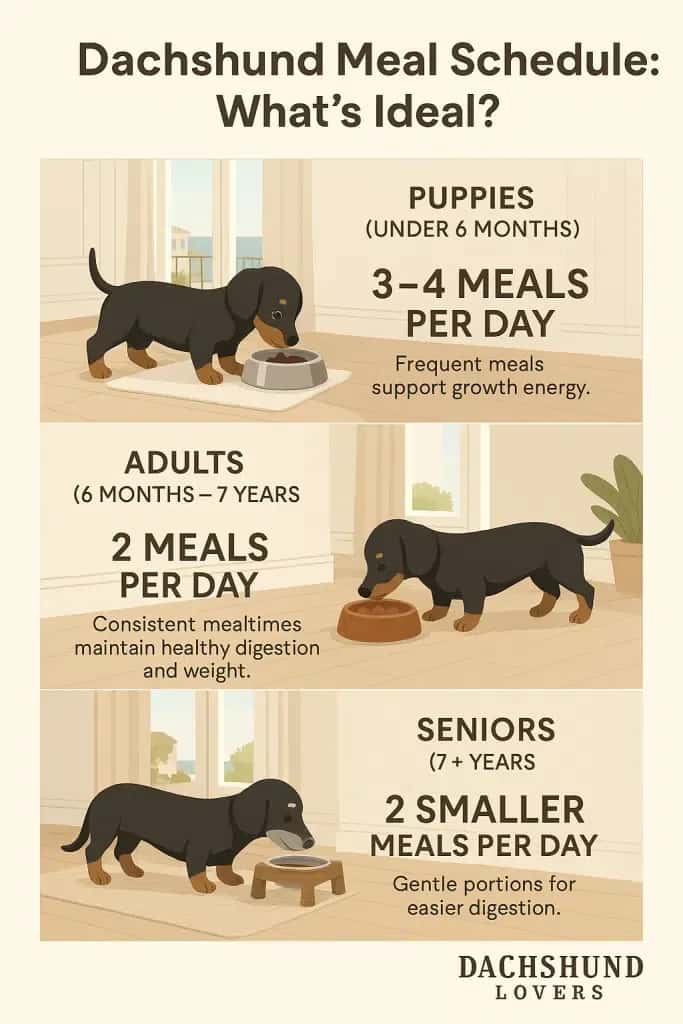
We learned the hard way that dachshunds don’t come with built-in portion control. When Harvey was a pup, we thought we were doing the right thing — topping his meals with a bit of chicken here, a scoop of rice there, and plenty of love in the form of treats. Within a few months, he’d developed a noticeable belly bulge and was less keen on his evening walk. That’s when our vet gave us the blunt truth: “He’s not big-boned — he’s just being overfed.”
Dachshunds may be small, but they’re famously food-driven. Combine that with their long bodies and fragile backs, and even a little excess weight can lead to serious issues — think slipped discs, joint strain, or chronic back pain.
According to the VCA Animal Hospitals, “Small breed dogs are especially prone to obesity, which significantly increases the risk of musculoskeletal problems, especially in breeds with long backs like dachshunds.” They go on to warn that overfeeding — even by as little as 10% — can contribute to long-term health problems.
That’s why understanding how much (and how often) to feed your doxie isn’t just a nice-to-know — it’s essential dachshund care.
This guide breaks down feeding amounts by age and size, explains the best schedule for meals, highlights portion differences between mini and standard doxies, and shows how activity level, health conditions, and even treats can impact how much your pup should be eating.
Whether you’re a first-time sausage dog parent or trying to fine-tune your long-time companion’s meal plan, this article is packed with vet-backed advice and real-world tips — including what we wish we’d known sooner.
How Much Should You Feed a Dachshund?
Factors Affecting Portion Size
Figuring out the right portion size for your dachshund isn’t always straightforward — especially when their appetite says “buffet,” but their back says “easy, tiger.” Knowing how much food to feed is crucial for their health and longevity.
The amount your dachshund needs depends on a mix of factors:
- Age
- Weight
- Miniature or standard size
- Activity level
- Calorie density of the food
A mini couch potato will have very different needs from a standard doxie that gets daily beach runs.
Sample Feeding Chart
Here’s a breakdown to help you calculate daily portions and determine how much food your dachshund should get:
Dachshund Type | Weight Range | Daily Calorie Range | Dry Food (Cup Estimate) |
|---|---|---|---|
Miniature Puppy | 2-5 kg | 200–300 kcal | ½ – 1 cup |
Standard Puppy | 5-10 kg | 300–500 kcal | 1 – 1.5 cups |
Miniature Adult | 4-6 kg | 180–300 kcal | ½ – 1 cup |
Standard Adult | 7-14 kg | 350–600 kcal | 1 – 2 cups |
Senior Doxie (All Sizes) | – | 20% less than adult needs | Adjust based on weight |
Note: These are ballpark figures based on average dry food (about 350–400 kcal per cup). Always check your dog food label and adjust by calorie, not just cup size.
A 2021 study in the Journal of Animal Physiology and Animal Nutrition found that small-breed dogs maintained optimal body condition when caloric intake was adjusted every 2–3 weeks based on visible weight and activity changes — a strategy that works well for dachshunds prone to fluctuations.
Tips for Measuring Portions
- If you’re feeding high-calorie or wet food, portions will look much smaller — which is where measuring cups or even digital kitchen scales can really help.
- Pre-portion meals into containers for convenience.
- For puppies, frequent meals throughout the day are essential for healthy development, steady energy, and proper digestion.
- Treats count! Snacks, chews, and table scraps all add up fast. If your pup’s getting a few treats a day, shave 10–15% off their meal portions to compensate — or opt for low-calorie training treats.
Now that you know how to calculate portions, let’s look at how to schedule meals for optimal health.
Dachshund Meal Schedule: What’s Ideal?
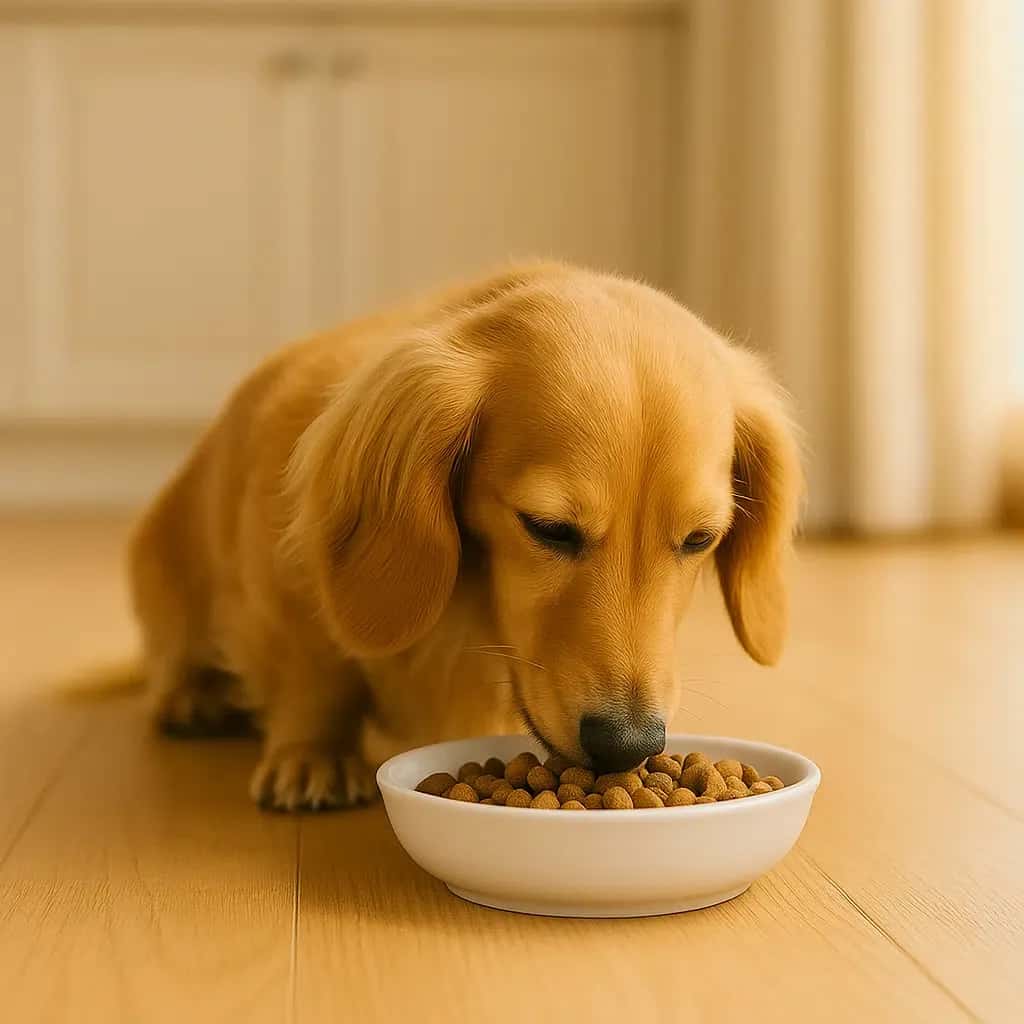
One of the easiest ways to support your dachshund’s digestion and behavior is to stick to a consistent feeding schedule. While portion size matters, timing and attention to daily meals can make just as big of a difference in supporting your dachshund's health.
Meal Frequency by Age
Age & Activity | Schedule | Notes |
|---|---|---|
Puppies (under 6 mo) | 7am, 12pm, 5pm | Small, evenly spaced meals help with energy and training. |
Adults (1–7 years) | 7am, 6pm | Helps regulate metabolism and avoids nighttime hunger. |
Seniors (7+ years) | 8am, 5pm | Keep consistent times but monitor for slowing digestion or decreased appetite. |
Consistency = less stress and better stools. Your dachshund’s long GI tract benefits from a predictable rhythm, making digestion smoother and reducing the chance of accidents or bloating. It's important that the entire household follows the same feeding routine to ensure your dachshund receives consistent care and avoids confusion or overfeeding.
Next, let’s explore how to choose the best food for your miniature dachshund’s unique needs.
Choosing the Best Food for Your Dachshund
Choosing the best food for your dachshund can feel overwhelming, especially with so many options lining the shelves — from dry food and wet food to the ever-popular raw diet. The right choice depends on your dog’s age, activity level, and any specific health concerns you need to address.
Puppy Nutrition
For dachshund puppies, a diet rich in high-quality protein and healthy fats is essential to support their rapid growth and energetic play.
Adult Nutrition
As your pup transitions to adult food, their nutritional requirements shift toward balanced nutrition that maintains a healthy weight and supports their unique long-and-low build.
Senior Nutrition
Seniors may need formulas that support joint health and are easy to digest.
Special Diets
If your dachshund has health concerns — such as allergies, sensitive digestion, or a tendency to gain weight — you may need to look for specialized dog food or consult your veterinarian for tailored advice.
Ultimately, the best food for your dachshund is one that fits their life stage, supports their health, and keeps them at an ideal weight. Don’t hesitate to ask your vet for recommendations, especially if you’re considering a raw diet or your dog has special dietary needs.
Up next, let’s break down the essential nutrients your miniature dachshund needs for optimal health.
Essential Nutrients for Optimal Health
A healthy dachshund starts with a well-rounded diet packed with essential nutrients. Whether you’re feeding high-quality dog food, exploring raw feeding, or mixing in some wet food, it’s important to cover all the nutritional bases.
Key Nutrients
- Protein: The building block for strong muscles and tissue repair. Look for high-quality animal protein as the first ingredient.
- Fats: Healthy fats, like those from fish oil or chicken, provide energy and help keep your dachshund’s coat glossy and skin supple.
- Carbohydrates: Whole grains, sweet potatoes, or fruits offer fiber for digestion and steady energy throughout the day. Keep carbs low for miniature dachshunds.
- Vitamins: Nutrients like vitamin D are vital for strong bones and a robust immune system.
- Minerals: Calcium and zinc support bone health and overall canine wellness.
If you’re considering a raw diet, make sure it’s carefully balanced to avoid deficiencies; raw feeding can be a great way to provide natural nutrients, but it requires planning to ensure your dog gets everything they need.
No matter which food you choose, focus on balanced nutrition to support your dachshund’s health, energy, and longevity.
Now, let’s compare feeding recommendations for miniature vs standard dachshunds.
Feeding Miniature vs Standard Dachshunds
While both sizes share that unmistakable doxie sass and shape, miniature and standard dachshunds have different metabolisms, caloric needs, and ideal portion sizes.
Mini vs Standard: Quick Comparison
Factor | Miniature Dachshunds | Standard Dachshunds |
|---|---|---|
Weight Range | 3.5–5 kg (7–11 lbs) | 7–15 kg (16–32 lbs) |
Daily Calories | ~200–300 kcal | ~400–600 kcal |
Portion Size | ¼ to ½ cup, split into 2 meals | ¾ to 1¼ cups, depending on activity level |
Kibble Size | Extra-small preferred | Small-medium works fine |
Mini-Specific Considerations:
- Lower calorie needs mean overfeeding happens fast
- Smaller mouths often benefit from extra-small kibble for easier chewing.
- Greater risk of hypoglycemia if meals are skipped.
- Proper nutrition is especially important for growing puppies.
- Transition your dachshund puppy off puppy food to adult food at the appropriate age.
Standard-Specific Considerations:
- Highly active miniature dachshunds require more protein and calorie-dense foods.
- Dental issues may still arise, so consider dental chews or tartar-friendly kibbles.
- Joint health support is especially important due to their weight-bearing size.
For more tailored food options, check out our detailed comparison in Best Dog Food for Miniature vs Standard Dachshunds.
Next, let’s see how to adjust your dachshund’s diet for age, activity, and health conditions.
How to Adjust for Activity, Age & Health Conditions
No two dachshunds are exactly alike — and their meal plans shouldn’t be either. Whether you have a sprightly puppy, a mellow couch potato, or a senior sausage dog with joint stiffness, your dachshund’s diet should match their current needs.
Age-Based Adjustments
Life Stage | Feeding Focus |
|---|---|
Puppy (0–12 months) | Growth, immune support, 3 meals/day. Needs high-calorie, DHA-rich food. |
Adult (1–7 years) | Maintenance. Prioritise protein, healthy fats, and balanced macros. |
Senior (8+ years) | Joint support, easy-to-digest food, and fewer calories. Watch for dental issues. |
Adjusting for Activity Level
- High-Energy Doxies: Consider performance blends or fresh food with quality protein.
- Low-Energy Doxies: Use low-calorie kibble and watch portions closely.
- Inconsistent Activity: Use a flexible measuring scoop and monitor their weight weekly.
For Dachshunds with Health Conditions
- Joint Issues: Consider foods with glucosamine and chondroitin.
- Allergies or Itchy Skin: Try limited-ingredient diets or novel proteins.
- Diabetes: Look for food with a low glycemic index and consistent carb levels — always vet-supervised.
We go deeper on targeted nutrition in our Top Supplements for Dachshunds article.
Now, let’s talk about transitioning your dachshund to a new food safely.
Transitioning to a New Food
Switching your dachshund to a new food? Take it slow to keep their tummy happy. Sudden changes can upset their digestion, especially if your pup has a sensitive stomach or food allergies.
- Start by mixing a small amount of the new food with their old food, gradually increasing the proportion of new food over 7–10 days.
- Monitor your dachshund’s appetite, stool quality, and overall health during the switch.
- If you notice any signs of discomfort, pause the transition and consult your veterinarian.
A slow, steady approach is the best way to ensure your dog adapts well to their new diet and continues to thrive.
Next, let’s cover treats, snacks, and how to keep those extra calories in check.
Treats, Snacks & Human Food: What Counts Toward Calories

It’s all too easy to underestimate the impact of treats — especially with dachshunds, who master the art of begging with just a head tilt and a sigh. But even a few extras a day can tip your pup into weight gain territory if you’re not careful.
The 10% Rule
Vets typically recommend that no more than 10% of your dachshund’s daily calories come from treats. So if your mini is eating 300 kcal/day, just 30 kcal should come from snacks.
Feeding Tips
- Stick to a consistent meal routine to help with digestion and prevent overeating.
- Choose treats and foods appropriate for miniature dachshunds’ size and dietary needs.
- Monitor your dog’s weight and adjust portions as needed.
- Introduce new foods gradually to avoid stomach upset.
- Consider adding a few raw meals per week or raw toppers for variety and improved nutrition.
Smart Treat Choices for Doxies
Treat Type | Safe for Dachshunds? | Notes |
|---|---|---|
Commercial training treats | ✅ Yes | Look for low-calorie, soft bites. We like Zuke’s Mini Naturals and Blue Bits. |
Freeze-dried meat treats | ✅ Yes | High in protein, great for motivation. Use sparingly — they’re rich! |
Raw veggies | ✅ Yes | Try carrot sticks, green beans, or cucumber for crunchy, low-cal snacks. |
Fruit (e.g. blueberries) | ✅ In moderation | Refer to our What Can Dachshunds Eat? article for a full fruit breakdown. |
Table scraps | 🚫 Not recommended | Highly palatable and nutritionally complete; can be used as a special treat or mixed with kibble to enhance flavor and texture. |
For more vet-approved options, check out our full Best Treats for Dachshunds guide.
Next up, let’s go over how to spot the signs you may be overfeeding (or underfeeding) your dachshund, and how to adjust their diet before it turns into a bigger issue.
Foods to Avoid
When it comes to your dachshund’s diet, some foods are best left off the menu entirely. Table scraps like chocolate, grapes, onions, and anything seasoned or fatty can be toxic or cause serious health problems for small dogs. High-fat foods — think fried treats or fatty meats — can trigger pancreatitis and contribute to excess weight, which is especially risky for dachshunds prone to intervertebral disc disease and joint issues.
Bones, especially cooked ones, are a no-go as they can splinter and cause internal injuries. Raw or undercooked meat, eggs, and fish may harbor harmful bacteria like Salmonella or E. coli, putting your dog’s health at risk.
Overfeeding is another common pitfall. Even healthy food can become a problem if your dachshund eats too much, leading to obesity, back problems, and a shorter, less active life. Stick to a balanced, portion-controlled feeding routine and avoid giving in to those pleading eyes at the dinner table.
Now, let’s learn how to recognize if your dachshund is being overfed or underfed.
Signs You’re Overfeeding or Underfeeding Your Dachshund
If there’s one thing dachshunds are exceptionally good at, it’s convincing you they’re still hungry. Harvey, for example, has perfected the post-meal stare that says, “Surely you forgot dessert?” But as adorable as it is, overfeeding is no joke — especially for a breed so prone to weight-related health issues.
Body Condition Score (BCS)
Veterinarians use a standardized tool called the Body Condition Score to assess whether a dog is underweight, at a healthy weight, or overweight. It’s a visual and tactile check based on a scale from 1 to 9. For dachshunds, a 4–5 out of 9 is the sweet spot.
Score | Condition | What You’ll Notice |
|---|---|---|
1-3 | Underweight | Ribs, spine, and pelvic bones are prominent. Muscle loss may be visible. |
4-5 | Ideal Weight | Ribs are easy to feel but not visible. Obvious waist and abdominal tuck. |
6-9 | Overweight/Obese | No waist definition. Ribs hard or impossible to feel. Sluggish movement or difficulty jumping. |
Try this: Stand over your dachshund and look down — do you see an hourglass waist or more of a sausage silhouette? Then gently run your hands along their ribcage. You should be able to feel the ribs easily without pressing hard.
Signs of Overfeeding
- Increased body fat or belly bloat
- Loose or greasy stools
- Lethargy or reduced playfulness
- Greasy coat or frequent ear infections
- Difficulty jumping up or walking long distances
- Rapid weight gain (more than 0.5–1 kg in a month)
Dachshunds are compact dogs with long spines. Even just 1 kg of extra weight can put significant pressure on their joints and spine, increasing the risk of back issues like IVDD.
Signs of Underfeeding
- Visible ribs or backbone
- Dry, brittle coat or flaky skin
- Low energy or weakness
- Scavenging for food or eating non-food objects
- Inability to maintain muscle mass
If you’re unsure, it’s always best to consult your vet — but for daily monitoring, weigh your dachshund every 2–3 weeks and take note of changes in appetite, energy, and stool quality.
For extra guidance, head over to our Dachshund Weight Loss Guide.
Frequently Asked Questions (FAQs)
More from This Series
Explore more helpful nutrition and feeding guides from Dachshund Lovers:
- What Can Dachshunds Eat? Safe & Unsafe Foods Explained
- Best Dog Food for Dachshunds in 2025
- Dachshund Feeding Guide: How Much & How Often?
- Top Supplements for Dachshunds: What’s Worth It?
- Hydration & Dachshunds: Why Water Intake Matters
- Homemade Dog Food for Dachshunds
- Dachshund Weight Loss: A Vet-Approved Guide
- Best Treats for Dachshunds
- Best Dog Food for Miniature Dachshunds vs Standard Dachshunds
- Raw vs Cooked Food for Dachshunds
Authored by
James
James is the founder of Dachshund Lovers and the proud human of Harvey, a mini dapple with a big personality. He writes to empower and connect the dachshund community, blending founder insights with honest, experience-based stories about life with this incredible and special breed. James brings candid, experience-backed opinions to the community and always focused on fewer, better products and ideas that genuinely improve life for dachshunds and their people.
Read moreJames is the founder of Dachshund Lovers and the proud human of Harvey, a mini dapple with a big personality. He writes to empower and connect the dachshund community, blending founder insights with honest, experience-based stories about life with this incredible and special breed. James brings candid, experience-backed opinions to the community and always focused on fewer, better products and ideas that genuinely improve life for dachshunds and their people.
Read more
Disclaimer
This content is for informational purposes only and should not be considered veterinary advice. Always consult with a licensed veterinarian regarding your dog’s health and wellbeing.
There are no comments yet
Leave a comment