Do Dachshunds Get Along With Other Dogs
Do Dachshunds Get Along With Other Dogs
From dog parks to family homes, here’s what I’ve seen firsthand when dachshunds meet other breeds and why early socialisation makes all the difference.
James
Posted on October 23, 2025.
Updated on July 12, 2026.
Table of Contents
- 1.Key Takeaways on Dachshunds and Other Dogs
- 2.Understanding Dachshund Temperament with Other Dogs
- 3.Signs Your Dachshund Will Get Along with Another Dog
- 4.How to Introduce Your Dachshund to a New Dog
- •Step-by-Step Introduction Guide
- 5.Managing Multi-Dog Household
- •1. Establish Clear Feeding Routines
- •2. Create Defined Rest Areas
- •3. Manage Play and Social Time
- •4. Keep Training Consistent
- •5. Seek Expert Support if Needed
- 6.Common Issues and How to Solve Them
- •1. Resource Guarding
- •2. Barking at Other Dogs
- •3. Over-Attachment to One Dog
- •4. Play Getting Too Rough
- •5. Avoidance or Nervousness Around Certain Dogs
- -More from This Series
- -Disclaimer
Share

When we first brought Harvey home, we pictured him running joyfully alongside other dogs, tail wagging, making friends wherever he went. The reality? Sometimes he’s the life of the party, sometimes he’s the quiet observer — and occasionally he’s the one hiding behind my legs when a particularly bouncy spaniel bounds over.
Harvey’s social side is clear: he’s usually great with other dogs, but there’s a noticeable difference when he sees the ones he knows well. Those familiar faces — the schnauzer from down the street, the border collie we meet on our morning walk — get an excited trot, a soft tail wag, and a playful bow. New dogs? He approaches with cautious curiosity, taking his time before deciding whether they’re worth a game of chase.
Living in the Sutherland Shire means we’re spoiled for dog-friendly spaces, from the grassy stretches of Don Lucas Reserve to the quieter corners of our local off-leash parks. These outings have taught us that a dachshund’s temperament with other dogs isn’t a simple yes-or-no answer — it’s shaped by personality, socialisation history, and even the other dog’s breed and energy level.
We’ve also seen first-hand that with the right introductions, even a cautious dachshund can learn to share their world happily. But it doesn’t happen by accident — it’s about knowing what makes them tick, managing first meetings carefully, and setting them up for success, whether you’re introducing them to a neighbour’s Labrador in Sydney, a terrier in a London park, or a golden retriever in a New York dog run.
Key Takeaways on Dachshunds and Other Dogs
Insight | Why It Matters | How to Apply It |
|---|---|---|
Familiar Faces First | Dachshunds often bond quickly with dogs they see regularly, building trust over time. | Arrange consistent meetups with calm, well-mannered dogs in your area. |
Personality Plays a Role | Temperament varies from confident extroverts to cautious introverts. | Observe your dachshund’s body language before pushing them into group settings. |
Early Socialisation is Key | Positive exposure to other dogs in puppyhood improves adult relationships. | Join puppy classes or structured socialisation programs in your local area. |
Controlled Introductions Work Best | Sudden or chaotic meetings can lead to stress or reactivity. | Use neutral territory, parallel walking, and leashes for first encounters. |
Energy Level Matching Prevents Clashes | Mismatched play styles can cause frustration or fear. | Pair dachshunds with similarly sized, energy-matched companions. |
Multi-Dog Homes Need Structure | Without clear rules, dachshunds may guard food, toys, or people. | Implement feeding routines, separate rest areas, and consistent training. |
Professional Guidance Helps | Expert trainers can guide safe introductions and solve conflicts. | In Sydney, tryThe Whole Hound or similar trusted local trainers. |
Understanding Dachshund Temperament with Other Dogs
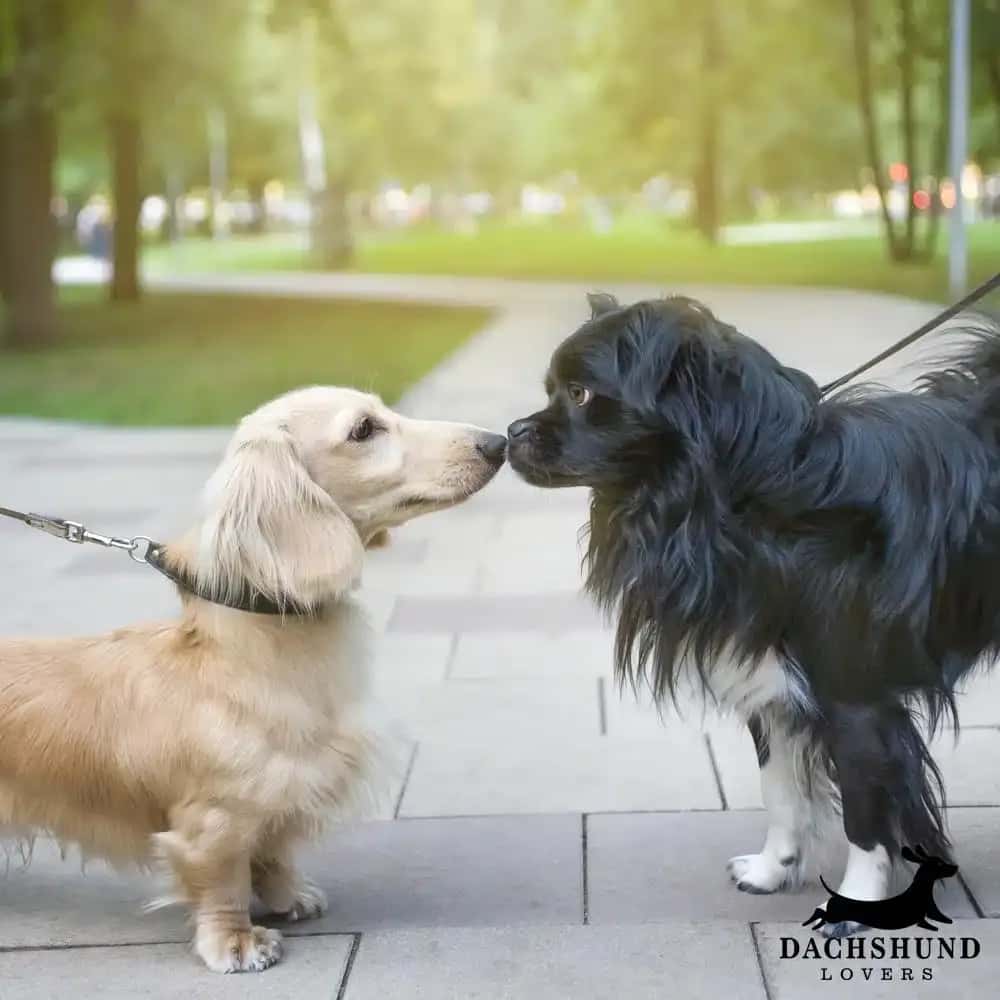
A dachshund’s relationship with other dogs is rarely black-and-white. Their personality sits somewhere on a sliding scale — from the confident social butterfly who thrives in a group to the selective friend-maker who sticks to a small, trusted circle. Harvey falls neatly into the second category. He’s usually great with other dogs, but his enthusiasm soars when it’s one he sees often — like the schnauzer we bump into on our early morning walks or the border collie at the park who always plays chase without getting too rough.
This pattern is common. Dachshunds are intelligent, observant, and often cautious with new dogs until they’ve had a chance to assess the situation. Once trust is established, many are incredibly loyal playmates. That loyalty is part of why dachshunds have such a strong bond with their people and their canine companions.
From a behavioural standpoint, dachshund temperament with other dogs is shaped by three main factors:
- Socialisation history — Dogs raised with positive exposure to other dogs from puppyhood tend to be more adaptable.
- Individual confidence — Some dachshunds are naturally more reserved, while others bound into play without hesitation.
- Environmental cues — The setting of the interaction (quiet park vs busy urban street) can influence how open they are.
In Sydney, busy off-leash areas like Centennial Parklands can be overwhelming for a dachshund who hasn’t been gradually introduced to a variety of dogs. The same applies to bustling UK city parks or popular US dog runs. For these environments, slow introductions and controlled exposure work best.
If you want your dachshund to get along with other dogs, the focus should be on building familiarity, matching energy levels, and providing safe spaces. For those in NSW, Emily from the whole hound — who specialises in multi-dog households — can make a world of difference. In the UK, The Dog Training College offers similar structured programs, while in the USA, the APDT (Association of Professional Dog Trainers) maintains a directory of qualified behaviourists.
Signs Your Dachshund Will Get Along with Another Dog
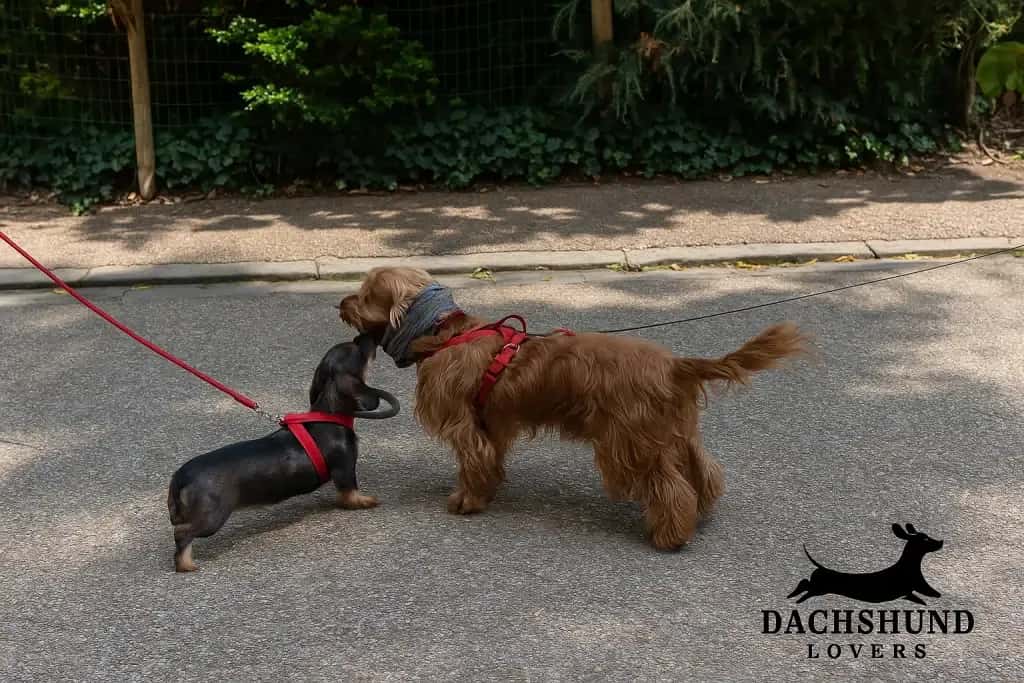
Every dachshund has their own way of telling you whether another dog is a potential friend or one to keep at paw’s length. With Harvey, the signs are crystal clear — his body softens, tail wags in a steady rhythm, and he’ll approach with that confident little trot when he’s met a dog he likes.
Here are some of the most common green flags that your dachshund might be ready for a positive interaction:
Sign | What It Means | Example in Action |
|---|---|---|
Relaxed Body Language | Soft eyes, loose tail wag, and an open stance show comfort. | Harvey spotted a familiar cavoodle at Don Lucas Reserve and approached calmly, tail wagging slowly. |
Play Bowing | A universal dog invitation to play, signalling friendliness. | After sniffing a new beagle at the park, Harvey dropped into a play bow before darting away playfully. |
Mirroring the Other Dog | Matching pace, sniffing where they sniff, and mimicking posture indicate curiosity without fear. | Walking alongside a dachshund-cross in Cronulla, Harvey matched his steps and kept checking in. |
Shared Interests | Enjoying the same game or activity can build instant bonds. | Harvey and his schnauzer friend will both happily chase a ball, taking turns without fuss. |
Calm Sniff and Walk Away | Not every meeting ends in play — sometimes a polite greeting is enough. | On the Esplanade, Harvey sniffed a spaniel politely, then moved on without any tension. |
Noticing and responding to these cues can help you make smarter choices about who your dachshund interacts with. In Sydney, where parks can be busy, spotting these early signs lets you step in before things escalate. In the UK and USA, the same principles apply whether you’re at a city park, suburban green, or rural walking trail.
Of course, even the friendliest dachshund might have an off day, so always supervise initial meetings and be ready to call them away if the energy shifts.
How to Introduce Your Dachshund to a New Dog
Introducing a dachshund to a new dog isn’t something you want to rush. While some will bounce into a new friendship with ease, others — like Harvey — need time and the right conditions to feel comfortable. Over the years, we’ve learned that the way you stage the first meeting can make all the difference.
Step-by-Step Introduction Guide
Step | Why It Matters | How to Do It |
|---|---|---|
Choose Neutral Territory | Prevents territorial behaviour at home or in the yard. | Meet at a quiet park like Carina Bay Reserve or a low-traffic walking path. |
Parallel Walks First | Walking side-by-side creates a shared activity without direct pressure. | Keep a safe distance at first, slowly closing the gap as both dogs relax. |
Watch the Body Language | Early stress signs let you step in before trouble. | Look for stiff posture, pinned ears, or lip licking — pause and create space if you see them. |
Short, Positive Sessions | Keeps the interaction fun and leaves both dogs wanting more. | Limit first meetings to 5–10 minutes, then take a break. |
Reward Calm Behaviour | Reinforces the behaviour you want repeated. | Treats, praise, and a calm voice work wonders here. |
End on a Good Note | Prevents the meeting from turning sour at the last minute. | Prevents the meeting from turning sour at the last minute. Separate the dogs while they’re still happy and relaxed. |
Managing Multi-Dog Household
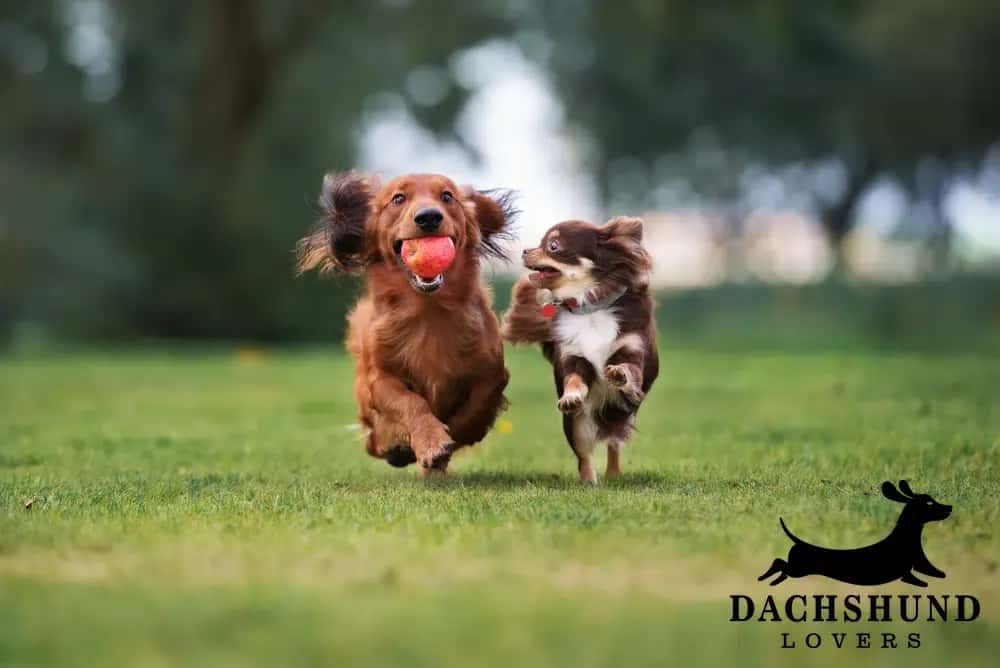
Living with more than one dog can be deeply rewarding, but it also comes with its own set of challenges — especially when one of those dogs is a dachshund. Their bold personality, loyalty to their humans, and occasional stubborn streak mean they thrive when there’s clear structure in place.
When Harvey spends time with his regular playmates, things run smoothly because he knows the rules. The same principle applies at home — consistency is everything. If you’re planning to bring a second dog into the family, it’s worth thinking through a few key areas:
1. Establish Clear Feeding Routines
Food is a common flashpoint for tension in multi-dog homes. Dachshunds can be possessive over meals or treats, especially in the early days.
- Feed dogs in separate spaces or crates.
- Pick up bowls when meals are done.
- Use slow feeder bowls if one dog tends to rush.
2. Create Defined Rest Areas
Rest is as important as play. A dachshund who can retreat to their own safe spot is less likely to feel overwhelmed or defensive.
- Use beds or crates in quiet corners.
- Make sure each dog has their own space.
Play sessions between resident dogs should always be supervised until you’re confident they know each other’s limits. This is especially important with smaller breeds like dachshunds, who can be more fragile than they realise.
- Watch for signs of fatigue or frustration.
- Step in before play gets too rough.
For more on reading dog behaviour cues, you might find our article on Dachshund Barking helpful — barking patterns often signal when a dog is overstimulated or needs space.
4. Keep Training Consistent
Dogs adapt best when everyone in the household follows the same rules. Inconsistency can create confusion and conflict.
- Reinforce core commands like “leave it,” “stay,” and “come” with all dogs.
- Practice short training sessions daily.
5. Seek Expert Support if Needed
If tension continues, it’s worth bringing in professional help early rather than letting habits form. Trainers who understand dachshund temperament — like The Whole Hound in Sydney — can create tailored plans for multi-dog harmony.
Common Issues and How to Solve Them
Even well-socialised dachshunds can hit bumps in the road when it comes to living with or meeting other dogs. The key is recognising the early signs and addressing them before they become habits.
1. Resource Guarding
Some dachshunds guard food, toys, or even people. This can escalate quickly in a multi-dog setting.
- Solution: Feed separately, rotate toys, and reward sharing behaviours.
- Further Reading: Our guide on Are Dachshunds Aggressive explores why guarding happens and how to manage it.
2. Barking at Other Dogs
Barking can be a social invitation, but it’s often a sign of overexcitement or discomfort.
- Solution: Identify triggers, use positive reinforcement, and give an alternative behaviour.
- Further Reading: See Dachshund Barking for strategies on stopping unwanted noise.
3. Over-Attachment to One Dog
If a dachshund bonds too tightly with one dog, separation can cause anxiety.
- Solution: Encourage independent play and training sessions to build confidence.
- Further Reading: Dachshund Separation Anxiety covers how to help them cope when apart.
4. Play Getting Too Rough
A playful dachshund can forget their own size, especially with larger dogs.
- Solution: Step in early, redirect play, and match them with suitable playmates.
5. Avoidance or Nervousness Around Certain Dogs
Not every dog is a match, and that’s okay.
- Solution: Respect your dachshund’s limits and focus on positive experiences.
- Further Reading: Our post on Do Dachshunds Like to Cuddle touches on recognising when they want space versus affection.
For all of these challenges, patience is key. Just like Harvey, who was initially cautious with new dogs but grew more confident after repeated positive experiences, progress comes in steady, well-managed steps
FAQs — Dachshunds and Other Dogs
More from This Series
Explore more insights into the unique traits, quirks, and behaviours of dachshunds:
- Why Are Dachshunds So Stubborn?
- When Do Dachshunds Calm Down
- Dachshund Separation Anxiety
- Dachshund Personality
- Dachshund Barking
- Are Dachshunds Aggressive
- Dachshund Dog Park Socialization
- Are Dachshunds Good with Kids
- Do Dachshunds Like to Cuddle
- Dachshund Digging
- Dachshund Sleeping
- Are Dachshunds Good with Cats
- Why Do Dachshunds Shake
Authored by
James
James is the founder of Dachshund Lovers and the proud human of Harvey, a mini dapple with a big personality. He writes to empower and connect the dachshund community, blending founder insights with honest, experience-based stories about life with this incredible and special breed. James brings candid, experience-backed opinions to the community and always focused on fewer, better products and ideas that genuinely improve life for dachshunds and their people.
Read moreJames is the founder of Dachshund Lovers and the proud human of Harvey, a mini dapple with a big personality. He writes to empower and connect the dachshund community, blending founder insights with honest, experience-based stories about life with this incredible and special breed. James brings candid, experience-backed opinions to the community and always focused on fewer, better products and ideas that genuinely improve life for dachshunds and their people.
Read moreDisclaimer
This content is for informational purposes only and should not be considered veterinary advice. Always consult with a licensed veterinarian regarding your dog’s health and wellbeing.
There are no comments yet
Leave a comment