Dachshund Separation Anxiety
Dachshund Separation Anxiety
From clingy behavior to trembling at loud sounds, dachshund anxiety is more common than you’d think. Here’s how to support and manage your doxie through it.
Posted on October 21, 2025.
Updated on July 11, 2026.
Table of Contents
- 1.Key Takeaways on Dachshund Separation Anxiety
- 2.Understanding Separation Anxiety in Dachshunds
- 3.Common Signs of Separation Anxiety in Dachshunds
- 4.Why Dachshunds Develop Separation Anxiety
- 5.Strategies to Manage and Reduce Separation Anxiety
- -Core principles to remember
- •Strategy Breakdown
- •What not to do
- 6.When to Seek Professional Help
- •Types of help available
- -More from This Series
- -Disclaimer
Share

Some dogs adjust easily to alone time. They’ll watch you walk out the door, maybe sigh, then wander off to nap. Harvey has never been one of those dogs.
We got our dog Harvey just before the COVID lockdowns in our small little unit in Cronulla — back when “working from home” wasn’t the norm, but soon became our daily reality. Like many pandemic pups, Harvey grew up with us around almost 24/7. The world outside our home was something he saw on walks, not during long stretches without us. By the time life started shifting back to normal, Harvey’s baseline expectation was that Caitlin and I were always there.
When we did try leaving him, the signs were immediate and intense. Barking. Pacing. Scratching at the door. Sometimes we’d come back to find the throw cushions on the floor — not chewed or torn, just rearranged as if he’d been trying to create some kind of barricade. It wasn’t mischief. It was panic and stress..
We tried everything we could think of. Gradual departures. Special toys. Sprays. Treat puzzles. Even leaving the TV on. Nothing really worked. Then we found Emily from olehound.com.au — a veterinary behaviour and dog training specialist here in Sydney. She didn’t just give us tips; she gave us a plan. The changes were slow, but they were real. Harvey started learning that us leaving didn’t mean the world was ending. Honestly, I don’t know what we’d have done without her guidance as we were limbo for at least two years.
Living with a dachshund who struggles with separation anxiety isn’t just hard on the dog — it’s hard on you and you do feel so trapped and anxious. But once you understand why this breed is prone to it and how to approach it, the picture starts to look a lot more manageable.
Key Takeaways on Dachshund Separation Anxiety
Question | Quick Answer |
|---|---|
What is dachshund separation anxiety? | A stress response when left alone, often shown through barking, pacing, destructive behaviour, or restlessness. |
Why are dachshunds prone to it? | They’re highly social, bond closely with owners, and were bred to work alongside humans, not in isolation. |
Can it be improved? | Yes — with structured training, desensitisation, and professional guidance when needed. |
Does exercise help? | Absolutely — physical and mental stimulation before leaving can reduce anxiety levels. |
Will another dog solve the problem? | Not necessarily — separation anxiety is usually about missing the owner, not just needing company. |
Should I seek professional help? | If home strategies aren’t working, yes — veterinary behaviourists and experienced trainers can make a big difference. |
How long does it take to see progress? | Weeks to months, depending on the severity and consistency of the approach. |
Understanding Separation Anxiety in Dachshunds
Separation anxiety isn’t just your dog missing you a bit. It’s a genuine stress response that can affect their behaviour, health, and even your daily life. In dachshunds, it’s more common than many owners realise — and it’s not hard to see why.
Why dachshunds are more prone to it
This breed was developed to work in close partnership with humans. Whether they were flushing out badgers, tracking rabbits, or acting as alert companions in the home, their role was almost always people-centred. That history has shaped their instincts. They’re not just comfortable with human presence — they expect it. Extended time alone can feel unnatural, even unsafe, to them.
The emotional profile of a dachshund
Dachshunds are tuned into their people in a way that’s both endearing and, at times, challenging. They recognise routines, watch for subtle departure cues, and can even detect mood changes in the household. That awareness makes them deeply loyal companions — but it also means they can start anticipating your departure long before you’ve picked up your keys.
In Harvey’s case, the sound of the coffee machine in the morning used to be enough to set him on alert. If I then reached for my keys or Caitlin put on her shoes, he’d move from alert to anxious in seconds — pacing the hallway, whining softly, and following us from room to room.
Boredom vs anxiety
It’s important to distinguish between a dog that’s simply bored and one that’s experiencing separation anxiety. A bored dog may chew a toy, nap, or find a low-level way to pass the time until you return. An anxious dog struggles to settle at all. They may bark persistently, pace in repetitive patterns, or fixate on the exit point in the house. In more severe cases, they might scratch at doors, chew furniture, or try to escape entirely.
The RSPCA notes that true separation anxiety often begins before you leave, with distress starting at the first cues — like grabbing a bag or putting on a coat — and continuing the entire time you’re gone.
How early-life experiences shape it
Harvey is a textbook example of how a dog’s early environment can set the stage for separation anxiety. We brought him home just before the COVID lockdowns. For the first year of his life, Caitlin and I were home almost constantly. He learned to expect near-constant companionship, so when life shifted and we started leaving more often, the change felt monumental to him.
This is a common pattern in “pandemic pups.” Without gradual, structured alone time in those formative months, the concept of being alone becomes foreign — and, in their minds, unsafe. When that belief is combined with the dachshund’s naturally close bond to their family, separation anxiety can become a long-term behaviour pattern if not addressed.
Why this matters
Understanding the “why” behind separation anxiety is more than just background knowledge. It’s the foundation for any effective strategy. If you mistake anxiety for simple disobedience, you risk using the wrong approach — one that may make the problem worse. The goal isn’t to teach your dachshund to “get over it” but to help them genuinely feel safe when you’re not there.
Common Signs of Separation Anxiety in Dachshunds
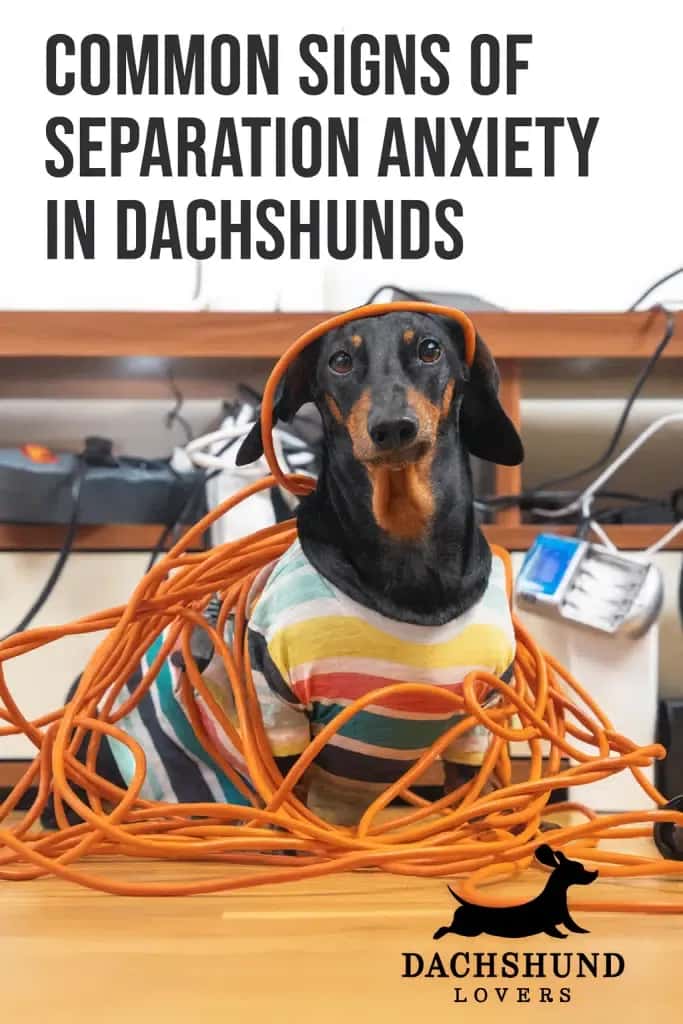
Not every bark or chewed shoe means your dachshund has separation anxiety. The key is recognising patterns — behaviours that consistently happen before, during, and after you’re away. For many dachshunds, these signs are a mix of vocal, physical, and emotional responses.
- Vocalising when left alone
Barking, whining, or howling that starts before you’ve even left the driveway is one of the most common indicators. Harvey’s “you’re leaving me” howl could be heard from the street in our early days of dealing with this. If your dog stops when you return, that’s a strong clue it’s separation-related rather than general boredom barking. For more on managing this side of the problem, see Dachshund Barking. - Pacing or restlessness
An anxious dachshund often can’t settle. They might patrol the hallway, sit at the door, or loop through rooms in a repetitive pattern. This movement burns energy but doesn’t relieve the stress — it’s the canine equivalent of pacing a waiting room. - Destructive behaviour
This isn’t about “naughtiness.” It’s often an attempt to cope or escape. Chewing door frames, scratching at doors, tearing soft furnishings, or digging at carpets can all be signs of frustration or panic. Harvey once gnawed the corner of a throw cushion — not because he wanted to play, but because it was right next to the window where he’d been watching for us. - House soiling
If a fully toilet-trained dachshund suddenly has accidents when you’re out, anxiety could be the trigger. Stress affects their bladder and bowel control, even if they were fine before you left. - Excessive salivation or panting
Physical signs of anxiety aren’t as obvious as barking or chewing but can be just as telling. A wet patch on the floor near the door or damp fur around the chest and face could point to prolonged panting or drooling during your absence. - Over-the-top greetings
A dachshund with separation anxiety might greet you like you’ve returned from a six-month expedition — whining, jumping, or spinning in circles. While many dogs are excited to see their people, the intensity here often reflects the relief of anxiety ending rather than simple joy. - Pre-departure distress
This is one many owners miss. Separation anxiety often starts before you leave. Simple cues — picking up keys, putting on shoes, or grabbing a bag — can trigger agitation. Harvey used to follow me room-to-room if I so much as touched my laptop bag in the morning.
The importance of tracking behaviour
Keeping a simple log or using a pet camera can help confirm patterns. If the behaviours are linked directly to your absence, they’re more likely to be separation anxiety rather than unrelated quirks.
Why Dachshunds Develop Separation Anxiety
Separation anxiety in dachshunds isn’t about one single cause — it’s usually a mix of genetics, upbringing, and life events. Understanding which factors are at play for your dog is the first step toward making a plan that works.
Factor | How It Contributes |
|---|---|
Genetic predisposition | Dachshunds were bred to work closely with humans. Their natural bonding tendency makes them more likely to feel stressed when apart from their people. |
Early-life environment | Puppies raised in constant company — like Harvey during the COVID lockdowns — may never learn that being alone is normal. This can make later separations harder to handle. |
Changes in routine | Sudden shifts, such as moving house, changes in work hours, or the arrival of a new baby, can unsettle even a confident dachshund. |
Lack of gradual alone-time training | Without slow exposure to short, positive absences, they can interpret your leaving as unsafe. |
Negative past experiences | Rescued or rehomed dachshunds may associate being left alone with abandonment, especially if they’ve had multiple homes. |
Over-dependence on one person | A dachshund that spends most of its time with a single owner may struggle more when that person is away, even if others are home. |
For Harvey, it was a combination of early-life environment and over-dependence. Having Caitlin and me around constantly in those first months cemented the idea that being alone was abnormal. Even short trips without him felt like a major event.
In some cases, separation anxiety develops gradually. In others — like after a move or a change in daily routine — it can appear almost overnight. Recognising the cause can help you choose the right approach, whether that’s training, environmental changes, or professional support like we found with Emily from olehound.com.au.
Strategies to Manage and Reduce Separation Anxiety
There’s no one-size-fits-all fix for separation anxiety, especially in a breed as people-focused as the dachshund. The goal is to create a plan that works for your dog’s specific triggers and level of distress. For Harvey, the turning point came when we stopped looking for quick wins and started following a structured, consistent approach — with Emily from olehound.com.au guiding every step.
Core principles to remember
- Go slow — progress is measured in small wins, not overnight changes.
- Stay consistent — mixed signals undo progress quickly.
- Work below their anxiety threshold — don’t push them to panic during training.
Strategy Breakdown
Strategy | How It Works | Harvey's Experience |
|---|---|---|
Gradual desensitisation | Slowly increase time apart, starting with seconds, not minutes. | Emily had us begin with just stepping out of the room for 10 seconds, returning before he became distressed. |
Pre-departure calm cues | Keep leaving rituals low-key to avoid triggering anxiety early.Keep leaving rituals low-key to avoid triggering anxiety early. | We swapped dramatic goodbyes for a casual “back soon” and a quiet exit. |
Exercise before leaving | Physical activity plus scent games help burn energy and reduce restlessness. | A short walk at Shelly Beach followed by a “find it” game indoors made departures easier. |
Enrichment during absenceEnrichment during absence | Use puzzle feeders, frozen Kongs, or safe chews to occupy them. | Harvey’s favourite is a Kong filled with frozen yoghurt and kibble. |
Safe space training | Teach them to settle in a designated bed, crate, or quiet room. | His bed in the sunny corner became the cue for “you’re safe, I’ll be back.” |
Professional support | Work with a trainer or veterinary behaviourist if anxiety is severe. | Emily’s tailored plan made more difference in 3 months than anything we’d tried alone. |
What not to do
Avoid punishment for anxious behaviours — it doesn’t address the cause and can increase fear. Likewise, “flooding” them (leaving for long periods to force them to cope) usually backfires, setting progress back weeks.
When to Seek Professional Help
Some separation anxiety cases respond well to gradual home training, but others need outside expertise. There’s no failure in asking for help — in fact, it can save you and your dog months of frustration and stress.
A good rule of thumb:
If you’ve been consistent with desensitisation and enrichment for six to eight weeks with no improvement — or if the anxiety is so severe that your doxie injures themselves or spends hours in visible distress — it’s time to bring in a professional.
Types of help available
Professional | How They Can Help | Example |
|---|---|---|
Veterinary behaviourist | Can diagnose anxiety severity, rule out medical causes, and, when appropriate, prescribe medication to support training. | Emily from olehound.com.au designed Harvey’s plan and recommended the right medication, which made him noticeably more relaxed and independent. |
Qualified dog trainer (with separation anxiety experience) | Can create a personalised training plan and guide you through it with consistent check-ins. | Weekly feedback kept us on track and adjusted the plan as Harvey progressed. |
Veterinarian | Can assess for underlying health issues that may worsen anxiety and work alongside trainers or behaviourists to implement a complete plan. | Harvey’s vet ruled out medical causes before we began behaviour-specific work. |
A note on medication
Some owners hesitate to consider medication, but for certain dogs, it can be life-changing. In Harvey’s case, combining training with the right anti-anxiety prescription meant he could actually relax when alone. Without it, he would have spent up to eight hours a day in a heightened state of stress — something we could never accept as “just the way he is.”
Medication doesn’t dull their personality; if it’s the right fit, it allows them to feel safe enough to learn and adapt. Used alongside a structured training plan, it can turn a constant state of panic into a manageable, even quiet, part of their day.
FAQs
More from This Series
- Why Are Dachshunds So Stubborn
- When Do Dachshunds Calm Down
- Dachshund Personality
- Dachshund Barking
- Are Dachshunds Aggressive
- Dachshund Dog Park Socialization
- Do Dachshunds Get Along with Other Dogs
- Are Dachshunds Good with Kids
- Do Dachshunds Like to Cuddle
- Dachshund Digging
- Dachshund Sleeping
- Are Dachshunds Good with Cats
- Why Do Dachshunds Shake
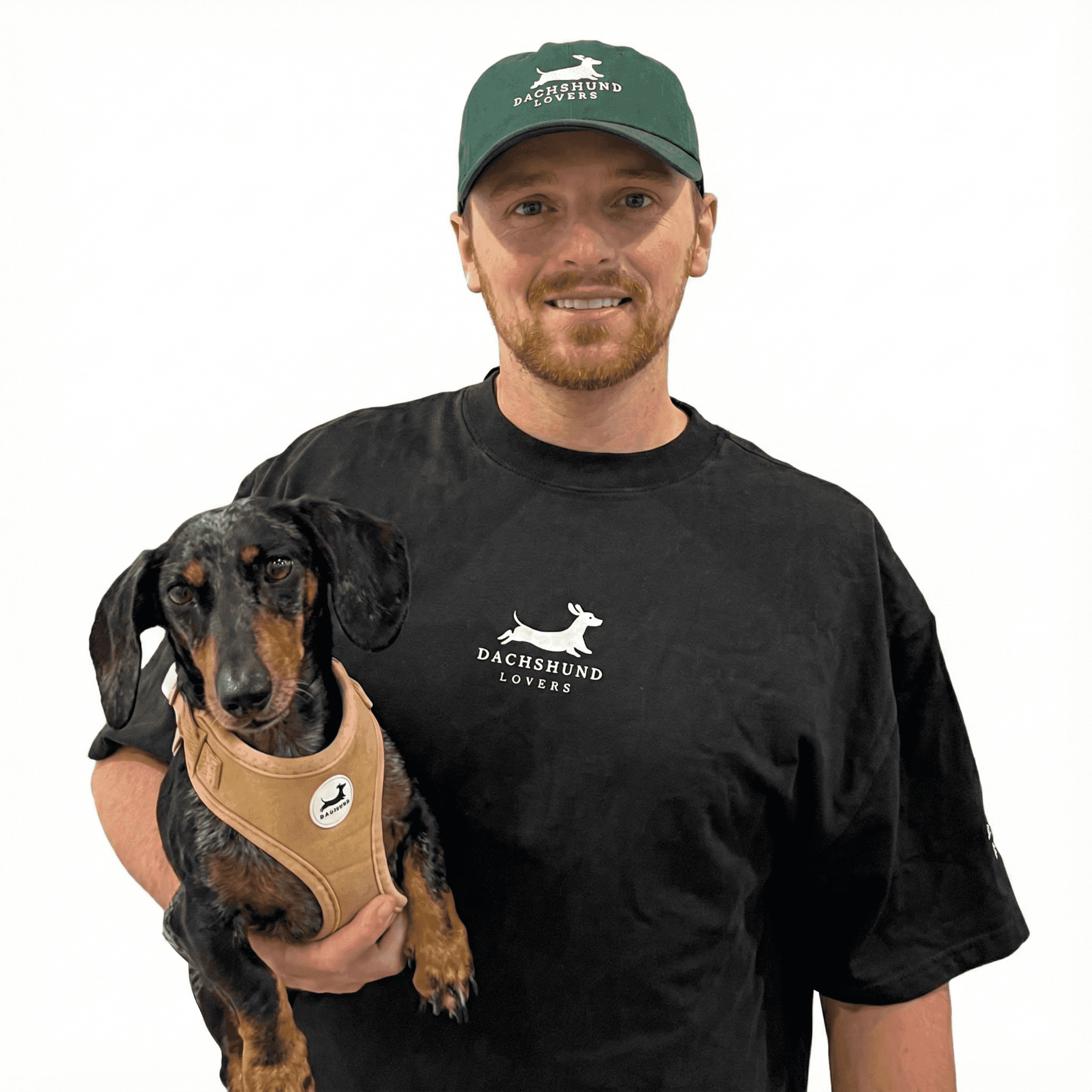
Authored by
James
James is the founder of Dachshund Lovers and the proud human of Harvey, a mini dapple with a big personality. He writes to empower and connect the dachshund community, blending founder insights with honest, experience-based stories about life with this incredible and special breed. James brings candid, experience-backed opinions to the community and always focused on fewer, better products and ideas that genuinely improve life for dachshunds and their people.
Read moreJames is the founder of Dachshund Lovers and the proud human of Harvey, a mini dapple with a big personality. He writes to empower and connect the dachshund community, blending founder insights with honest, experience-based stories about life with this incredible and special breed. James brings candid, experience-backed opinions to the community and always focused on fewer, better products and ideas that genuinely improve life for dachshunds and their people.
Read moreDisclaimer
This content is for informational purposes only and should not be considered veterinary advice. Always consult with a licensed veterinarian regarding your dog’s health and wellbeing.
There are no comments yet
Leave a comment