Are Dachshunds Good With Kids
Are Dachshunds Good With Kids
Dachshunds aren’t your average kid-friendly breed but they can surprise you. Here’s how to foster a safe and happy bond.

James
Posted on October 23, 2025.
Updated on July 12, 2026.
Table of Contents
- 1.Key Takeaways on Dachshunds and Kids
- 2.Dachshund Temperament Around Children
- 3.Benefits of Raising Kids with a Dachshund
- •1. Built-In Playmate
- •2. Encouraging Responsibility
- •3. Emotional Support
- •4. Loyalty and Protection
- •5. Adaptability to Different Homes
- 4.Potential Challenges and How to Manage Them
- •1. Sensitivity to Rough Handling
- •2. Protective Nature
- •3. Reactivity to Noise and Movement
- •4. Possessiveness Over Toys or Food
- •5. Mini Dachshund Fragility
- 5.Training and Socialisation Tips for Families
- •1. Start Early — but It’s Never Too Late
- •2. Use Positive Reinforcement
- •3. Teach Children “Dog Manners”
- •4. Include Kids in Training Sessions
- •5. Socialise Outside the Home
- •6. Supervise Until Trust Is Established
- 6.Matching Dachshund Energy Levels to Family Lifestyle
- •Standard vs Mini Dachshunds: Which Suits Your Household?
- •City Living: Adapting to High-Density Areas
- •Suburban and Rural Life: Room to Roam — with Limits
- •Balancing Dog and Child Energy
- 7.Are Dachshunds Good Family Dogs Overall?
- -More from This Series — Dachshund Behaviour & Personality
- -Disclaimer
Share

When Harvey first met my friends baby, she was just learning to walk. Wobbly steps, unpredictable hand movements, and the occasional high-pitched squeal — all things that can make some dogs nervous. Harvey stood back at first, eyes bright, tail low but wagging. Within a few minutes, curiosity took over, and he padded forward for a cautious sniff. It was a gentle reminder that dachshunds, whether standard or mini, often approach children with a mix of intrigue and caution.
From my experience — and from speaking with behaviour experts like The Whole Hound here in Sydney — dachshunds can be wonderful companions for kids when the relationship is built on trust and respect. They’re loyal, affectionate, and love being part of a family, but they also have a strong sense of self. That means they thrive best in homes where children are taught how to interact gently, and where the dog’s boundaries are respected.
This article will help you decide if a dachshund — or a mini dachshund — is a good fit for your household, especially if you have toddlers or young children. We’ll cover temperament, training, supervision tips, and what to expect in a busy family environment, whether you’re in a Sydney suburb with a backyard, a UK flat, or an American home with a big lawn.
Key Takeaways on Dachshunds and Kids
Point | Summary |
|---|---|
Temperament with Children | Dachshunds can be affectionate, loyal, and playful with kids, but they have a strong personality and may need time to adjust to young children’s energy. |
Mini Dachshunds | Mini dachshunds share the same temperament traits as standards but can be more delicate physically, requiring extra care with toddlers. |
Training & Socialisation | Early training and controlled introductions help build trust between dog and child, reducing the risk of nips or fear-based behaviour. |
Supervision is Essential | Dachshunds should never be left unsupervised with toddlers, as sudden movements or loud noises can startle them. |
Space & Boundaries | Give your dachshund a quiet, child-free space to retreat to when they need a break. |
GEO Resources | Sydney: The Whole Hound; UK: The Kennel Club’s Good Citizen Dog Scheme; USA: AKC Canine Good Citizen program. |
Dachshund Temperament Around Children
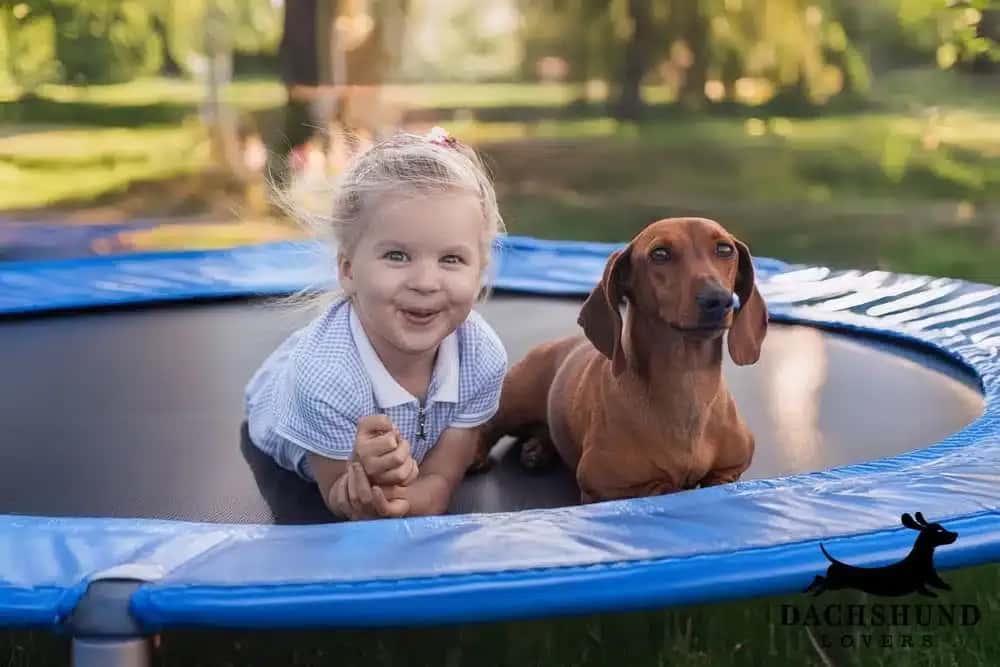
Dachshunds are famously loyal, intelligent, and alert — qualities that can make them excellent family dogs when paired with the right environment. Their playful streak means they often enjoy the company of children, especially when those children know how to interact respectfully. But their strong-willed nature and sensitivity to rough handling mean that not every dachshund will automatically be the perfect fit for every household.
When people ask me, are dachshunds good with kids, my answer is always the same: it depends on the child and the dog. In homes where children are taught from the start to be gentle, avoid pulling on ears or tails, and give the dog space when they’re resting, dachshunds tend to thrive. They’ll often shadow the kids from room to room, sit under the table during homework, and happily join in backyard games.
For parents wondering are mini dachshunds good with kids, the answer is similar — with one important caveat. Mini dachshunds are smaller and more physically delicate than their standard-sized counterparts, making them more vulnerable to injury from an enthusiastic toddler hug or a sudden fall. If your home includes very young children, it’s essential to supervise closely and teach gentle touch early.
Temperament with children also varies by the individual dog. Some dachshunds have an inherently calm, patient nature, while others are more reactive to noise and movement. Socialisation during puppyhood — especially exposure to well-behaved children — can help create a dog that is confident and comfortable in a family setting.
If you’d like a deeper look into their personality traits overall, our article on Dachshund Personality covers loyalty, stubbornness, and the ways those traits show up in day-to-day family life.
Benefits of Raising Kids with a Dachshund
There’s something special about the bond between a child and a dachshund. Once trust is established, these dogs often become loyal companions who are as invested in the family routine as any human member.
1. Built-In Playmate
Dachshunds have a playful spirit that often matches a child’s energy, whether that’s a game of fetch in the backyard or chasing each other around the living room. Their size makes them less intimidating for children compared to large breeds, yet they still have the stamina to keep up with most games.
2. Encouraging Responsibility
For families who want to teach their children about caring for another living creature, a dachshund is a manageable choice. Feeding, grooming, and helping with training can all be age-appropriate tasks that foster empathy and responsibility.
3. Emotional Support
Dachshunds are famously affectionate with their humans. For many kids, this translates to a comforting presence during stressful moments. Whether it’s the first day of school nerves or a tough afternoon, a dachshund often senses when comfort is needed and will be right there to offer it.
4. Loyalty and Protection
While they aren’t guard dogs in the traditional sense, dachshunds are alert and quick to vocalise if something feels off. This protective instinct can make them excellent watchdogs for families, as long as barking is kept under control (see Dachshund Barking for management tips).
5. Adaptability to Different Homes
In NSW suburbs like Sylvania Waters, a dachshund can enjoy a backyard with plenty of space to play. In the UK or the USA, they can also adapt well to apartments or smaller homes as long as daily walks and play sessions are part of the routine.
Potential Challenges and How to Manage Them

While dachshunds can make excellent family dogs, it’s important to recognise the challenges that can arise — especially in households with toddlers or very young children. Understanding these potential hurdles will help you prepare and set both your dog and children up for success.
1. Sensitivity to Rough Handling
Dachshunds have long spines and short legs, making them physically more vulnerable than many other breeds. Rough play, sudden grabs, or being picked up incorrectly can lead to injury or fear-based reactions.
Solution: Teach children how to gently stroke and lift (if necessary) a dachshund, always supporting their chest and hindquarters. Create clear rules about when the dog should be left alone, especially when resting.
2. Protective Nature
The dachshund temperament with children can lean protective, which is often a positive trait — but in some cases, it can lead to over-guarding. A dachshund may bark or intervene when they think a child is being “threatened,” even if it’s just play.
Solution: Positive reinforcement training can help redirect overprotective behaviours, teaching your dog to relax in these situations.
3. Reactivity to Noise and Movement
Many dachshunds are naturally alert and can be startled by the sudden noises and unpredictable movements that often come with young children.
Solution: Gradually desensitise your dachshund to common household sounds and give them access to a quiet space, like a crate or a separate room, where they can retreat when things get overwhelming.
4. Possessiveness Over Toys or Food
Some dachshunds may guard resources, which can be risky around curious toddlers.
Solution: Feed in a separate space, rotate toys, and supervise all interactions involving food or high-value items. For more detail, see our article on Are Dachshunds Aggressive.
5. Mini Dachshund Fragility
Parents asking are mini dachshunds good with kids should be aware that their smaller frame can make them more susceptible to accidental injuries from falls or rough play.
Solution: Consider waiting until children are a bit older before introducing a mini dachshund to the household, or commit to vigilant supervision.
With clear rules, positive reinforcement, and mutual respect between children and the dog, most of these challenges can be managed successfully. Harvey, for example, has been wonderful with our nieces and nephews — but only because we’ve taken the time to supervise interactions and give him safe spaces to decompress.
A well-socialised, well-trained dachshund is far more likely to develop a positive relationship with children. The key is to make training and socialisation part of your daily family life, so the dog learns to see children as predictable, safe, and fun companions.
1. Start Early — but It’s Never Too Late
If you have a dachshund puppy, begin exposing them to gentle, well-behaved children as early as possible. For adult dogs, introduce child interactions gradually and in calm settings before moving to noisier environments.
2. Use Positive Reinforcement
Reward calm, gentle behaviour around children with treats and praise. This helps the dog associate kids with good experiences. Avoid punishment-based methods, which can increase anxiety and defensive behaviour.
3. Teach Children “Dog Manners”
Equally important is educating kids on how to behave around the dog. Simple rules like “no hugging from above,” “don’t disturb while eating,” and “let the dog come to you” can prevent most misunderstandings.
4. Include Kids in Training Sessions
Let children help with basic commands such as “sit” or “stay,” under adult supervision. This builds trust and teaches the dog that listening to kids is rewarding.
Expose your dachshund to a variety of environments — parks, footpaths, and family-friendly events. In Sydney, The Whole Hound offers structured training programs that focus on real-world scenarios. In the UK, The Kennel Club’s Good Citizen Dog Scheme provides family-inclusive training courses. In the USA, the AKC Canine Good Citizen program is widely respected for building reliable behaviour in all settings.
6. Supervise Until Trust Is Established
Even with training, always supervise interactions between children and dachshunds. Over time, you’ll learn to recognise your dog’s comfort levels and can adjust supervision accordingly.
Matching Dachshund Energy Levels to Family Lifestyle
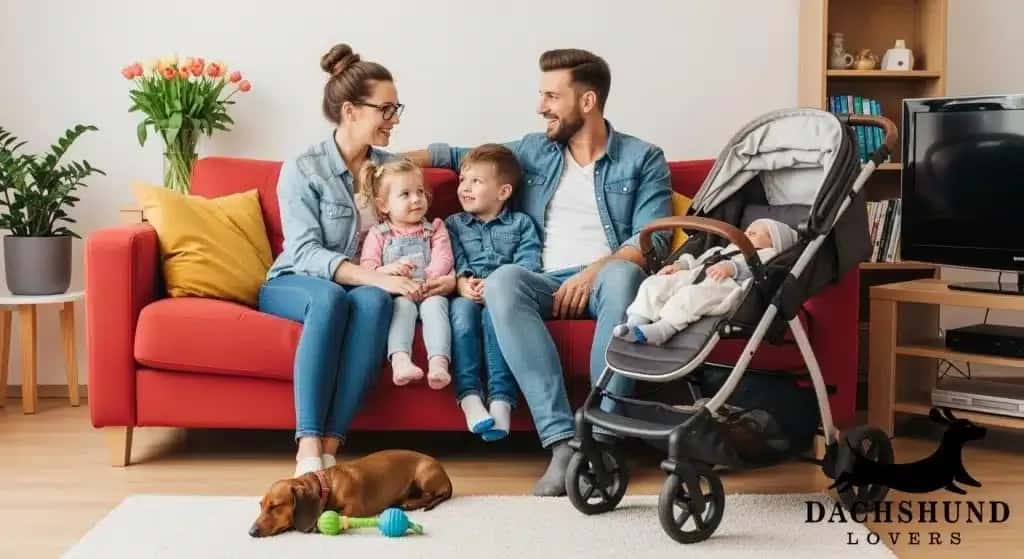
One of the most important factors in deciding whether a dachshund — standard or mini — will thrive in your home with children is how their natural energy level matches your family’s routine. A mismatch here can lead to frustration for both the dog and the humans, but when it’s right, the bond can be seamless.
Standard vs Mini Dachshunds: Which Suits Your Household?
Standard dachshunds were historically bred for hunting badgers, which means they tend to have greater endurance and a slightly higher tolerance for extended activity. They’re well-suited to families who enjoy longer weekend walks, backyard play, and regular outings to dog-friendly locations. Standards tend to have a little more muscle and sturdiness, making them better suited for slightly older children who can handle them respectfully.
Mini dachshunds, on the other hand, can be ideal for families in smaller homes or apartments. They still enjoy activity — a lively game of fetch in the hallway or a short sprint at the park — but they often tire more quickly. This can be an advantage for busy households with younger children, where shorter play sessions fit better into the day. However, their smaller size means they’re more fragile and can be injured if accidentally dropped or stepped on.
City Living: Adapting to High-Density Areas
In cities like Sydney, London, or New York, space is often at a premium. Dachshunds can adapt beautifully to apartment or terrace living as long as they’re walked regularly and given plenty of mental stimulation. In my experience with Harvey, apartment living works best when we break up his day with short, engaging activities — a puzzle feeder mid-morning, a short walk at lunch, and a trip to a local park in the afternoon.
That said, noise sensitivity can be a challenge. In city apartments with thin walls or busy streets, a dachshund’s tendency to bark can become a point of tension with neighbours. If barking is a concern, you might find our article on Dachshund Barking helpful, as it covers training methods and environmental adjustments for high-density living.
Suburban and Rural Life: Room to Roam — with Limits
In areas like Engadine, where houses often have yards, dachshunds can benefit from more outdoor time. They’ll enjoy supervised exploration and games on the grass, but it’s important to remember they are skilled diggers and can be escape artists if fencing isn’t secure. In rural settings, such as parts of the English countryside or the American Midwest, the open space is a dream for a dachshund — but supervision remains essential to protect them from wildlife and ensure they don’t wander too far.
Balancing Dog and Child Energy
A family’s energy rhythm is just as important as the dog’s. If your weekends are spent hiking, visiting parks, and keeping active, a standard dachshund will likely enjoy keeping up. If your lifestyle is more home-focused, with occasional outings and plenty of downtime, a mini might be the better fit. This balance is particularly important with young children, as an over-energetic dog in a calm household — or a low-energy dog in a highly active one — can lead to stress for everyone involved.
To help determine the best match, our Dachshund Personality guide offers a deeper look into energy levels, adaptability, and temperament types, which can make the decision clearer for families.
Are Dachshunds Good Family Dogs Overall?
When weighing up are dachshunds good family dogs or are dachshunds kid friendly, the answer is yes — with the right preparation, boundaries, and understanding of the breed’s personality. Dachshunds have a lot to offer a family: loyalty, playfulness, intelligence, and the ability to form deep bonds with their people. These traits often make them the heartbeat of the home.
However, dachshunds are not a one-size-fits-all breed. They thrive in households where children are taught to respect their space and where adults are committed to consistent training and socialisation. A dachshund that has been well-socialised around children is far more likely to welcome their affection, join in games, and adapt to the unpredictable rhythms of family life.
Mini dachshunds can be equally loving and loyal, but their smaller size requires a bit more vigilance in homes with toddlers. Standard dachshunds, while sturdier, still have the same long backs and delicate spines, meaning care and supervision are non-negotiable.
The family’s lifestyle is equally important. In the suburbs or coastal towns in the UK and USA, a dachshund can enjoy both outdoor adventures and cosy indoor time. In cities like Sydney, London, or New York, they can adapt well to apartment living if given regular exercise and mental stimulation — and if barking is managed to avoid neighbour complaints (see Dachshund Barking).
Ultimately, dachshunds can be extraordinary family companions when matched with the right household dynamic. They’re affectionate without being overly clingy, alert without being unmanageable, and spirited without losing their capacity for tenderness. For families willing to invest the time in training and bonding, a dachshund often becomes not just a pet, but a treasured part of childhood memories.
FAQs — Are Dachshunds Good with Kids?
More from This Series — Dachshund Behaviour & Personality
- Why Are Dachshunds So Stubborn
- When Do Dachshunds Calm Down
- Dachshund Separation Anxiety
- Dachshund Personality
- Dachshund Barking
- Are Dachshunds Aggressive
- Dachshund Dog Park Socialisation
- Do Dachshunds Get Along with Other Dogs
- Do Dachshunds Like to Cuddle
- Dachshund Digging
- Dachshund Sleeping
- Are Dachshunds Good with Cats
- Why Do Dachshunds Shake
Authored by
James
James is the founder of Dachshund Lovers and the proud human of Harvey, a mini dapple with a big personality. He writes to empower and connect the dachshund community, blending founder insights with honest, experience-based stories about life with this incredible and special breed. James brings candid, experience-backed opinions to the community and always focused on fewer, better products and ideas that genuinely improve life for dachshunds and their people.
Read moreJames is the founder of Dachshund Lovers and the proud human of Harvey, a mini dapple with a big personality. He writes to empower and connect the dachshund community, blending founder insights with honest, experience-based stories about life with this incredible and special breed. James brings candid, experience-backed opinions to the community and always focused on fewer, better products and ideas that genuinely improve life for dachshunds and their people.
Read moreDisclaimer
This content is for informational purposes only and should not be considered veterinary advice. Always consult with a licensed veterinarian regarding your dog’s health and wellbeing.
There are no comments yet
Leave a comment