How to Potty Train a Mini Dachshund
How to Potty Train a Mini Dachshund
How to potty train a mini dachshund the right way: consistent cues, realistic expectations, and strategies that work with their bold little brains.
James
Posted on September 10, 2025.
Updated on July 12, 2026.
Table of Contents
- 1.Key Takeaways on Potty Train Mini Dachshund
- 2.Why Potty Training a Mini Dachshund Feels Different (and What to Do About It)
- •1. Tiny Bladders, Big Consequences
- •2. They’re Smart — But Selective
- •3. They Hate the Cold and Wet
- 3.The Ideal Mini Dachshund Toilet Routine (With a Sample Day Plan)
- •Sample Routine for a 10-Week-Old Mini Dachshund
- •Tips to Make It Work (Without Going Insane)
- 4.How to Handle Accidents Without Setting Back Progress
- •What Not to Do
- •What To Do Instead
- •Keep Perspective
- 5.Indoor Toilet Options for Apartment Living
- •Pee Pads vs. Grass Patches: What We Found Worked
- •How to Set It Up for Success
- •Further Reading
- 6.Creating a Mini Dachshund Toilet Schedule That Actually Works
- •Sample Toilet Training Schedule (Based on Harvey’s Routine)
- •Tips to Build Routine Into Daily Life
- 7.How to Handle Setbacks and Accidents Without Losing Your Cool
- •Setbacks Are Normal. Reactions Matter.
- •Step-by-Step: What to Do When Your Dachshund Has an Accident
- •Remember This:
- 8.Night-Time Toilet Training Tips (So Everyone Gets More Sleep)
- •How to Set a Mini Dachshund Up for Night-Time Success
- •When Will My Mini Dachshund Sleep Through the Night?
- 9.When to Expect Progress (And What’s Totally Normal?)
- •Week 1–2: Welcome to the Mess Zone
- •Week 3–4: The Lightbulb Flickers
- •Month 2–3: Solid Progress (With the Odd Surprise)
- •Beyond 3 Months: Mastery in Sight (But Keep Reinforcing)
- 10.Common Potty Training Mistakes (And How to Avoid Them)
- •1. Letting Them Roam Too Soon
- •2. Inconsistent Routine
- •3. Punishing Accidents
- •4. Not Transitioning Off Pee Pads (When Ready)
- •5. Ignoring Subtle Signals
- 11.Should You Use Treats or Praise to Reward Potty Training?
- •Timing Is Everything
- •What Kind of Reward Works Best?
- •Should You Reward Every Time?
- •A Quick Word on Bribing vs. Reinforcing
- •Bonus Tip: Add a Verbal Cue
- 12.Troubleshooting Accidents and Setbacks
- •What to Do Immediately After an Accident
- •Why Accidents Happen (Even With a Routine)
- •Research Says…
- •Resetting Without Losing Progress
- 13.When to Transition from Indoor to Outdoor Toileting
- •Signs Your Mini Dachshund is Ready
- •How to Make the Shift
- •Real Talk From the Research
- -More from This Series
- -Disclaimer
Share

I still remember walking back from White Horse Coffee in Sutherland one crisp Saturday morning — large cap with one sugar in hand, feeling like we were finally getting into a routine — when Caitlin my wife to be at the time rang me.
“You won’t believe what Harvey just did on the rug.”
Let’s just say… it wasn’t a spilled coffee.
And it was the third time that week.
We’d only had Harvey, our miniature silver dapple dachshund, for a few weeks. We were living in a small unit in Cronulla, navigating the chaos of puppyhood in between work calls, endless laundry, and wiping up mystery puddles like it was part of a new daily ritual.
Potty training a miniature dachshund? It’s a whole different game.
They’re smart — too smart sometimes — but they’re also headstrong, suspicious of change, and not exactly fans of being told what to do. Throw in a tiny bladder and a low tolerance for rain, and you’ve got a recipe for frustration and a whole lot of carpet cleaner.
But I promise you this — it’s not impossible.
With the right strategies, a little structure, and a whole lot of consistency (and paper towels), your mini dachshund will learn where to go. You just need to know what makes them tick — and how to stay one step ahead of them.
Whether you’re in an apartment in London, a townhouse in Texas, or just doing your best with a toddler and a tiny tornado of a dog, this guide is designed for the real-life dachshund owner.
Not the fantasy version. The one that ends up cleaning pee off the hallway floor at 2am.
Let’s get into it.
Key Takeaways on Potty Train Mini Dachshund
Topic | Summary |
|---|---|
Start Early | Introduce structure from day one. It sets the foundation for everything that follows. |
Mini = Frequent | Mini dachshunds have small bladders. Expect toilet breaks every 30–60 minutes when they’re young. |
Patience Is Your Superpower | Accidents will happen — what matters is how calmly and consistently you respond. |
Use Indoor Tools Strategically | Pee pads and grass patches can work, but only with a clear routine and supervision. |
Routine Wins | Feed, walk, rest, toilet — same times each day helps them predict what’s next. |
Why Potty Training a Mini Dachshund Feels Different (and What to Do About It)
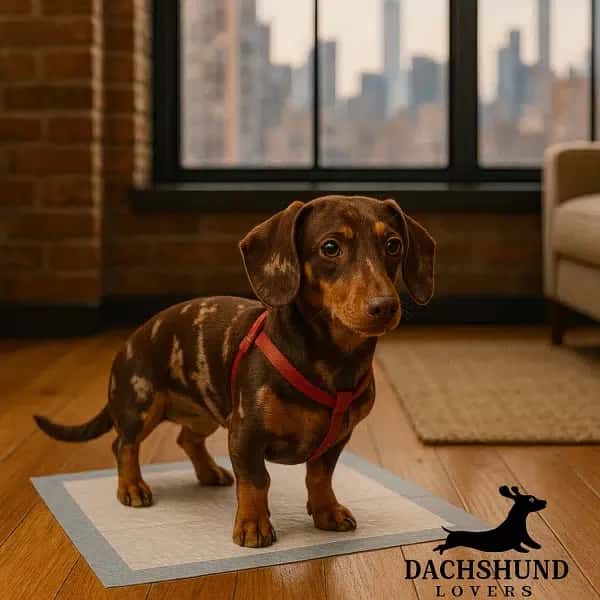
You’d think smaller dogs = easier, right?
Not with mini dachshunds.
These little sausages might fit in your tote bag, but their toilet training needs come with a whole separate playbook. What makes them tricky isn’t just their stubborn streak (although that’s a real thing) — it’s the combo of personality, physiology, and, frankly, their deep belief that they’re the ones in charge.
1. Tiny Bladders, Big Consequences
A miniature dachshund can’t physically hold their bladder as long as a larger breed. That means more frequent toilet breaks — especially under six months of age. Miss a window, and you’ll likely find a puddle waiting for you somewhere they thought was close enough.
Tip: Set a timer. In those early weeks, aim to take them to their potty spot every 30–60 minutes. Yes, it’s exhausting. Yes, it works.
2. They’re Smart — But Selective
Mini dachshunds are clever. They know how to manipulate a routine if they sense inconsistency. If you sometimes reward indoor toileting but sometimes don’t… or if you tell them “no” one day and laugh the next… they’ll choose whatever benefits them the most.
Tip: Stick to a consistent reaction every time — praise when they get it right, redirect when they don’t. No grey zones.
3. They Hate the Cold and Wet
Step outside on a rainy morning and watch your dachshund look up at you like, “You expect me to go out there?”
Mini dachshunds have low bellies and short legs. Wet grass or cold surfaces feel genuinely uncomfortable to them, and they’ll often retreat indoors before doing their business.
Tip: Create a sheltered area or use a grass patch like this for rainy-day options. And always reward brave toileting-in-the-wet behavior like you’ve just witnessed an Olympic gold.
These quirks don’t make potty training impossible — they just require a bit more awareness and empathy. Once you understand why your dachshund might be resisting, you can adjust your training approach and avoid the frustration loop.
Want more insight into why dachshunds can be so hard to train?
Check out our deep-dive: Are Dachshunds Hard to Potty Train?
The Ideal Mini Dachshund Toilet Routine (With a Sample Day Plan)
If there’s one thing that can turn a frustrating toilet training journey into a smooth, almost autopilot experience — it’s structure. Mini dachshunds, despite their rebellious streaks and high intelligence, are creatures of habit. When they know what to expect, they’re far more likely to succeed.
And let’s be honest — when your pup starts consistently doing their business outside (and not on your rug), the whole house feels calmer.
This sample routine reflects what worked for us with Harvey and is built for mini dachshunds under six months of age. You can adapt it to suit your own schedule — especially if you’re working from home or have support during the day. But the core idea stays the same: timing, consistency, and reinforcement.
Sample Routine for a 10-Week-Old Mini Dachshund
Time | Activity | Toilet Break? |
|---|---|---|
6:30 am | Wake up + straight outside | ✅ Absolutely |
7:00 am | Breakfast | |
7:15 am | Outside again | ✅ Yes |
8:30 am | Play/training session | ✅ Before & after |
Routine Wins10:00 am | Nap (in pen or crate) | |
11:00 am | Wake up + outside | ✅ Yes |
12:00 pm | Lunch | |
12:30 pm | Outside again | ✅ Yes |
1:00–3:00 pm | Quiet time / supervised play | ✅ As needed |
3:30 pm | Snack or training treat | |
4:00 pm | Outside break | ✅ Yes |
5:30 pm | Dinner | |
6:00 pm | Outside again | ✅ Yes |
7:30–8:30 pm | Wind-down, cuddles, quiet play | ✅ Pre-bed break |
9:00–10:00 pm | Bedtime | ✅ Final break |
2:00–3:00 am | (Optional) overnight toilet trip | ✅ While young |
Tips to Make It Work (Without Going Insane)
- Keep a simple log — even just a notebook near the front door. Track when they go, where, and whether it was a success or “miss.” This helped us anticipate Harvey’s next move before it happened.
- Use the same toilet command every time — for us, it was “Quick quick!” It sounds silly, but once he made the association, it saved us so much time standing outside in the cold.
- Reward in real time — don’t wait until they’re back inside. Praise or treat as they’re going to reinforce the connection.
If your schedule makes this hard to stick to, look into support. Pawshake – Sutherland Dog Sitters is one great option for people lucky enough living in Sydney, or even asking a friend or neighbour to help for the first few weeks. Every successful toilet trip is a win that builds momentum — and it’s worth the investment.
How to Handle Accidents Without Setting Back Progress
Accidents will happen. Full stop. Even with the most detailed routine and eagle-eyed supervision, your mini dachshund is going to pee somewhere they shouldn’t — usually right after you’ve cleaned the floor and let your guard down.
The key isn’t to prevent every accident — it’s to respond in a way that keeps training on track.
What Not to Do
Let’s get this out of the way early: scolding doesn’t work. Yelling, smacking, or “rubbing their nose in it” — not only is it ineffective, but it also damages the trust you’re building. Mini dachshunds are sensitive, and reacting with anger usually just teaches them to be sneaky about where they pee, not to stop altogether.
And if you find an accident after the fact? Clean it, move on. They won’t connect your frustration to something they did an hour ago.
What To Do Instead
- Catch them in the act? Interrupt calmly.
Clap your hands gently or say “uh uh!” in a neutral tone. Then immediately guide them to their designated toilet spot. If they finish there, praise them like they just won the lottery. - Missed it completely? Clean thoroughly.
Use an enzymatic cleaner like Nature’s Miracle or Urine Free to remove every trace of scent. Dogs tend to return to the same spots if they can still smell urine. - Review your schedule.
Was it too long between breaks? Did something throw off their routine? These “why” moments are gold for improving your strategy. - Consider temporary confinement.
If accidents are stacking up, limit your pup’s access with baby gates or exercise pens. It’s not a punishment — it’s a training support tool. - Track patterns.
We started noticing Harvey had a tendency to pee right after longer play sessions. Once we built a toilet break into those transitions, accidents dropped significantly.
Keep Perspective
Potty training isn’t linear. You’ll have amazing days where your dachshund nails every break… and others where it feels like they’ve forgotten everything.
Celebrate the wins, stay consistent, and remind yourself: even the most stubborn pups get there eventually. If you’re ever really stuck or overwhelmed, don’t hesitate to check in with a local trainer. Positive Dogs based in Sydney’s south are an example of great support service from what I have been recommended— especially in the trickier early months.
Indoor Toilet Options for Apartment Living
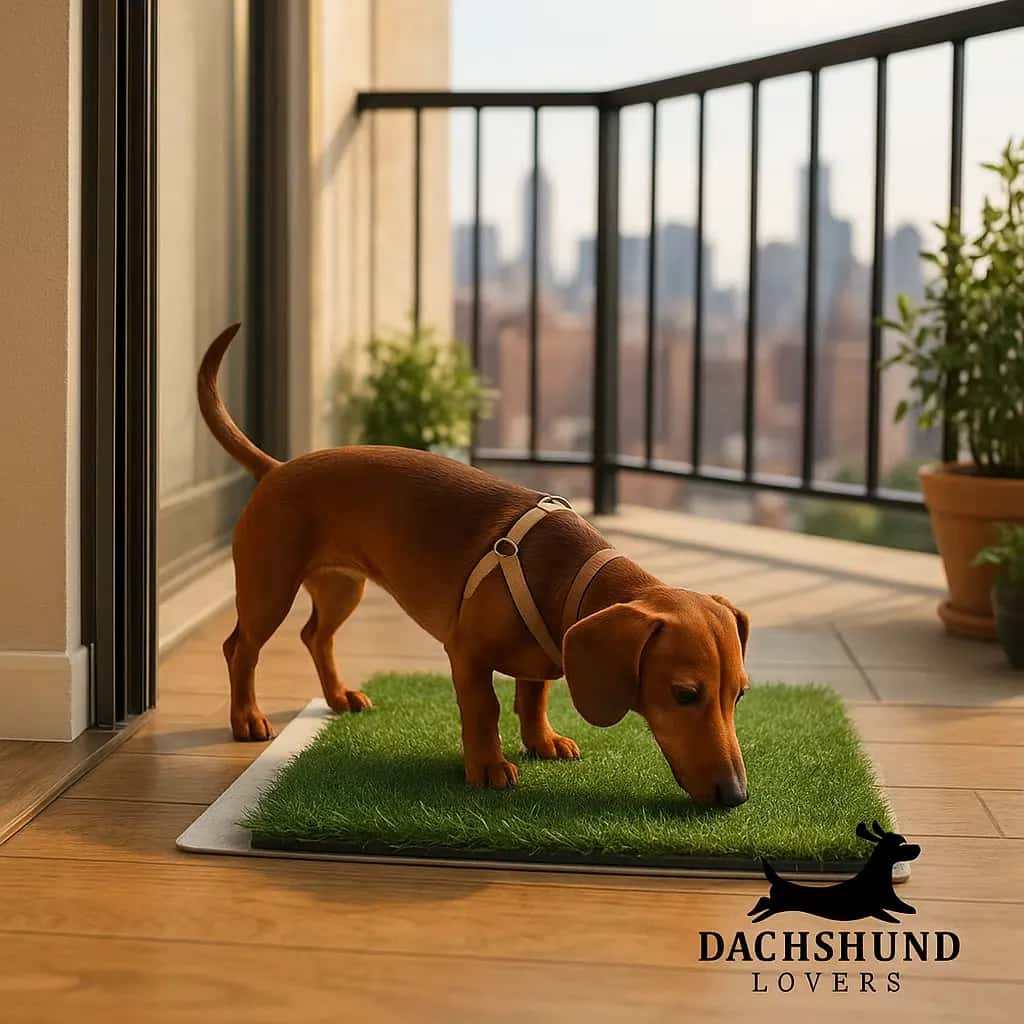
When Caitlin and I first brought Harvey home, we were living in a small second-floor unit in Cronulla, just a short walk from South Cronulla Beach. The kind of place where the balcony barely fit two beach chairs and a pot plant, and taking Harvey down the stairs every 45 minutes — especially in the rain — wasn’t exactly sustainable. We quickly realised we needed an indoor toilet solution, fast.
If you’re in an apartment or don’t have easy yard access, tools like pee pads and grass patches are more than just convenient — they’re crucial. But, as we learned firsthand, they need to be used properly. If not, you risk teaching your mini dachshund that any soft surface is fair game — including rugs, towels, or even your bedspread.
Pee Pads vs. Grass Patches: What We Found Worked
Pee Pads
- Cheap, easy to find, and simple to set up indoors
- Ideal for very young puppies or owners in high-rise apartments
- Watch out: Their soft feel can be confusing — we caught Harvey trying to pee on a pile of freshly folded towels more than once
- Best for: Temporary setups or emergency indoor options
Grass Patches (real or synthetic)
- Mimics the feel and scent of real outdoor toileting
- Makes the transition to outdoor training a lot easier
- Needs cleaning and upkeep — especially the real grass versions which can get smelly fast
- Best for: Balcony setups, longer-term use, or transitioning outdoors
We started Harvey off with pee pads near the laundry, behind the sliding door that led to our tiny balcony. It worked for about a week — until he started treating the bath mat like it was fair game too. That’s when we switched to a small grass patch setup out on the balcony. It completely changed the game. He quickly associated the turf with toilet time, and within a couple of weeks, we were able to start transitioning him to toileting outside altogether.
How to Set It Up for Success
- Stick to one location. Don’t move the pad or patch around — consistency helps them learn where the toilet spot is.
- Introduce scent. If they’ve already peed once, use a bit of that to mark the surface. Otherwise, try a puppy training spray like Simple Solution Puppy Aid.
- Clean surrounding areas well. Use an enzymatic cleaner like Nature’s Miracle to fully eliminate any lingering smells from past accidents.
- Use a cue word. We used “go toilet” in a calm voice every time we brought Harvey to his patch — eventually, he connected the dots.
- Reward immediately. Timing is everything. Praise and treat the moment they finish, not after they wander away.
- Transition when ready. As soon as they’re reliable indoors, start moving the patch toward the door — and then outside, if that’s your long-term goal.
Further Reading
- Ready to dive into the full play-by-play from our early weeks?
How to Toilet Train a Dachshund Puppy (Without Losing Your Mind) - Want to know why these dogs can be so stubborn?
Are Dachshunds Hard to Potty Train? (What Makes Them So Stubborn?)
Creating a Mini Dachshund Toilet Schedule That Actually Works
Miniature dachshunds aren’t just small — they’re small and stubborn, which means getting the timing right is half the battle when it comes to toilet training. Their little bladders can’t hold much, and if you wait too long between breaks, you’re almost guaranteed to end up cleaning the floor.
Back in our Cronulla unit, Caitlin and I learned this the hard way. We thought we were being proactive by taking Harvey out “often enough,” but we quickly discovered that “often” isn’t a schedule — and dachshunds thrive on routine.
Once we locked in a proper daily rhythm, everything got easier. Fewer accidents. Less second-guessing. More confidence for Harvey, and for us.
Sample Toilet Training Schedule (Based on Harvey’s Routine)
Morning:
- 🕕 Wake-up and toilet immediately (no cuddles or breakfast until after)
- 🕘 Second toilet break after breakfast and a short play session
Midday:
- 🕛 Lunch and water — then straight outside or to the grass patch
- 🕒 Mid-afternoon break, especially important if your pup naps often
Evening:
- 🕕 After dinner toilet trip
- 🕗 One more break before winding down for bed
Before Bed:
- 🕙 Final toilet break before lights out. Even if they look sleepy, don’t skip this one.
For younger puppies (under 6 months), you’ll likely need even more frequent breaks — around every 1.5 to 2 hours. That might sound excessive, but it teaches them where and when to go before bad habits form.
Tips to Build Routine Into Daily Life
- Use alarms or reminders. In the early weeks, Caitlin set phone reminders — especially during work-from-home days — to make sure Harvey got his regular breaks. It sounds rigid, but it saved our floors.
- Anchor toileting to key moments. Before meals, after naps, right after play — use these transitions to build predictability.
- Consistency > speed. Even if progress feels slow, stick to the plan. Regression is normal, but structure is what pulls them back on track.
A strong routine doesn’t just prevent accidents — it builds trust. Your mini dachshund starts to understand the rhythm of the day, and that predictability reduces anxiety and confusion (for both of you).
How to Handle Setbacks and Accidents Without Losing Your Cool
Even with the best routine in the world, accidents are going to happen. Mini dachshunds are clever — but they’re not robots. They get excited. Distracted. Nervous. And sometimes, they just decide to go rogue.
Harvey’s worst accident wasn’t even in the early weeks. It was after three full months of solid progress. Caitlin had just finished mopping the floor, and five minutes later, Harvey strolled right into the hallway and peed in the exact spot she’d just cleaned. No warning. No signal. Just a puddle and a guilty face.
At that point, we could have yelled. Thrown our hands up. Questioned every decision we made since adopting him. But we didn’t — because we’d finally accepted one of the golden rules of dachshund parenting:
Setbacks Are Normal. Reactions Matter.
Accidents aren’t a failure — they’re a message. Your pup is either confused, overstimulated, or just needs more structure.
Here’s how to handle it:
Step-by-Step: What to Do When Your Dachshund Has an Accident
- Stay calm. Seriously. No yelling, no rubbing noses, no scolding. It doesn’t work — and it can actually make your dachshund hide their next accident.
- Interrupt gently (if you catch them in the act). Clap or say “Uh-uh” to interrupt, then calmly take them to the correct toilet spot. Reward them if they finish there.
- Clean thoroughly. Use an enzymatic cleaner like Nature’s Miracle to eliminate scent. If not, they’ll return to the same spot again and again.
- Check your routine. Did you miss a scheduled break? Were they overexcited or nervous? Try to spot what might’ve led to it — and adjust.
- Go back a step if needed. If accidents keep happening, go back to shorter intervals between toilet trips, or reintroduce the indoor toilet tool (grass patch or pee pad) temporarily.
Remember This:
- Setbacks don’t mean your dachshund is “bad” or “broken.”
- Mini dachshunds often regress around big transitions — new homes, visitors, changes in work routine, etc.
- The calmer you are, the faster they bounce back.
Harvey had about three different regression periods before he fully locked in his toilet habits — and each time, it was our response that made the difference. We didn’t punish. We just restructured, reset the routine, and stayed consistent.
And you know what? Each regression was shorter than the last.
Night-Time Toilet Training Tips (So Everyone Gets More Sleep)
Let’s talk about the dreaded 2am wake-up. Because if you’ve ever shuffled barefoot through your dark apartment, praying your mini dachshund might be holding it until morning… you’re not alone.
For us, nights were the toughest part of training Harvey — especially in the early months back in our Cronulla unit. Caitlin and I tried everything: limiting water, extra toilet breaks before bed, even sleeping lightly so we could hear him stir. And still, we woke up to the occasional “surprise” on the mat.
But here’s the thing: you can set your mini dachshund up for success overnight — without losing your mind or wrecking your sleep cycle.
How to Set a Mini Dachshund Up for Night-Time Success
- Limit food and water intake 2 hours before bed
This doesn’t mean dehydration — just structure. Give the last water and food break by 7pm if bedtime is 9. This helps reduce the likelihood of overnight accidents. - Last toilet break = non-negotiable
Even if they’re snoozing on the couch. Even if they just went an hour ago. Carry them outside, to the pad, or to the grass patch. No compromises. - Use a confined sleeping space
A crate or secure pen can be a game-changer here. Most dogs won’t soil where they sleep — it creates natural boundaries and keeps them from wandering at night. - Set an early alarm (just for now)
During the first few weeks, we set a 3am alarm. It wasn’t forever — just until Harvey was reliably dry through the night. This preemptive break meant fewer middle-of-the-night messes. - Watch for stirrings
If they’re in a crate in your room, you’ll hear rustling or pacing. That’s often their subtle way of saying, “Hey, I need to go.”
When Will My Mini Dachshund Sleep Through the Night?
Every dog is different, but by around 4–5 months old, many mini dachshunds can last 6–7 hours overnight — especially if you’re sticking to the routine. Some take longer. Some have setbacks. It’s all part of the game.
Harvey? He finally made it through the night consistently at around 5.5 months — but only after Caitlin and I got strict about the schedule and used a crate at night.
When to Expect Progress (And What’s Totally Normal?)
Toilet training a mini dachshund isn’t a straight line — it’s more like a wobbly S-bend through occasional triumphs and unavoidable setbacks. And that’s totally normal. These little sausages are smart, but they’re also easily distracted, wildly independent, and a little too confident for their size.
Knowing what’s typical at each stage helps you avoid second-guessing yourself or rushing the process. Because yes — they will get it… eventually.
Week 1–2: Welcome to the Mess Zone
The first two weeks are an adjustment period — for both of you. Your mini dachshund is learning where to eat, sleep, and yes, where to pee. It’s totally normal to feel like a full-time toilet monitor during this stage.
Here’s what to expect:
- Accidents, even right after they’ve just “gone”
- Signs they need to go (circling, sniffing, pausing) — which you’ll miss at first
- The odd success — which deserves huge praise
Set yourself up with:
- Absorbent, waterproof pads to protect floors (like these washable ones)
- A natural enzyme spray like Nature’s Miracle to clean up without leaving lingering odours
- Patience. So much patience.
Week 3–4: The Lightbulb Flickers
Around this time, you’ll start to see mini moments of understanding — a little hesitation before squatting, or an intentional trot over to the grass patch. This is when the association between routine and results really begins to stick.
But don’t be surprised by:
- Relapses on rainy days (mini doxies hate getting their paws wet)
- “Excitement wees” when meeting new people or during play
- A false sense of progress — you’ll think it’s solved, and then boom, another puddle
Keep reinforcing good habits and keep their routine tight — same spots, same times.
Month 2–3: Solid Progress (With the Odd Surprise)
Most owners start to see real, reliable results here — especially if training has been consistent and structured. At this stage:
- Bladder control improves
- Outdoor toileting becomes more predictable
- Accidents mostly occur when you’ve missed a cue, not them
Still very normal:
- A bad day after a great week
- Forgetting to “go” outside because they were too busy sniffing
- Accidents when visiting new places
This is a great time to reinforce nighttime training, too — especially if they’re sleeping in a bed, crate, or confined area.
Beyond 3 Months: Mastery in Sight (But Keep Reinforcing)
By the time your mini dachshund hits four to five months old, they’ll typically be able to hold their bladder for 3–4 hours and understand the designated toilet space. At this stage, you’re mostly fine-tuning:
- Encouraging them to “go” on command before a walk or bed
- Watching for rare regression (especially if they’re teething or stressed)
- Phasing out pads, if you’re moving to full-time outdoor toileting
James’s Tip: A consistent “toilet” cue — said every time they start to go — can be a game-changer. You’ll thank yourself later when they’re older and you’re rushing out the door before work.
And if your dachshund is over 6 months and still having multiple accidents a week, don’t panic — but do consider:
- Revisiting basic routine
- Changing up the toilet location if it’s not working
- Talking to a vet to rule out a medical cause like a UTI
Consistency is still your best friend — but sometimes a new environment, product, or tool can help push you through the plateau.
Common Potty Training Mistakes (And How to Avoid Them)
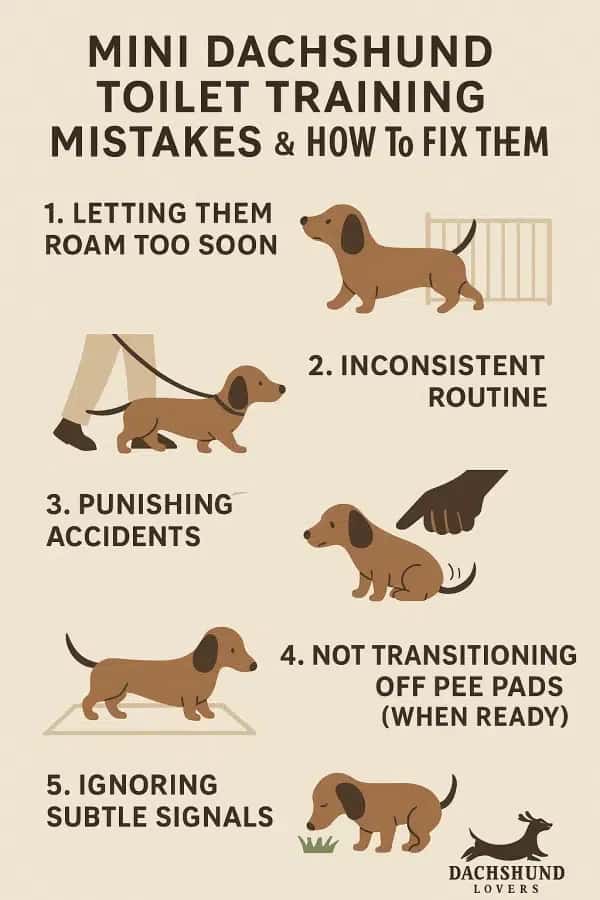
Even with the best intentions, it’s easy to sabotage your own progress when toilet training a mini dachshund. Their stubborn streak, combined with a tiny bladder, means consistency is everything. Here are the most common mistakes dachshund owners make — and how to course-correct before they become bad habits.
1. Letting Them Roam Too Soon
Allowing a not-yet-trained pup to wander freely around the house is a recipe for accidents — and stress. Without structure, your dachshund won’t learn boundaries or bathroom cues. Instead:
- Use a puppy pen or gate to limit access during training
- Set up a defined toileting space with clear surfaces (grass patch, pad, outdoor zone)
- Slowly expand freedom as their success rate improves
Try this: A compact indoor playpen like the MidWest Foldable Exercise Pen is a great way to keep your pup close while minimising mess.
2. Inconsistent Routine
Skipping toilet breaks or changing their schedule day-to-day is a fast way to confuse your dog. Dachshunds thrive on predictability, and missing cues means more accidents.
Stick to:
- First thing in the morning
- After meals, naps, and play
- Right before bed
Set reminders if needed. A consistent schedule builds confidence — for both of you.
3. Punishing Accidents
Yelling, scolding, or rubbing their nose in it? That’s outdated advice — and it backfires. Dachshunds may seem confident, but they’re sensitive dogs. Punishment only teaches fear, not clarity.
Instead:
- Interrupt calmly if you catch them mid-squat
- Redirect immediately to the right spot
- Reward generously if they finish in the correct place
And always clean with an enzyme-based cleaner like Nature’s Miracle Advanced Formula — regular household spray won’t remove the scent your dachshund can still detect.
4. Not Transitioning Off Pee Pads (When Ready)
While pee pads and grass patches are great early tools, staying on them for too long can delay outdoor training. The key is knowing when to move on.
Here’s a simple transition guide:
- Start placing pads closer to the door each week
- Gradually switch to outdoor breaks only, using the same “toilet” cue
- For apartments: use a real-grass balcony patch like The Pet Loo by PetSafe to make the leap easier
5. Ignoring Subtle Signals
Mini dachshunds often give subtle signs before they need to go — pacing, sniffing, pausing, or circling. These cues are easy to miss, especially during busy mornings or screen time.
Pay attention to patterns:
- After eating or waking
- When they suddenly get restless or anxious
- If they hover near the usual toilet spot
Catching these signs early means fewer accidents — and a faster path to success.
Toilet training isn’t about perfection — it’s about progress. Spot the mistakes early, and you’ll stay ahead of the curve.
Should You Use Treats or Praise to Reward Potty Training?
(Yes — But There’s a Trick to It)
When it comes to house training a miniature dachshund, positive reinforcement isn’t just helpful — it’s essential. These clever little sausages respond best to consistency, timing, and high-value motivation. But there’s a fine line between using treats effectively and creating a four-legged con artist who pretends to go, just to score a snack.
So, how do you strike the right balance?
Timing Is Everything
According to a 2020 study in the Journal of Veterinary Behavior, timing of reward delivery is critical for effective dog training, especially in young puppies. Rewards given during or immediately after the desired behavior significantly improve learning outcomes, while delayed rewards can lead to confusion or reinforcement of the wrong behavior.
Source: Journal of Veterinary Behavior – Timing of reinforcement affects learning speed in puppies
“Dogs live in the moment. If you praise them too late, you may be praising them for sniffing the floor — not for going in the right spot.”
— Dr. Carlo Siracusa, University of Pennsylvania School of Veterinary Medicine
What Kind of Reward Works Best?
You want something high-value, quick to consume, and easy to deliver. Think soft, bite-sized treats with a strong smell.
A few solid options we recommend:
- Zuke’s Mini Naturals: Soft, small, and low-calorie — perfect for frequent training.
- Wellness Soft Puppy Bites: Ideal texture and size for young, food-motivated pups.
- Paw Lifestyles Training Pouch: A great hands-free way to keep treats on you at all times.
And don’t underestimate the power of enthusiastic verbal praise. Use a consistent, cheerful cue like “Good toilet!” or “Yes, go potty!” to help them make the connection.
Should You Reward Every Time?
At the beginning — absolutely. Reward every successful potty trip to reinforce the behavior. Over time:
- Shift to intermittent reinforcement after a few weeks (every second or third time)
- Keep up verbal praise 100% of the time
- Gradually fade treats as the behavior becomes second nature
This prevents treat dependency and teaches your dachshund that good toileting is its own reward (with occasional bonuses).
A Quick Word on Bribing vs. Reinforcing
Bribing is showing the treat before the behavior. Reinforcing means delivering the reward after your dachshund has done the right thing. That timing matters. Otherwise, they’ll start faking squats or just expect a snack on command.
If they don’t go within a few minutes, step away and try again in 10–15 minutes. No treat unless they actually go.
Bonus Tip: Add a Verbal Cue
Adding a cue like “go toilet” or “potty time” just as they start peeing can help build a useful command. With repetition, your dachshund will learn to go on cue — a huge win when you’re on a schedule or in unfamiliar places.
Troubleshooting Accidents and Setbacks
(Without Losing Your Mind or Blaming the Rug)
Even with a solid routine and the best intentions, accidents happen. Maybe your dachshund gets distracted. Maybe you were on a Zoom call. Or maybe they just decided your hallway mat looked like a patch of grass. Whatever the cause, don’t panic — and definitely don’t take it personally.
Mini dachshunds are smart, but they’re also sensitive and stubborn. So the way you handle mistakes matters just as much as the training itself.
What to Do Immediately After an Accident
- Interrupt the moment (if you catch it)
A firm “uh-oh” or clap is enough. Don’t yell — you’re redirecting, not scaring. Then, calmly take them to the correct potty spot. - Clean thoroughly
Dogs tend to return to places where they’ve gone before, so use an enzymatic cleaner like Nature’s Miracle to remove all traces of odor. Avoid ammonia-based cleaners, which smell like urine and can confuse them. - Don’t punish after the fact
If you didn’t see it happen, don’t react. Telling them off hours later does nothing — they won’t connect the dots. You’ll only create anxiety around you, not the behavior.
Why Accidents Happen (Even With a Routine)
- They were unsupervised too long
- They didn’t finish their business outside
- You stretched time between breaks too soon
- There’s a sudden change in schedule or environment
- Medical issue (if frequent and sudden — always worth checking with your vet)
Research Says…
According to the American Veterinary Medical Association, house soiling in puppies is most commonly due to incomplete training and inconsistent routines — not disobedience. Keeping logs of toilet times and sticking to structure is the best prevention.
Resetting Without Losing Progress
If you’ve had a run of accidents:
- Reinstate short, frequent potty breaks — even every hour if needed
- Go back to basic supervision: use pens or gates again
- Reward successes like day one — yes, every single squat
These resets are normal. And they’re temporary. Just stay consistent, and your mini dachshund will fall back into rhythm.
When to Transition from Indoor to Outdoor Toileting
While indoor setups like pee pads and grass patches are fantastic for the early months (especially if you’re in an apartment or dealing with a young pup’s tiny bladder), they’re meant to be stepping stones, not permanent solutions.
The goal is always outdoor toileting — and knowing when (and how) to make that shift can save you a world of frustration later on.
Signs Your Mini Dachshund is Ready
- They consistently use their indoor potty area without accidents
- They’re holding their bladder for longer stretches between breaks
- They start heading to the door or pacing when they need to go
- They’re around 4–6 months old and responding well to routine
These signals suggest your mini dachshund has the bladder control and pattern recognition needed to graduate to the big leagues — aka, the great outdoors.
How to Make the Shift
- Pick a Spot Outside
Choose one area in your yard or near your building and stick with it. The more consistent the location, the easier it is for your dachshund to associate it with toileting. - Use the Same Cue Words
Whether it’s “go potty” or “toilet time,” consistency with verbal cues helps reinforce the behavior. Say it just before they start — not during or after. - Bring the Routine with You
Use the same feeding times, same break schedule, and go out after every meal, nap, or play session. This keeps the structure predictable even in a new environment. - Reward the Success — Immediately
Have a pocket full of treats ready. The second they go outside, reward them with praise and a treat. You want them to connect outdoor toileting with a win. - Phase Out Indoor Options
As your dachshund starts toileting more reliably outside, slowly reduce access to indoor potty areas. Remove them entirely once you’re confident in their new habit.
Real Talk From the Research
According to the American Kennel Club, “dogs thrive on routine, and the transition to outdoor potty training is smoother when it mirrors the structure of their indoor setup.” That means same times, same cues, same praise — just a new location.
FAQs About Potty Training a Mini Dachshund
More from This Series
Need more help navigating the joys (and frustrations) of toilet training your dachshund? Dive deeper with these related guides:
How to Toilet Train a Dachshund Puppy (Without Losing Your Mind)
The go-to guide for new dachshund parents. Real-life stories, practical steps, and plenty of “yep, that happened to us” moments.
Are Dachshunds Hard to Potty Train? (What Makes Them So Stubborn?)
Explore the mindset behind the stubborn streak. This one’s for anyone who’s ever asked, “Why won’t they just go outside?!”
A one-stop spot for all things toilet training — tips, tools, product recs, and strategies that actually work. Bookmark it now so you’re not scrambling later.
Authored by
James
James is the founder of Dachshund Lovers and the proud human of Harvey, a mini dapple with a big personality. He writes to empower and connect the dachshund community, blending founder insights with honest, experience-based stories about life with this incredible and special breed. James brings candid, experience-backed opinions to the community and always focused on fewer, better products and ideas that genuinely improve life for dachshunds and their people.
Read moreJames is the founder of Dachshund Lovers and the proud human of Harvey, a mini dapple with a big personality. He writes to empower and connect the dachshund community, blending founder insights with honest, experience-based stories about life with this incredible and special breed. James brings candid, experience-backed opinions to the community and always focused on fewer, better products and ideas that genuinely improve life for dachshunds and their people.
Read moreDisclaimer
This content is for informational purposes only and should not be considered veterinary advice. Always consult with a licensed veterinarian regarding your dog’s health and wellbeing.
There are no comments yet
Leave a comment