How to Toilet Train a Dachshund Puppy (Without Losing Your Mind)
How to Toilet Train a Dachshund Puppy (Without Losing Your Mind)
Toilet training a dachshund puppy can be hard. Learn how to set a routine, avoid common mistakes, and build habits that actually stick for long term success,
James
Posted on September 11, 2025.
Updated on July 20, 2026.
Table of Contents
- •The First Time We Brought Harvey Home…
- 1.Key Takeaways on How To Toilet Train Dachshund
- 2.Why Is Potty Training a Dachshund So Hard?
- •It’s in Their DNA
- •Smart, But Not Submissive
- •Common Mistakes (You Might Be Making)
- •Real Talk from Cronulla
- 3.Why Are Dachshunds So Hard to Toilet Train?
- •1. They’re Smart — But Selective
- •2. They Have Tiny (and I Mean Tiny) Bladders
- •3. They’re Easily Distracted (and a Bit Dramatic)
- •4. They’re Weather Princesses
- •Key Takeaways
- 4.When to Start Potty Training a Dachshund Puppy
- •Why Day One Matters
- •Setting the Tone (and the Floor)
- •Example Schedule (8–10 Week Puppy)
- 5.Where Should Your Dachshund Puppy Go to the Toilet?
- •The Backyard: Best for Long-Term Success
- •No Backyard? No Worries — But Be Strategic
- •Why “Roaming Freedom” Sets You Back
- 6.How Often Do Dachshund Puppies Need to Go?
- •General Toilet Timing by Age
- •What’s “Normal” for Dachshunds?
- •Signs They Need to Go (Don’t Miss These)
- 7.How to Train a Dachshund to Use a Pee Pad or Grass Patch
- •Pee Pads vs. Grass Patches: Which One Actually Works?
- -Pee Pads
- -Grass Patches
- •Step-by-Step: Using Pee Pads or Grass Patches the Right Way
- •What the Experts Say
- 8.How to Handle Setbacks and Accidents Without Losing Your Cool
- •First Rule: No Drama
- •What To Do When Accidents Happen
- 9.Graduating to Outdoor Potty Training (Without the Setbacks)
- •When Is Your Dachshund Actually Ready?
- •How to Transition from Indoors to Outdoors (Step-by-Step)
- 10.Common Dachshund Potty Training Mistakes (and How to Avoid Them)
- •1. Giving Too Much Freedom Too Soon
- •2. Skipping Scheduled Toilet Breaks
- •3. Missing the Signs
- •4. Inconsistent Rewards
- •5. Getting Angry After Accidents
- 11.How Long Does It Take to Potty Train a Dachshund?
- •For Puppies: 2 to 6+ Months (Depending on Consistency)
- •For Adults: 2 to 4 Weeks (Sometimes Longer)
- •What Slows It Down?
- •How to Make It Faster
- •So… How Long Is This Going to Take?
- -More from This Series
- -Disclaimer
Share

The First Time We Brought Harvey Home…
We were living in a modest second ground-floor unit in Cronulla near Highlands Property group — one of those older red blocks, where the walls were thin, the kitchen tiles were original (circa 1982), and the only outdoor space was a communal clothesline out the back. Harvey, our silver dapple dachshund, was just eight weeks old when we brought him home from Hillhaven Dachshunds in Tamworth in the summer of 2019, and we were in that excited, everything-smells-like-puppy phase.
That lasted about 12 hours.
Because while Harvey may have been tiny, his bladder was a biological mystery. One minute he was chasing a soft squeaky toy, the next minute he was relieving himself on the hallway floor — usually right after we’d just taken him outside.
By day three, we were tired, second-guessing everything, and Googling things like:
- “Do dachshunds understand toilet training?”
- “How long does it take to house train a stubborn puppy?”
- “Is it normal to cry during week one of dog ownership?”
Turns out we weren’t alone. According to the American Kennel Club, house training is consistently ranked as one of the most common challenges new puppy owners face — and dachshunds, with their legendary independence and selective listening skills, aren’t known for making things easy.
But here’s the good news: it gets better. Much better.
With the right structure, consistency, and understanding of the dachshund’s quirky personality, toilet training is absolutely achievable. It just takes longer than it would with, say, a people-pleasing golden retriever.
This guide is for the real-world dachshund parent — the ones living in apartments, juggling work, cleaning up accidents, and wondering if they adopted a cute little sausage or a pint-sized anarchist. We’ve been there. And we’ve got you covered.
Key Takeaways on How To Toilet Train Dachshund
Topic | Summary |
|---|---|
Personal Experience | Our experience with Harvey in a small Cronulla unit highlights the real-life chaos of week one |
Why It’s Tough | Dachshunds are notoriously independent, making toilet training a longer process |
Common Owner Questions | Includes keyword-focused queries like “potty training dachshund puppy” and “dachshund house training” |
What This Article Offers | A realistic, step-by-step training plan based on actual experience and expert-backed sources |
Why Is Potty Training a Dachshund So Hard?
If you’ve found yourself Googling “why won’t my dachshund pee outside?” at 1:30am — barefoot, defeated, holding a soggy paper towel — you’re not alone.
Potty training a dachshund is like playing chess with a toddler. It’s not that they don’t understand the rules. They just think their way is better.
It’s in Their DNA
Dachshunds were bred for independence. These little sausages were built to hunt solo, burrowing into dark holes, making big decisions in tight places. That same spirit shows up at home — especially when you’re standing outside in your dressing gown, pleading with them to go potty on command.
As The Spruce Pets puts it, dachshunds are among the top five hardest breeds to house train. Not because they’re not smart — but because they’re selective.
Smart, But Not Submissive
Dachshunds quickly learn where they should go. The problem? They also learn what they can get away with. Unlike Labradors, who live for your approval, dachshunds are more “what’s in it for me?”
This isn’t a flaw. It’s a feature. It just means your training plan needs to work with their nature, not against it.
“The trick is consistency and rewards. Punishment doesn’t speed up potty training — it just creates sneakier accidents.”
— VetStreet: House Training Your Puppy
Common Mistakes (You Might Be Making)
- Too much freedom too soon
Dachshunds love to explore, but giving them the full run of the house from day one sets you up for failure. Confined areas = fewer accidents. - Inconsistent routines
Skipping a scheduled potty break or reacting too late teaches unpredictability. And unpredictability breeds confusion. - Overreacting to accidents
Shouting or scolding leads to secretive toileting — behind the couch, under the table, anywhere but outside.
Real Talk from Cronulla
Back when we were in the unit in Cronulla, Harvey’s worst phase came when we thought he was fully trained. We got too relaxed. Pulled back the structure. Let him roam. Within two days, he’d picked a new indoor “pee spot” — the corner of our hallway.
It took weeks to correct what we could’ve avoided with a tighter routine.
If you’re still in the early days, trust me — go slow. Structure beats speed.
Why Are Dachshunds So Hard to Toilet Train?
If you’ve ever muttered “Why won’t this dog just pee outside like a normal puppy?” — take a breath. You’re not doing it wrong. Dachshunds just play by their own rules.
And when it comes to house training, they’re one of the most infuriatingly adorable breeds to crack.
Let’s break down why these little legends test your patience — and how to work with their quirks, not against them.
1. They’re Smart — But Selective
Dachshunds are sharp. They’ll learn how to open a treat cupboard before they master going to the toilet in one place. Why? Because they’re selective problem-solvers. If a behavior doesn’t result in a reward they care about, they’ll simply skip it.
This independent streak is one of the reasons they’ve historically been a top breed for hunting. But in a modern household? It means every command (or toilet prompt) can feel like a negotiation.
As the American Kennel Club puts it, “Dachshunds are clever, lively and courageous… but their stubbornness can be a challenge in training.”
So you’re not crazy. Your dachshund really is trying to strike a deal.
2. They Have Tiny (and I Mean Tiny) Bladders
Let’s talk anatomy.
Mini dachshunds, in particular, have bladders the size of a shot glass. Combine that with fast metabolisms and excitable temperaments, and you’ve got a dog that needs to go now, not in 15 minutes.
For puppies under 4 months, toilet breaks every hour during the day aren’t excessive — they’re necessary. And yes, that includes after meals, naps, and even energetic play.
We’ve outlined a full sample daily schedule for minis over in this article:
How to Potty Train a Mini Dachshund
3. They’re Easily Distracted (and a Bit Dramatic)
Take your doxie outside and what happens?
They sniff. They run. They bark at the neighbor’s cat. Then… they do nothing. Until 30 seconds after you bring them inside and step onto your rug.
Welcome to dachshund logic.
Many doxies confuse “outside” with “adventure time”, especially if they haven’t yet made the connection between location and elimination. That’s why keeping your dachshund on a leash, using a consistent potty cue (like “go pee”), and staying boring during toilet breaks helps drive the message home.
4. They’re Weather Princesses
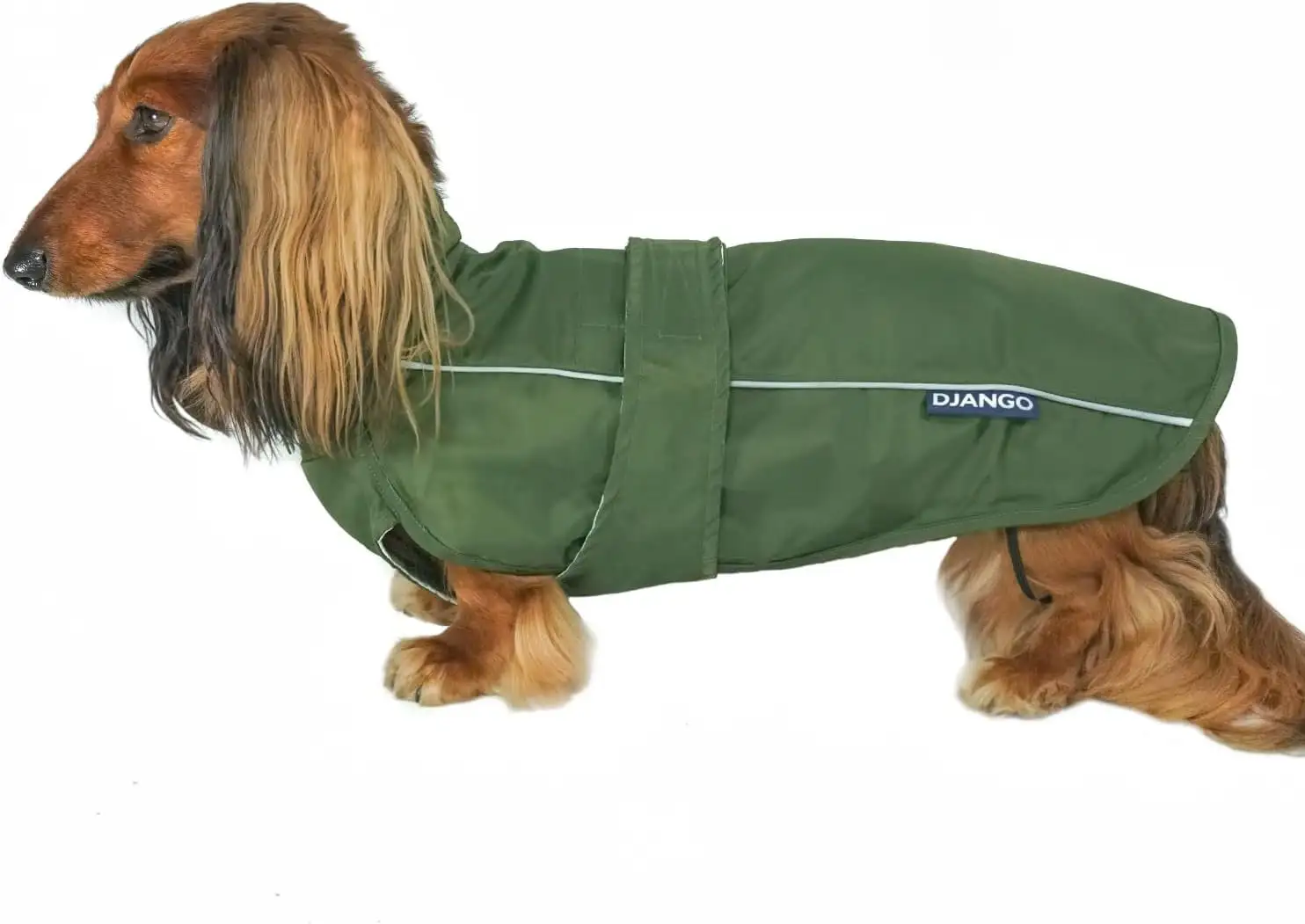
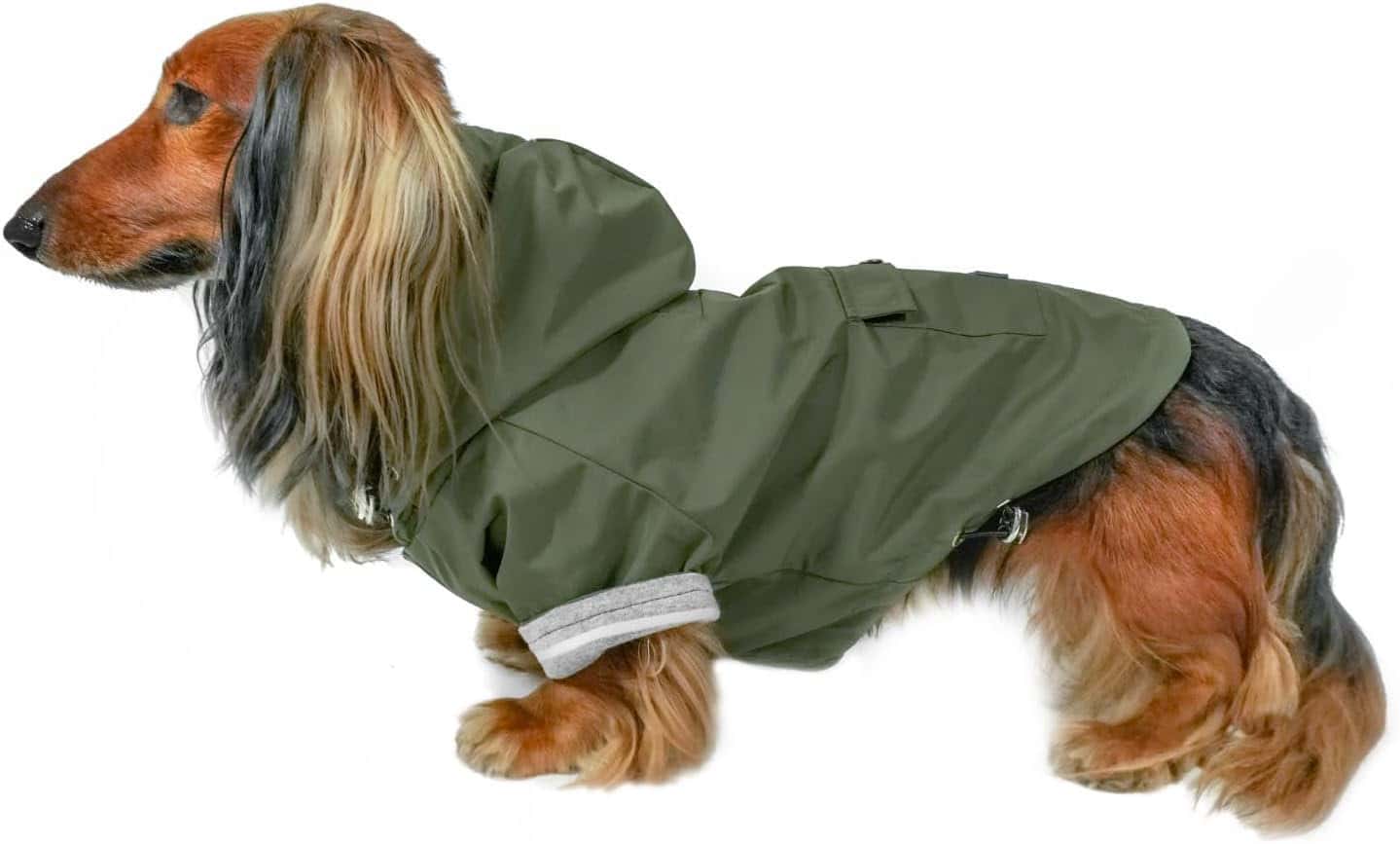
If you live anywhere with rain, wind, or cold mornings — good luck. Dachshunds hate being uncomfortable. Many will straight-up refuse to go outside when it’s wet or chilly, even if they’re busting.
This is where patience, proper outdoor gear (like a rain jacket or warm jumper), and consistent praise come into play.
Still struggling? We go deeper on the emotional side of training here:
Are Dachshunds Hard to Potty Train?
Key Takeaways
- Dachshunds are stubborn but smart — they’ll toilet train when they see the benefit.
- Miniatures need frequent breaks — don’t expect them to hold it for hours.
- Keep toilet breaks focused — leash on, use a cue word, reward immediately.
- Don’t trust the weather forecast. Rainy days can mean indoor protests without planning.
- You’re not alone. Many dachshund owners face this challenge — consistency, structure, and reward-based training are your best tools.
When to Start Potty Training a Dachshund Puppy
The short answer? Day one.
The long answer? Still day one — but with patience, structure, and a game plan.
If you’ve just brought home your dachshund puppy, whether from a registered breeder like Hillhaven Dachshunds in Tamworth or a trusted rescue, toilet training should begin the moment those tiny paws hit your floor.
Delaying it because “they need to settle in” or “they’re too small” only makes the process longer and messier. Dachshunds respond best to clear boundaries early on — especially when it comes to where they’re allowed to pee.
Why Day One Matters
Think of your dachshund’s first 48 hours as a soft reset. Everything is new — smells, sounds, routines, people.
That means it’s the perfect time to:
- Establish bathroom routines (after sleep, play, meals)
- Introduce a designated toilet spot outside or on puppy pads
- Start using verbal cues like “go potty” or “toilet time”
- Reward like your life depends on it (tiny treats, big praise)
As PDSA notes, “The sooner you begin toilet training, the easier it will be to help your puppy understand where it’s okay to go.”
Setting the Tone (and the Floor)
Here’s the reality of those early days:
- Accidents will happen. Get the mop, keep your cool.
- Praise every win. When they go in the right spot, make it a party.
- Never punish. Your dachshund isn’t being naughty — they’re learning. If they slip up, clean it up and move on.
Bonus tip: Use enzymatic cleaner for accidents — standard sprays often leave traces your dachshund can smell (which means “repeat performance” territory).
Example Schedule (8–10 Week Puppy)
- 6:30am: Straight outside — no cuddle time, no play
- 7:00am: Breakfast
- 7:30am: Toilet break
- 9:00am: Nap → Wake = toilet
- 12:00pm: Lunch → Toilet
- 2:00pm: Post-play toilet
- 5:00pm: Dinner → Toilet
- 7:00pm: Last toilet before bed
It’s full-on, we know. But it’s also temporary. That effort upfront is what fast-tracks long-term success.
Where Should Your Dachshund Puppy Go to the Toilet?
When your dachshund puppy first arrives home, the excitement is quickly followed by the realisation: “Where is this tiny sausage going to pee?”
The truth is, dachshunds don’t come pre-installed with a toilet preference. They’ll go wherever they feel safe, and once they’ve picked a spot — good luck convincing them otherwise. That’s why choosing the right location from the very start is one of the most important decisions you’ll make in the early weeks.
The Backyard: Best for Long-Term Success
If you’ve got a backyard, you’re already ahead.
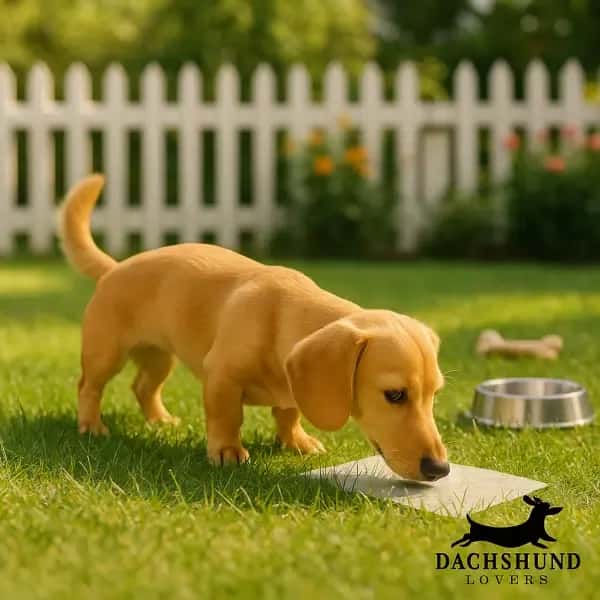
Designating a consistent toilet spot outside — ideally in a quiet corner on grass — gives your dachshund puppy the clearest signal: “This is where the magic happens.”
Why backyard training works:
- It creates a clear boundary between toilet space and living space
- It taps into natural surface preferences — most dogs prefer grass over hard surfaces
- It sets them up for success as adults who toilet outdoors
Take them to the exact same spot each time, especially after meals, naps, and play. Dogs rely heavily on scent, so the smell of previous success becomes a powerful cue to go again. According to the American Kennel Club, scent marking plays a major role in potty training routines source.
Over time, the repetition pays off. And best of all? You’re not stuck with smelly pads inside.
No Backyard? No Worries — But Be Strategic
Living in an apartment, townhouse, or unit doesn’t mean toilet training is doomed. But it does mean you’ll need a more thoughtful setup.
Here are three popular options that have worked well for dachshund owners:
- Indoor puppy pad station: Set up in a low-traffic area, like the laundry or bathroom. Never move it — consistency is everything.
- Balcony toilet area: A synthetic grass pad can replicate the feeling of real grass. We used this option when Harvey was a puppy and we were living in Cronulla, and it genuinely made a difference during the rainy weeks.
- Real grass solutions like Fresh Patch: A subscription-based grass delivery service that lets apartment dogs enjoy the benefits of real lawn, without needing to go outside.
Whichever you choose, don’t mix and match. Rotating between indoor and outdoor setups too early in the process creates confusion — and confusion leads to accidents.
Why “Roaming Freedom” Sets You Back
We know it’s tempting. You’ve just brought this adorable, clumsy sausage dog home, and you want them to feel free and relaxed. But giving your dachshund full access to the house before they’re reliably toilet trained is like handing the car keys to a learner driver.
Dachshunds thrive with structure. Limiting their space helps them form solid toilet habits — they’re far less likely to go in their bed area or in your line of sight.
Use:
- Baby gates to confine to one or two rooms
- Exercise pens with a toilet area inside
- Your presence — keep them in the same room you’re in
These small boundaries add up to big wins in toilet training progress.
How Often Do Dachshund Puppies Need to Go?
If you’re wondering “How many times is too many?” — welcome to life with a dachshund puppy. These little sausages have small bladders and fast metabolisms, which means you’re going to be heading outside (or to your indoor toilet spot) more than you might expect.
General Toilet Timing by Age
Here’s a rough timeline based on age — just remember, every pup is different, and these numbers are a guideline, not gospel.
Age | Toilet Frequency |
|---|---|
8–10 weeks | Every 30–60 minutes during the day |
11–14 weeks | Every 1.5–2 hours |
15–20 weeks | Every 3–4 hours |
6+ months | Every 4–6 hours (if well-trained) |
At night, you’ll need to set an alarm for at least one toilet trip until around 12–14 weeks. Yes, it’s brutal. But it’s temporary.
Vet-approved sources like PetMD recommend using your puppy’s age in months as a guide — e.g., a 2-month-old may only be able to hold it for 2 hours, max.
What’s “Normal” for Dachshunds?
Dachshunds are known for being a bit more stubborn (read: dramatic divas) when it comes to toilet training. So while the chart above applies broadly, your doxie might decide the timeline doesn’t apply to them.
Here’s what we saw with Harvey:
- At 9 weeks: We were going out every 40 minutes.
- At 12 weeks: He started holding for 1.5 hours during the day.
- At 16 weeks: Accidents slowed, but he still needed supervision.
Moral of the story? Expect progress in weeks, not days — and celebrate the small wins (like that first full night without an accident!).
Signs They Need to Go (Don’t Miss These)
New owners often miss these early cues — and by the time they notice, it’s too late.
Keep an eye out for:
- Sniffing in circles
- Suddenly going quiet or hiding
- Whining near the door or crate
- Wandering off after a meal or nap
If you see any of these, act fast.
How to Train a Dachshund to Use a Pee Pad or Grass Patch
Let’s face it — not everyone has the luxury of a backyard, and even if you do, dragging yourself outside in your dressing gown at 3am isn’t exactly a dream scenario. If you’re raising your dachshund puppy in an apartment (like we did when living in Cronulla), or just want a plan B for wet weather, indoor toilet options like pee pads and grass patches can be a lifesaver.
But — and it’s a big but — only if you use them with structure. Otherwise, you risk training your dachshund to think anything soft and absorbent (hello, bath mat) is fair game.
Pee Pads vs. Grass Patches: Which One Actually Works?
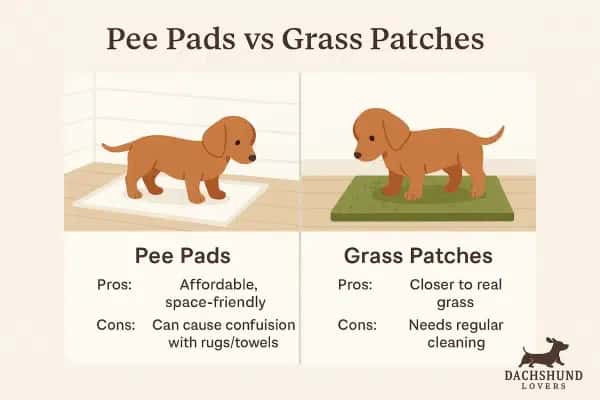
Pee Pads
- Pros: They’re affordable, easy to get started with, and great in tight spaces.
- Cons: Their soft texture can backfire. Puppies may generalise and start toileting on towels, rugs, or laundry piles. We learned this the hard way with Harvey when he mistook our hallway runner for a giant wee pad.
Grass Patches
- Pros: Closer to the real thing. Whether you use artificial turf or real grass, these help bridge the gap between indoor and outdoor toileting.
- Cons: Real turf requires replacing and regular cleaning. Artificial ones still need frequent disinfecting and can carry odour.
We started with pee pads but quickly made the switch to an artificial grass patch from PETstock. Within days, Harvey’s accuracy improved and the transition to backyard toileting later on was seamless.
Step-by-Step: Using Pee Pads or Grass Patches the Right Way
- Commit to a single location
Don’t move the pad around. Choose a corner — ideally away from food and play zones — and stick to it. Inconsistency here can delay training by weeks.
- Use scent cues
If your puppy’s already peed somewhere, dab a tissue on it and gently rub it onto the pad or patch. Otherwise, consider using a product like Simple Solution Puppy Aid Training Spray. The scent draws your puppy to the spot like a magnet.
- Keep the area clean but familiar
Clean up any accidents outside the potty zone thoroughly using enzymatic cleaners such as Nature’s Miracle. Avoid bleach or ammonia-based products — they confuse dogs and might lead to repeat mistakes.
- Use a lead indoors
Yes, really. Clip the leash on and walk them to the pee pad or patch like you would on a regular toilet break. It reinforces the idea that this is a structured moment — not a free-for-all.
- Timing is everything
Praise your dachshund during or immediately after they go. Delay it even five seconds and you’ve missed the teaching moment.
- Watch them like a hawk
Free-roaming leads to free-peeing. Until they’re consistently using their toilet area, keep them in sight or in a confined space like a pen or small room.
- Have an exit plan
Pee pads aren’t forever. Once your dachshund gets the hang of it, start slowly transitioning outside if that’s your goal. That means moving the patch closer to the door, and eventually outdoors.
What the Experts Say
According to VetStreet, “Indoor potty training works best when you treat it with the same structure and consistency as outdoor training.” That means a strict routine, a single location, and immediate reinforcement when they get it right.
Nature’s Miracle Stain & Odor Remover
How to Handle Setbacks and Accidents Without Losing Your Cool
Even with a solid plan and a strong start, potty training rarely goes smoothly from day one. One day your dachshund nails it — the next, they’re leaving you a surprise on the hallway rug. Sound familiar?
Here’s the thing: accidents are part of the process. And with dachshunds — a breed known for their bold streak and love of doing things their way — they’re not just common, they’re expected. The key isn’t avoiding setbacks altogether. It’s knowing how to respond to them without unraveling all the progress you’ve made.
First Rule: No Drama
Let’s be clear — never punish a dachshund for an accident. That means no yelling, no dragging them to the mess, and absolutely no rubbing their nose in it. Not only is it ineffective, but it can backfire fast. Dachshunds are whip-smart and emotionally intuitive — if they associate you with fear or punishment, they’ll start hiding their messes or become anxious about toileting altogether.
Instead, adopt the calm confidence of a seasoned guide. You’re here to lead — not scold.
What To Do When Accidents Happen
- Interrupt Immediately (if you catch them mid-squat)
Clap your hands or say “ah-ah!” in a calm but firm tone. Then gently redirect them to their toilet area — even if they’ve already finished. This helps reinforce location over time. If they finish there, praise them like a champ. - Clean Up With Precision
Dogs have incredibly sensitive noses. If the scent remains, they’ll return to that spot. Use a proper enzymatic cleaner like Nature’s Miracle Stain & Odor Remover to eliminate lingering smells. Avoid household cleaners with ammonia — they can mimic the smell of urine and confuse your dog. - Check the Routine, Not Just the Mess
Accidents are often a symptom of a broken routine. Ask yourself: - Did they get their usual potty break?
- Were they left unsupervised for too long?
- Was there something new (visitors, rain, loud noise) that may have thrown them off?
- Did they get their usual potty break?
- In our own journey with Harvey back in our old Cronulla unit, we learned quickly that even a missed cue by 10 minutes could mean a full reset on our progress.
- Don’t Forget the Wins
It’s easy to focus on the mess and forget the success. But the fastest path forward is through positive reinforcement. Praise your dachshund enthusiastically the moment they go in the right place. Not two minutes later. Not once they come over for a pat. Right then and there. That moment of reinforcement is what sticks.
Accidents Are Not Regression — They’re Feedback
According to the American Kennel Club, small breeds like dachshunds often take longer to toilet train due to their small bladders and lower tolerance for environmental discomfort (think: wet grass, cold wind, or even a noisy backyard).
So if your dachshund has an off day, view it as information — not failure.
Graduating to Outdoor Potty Training (Without the Setbacks)
So your dachshund has finally mastered indoor potty training — cue the confetti. But now comes the next big leap: getting them to do their business outside. It sounds simple, but for dachshunds, it’s a real transition. The smells are different. The distractions are endless. And for some pups, the change in surface alone can throw everything off.
When we were living in a small unit in Cronulla, we didn’t have a yard — just a shared garden space. So when Harvey was ready to go from pads to real grass, we had to be deliberate about how we made the switch. Spoiler: he didn’t love the cold concrete at first. But with some structure, routine, and (a lot of) praise, we got there.
When Is Your Dachshund Actually Ready?
There’s no magic number of weeks — but these signs are good indicators:
- Zero indoor accidents for at least 7–10 days
- Consistent use of the pee pad or grass patch
- Showing signs they need to go — like heading to the pad, whining, pacing, or even looking at the door
- Holding their bladder for a few hours (or overnight)
If your pup is still peeing unexpectedly or seems unsure about their designated spot, don’t rush it. According to Dr. Jessica Pierce via Psychology Today, many house-training setbacks are caused by owners moving too quickly or getting inconsistent (source).
How to Transition from Indoors to Outdoors (Step-by-Step)
- Start with Familiarity: Use the Same Door and the Same Spot
Routine matters. Always use the same exit and head to the same patch of grass or outdoor space. If you have a backyard, pick one corner. If you’re in an apartment, it might be a consistent spot near the sidewalk or building garden. - Bring the Scent With You
Dogs follow their nose. Take a piece of used pee pad, paper towel, or even a toy that smells like the indoor potty area. Leave it outside where you want them to go. The scent tells your dachshund, “This is a toilet.” This tactic is backed by training guides like those from AKC — who recommend using scent to guide your dog during transitions (source). - Use the Same Verbal Cue
Whether it’s “toilet,” “go potty,” or “do your business,” keep your phrasing consistent. Say it calmly and clearly each time they’re in position. Over time, the cue becomes a behavioral trigger. - Go Out Frequently (More Than You Think)
In the early days of outdoor training, take your pup out: - First thing in the morning
- After meals
- After naps
- After playtime
- Before bedtime
This might feel like overkill, but repetition builds habit. Dachshunds are smart — they just need a bit more structure than most breeds.
- First thing in the morning
- Praise Like You Mean It
Don’t wait until they’ve walked back inside — praise the exact moment they’re toileting. Bring a treat, use your voice, and let them know they nailed it. A few seconds of excitement will do far more than any punishment later ever could. - Keep an Indoor Backup (Just in Case)
Transitioning doesn’t mean you need to remove indoor options completely overnight. If your dachshund is nervous or it’s pouring rain, having a grass patch on standby can avoid accidents and setbacks.
Troubleshooting Common Issues
- They Won’t Go Outside: Try going at low-traffic times. Cars, people, and dogs can overwhelm a pup. Keep outings short but frequent.
- They Get Distracted: Limit the area they can explore. Use a leash and stand still near the potty spot. This helps them focus on the task.
They Go Inside Right After Being Outside: This means they’re either nervous or didn’t understand the expectation. Try extending the time you spend at the outdoor potty spot and reduce excitement immediately after the walk to avoid distraction.
Common Dachshund Potty Training Mistakes (and How to Avoid Them)
Even the best-intentioned dachshund owners can trip up during the toilet training process. Whether it’s inconsistency, misreading your pup’s cues, or just giving them a little too much freedom too soon — these mistakes can stretch out training far longer than necessary.
1. Giving Too Much Freedom Too Soon
Dachshunds are clever but also easily distracted. If you let your pup roam the whole house before they’re toilet trained, chances are they’ll sneak off to pee in a quiet corner. Freedom should be earned gradually — not handed over on day one.
Fix it: Until they’re consistent, keep them in a confined area like a playpen or gated room where you can supervise closely. As their reliability improves, slowly expand their access.
2. Skipping Scheduled Toilet Breaks
Bladders don’t run on guesswork. Puppies, especially dachshunds, need a consistent toilet routine — ideally after waking, eating, playing, and every 1–2 hours when young.
Fix it: Use a timer on your phone or a potty training app to stay on track. Over time, your pup will learn the rhythm and start anticipating toilet time — a win for both of you.
3. Missing the Signs
Many dachshunds give warning signs before an accident: circling, sniffing, or heading toward a favourite pee spot. If you’re distracted, you’ll miss them — and they’ll go wherever they please.
Fix it: Watch like a hawk, especially in the early weeks. If they start showing a “pre-potty” behavior, calmly guide them to their pee pad, grass patch, or outside spot.
4. Inconsistent Rewards
Rewarding your dachshund when they get it right is crucial — but so is when you reward them. If you’re praising them 10 seconds too late or forgetting to reward at all, they won’t make the connection.
Fix it: Keep a stash of treats by the door or near their potty spot. Praise and treat the moment they start going (yes, even mid-pee). Timing is everything.
5. Getting Angry After Accidents
Yelling, scolding, or rubbing their nose in it doesn’t teach your dog anything — except that you’re unpredictable. It damages trust and may even lead to sneaky toileting in hidden spots.
Fix it: Clean the mess, move on, and use enzymatic cleaners to eliminate scent. Then double down on supervision and routine
How Long Does It Take to Potty Train a Dachshund?
If you’ve found yourself frantically searching “how long does it take to toilet train a dachshund?” while scrubbing your third accident of the day off the hallway rug — take a breath. You’re in good company. The answer isn’t black and white, but we can give you a solid roadmap based on both expert advice and plenty of firsthand experience.
For Puppies: 2 to 6+ Months (Depending on Consistency)
Most dachshund puppies take at least 2–3 months to start developing reliable toileting habits. But full mastery? That can stretch to 6 months or even longer, especially if you have a particularly strong-willed pup or if life throws off your routine.
Their small size means tiny bladders and fast metabolisms, which is why puppies can’t hold it for very long — especially in the early weeks. According to the American Kennel Club, small breeds often need more frequent breaks and longer reinforcement to develop solid toilet habits.
When we were living in our unit in Cronulla, Harvey took about four months to become consistent — but only because we were strict about timing, consistency, and routine. Any lapses on our part (like trying to push bedtime too far, or leaving him free-roaming for too long) would result in a puddle. And that’s not a “bad dog” moment — it’s on the humans every time.
For Adults: 2 to 4 Weeks (Sometimes Longer)
If you’re adopting an older dachshund or rehoming one from a rescue, the process can move faster — especially if they were previously house-trained. Some dogs only need a week or two to adjust, particularly in a stable home with a predictable routine.
However, if they were never properly toilet trained, or have trauma or confusion from past environments, you’ll need to treat them like a puppy — no shortcuts. Go back to basics: scheduled toilet breaks, praise for every success, and limited unsupervised time.
What Slows It Down?
Even the most diligent owner will face setbacks. Don’t panic — these are part of the process:
- Environmental changes: Moving house, new furniture, loud renovations
- Weather disruptions: Some dachshunds hate going outside in the rain
- Growth spurts or teething: Can throw off routines
- Medical issues: Always rule out UTIs or gut issues with your vet if you notice a sudden regression
One of our readers, Sophie from Melbourne, emailed us after her 5-month-old mini dachshund regressed completely during a house move. Once things settled, and she reinforced the basics again, her pup got back on track within two weeks.
How to Make It Faster
There’s no secret sauce — just reliable, structured action:
- Same toilet times every day — after waking, after meals, before bed.
- Use a consistent command — e.g., “Go toilet” — to build an association.
- Limit freedom — pens, baby gates, and crates are your friend (especially early on).
- Immediate reward — as they squat, not after they’re walking away.
- Stick to one location — the clearer the routine, the faster they learn.
For more behavioral context, check out Are Dachshunds Hard to Potty Train? — it’ll help you understand what makes them tick (and how to keep your cool when things go sideways).
So… How Long Is This Going to Take?
You’re not going to love this answer — but here’s the truth: it takes as long as it takes. Every dachshund is different. What matters is your consistency, your willingness to reset when things slip, and your ability to stay calm when they inevitably do.
If you want help tailoring your approach to a smaller breed, we’ve also put together a Mini Dachshund Potty Training guide with specific advice for their shorter holding capacity and smaller routines.
FAQs About Toilet Training Dachshunds
More from This Series
Want to go deeper into dachshund toilet training and tackle the trickiest challenges? Explore our full series:
Are Dachshunds Hard to Potty Train?
Understand why your dachshund might be resisting — and how to work with their stubborn streak, not against it.
How to Potty Train a Mini Dachshund
Tailored tips for smaller bladders, tighter spaces, and life in apartments.
Dachshund Potty Training Hub
Your go-to destination for everything toilet training — from first wee to full success. Bookmark it for easy reference.
Authored by
James
James is the founder of Dachshund Lovers and the proud human of Harvey, a mini dapple with a big personality. He writes to empower and connect the dachshund community, blending founder insights with honest, experience-based stories about life with this incredible and special breed. James brings candid, experience-backed opinions to the community and always focused on fewer, better products and ideas that genuinely improve life for dachshunds and their people.
Read moreJames is the founder of Dachshund Lovers and the proud human of Harvey, a mini dapple with a big personality. He writes to empower and connect the dachshund community, blending founder insights with honest, experience-based stories about life with this incredible and special breed. James brings candid, experience-backed opinions to the community and always focused on fewer, better products and ideas that genuinely improve life for dachshunds and their people.
Read moreDisclaimer
This content is for informational purposes only and should not be considered veterinary advice. Always consult with a licensed veterinarian regarding your dog’s health and wellbeing.
There are no comments yet
Leave a comment