Dachshund Brain Size
Dachshund Brain Size
Is their brain really smaller or just wired differently? We break down what makes the dachshund mind unique (and a little mischievous).

James
Posted on October 31, 2025.
Updated on July 21, 2026.
Table of Contents
- 1.Key Takeaways
- 2.Do Dachshunds Really Have Small Brains?
- •Brain-to-Body Ratio
- •The Myth vs. the Science
- •Real-World Examples
- •Related Misunderstandings
- 3.Origins of the “Small Brain” Myth
- •1. Stubbornness Mistaken for Lack of Smarts
- •2. Skull Shape & Brain Diagrams
- •3. The Reputation Factor
- •4. Misuse in Popular Culture
- 4.Brain Structure & Skull Shape
- •Elongated Skull Design
- •Brain Shape vs. Brain Size
- •Impacts on Neurology
- •Skull Shape and Dental Links
- •5. Comparison of Skull Types
- •6. Owner Perspective
- 5.Does Brain Size Affect Intelligence?
- •1. Intelligence in Context
- •2. The Dachshund Profile
- •3. Why the Myth Persists
- •4. Research Backing
- •5. Owner’s Role in Nurturing Intelligence
- 6.Health Implications of Brain Size & Skull Shape in Dachshunds
- •Neurological Vulnerabilities
- •Dental Health & Brain Connection
- •Cognitive Ageing
- •Behavioural Health Links
- •Owner Checklist: Monitoring Brain & Neurological Health
- •Table: Brain Structure vs Health Considerations
- •Final Perspective
- 7.Owner Perspective: Living With a Clever Dachshund
- •The Myth vs the Reality at Home
- •The Role of Mental Enrichment
- •Training With Independence in Mind
- •Table: Common Owner Misconceptions vs Reality
- •Creating a Brain-Friendly Home
- •The Harvey Factor
- -More from This Series
- -Disclaimer
Share

Harvey has a memory I envy. He remembers every café where he once scored a bit of bacon, every park we’ve ever walked through, and somehow the exact cupboard where his favourite toy is hidden. That got me thinking: what’s really going on inside a dachshund’s brain? Dachshund brain size is a topic that sparks curiosity among owners and enthusiasts alike, especially given the breed’s reputation for cleverness and independence.
This article is designed for dachshund owners and enthusiasts who want to understand the facts about dachshund brain size, intelligence, health implications, and what these mean for daily life with a dachshund. We’ll cover the science behind dachshund brain size, debunk common myths, explore how brain structure relates to health and training, and share practical owner perspectives. Understanding dachshund brain size matters because it helps owners provide better care, support effective training, and recognize the unique strengths of this beloved breed.
Dachshunds, like many breeds, have a notable cognitive capacity that supports their impressive problem-solving skills and memory. A dog's brain, like that of other canines, has evolved under strong selection pressures from humans, resulting in significant variation in brain anatomy among breeds—including dachshunds.
There’s a long-running myth that dachshunds have “small brains” compared to other breeds—a rumour often used to explain their stubborn streak or cheeky independence. The truth is less dramatic. According to AKC, dog brain size generally scales with body size. A dachshund’s brain is proportionate to its frame—not tiny, not oversized, just balanced for a small hunting dog. When compared to other small dogs, dachshunds demonstrate that small dogs can still possess impressive cognitive abilities and intelligence. In fact, the cognitive abilities of dachshunds are comparable to those of toddlers, enabling them to learn and understand basic commands and emotions.
So why the reputation? Their unique skull shape, independent nature, and certain health quirks play into the perception. But small brain doesn’t mean small smarts—in fact, dachshunds are ranked among the more problem-solving, instinct-driven dogs, though they may not always choose to “listen.” Their cognition and cognitive abilities are evident in their adaptability, memory, and breed-specific behaviors.
Key Takeaways
Problem | Summary | Key Notes |
|---|---|---|
Do dachshunds have small brains? | No — their brain size is proportionate to body size, like other small breeds. | Myth often confused with stubborn behaviour. |
Does brain size equal intelligence? | Not directly. Dachshunds are clever but independent. | Intelligence shows in problem-solving and memory. |
Why the long skull matters | Dachshunds' elongated skull slightly alters brain shape. | Doesn't lower intelligence but connects to some neurological concerns. |
Related health links | Brain and skull structure tie into risks like seizures and IVDD. | Monitoring is important in middle to senior years. |
Owner perspective | Brain size matters less than enrichment, training, and engagement. | Mental stimulation keeps them sharp and balanced. |
Dachshund Brain Size Summary:
Miniature dachshund brains measure around 70–80 cubic centimeters, while standard dachshund brains measure 120–130 cubic centimeters. Despite their small absolute brain size, dachshunds possess a relatively large brain compared to their body size, showing a higher brain-to-body mass ratio than some larger breeds. This means that, pound for pound, dachshunds often have more brain tissue relative to their size than bigger dogs.
Do Dachshunds Really Have Small Brains?

The idea that dachshunds have “small brains” has been floating around for decades. It usually comes up in two contexts: a joke about their stubbornness or a misunderstanding of their skull shape. But the reality is straightforward: a dachshund’s brain is the right size for its body. While dachshunds have smaller brains than larger breeds or bigger dogs, their brain size is proportionate to their body size, just as it is in other breeds. There is also notable intraspecific variation in brain size among dog breeds, meaning that differences exist within the species, not just between different species. However, compared to other species, dogs—regardless of breed—have a similar number of neurons in their brains, which provides an equal capacity for learning and comprehension across all breeds.
Actual Dachshund Brain Size:
Miniature dachshund brains measure around 70–80 cubic centimeters, and standard dachshund brains measure 120–130 cubic centimeters. Dachshunds possess a relatively large brain compared to their body size, showing a higher relative brain mass than some larger breeds. Despite being smaller in absolute size, smaller dog breeds like dachshunds often have a larger brain-to-body size ratio.
Brain-to-Body Ratio
In dogs, brain size scales with overall body size. The brain-to-body ratio is a measure of the size of the brain relative to the animal’s total body mass. This ratio is important because it provides insight into the animal’s potential cognitive abilities and neurological efficiency.
A dachshund weighing around 7–10kg will naturally have a smaller brain than a German Shepherd or Labrador, but it’s proportionate. Compared to larger dogs, dachshunds—as a smaller dog breed—have smaller brains, but this is typical for their size and breed characteristics. In fact, dachshunds possess a relatively large brain compared to their body size, showing a higher brain-to-body mass ratio than some larger breeds. Despite their small absolute brain size, dachshunds have a similar number of neurons as other dog breeds, indicating an equal capacity for learning and comprehension. Brain size can vary significantly between dog breeds, reflecting differences in genetics, morphology, and selection for specific traits. Studies have shown that dogs with larger brains tend to have longer yawning duration, indicating that larger brains are associated with certain behaviors such as yawning.
According to PetMD, there’s no direct link between the physical size of a dog’s brain and its intelligence.
The Myth vs. the Science
- The myth: dachshunds are “hard-headed” or “slow learners” because they have smaller brains.
- The fact: dachshunds are clever problem-solvers, but their independence often makes them less obedient than breeds bred purely for compliance.
- What looks like “ignoring commands” is often a case of dachshunds weighing up whether the task is worth their effort.
Real-World Examples
Harvey, for instance, knows exactly where the leash is kept. He can quickly find the leash or his favorite toy when motivated. On mornings when he isn’t in the mood for a walk, he’ll pretend not to notice it being picked up. That isn’t forgetfulness — it’s selective engagement.
Many pet owners report similar stories: many dachshunds excel at puzzle feeders, memory games, and navigating environments. The challenge is that they won’t always perform on command.
The dachshund’s elongated skull shape can make the brain appear “smaller” in proportion when viewed in diagrams.
In reality, it’s not the size that’s unusual, but the shape. There is significant neuroanatomical variation among dog breeds, with differences in brain structure, grey matter volume, and neural architecture often reflecting breed-specific traits. Differences in the number and distribution of neurons also play a key role in shaping breed-specific behaviors and cognitive abilities. This elongation ties more into structural and neurological health (like dachshund back problems) than intelligence.
Origins of the “Small Brain” Myth

So where did the idea of dachshunds having unusually small brains actually come from? Like many breed myths, it’s part science misinterpreted, part personality exaggerated. Dachshunds were originally bred to hunt badgers, a job that required independent thinking and strong problem-solving abilities to navigate underground tunnels and confront their quarry.
1. Stubbornness Mistaken for Lack of Smarts
- Dachshunds were bred as hunting dogs, working independently underground to flush out badgers.
- Unlike a retriever or border collie, they weren’t designed to look to humans for constant direction.
- This independence often shows up in training — a doxie might “refuse” a command, not because they don’t understand, but because they’re weighing whether it’s worth it.
- Owners sometimes confuse this with lack of intelligence, fueling the “small brain” stereotype.
2. Skull Shape & Brain Diagrams
- Anatomical sketches and MRI scans of dachshunds highlight their elongated skull.
- Compared to a rounder-skulled breed, their brain appears narrower and more stretched.
- Researchers often use an average brain template—created by aggregating multiple individual brain images into a single, unbiased model—to compare typical anatomy across breeds, which helps illustrate how the dachshund's brain shape differs from others.
- To the untrained eye, this can look like “less brain space,” when it’s simply a different shape.
3. The Reputation Factor
Dachshunds are often described as bold, bossy, and a little mischievous. Most dachshunds share these personality traits, making them well-known for their loyalty, stubbornness, and love of cuddling.
Stories of them outsmarting their owners — or digging under fences no matter the barrier — are common in breed forums. Despite differences in brain size, dachshunds often solve problems in the same way as other dogs, showing a comparable capacity for cleverness and determination.
Ironically, these clever escapades contradict the myth of “small brains,” but the stubborn reputation tends to stick.
4. Misuse in Popular Culture
Over time, jokes about “tiny dogs with tiny brains” have spread beyond dachshunds.
In doxies, the phrase caught on more firmly because of their outsized personality compared to their small frame. Their cute appearance also plays a role, as people often associate their adorable looks with playful stereotypes, making the myth even more persistent.
The myth persists not because of evidence, but because it makes for an easy punchline.
Key takeaway: Dachshunds don’t have smaller brains than they should. What they do have is an independent working style and a head shape that makes them look different from the average small dog — and that’s enough to fuel decades of misconception.
Brain Structure & Skull Shape
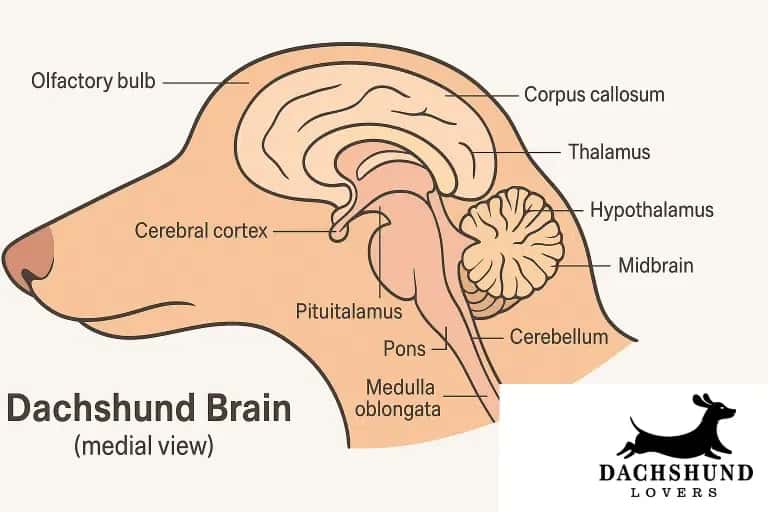
The dachshund’s head is one of its most defining features — long, narrow, and carried with a surprising amount of pride for such a small frame. Along with their distinctive long bodies and short legs, these physical characteristics are closely tied to their history as tunneling and hunting dogs.
While most of us admire the silhouette for its charm, the elongated skull does raise interesting questions about how the dachshund brain is structured, and whether that influences intelligence or health. Different brain regions in dachshunds, such as the olfactory bulb, olfactory cortex, and cerebral cortex, are specialized to support their unique behaviors and sensory abilities. The dachshund's exceptional sense of smell, supported by a well-developed olfactory bulb and cortex, plays a crucial role in their hunting instincts and ability to track scents underground.
Dachshunds are also prone to instinct-driven behaviors, such as barking at shadows and chasing prey, which shapes what everyday life with them is really like for owners who are living with dachshunds.
Elongated Skull Design
Dachshunds fall into the dolichocephalic category of skull shapes (long-skulled breeds). This group includes sighthounds like greyhounds and collies, where the nose is long and narrow compared to the cranium. Among dachshunds, the standard dachshund typically has a slightly larger and longer skull compared to the miniature dachshund, reflecting their overall size difference. In contrast, brachycephalic breeds (pugs, bulldogs) have shortened, broad skulls with compressed airways. Dachshunds sit somewhere in the middle of the dolichocephalic spectrum — not as extreme as a greyhound, but much longer than a terrier.
Why this matters: A longer skull means the brain itself is stretched slightly lengthwise. That doesn’t mean “less brain,” it just means the grey matter is housed differently compared to round-skulled breeds.
Brain Shape vs. Brain Size
- Volume remains proportionate. Dachshunds have brains sized appropriately for their body mass, just as any other breed.
- Shape differs. The brain appears more elongated and narrow in imaging studies.
- Intelligence isn’t impacted. Brain size does not directly equate to trainability or problem-solving ability (a fact supported by PetMD).
Impacts on Neurology
The unique skull shape doesn’t directly cause intelligence differences, but it does interact with other structural quirks:
- Spinal stress: Because their spine extends well beyond the head-to-tail ratio of most breeds, pressure distribution through the neck and skull is different. This ties into conditions like dachshund back problems. Intervertebral disc disease (IVDD) is especially common in dachshunds due to their long backs, whereas breeds like the English Sheepdog have different spinal risks.
- Hydrocephalus risk: In rare cases, long-skulled breeds can experience abnormal fluid build-up around the brain.
- Seizure predisposition: Neurological disorders in dachshunds sometimes link back to head and skull anatomy, though genetics play a bigger role. Other breeds, such as the Doberman Pinscher and Old English Sheepdog, are also predisposed to certain brain tumors and neurological conditions due to their anatomical features.
Skull Shape and Dental Links
It’s easy to overlook, but the dachshund skull shape also influences the mouth:
- Narrow jaws can cause dental crowding, making them more prone to tartar, gum disease, and discomfort.
- Dental pain and infection can affect behaviour and even contribute to systemic issues impacting the brain.
- See more in Dachshund Teeth.
5. Comparison of Skull Types
Skull Type | Example Breeds | Shape Features | Health Implications |
|---|---|---|---|
Brachycephalic (short skull) | Pug, Bulldog | Wide, flat face, short nose | Breathing issues, eye problems |
Mesocephalic (medium skull) | Labrador, Beagle | Balanced skull proportions | Fewer skull-specific health risks |
Dolichocephalic (long skull) | Dachshund, Greyhound | Narrow, elongated cranium | Neurological & dental considerations, spinal links |
This table highlights the diversity of skull types among domestic dog breeds, showing how selective breeding has led to significant variation in skull morphology, brain size, and related health implications. For example, the golden retriever is a classic mesocephalic breed with a balanced skull and moderate brain size, while the great dane, a dolichocephalic breed, has a long, narrow skull and one of the largest brain and body sizes among dogs.
6. Owner Perspective
When you live with a dachshund, you quickly realise their head is built for more than just looks. The long nose is perfect for scenting, their jaw muscles are built for gripping, and their brain shape simply fits the form. Intelligence isn’t compromised — if anything, dachshunds use their noses and memory in ways that often surprise owners.
The main takeaway: while the dachshund skull does mean certain health checks are wise (teeth, spine, neurology), it doesn’t support the “small brain” myth. Their head is an efficient design for a small hunter — and one that’s lasted through centuries of selective breeding.
Does Brain Size Affect Intelligence?
One of the most common questions I see in dachshund forums is whether their “small brain” means they’re less intelligent. The short answer: no. Brain size doesn’t predict smarts in dogs — what matters more is how the brain is wired and how the breed has been developed for specific purposes.
While dogs and primates both have complex brains, their brain structures and cognitive abilities have evolved differently. Higher-order cortical association areas and advanced cognitive skills developed independently in primates and in non-primate species like dogs, reflecting their unique evolutionary paths.
1. Intelligence in Context
- Dog intelligence isn’t measured by brain volume but by three factors:
- Instinctive intelligence — what the breed was designed to do (hunting, guarding, herding).
- Adaptive intelligence — the ability to solve problems and learn from experience.
- Working/obedience intelligence — how quickly a dog learns commands and responds to training.
- Instinctive intelligence — what the breed was designed to do (hunting, guarding, herding).
- Dachshunds excel in instinctive and adaptive intelligence, but often score lower in obedience. This isn’t because they can’t learn — it’s because they choose not to follow every command.
2. The Dachshund Profile
- Problem-solvers: Harvey has figured out baby gates, puzzle toys, and even how to sneak under a fence gap once — not signs of a “dumb dog.”
- Selective listeners: A retriever might fetch every time, but a dachshund might fetch once, then decide the game is over.
- Strong memory: Many owners report dachshunds remembering favourite places, scents, and even the sound of specific food packaging.
3. Why the Myth Persists
- Their stubborn streak is often confused with lack of intelligence.
- In reality, dachshunds can be too smart for their own good, using their intelligence to push boundaries.
- A dog that ignores a command isn’t necessarily less clever — sometimes they’re just prioritising their own agenda.
4. Research Backing
- According to AKC, smaller dogs like dachshunds don’t score lower on intelligence tests when adjusted for size.
- Stanley Coren’s famous “The Intelligence of Dogs” ranked dachshunds around the middle — not because they lack problem-solving skills, but because they resist repetitive training. Recent research, including studies published in journals such as J Neurosci, has further explored the relationship between brain size, neurological function, and behavioral traits in dogs, providing updated insights into how dachshund brain size relates to their cognitive abilities. Future research may further clarify the relationship between brain size, behavior, and neurophysiological measures in dogs.
5. Owner’s Role in Nurturing Intelligence
You can shape how “smart” your dachshund seems by the way you engage them:
- Mental enrichment: Puzzle feeders, scent games, and new walking routes, supported by carefully chosen healthy dachshund treats that don’t add unnecessary calories.
- Short training sessions: Dachshunds thrive on quick, varied challenges instead of long, repetitive drills.
- Consistency: Clear boundaries help prevent them from outsmarting you (because they will try).
Gaining knowledge about dog intelligence—through scientific studies and understanding breed-specific traits—can help you tailor training methods that truly bring out your dachshund’s best.
Key takeaway: Dachshunds aren’t less intelligent because of their brain size. They’re clever, independent, and sometimes too stubborn for their own good — which means their intelligence often shows up in surprising ways, not always in textbook obedience.
Health Implications of Brain Size & Skull Shape in Dachshunds
While a dachshund’s brain is proportionate and perfectly functional, its skull shape and body design introduce certain health considerations. Studies of pet dogs have revealed significant neuroanatomical and behavioral variation across breeds, highlighting how breed-specific traits can impact health and behavior. Owners often assume “brain size” is about intelligence, but the more pressing issue is how the dachshund’s unique anatomy influences neurology, mobility, and long-term wellbeing. Consulting veterinarians is essential for monitoring neurological and behavioral health in your pet.
Behavioral health in dachshunds can be affected by emotions such as fear, anxiety, and stress. Ensuring your dachshund feels safe in its environment is crucial for its well-being and can help prevent negative behaviors.
When considering health implications, it’s also important to monitor your dachshund’s interactions with other animals, such as cats or smaller pets, to ensure social compatibility and overall pet health. Obesity is a significant health concern for dachshunds and can exacerbate conditions like IVDD, making it vital to focus on dachshund health and nutrition foundations.
Neurological Vulnerabilities
Dachshunds don’t suffer from “small brains,” but their elongated skull and spinal structure can contribute to neurological conditions.
- Intervertebral Disc Disease (IVDD): Though primarily a spinal condition, IVDD can impact brain function indirectly. Pain signals, reduced mobility, and nerve compression can alter how the central nervous system communicates with the brain.
- Seizures: Some dachshunds are prone to seizures, which are neurological episodes rather than direct signs of brain size. Genetics and irregular neural firing are usually to blame.
- Hydrocephalus: Rare, but possible in dachshunds. It occurs when cerebrospinal fluid builds up in the brain, leading to pressure on brain tissue. Signs can include head enlargement, circling, or behavioural changes.
Neurological Condition | Description | How It Relates to Dachshunds |
|---|---|---|
IVDD | Disc material presses on the spinal cord, causing pain and mobility issues. | Dachshund’s long spine predisposes them; brain responds to chronic pain signals. |
Seizures | Sudden bursts of irregular electrical activity in the brain. | Can occur in dachshunds due to genetics; not linked to brain size. |
Hydrocephalus | Excess fluid accumulation within brain ventricles. | Rare, but dachshund skull shape makes it possible. |
Dental Health & Brain Connection
The dachshund’s narrow jaw and long skull affect dental alignment. This might not sound like a brain issue, but poor dental health can influence neurological wellbeing.
- Crowded teeth make plaque and tartar more common, leading to gum disease.
- Oral infections can spread through the bloodstream, impacting organs — including the brain.
- Behavioural changes such as irritability or lethargy sometimes trace back to dental pain.
For a detailed look at this, see Dachshund Teeth. Dental and brain health may seem unrelated, but in dachshunds they’re part of the same interconnected system.
Cognitive Ageing
Just like humans, dachshunds experience cognitive decline with age. Their brain size doesn’t make this more likely, but their lifespan (12–16 years on average) means many owners eventually notice signs of canine cognitive dysfunction (doggy dementia).
Signs include:
- Disorientation (getting lost in familiar spaces).
- Changes in sleep-wake cycles.
- Forgetting trained behaviours.
- Increased anxiety or restlessness
Behavioural Health Links
Brain structure doesn’t determine personality, but it does interact with breed traits. Dachshunds are often labelled “stubborn,” but their behaviour is better explained by independence, prey drive, and selective engagement.
- Stress Sensitivity: Dachshunds may react strongly to changes in routine or environment, which can exacerbate health conditions.
- Pain Masking: Dogs often hide discomfort. Subtle behavioural changes (avoidance of touch, growling when lifted) may point to underlying neurological or joint issues.
- Training & Enrichment: A lack of stimulation can make behavioural issues worse. Their brains are wired for problem-solving — without outlets, frustration builds.
Did you know - Dachshunds can experience seizures, particularly those with the dapple gene, which makes them genetically predisposed to this condition. Seizures in Dachshunds can occur between 6 months and 5 years of age, but some may experience them later in life due to other health issues.
Lafora disease is a genetic condition that can cause seizures in miniature wirehaired Dachshunds, typically occurring in older dogs.
Owner Checklist: Monitoring Brain & Neurological Health
A proactive approach helps owners spot problems early.
Routine Checks:
- Schedule annual (or biannual for seniors) vet visits.
- Monitor dental health closely.
- Watch for subtle gait or posture changes.
At Home:
- Provide puzzle toys and scent-based games to keep the brain active.
- Maintain a healthy weight to reduce spinal and neurological stress.
- Limit jumping with ramps (see Dachshund Back Problems).
Vet Red Flags:
- Sudden disorientation or circling.
- Seizure-like episodes.
- Reluctance to move, climb stairs, or eat.
Table: Brain Structure vs Health Considerations
Factor | Impact | Why It Matters for Dachshunds |
|---|---|---|
Elongated Skull | Brain appears narrower, but normal volume. | May influence dental crowding and fluid flow. |
Long Spine | Adds risk of IVDD and nerve pressure. | Chronic pain impacts neurological wellbeing. |
Narrow Jaw | Crowded teeth, higher dental risks. | Oral infections can indirectly affect brain health. |
Ageing Brain | Risk of cognitive decline in senior years. | Early management improves quality of life. |
Final Perspective
A dachshund’s brain is not too small, nor is it less capable than other dogs. What matters most is the context of their anatomy: a long back, narrow skull, and compact frame create unique health considerations.
From IVDD to dental care to senior cognitive changes, owners who understand the connection between structure and health are better equipped to keep their dachshund thriving. The brain is not the weakness here — it’s the system around it that needs thoughtful care.
Owner Perspective: Living With a Clever Dachshund

At the end of the day, dachshund brain size isn’t something owners need to worry about. What really matters is how we nurture their intelligence and protect their health.
Like many dogs, dachshunds are adept at recognizing human faces and responding to their owners' emotions, which strengthens the bond between pet and owner. Living with Harvey has shown me that dachshunds are often too smart for their own good — they remember, problem-solve, and test boundaries daily.
The Myth vs the Reality at Home
Harvey doesn't always “listen” on command, but that's not because he doesn't understand — it's because he's weighing the cost-benefit.
For example, if I ask him to come inside mid-sunbake, he'll pretend he hasn't heard me. If I open the fridge, he's through the door in seconds. That selective attention sums up dachshund intelligence perfectly.
Owners who confuse stubbornness for lack of smarts often underestimate how mentally sharp their dogs really are.
The Role of Mental Enrichment
A dachshund’s brain thrives on stimulation. Without it, behavioural issues creep in — barking, chewing, digging.
Effective ways to challenge a dachshund’s brain:
- Puzzle feeders or snuffle mats for mealtime.
- Hide-and-seek games with treats or toys, paired with appropriately balanced homemade meals for your dachshund if you choose to cook for them.
- Scent trails in the garden (they're scent hounds, after all).
- Short, focused training sessions that rotate commands.
Training With Independence in Mind
Unlike breeds bred for obedience, dachshunds value independence. Training works best when it acknowledges that personality trait. Potty training is often the most difficult aspect of training for dachshunds due to their stubbornness, so consistency and patience are key.
- Keep sessions short (5–10 minutes).
- Use high-value rewards — dachshunds won’t work for boring kibble.
- Avoid harsh corrections; they’ll dig in harder.
- Build variety into sessions to keep things interesting.
Table: Common Owner Misconceptions vs Reality
Misconception | Reality | Owner Takeaway |
|---|---|---|
“Dachshunds are dumb.” | Their intelligence is adaptive and problem-solving driven. | Focus on games, puzzles, and challenges. |
“They forget commands easily.” | They remember — they just choose when to respond. | Use positive reinforcement and patience. |
“Small brain = stubborn dog.” | Stubbornness comes from independence, not brain size. | Reframe it as confidence and decision-making. |
“Training takes too long.” | Dachshunds learn quickly when motivated. | Short, engaging sessions work best. |
Creating a Brain-Friendly Home
Owners can design their homes in ways that support both mental and physical health:
- Ramps instead of jumps (protects spine and joints) and help reduce strain on vulnerable areas like the hips, which is especially important in breeds prone to hip dysplasia in dachshunds.
- Orthopedic beds (promotes comfort for ageing brains and bodies).
- Safe chew toys (dental and neurological enrichment combined) and regular grooming to manage dachshund shedding.
- Routine vet checks (to catch subtle cognitive or neurological changes).
The Harvey Factor
Harvey has taught me that dachshunds are memory-driven creatures. He knows which neighbours carry snacks, which café staff sneak him bacon, and which cupboard rattles with treats.
His brain might not be “big,” but it's efficient, sharp, and perfectly designed for life as a small hound with a big personality.
Final Thought: Dachshund brain size isn't the question owners should be asking. The better one is: “Am I giving my dachshund enough opportunities to use their brain?” Because with the right stimulation, they'll show you just how sharp they really are.
FAQs About Dachshund Brain Size
More from This Series
- Dachshund Eye Problems
- CDA in Dachshunds
- Dachshund Brain Size
- Dachshund Back Surgery
- Dachshund Dragging Back Legs
- Dachshund Neck Size
- Dachshund Back Brace
- Dachshund Back Problems
- Dachshund Skin Issues
- Dachshund Health Issues
- Dachshund Feet
- Dachshund Ribs
- Overweight Dachshund
- Dachshund Teeth
- Dachshund Allergies
- Dachshund Ears
- Dachshund Hip Dysplasia
- Dachshund Constipation
- Dachshund Bad Breath
Authored by
James
James is the founder of Dachshund Lovers and the proud human of Harvey, a mini dapple with a big personality. He writes to empower and connect the dachshund community, blending founder insights with honest, experience-based stories about life with this incredible and special breed. James brings candid, experience-backed opinions to the community and always focused on fewer, better products and ideas that genuinely improve life for dachshunds and their people.
Read moreJames is the founder of Dachshund Lovers and the proud human of Harvey, a mini dapple with a big personality. He writes to empower and connect the dachshund community, blending founder insights with honest, experience-based stories about life with this incredible and special breed. James brings candid, experience-backed opinions to the community and always focused on fewer, better products and ideas that genuinely improve life for dachshunds and their people.
Read moreDisclaimer
This content is for informational purposes only and should not be considered veterinary advice. Always consult with a licensed veterinarian regarding your dog’s health and wellbeing.
There are no comments yet
Leave a comment