Dachshund Back Problems
Dachshund Back Problems
IVDD and back pain are sadly common in dachshunds. Here’s how to spot the 7 signs early, what causes it, and how to help your doxie live pain-free.
James
Posted on November 2, 2025.
Updated on July 21, 2026.
Table of Contents
- 1.Key Takeaways on Dachshund Back Problems
- 2.Why Dachshunds Are Prone to Back Problems
- •The Dachshund Spine
- •IVDD: The Main Culprit
- •Wiener Dog Back Problems vs Other Breeds
- •Signs of Dachshund Back Disease
- •Why Genetics and Lifestyle Both Matter
- •Table: Why Dachshunds Are Prone to Back Problems
- •Harvey’s Wake-Up Call
- •Table : Age and IVDD Risk in Dachshunds
- 3.Common Dachshund Spine Problems
- •IVDD in Dachshunds
- •Dachshund Herniated Disc
- •Dachshund Spine Sticks Out
- •Dachshund Vertebrae Problems
- •Dachshund Paralysis
- •Table: Common Dachshund Spine Problems
- 4.Early Signs of IVDD in Dachshunds
- •Why Early Signs Matter
- •Common Early Symptoms of IVDD in Dachshunds
- •Progressing Symptoms
- •Differentiating IVDD from Arthritis or Minor Injury
- •How to Respond to Early Signs
- •Table: IVDD Symptoms in Dachshunds
- 5.Treatment Options for Dachshund Back Issues
- •Back Braces as Support
- •When Surgery Is Needed
- •Recovery Outlook
- •Harvey’s Recovery
- •Final Perspective
- 6.Prevention & Lifestyle Management
- •Weight Management: The Number One Priority
- •Ramps and Home Modifications
- •Exercise: Strong Muscles Protect the Spine
- •How to Carry a Dachshund with Back Problems
- •How to Prevent and Avoid Dachshund Back Problems
- •Australian Vet Perspective
- •Harvey’s Lifestyle
- •Table: Prevention at a Glance
- -Disclaimer
Share

I’ll never forget the first time Harvey hesitated to jump off the couch. He stood there, tail wagging, but his back legs wobbled as if he wasn’t quite sure of himself. That was our wake-up call, dachshund back problems aren’t abstract “risks” you read about online. They’re real, they can appear suddenly, and they can change your dog’s life overnight.
Back issues are the single biggest health challenge facing dachshunds. Studies estimate that as many as 1 in 4 dachshunds will develop IVDD (Intervertebral Disc Disease) at some stage in their life. This genetic predisposition, combined with their long backs and short legs, makes them uniquely vulnerable to spinal problems.
But while the statistics sound grim, awareness makes a huge difference. Knowing the early signs, prevention strategies, and treatment options can help you catch problems early and give your dachshund the best chance at recovery.
Key Takeaways on Dachshund Back Problems
Problem | Summary | Key Notes |
|---|---|---|
Why do dachshunds have back problems? | Their long backs and short legs put abnormal stress on the spine. | Genetics and lifestyle both contribute. |
Most common condition | IVDD is the leading cause of spinal pain and paralysis in dachshunds. | 1 in 4 dachshunds may be affected. |
Warning signs | Stiffness, reluctance to jump, wobbling, dragging legs. | Act quickly — time matters. |
Treatment options | Crate rest, medication, back brace, or back surgery. | Depends on severity and speed of response. |
Prevention | Weight control, ramps, avoiding stairs and jumping. |
Why Dachshunds Are Prone to Back Problems
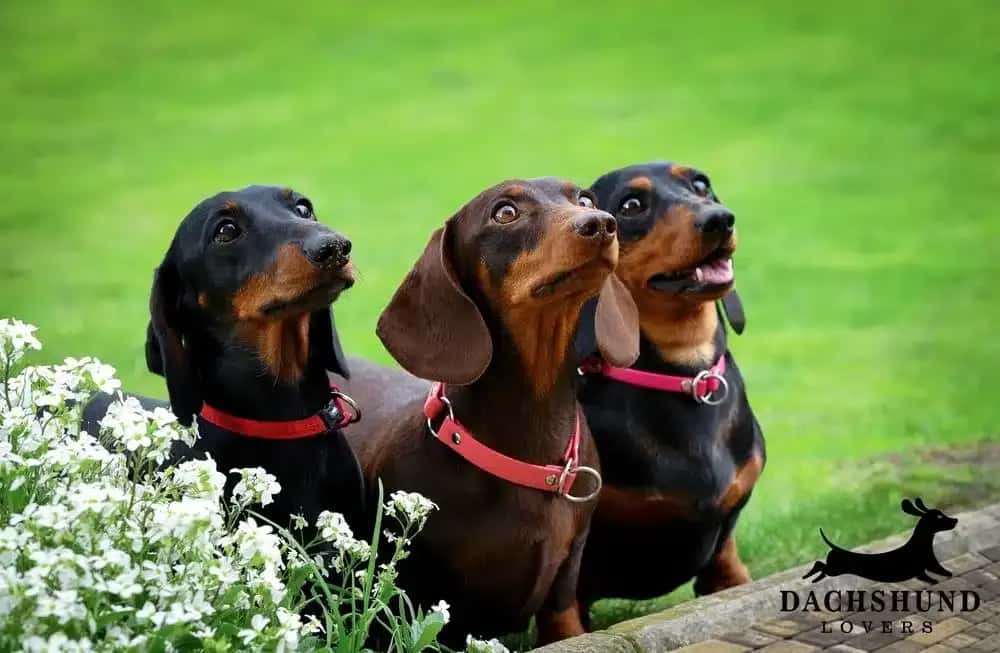
Dachshunds are one of the most beloved small breeds, but they are also one of the most fragile when it comes to spinal health. Their distinctive build, long backs supported by short legs is what makes them so unique, but it also makes them highly vulnerable to injury and disease.
So, do dachshunds have back problems? The answer is yes, more than almost any other breed. Research consistently shows that dachshunds have the highest incidence of IVDD (Intervertebral Disc Disease) of all dog breeds, with studies estimating that up to 25% of dachshunds will experience spinal issues in their lifetime. Owners sometimes refer to this simply as “wiener dog back problems,” but the reality is more complex than one condition.
The Dachshund Spine
A healthy dog spine is designed to distribute weight evenly across vertebrae. In dachshunds, their long spine has to support a body that is much longer than average for their height. This creates abnormal stress on the vertebrae and discs.
- Short legs and long back: This disproportion increases pressure on each disc.
- Chondrodystrophy: A genetic trait in dachshunds where discs degenerate earlier than in other breeds.
- Fragile vertebrae: Dachshund vertebrae problems often arise because the cushioning discs between vertebrae break down prematurely.
This explains why “dachshund spine problems” are so common and why even normal activities like climbing stairs or jumping off the couch can trigger serious injury.
IVDD: The Main Culprit
When people talk about dachshund back disease, they are usually talking about IVDD. This condition occurs when the discs between the vertebrae begin to harden and then bulge or rupture.
- Early stages: Discs stiffen and lose flexibility, causing pain and stiffness.
- Herniation: A dachshund herniated disc can press on the spinal cord, leading to wobbling or loss of movement.
- Severe cases: Dachshund paralysis occurs when discs rupture severely and compress the spinal cord.
According to RSPCA NSW, IVDD is one of the most common and serious hereditary diseases in dachshunds, requiring urgent veterinary attention at the first signs of pain.
Wiener Dog Back Problems vs Other Breeds
While all dogs can suffer spinal issues, wiener dogs are particularly prone to back problems because of their genetics. Other long-bodied breeds like Corgis or Basset Hounds share some risk, but dachshunds are the most affected due to their prevalence of chondrodystrophy.
Owners often notice dachshund back issues earlier than with other breeds because the signs are more dramatic. A simple reluctance to jump or a stiff walk in a Labrador might not set off alarms, but in dachshunds it often signals the beginning of IVDD.
Signs of Dachshund Back Disease
Even before paralysis or severe pain sets in, subtle signs may suggest spinal problems:
- Reluctance to jump or climb stairs.
- A hunched posture or arching back.
- Yelping when picked up.
- Wobbly gait or back legs not working properly.
- Dachshund spine sticks out (visible when muscle mass declines due to pain).
For more detail on what happens when symptoms progress, see Dachshund Dragging Back Legs.
Why Genetics and Lifestyle Both Matter
It’s tempting to think dachshund spine issues are purely genetic, but lifestyle plays an enormous role.
- Weight: An overweight dachshund puts even more strain on the back.
- Jumping: Repeated leaps from beds or couches increase the chance of disc rupture.
- Exercise: Lack of muscle strength around the spine reduces natural protection.
This is why two dachshunds from the same litter can have completely different outcomes. One may suffer a herniated disc at three years old, while another lives comfortably into old age without major back issues. Genetics create the risk, but lifestyle determines how that risk plays out.
Table: Why Dachshunds Are Prone to Back Problems
Factor | How It Affects Spine | Example Outcome | Related Resource |
|---|---|---|---|
Long back, short legs | Extra stress on vertebrae | Chronic back pain | |
Genetics (chondrodystrophy) | Early disc degeneration | IVDD dachshund | |
Weight | Adds spinal load | Dachshund bad back, mobility issues | |
Jumping | Sudden impact on discs | Dachshund herniated disc | |
Weak Muscles | Less spinal support | Dachshund spine sticks out, wobbling |
Harvey’s Wake-Up Call
Harvey’s first sign of spinal strain wasn’t a dramatic collapse — it was a wobble. One day he simply hesitated to jump off the couch and shuffled instead of bounding across the room. That was the moment I realised dachshund back problems weren’t just something to read about, they were real, and they could happen to us. Catching those subtle changes early meant we could act fast with crate rest and vet advice, which gave Harvey the best chance at recovery.
Table : Age and IVDD Risk in Dachshunds
Age Range | IVDD Risk Level | Notes |
|---|---|---|
Under 2 years | Low | Rare but possible with trauma. |
2-5 years | Medium | Early disc degeneration begins. |
5–8 years | High | Peak age for herniated discs. |
8+ years | High | Chronic back pain and vertebrae problems common. |
This is why many owners first notice dachshund back issues around middle age, though younger dogs are not immune.
Final Thought: Dachshunds are predisposed to spinal problems by design, but owners have power. By recognising the risks, spotting early signs, and managing weight and lifestyle, you can dramatically reduce the severity of wiener dog back problems and give your dachshund a healthier, more comfortable life
Common Dachshund Spine Problems

When people talk about “dachshund back problems,” they’re often referring to a group of related spinal conditions. The most well-known is IVDD (Intervertebral Disc Disease), but it’s far from the only concern. Dachshunds may also experience herniated discs, vertebrae malformations, chronic back pain, or even paralysis if conditions progress untreated.
Understanding each of these spine issues helps owners recognise symptoms early and make informed choices about care.
IVDD in Dachshunds
IVDD dachshund cases make up the majority of spinal problems in the breed. IVDD is a degenerative disease where the discs that cushion the vertebrae lose elasticity, harden, and eventually rupture.
- Type I IVDD: Most common in dachshunds; discs calcify and rupture suddenly, often in younger dogs (3–6 years).
- Type II IVDD: Slower degeneration, more common in older dogs, leading to chronic back pain.
Signs of IVDD in dachshunds can include:
- Reluctance to jump or climb stairs.
- Yelping when picked up.
- Arching the back unnaturally.
- Wobbling or dragging back legs.
- Sudden paralysis (in severe cases).
As PetMD stresses, IVDD is progressive and requires immediate attention. Early cases may respond to crate rest and medication, but advanced cases often require back surgery.
Dachshund Herniated Disc
Closely tied to IVDD is the dachshund herniated disc (or herniated disk). When discs rupture, the jelly-like centre pushes out and compresses the spinal cord.
Symptoms include:
- Sudden onset of back pain.
- Crying out when moving.
- Difficulty walking.
- Dachshund back legs not working in severe cases.
Herniated discs can occur anywhere along the spine, but they are most common in the thoracolumbar region (mid-back). Some dogs may recover with strict rest, but many require surgery to relieve pressure on the spinal cord.
Dachshund Spine Sticks Out
Owners sometimes report their dachshund’s spine sticks out, which can be alarming. This isn’t always caused by disease — sometimes it’s due to weight loss or reduced muscle mass. However, it can also signal deeper spinal issues.
Possible causes:
- Disc collapse reducing space between vertebrae.
- Muscle wasting from chronic pain or disuse.
- Severe underweight conditions.
If a dachshund’s spine suddenly appears more visible, it’s worth consulting a vet to rule out IVDD or general health issues.
Dachshund Vertebrae Problems
Beyond discs, dachshunds can also suffer vertebrae malformations or degenerative issues.
- Hemivertebrae: A congenital condition where vertebrae are wedge-shaped, leading to spinal curvature.
- Spondylosis deformans: Extra bone growth along the spine, usually in older dogs, causing stiffness.
- Osteoarthritis: Joint degeneration affecting the vertebrae and contributing to pain.
These conditions can exist alongside IVDD, making diagnosis and treatment complex.
Dachshund Paralysis
One of the most feared outcomes of dachshund back issues is paralysis. When discs rupture severely and compress the spinal cord, signals from the brain can no longer reach the back legs.
- Partial paralysis: Weakness or dragging of the back legs.
- Full paralysis: Complete loss of movement and, in some cases, loss of pain sensation.
According to PetMD, prognosis depends heavily on whether the dachshund still has deep pain sensation. Dogs who retain this sensation have a good chance of recovery with surgery; those without it face a much more guarded outlook.
Table: Common Dachshund Spine Problems
Condition | Description | Common Signs | Treatment | Related Source |
|---|---|---|---|---|
Not a cure | Disc degeneration and rupture | Stiffness, wobbling, dragging legs | Crate rest, surgery | |
Herniated Disc | Disc material compresses spinal cord | Pain, crying, legs not working | Surgery or strict rest | |
Spine Sticks Out | Visible vertebrae | Weight loss, disc collapse, muscle wasting | Vet exam, diet, physiotherapy | |
Vertebrae Problems | Malformations or bone growth | Stiffness, spinal curve | Pain management, physio | |
Paralysis | Severe spinal cord compression | Back legs not working | Emergency surgery |
Harvey’s Story in Context
Harvey never reached full paralysis, but his Grade 2 IVDD was enough to scare us into taking action. When his gait turned wobbly and his back legs weakened, we immediately went into crate rest under vet advice. Our specialist at VSOS Sydney explained that without fast action, paralysis was possible. For Harvey, acting early meant the difference between recovery and a far more difficult road.
Early Signs of IVDD in Dachshunds
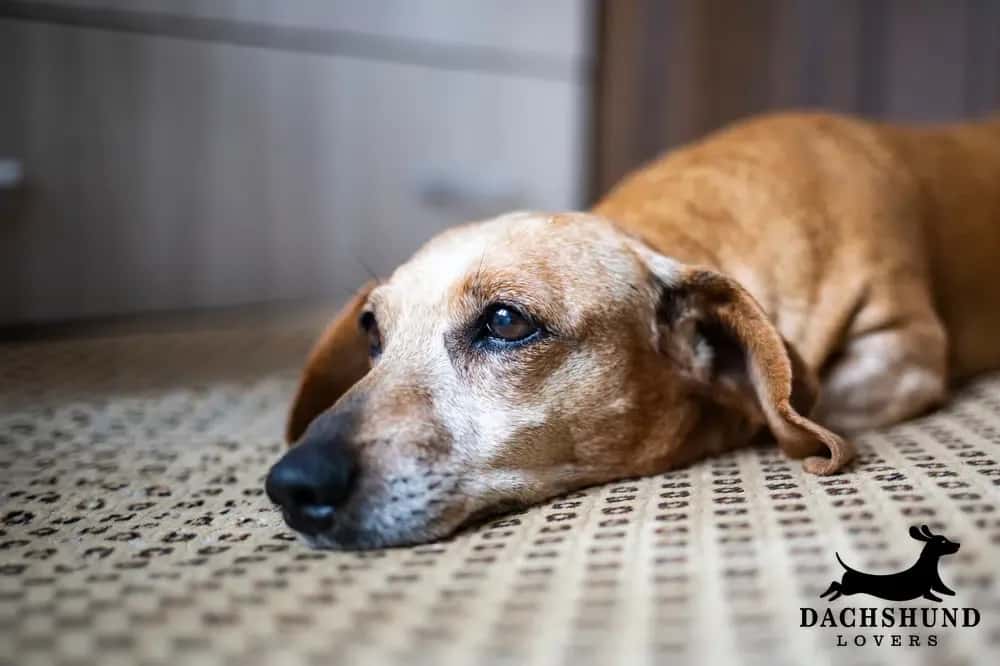
IVDD rarely arrives without warning. The challenge for owners is that the early signs are often subtle and easy to dismiss as “just a stiff day” or “a pulled muscle.” With dachshunds, however, even the smallest signs of back pain can signal something more serious. Recognising these early symptoms gives your dachshund the best chance of avoiding paralysis and making a strong recovery.
Why Early Signs Matter
IVDD progresses in stages, from mild discomfort to full paralysis. The sooner treatment begins, the better the outcome. According to VCA Hospitals, dogs who receive treatment within 24 hours of losing mobility have a far higher chance of regaining function compared to those treated later.
For dachshunds, whose genetic predisposition puts them at extreme risk, owners must treat every sign of stiffness, pain, or unsteadiness as a possible IVDD flare.
Common Early Symptoms of IVDD in Dachshunds
Here are the most frequent early signs of IVDD in dachshunds that owners should watch for:
- Reluctance to jump or climb stairs – A dog who once leapt onto the couch may suddenly hesitate.
- Yelping or crying when picked up – Pain caused by pressure on the spinal cord can make normal handling unbearable.
- Stiff neck or back – Your dachshund may carry themselves more rigidly than usual.
- Hunched posture – A curved or arched back is often a sign of spinal discomfort.
- Shaking or trembling – Subtle signs of pain that many owners mistake for anxiety.
- Decreased activity – Dogs may withdraw from play or appear tired more often.
Progressing Symptoms
If IVDD is not caught in the early stages, symptoms can progress rapidly:
- Wobbling gait – Known as ataxia, this unsteady walk is a key warning sign.
- Knuckling of paws – The dog drags the tops of its paws instead of placing them correctly.
- Weakness in hind legs – One or both back legs may appear unstable.
- Dachshund back legs not working – In advanced stages, paralysis can occur suddenly.
At this stage, Dachshund Dragging Back Legs becomes the defining symptom and requires immediate veterinary care.
Differentiating IVDD from Arthritis or Minor Injury
Not every case of dachshund back pain is IVDD. Older dachshunds may also suffer arthritis, while minor sprains or slips can cause temporary discomfort. The difference lies in severity and progression
Condition | Typical Signs | Progression | Cluster Resource |
|---|---|---|---|
IVDD | Stiffness, reluctance to move, wobbling, dragging legs | Rapid (hours to days) | |
Arthritis | Slower, chronic stiffness, worse in mornings | Gradual (months to years) | |
Minor Injury | Limping or soreness, usually resolves with rest | Short-term (days) |
How to Respond to Early Signs
If you notice any of the above symptoms, treat it as urgent:
- Restrict movement immediately – No jumping, stairs, or running.
- Crate rest – Place your dachshund in a confined space to limit movement.
- Contact your vet – Even if symptoms seem mild, spinal pain is never “normal” in this breed.
- Avoid home remedies – Human painkillers or over-the-counter medications can be dangerous for dogs.
Delaying action can be the difference between a dachshund recovering with crate rest and one requiring surgery.
Table: IVDD Symptoms in Dachshunds
Stage | Symptoms | Owner Action | Related Resource |
|---|---|---|---|
Early | Reluctance to jump, trembling, stiff back, yelping | Restrict movement, call vet | |
Moderate | Wobbling, arching back, knuckling paws | Immediate vet visit | |
Advanced | Dachshund back legs not working, paralysis | Emergency vet care, possible surgery |
Harvey’s Experience
Harvey’s IVDD scare began with one of these early signs — trembling after a walk and refusing to jump onto the lounge. At first, we thought he was just tired, but within 24 hours, his gait was wobbly. Thankfully, we went straight to the vet, who confirmed he was at Grade 2 IVDD. Because we caught it early, strict crate rest and anti-inflammatory medication gave him the chance to recover without surgery.
That experience reinforced how easy it is to dismiss subtle symptoms — and how dangerous that delay could have been.
Treatment Options for Dachshund Back Issues
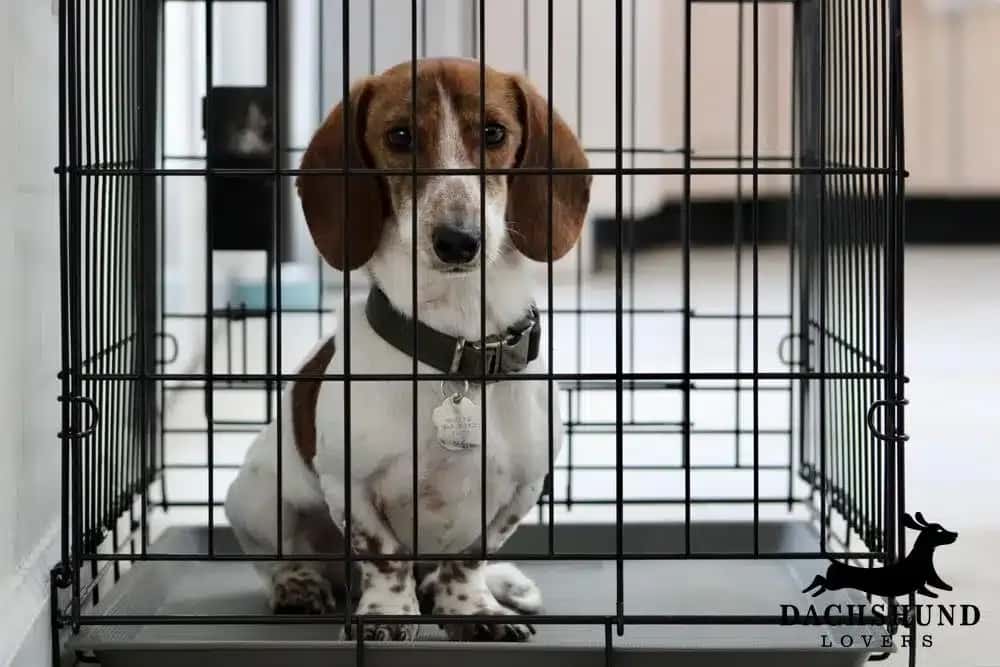
When dachshund back problems appear, one of the first questions owners ask is: “Can my dog recover without surgery?” The answer depends on the severity of the condition. Some doxies improve with rest and medication, while others require surgery to walk again. What’s most important is acting quickly — every hour counts when the spinal cord is under pressure.
Conservative (Non-Surgical) Treatment
For mild to moderate cases of IVDD or a dachshund herniated disc, vets often begin with conservative management.
Key elements include:
- Strict crate rest – Often for 4–6 weeks, to allow the disc to stabilise.
- Anti-inflammatory medication – Reduces swelling around the spinal cord.
- Pain relief – Helps manage acute discomfort.
- Muscle relaxants – May be prescribed to ease spinal tension.
- Physical therapy – Gentle rehabilitation under professional guidance.
Conservative care works best when symptoms are caught early, before there is significant nerve damage. If your dachshund still has full mobility and only mild back pain, non-surgical management may be enough.
Back Braces as Support
In some cases, a dachshund back brace may be introduced as part of conservative care. A brace helps stabilise the spine, reduce movement, and provide comfort during recovery.
However, braces should never replace crate rest or vet care. They are supportive tools, not cures. For Harvey, his brace helped him feel steadier on toilet breaks, but it was the strict rest that made the real difference.
When Surgery Is Needed
If a dachshund’s symptoms progress — wobbling turns into dragging feet, or back legs stop working altogether — surgery often becomes the only option.
Surgical intervention may involve:
- Hemilaminectomy – Removing part of the vertebral bone to relieve pressure.
- Fenestration – Removing damaged disc material to prevent future herniation.
According to VCA Hospitals, dogs who lose mobility but still have deep pain sensation have a good chance of recovery with surgery. If deep pain is lost entirely, prognosis becomes more guarded, though some dogs still improve.
Recovery Outlook
Prognosis depends heavily on the stage of disease at the time of treatment.
- Mild back pain, no weakness: Excellent chance of recovery with crate rest and medication.
- Moderate weakness or wobbling: Good chance of recovery with conservative care, though relapse risk is higher.
- Dachshund back legs not working but pain sensation intact: Surgery offers strong recovery prospects.
- Complete paralysis, no deep pain sensation: Guarded prognosis, even with surgery.
Risk Factor | Lifestyle Adjustment | Role of Brace | Cluster Resource |
|---|---|---|---|
Condition | Recommended Treatment | Prognosis | |
Mild pain only | Crate rest, medication | Excellent | |
Wobbling Gait | Conservative or surgery | Good | |
Back Legs Weak | Surgery if pain sensation present | Strong | |
Paralysis, no deep pain | Emergency surgery | Guarded |
Rehabilitation and Physical Therapy
Recovery doesn’t end with crate rest or surgery. Rehabilitation is a crucial part of getting dachshunds moving again.
- Hydrotherapy: Swimming or underwater treadmill exercises strengthen muscles without spinal strain.
- Controlled walking: Gradually reintroducing movement under guidance.
- Massage and stretching: Helps maintain circulation and reduce stiffness.
- Acupuncture and laser therapy: Some vets recommend these as supportive therapies.
Rehabilitation often takes months but dramatically improves outcomes and reduces the chance of relapse.
Harvey’s Recovery
When Harvey was diagnosed with Grade 2 IVDD, surgery was on the table. But because he still had mobility and responded well to anti-inflammatories, we chose conservative management. For six weeks, Harvey lived in a crate, only leaving for short, supported toilet breaks.
It was tough, but it worked. Combined with medication, strict rest allowed his discs to stabilise. Today, ramps, rugs, and controlled exercise are part of his routine, but he walks normally. That experience showed us both the value of acting early and the importance of prevention after recovery.
Final Perspective
There is no one-size-fits-all solution for dachshund spine problems. Some dogs recover beautifully with crate rest and medication, while others need surgery to walk again. The critical factor is timing. Owners who act quickly — restricting movement, calling their vet, and following professional advice — give their dachshunds the best chance at recovery.
Prevention & Lifestyle Management
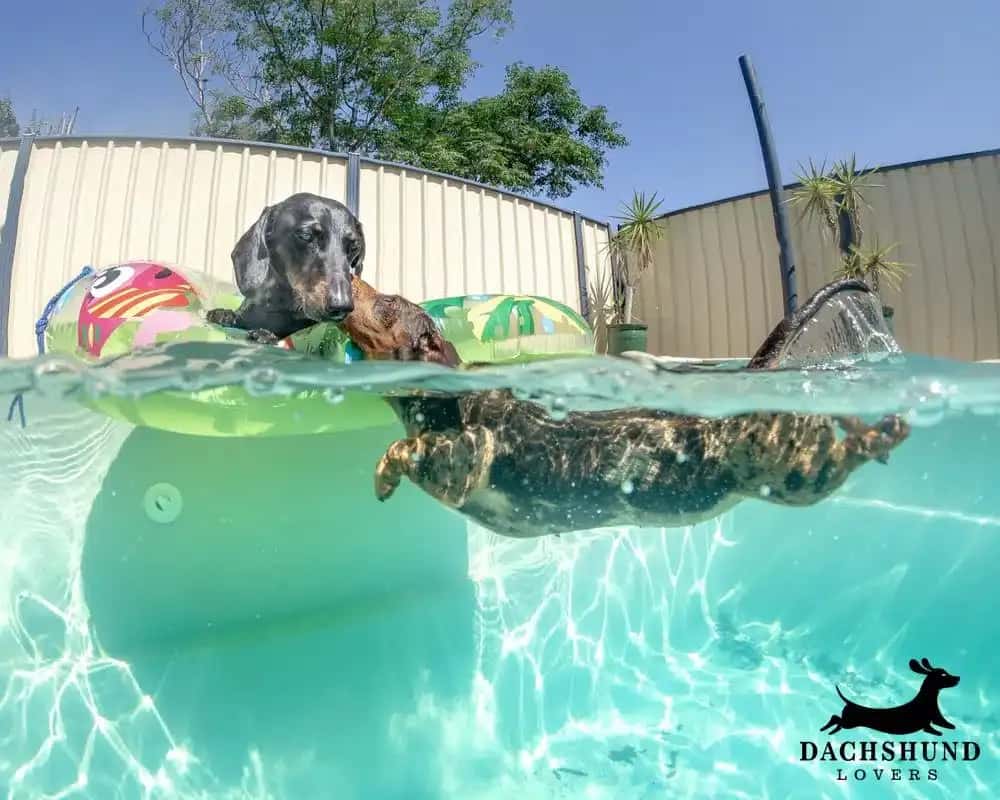
The most important lesson I’ve learned as a dachshund owner is that prevention isn’t optional, it’s essential. You can’t change your dachshund’s genetics or body shape, but you can dramatically reduce their risk of serious spinal disease. Small daily choices add up to years of protection.
Weight Management: The Number One Priority
Carrying excess weight is one of the strongest predictors of dachshund back pain. Every extra kilo increases strain on discs that are already fragile.
- Body condition check: You should feel your dachshund’s ribs without pressing hard, but they shouldn’t be visibly protruding.
- Controlled portions: Use a scale or measuring cup, not guesswork.
- Low-calorie treats: Carrot sticks, cucumber slices, or small pieces of lean meat.
For more detail on this topic, see Overweight Dachshund, which explains why keeping your dachshund lean is the most effective form of prevention.
Ramps and Home Modifications
Jumping off furniture is one of the fastest ways to cause a dachshund herniated disc. Every impact jars the spine, and repeated strain can lead to rupture.
- Install ramps: Beside beds, couches, and even the car.
- Block stairs: Use baby gates to stop unsupervised climbing.
- Non-slip flooring: Rugs and mats prevent slips that twist the spine.
See Dachshund Back Brace for how support tools work in combination with safe environments.
Exercise: Strong Muscles Protect the Spine
Muscles act like shock absorbers. A dachshund with strong back and core muscles can better support their spine and reduce strain on discs.
- Safe activities: Flat-ground walks, gentle sniffaris, swimming or hydrotherapy.
- Avoid: Ball chasing, rough play, agility jumps.
- Consistency: Short, frequent walks (15–20 minutes) are better than long, exhausting ones.
For dogs recovering from IVDD, hydrotherapy is often recommended. See Dachshund Back Surgery for how physiotherapy supports recovery.
How to Carry a Dachshund with Back Problems
Many owners don’t realise that improper lifting can trigger or worsen spinal problems in dachshunds. The correct way to lift is always to support both the chest and the rear, keeping the spine level.
- Never lift under the front legs only.
- Hold close to your body to reduce strain.
- Use two hands: One under the chest, one under the hindquarters.
If your dachshund already has a bad back, this technique is non-negotiable.
How to Prevent and Avoid Dachshund Back Problems
The question many owners ask is: “How can I prevent dachshund back issues?” While no method guarantees complete safety, combining these strategies creates the strongest defence:
- Maintain a healthy weight.
- Avoid jumping with ramps and gates.
- Use safe lifting techniques.
- Exercise wisely with controlled, low-impact activity.
- Provide supportive bedding to cushion the spine.
- Regular vet checks to catch early signs of IVDD.
See Dachshund Back Problems for how prevention ties directly into reducing the need for emergency treatment.
Australian Vet Perspective
In Australia, RSPCA NSW reminds owners that dachshunds are a “high-risk breed” when it comes to spinal disease. They recommend weight control, ramps, and careful handling as everyday essentials. Local specialists like VSOS Sydney also stress immediate veterinary attention if signs of back pain appear, as early treatment is key to avoiding surgery.
Harvey’s Lifestyle
For Harvey, prevention became a daily routine after his Grade 2 IVDD scare. We installed ramps for the couch and bed, laid rugs across slippery tiles, and switched him to a lean diet. Even today, he gets two short walks instead of one long one, and I always carry him up stairs. These changes may seem small, but together they’ve kept him strong and mobile without another major flare.
Table: Prevention at a Glance
Risk Factor | Prevention Strategy | Cluster Resource |
|---|---|---|
Excess weight | Portion control, lean treats | |
Jumping | Install ramps, block stairs | |
Weak Muscles | Short walks, hydrotherapy | |
Poor lifting | Support chest and rear | |
Slips & falls | Rugs, non-slip mats |
Prevention doesn’t mean wrapping your dachshund in bubble wrap — it means creating an environment and lifestyle that supports their fragile spines. By managing weight, using ramps, lifting correctly, and exercising wisely, you dramatically lower the chances of severe IVDD. Dachshunds will always be prone to back issues, but with the right habits, those risks don’t have to define their lives.
FAQs About Dachshund Back Problems
More from This Series
Explore the full Dachshund Health Content Cluster for in-depth guides:
- Dachshund Eye Problems
- CDA in Dachshunds
- Dachshund Brain Size
- Dachshund Back Surgery
- Dachshund Dragging Back Legs
- Dachshund Neck Size
- Dachshund Back Brace
- Dachshund Back Problems
- Dachshund Skin Issues
- Dachshund Health Issues
- Dachshund Feet
- Dachshund Ribs
- Overweight Dachshund
- Dachshund Teeth
- Dachshund Allergies
- Dachshund Ears
- Dachshund Hip Dysplasia
- Dachshund Constipation
- Dachshund Bad Breath
Authored by
James
James is the founder of Dachshund Lovers and the proud human of Harvey, a mini dapple with a big personality. He writes to empower and connect the dachshund community, blending founder insights with honest, experience-based stories about life with this incredible and special breed. James brings candid, experience-backed opinions to the community and always focused on fewer, better products and ideas that genuinely improve life for dachshunds and their people.
Read moreJames is the founder of Dachshund Lovers and the proud human of Harvey, a mini dapple with a big personality. He writes to empower and connect the dachshund community, blending founder insights with honest, experience-based stories about life with this incredible and special breed. James brings candid, experience-backed opinions to the community and always focused on fewer, better products and ideas that genuinely improve life for dachshunds and their people.
Read moreDisclaimer
This content is for informational purposes only and should not be considered veterinary advice. Always consult with a licensed veterinarian regarding your dog’s health and wellbeing.
There are no comments yet
Leave a comment