Dachshund Hip Dysplasia
Dachshund Hip Dysplasia
Limping? Bunny hopping? I’ll walk you through the subtle signs of hip dysplasia in dachshunds and what you can do to help early.
James
Posted on November 3, 2025.
Updated on July 17, 2026.
Table of Contents
- 1.Key Takeaways on Dachshund Hip Dysplasia
- 2.Causes of Hip Dysplasia in Dachshunds
- •2. Body Structure of Dachshunds
- •3. Growth and Development Factors
- •4. Weight and Obesity
- •5. Activity and Lifestyle
- •6. Secondary Conditions
- 3.Causes of Hip Dysplasia in Dachshunds
- •Owner Insight
- 4.Symptoms of Hip Dysplasia in Dachshunds
- •Early-Stage Symptoms
- •Mid-Stage Symptoms
- •Severe/Chronic Symptoms
- •Secondary Symptoms
- 5.Diagnosis of Hip Dysplasia in Dachshunds
- •Step 1: Clinical History
- •Step 2: Physical Examination
- •Step 3: Imaging & Tests
- •Step 4: Differential Diagnosis
- 6.Diagnosis Methods Table
- 7.Treatment & Management of Hip Dysplasia in Dachshunds
- •1. Medications
- •2. Physiotherapy & Low-Impact Exercise
- •3. Lifestyle Adjustments at Home
- •4. Surgical Options
- •5. Preventing Progression
- 8.Treatment Options Table
- 9.Dachshund Hip Dysplasia Across Life Stages
- 10.Owner Insight
- -More from This Series
- -Disclaimer
Share

One chilly morning at Coal Cliff Beach, Harvey bounded after his ball with his usual determination. But halfway back, I noticed something off, his stride looked uneven, almost like he was swinging one hip more than the other. At first, I assumed it was just the soft sand. But over the next few weeks, Harvey began hesitating before jumping off the couch and occasionally limped after longer walks. Our vet’s examination confirmed what many dachshund owners dread: signs of hip dysplasia.
Hip dysplasia is often thought of as a “big dog disease,” but dachshunds are not immune. While their long backs and risk of IVDD usually take centre stage, their hips can also suffer from poor joint formation, arthritis, and chronic pain. According to VCA Animal Hospitals, hip dysplasia occurs when the hip joint doesn’t develop properly, leading to instability, inflammation, and eventual degeneration. For dachshunds, this risk is compounded by their unique skeletal structure, genetics, and sometimes even their diet and lifestyle.
Understanding hip dysplasia isn’t just about knowing the science, it’s about recognising early signs, managing discomfort, and giving dachshunds the quality of life they deserve.
Key Takeaways on Dachshund Hip Dysplasia
Question | Quick Answer | Why It Matters for Dachshunds |
|---|---|---|
What is hip dysplasia? | A malformation of the hip joint where the ball and socket don’t fit properly | Leads to arthritis, pain, and mobility issues in dachshunds |
Are dachshunds prone to hip dysplasia? | Less common than IVDD, but yes — especially in poorly bred or overweight dachshunds | Adds to joint stress already caused by long backs and short legs |
What are the symptoms? | Limping, bunny-hopping gait, stiffness, reluctance to exercise or jump | Early detection prevents chronic damage |
How is it diagnosed? | Vet exam, X-rays, and orthopedic evaluation | Rules out other conditions like IVDD |
Can hip dysplasia be treated? | Yes — with weight management, medications, physiotherapy, and in severe cases, surgery | Tailored treatment improves comfort and mobility |
How can it be prevented? | Responsible breeding, avoiding overfeeding, controlled exercise | Prevention reduces risk of lifelong joint problems |
What’s the outlook for dachshunds with hip dysplasia | With proper care, many live comfortable, active lives | Consistent management keeps them mobile and pain-free |
Causes of Hip Dysplasia in Dachshunds

Hip dysplasia happens when the hip joint — a ball-and-socket design — doesn’t fit together correctly. Instead of moving smoothly, the ball grinds against the socket, leading to inflammation, pain, and eventually arthritis. While often associated with large breeds like German Shepherds or Labradors, dachshunds can also suffer from this painful condition. For them, the risk isn’t as well-publicised because spinal issues like IVDD usually dominate the conversation. Still, hip dysplasia is a significant and under-recognised concern.
- Genetics and Breeding Practices
One of the strongest risk factors is genetics. Hip dysplasia is heritable, meaning dogs born from affected parents are more likely to develop it themselves. Poor breeding practices, such as failing to screen breeding dogs with hip X-rays or prioritising appearance over health, perpetuate the problem.
- Backyard breeders or puppy mills rarely screen for hip health.
- Responsible breeders should conduct OFA (Orthopedic Foundation for Animals) or PennHIP evaluations before breeding.
- Even with good breeding, genetics can “skip” a generation, making regular monitoring important.
When Harvey’s vet first mentioned hip dysplasia, my first thought was whether it was inherited — a reminder of why researching breeders carefully is so important when choosing a dachshund puppy.
2. Body Structure of Dachshunds
Dachshunds’ unique anatomy — long back, short legs, and narrow hips — puts unusual forces on their joints.
- Their long spine shifts weight distribution, altering the mechanics of how hips move.
- Short legs mean they don’t have the same leverage as taller breeds, placing more strain on the hip sockets.
- Narrow hips may lead to looser-fitting joints, especially in minis.
While dachshunds are
3. Growth and Development Factors
Puppies grow rapidly in their first year. If bones and muscles don’t develop in balance, joints can form abnormally.
- Overfeeding puppies leads to rapid weight gain, which stresses developing joints.
- Too much exercise too young (like repeated stair climbing or jumping) can damage growing hips.
- Nutrient imbalances in diet (especially excess calcium) affect bone development.
Owners sometimes mistake “chunky puppy” weight for cuteness, but it can sow the seeds for both hip dysplasia and overweight dachshunds later in life.
4. Weight and Obesity
Weight is one of the most preventable contributors to hip dysplasia progression.
- Extra kilos add pressure on hips already prone to instability.
- Overweight dachshunds develop arthritis earlier and recover more slowly from flare-ups.
- Fat tissue also produces inflammatory hormones that worsen joint degeneration.
When Harvey gained just 1 kg after desexing, our vet explained it was like a human suddenly carrying an extra 10–15 kg. That extra load doesn’t just affect his back — it stresses every joint, including his hips.
5. Activity and Lifestyle
Dachshunds bred for hunting were active, lean, and constantly moving. Today, many live as indoor companions with limited exercise.
- Too little activity → Weak muscles provide less hip support.
- Too much high-impact activity → Jumping off furniture, rough play, and repeated stair use all increase strain.
- Slippery floors → Hardwood or tiles cause dachshunds to splay, stressing hips and knees.
Balanced, moderate activity is ideal — daily walks, low-impact play, and ramp use to protect both hips and spines.
6. Secondary Conditions
Hip dysplasia in dachshunds can also be compounded by other health issues:
- Allergies and skin issues → Chronic discomfort reduces activity, leading to muscle weakness that worsens joint instability (see dachshund allergies and dachshund skin issues).
- Arthritis → Once inflammation begins, it accelerates joint degeneration.
- Overlapping spinal problems → Dogs with back problems may walk abnormally, which throws off hip mechanics.
Causes of Hip Dysplasia in Dachshunds
Search Type | Example Query | What They’re Really Looking For | How We Answer in Article |
|---|---|---|---|
AI Search Intent | “dachshund hip dysplasia causes” | Quick list of triggers | Genetics, poor breeding, obesity, body structure, growth factors. |
AI Search Intent | “are dachshunds prone to hip dysplasia” | Breed predisposition | Yes, though less common than IVDD, especially with poor breeding/obesity. |
Human Intent | “Did I cause my dachshund’s hip dysplasia?” | Owner guilt/reassurance | We explain genetic + environmental factors, with emphasis on preventable aspects. |
Human Intent | “Can puppy diet cause hip dysplasia in dachshunds?” | Diet-specific concern | Yes, rapid growth/overfeeding increases risk. |
Human Intent | “Why does my dachshund limp on back legs?” | Symptom-based search | Could be hip dysplasia, IVDD, or arthritis — needs vet diagnosis. |
Owner Insight
Looking back, Harvey’s hips probably showed subtle signs before we noticed. His reluctance to jump wasn’t laziness, it was discomfort. Our vet reassured us that while genetics played a role, our daily care (weight control, ramps, low-impact walks) could make the biggest difference in slowing progression. That reminder reframed dysplasia not as a “death sentence” but as a condition to manage proactively.
Symptoms of Hip Dysplasia in Dachshunds

Recognising hip dysplasia early is crucial. Many owners mistake the first signs — slower walks, reluctance to jump, or occasional stiffness — for normal aging. In reality, these may be subtle signals of joint instability. Left unchecked, hip dysplasia leads to chronic arthritis, reduced mobility, and ongoing pain.
When Harvey first showed signs, it wasn’t obvious. He still wagged his tail and begged for food, but he stopped racing up the stairs and sometimes hesitated before jumping off the couch. Only when he developed a “bunny-hop” run did we realise something more serious was happening.
Early-Stage Symptoms
In the early stages, dachshunds may only show mild or occasional signs:
- Reluctance to jump onto beds, couches, or into the car.
- Stiffness after rest (especially in the morning or after naps).
- Slight limp in one or both back legs.
- Lower energy levels during walks.
- Shifting weight to the front legs to avoid stressing hips.
These can be mistaken for back problems or even laziness, but consistent patterns usually suggest joint discomfort.
Mid-Stage Symptoms
As the condition progresses, hip dysplasia becomes harder to ignore:
- Bunny-hopping gait – Both back legs move together instead of alternating.
- Narrow stance – Legs held close together for stability.
- Muscle loss – Thigh muscles shrink from disuse.
- Popping or clicking sounds from the hips.
- Noticeable limp after longer walks or play sessions.
Harvey’s “bunny hop” was the turning point for us — it was so distinct that even friends who weren’t dog owners noticed something was wrong.
Severe/Chronic Symptoms
In advanced stages, hip dysplasia significantly reduces quality of life:
- Constant limping or lameness.
- Difficulty rising from lying down.
- Pain when touched around the hips.
- Arthritic changes – stiffness, reduced range of motion.
- Behavioral changes – irritability, reluctance to be active, or avoiding interaction.
Some dachshunds may even display balance issues, though this can overlap with spinal concerns like IVDD.
Secondary Symptoms
Hip dysplasia doesn’t exist in isolation — it creates ripple effects across the body:
- Overweight dachshunds often worsen hip pain because inactivity fuels weight gain (see Overweight Dachshund).
- Skin issues can increase if scratching and mobility shifts affect posture (see Dachshund Skin Issues).
- Dental strain – Some dachshunds chew differently when in pain (see Dachshund Teeth).
With Harvey, the hardest part was distinguishing between his back sensitivity and hip pain. Both can make dachshunds limp or avoid jumping. Our vet explained that while IVDD often causes sudden, sharp mobility loss, hip dysplasia usually creeps in gradually.
Diagnosis of Hip Dysplasia in Dachshunds
Spotting the symptoms of hip dysplasia is only the first step — proper diagnosis requires a vet’s expertise. Because dachshunds are prone to other joint and spinal issues, such as IVDD or arthritis, it’s essential to rule out overlapping conditions.
When Harvey began showing his bunny-hop gait, our vet explained that clinical signs alone weren’t enough. We needed imaging to confirm what was happening inside his joints. The process of diagnosis helped us not only identify the problem but also plan how to manage it effectively.
Step 1: Clinical History
Your vet will begin by asking about:
- When symptoms started and whether they’re seasonal or constant.
- Any changes in activity levels or reluctance to jump.
- Patterns in limping (after walks, mornings, evenings).
- Family history of hip issues if known (important in poorly bred dachshunds).
Keeping a symptom diary — especially noting limping, stiffness, or reluctance to exercise, helps the vet identify patterns.
Step 2: Physical Examination
A vet will:
- Palpate (feel) the hip joints to detect looseness or pain.
- Observe gait for signs of bunny hopping, stiffness, or asymmetry.
- Check for muscle loss in the thighs.
- Rule out other causes, such as knee problems or spinal compression.
While physical exams can strongly suggest dysplasia, they don’t always show the full picture.
Step 3: Imaging & Tests
To confirm diagnosis, vets use imaging:
- X-rays (radiographs): The gold standard for diagnosis.
- Show joint structure, socket depth, and arthritis changes.
- Performed under sedation or anesthesia for accuracy.
- Show joint structure, socket depth, and arthritis changes.
- CT or MRI scans: More advanced imaging, often used if IVDD or spinal issues need to be ruled out.
- Orthopedic scoring systems: Such as OFA or PennHIP, often used by breeders but also informative for owners.
Step 4: Differential Diagnosis
Because dachshunds are prone to multiple musculoskeletal conditions, vets often compare hip dysplasia with:
- IVDD: Sudden pain, dragging legs, or paralysis (see dachshund dragging back legs).
- Arthritis: Can overlap with dysplasia but may occur without malformed hips.
Knee luxation: Common in small dogs, causes limping and instability.
Diagnosis Methods Table
Diagnostic Method | What It Shows | Pros | Cons | Dachshund-Specific Notes |
|---|---|---|---|---|
Clinical History | Onset, severity, family background | Non-invasive, free | Owner observations may be subjective | Keep diary of limping/jumping reluctance |
Physical Exam | Joint looseness, gait, muscle loss | Immediate insights | Can’t confirm structural changes | Can’t confirm structural changes |
X-Rays | Joint malformation, arthritis | Gold standard, widely available | Requires sedation; cost varies | Best for confirming dysplasia in dachshunds |
CT/MRI | Detailed bone/soft tissue | Useful for overlap with IVDD | Expensive, specialist only | Often used if back issues suspected |
Orthopedic Scoring (OFA, PennHIP) | Breeding health, risk level | Objective scoring system | Mostly breeder-focused | Responsible breeders should use these tests |
Treatment & Management of Hip Dysplasia in Dachshunds
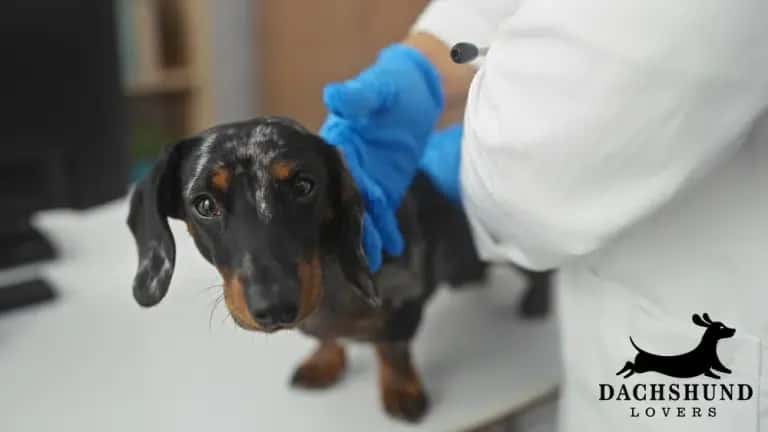
A hip dysplasia diagnosis can feel overwhelming, but it’s not a life sentence. With the right management, many dachshunds live long, comfortable, active lives. Treatment varies depending on severity — from simple weight control to surgery in advanced cases.
When Harvey was first diagnosed, we expected the worst. But our vet reassured us: with weight management, controlled activity, and supplements, we could keep him mobile without surgery. That reassurance reframed our outlook from fear to proactive care.
1. Medications
- Non-Steroidal Anti-Inflammatory Drugs (NSAIDs)
- Reduce pain and inflammation.
- Common first-line option for flare-ups.
- Reduce pain and inflammation.
- Joint Supplements
- Glucosamine, chondroitin, MSM, green-lipped mussel.
- Support cartilage health and slow degeneration.
- Glucosamine, chondroitin, MSM, green-lipped mussel.
- Omega-3 Fatty Acids
- Anti-inflammatory benefits.
- Often recommended alongside supplements.
- Anti-inflammatory benefits.
- Pain Relief (Gabapentin, Tramadol)
- Used in severe cases or post-surgery.
- Used in severe cases or post-surgery.
Harvey started on fish oil supplements, and the difference in his stiffness after walks was noticeable within weeks.
2. Physiotherapy & Low-Impact Exercise
- Hydrotherapy (underwater treadmill, swimming)
- Builds muscle without stressing joints.
- Popular option for dachshunds since it also supports back health.
- Builds muscle without stressing joints.
- Strengthening exercises
- Controlled walks, balance boards, gentle inclines.
- Keep muscles strong to stabilise hips.
- Controlled walks, balance boards, gentle inclines.
- Avoid high-impact activities
- No jumping on/off furniture (use ramps).
- Limit stair climbing.
- No jumping on/off furniture (use ramps).
3. Lifestyle Adjustments at Home
- Ramps over stairs/jumps (see Dachshund Back Brace for spinal protection).
- Non-slip flooring – Rugs or mats prevent splaying.
- Supportive bedding – Orthopedic memory foam beds reduce pressure.
- Weight control – Critical to reduce joint strain (see Overweight Dachshund).
4. Surgical Options
For severe or advanced cases where conservative management isn’t enough:
- Femoral Head Ostectomy (FHO)
- Removes the ball portion of the hip joint.
- Pain relief option, especially in small dogs like dachshunds.
- Removes the ball portion of the hip joint.
- Total Hip Replacement (THR)
- Replaces the joint with an artificial implant.
- Gold standard for restoring mobility, but costly and requires specialist surgeons.
- Replaces the joint with an artificial implant.
While surgery sounds extreme, many dachshunds adapt well — especially to FHO because of their smaller size.
5. Preventing Progression
Even after diagnosis, progression can be slowed with consistent care:
- Keep weight lean (critical in dachshunds prone to obesity).
- Exercise daily, but keep it low-impact.
- Supplement diet for joint health.
- Monitor for overlapping issues like allergies or skin problems, which reduce resilience.
Treatment Options Table
Treatment | What It Does | Pros | Cons | Dachshund-Specific Notes |
|---|---|---|---|---|
NSAIDs | Reduce pain & inflammation | Effective short-term relief | Long-term side effects possible | Use during flare-ups or vet-guided |
Joint Supplements | Support cartilage & joint health | Safe for long-term use | Variable results | Great for early intervention |
Omega-3s | Reduce inflammation | Easy dietary addition | Needs consistency | Fish oil often palatable for dachshunds |
Physiotherapy/Hydrotherapy | Strengthens muscles | Builds stability without strain | Requires time & cost | Excellent for dachshunds with back + hip issues |
Lifestyle Adjustments | Reduce strain at home | Inexpensive, effective | Needs owner commitment | Ramps, rugs, and weight control are non-negotiable |
Surgery (FHO/THR) | Corrects or replaces joint | Effective for severe cases | Expensive, recovery required | THR success rate high even in small breeds |
Perfect — let’s wrap Dachshund Hip Dysplasia with the Life Stage Perspective, FAQs, and More from This Series block. This will push the full article close to the 3,500-word target and keep it consistent with the rest of your cluster.
Dachshund Hip Dysplasia Across Life Stages
Life Stage | What to Expect | Common Risks | Care Priorities |
|---|---|---|---|
Puppyhood (0–12 months) | Hips still developing; early malformation may be hidden | Overfeeding, excessive exercise, poor breeding practices | Keep puppies lean; avoid high-impact play; ensure breeders use OFA/PennHIP screening |
Adulthood (1–7 years) | Symptoms often first appear; arthritis begins if dysplasia present | Bunny-hopping gait, reluctance to jump, stiffness after walks | Maintain lean weight (see Overweight Dachshund); daily low-impact exercise; joint supplements |
Senior Years (8+ years) | Dysplasia often worsens into arthritis; mobility decreases | Chronic pain, muscle loss, secondary spinal strain (see Back Problems) | Vet checks every 6 months; orthopedic bedding; possible pain meds or surgery; physiotherapy for comfor |
Owner Insight
With Harvey, we know the signs of dysplasia may change as he ages. Puppies need prevention, adults need vigilance, and seniors need comfort. The way we manage his hips will evolve, but the principle will stay the same: keep him lean, keep him moving, and keep him supported.
FAQs on Dachshund Hip Dysplasia
More from This Series
- Dachshund Eye Problems
- CDA in Dachshunds
- Dachshund Brain Size
- Dachshund Back Surgery
- Dachshund Dragging Back Legs
- Dachshund Neck Size
- Dachshund Back Brace
- Dachshund Back Problems
- Dachshund Skin Issues
- Dachshund Health Issues
- Dachshund Feet
- Dachshund Ribs
- Overweight Dachshund
- Dachshund Teeth
- Dachshund Allergies
- Dachshund Ears
- Dachshund Hip Dysplasia
- Dachshund Constipation
- Dachshund Bad Breath
Authored by
James
James is the founder of Dachshund Lovers and the proud human of Harvey, a mini dapple with a big personality. He writes to empower and connect the dachshund community, blending founder insights with honest, experience-based stories about life with this incredible and special breed. James brings candid, experience-backed opinions to the community and always focused on fewer, better products and ideas that genuinely improve life for dachshunds and their people.
Read moreJames is the founder of Dachshund Lovers and the proud human of Harvey, a mini dapple with a big personality. He writes to empower and connect the dachshund community, blending founder insights with honest, experience-based stories about life with this incredible and special breed. James brings candid, experience-backed opinions to the community and always focused on fewer, better products and ideas that genuinely improve life for dachshunds and their people.
Read moreDisclaimer
This content is for informational purposes only and should not be considered veterinary advice. Always consult with a licensed veterinarian regarding your dog’s health and wellbeing.
There are no comments yet
Leave a comment