Chiweenie: The Ultimate Guide to the Dachshund-Chihuahua Mix
Chiweenie: The Ultimate Guide to the Dachshund-Chihuahua Mix
I’ve spent years around dachshunds and their mixes here’s what stood out to me about Chiweenies, from personality quirks to everyday realities.

Ellie
Posted on October 9, 2025.
Updated on July 20, 2026.
Table of Contents
- 1.Key Takeaways: About Chiweenie
- 2.What is a Chiweenie? (Overview & Characteristics)
- •Chiweenie Appearance
- •Personality Traits
- •Who Are Chiweenies Best For?
- 3.History & Origin of the Chiweenie
- •The Dachshund Legacy
- •The Chihuahua’s Ancient Roots
- •The Rise of the Chiweenie
- •Why the Chiweenie Became Popular
- 4.Chiweenie Temperament
- •Core Personality Traits
- •Family & Social Life
- •Temperament Variations
- 5.Chiweenie Size & Growth
- •How Big Do Chiweenies Get?
- •Chiweenie Growth Chart
- •Full-Grown Chiweenie: What to Expect
- •Factors That Affect Growth
- •Why Size Knowledge Matters
- 6.Chiweenie Puppies: What New Owners Should Know
- •Understanding Chiweenie Puppy Behavior
- •Feeding Chiweenie Puppies
- •Training and Socialization
- •Crate Training and Potty Breaks
- •Exercise Needs
- •Vet Care and Health Watchpoints
- •Why Chiweenie Puppies Stand Out
- 7.Chiweenie Coat Colors & Grooming
- •Common Chiweenie Coat Colors
- •Coat Texture and Length
- •Shedding Patterns
- •Bathing and Skin Care
- •Grooming Tools You’ll Need
- 8.Chiweenie Health & Lifespan
- •How Long Do Chiweenies Live?
- •Common Health Issues
- •Preventative Care Tips
- •Signs of a Healthy Chiweenie
- •Senior Chiweenie Care
- •Key Takeaways: Chiweenie Health
- •Why Early Training Matters
- •Top Training Tips for Chiweenies
- •Socialization: The Secret to a Confident Chiweenie
- •Exercise & Mental Stimulation
- •Quick Training Toolkit
- 9.Blue Merle Chiweenie: A Rare and Striking Coat
- •What is a Blue Merle Chiweenie?
- •Why Are Blue Merle Chiweenies Rare?
- •Blue Merle Coat Care
- •Temperament of Blue Merle Chiweenies
- •How Much Does a Blue Merle Chiweenie Cost?
- •Are Blue Merle Chiweenies Healthy?
- •Are They Right for You?
- 10.Chiweenie vs. Other Hybrid Dogs
- •Chiweenie vs. Doxiepoo
- •Chiweenie vs. Cheagle
- •Chiweenie vs. Dachshund (Purebred)
- •Chiweenie vs. Chihuahua (Purebred)
- •Chiweenie vs. Maltipoo
- •Other Comparisons
- •Which Breed Fits Your Lifestyle?
- •Comparison Table
- -More From This Series:
- -Disclaimer
Share

The first time I saw a Chiweenie, I was sitting outside the Morris café in Paddington on one of those crisp Sydney winter mornings where every table seemed to have a small dog underfoot. This particular dog had the alert, almost deer-like gaze of a Chihuahua but carried itself with the long, low confidence of a dachshund. The owner laughed when I asked about her breed: “She’s half dachshund, half Chihuahua — all attitude.” That description stuck with me because it’s exactly what these little hybrids embody — a mix of charm, sass, and surprising loyalty.
A Chiweenie is the product of crossing two iconic breeds: the dachshund, famous for its elongated body and fearless hunting instincts, and the Chihuahua, celebrated for its confidence, alertness, and strong bond with owners. While both parent breeds have centuries of history behind them — the American Kennel Club (AKC) traces dachshunds back to 15th-century Germany — the Chiweenie itself is a more modern “designer” mix. It first gained popularity in the 1990s and 2000s as smaller breeds became highly sought after by urban pet owners.
Chiweenies are adored for their versatility:
- They’re small enough for city apartments yet have the spunky personality of a much larger dog.
- They’re affectionate and loyal, often forming a tight bond with one or two people, much like Chihuahuas.
- They’re adventurous and playful, traits they inherit from the dachshund side.
According to DogTime’s Chiweenie profile, these hybrids are often described as “a small dog with a big personality,” thriving in environments where they can both cuddle and explore. They can be stubborn at times — a dachshund trait — but with patience and positive reinforcement training, they quickly become affectionate companions.
This guide will take you through everything you need to know:
- What a chiweenie dog is like to live with.
- How to care for chiweenie puppies in their early months.
- Insights on their lifespan, coat colors, health, and training needs.
Real-world grooming advice and pictures of chiweenies that show their stunning variety.
Key Takeaways: About Chiweenie
Topic | Summary |
|---|---|
Breed Type | A small designer crossbreed of the dachshund and Chihuahua. |
Size | Typically 5–12 lbs (2.2–5.4 kg) and 6–10 inches tall at the shoulder. |
Temperament | Loyal, alert, playful — can be stubborn but very affectionate with family. |
Energy Levels | Moderate — enjoys 20–30 min walks and interactive games daily. |
Coat & Colors | Short or medium-length coats; common shades include brown, black, tan, or merle patterns. |
Lifespan | 12–16 years, depending on diet, exercise, and genetic health. |
Family Fit | Best for singles, couples, or families with older kids. |
Training Needs | Responds best to reward-based methods; early socialization is essential. |
Health Considerations | May inherit back issues (from dachshunds) and dental problems (from Chihuahuas). |
Grooming | Low-to-moderate; weekly brushing and regular dental care recommended. |
What is a Chiweenie? (Overview & Characteristics)

A Chiweenie is a crossbreed between a purebred dachshund and a purebred Chihuahua. While both parent breeds have distinct looks and personalities, the Chiweenie combines their best traits into one compact, confident package. These dogs are often described as “small dogs with big dog energy” because they carry themselves with boldness well beyond their size.
According to the American Kennel Club (AKC), dachshunds are known for their “clever, courageous, and lively” temperament, while Chihuahuas are alert, fiercely loyal, and surprisingly protective for their size. The Chiweenie blends these traits into a dog that is both affectionate and spirited, making it a popular companion for singles, couples, and families with older children.
Chiweenie Appearance
- Size: Typically 5–12 lbs (2.2–5.4 kg) and 6–10 inches tall.
- Body Shape: Often inherits the dachshund’s long body and short legs, with the Chihuahua’s slightly rounded head and expressive eyes.
- Coat Types: Smooth, short coats are most common, but longer or slightly wiry coats can appear depending on genetics.
- Colors: Chiweenies come in a wide variety of shades, including black, tan, cream, chocolate, or mixed patterns like merle or dapple.
Personality Traits
Chiweenies are affectionate dogs that form close bonds with their families, often following their favorite person around the house. However, they can also be independent thinkers — especially when a scent or sound catches their attention (thanks to the dachshund lineage).
DogTime notes that Chiweenies are “energetic, curious, and happiest when given both mental and physical exercise.” They thrive with daily walks, puzzle toys, and interactive play sessions.
Who Are Chiweenies Best For?
- Apartment dwellers who want a small but alert companion.
- Families with older children (due to their small size and occasional fragility).
- Owners who enjoy training and mental enrichment activities.
History & Origin of the Chiweenie
The Chiweenie might be a modern hybrid, but its parent breeds bring centuries of history and purpose to the mix. To truly understand this crossbreed, it helps to look at where dachshunds and Chihuahuas began — and why their combination has become so popular.
The Dachshund Legacy
Dachshunds were developed in Germany as far back as the 15th century. The American Kennel Club (AKC) describes them as “clever, lively, and courageous to the point of rashness.” These dogs were originally bred for hunting badgers, with their long, low bodies designed to fit into burrows and their powerful paws made for digging. Even today, a Chiweenie may inherit the dachshund’s stubborn streak and its natural drive to explore — traits that make them both entertaining and independent.
The Chihuahua’s Ancient Roots
Chihuahuas have a different story, one steeped in ancient history. According to DogTime’s breed history, they are believed to descend from the Techichi, a small companion dog cherished by the Toltec civilization of Mexico. Known for their loyalty and alertness, Chihuahuas were valued as both companions and guardians, despite their tiny stature. Their confident personality is one of the most recognizable features that carries over into the Chiweenie.
The Rise of the Chiweenie
The Chiweenie is thought to have gained traction as a “designer dog” in the 1990s and early 2000s, when intentionally crossbreeding two purebred dogs became a trend. Owners sought dogs that combined the best traits of both parent breeds — in this case, the Chihuahua’s devotion and the dachshund’s playful curiosity. Breeders also aimed to reduce some of the health risks associated with purebreds, such as intervertebral disc disease (IVDD) in dachshunds or dental issues in Chihuahuas.
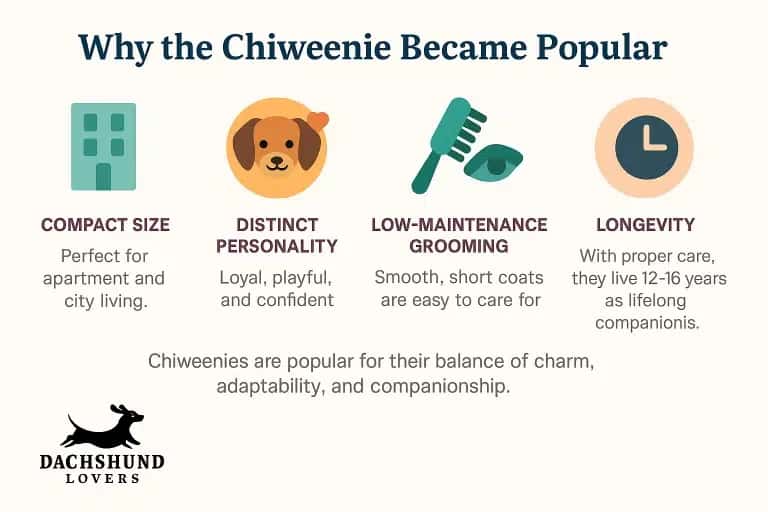
Why the Chiweenie Became Popular
- Compact size: Perfect for apartment and city living.
- Distinct personality: A balance of loyalty, playfulness, and confidence.
- Low-maintenance grooming: Most Chiweenies have smooth, short coats that are easy to care for.
- Longevity: With proper care, they often live 12–16 years, making them lifelong companions.
The Chiweenie’s appeal also stems from its adaptability. They can be equally content snuggling on the couch or strutting down the local café strip, drawing attention for their expressive faces and bold attitudes.
Chiweenie Temperament
If I had to sum up a Chiweenie’s temperament, I’d say they live life with unapologetic confidence. They’re the kind of dog that makes their presence known — whether by curling into your lap with absolute entitlement or by standing guard at the window, convinced they’re protecting the household from every passerby. I once met a Chiweenie named Bella at a weekend market in Newtown; she wasn’t more than 6 pounds, but she stood like she owned every inch of that place. Her owner laughed and said, “She’s sweet, but I’m pretty sure she thinks she’s a Great Dane.”
This mix combines the loyalty and sass of the Chihuahua with the playful stubbornness of the dachshund, resulting in a small dog with a big personality. They are affectionate to the point of being “shadow dogs” — always wanting to be near their favorite human — yet they also have a streak of independence, especially if something more interesting (like a squirrel or a scent trail) grabs their attention.
According to DogTime’s Chiweenie profile, these hybrids are “energetic, curious, and deeply attached to their families.” It’s not unusual for Chiweenies to develop a strong preference for one or two family members, though they’ll happily bond with others if socialized early. The American Kennel Club (AKC) notes that dachshunds are clever and courageous, while Chihuahuas are lively and alert — and both of these qualities shine through in the Chiweenie.
Core Personality Traits
- Loyal & Affectionate:
Chiweenies thrive on connection. They’re happiest when involved in daily routines — whether that’s sitting beside you while you work from home or tagging along for short errands. Their Chihuahua side tends to bond closely with one person, while their dachshund genes bring a playful, family-oriented vibe. - Energetic Yet Compact:
Don’t be fooled by their size — a Chiweenie still needs a daily energy outlet. A 20- to 30-minute walk combined with interactive indoor play is usually enough to keep them content. Without it, they might resort to “inventing” games, like rearranging the contents of your laundry basket. - Alert & Vocal:
Like many small breeds, Chiweenies are naturally vocal. They’ll bark to alert you of new visitors or unusual sounds. While this makes them effective watchdogs, it’s worth implementing early training to prevent over-barking. See our Chiweenie Training Guide for practical strategies. - Independent Thinkers:
This is where the dachshund side really shows. Chiweenies are intelligent, but they can also be stubborn. Training requires patience and consistency — think short, fun sessions with plenty of rewards. Harsh methods or yelling will only backfire.
Chiweenies are ideal companions for singles or couples, but they can also thrive in families with older children. Their small size makes them delicate, so younger kids who don’t understand gentle handling may accidentally cause harm. Socialization is crucial from a young age — exposing them to various people, sounds, and environments will prevent the Chihuahua tendency toward being overly protective or shy.
For a guide on starting off on the right foot with a young pup, see our Chiweenie Puppies article. It covers socialization steps, feeding tips, and how to introduce them to household routines.
Temperament Variations
No two Chiweenies are the same. Some take after the Chihuahua’s confident, alert nature, while others are more playful and easy-going, like a dachshund. You might find that your Chiweenie is fearless at the dog park but becomes a lap-loving snuggler at home — it’s this mix of boldness and affection that makes them so loved.
PetMD highlights that Chiweenies are generally adaptable but can become anxious if left alone for long stretches. Separation anxiety is common, so consider doggy daycare or a pet sitter if you work long hours.
Training Their Mind
Chiweenies excel when given mental stimulation. Puzzle feeders, treat-dispensing toys, and short training sessions are fantastic for keeping their sharp minds engaged. They respond best to positive reinforcement, so think treats, praise, and play rather than scolding.
Want a step-by-step plan for training commands like “sit” or “stay”? Check out our Chiweenie Training Guide for reward-based techniques that work especially well for stubborn doxies and hybrids.
Chiweenie Size & Growth
A Chiweenie is considered a small breed dog, but its size can vary depending on which parent breed it takes after more strongly. Some Chiweenies lean toward the tiny, delicate build of a Chihuahua, while others inherit the slightly longer, sturdier frame of a dachshund. Either way, they remain compact enough to be perfect for apartment living — yet big enough to keep up with daily adventures.
How Big Do Chiweenies Get?
On average, a full-grown Chiweenie will weigh between 5–12 pounds (2.2–5.4 kg) and stand 6–10 inches tall at the shoulder. However, these numbers can shift slightly based on factors such as genetics, diet, and activity level.
The American Kennel Club (AKC) Dachshund breed standard lists standard dachshunds at 16–32 lbs and Chihuahuas under 6 lbs, which means the Chiweenie often lands right in the middle. This balance of size makes them both manageable and durable — ideal for urban pet owners and families alike.
If you want a detailed breakdown of growth milestones, our Chiweenie Size & Growth Chart has a month-by-month guide to help you track your pup’s development.
Chiweenie Growth Chart
Age | Weight Range | Height Range | Notes |
|---|---|---|---|
8–12 weeks | 2–4 lbs (0.9–1.8 kg) | 4–6 inches (10–15 cm) | Socialization and basic training begin here. |
4–6 months | 4–8 lbs (1.8–3.6 kg) | 5–8 inches (12–20 cm) | Growth spurts — controlled play is best |
6–12 months | 6–10 lbs (2.7–4.5 kg) | 6–9 inches (15–23 cm) | Transition to adult feeding schedule. |
12–18 months | 8–12 lbs (3.6–5.4 kg) | 6–10 inches (15–25 cm) | Fully grown — muscle tone continues to build. |
Full-Grown Chiweenie: What to Expect
A full-grown Chiweenie is small but sturdy. While they’re easy to carry, they don’t have the fragility of some toy breeds. Their body shape often combines the dachshund’s longer back with the Chihuahua’s slimmer build, so it’s important to protect their spine from unnecessary strain. Using ramps or steps for furniture can prevent injuries, just like we recommend for dachshunds prone to IVDD (Intervertebral Disc Disease).
For more details on how size impacts long-term health, see our Chiweenie Health Guide.
Factors That Affect Growth
- Genetics:
A Chiweenie with a larger dachshund parent may naturally have a heavier, sturdier frame compared to one that takes after a smaller Chihuahua parent. - Diet:
High-quality, portion-controlled meals are essential. Overfeeding during puppyhood can lead to obesity, which is dangerous for long-backed dogs. - Exercise:
Gentle, regular activity supports healthy muscle development without putting strain on their joints or spine. - Spaying/Neutering:
Early spaying or neutering may slightly affect a dog’s growth, though it’s generally minimal. Consult your vet for timing recommendations.
Why Size Knowledge Matters
Understanding your Chiweenie’s expected size is crucial for everything from choosing the right harness to selecting crate dimensions and setting portion sizes. If you’re raising a Chiweenie puppy, knowing when they’re hitting growth milestones helps you adjust feeding, exercise, and training schedules.
For new puppy owners, our Chiweenie Puppies Guide includes a dedicated section on feeding and exercise during these early stages.
Chiweenie Puppies: What New Owners Should Know

There’s nothing quite like bringing home a Chiweenie puppy. With their wide-eyed curiosity and oversized personalities, these dachshund-Chihuahua hybrids are equal parts mischief and affection. But while they’re small, their care needs are anything but minimal. Raising a Chiweenie puppy means understanding their unique mix of intelligence, independence, and sensitivity.
For an even deeper dive — including crate setup tips, early leash training, and feeding charts — check out our full Chiweenie Puppies Guide.
Understanding Chiweenie Puppy Behavior
Chiweenie puppies tend to inherit the dachshund’s fearless streak and the Chihuahua’s tendency to form strong bonds with their humans. This can make them clingy at times, so crate training and alone-time conditioning are important from day one. Without it, you might find yourself with a puppy that becomes overly anxious whenever you step out of the room.
According to PetMD’s Chiweenie overview, these hybrids are “intelligent, playful, and social, but require early socialization to prevent timid or overly vocal behavior.” This means introducing them to new experiences early — gentle walks in your neighborhood, trips to cafés, and friendly encounters with other dogs.
Feeding Chiweenie Puppies
Because of their small size, Chiweenie puppies have tiny stomachs and fast metabolisms. Overfeeding can lead to early weight gain (a concern for dachshund-backed breeds due to IVDD risk), while underfeeding can leave them lacking the energy they need for growth.
Feeding Schedule:
- 8–12 weeks: 3–4 small meals per day.
- 4–6 months: 3 meals per day.
- 6+ months: 2 balanced meals per day.
Food Tips:
- Choose a high-quality puppy kibble that lists real meat (chicken, turkey, or fish) as the first ingredient.
- Avoid foods heavy in fillers like corn or soy — these offer little nutritional value.
- Small-bite kibble is ideal for preventing choking hazards and maintaining dental health.
Want more feeding tips? See our Chiweenie Size & Growth Chart, which includes ideal weight ranges and feeding advice for each life stage.
The first 12–16 weeks of a puppy’s life shape their adult temperament. Chiweenies need consistent, positive reinforcement training. Harsh methods or raised voices will only backfire due to their sensitive nature.
Focus on:
- Basic commands: “Sit,” “stay,” and “leave it” are must-haves early on.
- Social exposure: Take them to dog-friendly markets or cafés to get used to new people and sounds.
- Handling training: Regularly touch their ears, paws, and mouth to prepare for grooming or vet visits.
For step-by-step guidance, check out our Chiweenie Training Guide, which covers everything from housebreaking to managing stubborn behavior.
Crate Training and Potty Breaks
Crate training is invaluable for a Chiweenie puppy. It creates a safe, den-like environment and accelerates housebreaking. Start by placing a soft blanket or item of clothing that smells like you inside the crate to build positive associations.
Potty Tips:
- Take them outside immediately after waking, eating, or playing.
- Reward with small treats or enthusiastic praise for each success.
- Keep early crate sessions short and positive — no crate should ever feel like punishment.
For a complete breakdown of crate training methods, see the section in Chiweenie Puppies.
Exercise Needs
While they’re small, Chiweenie puppies still have plenty of energy. Gentle activities are best — their developing joints and long backs can be prone to strain if over-exercised.
Recommended Routine:
- 5–10 minute walks twice a day.
- Indoor play sessions with soft toys or snuffle mats.
- Mental stimulation games — hide small treats around the house for scent-based play.
Vet Care and Health Watchpoints
Chiweenies may inherit dental issues from the Chihuahua side and spinal concerns (IVDD) from the dachshund side. Regular vet checkups, early dental brushing, and weight management are essential for long-term health.
Our Chiweenie Health Guide explains the most common health risks and how to prevent them.
Why Chiweenie Puppies Stand Out
Chiweenie puppies are clever, quick learners that thrive on attention. They’re perfect for owners who want a dog that’s both affectionate and spirited, with enough personality to keep life interesting. But they also require time, consistency, and patience during those early months to ensure they grow into confident, well-mannered adults.
For everything from feeding schedules to puppy-proofing your home, visit our full Chiweenie Puppies Article.
Chiweenie Coat Colors & Grooming
Chiweenies come in an incredible variety of colors and patterns, making each one truly unique. Whether your pup is a glossy black-and-tan or a rare blue merle, their coat often reflects a mix of dachshund and Chihuahua traits. I once saw a chocolate Chiweenie at a dog-friendly café in Jamberoo — her coat shimmered like velvet in the sunlight, and her owner said she gets stopped at least three times on every walk. That’s the thing with Chiweenies: their looks are just as attention-grabbing as their personalities.
Common Chiweenie Coat Colors
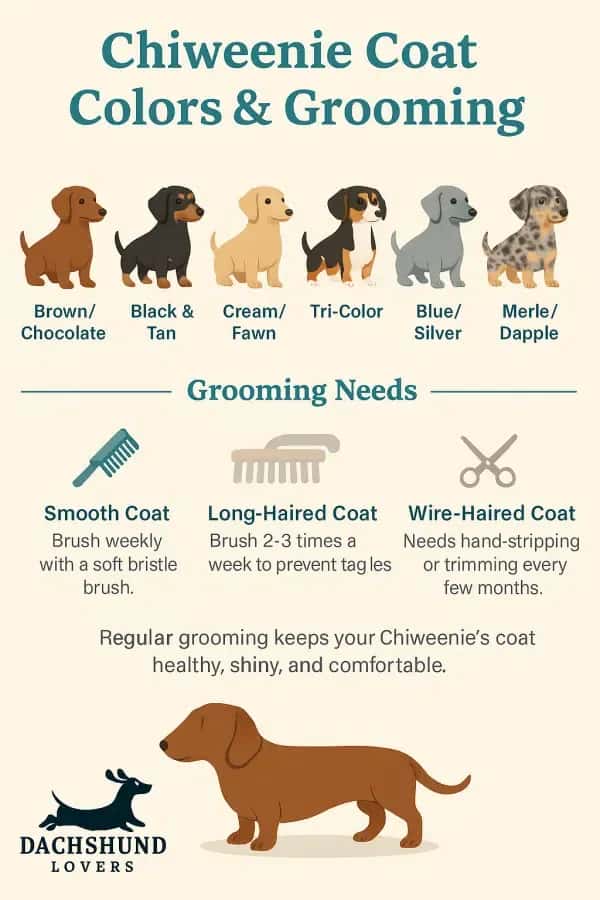
While Chiweenies can inherit any shade from their parents, some of the most popular colors include:
- Brown or Chocolate: A warm, rich tone often seen in dachshunds, giving the dog a soft, earthy look.
- Black and Tan: A classic dachshund pattern, with tan markings over the eyes, chest, and paws.
- Cream or Fawn: Soft, pale coats that are common among Chihuahuas.
- Tri-Color: A mix of black, tan, and white, reminiscent of beagle-like patterns.
- Blue or Silver: A rarer color sometimes seen when the dachshund parent carries dilute genes.
- Merle or Dapple: A mottled, speckled look that creates a patchwork-like coat pattern.
For photos and coat comparisons, see Chiweenie Shedding & Coat Care.
Coat Texture and Length
Chiweenies usually have smooth, short coats that are low-maintenance. However, if the dachshund parent is long-haired, you might get a puppy with slightly longer, feathered fur around the ears or tail. These coats need brushing 2–3 times a week to prevent tangles.
- Smooth Coats: Require only weekly brushing.
- Medium or Feathered Coats: Brush 2–3 times a week.
- Rare Wire Coats: A quick trim every few months and weekly brushing.
Shedding Patterns
Chiweenies are moderate shedders. Seasonal changes in spring and autumn can cause heavier shedding, especially in mixes with thicker coats. A de-shedding brush can minimize loose hairs, and regular grooming also reduces allergens in the home.
For complete shedding tips, visit our Chiweenie Shedding & Coat Care Guide.
Bathing and Skin Care
Bathing once every 4–6 weeks is sufficient for most Chiweenies. Over-bathing can strip natural oils, leading to dryness.
- Use a mild, dog-specific shampoo (oatmeal-based for sensitive skin).
- Dry thoroughly to avoid chills, especially for small, short-coated dogs.
The American Kennel Club recommends brushing before and after baths to reduce tangles and ensure a healthy, shiny coat.
Nail, Ear & Dental Care
- Nails: Trim every 3–4 weeks, or when you hear clicking on floors.
- Ears: Check weekly for signs of redness or wax buildup — Chiweenies with floppy ears can inherit beagle-like ear issues.
- Teeth: Brush 2–3 times per week, as Chihuahuas are prone to dental problems.
Grooming Tools You’ll Need
- Soft bristle brush or slicker brush (for smooth coats).
- Deshedding comb (for seasonal shedding).
- Nail clippers or grinder.
- Dog-friendly ear wipes and toothbrush.
Chiweenie Health & Lifespan

Chiweenies are known for their surprising resilience and long lifespans, often outliving many larger breeds thanks to their small size and hybrid vigor. On average, a well-cared-for Chiweenie can live 12–16 years, with some reaching up to 17 or 18 when kept lean and active.
But like any hybrid breed, they’re not immune to health challenges. The key is proactive care, from dental hygiene (Chihuahua influence) to spinal protection (dachshund influence). For a complete breakdown of common health concerns and preventative strategies, see our Chiweenie Health Guide.
How Long Do Chiweenies Live?
Chiweenies often enjoy long, healthy lives when their needs are met. The American Kennel Club lists the average Chihuahua lifespan at 14–16 years, while dachshunds average 12–16 years. With proper diet and care, Chiweenies usually sit comfortably in the middle of this range.
For a deep dive into longevity tips and real-world data, visit How Long Do Chiweenies Live.
Common Health Issues
- Intervertebral Disc Disease (IVDD):
Dachshunds are notorious for back problems, and Chiweenies can inherit that risk. Avoid letting them jump from couches or stairs. Use ramps or steps for furniture access. - Dental Issues:
Chihuahua genes can lead to overcrowded teeth and early tartar buildup. Brush their teeth 2–3 times per week and use vet-approved dental chews. - Patellar Luxation:
Small dogs often face kneecap instability. Watch for signs like skipping or limping during play. - Obesity:
Both parent breeds love food. Extra weight can increase IVDD risk and strain their joints. A balanced diet and daily walks are non-negotiable. - Ear Infections:
Chiweenies with floppy dachshund-style ears are prone to wax buildup. Weekly ear checks prevent infections.
Preventative Care Tips
- Weight Management:
Keep your Chiweenie lean by following a strict feeding schedule. Check our Chiweenie Size & Growth Chart for weight guidelines. - Routine Vet Checkups:
Annual checkups (or bi-annual for seniors) catch early signs of health issues. - Spinal Health:
Use ramps instead of stairs and avoid rough play that could strain their back. - Vaccinations & Parasite Prevention:
Follow standard puppy and adult vaccination schedules, plus regular flea/tick control.
Signs of a Healthy Chiweenie
A healthy Chiweenie should have:
- Bright, clear eyes.
- A shiny, well-groomed coat (thanks to proper diet and brushing).
- Steady energy levels with playful bursts.
- A visible waistline — if you can’t feel their ribs, they might be overweight.
Senior Chiweenie Care
From age 8 onward, Chiweenies are considered seniors. At this stage, you may notice slowed activity or stiffness. Adjustments like orthopedic dog beds, shorter walks, and joint supplements (glucosamine and chondroitin) can make a big difference.
Key Takeaways: Chiweenie Health
Topic | Summary |
|---|---|
Average Lifespan | 12–16 years with proper care. |
Top Risks | IVDD, dental issues, patellar luxation, obesity. |
Prevention | Regular vet care, lean weight, ramps for back protection. |
Senior Support | Orthopedic bedding, joint care, and low-impact exercise. |
Training a Chiweenie is a mix of patience, strategy, and a good sense of humor. These dogs are clever and eager to please, but they can also be stubborn and independent, thanks to their dachshund and Chihuahua lineage. The key is positive reinforcement and short, engaging training sessions that feel more like play than commands.
According to the American Veterinary Society of Animal Behavior (AVSAB), reward-based training is proven to build stronger bonds and long-term results compared to punishment-based methods. This couldn’t be truer for Chiweenies — they respond far better to treats, praise, and patience.
Why Early Training Matters
Chiweenies are naturally alert and vocal (traits from both parents), which makes early training essential to prevent excessive barking or territorial behaviors.
- Start Training at 8–10 Weeks: Simple commands like “sit,” “stay,” and “come” lay the foundation for good manners.
- Housebreaking: Chiweenies benefit from crate training, which doubles as both a safe space and an effective potty training tool.
For step-by-step techniques, visit our Chiweenie Training Guide.
Top Training Tips for Chiweenies
- Positive Reinforcement:
Use small, high-value treats (like chicken or cheese) to reward desired behavior. Avoid harsh corrections, which can make them anxious or resistant. - Short Sessions Work Best:
Keep sessions to 5–10 minutes. Chiweenies, like many small dogs, can lose focus quickly. - Clicker Training:
Clicker training is effective for Chiweenies because it provides clear, consistent feedback that pairs well with treats and verbal praise. - Leash Skills:
Start with a no-pull harness early on. Dachshund-shaped backs benefit from extra support, and harnesses reduce the risk of neck strain.
Chiweenies can be wary of strangers if not properly socialized, especially those leaning toward the Chihuahua personality.
- Introduce them to different environments: local parks, markets, and pet-friendly cafés.
- Expose them to various sounds like vacuum cleaners, traffic, and doorbells to reduce fear-based barking.
- Arrange playdates with other dogs to teach healthy social skills.
For raising a well-rounded puppy, our Chiweenie Puppies Guide has a detailed socialization checklist.
Common Training Challenges
- Barking: Chiweenies are natural watchdogs. Teach a “quiet” command and reward them for calm behavior.
- Separation Anxiety: Gradually increase alone time to prevent destructive habits when you’re away.
- Stubbornness: If a session isn’t going well, end on a positive note with a simple command they know (like “sit”) and reward them.
Exercise & Mental Stimulation
Training isn’t just about commands — it’s about mental engagement.
- Puzzle toys and snuffle mats keep their minds active.
- Scent games tap into their dachshund tracking instincts.
- Short walks or light play sessions (20–30 minutes per day) burn off energy and reduce unwanted behaviors.
Quick Training Toolkit
- Essential Gear: No-pull harness, clicker, and soft treats.
- Routine: Daily 5–10 minute sessions + play-based training.
Reward Types: Mix treats with praise and toy-based rewards to keep things interesting.
Blue Merle Chiweenie: A Rare and Striking Coat

The blue merle Chiweenie is one of the rarest and most visually striking variations of the dachshund-Chihuahua mix. With a unique marbled coat pattern — where shades of gray, black, and sometimes white or tan appear like brush strokes — these dogs are nothing short of eye-catching. When I first saw a blue merle Chiweenie at a pet-friendly café near Jamberoo, I couldn’t help but notice how many heads turned. It’s a coat pattern that truly stands out from the crowd.
What is a Blue Merle Chiweenie?
A blue merle Chiweenie inherits its pattern from the merle gene, often passed down through the dachshund side of the lineage. The term “blue” refers to the dilute black or gray tones that form the base color, while “merle” describes the irregular patches and speckles overlaid on that base.
According to VCA Animal Hospitals, merle is not a color but a genetic pattern that affects pigment distribution, creating the mottled effect seen on dogs like Australian Shepherds or merle dachshunds.
Why Are Blue Merle Chiweenies Rare?
The merle gene isn’t common in Chihuahuas, which means a merle Chiweenie is almost always the result of a merle-coated dachshund parent. Ethical breeders are careful about breeding merle dogs because double-merle genetics (merle x merle) can cause health issues, such as hearing or vision impairments. As a result, responsible merle Chiweenie breeding is limited, making these hybrids both rare and sought-after.
Blue Merle Coat Care
While the merle pattern itself doesn’t require extra grooming, dogs with lighter coat patches sometimes have more sensitive skin.
- Weekly brushing with a soft bristle brush helps maintain the coat’s shine.
- Sunscreen for dogs may be needed on light or thin-haired areas if your Chiweenie spends a lot of time outdoors.
- A diet rich in omega-3 fatty acids (salmon oil or fish-based dog food) supports coat health and reduces seasonal shedding.
For detailed grooming tips, see Chiweenie Shedding & Coat Care.
Temperament of Blue Merle Chiweenies
The coat pattern doesn’t influence personality — but blue merle Chiweenies often get more attention from strangers simply because of their looks. These dogs have the same playful, affectionate nature as any Chiweenie:
- Loyal to their family, often choosing one “favorite person.”
- Curious and alert, thanks to their dachshund side.
- Bold and sometimes a little cheeky, especially when they inherit the Chihuahua’s fearless attitude.
How Much Does a Blue Merle Chiweenie Cost?
Because of their rarity, blue merle Chiweenies are often priced higher than other coat variations.
- In the USA: $800–$1,500 from reputable breeders.
- In Australia or the UK: Prices can range from AUD $1,200–$2,000 or £700–£1,200.
Always ensure the breeder follows ethical practices and avoids double-merle breeding. Our Chiweenie Cost & Adoption Guide outlines what to look for in a breeder or rescue organization.
Are Blue Merle Chiweenies Healthy?
The merle gene itself doesn’t cause health problems unless paired with another merle gene. However, like all Chiweenies, they can be prone to:
- IVDD (spinal issues from dachshunds).
- Dental problems (from Chihuahuas).
- Patellar luxation (knee instability common in small breeds).
Preventative care — like regular vet checkups and weight control — will help them live their full lifespan. For health tips, visit Chiweenie Health Guide.
Are They Right for You?
If you’re looking for a small dog with a big personality and a coat that turns heads, a blue merle Chiweenie might be perfect. Just remember: temperament and care matter far more than coat color.
Chiweenie vs. Other Hybrid Dogs
The Chiweenie (Chihuahua + Dachshund mix) has quickly become one of the most beloved “designer dogs”, thanks to its bold personality and compact size. But in today’s world of hybrid breeds, how does the Chiweenie compare to other small dog mixes like the Doxiepoo, Cheagle, or even the popular Maltipoo? Choosing the right breed means looking at temperament, grooming needs, energy levels, trainability, and health risks.
This detailed comparison will help you figure out if the Chiweenie matches your lifestyle or if another designer dog might suit you better.
Chiweenie vs. Doxiepoo
The Doxiepoo — a dachshund and poodle mix — is a smart and often hypoallergenic hybrid. While both Chiweenies and Doxiepoos share dachshund traits like independence and curiosity, there are some notable differences.
Coat & Grooming:
- Doxiepoos often inherit a poodle’s curly coat, which is low-shedding but high-maintenance. Expect brushing every 2–3 days, plus grooming trims every 6–8 weeks.
- Chiweenies, on the other hand, usually have a low-maintenance coat, requiring only weekly brushing (see our Chiweenie Shedding & Coat Care).
Temperament:
- Doxiepoos are quick learners and highly trainable, thanks to poodle intelligence.
- Chiweenies are intelligent too, but their stubborn streak (from the dachshund and Chihuahua mix) can make them more challenging to train. You’ll need to lean on positive reinforcement techniques (see Chiweenie Training Guide).
Best For:
- A Doxiepoo is ideal for families or owners looking for a hypoallergenic dog with higher trainability.
- A Chiweenie is perfect for apartment dwellers or singles who want a loyal, sassy companion with lower grooming demands.
Trusted Reference: The American Kennel Club notes that poodle mixes are popular for their intelligence and minimal shedding, but they require dedicated grooming routines.
Chiweenie vs. Cheagle
The Cheagle (Chihuahua + Beagle) is another fun-loving hybrid that shares some similarities with the Chiweenie, but their energy levels and personalities differ.
Energy & Exercise:
- Cheagles often inherit the beagle’s hunting drive, requiring at least 45–60 minutes of outdoor activity daily.
- Chiweenies, while playful, are content with 20–30 minutes of walks and indoor play, making them easier to manage for busy owners.
Personality:
- Cheagles tend to be less stubborn than Chiweenies, but they can be more vocal and easily distracted by scents.
- Chiweenies are alert watchdogs, but with consistent training (see Chiweenie Puppies Guide), they can learn to control barking.
Family Fit:
- Cheagles suit active families who enjoy outdoor adventures.
- Chiweenies are better for smaller households or individuals who want a lapdog that also enjoys playful bursts of energy.
Trusted Reference: According to PetMD, beagle mixes often inherit a strong scent-driven curiosity that requires mental stimulation to prevent boredom.
Chiweenie vs. Dachshund (Purebred)
It’s no surprise that potential Chiweenie owners often compare them to purebred dachshunds.
Health Risks:
- Dachshunds are highly prone to intervertebral disc disease (IVDD) due to their long spines.
- Chiweenies can still inherit IVDD risk but often benefit from hybrid vigor, which may reduce some genetic issues. For a breakdown of Chiweenie health risks, see Chiweenie Health Guide.
Training Needs:
- Dachshunds are independent thinkers and require firm but positive training.
- Chiweenies share this streak but are generally more adaptable to indoor living, especially in small apartments.
Size:
- Standard dachshunds weigh 16–32 lbs, while a Chiweenie typically weighs 8–15 lbs, making them lighter and easier to carry.
Trusted Reference: The American Kennel Club emphasizes the dachshund’s independent temperament and need for proper spinal care.
Chiweenie vs. Chihuahua (Purebred)
Chihuahuas are known for being tiny but mighty — traits that Chiweenies often share, but with some added balance.
Personality:
- Chihuahuas are more one-person dogs, often becoming very protective of their primary owner.
- Chiweenies are typically more social, thanks to the dachshund’s playful nature.
Exercise Needs:
- Both breeds thrive on short daily walks, but Chiweenies usually tolerate slightly more exercise without tiring out.
Training:
- Chihuahuas can be more nervous and vocal, while Chiweenies are bold but easier to calm with consistent training.
Chiweenie vs. Maltipoo
The Maltipoo (Maltese + Poodle) is a popular choice for allergy-prone households.
Coat & Allergies:
- Maltipoos are hypoallergenic, making them a better fit for people sensitive to dander.
- Chiweenies are low-shedding but not hypoallergenic, meaning they may still trigger allergies.
Grooming:
- A Maltipoo’s coat requires intensive grooming, while Chiweenies are more low-maintenance.
Personality:
- Maltipoos are gentler and more people-oriented, while Chiweenies are feisty and independent.
Trusted Reference: The ASPCA notes that poodle mixes like Maltipoos require extra grooming but can be great for first-time owners due to their easy-going personalities.
Other Comparisons
- Chiweenie vs. Dorgi (Dachshund + Corgi):
- Dorgis are larger (20–30 lbs) and require more space.
- Chiweenies are smaller and more portable for urban living.
- Chiweenie vs. Cavachon (Cavalier + Bichon Frise):
- Cavachons are mild-mannered and ideal for families with kids.
- Chiweenies are more alert and protective, making them excellent watchdogs.
- Chiweenie vs. Frenchton (French Bulldog + Boston Terrier):
- Frenchtons are heavier and low-energy, while Chiweenies are lighter and more energetic.
Which Breed Fits Your Lifestyle?
Choosing between a Chiweenie and other designer dogs depends on:
- Your grooming tolerance: Doxiepoos and Maltipoos need more upkeep.
- Your energy level: Cheagles and Dorgis require more daily exercise.
- Your space: Chiweenies thrive in apartments or smaller homes.
- Your family: Chiweenies are loyal but may do better in homes with older kids (due to their fragile size).
If you value a compact, low-maintenance dog with a bold personality, the Chiweenie stands out. For more on whether their temperament suits you, see our Chiweenie Temperament Guide.
Comparison Table
Breed | Size | Coat Needs | Temperament | Best For |
|---|---|---|---|---|
Chiweenie | 8–15 lbs | Low grooming | Loyal, playful, stubborn | Apartments, singles, couples |
Doxiepoo | 10–20 lbs | High (regular trims) | Smart, trainable | Allergy-prone owners |
Cheagle | 12–20 lbs | Low to moderate | Energetic, social | Active families |
Dachshund | 16–32 lbs | Moderate (coat type) | Bold, loyal, stubborn | Experienced dog owners |
Chihuahua | 4–6 lbs | Low | Sassy, independent | Singles or calm households |
Maltipoo | 10–15 lbs | High (hypoallergenic) | Gentle, affectionate | Allergy-prone, first-time owners |
Additional Resources
- Chiweenie Cost & Adoption Guide – Price ranges and adoption advice.
- Chiweenie Puppies Guide – Tips for raising and socializing puppies.
- How Long Do Chiweenies Live – Lifespan and senior care.
FAQs About Chiweenies
More From This Series:
Explore our complete Chiweenie collection for in-depth guides on temperament, care, and breed-specific tips:
- Chiweenie: The Complete Guide
Your all-in-one introduction to Chiweenies — from history to personality traits. - Chiweenie Temperament: Is the Doxie Mix Right for You?
Learn about their personality, quirks, and how they fit into family life. - How Long Do Chiweenies Live?
Discover their lifespan and how to keep them healthy well into their senior years. - Chiweenie Puppies: What New Owners Should Know
Practical tips on raising a Chiweenie puppy, from feeding schedules to early training. - Chiweenie Size & Growth Chart
Track your puppy’s growth and learn what to expect as they mature. - Chiweenie Cost & Adoption Guide
A breakdown of price ranges, adoption resources, and trusted breeders. - Chiweenie Health Guide
Everything you need to know about common health issues and preventative care. - Chiweenie Training Guide
Proven techniques for housebreaking and teaching core commands. - Chiweenie Shedding & Coat Care
Grooming routines for every coat type, plus tips for managing seasonal shedding. - Long-Haired Chiweenie
Coat care tips and insights into this beautiful Chiweenie variety. - Blue Merle Chiweenie
A closer look at this rare and stunning coat pattern. - Chiweenie vs. Other Designer Dogs Compare Chiweenies to other popular small-breed mixes to find your best fit.
Authored by
Ellie
Ellie is a lifelong dachshund lover and the proud human of Maple, a long-haired brown doxie with a regal side-eye. While not a vet, Ellie brings honest, researched, and experience-based insights into every article she writes for the Dachshund Lovers community.
Read moreEllie is a lifelong dachshund lover and the proud human of Maple, a long-haired brown doxie with a regal side-eye. While not a vet, Ellie brings honest, researched, and experience-based insights into every article she writes for the Dachshund Lovers community.
Read moreDisclaimer
This article was written by Ellie, a dachshund owner and enthusiast — not a veterinarian. Please consult your vet for personalized guidance.
There are no comments yet
Leave a comment