Chiweenie vs. Other Designer Dogs
Chiweenie vs. Other Designer Dogs
From Cavoodles to Cockapoos, how does the Chiweenie compare? I break down personality, trainability, and lifestyle fitespecially for dachshund lovers.

Ellie
Posted on September 30, 2025.
Updated on July 21, 2026.
Table of Contents
- 1.Key Takeaways: Chiweenie vs. Other Designer Dogs
- 2.Chiweenie vs. Doxiepoo
- •Temperament and Personality
- •Energy Levels and Exercise
- •Grooming and Shedding
- •Health Considerations
- •Training and Intelligence
- •Which Breed Is Better for You?
- 3.Chiweenie vs. Cheagle
- •Temperament and Personality
- •Energy Levels and Exercise
- •Training and Socialization
- •Grooming and Shedding
- •Health Considerations
- •Which Breed Is Best for You?
- 4.Chiweenie vs. Other Small Designer Breeds
- •Chiweenie vs. Cavachon
- •Chiweenie vs. Puggle
- •Chiweenie vs. Yorkiepoo
- •Chiweenie vs. Maltipoo
- 5.Which Designer Dog Is Right for You?
- •1. Living Space
- •2. Activity Level
- •3. Grooming Requirements
- •4. Temperament and Training
- •5. Health Considerations
- •More From This Series:
- •Disclaimer
Share

With the rising popularity of “designer dog breeds”, choosing the right one for your lifestyle can feel overwhelming. Among these hybrids, the Chiweenie a spirited cross between a dachshund and a Chihuahua has earned a loyal following for its playful personality, compact size, and low-to-moderate shedding. But how does it stack up against other popular mixes like the Doxiepoo (dachshund-poodle) or Cheagle (Chihuahua-beagle)?
Comparing breeds is more than just looking at size or coat type. It’s about understanding temperament, energy levels, grooming needs, and health considerations all factors that will shape your daily life as a pet owner. While Chiweenies are known for being affectionate yet stubborn, other designer dogs may be more adaptable or easier to train, depending on their parent breeds.
In this guide, we’ll explore Chiweenie vs. Doxiepoo, Chiweenie vs. Cheagle, and how Chiweenies compare to other small designer dogs like Cavachons and Maltipoos. Whether you’re after a dog with minimal grooming needs or a breed that thrives on social interaction, this comparison will help you find the right fit for your home.
Key Takeaways: Chiweenie vs. Other Designer Dogs
Breed | Size & Weight | Temperament | Grooming Needs | Best For |
|---|---|---|---|---|
Chiweenie | 5–12 lbs; 6–10 in | Loyal, alert, playful; can be stubborn | Low-to-moderate; weekly brushing | Singles, couples, families with older children |
Doxiepoo | 10–30 lbs; 8–15 in | Friendly, intelligent, energetic | Moderate-to-high; frequent grooming due to poodle coat | Active owners, families |
Cheagle | 9–20 lbs; 9–14 in | Outgoing, sociable, vocal | Low; short coat with minimal upkeep | Families with children, first-time owners |
Other Small Designer Breeds | Varies (10–25 lbs) | Gentle, affectionate, often hypoallergenic (e.g., Maltipoo) | Moderate; grooming depends on coat | Apartment dwellers, allergy-sensitive households |
Chiweenie vs. Doxiepoo
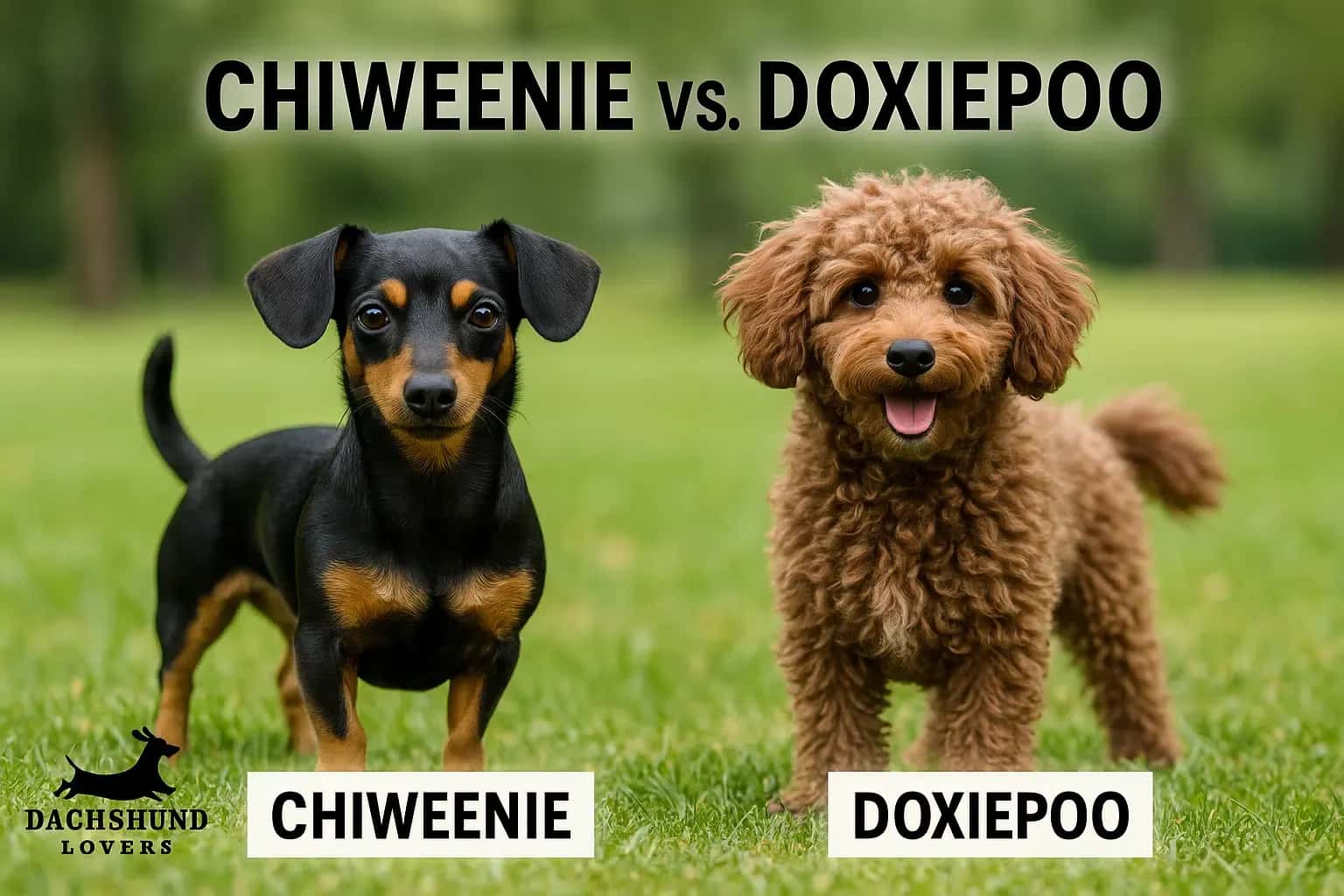
When comparing the Chiweenie (dachshund-Chihuahua mix) with the Doxiepoo (dachshund-poodle mix), you’re essentially weighing a low-maintenance, feisty companion against a more energetic, intelligent dog that often requires regular grooming. Both breeds inherit the lively spirit of the dachshund, but their second parent breed significantly influences personality, coat type, and overall care needs.
Temperament and Personality
- Chiweenie:
Chiweenies are affectionate, alert, and loyal to their families. They tend to bond strongly with one person and can be protective or cautious around strangers. While playful, they also have a stubborn streak, which can make training slightly challenging without positive reinforcement. Their small size and adaptable nature make them great for apartments or smaller homes.
- Doxiepoo:
Doxiepoos inherit the intelligence and trainability of the poodle, making them highly responsive to training compared to Chiweenies. They are generally friendly, social, and eager to please, which makes them a good choice for families with children or other pets. However, they tend to have higher energy levels, requiring more exercise and mental stimulation than Chiweenies.
Energy Levels and Exercise
- Chiweenie:
Daily 20–30 minute walks and short play sessions are sufficient to keep a Chiweenie healthy and happy. Overexertion should be avoided due to their dachshund-influenced long backs, which are prone to Intervertebral Disc Disease (IVDD).
- Doxiepoo:
With poodle genetics, Doxiepoos have higher energy needs. They benefit from at least 45–60 minutes of daily exercise, including brisk walks, interactive games, or agility training. Without proper mental and physical stimulation, Doxiepoos can become bored and develop destructive behaviors.
Grooming and Shedding
- Chiweenie:
Shedding is typically low-to-moderate, especially for smooth-coated Chiweenies. Weekly brushing is usually sufficient, and their grooming routine is minimal. Long-haired Chiweenies require 2–3 brushing sessions weekly to prevent mats and tangles. For detailed care, see our Chiweenie Shedding & Coat Care Guide.
- Doxiepoo:
Doxiepoos often have curly or wavy coats inherited from their poodle parent. This means they are often low-shedding and more allergy-friendly, but their coats require regular brushing (at least 3–4 times per week) and professional grooming every 6–8 weeks to prevent matting.
Health Considerations
- Chiweenie:
Common issues include IVDD, dental problems due to small jaws, and patellar luxation. With proper care, Chiweenies typically live 12–16 years.
- Doxiepoo:
Doxiepoos share the dachshund’s risk of IVDD but are less prone to dental issues thanks to the poodle influence. However, they may develop hip dysplasia or allergies, and their ears require regular cleaning to avoid infections. Their lifespan is similar, averaging 12–15 years.
Training and Intelligence
- Chiweenie:
While smart, Chiweenies can be independent thinkers. Consistent, reward-based training is essential. They respond best to short, fun sessions of 5–10 minutes.
- Doxiepoo:
Doxiepoos are highly trainable thanks to the poodle’s intelligence. They excel in obedience training, agility, and trick learning. For first-time dog owners, Doxiepoos may be easier to train than Chiweenies.
Which Breed Is Better for You?
- Choose a Chiweenie if you:
- Prefer a lower-maintenance grooming routine.
- Want a loyal, alert lapdog with moderate exercise needs.
- Live in an apartment or small home.
- Prefer a lower-maintenance grooming routine.
- Choose a Doxiepoo if you:
- Want a smart, family-friendly dog with high trainability.
- Don’t mind regular grooming appointments.
- Want a smart, family-friendly dog with high trainability.
Can provide daily exercise and mental stimulation.
Chiweenie vs. Cheagle
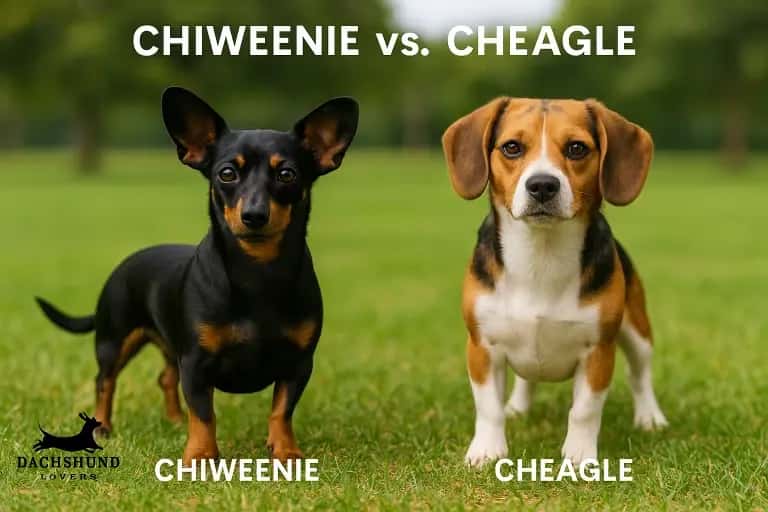
When comparing the Chiweenie (dachshund-Chihuahua mix) with the Cheagle (Chihuahua-beagle mix), you’re essentially weighing two small but spirited hybrids. While both share the boldness and affectionate nature of the Chihuahua, the Cheagle inherits a beagle’s playful, scent-driven personality, making it more active and social than a Chiweenie. Your choice between the two will largely depend on your lifestyle, home environment, and preference for grooming and training.
Temperament and Personality
- Chiweenie:
Known for being loyal, alert, and slightly stubborn, Chiweenies bond closely with their owners and can be protective. They often prefer quieter environments and may be reserved with strangers. While playful, they also have a lapdog side and enjoy spending time snuggled up with their favorite person. Their dachshund heritage means they can sometimes be independent thinkers, which can affect trainability. - Cheagle:
Cheagles inherit the friendly, sociable, and curious temperament of the beagle. They are outgoing dogs that enjoy meeting new people and other pets, often thriving in busy households. With a beagle’s hunting roots, Cheagles are scent-driven and love to explore, making them more adventurous and sometimes a bit more mischievous than Chiweenies.
Energy Levels and Exercise
- Chiweenie:
Chiweenies have moderate energy levels and typically do well with 20–30 minutes of exercise per day, including short walks or interactive play. Because of their dachshund-influenced back structure, care should be taken to avoid strenuous jumping or climbing that could lead to back injuries like IVDD. - Cheagle:
Cheagles are more energetic and playful, needing at least 45–60 minutes of daily activity. This can include longer walks, scent games, or off-leash play in secure areas. Their beagle heritage makes them natural explorers — they may follow a scent and wander, so a fenced yard or leash is essential.
- Chiweenie:
While intelligent, Chiweenies can be stubborn during training. Short, reward-based sessions and positive reinforcement work best. They may be slightly wary of new people, so early socialization is important to build confidence and reduce unnecessary barking. - Cheagle:
Cheagles are often easier to train, thanks to their sociable and eager-to-please nature. However, their beagle side can sometimes make them distracted by scents, so leash training and recall commands are important. Cheagles generally excel in households that enjoy active, outdoor lifestyles.
Grooming and Shedding
- Chiweenie:
Grooming depends on coat type. Smooth-coated Chiweenies shed lightly and need weekly brushing, while long-haired varieties require 2–3 brushing sessions per week. Bathing every 4–6 weeks is enough to keep their coat healthy. - Cheagle:
Cheagles typically have a short, dense coat that sheds moderately year-round. They need weekly brushing to remove loose hair and keep their coat shiny. Grooming needs are slightly lower than long-haired Chiweenies, but regular ear cleaning is a must to prevent infections — a common issue in beagle mixes.
Health Considerations
- Chiweenie:
Common health issues include dental problems, patellar luxation, and back issues (IVDD) due to the dachshund influence. Regular vet checkups and weight management are essential. - Cheagle:
Cheagles are generally healthy but can inherit hip dysplasia, eye problems, or ear infections from the beagle side. They may also be prone to weight gain if not exercised properly.
Which Breed Is Best for You?
- Choose a Chiweenie if you:
- Prefer a smaller, lower-maintenance dog with moderate energy levels.
- Live in an apartment or smaller home.
- Want a companion that enjoys both playtime and snuggling.
- Prefer a smaller, lower-maintenance dog with moderate energy levels.
- Choose a Cheagle if you:
- Lead an active lifestyle with time for daily outdoor adventures.
- Want a friendly, sociable dog that loves meeting new people and pets.
- Don’t mind moderate shedding and extra playtime.
- Lead an active lifestyle with time for daily outdoor adventures.
Chiweenie vs. Other Small Designer Breeds
The Chiweenie stands out among small designer breeds for its alert personality and low-to-moderate grooming needs, but how does it compare to popular mixes like the Cavachon (Cavalier King Charles Spaniel-Bichon Frise), Puggle (Pug-Beagle), Yorkiepoo (Yorkshire Terrier-Poodle), and Maltipoo (Maltese-Poodle)? Each of these breeds has unique traits shaped by their parentage, which can impact everything from energy levels to grooming routines.
Chiweenie vs. Cavachon
- Temperament: Cavachons are known for their gentle, easygoing nature and are often recommended as family-friendly dogs due to their patient temperament. Chiweenies, on the other hand, can be more alert and protective, making them great watchdogs but sometimes less tolerant of rough handling from younger children.
- Grooming: Cavachons typically have a soft, wavy coat that requires brushing 3–4 times a week to prevent matting. Chiweenies, especially smooth-coated ones, need less maintenance.
- Size: Cavachons tend to be slightly larger (12–20 lbs) compared to Chiweenies (5–12 lbs).
- Health: Cavachons can inherit heart issues from the Cavalier King Charles Spaniel, while Chiweenies are prone to back problems and dental issues. According to The Kennel Club UK, regular health screenings are essential for mixed breeds with known hereditary conditions.
Chiweenie vs. Puggle
- Temperament: Puggles are social, outgoing, and playful, often thriving in households with children or multiple pets. Chiweenies can be slightly more reserved, preferring a calmer environment.
- Energy: Puggles, with their beagle background, require 45–60 minutes of exercise daily. Chiweenies are happy with 20–30 minutes of play and walks.
- Grooming: Both breeds are relatively low-maintenance, requiring weekly brushing to keep their coats clean and reduce shedding.
- Health: Puggles are prone to breathing issues due to their pug heritage, while Chiweenies are less likely to have respiratory problems but may face patellar luxation or IVDD.
Chiweenie vs. Yorkiepoo
- Temperament: Yorkiepoos are lively, affectionate, and intelligent, thanks to their poodle parentage. Chiweenies share the same intelligence but can be more stubborn, which can make training slightly harder.
- Grooming: Yorkiepoos often have curly, low-shedding coats that require regular brushing and professional grooming every 6–8 weeks. In contrast, Chiweenies (especially smooth-coated ones) require much less upkeep.
- Suitability for Allergy Sufferers: Yorkiepoos are often marketed as hypoallergenic due to their poodle lineage (though no dog is truly hypoallergenic). Chiweenies shed slightly more but produce minimal dander compared to double-coated breeds.
- Exercise: Yorkiepoos require similar exercise needs (30–40 minutes daily), but they excel at training games and agility exercises due to their poodle intelligence (AKC).
Chiweenie vs. Maltipoo
- Temperament: Maltipoos are affectionate and highly social, often preferring constant company. Chiweenies are equally loving but may be more independent and protective, especially with strangers.
- Grooming: Maltipoos require frequent grooming and brushing (3–4 times per week) to keep their curly coat free of mats. Chiweenies, particularly short-haired ones, are far easier to maintain.
- Health: Maltipoos are prone to dental issues and luxating patellas, similar to Chiweenies. However, Chiweenies may have additional risks from their dachshund parentage, like back injuries.
Which Small Designer Breed Is Best?
The best breed depends on your lifestyle:
- Choose a Chiweenie if you want a small, protective companion with minimal grooming needs and moderate exercise requirements.
- Choose a Cavachon or Maltipoo if you prefer a soft, cuddly dog that loves attention but don’t mind the higher grooming needs.
- Choose a Puggle if you want a fun, active family dog that’s social and adaptable.
Choose a Yorkiepoo if you value intelligence and a low-shedding coat, and you’re happy to invest in regular grooming.
Which Designer Dog Is Right for You?
Choosing between a Chiweenie and other popular small designer breeds such as Doxiepoos, Cheagles, Cavachons, Yorkiepoos, and Maltipoos comes down to your lifestyle, space, and level of commitment to grooming and exercise. While all of these breeds share a charming mix of traits from their parent breeds, subtle differences make each better suited for specific households.
1. Living Space
- Chiweenie: Compact and adaptable, Chiweenies thrive in apartments or small homes as long as they get daily walks and playtime.
- Cheagle or Puggle: Better suited for homes with a backyard or access to parks, as these breeds have higher exercise needs and enjoy exploring.
- Maltipoo or Yorkiepoo: Perfect for smaller spaces but require a dedicated grooming area due to their high-maintenance coats.
2. Activity Level
- Low to Moderate Activity Owners: Chiweenies and Cavachons are ideal for those who prefer a relaxed routine, requiring 20–30 minutes of light exercise daily.
- Active Owners or Families: Cheagles, Doxiepoos, and Puggles suit people who can dedicate at least 45–60 minutes to outdoor activities, training games, or long walks.
3. Grooming Requirements
- Minimal Grooming: Chiweenies (especially smooth-coated) and Puggles need weekly brushing and occasional baths.
- Moderate to High Grooming: Doxiepoos, Yorkiepoos, and Maltipoos require 3–4 brushing sessions a week plus professional grooming every 6–8 weeks to keep their coats mat-free.
If you prefer a low-maintenance grooming routine, Chiweenies or Cavachons may be a better match.
4. Temperament and Training
- For Affection and Loyalty: Chiweenies and Maltipoos excel at bonding closely with their owners, often becoming “velcro dogs” that crave attention.
- For Intelligence and Ease of Training: Doxiepoos and Yorkiepoos, with their poodle heritage, are quick learners and thrive with interactive training sessions.
- For Social Households: Cheagles and Cavachons are sociable and enjoy being around children or other pets.
5. Health Considerations
Each breed comes with unique health risks. Chiweenies may face back problems (IVDD) and dental issues, while Puggles may suffer from breathing issues. Designer breeds with poodle lineage often have fewer shedding issues but may inherit allergies or hip dysplasia.
For an overview of Chiweenie-specific health concerns, see our Chiweenie Health Guide.
Frequently Asked Questions About Chiweenie vs. Other Designer Dogs
More From This Series:
Explore our full Chiweenie series for detailed breed guides and expert care tips:
- Chiweenie: The Complete Guide
Everything you need to know about Chiweenies — history, traits, and care essentials. - Chiweenie Temperament: Is the Doxie Mix Right for You?
A deep dive into their behavior, quirks, and family compatibility. - How Long Do Chiweenies Live?
Discover their average lifespan and how to keep them healthy for years to come. - Chiweenie Puppies: What New Owners Should Know
Tips on training, feeding, and socializing your Chiweenie puppy. - Chiweenie Size & Growth Chart
Track your dog’s weight and size milestones. - Chiweenie Cost & Adoption Guide
Understand the costs of owning or adopting a Chiweenie. - Chiweenie Health Guide
An in-depth look at common health concerns and preventative care. - Chiweenie Training Guide
Step-by-step training tips, from basic commands to housebreaking. - Chiweenie Shedding & Coat Care
Grooming tips for every coat type. - Long-Haired Chiweenie
Special grooming advice and coat care for long-haired varieties. - Blue Merle Chiweenie
Everything about this rare and beautiful coat pattern.
Authored by
Ellie
Ellie is a lifelong dachshund lover and the proud human of Maple, a long-haired brown doxie with a regal side-eye. While not a vet, Ellie brings honest, researched, and experience-based insights into every article she writes for the Dachshund Lovers community.
Read moreEllie is a lifelong dachshund lover and the proud human of Maple, a long-haired brown doxie with a regal side-eye. While not a vet, Ellie brings honest, researched, and experience-based insights into every article she writes for the Dachshund Lovers community.
Read moreDisclaimer
This article was written by Ellie, a dachshund owner and enthusiast — not a veterinarian. Please consult your vet for personalized guidance.