Chiweenie Size & Growth
Chiweenie Size & Growth
Wondering how big a Chiweenie gets? I’ve done the research to help you understand their size range, from tiny lapdogs to surprisingly long little explorers.

Ellie
Posted on October 3, 2025.
Updated on July 21, 2026.
Table of Contents
- 1.Key Takeaways: Chiweenie Size & Growth Overview
- 2.How Big Do Full Grown Chiweenies Get?
- -Smooth-Coated vs. Long-Haired Chiweenies
- -Height and Body Shape
- -Factors Influencing Adult Size
- •Chiweenie Puppy Growth Chart (Month-by-Month)
- -Average Chiweenie Puppy Growth Chart
- -Key Growth Milestones
- -Monitoring Growth
- 3.Managing Chiweenie Weight
- -Ideal Weight for Full Grown Chiweenies
- -How to Maintain a Healthy Weight
- -Weight Management Tips for Puppies
- 4.Factors That Affect a Chiweenie’s Growth
- -1. Genetics and Parent Breed Size
- -2. Nutrition and Feeding Habits
- -3. Exercise and Activity Levels
- -4. Spaying/Neutering
- -5. Overall Health
- 5.How to Support Healthy Growth
- -1. Nutrition and Feeding
- -2. Exercise and Physical Development
- -3. Regular Vet Checkups
- -4. Mental Stimulation
- 6.When Is a Chiweenie Fully Grown?
- -Signs Your Chiweenie Has Stopped Growing
- -Post-Growth Care
- -More From This Series:
- -Disclaimer
Share

The first time I met a full grown Chiweenie, I was surprised at how petite yet sturdy the little dog was — about the size of a well-fed rabbit, with the confidence of a much larger breed. Chiweenies, a cross between the dachshund and Chihuahua, are known for their compact frames, expressive faces, and lively personalities. But their size can vary depending on which parent breed they take after more.
If you’re raising a Chiweenie puppy, understanding their growth stages and healthy adult size is essential. Being small doesn’t mean they don’t need careful attention to their weight, exercise, and nutrition. In fact, Chiweenies are prone to weight-related health issues, especially due to their dachshund-like back. Monitoring their growth ensures they stay lean, agile, and free from strain.
This guide explores everything you need to know about Chiweenie size and growth — from how big a full grown Chiweenie gets to what you can expect in the first year of their life. We’ll also share a month-by-month growth chart, advice on maintaining a healthy weight, and tips for supporting proper development. For new owners, this article works hand-in-hand with our Chiweenie Puppies Guide to give a full picture of what to expect during those early months.
Key Takeaways: Chiweenie Size & Growth Overview
Aspect | Details |
|---|---|
Adult Weight | 5–12 lbs (2.2–5.4 kg), with smaller Chiweenies closer to the Chihuahua’s size and larger ones taking after the dachshund. |
Adult Height | 6–10 inches (15–25 cm) at the shoulder. |
Growth Timeline | Most Chiweenies reach 75% of their adult size by 6 months and are fully grown by 10–12 months. |
Body Type | Long, low-slung dachshund build or a more compact Chihuahua frame — sometimes a mix of both. |
Weight Management | Ideal adult weight varies; being overweight increases risk of IVDD and joint issues. |
Puppy Size at 8 Weeks | Typically 2–4 lbs (0.9–1.8 kg), doubling by 4 months. |
Growth Factors | Genetics, diet, exercise, and health care during puppyhood. |
Coat Influence | Smooth-coated Chiweenies often appear slimmer, while long-haired varieties can look slightly larger due to their feathered coats. |
How Big Do Full Grown Chiweenies Get?

A full grown Chiweenie is a compact dog, generally weighing between 5–12 lbs (2.2–5.4 kg) and standing 6–10 inches (15–25 cm) tall at the shoulder. This size range makes them perfectly suited for apartment living or smaller homes while still being sturdy enough to enjoy outdoor activities like park walks and play sessions.
According to Vetstreet, Chiweenies are considered toy-to-small breed dogs, with their final size strongly influenced by the genetics of their parent breeds — the dachshund and Chihuahua. For example, a Chiweenie with a miniature dachshund parent will usually stay on the lighter end of the range, while those with a standard dachshund parent can approach the upper limit of 12 lbs.
Smooth-Coated vs. Long-Haired Chiweenies
While coat type doesn’t change actual body size, it can affect how large a Chiweenie appears.
- Smooth-Coated Chiweenies: Typically weigh between 5–9 lbs (2.2–4.1 kg). Their short, sleek coat shows off the body shape, often revealing a slimmer build.
- Long-Haired Chiweenies: Usually weigh 7–12 lbs (3.1–5.4 kg). Their feathered coats give them a fluffier appearance, but regular grooming keeps their profile sleek.
Height and Body Shape
A Chiweenie’s height varies from 6 to 10 inches (15–25 cm) at the shoulder. Most have a longer body similar to the dachshund, but some inherit a more compact, square-shaped build from the Chihuahua side. This unique mix makes each Chiweenie’s appearance distinct, with some looking like “miniature dachshunds” while others resemble a slightly longer Chihuahua.
Factors Influencing Adult Size
- Genetics:
The size of the parents is the most significant factor. A Chiweenie bred from a standard dachshund and a large Chihuahua will be bigger than one from two smaller parents.
- Diet and Nutrition:
Overfeeding during puppyhood can lead to excess weight and stress on developing joints. Puppies fed high-quality small-breed formulas grow at a steady, healthy rate. See Chiweenie Puppies for feeding tips.
- Exercise:
Moderate, consistent exercise helps develop a lean, muscular build. Avoid high-impact activities like jumping, as these can harm their spine.
- Spaying/Neutering:
Early neutering can slightly alter growth patterns, but this effect is minor compared to genetics and diet.
The American Kennel Club (AKC) notes that small breeds like the Chihuahua reach full physical maturity faster than large breeds, often by 10–12 months. Chiweenies follow a similar timeline, with 75% of their growth complete by 6 months.
Chiweenie Puppy Growth Chart (Month-by-Month)
Understanding how your Chiweenie puppy grows helps you ensure they’re developing at a healthy pace. While genetics play a significant role, most Chiweenies follow the small-breed growth curve, meaning they reach most of their adult size by 6–8 months and fully mature by 10–12 months.
According to PetMD, small breeds like the Chiweenie can double their birth weight within the first few weeks and experience rapid growth during the first 4–5 months. Tracking your puppy’s weight and height each month is an easy way to monitor their health and spot potential issues early, such as being underweight or overweight.
Average Chiweenie Puppy Growth Chart
Age | Weight Range | Height Range | Notes |
|---|---|---|---|
8 Weeks | 2–4 lbs (0.9–1.8 kg) | 3–5 inches (7–12 cm) | Ready to leave breeder; rapid development phase. |
3 Months | 3–5 lbs (1.3–2.2 kg) | 4–6 inches (10–15 cm) | Playful and teething; introduce crate training and short walks. |
4 Months | 4–6 lbs (1.8–2.7 kg) | 5–7 inches (12–17 cm) | Significant growth spurt; maintain 3 meals/day. |
6 Months | 5–9 lbs (2.2–4.1 kg) | 6–8 inches (15–20 cm) | About 70–75% of adult size; can transition to 2 meals/day. |
9 Months | 6–10 lbs (2.7–4.5 kg) | 7–9 inches (18–23 cm) | Growth slows; weight and body shape begin stabilizing. |
12 Months | 5–12 lbs (2.2–5.4 kg) | 6–10 inches (15–25 cm) | Fully grown; switch to adult food and maintain exercise. |
Note: Weight ranges vary based on coat type, parental size, and whether your Chiweenie leans toward the Chihuahua or dachshund side.
Key Growth Milestones
- 8–12 Weeks:
Puppies are still developing rapidly. This is a critical time for nutrition, vaccinations, and early socialization. Chiweenie puppies at this stage are small (often under 4 lbs) but have bursts of energy. - 3–6 Months:
Most Chiweenies hit a major growth spurt during this time. Their bones and muscles strengthen, so balanced nutrition and controlled play (to protect their back) are essential. - 6–9 Months:
By now, most Chiweenies have achieved their adult height and are just filling out in muscle and weight. - 10–12 Months:
The growth phase ends, and puppies transition into adulthood. This is when you should switch to an adult small-breed dog food.
Monitoring Growth
Regular weight checks (every 2–4 weeks during the first year) ensure your Chiweenie stays on track. Overweight puppies risk joint and spinal issues, while underweight puppies may lack vital nutrients. If you’re unsure about your Chiweenie’s growth, consult your vet — they can compare your puppy’s development against breed-specific growth curves (as noted by Vetstreet).
Managing Chiweenie Weight
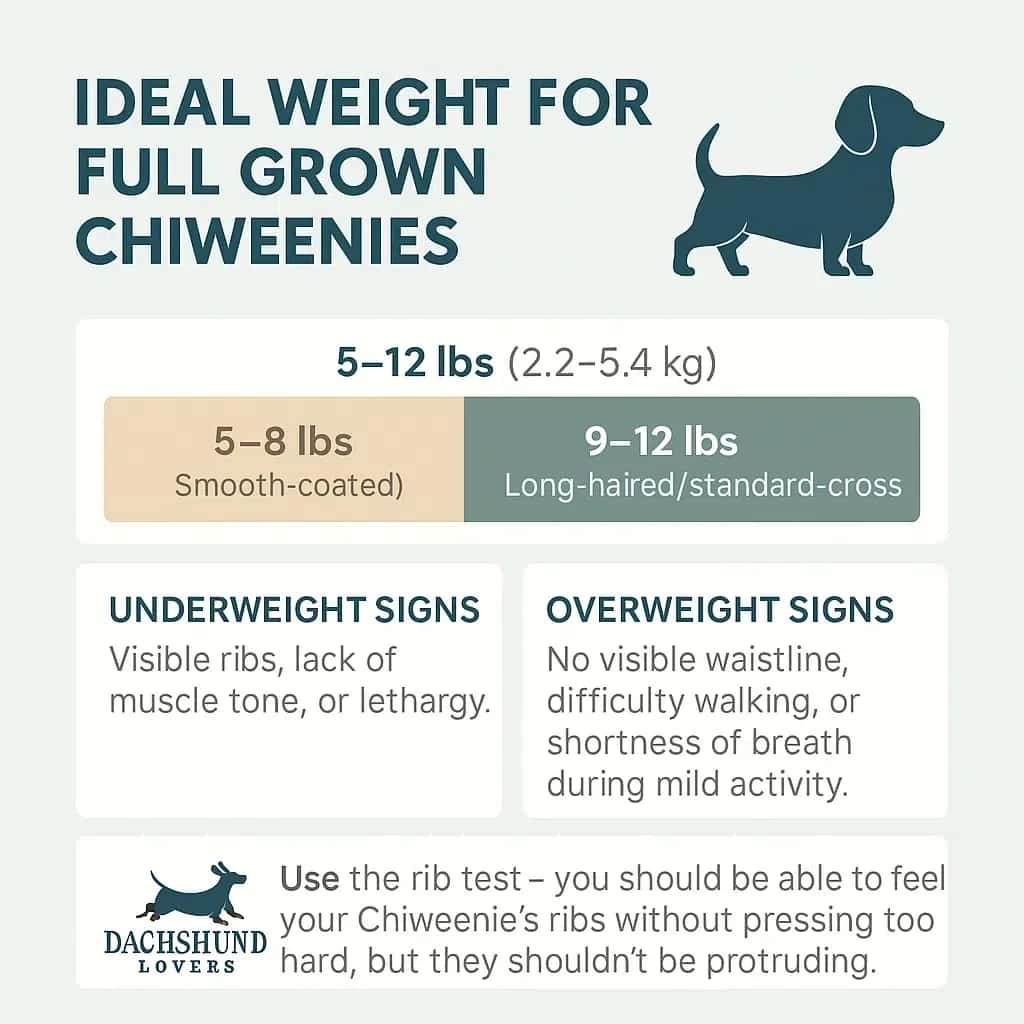
A healthy weight is crucial for a full grown Chiweenie, as even a small amount of excess weight can put unnecessary strain on their spine and joints. Because Chiweenies often inherit the long back of the dachshund, maintaining a lean body is essential to prevent conditions like Intervertebral Disc Disease (IVDD), a common health concern for the breed.
Our Chiweenie Health Guide emphasizes that weight management isn’t just about appearance — it’s directly tied to lifespan and overall health. Studies cited by PetMD show that obese dogs live up to 2.5 years less than those kept at an ideal weight.
Ideal Weight for Full Grown Chiweenies
Most adult Chiweenies fall between 5–12 lbs (2.2–5.4 kg), depending on genetics and build. Smooth-coated Chiweenies may stay closer to 5–8 lbs, while long-haired or standard dachshund-cross Chiweenies may weigh 9–12 lbs.
- Underweight Signs: Visible ribs, lack of muscle tone, or lethargy.
- Overweight Signs: No visible waistline, difficulty walking, or shortness of breath during mild activity.
Tip: Use the “rib test” — you should be able to feel your Chiweenie’s ribs without pressing too hard, but they shouldn’t be protruding.
How to Maintain a Healthy Weight
- Portion Control:
Follow feeding guidelines for small breeds, adjusting portions based on your dog’s activity level. For most Chiweenies, this means ¼–½ cup of high-quality food per day, split between two meals. - Regular Exercise:
Daily 20–30 minute walks, combined with indoor play (fetch, gentle tug-of-war), keep your Chiweenie active without overstraining their back. - Healthy Treats:
Limit treats to 10% of daily calories. Choose low-calorie options like baby carrots, blueberries, or small training treats. - Scheduled Feeding:
Avoid free-feeding (leaving food out all day), which can lead to overeating. Stick to a consistent schedule with measured portions.
Risks of Obesity in Chiweenies
- IVDD: Excess weight increases the risk of slipped discs and spinal injuries.
- Joint Problems: Obesity puts extra pressure on hips and knees, increasing the risk of patellar luxation (a condition common in small breeds).
- Heart and Respiratory Issues: Extra weight makes it harder for small dogs to breathe and can strain the heart.
Weight Management Tips for Puppies
Chiweenie puppies grow rapidly, so overfeeding during the first year can lead to both rapid weight gain and long-term health problems. Stick to small, frequent meals and monitor their weight monthly. Adjust their diet if they appear too round or sluggish.
Factors That Affect a Chiweenie’s Growth
The size and weight of a full grown Chiweenie are influenced by several factors, ranging from genetics to lifestyle. While the average adult Chiweenie weighs 5–12 lbs (2.2–5.4 kg), certain conditions during puppyhood can lead to variations in their final size. Understanding these factors helps you provide the best care for healthy growth.
1. Genetics and Parent Breed Size
Genetics play the most significant role in determining your Chiweenie’s adult size.
- Miniature Dachshund Crosses: Typically produce smaller Chiweenies (closer to 5–8 lbs).
- Standard Dachshund Crosses: May result in larger Chiweenies, reaching 10–12 lbs.
- Chihuahua Influence: Apple-headed or smaller Chihuahua parents often lead to lighter offspring.
According to Vetstreet, even within the same litter, Chiweenie puppies can show noticeable differences in size depending on which parent’s traits are dominant.
2. Nutrition and Feeding Habits
A balanced diet during the first 12 months is critical for proper bone, muscle, and joint development. Overfeeding can cause rapid weight gain, which may stress the developing spine and joints. For feeding tips, see our Chiweenie Puppies Guide.
PetMD recommends a high-protein, small-breed puppy food that supports steady growth rather than accelerated weight gain.
3. Exercise and Activity Levels
Chiweenie puppies need controlled exercise to build muscle while protecting their spine. Overly strenuous activities, like jumping from furniture, can lead to injury.
- Ideal Routine: Short play sessions and 10–15 minute walks as puppies, increasing to 20–30 minutes daily as adults.
4. Spaying/Neutering
Spaying or neutering before 6–8 months can slightly influence growth due to hormonal changes. While the impact is minimal for small breeds, it’s still a factor to consider when tracking size and weight.
5. Overall Health
Puppies with frequent illnesses or poor nutrition may experience slower growth. Regular vet checkups and a proactive approach to parasite prevention ensure steady, healthy development.
How to Support Healthy Growth
Supporting the growth of a full grown Chiweenie starts long before they reach adulthood. The habits and care routines established in their first year of life play a vital role in determining their overall health, size, and longevity. From proper nutrition to safe exercise, every small step counts.
Our Chiweenie Health Guide emphasizes that a balanced approach to diet, activity, and routine veterinary care is the key to raising a healthy Chiweenie. The American Kennel Club (AKC) also notes that small breeds like the Chiweenie thrive when given high-quality food and careful attention to portion control.
1. Nutrition and Feeding
A high-quality small-breed puppy formula is essential during the first year. These foods are designed to deliver the right balance of protein, healthy fats, and nutrients that support steady muscle and bone development.
Tips for proper feeding:
- Meal Frequency:
- 8–12 weeks: 4 small meals per day.
- 3–6 months: 3 meals per day.
- 6–12 months: Transition to 2 meals daily.
- 8–12 weeks: 4 small meals per day.
- Portion Control: Follow feeding guidelines on your food brand, adjusting based on your puppy’s energy levels and growth.
- Treats: Keep treats under 10% of daily caloric intake to avoid unnecessary weight gain.
2. Exercise and Physical Development
While Chiweenies need daily activity, their dachshund-like back makes them prone to spinal injuries if overexerted.
- For Puppies: Short play sessions and gentle walks (5–10 minutes twice a day) are enough during early growth phases.
- For Adults: Increase to 20–30 minutes of daily activity, including walking and light indoor games.
- Avoid: Jumping off furniture, climbing steep stairs, or rough play, as these can strain their developing spine.
3. Regular Vet Checkups
Schedule routine checkups every 6–8 weeks during the first year. These visits help track weight, growth milestones, and overall health. Vets can also give advice on dietary adjustments and supplements (such as omega-3s for joint and coat health)
4. Mental Stimulation
Mental exercise is just as important as physical activity for Chiweenies. Interactive toys, puzzle feeders, and short training sessions (5–10 minutes) keep them mentally sharp and build good habits early on.
When Is a Chiweenie Fully Grown?
Most Chiweenies reach their full adult size between 10 and 12 months of age, although some smaller Chiweenies may complete their growth as early as 9 months. Like other small breeds, Chiweenies grow rapidly during the first 6 months, reaching 70–75% of their adult weight by around 5–6 months. After this point, their growth slows as they shift from developing height and length to building muscle tone.
According to Vetstreet, Chiweenies follow a similar growth curve to Chihuahuas and miniature dachshunds, meaning they hit major milestones earlier than medium or large breeds. Monitoring your Chiweenie’s weight during this transition is crucial — puppies that gain weight too quickly can face joint strain or early signs of obesity, which can impact their spinal health.
Signs Your Chiweenie Has Stopped Growing
- Stable Weight: If your Chiweenie’s weight has remained steady for 2–3 months, they’ve likely reached adult size.
- Bone Development: Their legs and frame will appear more defined, and growth plates in their bones will have closed.
- Behavioral Maturity: Around 12 months, many Chiweenies begin to shift from playful, erratic puppy energy to a more balanced temperament.
Post-Growth Care
Once fully grown, Chiweenies should transition from puppy food to adult small-breed dog food. The first year is the best time to set long-term habits — maintaining a consistent feeding schedule, proper exercise, and regular vet checkups helps ensure your dog stays healthy and fit throughout adulthood. For additional advice on care during the transition from puppy to adult, see our Chiweenie Puppies Guide.
Frequently Asked Questions About Chiweenie Size & Weight
More From This Series:
Explore our complete Chiweenie collection for in-depth guides on temperament, care, and breed-specific tips:
- Chiweenie: The Complete Guide
Your all-in-one introduction to Chiweenies — from history to personality traits. - Chiweenie Temperament: Is the Doxie Mix Right for You?
Learn about their personality, quirks, and how they fit into family life. - How Long Do Chiweenies Live?
Discover their lifespan and how to keep them healthy well into their senior years. - Chiweenie Puppies: What New Owners Should Know
Practical tips on raising a Chiweenie puppy, from feeding schedules to early training. - Chiweenie Size & Growth Chart
Track your puppy’s growth and learn what to expect as they mature. - Chiweenie Cost & Adoption Guide
A breakdown of price ranges, adoption resources, and trusted breeders. - Chiweenie Health Guide
Everything you need to know about common health issues and preventative care. - Chiweenie Training Guide
Proven techniques for housebreaking and teaching core commands. - Chiweenie Shedding & Coat Care
Grooming routines for every coat type, plus tips for managing seasonal shedding. - Long-Haired Chiweenie
Coat care tips and insights into this beautiful Chiweenie variety. - Blue Merle Chiweenie
A closer look at this rare and stunning coat pattern. - Chiweenie vs. Other Designer Dogs
Compare Chiweenies to other popular small-breed mixes to find your best fit.
Authored by
Ellie
Ellie is a lifelong dachshund lover and the proud human of Maple, a long-haired brown doxie with a regal side-eye. While not a vet, Ellie brings honest, researched, and experience-based insights into every article she writes for the Dachshund Lovers community.
Read moreEllie is a lifelong dachshund lover and the proud human of Maple, a long-haired brown doxie with a regal side-eye. While not a vet, Ellie brings honest, researched, and experience-based insights into every article she writes for the Dachshund Lovers community.
Read moreDisclaimer
This article was written by Ellie, a dachshund owner and enthusiast — not a veterinarian. Please consult your vet for personalized guidance.