Overweight Dachshund
Overweight Dachshund
Is your dachshund packing on extra kilos? Learn the signs of an overweight dachshund, what causes it, and realistic tips to help them slim down.
James
Posted on November 2, 2025.
Updated on July 20, 2026.
Table of Contents
- 1.Key Takeaways
- 2.Causes of Weight Gain in Dachshunds
- •Overfeeding & Portion Control
- •High-Calorie Treats & Human Food
- •Low Activity Levels
- •Age & Hormonal Changes
- •Medical Conditions
- 3.Risks of Obesity in Dachshunds
- •IVDD (Intervertebral Disc Disease)
- •Arthritis & Joint Strain
- •Diabetes & Metabolic Disorders
- •Heart & Respiratory Problems
- •Skin & Mobility Complications
- •Shortened Lifespan
- 4.Diet & Weight Loss Strategies for Overweight Dachshunds
- •Step 1: Know the Healthy Weight Range
- •Step 2: Portion Control & Meal Management
- •Step 3: Smarter Treat Choices
- •Step 4: Choose the Right Food
- •Step 5: Manage Food Motivation
- •Step 6: Avoid Common Pitfalls
- 5.Exercise & Lifestyle Management for Overweight Dachshunds
- •Daily Walks: The Foundation of Dachshund Fitness
- •Play & Low-Impact Indoor Activities
- •Safe Alternatives to High-Impact Play
- •Enrichment: Exercising the Mind as Well as the Body
- •Swimming & Hydrotherapy
- •Social Interaction & Playdates
- •Rest & Recovery Balance
- 6.Overweight Dachshunds Across Life Stages
- •Owner Insight
- -More from This Series
- -Disclaimer
Share

I’ll never forget the moment our vet gently pointed out that Harvey was carrying “a little extra padding.” Caitlin and I thought his rounder shape was just part of his charm but when we couldn’t feel his ribs as easily, it became clear he was tipping into overweight territory. Like many dachshunds, Harvey loves food almost as much as he loves a nap, and it doesn’t take many treats to push him beyond a healthy weight.
Dachshund obesity is a serious concern. According to the RSPCA NSW, more than 40% of Australian dogs are overweight or obese, and dachshunds are particularly vulnerable because extra weight puts direct pressure on their already fragile spines. Carrying too many kilos increases the risk of intervertebral disc disease (IVDD), diabetes, arthritis, and a shortened lifespan.
The good news is that dachshunds respond well to structured diets, consistent exercise, and simple lifestyle adjustments. Monitoring weight isn’t just about appearance, it’s about protecting your doxie’s back and keeping them mobile well into old age.
Key Takeaways
Question | Quick Answer | Why It Matters for Dachshunds |
|---|---|---|
What is a healthy weight for a dachshund? | Miniature: 4.5–5.5 kg (10–12 lbs); Standard: 7.5–14.5 kg (16–32 lbs) | Staying within range reduces strain on the spine and joints |
How do I know if my dachshund is overweight? | You should feel ribs without pressing hard; if not, your dog may be overweight | Body condition score is more reliable than scales alone |
What are the risks of obesity? | IVDD, arthritis, diabetes, heart strain, reduced lifespan | Overweight dachshunds are far more prone to spinal injury |
How can I help my dachshund lose weight? | Portion control, measured feeding, low-calorie treats, daily walks | Small changes add up to big health improvements |
Can dachshunds lose weight with exercise alone? | No — diet plays the biggest role | Exercise supports but cannot offset overfeeding |
What role does diet play? | High-quality protein, portion control, and avoiding table scraps are essential | Prevents excess fat storage and supports muscle health |
Causes of Weight Gain in Dachshunds

If you’ve ever joked about your dachshund being “sausage-shaped,” you’re not alone — but carrying extra weight is no laughing matter. Dachshunds are naturally prone to obesity, and even a slight gain can dramatically increase health risks. Their long backs and short legs mean extra kilos place stress exactly where they’re most vulnerable.
When Harvey was desexed, we quickly saw how easily the scales tipped. His appetite stayed the same, but his metabolism slowed. Add in a few too many treats “just because he looked cute,” and within weeks he went from lean to slightly padded. It was a wake-up call: dachshund weight gain isn’t about vanity; it’s about protecting their spine and lifespan.
Overfeeding & Portion Control
One of the most common reasons dachshunds gain weight is simply being fed too much. Their eyes beg, their tails wag, and it’s hard to resist giving them extra. But dachshunds are small dogs — what looks like a harmless handful of kibble can be hundreds of calories over their daily needs.
- Free feeding (leaving food out all day) almost guarantees overeating.
- Measuring meals precisely using a kitchen scale prevents portion creep.
- Owners often underestimate treat calories — a single dental chew can equal 20% of daily intake.
High-Calorie Treats & Human Food
Dachshunds are experts at begging. Unfortunately, table scraps, cheese cubes, and processed treats can be calorie bombs.
- Cheese – A common training treat, but one cube can equal the calorie load of a full meal for a miniature dachshund.
- Fatty meats – Leftovers from the table may delight your dog, but they add fat with no balance of nutrients.
- Processed treats – Many commercial dog biscuits are high in fillers and carbs.
With Harvey, we learned to swap out processed treats for healthier alternatives: carrot sticks, green beans, or his regular kibble used as training rewards. He’s just as happy, and it keeps his weight stable.
Low Activity Levels
Dachshunds may be brave little hunters, but many prefer naps to long walks. Combine their love of comfort with modern indoor lifestyles, and it’s easy for calories to outweigh exercise.
- Short legs = less distance – A “long” walk for a dachshund is not the same as for a labrador. They need consistent, moderate walks to burn energy.
- Mental enrichment matters – Boredom leads to comfort eating (yes, dogs do it too). Toys, puzzle feeders, and games can keep their metabolism active.
- Weather impacts activity – Many dachshunds dislike rain or heat, but skipping walks too often adds up.
Age & Hormonal Changes
Just like people, dachshunds experience metabolic shifts as they age.
- Puppy to adult – Puppies burn calories quickly, but adults need stricter portion control.
- Post-desexing – Hormonal changes lower metabolism, making weight gain more likely. This is when Harvey’s weight first crept up.
- Senior years – Older dachshunds move less, but owners often keep feeding them the same portions.
Without adjusting diet and exercise at each life stage, weight gain sneaks in.
Medical Conditions
Sometimes, weight gain isn’t just about food and exercise. Certain conditions cause dachshunds to gain weight even when owners manage diet carefully:
- Hypothyroidism – Low thyroid function slows metabolism, leading to unexplained weight gain.
- Cushing’s disease – Causes increased appetite, thirst, and fat retention.
- Medication side effects – Steroids and some pain medications can alter weight balance.
If your dachshund seems to gain weight despite careful feeding, a vet check with bloodwork may be needed.
Harvey taught us that weight gain can creep up quietly. It wasn’t until his ribs became harder to feel that we realised those extra treats and slower metabolism were catching up. By cutting his portions slightly and replacing snacks with healthier alternatives, he slimmed back down within a month. That simple shift reminded us that dachshund weight isn’t static — it changes with age, lifestyle, and even small indulgences.
Risks of Obesity in Dachshunds

When a dachshund gains weight, it’s not just about looking a little rounder. For this breed, every extra gram has an outsized effect. Their long spine and short legs were never designed to carry surplus weight, and the results can be devastating. Our vet once told us that “one extra kilo on a dachshund is like a person suddenly carrying 10–15 kg all day long.” That comparison has always stuck with me, it’s a reminder that dachshund obesity isn’t cosmetic, it’s structural and medical.
When Harvey tipped just 1 kg above his ideal weight post-desexing, we started to notice small but significant changes: he tired faster on walks, paused before jumping down from the couch, and seemed a little less playful. None of those things seemed dramatic at the time, but they were subtle red flags that his body was under stress.
IVDD (Intervertebral Disc Disease)
One of the greatest risks of dachshund obesity is spinal disease. Intervertebral disc disease (IVDD) already affects up to 25% of dachshunds in their lifetime. Adding extra weight only accelerates the problem.
- Spinal pressure increases – Extra fat around the abdomen shifts weight onto the spine, hastening disc degeneration.
- Increased risk of disc rupture – Overweight dachshunds are far more likely to experience slipped discs.
- Reduced recovery odds – Studies show that overweight dogs recover more slowly — and less completely — from back surgery.
- Everyday movements become risky – Jumping on/off furniture, running up stairs, or twisting suddenly all place higher stress on the back.
The Royal Veterinary College highlights obesity as one of the most preventable contributors to IVDD, yet also one of the most overlooked.
Arthritis & Joint Strain
Even if your dachshund avoids IVDD, their joints pay the price for extra weight. Dachshunds already have unusual limb angles, with short legs supporting a long frame. When obesity is added:
- Hips and knees deteriorate faster – Accelerated wear-and-tear leads to arthritis in middle age rather than later life.
- Pain reduces movement – Dogs become reluctant to walk, which compounds weight gain in a vicious cycle.
- Injuries from simple slips – Extra body mass increases force on joints when running, climbing, or even landing from small jumps.
The result is often a dachshund who slows down not from old age, but from preventable strain.
Diabetes & Metabolic Disorders
Obesity is a major trigger for canine diabetes. According to VCA Animal Hospitals, overweight dogs are significantly more likely to develop insulin resistance. For dachshunds, that means:
- Constant thirst and increased urination.
- Unexplained weight loss after a period of gain.
- Greater susceptibility to infections.
- Lifelong insulin management if diabetes develops.
While diabetes can be managed, it dramatically reduces quality of life and increases vet costs. Preventing obesity is far easier than managing the disease once it appears.
Heart & Respiratory Problems
Extra fat isn’t just external. It builds up around the heart, lungs, and other vital organs, creating internal pressure. In overweight dachshunds:
- The heart works harder – leading to higher risk of cardiac disease.
- Reduced lung capacity – fat around the rib cage restricts breathing.
- Exercise intolerance – overweight dachshunds pant heavily, tire quickly, and avoid activity.
This creates a cycle where the dog becomes increasingly sedentary, further contributing to weight gain.
Skin & Mobility Complications
Less obvious but equally important are the “secondary” risks of obesity:
- Skin fold irritation – Extra fat creates folds that trap moisture, leading to dermatitis.
- Paw and pad strain – Extra body mass increases pressure on small feet, increasing risk of cracks and paw injuries.
- Reduced mobility – Even climbing stairs or hopping onto a low step becomes a struggle.
Shortened Lifespan
Perhaps the most sobering risk of obesity is its effect on lifespan. Studies cited by PetMD found that overweight dogs live on average two years less than dogs kept at a healthy weight. For dachshunds, this could mean losing cherished senior years that should have been spent enjoying gentle walks and long naps.
A two-year reduction in lifespan doesn’t just represent time lost — it represents years likely filled with illness, pain, and reduced quality of life.
Harvey’s short-lived flirtation with being overweight gave us a glimpse of these risks in real time. He wasn’t dramatically obese, but even carrying one extra kilo made him slower, less enthusiastic for walks, and more hesitant about stairs. Once we helped him lose that weight, the change was striking: lighter steps, more energy, and less panting.
It proved what the research makes clear — dachshunds don’t have “room” to carry extra weight. Their unique build magnifies every risk, and keeping them lean is one of the greatest gifts we can give them.
Diet & Weight Loss Strategies for Overweight Dachshunds

Helping a dachshund lose weight isn’t just about cutting food — it’s about reshaping daily routines. Because of their strong food drive, dachshunds rarely self-regulate. They’ll happily eat until they’re round. That makes portion control, smart feeding, and healthier treat strategies essential.
When Harvey gained a kilo after his desexing, we didn’t overhaul his life overnight. Instead, we made small but consistent changes — measuring meals, swapping treats, and slightly reducing portions. Within a few weeks, his ribs were easier to feel, and his energy came back.
Step 1: Know the Healthy Weight Range
- Miniature Dachshunds – 4.5–5.5 kg (10–12 lbs)
- Standard Dachshunds – 7.5–14.5 kg (16–32 lbs)
Weight ranges are guidelines — body condition scoring (BCS) is more reliable. A healthy dachshund should:
- Have ribs easy to feel but not sharply visible.
- Show a defined waist when viewed from above.
- Have a slight tuck behind the ribs when viewed from the side.
If you can’t feel ribs without pressing, your dachshund is overweight.
Step 2: Portion Control & Meal Management
- Weigh food with a kitchen scale – Measuring scoops vary; scales don’t.
- Split meals – Two smaller meals reduce hunger begging compared to one big serving.
- Stop free-feeding – Leaving food out all day encourages overeating.
- Vet guidance – Your vet can set a calorie target based on weight loss goals.
For Harvey, reducing portions by 10% after his desexing was enough to stabilise his weight.
Step 3: Smarter Treat Choices
Treats are often the hidden culprit behind dachshund obesity. A “few extra snacks” can equal an entire extra meal.
- Use low-calorie options like carrot sticks, green beans, or small apple slices.
- Break larger treats into tiny training pieces — dogs care more about frequency than size.
- Swap treats for praise, play, or cuddles when possible.
- Count every treat towards daily calories.
Step 4: Choose the Right Food
A high-quality diet supports lean muscle while cutting excess calories.
- Protein-first diets keep dachshunds fuller for longer.
- Avoid foods heavy in corn, soy, or fillers.
- Consider weight management formulas recommended by your vet.
- For dogs with allergies, use limited-ingredient diets to avoid inflammatory weight gain.
According to PetMD, diets high in lean protein and low in simple carbs are best for weight control in small breeds.
Step 5: Manage Food Motivation
Dachshunds are clever, and many will beg, whine, or even “fake starve” to get more food. Strategies to manage this include:
- Puzzle feeders – Slow down eating and provide mental stimulation.
- Pre-measured treat jars – Fill daily with the correct allowance so you can’t overgive.
- Family consistency – Everyone in the house must follow the same rules.
We keep Harvey’s treats in a small container labelled “daily allowance.” Once it’s gone, no one can sneak him extras.
Step 6: Avoid Common Pitfalls
- Table scraps – Even small bites add up.
- High-fat chews – Dental sticks, pigs’ ears, and bones often pack more calories than meals.
- “Just one more” syndrome – The occasional indulgence becomes a habit.
- Weekend lapses – Overfeeding on weekends can undo a week of progress.
The hardest part of Harvey’s weight loss wasn’t cutting food — it was resisting his eyes when he begged. We solved this by swapping calorie-heavy snacks for carrot sticks and breaking his treats into tiny pieces. It felt almost too simple, but it worked. The begging didn’t stop overnight, but once he realised he’d still get something — even if smaller — he adjusted quickly.
Weight loss wasn’t dramatic, but it was steady, and within two months he was back at his ideal body condition. That consistency was more sustainable for him (and us) than any crash approach.
Exercise & Lifestyle Management for Overweight Dachshunds
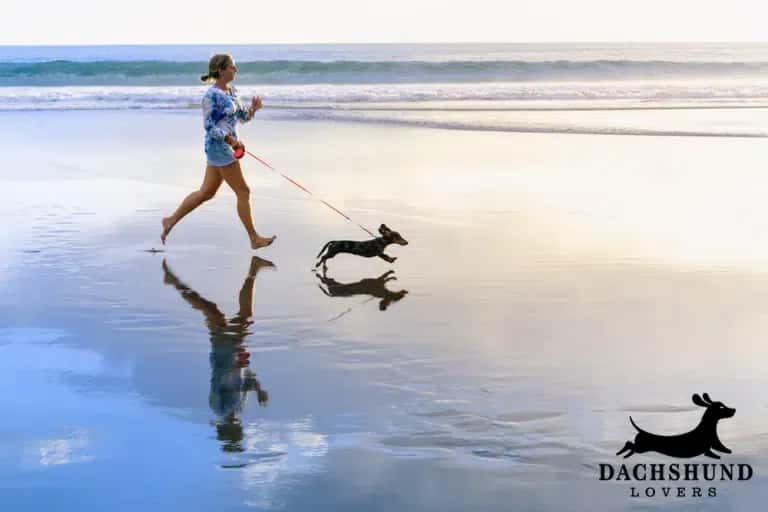
Helping a dachshund lose weight isn’t just about feeding less. Their lifestyle how they move, play, rest, and interact plays an equally important role. Because of their long backs and short legs, dachshunds are uniquely sensitive to exercise. Too little activity, and weight gain piles on. Too much impact, and you risk back injuries. The solution is balance: consistent, safe, and stimulating routines that burn calories without overloading the spine.
When Harvey carried a little extra weight after his desexing, our vet warned us that one weekend “catch-up” walk wouldn’t fix it. Instead, daily, gentle movement paired with small lifestyle tweaks would matter more than bursts of intensity. That lesson shaped how we approached his weight management, and it worked.
Daily Walks: The Foundation of Dachshund Fitness
For dachshunds, the most effective exercise is the simplest: walking.
- Consistency over distance – Two 15–20 minute walks daily are better than one long 60-minute push.
- Gentle surfaces – Grass, dirt trails, or shaded park paths reduce strain on joints compared to hot pavement.
- Proper harnessing – Always use a harness instead of a collar to avoid rib cage and throat pressure.
- Gradual increase – If your dachshund is overweight or sedentary, start with 10 minutes and build up over weeks.
When Harvey was heavier, even a short walk left him puffing. We resisted the urge to “push him harder” — instead, we increased duration by just a few minutes each week. Over time, he regained stamina without strain.
Play & Low-Impact Indoor Activities
Walking isn’t the only way to exercise a dachshund. Indoor play can be just as effective — and often safer.
- Fetch in a hallway – Encourages bursts of running without long distances.
- Tug-of-war – Builds strength and engagement, but avoid lifting off the ground.
- Hide-and-seek with toys – Stimulates their nose and burns calories as they search.
- Gentle chase games – Short, supervised sprints that satisfy their hunter instincts.
Even five-minute play sessions add up. For Harvey, a short game of hide-the-toy before dinner works better than forcing another long walk on days he’s tired.
Safe Alternatives to High-Impact Play
Many dachshunds love leaping off couches or bounding up stairs. When overweight, these movements become much riskier. Each jump multiplies spinal pressure, increasing the chance of IVDD.
- Install ramps – For couches, beds, and cars.
- Block stairs – Use baby gates to limit climbing.
- Positive reinforcement – Reward your dachshund for using ramps instead of jumping.
We trained Harvey with small treats on his ramp, turning it into a game. Within days, he chose the ramp instinctively. It reduced his spinal strain and kept him moving more safely.
Enrichment: Exercising the Mind as Well as the Body
Dachshunds often eat out of boredom. Providing mental stimulation reduces begging and makes them less food-obsessed.
- Puzzle feeders – Slow down eating and engage problem-solving skills.
- Snuffle mats – Mimic foraging and satisfy their hunting instincts.
- Training sessions – Use kibble or low-calorie treats as rewards while practicing commands.
- Scent games – Hide toys or treats around the house to encourage sniffing and searching.
When Harvey was begging constantly, we realised he wasn’t hungry — he was bored. A snuffle mat not only occupied him but also reduced his food obsession.
Swimming & Hydrotherapy
Not all dachshunds like water, but swimming is an excellent low-impact exercise.
- Hydrotherapy pools – Many vet clinics offer supervised sessions for overweight or recovering dachshunds.
- Shallow paddling pools – Great for hot days and light exercise.
- Monitor closely – Dachshunds aren’t natural swimmers; use a life jacket for safety.
Even short water sessions can strengthen muscles without loading joints.
Exercise doesn’t have to be solitary. Controlled play with other small dogs burns calories and stimulates social engagement.
- Choose size-appropriate companions – Play with similar-sized dogs avoids injury.
- Supervise play – Excitable dachshunds may overdo it.
- Short sessions – Limit to 15–20 minutes to prevent fatigue.
When Harvey meets other dachshunds at the park, his excitement naturally makes him move more. But we always cap playtime before he gets too tired.
Rest & Recovery Balance
Ironically, rest is part of weight management. Overexercising overweight dachshunds can lead to injuries, making them more sedentary in the long run.
- Monitor fatigue – Panting, slowing down, or lying flat mid-play means stop.
- Soft resting spots – Provide cushioned beds to reduce joint strain.
- Consistent routine – Balance activity and downtime daily.
During Harvey’s weight loss phase, we discovered that “more” wasn’t better — “regular” was. Two walks every day, puzzle feeders, and replacing jumps with ramps made the biggest difference. We didn’t run him into the ground or force long hikes. Instead, we built a rhythm: short walks, short play, and lots of little moments of movement. Over time, his waistline slimmed, his ribs became easier to feel, and most importantly, his energy and playfulness returned.
Overweight Dachshunds Across Life Stages
Life Stage | How Weight Gain Appears | Key Risks | Management Tips |
|---|---|---|---|
Puppyhood (0–12 months) | Puppies may look ribbier; “chubby puppy” is often overfeeding rather than healthy growth | Extra kilos strain developing joints, increase lifetime obesity risk | Keep portions measured, avoid overfeeding, focus on balanced puppy diet |
Adulthood (1–7 years) | Weight gain creeps in as metabolism slows; ribs become harder to feel under fat | IVDD, arthritis, diabetes, reduced energy | Daily walks, portion control, use a harness, swap treats for low-calorie options |
Senior Years (8+ years) | Some gain weight due to inactivity, others lose muscle mass (ribs more visible despite fat) | Arthritis worsens with extra kilos, mobility loss, higher back strain | Shorter, gentler walks, monitor body condition score, maintain lean but not underweight frame |
Owner Insight
Harvey’s ribs have been our best guide through his life stages so far. As a puppy, visible ribs reassured us he wasn’t overfed. In adulthood, the ribs vanishing under a layer of fat were a sign we’d overindulged. And when he reaches senior years, we’ll rely even more on rib checks to balance fat against muscle loss.
FAQs on Overweight Dachshunds
More from This Series
- Dachshund Eye Problems
- CDA in Dachshunds
- Dachshund Brain Size
- Dachshund Back Surgery
- Dachshund Dragging Back Legs
- Dachshund Neck Size
- Dachshund Back Brace
- Dachshund Back Problems
- Dachshund Skin Issues
- Dachshund Health Issues
- Dachshund Feet
- Dachshund Ribs
- Overweight Dachshund
- Dachshund Teeth
- Dachshund Allergies
- Dachshund Ears
- Dachshund Hip Dysplasia
- Dachshund Constipation
- Dachshund Bad Breath
Authored by
James
James is the founder of Dachshund Lovers and the proud human of Harvey, a mini dapple with a big personality. He writes to empower and connect the dachshund community, blending founder insights with honest, experience-based stories about life with this incredible and special breed. James brings candid, experience-backed opinions to the community and always focused on fewer, better products and ideas that genuinely improve life for dachshunds and their people.
Read moreJames is the founder of Dachshund Lovers and the proud human of Harvey, a mini dapple with a big personality. He writes to empower and connect the dachshund community, blending founder insights with honest, experience-based stories about life with this incredible and special breed. James brings candid, experience-backed opinions to the community and always focused on fewer, better products and ideas that genuinely improve life for dachshunds and their people.
Read moreDisclaimer
This content is for informational purposes only and should not be considered veterinary advice. Always consult with a licensed veterinarian regarding your dog’s health and wellbeing.
There are no comments yet
Leave a comment