Movies About Dachshunds
Movies About Dachshunds
Love sausage dogs on screen? Check out this list of dachshund movies. Funny, charming, and a little bit emotional. Streaming guide included!

James
Posted on October 30, 2025.
Updated on July 21, 2026.
Table of Contents
- 1.Key Takeaways on Movies About Dachshunds
- 2.Dachshunds in Early Film (1930s to 1960s)
- 3.The Sausage Dog Trope: Humor and Visual Symbolism
- 4.Scene Stealers: Dachshunds as Stars, Not Sidekicks
- 5.Dachshunds in International Cinema
- 6.Animated Dachshunds: Cartoons, Comics and Kids’ Films
- •More from This Series
- •Disclaimer
Share

I still remember the first time I spotted a dachshund on screen and felt that quiet flicker of recognition — the kind that makes you sit up straighter, nudge whoever’s next to you, and say “That’s exactly what Harvey does.” There’s something oddly affirming about seeing your long-bodied, strong-willed, occasionally ridiculous companion represented in film. Not as a background blur, but as a character with all the stubborn charm intact.
Dachshunds have been appearing in cinema for nearly a century. Sometimes they’re the comedic relief. Sometimes they’re a quirky detail that says more about their owner than the plot. And every so often, they’re the quiet heart of a story.
This article isn’t just a list. It’s a curated archive of noteworthy, charming, and downright iconic dachshund appearances in film from animated classics to art-house indies. And while you may recognize a few, there’s a good chance this collection will surprise you, too.
For reference, several of the films below are documented in databases such as IMDb and detailed by breed-enthusiast platforms like American Kennel Club helpful resources if you’re building your own dachshund watchlist.
Key Takeaways on Movies About Dachshunds
Fact | Why It Matters |
|---|---|
Dachshunds have appeared in major films since the 1930s. | Their recognisable shape and bold personality make them unforgettable on screen. |
Walt Disney featured a dachshund in the 1940 short The Ugly Duckling. | It marked one of the breed’s earliest animated cameos. |
The 2016 Wes Anderson film Isle of Dogs includes a dachshund named “Duke.” | Anderson’s attention to visual detail made this role a quiet standout for breed fans. |
The Secret Life of Pets (2016) stars a dachshund named Buddy. | This film brought dachshund behaviour to the mainstream — from sliding under dishwashers to acting like royalty. |
Many famous directors, including Alfred Hitchcock, have featured dachshunds in minor yet telling roles. | The breed’s presence often hints at eccentricity, loyalty, or quiet mischief — sometimes all three. |
Dachshunds in Early Film (1930s to 1960s)
Long before dog influencers and Instagram reels, there was the silver screen — and dachshunds were quietly claiming their space in it. From early animated shorts to mid-century comedies, the dachshund made frequent cameos that said more about their cultural image than most people realise. They weren’t just background pets. They were shorthand. Visual jokes. Sometimes even commentary.
In 1934, Disney released The Dognapper, an early Mickey Mouse short where a sausage dog helps solve the case. It wasn’t the first time animation leaned on the dachshund’s unique shape for laughs — animators saw the breed as living exaggerations: long, low, and cartoonishly expressive.
A few years later, in 1941, the Tex Avery cartoon The Blitz Wolf included a dachshund character as a subtle nod to the breed’s German roots during wartime. It’s a telling example of how the dachshund’s presence often reflected global sentiment — especially during and after World War II. These weren’t neutral dogs. They carried national identity and comedic tension all at once. (For more on that cultural weight, you can explore our piece on Dachshunds and World War II.)
By the 1950s, the dachshund had gone mainstream. Doris Day famously starred in a number of family films where dachshunds popped up — often as the quirky sidekick or loyal companion. One standout is Please Don’t Eat the Daisies (1960), where a dachshund plays the part of the beleaguered family pet in a house full of chaos.
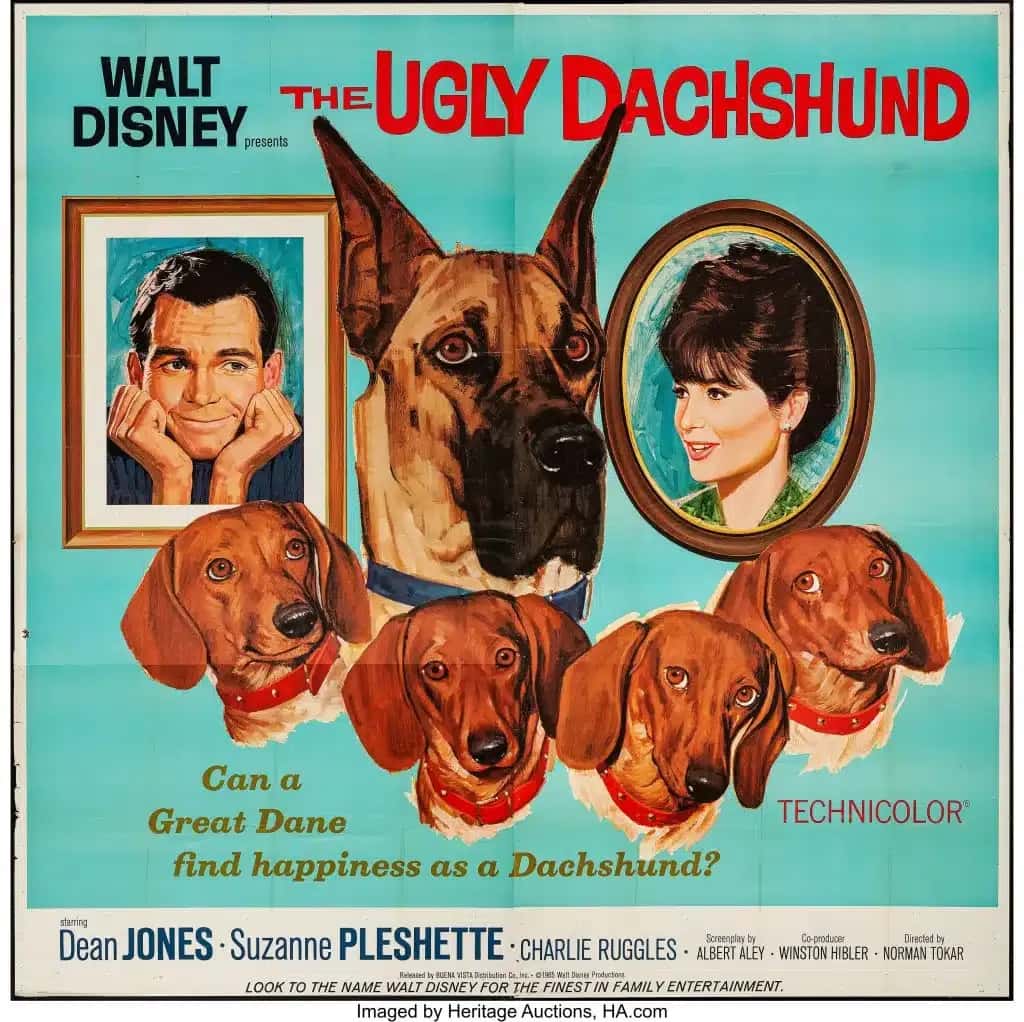
The breed also appeared in The Ugly Dachshund (1966), a Disney comedy in which a Great Dane is raised to believe he’s a dachshund — and the film plays off every physical contrast between the two breeds for maximum effect. While the movie itself is light, the message isn’t lost: dachshunds are small but mighty, and identity isn’t just skin (or fur) deep.
You can find more classic films featuring dachshunds over at Letterboxd.
These early roles helped set the tone for how the breed would be perceived in film for decades — comical, clever, and always just a little bit out of place in the best possible way.
The Sausage Dog Trope: Humor and Visual Symbolism
By the 1970s and well into the 2000s, the dachshund’s shape had become more than just a breed trait — it was a comedic device. Directors and animators used the dachshund’s long, low silhouette to inject humor, irony, and a bit of absurdity into everyday scenes.
The breed became shorthand for the visually unexpected. A dachshund trotting across the screen didn’t just draw attention — it reframed it.
You see this most clearly in animation. From Looney Tunes to Family Guy, the dachshund often appears not because it advances the plot, but because its body alone elicits a reaction. It’s the dog version of a visual punchline — elongated, low, and endlessly memeable long before memes existed.
In Wes Anderson’s The Royal Tenenbaums (2001), a dachshund named Buckley appears briefly but memorably. Though not central to the storyline, Buckley is the only pet featured, and his presence adds a quiet eccentricity to a film already steeped in stylised nostalgia. It’s no accident that Anderson — known for meticulous detail — chose a dachshund.
Outside of film, this visual symbolism became part of branding. In the fashion world, labels like Ralph Lauren and Paul Smith used dachshunds in promotional campaigns to signal sophistication with a twist. Their exaggerated proportions — both elegant and awkward — made them icons of individuality.
What made the dachshund such a reliable comedic or symbolic motif? Three things:
- Recognition: Even in silhouette, the dachshund is unmistakable.
- Contrast: Their fierce loyalty and boldness contrast their size.
- Exaggeration: They’re real-life caricatures — a dream for visual storytellers.
You could argue no other breed occupies this kind of comedic space — not the Labrador, not the poodle, not even the bulldog. The dachshund is in a lane of its own. And filmmakers, animators, and advertisers have known it for decades.
Scene Stealers: Dachshunds as Stars, Not Sidekicks
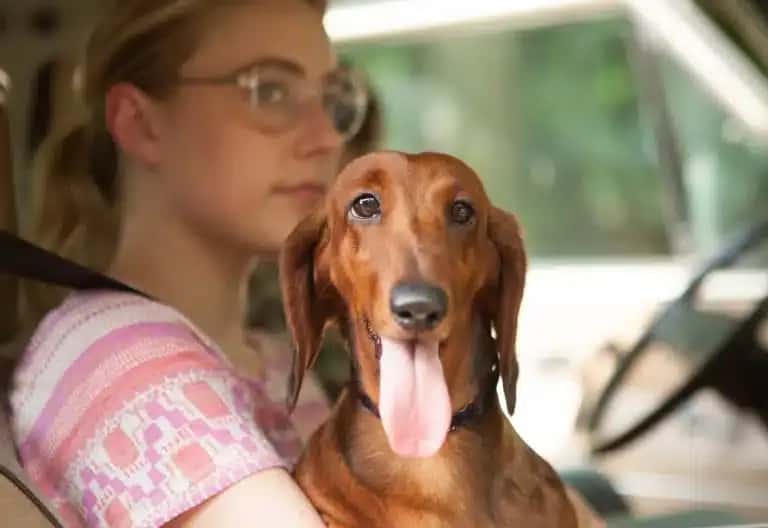
Image Reference
It’s one thing to pop up in a movie for comic relief. It’s another to carry the emotional weight of a scene. And in some standout films, dachshunds aren’t just background — they’re the heartbeat.
Take Wiener-Dog (2016), directed by Todd Solondz. It’s a dark comedy that follows a single dachshund through a series of owners, each navigating some form of dysfunction, disappointment, or existential dread. The film doesn’t just use the dog as a throughline — it invites the audience to project meaning onto her. She becomes a kind of observer, passive but present, witnessing the very human messes we make.
Wiener-Dog was divisive, but one thing was clear: the dachshund wasn’t a prop. She was the frame. The emotional anchor. The witness to quiet tragedies that didn’t need words. Then you have Wiener Dog Internationals (2016) in which Shelly who is the USWeiner Dog champion, enters the international competition where her owners, the Jacks find themselves caught up in a deceitful scheme with the only real winners can sniff out. A notable mention as well for Wiener Dog Nationals (2013).
Then there’s Grandma (2015), starring Lily Tomlin, where a small dachshund named Mulan adds depth to a character-driven film without ever speaking or “doing tricks.” Just by being there — curled on a lap, following at a distance — the dog shapes our understanding of its owner. We see softness. History. Love that doesn’t ask for attention.
These kinds of roles reflect a shift in how dachshunds were seen. No longer just comic relief, they became vessels for emotional nuance. You didn’t need them to bark, bite, or bolt across a field. Their mere presence was enough to suggest memory, comfort, contradiction.
Even in family-friendly films, dachshunds have claimed lead billing. In The Secret Life of Pets (2016), Buddy the dachshund is voiced by Hannibal Buress. He’s not just background noise — he’s smart, dry, and quick with a line. His wit is understated, but it cuts through, and he’s given as much narrative respect as any of the other characters.
These portrayals reflect something deeper in how people connect with dachshunds. They aren’t perfect. They’re complex. Stubborn, yes. But also soulful. Often underestimated — and never, ever boring.
Dachshunds in International Cinema
While many dachshund appearances in film have come out of the U.S. and U.K., the breed has had a long-standing presence in European and Asian cinema too — often with more cultural nuance and less caricature.
In Germany, the dachshund’s country of origin, the breed is deeply tied to national identity and has shown up in films both as a symbol of heritage and a point of humor. One notable example is the 1972 German film Willi wird das Kind schon schaukeln, where a dachshund appears as a loyal companion in a post-war satire that pokes fun at bureaucratic absurdities. The dog acts almost as a grounding force amid human ridiculousness.
In France, dachshunds often appear in more artistic or introspective contexts. Ma Vie de Courgette (2016), a French-Swiss stop-motion animated film, includes a dachshund as a quiet visual detail — not integral to the plot, but present in the background as part of a family scene. It’s subtle, like much of the film’s emotional storytelling, but it adds domestic texture and familiarity.
Japanese cinema and anime have also embraced dachshunds, though often in more exaggerated forms. The long-body trope translates well to stylised formats. In the animated series Shiba Inuko-san, a minor character is a dachshund with exaggerated proportions and a comic personality. The breed’s visual silhouette — low, stretched, instantly recognisable — fits perfectly into manga and anime aesthetics.
Dachshunds have also appeared in popular Korean dramas, usually as status symbols or expressions of character personality. In My Lovely Sam Soon (2005), a rom-com classic, the lead character owns a dachshund that acts almost as a confidant — a trope familiar to many single-dog-owner stories around the world.
The pattern in global cinema is clear: regardless of region or language, dachshunds consistently appear as more than decoration. They are used to reflect:
- Eccentricity or individuality
- Family intimacy
- Emotional memory or loss
- Loyalty or internal contrast (bold dog, gentle scene)
Their global screen presence speaks to something universal about the breed. They’re recognisable everywhere — and relatable almost anywhere.
Animated Dachshunds: Cartoons, Comics and Kids’ Films
If there’s a medium where the dachshund’s body shape truly shines, it’s animation. That iconic silhouette — low to the ground, long as a loaf, and completely distinct — has made dachshunds an animator’s dream for decades. But it’s not just their physical form that works. It’s the personality. The slight dramatic flair. The stubborn charm. The way they steal scenes without trying too hard.
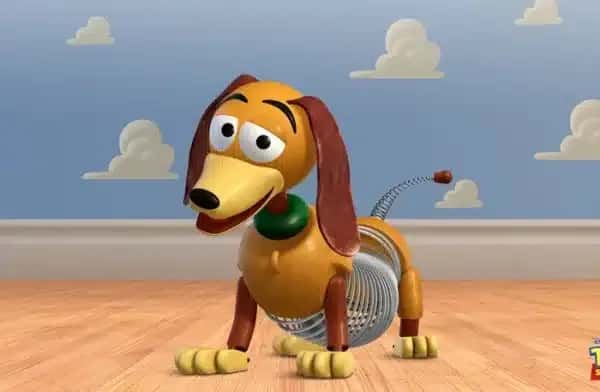
Perhaps the most recognisable example is Slinky Dog from Pixar’s Toy Story franchise. Voiced by Jim Varney (and later Blake Clark), Slinky is part dachshund, part slinky toy — a visual pun that turned into a character beloved by millions. He’s loyal, brave, and always just a little bit behind the curve — literally stretching himself to help others. While exaggerated, Slinky Dog captures something essential about dachshunds: their persistence, their flexibility (in every sense), and their emotional stickiness. Kids love him. Adults see their own dachshunds in him.
Another standout is The Ugly Dachshund (1966), a Disney live-action-meets-animation hybrid where the chaos of raising dachshunds becomes a full-blown household spectacle. Though the film centers on a Great Dane mistakenly raised among dachshunds, the real stars are the mischievous miniature pack who cause more havoc than any large dog ever could.
In The Secret Life of Pets (2016), as mentioned earlier, Buddy the dachshund brings sarcastic humour and city-dog realism to a cast of otherwise over-the-top animals. He’s chill. He’s slick. He uses a stand mixer to scratch his back. And he’s exactly the kind of character a real dachshund owner would appreciate — clever without being loud about it.
Even in Mickey Mouse cartoons, Dachshunds have appeared over the years as background characters, usually with exaggerated body length and a slightly smug air. They often show up as “too cool” for whatever chaos is going on — a trait anyone who’s tried to call their dachshund off a sun patch can understand.
Across different animation styles — from high-gloss Pixar to classic line-drawing Disney — dachshunds have become a design motif. Their shape lends itself to exaggeration. But what keeps them relevant is the emotional accuracy. They’re animated to look funny, yes, but they feel true.
Frequently Asked Questions
More from This Series
Explore more dachshund quirks, culture, and community moments in our Fun Facts & Trivia collection:
- Fun Facts About Dachshunds
The surprising, the specific, and the things no one tells you until you live with one. - Famous Dachshunds
Real dogs who left their mark on history, art, sport, and pop culture. - Dachshund World War II
How this German breed became both a propaganda symbol and a postwar companion. - World’s Longest Dachshund
Tall tales and real measurements — the dachshunds who made headlines. - Dachshund Jokes
A collection of clever (and questionably clever) jokes only doxie lovers will truly appreciate. - Funny Dachshund Sayings
From t-shirts to tea towels — the sayings that stick because they’re true. - Dachshund Names
Whether you’re naming your first or fifth, here’s a list that’s as long as the dog. - Dachshund Meme
A rotating archive of the best dachshund memes on the internet (and some only doxie lovers will understand). - When is National Dachshund Day?
Why we celebrate the long dog in June — and what makes the date so fitting.
Authored by
James
James is the founder of Dachshund Lovers and the proud human of Harvey, a mini dapple with a big personality. He writes to empower and connect the dachshund community, blending founder insights with honest, experience-based stories about life with this incredible and special breed. James brings candid, experience-backed opinions to the community and always focused on fewer, better products and ideas that genuinely improve life for dachshunds and their people.
Read moreJames is the founder of Dachshund Lovers and the proud human of Harvey, a mini dapple with a big personality. He writes to empower and connect the dachshund community, blending founder insights with honest, experience-based stories about life with this incredible and special breed. James brings candid, experience-backed opinions to the community and always focused on fewer, better products and ideas that genuinely improve life for dachshunds and their people.
Read moreDisclaimer
This content is for informational purposes only and should not be considered veterinary advice. Always consult with a licensed veterinarian regarding your dog’s health and wellbeing.
There are no comments yet
Leave a comment