Dachshund in World War II
Dachshund in World War II
They didn’t fight on the frontlines, but WWII changed everything for dachshunds. Discover the breed’s wartime history and redemption.
James
Posted on October 30, 2025.
Updated on July 21, 2026.
Table of Contents
- •Introduction: A Symbol of Loyalty — or the Enemy?
- 1.Key Takeaways on Dachshund World War 2
- 2.Dachshunds as Political Symbols: Propaganda on All Sides
- •From companions to caricatures
- •In Germany: The dachshund as national heritage
- •Posters and public opinion
- 3.Decline in Popularity: What Happened to the Breed in Allied Countries
- •A sudden fall from favor
- •Australia and Canada followed suit
- 4.What the Dachshund’s Story Tells Us About Culture, Conflict, and Memory
- •Dogs as cultural shorthand
- •Reputation is rarely self-controlled
- •The comeback mattered
- -More from This Series
- -Disclaimer
Share

Introduction: A Symbol of Loyalty — or the Enemy?
When I first came across an old wartime cartoon showing a dachshund draped in a spiked helmet, I paused. The artwork was playful on the surface — but there was tension underneath. This wasn’t the cheeky “badger dog” I knew from my own lounge room. It was a caricature. A symbol. A stand-in for something larger.
During World War II, the dachshund became unexpectedly entangled in global politics. Their German origin, so proudly celebrated in the 19th and early 20th centuries, suddenly became a liability. Once adored for their charm and loyalty, dachshunds were recast — in propaganda, newspapers, even public opinion — as untrustworthy or unpatriotic simply because of where they came from.
In the United States, some owners faced ridicule or even threats for walking their dachshunds in public. Breed numbers declined in countries allied against Germany. Meanwhile, in Germany itself, the dachshund was still a cultural touchstone — a dog tied to national identity, but not to the Nazi regime.
This article explores the complex role of the dachshund during WWII:
- How it was used in propaganda, on both sides of the war.
- Why ownership declined in Allied countries.
- How the breed’s reputation was slowly repaired in the postwar decades.
- And what it tells us about how quickly dogs can become political.
To ground this piece, I’ll be referencing historical articles and resources, including Smithsonian Magazine, which offers a deeper look into the wartime experiences of pets and their owners.
Key Takeaways on Dachshund World War 2
Fact | Why It Matters |
|---|---|
Dachshunds were closely associated with Germany during WWII. | Their origin made them symbolic — sometimes unfairly — of the enemy nation. |
Anti-German sentiment led to declining popularity in Allied countries. | Many dachshund owners in the U.S., U.K., and Australia were pressured to avoid public outings with their dogs. |
Dachshunds appeared in both Axis and Allied propaganda. | Used as caricatures of German leadership, especially in American and British cartoons. |
The breed was not connected to Nazi ideology — but was caught in cultural crossfire. | Their reputation suffered not because of what they did, but where they were from. |
Postwar media and celebrity ownership helped rehabilitate the dachshund’s image. | By the 1950s and 60s, they were once again embraced for their charm and distinctiveness. |
Dachshunds as Political Symbols: Propaganda on All Sides
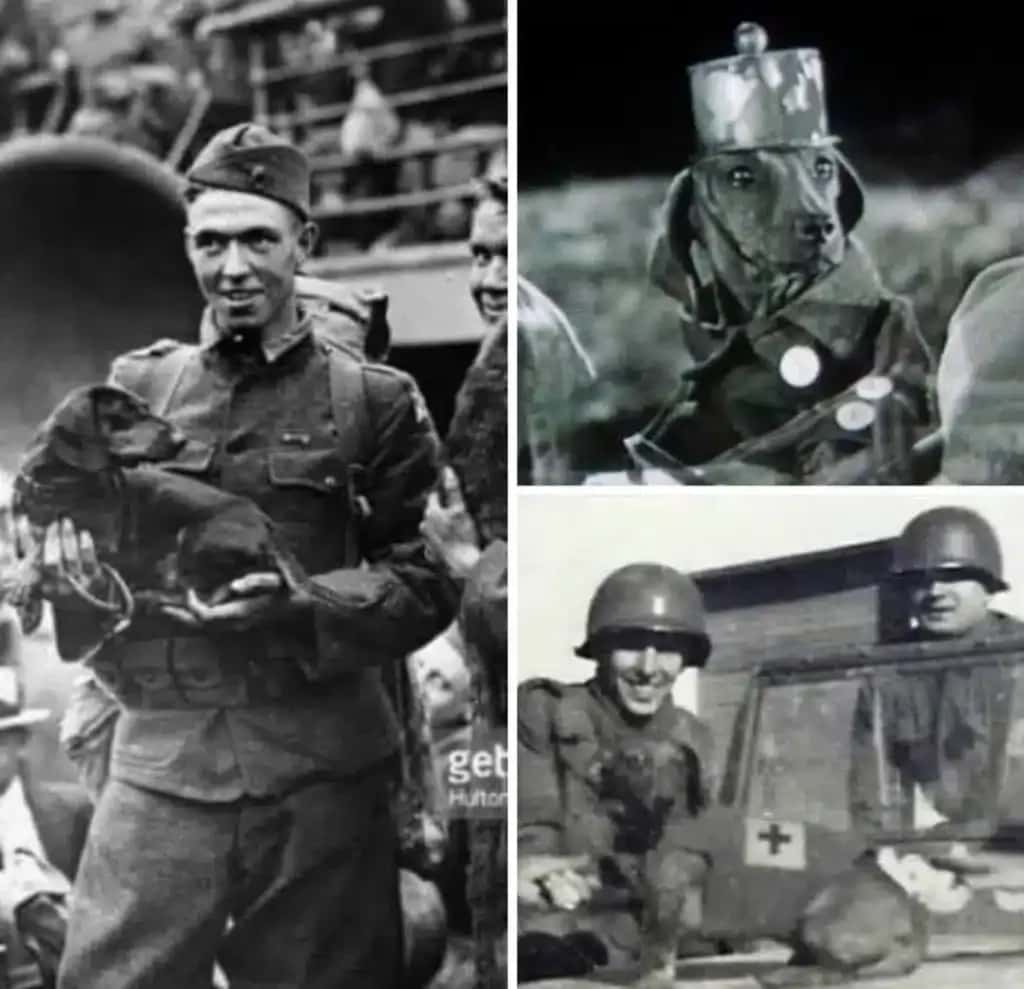
Before the 1940s, dachshunds were seen as quirky, proud, and deeply German. That heritage was mostly embraced — they were the beloved breed of Queen Victoria, a fixture in American upper-middle-class households, and even featured on Valentine’s Day cards. But once war broke out, everything changed.
From companions to caricatures
In Allied countries, especially the United States and United Kingdom, dachshunds quickly became stand-ins for Germany itself. Propaganda posters, political cartoons, and editorial comics routinely used the dog to symbolise Nazi aggression — giving the breed exaggerated, almost villainous features: slanted eyes, military helmets, sharp teeth.
This wasn’t new. During World War I, the breed had already experienced a reputation drop, but WWII took it further. Dachshunds were:
- Painted red and black in print to echo swastika imagery
- Shown goose-stepping in comic strips
- Named things like “Adolf” or “Hitler’s hound” in political jokes
One 1942 political cartoon published in a U.S. newspaper shows a dachshund standing atop a map of Europe, its tail shaped like a swastika, captioned: “He’s got the bark, but not the bite.”
This visual shorthand made the breed a tool for satire — but it also caused real harm. Dachshund owners were sometimes accused of being “sympathetic to the enemy.” Some were asked to keep their dogs out of public spaces. Others quietly surrendered them to shelters out of fear or shame.
In Germany: The dachshund as national heritage
Within Nazi Germany, however, the dachshund wasn’t heavily politicised. Unlike German Shepherds — which were actively used by the military and associated with the regime’s image of strength — dachshunds remained civilian dogs. They continued to be featured in family life, parades, and children’s books.
The breed’s long-standing popularity in Germany meant it was somewhat protected from propaganda manipulation. That said, some pro-German publications abroad used the dachshund as a gentler alternative symbol of the German people: loyal, proud, underestimated.
Posters and public opinion
According to Smithsonian Magazine, “many breeds associated with Axis countries faced backlash, but few as intensely or unjustly as the dachshund.” Other pets, like Siamese cats and Japanese Chin, saw similar suspicion — but the dachshund’s visibility made it a bigger target.
The irony, of course, is that the dachshund is not a political animal. It’s stubborn. It’s affectionate. It wants warmth and food and familiarity — not a seat in a propaganda machine. But during WWII, that didn’t seem to matter.
Decline in Popularity: What Happened to the Breed in Allied Countries
The impact of World War II on dachshunds wasn’t just symbolic — it was statistical. In countries like the United States, United Kingdom, Canada, and Australia, dachshund registrations and public appearances dropped sharply in the early 1940s. Not because the breed had changed, but because public perception had.
A sudden fall from favor
Before the war, dachshunds were considered stylish, cosmopolitan pets — the kind you’d see in department store ads or beside high-society families. But as anti-German sentiment surged, breed associations began quietly distancing themselves from the dachshund.
In the United States, some owners began referring to them as “liberty hounds,” echoing the earlier rebranding of “sauerkraut” as “liberty cabbage” during WWI. According to the American Kennel Club, the dachshund saw a noticeable dip in popularity in the early 1940s, though it remained quietly present in loyal households.
Newspapers from the time reflect a mix of sentiment:
- Some printed letters urging the public not to “punish the pet for the politics of its origin.”
- Others ran tone-deaf gags about “spying sausage dogs” or “miniature invaders in the backyard.”
In Britain, where wartime loyalty was everything, the dachshund’s German identity became problematic. A 1940 issue of The Times reported that “several London households have given up their dachshunds to avoid scrutiny in the street.”
As noted by historian John M. Kistler in Animals in the Military: From Hannibal’s Elephants to the Dolphins of the U.S. Navy (ABC-CLIO, 2011), “no other breed suffered quite the same reputational damage in both World Wars — and yet managed to recover twice.”
Australia and Canada followed suit
In Australia, newspaper archives from the National Library’s Trove database reveal similar patterns. A 1942 piece in The Sydney Morning Herald noted that dachshund sightings in public parks had “visibly declined” and that local breeders had “temporarily halted litters” to avoid public backlash.
In Canada, dachshunds were listed among breeds affected by wartime import restrictions, according to Canadian Kennel Club archives. The message was subtle, but clear: this was not the time to celebrate German lineage.
What the Dachshund’s Story Tells Us About Culture, Conflict, and Memory
Dachshunds didn’t ask to be political. But their story during World War II — and in the years that followed — reveals something deeper about how animals get swept into human narratives. It’s not just a story about a breed. It’s a story about symbolism, identity, and how quickly affection can turn to suspicion when the context shifts.
Dogs as cultural shorthand
When societies enter conflict, they often reduce the “other side” to symbols — and dogs, with their visibility and loyalty, become convenient avatars. During WWII, the dachshund became a shorthand for “German-ness.” But that idea wasn’t fixed. In Germany, they were family dogs. In the U.S., they were framed as spies or villains. The same animal, filtered through a different lens.
Reputation is rarely self-controlled
The most telling part? The dachshund did nothing to deserve the backlash. They didn’t change behavior. They didn’t become more aggressive or difficult. But the social and political climate shifted, and with it, public tolerance.
This has implications beyond breed history. It speaks to how quickly collective sentiment can turn — and how easily personal joy (a dog, a ritual, a relationship) can be shaped by external forces.
The comeback mattered
The slow rehabilitation of the dachshund’s image is also telling. It didn’t happen overnight. It wasn’t engineered by a PR campaign. It happened through quiet, consistent familiarity — families who never stopped loving their dogs, breeders who stayed the course, and media moments that reminded people of the breed’s charm, not its origin.
Today, the dachshund is once again one of the most beloved breeds globally — from show dogs to meme culture. But their WWII-era story isn’t just a historical footnote. It’s a reminder of how culture can distort, how loyalty can be questioned, and how reputation, once altered, takes time to restore.
FAQs — Dachshunds in World War II
More from This Series
Looking for more ways to deepen your dachshund knowledge? Explore the full Fun Facts & Trivia collection:
- World’s Longest Dachshund
Discover the dogs who took “long-bodied” to record-breaking levels — and what it means for health and breeding. - When Is National Dachshund Day?
The longest day of the year belongs to the longest dog in the world. Here’s how people celebrate, and why it matters. - Movies About Dachshunds
From slapstick to arthouse, explore the films where dachshunds take center stage — or steal it. - Funny Dachshund Sayings
Bite-sized wisdom and cheeky one-liners only a doxie owner would fully understand. - Famous Dachshunds
From Picasso’s muse to Formula One’s paddock prince, these are the dachshunds who’ve lived big lives. - Dachshund in World War II
How one breed got swept up in propaganda, politics, and a postwar redemption arc. - Dachshund Names
Choosing a name that suits a sausage dog is an art form. Start here. - Dachshund Jokes
Silly, simple, and surprisingly clever — a clean laugh for anyone who lives with a low-rider. - Fun Facts About Dachshunds
A collection of unexpected trivia for those who think they’ve heard it all. - Dachshund Meme
How the internet turned the dachshund into an unofficial mascot of joy, chaos, and relatability.
Authored by
James
James is the founder of Dachshund Lovers and the proud human of Harvey, a mini dapple with a big personality. He writes to empower and connect the dachshund community, blending founder insights with honest, experience-based stories about life with this incredible and special breed. James brings candid, experience-backed opinions to the community and always focused on fewer, better products and ideas that genuinely improve life for dachshunds and their people.
Read moreJames is the founder of Dachshund Lovers and the proud human of Harvey, a mini dapple with a big personality. He writes to empower and connect the dachshund community, blending founder insights with honest, experience-based stories about life with this incredible and special breed. James brings candid, experience-backed opinions to the community and always focused on fewer, better products and ideas that genuinely improve life for dachshunds and their people.
Read moreDisclaimer
This content is for informational purposes only and should not be considered veterinary advice. Always consult with a licensed veterinarian regarding your dog’s health and wellbeing.
There are no comments yet
Leave a comment