Dachshund Skin Issues
Dachshund Skin Issues
After seeing my dachshund’s skin flare up, I started digging. These are the signs I missed and the treatments that finally made a difference.

James
Posted on November 2, 2025.
Updated on July 18, 2026.
Table of Contents
- 1.Key Takeaways
- 2.Causes of Dachshund Skin Issues
- •Allergies: The Biggest Culprit
- •Parasites: Fleas, Mites, and Ticks
- •Coat Type: Long, Smooth, or Wire-Haired
- •Environmental Triggers
- •Genetic Predisposition
- •Diet and Nutrition
- •Table: Causes of Dachshund Skin Problems
- •External Authority
- •Harvey’s Story
- 3.Common Dachshund Skin Conditions
- •Dachshund Skin Allergies
- •Dachshund Itchy Skin and Flaky Skin
- •Dachshund Hair Loss
- •Dachshund Rash, Scabs, and Skin Bumps
- •Dachshund Skin Infections
- •Table: Common Dachshund Skin Conditions
- •Harvey’s Experience
- 4.Warning Signs to Watch For
- •Persistent Itching
- •Bald Patches and Hair Loss
- •Redness, Rashes, and Scabs
- •Bad Odour or Greasy Coat
- •Dachshund Sensitive Skin Reactions
- •Table: Warning Signs of Dachshund Skin Issues
- •When to See a Vet
- •Harvey’s Perspective
- 5.Treatment Options for Dachshund Skin Problems
- •Veterinary Diagnosis
- •Medicated Baths and Shampoos
- •Anti-Itch Medication
- •Antibiotics and Antifungals
- •Parasite Control
- •Dietary Adjustments
- •Lifestyle and Home Care
- •Table: Treatments for Dachshund Skin Issues
- •Harvey’s Treatment Journey
- 6.Prevention & Care Tips
- •Regular Grooming
- •Bathing Routine
- •Diet and Supplements
- •Parasite Prevention
- •Environmental Management
- •Monitoring and Early Intervention
- •Harvey’s Daily Routine
- •More from This Series
- -Disclaimer
Share

When Harvey first started scratching more than usual, I thought it was just a seasonal thing. But over a few weeks, his beautiful long-haired coat developed patches of irritation and flaky skin. That was my introduction to how common dachshund skin issues really are.
Dachshunds may be famous for their long backs, but they are also one of the breeds most prone to skin problems. From itchy skin and hair loss to allergies and infections, their sensitive skin can react to food, fleas, environmental triggers, or even the way their coats trap moisture.
According to RSPCA NSW, skin disease is one of the most frequent reasons dogs visit the vet in Australia. For dachshunds, their genetics and coat types mean they are often at higher risk.
Key Takeaways
Problem | Summary | Key Notes |
|---|---|---|
Why dachshunds get skin problems | Genetics, coat type, allergies, parasites, and environment all play a role. | Long-haired dachshunds often trap moisture; smooth coats show rashes more easily. |
Common conditions | Allergies, dermatitis, infections, rashes, flaky skin, scabs. | See Dachshund Allergies. |
Warning signs | Persistent itching, bald patches, redness, bumps, bad odour. | Seek a vet if scratching lasts more than a few days. |
Treatment options | Depends on cause — may include flea control, medicated baths, dietary changes, or medication. | Linked to Dachshund Health Issues. |
Prevention | Balanced diet, grooming, parasite protection, and monitoring for changes. | Weight management can also reduce inflammation (see Overweight Dachshund). |
Causes of Dachshund Skin Issues

Dachshunds may be tough little dogs in spirit, but when it comes to skin, they can be surprisingly sensitive. Their skin is often described by vets as “reactive”, meaning that it overresponds to common irritants such as pollen, fleas, or certain foods. The result is a wide range of dachshund skin problems: itching, redness, rashes, flaky skin, and even infections if left untreated.
As RSPCA NSW explains, skin disease is one of the most common reasons dogs visit the vet in Australia. For dachshunds, their genetics, coat type, and lifestyle factors make them especially prone to flare-ups. Let’s explore the main causes.
Allergies: The Biggest Culprit
Allergies are the number one cause of dachshund skin issues. When the immune system overreacts to a trigger, the skin becomes inflamed, itchy, and irritated.
Types of allergies in dachshunds:
- Food allergies – Common triggers include chicken, beef, dairy, and grains. Symptoms often include dachshund hair loss, chronic ear infections, and itchy skin.
- Environmental allergies – Pollen, dust mites, grass seeds, and mould can all cause flare-ups. Dogs with dachshund sensitive skin often lick their paws excessively during pollen season.
- Flea bite allergies – Just one flea bite can set off severe itching and dachshund rash in sensitive dogs.
For more on this, see Dachshund Allergies.
Parasites: Fleas, Mites, and Ticks
Parasites are another leading cause of dachshund itchy skin and skin infections.
- Fleas: Even a small infestation can cause allergic dermatitis, leading to intense scratching, scabs, and hair loss.
- Mites: Demodex and Sarcoptes mites burrow into the skin, causing mange, bald patches, and crusty scabs.
- Ticks: Apart from transmitting disease, ticks can cause local irritation, swelling, and open sores.
Unchecked parasites often lead to secondary bacterial or yeast infections, which cause a bad odour and red, inflamed patches.
Coat Type: Long, Smooth, or Wire-Haired
Not all dachshunds have the same coat, and each coat type comes with its own skin conditions:
- Long-haired dachshunds – Their coats trap moisture, making them prone to hotspots and fungal infections. Mats can hide rashes and scabs.
- Smooth-haired dachshunds – Their thin coats show redness and bumps quickly. They often struggle with dachshund dry skin and flaky skin in winter.
- Wire-haired dachshunds – Their coarse coats can cause irritation if not brushed properly, and they are more likely to get embedded grass seeds that lead to rashes.
Harvey, being long-haired, once developed a nasty hotspot under his chest after swimming and not drying off properly. Within days, his skin was raw and itchy — a lesson in how coat type influences dachshund skin problems.
Environmental Triggers
The world outside can be harsh on dachshund sensitive skin.
- Pollen and dust: Cause sneezing, watery eyes, and itchy patches.
- Humidity: Encourages yeast infections in skin folds and ears.
- Dry climates: Lead to dachshund flaky skin and dandruff.
- Chemicals: Shampoos, detergents, or even carpet cleaners can cause rashes.
Dogs living in urban apartments may face dust and mould, while rural dachshunds might be exposed to grass seeds and ticks. Both environments carry risks.
Genetic Predisposition
Some dachshunds are simply born with skin that’s more reactive. Breeding for coat colour, such as dapples or creams, can occasionally increase sensitivity. Genetic conditions like alopecia (hair loss) and Color Dilution Alopecia (CDA) are more common in certain lines.
This explains why some dachshunds seem to struggle with skin bumps, scabs, or infections repeatedly, even when owners do everything right.
Diet and Nutrition
Poor diet or nutritional imbalances can directly affect skin health.
- Low-quality food: Lacking essential fatty acids, leading to dachshund dry skin.
- Obesity: Increases inflammation, worsening skin allergies and infections. See Overweight Dachshund for why maintaining a lean weight helps reduce flare-ups.
- Deficiencies: Lack of Omega-3s and vitamins like E can cause brittle coats and flaky skin.
A balanced diet rich in fatty acids and high-quality protein is one of the best defences against chronic skin conditions.
Table: Causes of Dachshund Skin Problems
Cause | Symptoms | Risk Factors | Related Resource |
|---|---|---|---|
Allergies | Itchy skin, rash, hair loss, scabs | Food, pollen, fleas | |
Parasites | Scratching, bumps, bald spots, infections | Fleas, mites, ticks | |
Coat Type | Hotspots, flaky skin, irritation | Long-haired trap moisture, smooth-haired dry | |
Environment | Flaky skin, redness, fungal infections | Pollen, dust, humidityPollen, dust, humidity | |
Genetics | Recurrent issues, CDA, alopecia | Colour dilution, family history | |
Diet | Dull coat, dandruff, inflammation | Poor nutrition, obesity |
As PetMD notes, skin conditions in dogs often arise from “a combination of genetics, environment, and lifestyle.” In dachshunds, those three factors align perfectly to make skin problems both common and chronic.
Harvey’s Story
Harvey’s worst flare-up came one spring when his scratching became constant. At first, I thought it was just fleas, but after a vet visit we discovered he had developed environmental allergies to pollen. His skin was red and inflamed, with flaky patches around his tail. The solution was a mix of medicated shampoo, antihistamines, and a change to a fish-based diet rich in Omega-3s. Within weeks, his coat was shiny again, and the scratching eased.
That experience taught me two things: first, that dachshund skin issues are often more complex than they appear; and second, that prevention — diet, grooming, and quick vet visits — makes all the difference.
Common Dachshund Skin Conditions
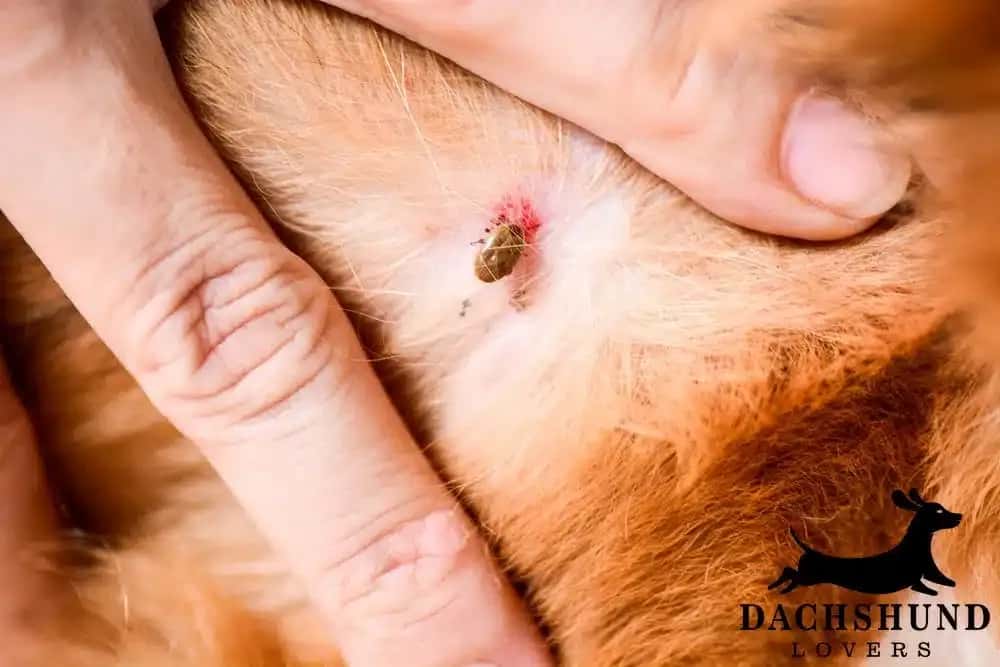
When dachshund owners talk about skin problems, they’re usually describing one of a handful of recurring conditions. Some are mild and easy to treat at home, while others require long-term management or veterinary care. Knowing what each looks like and when to act, can make all the difference in your dachshund’s comfort.
Dachshund Skin Allergies
Allergies are the most frequent dachshund skin condition, often presenting as itchy skin, rashes, or chronic ear infections.
- Food allergies: Triggered by proteins like chicken, beef, or dairy. Common signs include dachshund hair loss around the face or paws and chronic licking.
- Environmental allergies: Pollen, dust, and mould cause seasonal flare-ups, leading to dachshund itchy skin and redness on the belly or paws.
- Flea bite allergies: A single bite can trigger days of intense scratching, with scabs and flaky skin forming over time.
See Dachshund Allergies for a full guide on managing allergy triggers.
Dachshund Itchy Skin and Flaky Skin
Dachshund itchy skin is one of the most common reasons owners visit the vet. Persistent itching may point to:
- Dry climates leading to dachshund flaky skin and dandruff.
- Overbathing or harsh shampoos stripping natural oils.
- Secondary yeast infections from constant scratching.
Signs to watch for: scratching until the skin becomes red, flakes of dandruff on bedding, or licking that leaves the skin raw.
Dachshund Hair Loss
Hair loss in dachshunds can be seasonal, allergy-related, or genetic.
- Alopecia: Thinning patches without redness often point to hereditary hair loss.
- Color Dilution Alopecia (CDA): Common in diluted coat colours, leading to thinning hair and sensitive skin (see CDA in Dachshunds).
- Parasitic or bacterial causes: Mites, fleas, or skin infections may cause bald patches with inflammation.
If your dachshund develops symmetrical hair loss or persistent bald spots, veterinary advice is essential.
Dachshund Rash, Scabs, and Skin Bumps
Rashes and scabs are clear signs that dachshund skin issues have gone beyond irritation.
- Rashes: Often linked to allergies or contact irritants (shampoo, carpet cleaners).
- Scabs: Can develop from flea bites, infections, or persistent scratching.
- Skin bumps: May be cysts, warts, or allergic reactions. Most are harmless, but some require vet checks to rule out infection or growths.
The sight of dachshund scabs on Harvey’s back once sent us straight to the vet — in his case, it turned out to be flea allergy dermatitis.
Dachshund Skin Infections
When scratching and allergies go untreated, secondary infections often follow.
- Bacterial infections: Present as moist, smelly patches that may ooze.
- Yeast infections: Often occur in folds or ears, causing a greasy feel and strong odour.
- Hotspots: Raw, inflamed patches caused by moisture trapped against the skin (especially in long-haired dachshunds).
According to VCA Hospitals, untreated skin infections can spread quickly, leading to systemic illness.
Table: Common Dachshund Skin Conditions
Condition | Typical Signs | Likely Cause | Related Resource |
|---|---|---|---|
Skin allergies | Itching, redness, hair loss | Food, pollen, fleas | |
Itchy/Flaky Skin | Dandruff, dry patches | Dry air, harsh shampoos | |
Hair Loss | Bald spots, thinning coat | CDA, alopecia, mites | |
Rashes/Scabs/Bumps | Redness, sores, crusty patches | Allergies, fleas, irritation | |
Skin Infections | Odour, oozing, greasy coat | Bacteria, yeast |
Harvey’s Experience
Harvey has had his share of skin bumps and scabs over the years. The worst episode was caused by a flea allergy — just a few bites left him with raw, irritated patches along his back. Once treated with flea medication and medicated baths, the scabs healed, and his coat returned to normal. Now, I never skip flea prevention, especially in spring when flare-ups are most likely.
From dachshund itchy skin and flaky skin to more serious infections, these skin conditions share one thing in common: they can escalate quickly if ignored. Knowing what each looks like helps owners decide whether simple at-home care is enough or whether a vet visit is needed.
Warning Signs to Watch For

Dachshunds can be subtle when something is wrong with their skin. Many owners dismiss scratching as “normal dog behaviour” or think a little dandruff is harmless. But in this breed, small irritations can escalate into bigger dachshund skin problems quickly — from rashes and scabs to full-blown skin infections.
Knowing the red flags helps you step in before discomfort turns into a veterinary emergency.
Persistent Itching
Every dog scratches now and then, but dachshund itchy skin that lasts more than a few days is not normal. Persistent itching often points to:
- Allergies (food, fleas, or pollen).
- Dry skin from overbathing or harsh shampoos.
- Secondary infections beginning under the skin.
If your dachshund scratches until the skin looks red or raw, it’s time to take action. According to PetMD, persistent itching is the most common symptom of canine skin disease.
Bald Patches and Hair Loss
Hair loss in dachshunds can be seasonal shedding, but bald patches often indicate something more serious.
- Symmetrical hair loss: Could suggest a genetic condition like CDA (see CDA in Dachshunds).
- Patchy hair loss: Often points to parasites (mites or fleas).
- Inflamed bald spots: Usually caused by allergies or infection.
Any sudden dachshund hair loss should be noted and monitored, especially if combined with redness or itching.
Redness, Rashes, and Scabs
A dachshund rash is one of the clearest indicators of skin irritation. It may appear as redness on the belly, bumps on the back, or small raised patches around the armpits and groin.
- Mild cases: May clear with improved grooming or dietary changes.
- Moderate cases: Often linked to allergies or contact irritants like detergents.
- Severe cases: Progress to dachshund scabs, which can bleed and lead to infection.
Harvey once developed dachshund scabs along his tail after a flea bite allergy. The scabs weren’t just unsightly — they were painful until treated.
Bad Odour or Greasy Coat
One overlooked sign of dachshund skin infection is odour. If your dachshund smells “yeasty” or has a greasy feel to their coat, yeast or bacteria may be at play.
- Yeast infections: Often occur in folds, ears, and paws.
- Bacterial infections: Create moist, oozing patches with foul smell.
According to VCA Hospitals, infections that produce bad odour or discharge require immediate veterinary treatment.
Dachshund Sensitive Skin Reactions
Dachshunds are known for sensitive skin. Reactions can appear after:
- Switching shampoos.
- Contact with certain grasses or cleaning products.
- Overuse of flea or tick medication.
Signs of sensitivity include redness after baths, excessive licking, or flaky patches after grooming.
Table: Warning Signs of Dachshund Skin Issues
Warning Sign | What It Could Mean | Action to Take | Related Resource |
|---|---|---|---|
Persistent scratching | Allergies, parasites, infections | Vet check if >3 days | |
Bald Patches | CDA, parasites, infections | Monitor & vet visit | |
Redness/rash | Allergies, irritants, dermatitis | Remove irritant, vet check if severe | |
Scabs | Flea allergy, persistent scratching | Flea control + vet exam | |
Odour/greasy coat | Yeast or bacterial infection | Vet visit for treatment |
When to See a Vet
Not every scratch is a crisis, but seek veterinary care if you notice:
- Itching that lasts more than 3–5 days.
- Red or inflamed patches that worsen.
- Odour or discharge from the skin.
- Large bald patches or persistent flaky skin.
- Behavioural changes like lethargy or loss of appetite alongside skin issues.
Harvey’s Perspective
For Harvey, the first warning sign was always scratching. He has sensitive skin, so even small environmental triggers (like spring pollen) made him itchy. The mistake I made early on was assuming it would pass on its own. By the time scabs appeared, he needed medicated shampoo and antihistamines. Now, I know to watch for subtle changes and act before problems escalate.
Final Thought: Dachshund skin conditions rarely start severe — they begin with small clues like itching, flakes, or rashes. Owners who pay attention to these early warning signs can prevent minor issues from becoming painful infections.
Treatment Options for Dachshund Skin Problems

Treating dachshund skin issues isn’t a one-size-fits-all process. The best treatment depends on the underlying cause — what looks like a simple rash might actually be an allergy, a parasite bite, or even the start of a skin infection. Because dachshunds are prone to chronic and recurring conditions, it’s important to work with your vet to identify the root problem rather than just soothing symptoms.
Veterinary Diagnosis
The first step in treating dachshund skin conditions is a proper veterinary workup.
- Skin scrapings: To check for mites or fungal infections.
- Allergy testing: Helps pinpoint whether food, fleas, or environment are triggers.
- Blood work: May be needed if hair loss or dachshund flaky skin is linked to hormone issues.
- Swabs or cultures: To diagnose bacterial or yeast infections.
Without a diagnosis, treatment is guesswork — and dachshunds with sensitive skin often need tailored solutions.
Medicated Baths and Shampoos
Bathing with medicated shampoos is one of the most common treatments for dachshund itchy skin.
- Antifungal shampoos: For yeast infections.
- Antibacterial shampoos: For scabs and hotspots.
- Oatmeal-based shampoos: To soothe dachshund sensitive skin.
Important: Avoid overbathing. Too many baths strip natural oils and can make dachshund dry skin worse.
Anti-Itch Medication
Persistent itching needs relief so your dachshund doesn’t scratch themselves into open wounds.
- Antihistamines: Commonly prescribed for allergies.
- Steroids: Reduce inflammation but are usually short-term.
- Newer anti-itch drugs (Apoquel, Cytopoint): Target itch pathways with fewer side effects.
These treatments are especially useful for managing dachshund skin allergies that flare with pollen or seasonal changes.
Antibiotics and Antifungals
When dachshund skin infections set in, topical creams or oral medications are often required.
- Topical antibiotics/antifungals: Applied directly to infected spots.
- Oral antibiotics: For more severe bacterial infections.
- Antifungal treatments: Especially for yeast infections in folds, paws, or ears.
Infections often develop secondary to allergies or parasites, so preventing scratching is just as important as treating the infection itself.
Parasite Control
Since fleas, mites, and ticks are frequent triggers of dachshund rash, scabs, and hair loss, parasite control is non-negotiable.
- Monthly flea/tick preventatives.
- Regular grooming to spot parasites early.
- Treatment of the home environment: Wash bedding, vacuum carpets, and use flea sprays if needed.
Even a single flea bite can cause days of misery in a dachshund with sensitive skin.
Dietary Adjustments
Food allergies and poor nutrition are underestimated causes of dachshund skin problems.
- Hypoallergenic diets: May eliminate common triggers like chicken or beef.
- Grain-free vs. grain-inclusive: Depends on what the allergy tests show.
- Omega-3 fatty acids: Reduce inflammation, improve coat shine, and reduce dandruff.
Harvey’s flare-ups improved dramatically when we shifted him to a fish-based diet rich in fatty acids. Within weeks, his coat regained its shine, and the flaky skin disappeared.
Lifestyle and Home Care
Treatment isn’t just about medications — daily care makes a huge difference.
- Bedding: Wash weekly to prevent dust mite and flea build-up.
- Environment: Limit exposure to grass or pollen during allergy season.
- Grooming: Brush regularly to remove loose hair, dirt, and allergens.
- Weight control: A lean dachshund has lower overall inflammation. See Overweight Dachshund.
Table: Treatments for Dachshund Skin Issues
Problem | Treatment | Example | Related Resource |
|---|---|---|---|
Skin Allergies | Antihistamines, diet change, anti-itch drugs | Hypoallergenic diet + Apoquel | |
Itchy/dry skin | Medicated shampoos, Omega-3 supplements | Oatmeal baths | |
Hair Loss | Diagnose cause (CDA, parasites, allergies) | CDA → lifelong management | |
Rash/scabs | Flea control, medicated creams | Flea dermatitis treatment | |
Skin infections | Antibiotics, antifungals, medicated baths | Yeast infection → antifungal shampoo |
Harvey’s Treatment Journey
When Harvey developed a pollen-triggered rash one spring, we had to tackle it from multiple angles: antihistamines to reduce itching, weekly medicated baths to clear the skin, and a diet shift to reduce inflammation. The biggest breakthrough came when we added Omega-3 supplements — within a month, his coat was shinier and softer, and the scratching calmed.
According to VCA Hospitals, “skin disease is often chronic and requires both veterinary treatment and long-term management by owners.” For dachshunds, this means combining medication with lifestyle adjustments.
Treating dachshund skin issues is rarely about one fix. Success usually comes from a combination of vet diagnosis, medical treatments, parasite control, and daily care. Owners who treat the cause — not just the symptoms — give their dachshunds the best chance of staying itch-free and comfortable.
Prevention & Care Tips

While treatments can calm flare-ups, prevention is what truly keeps dachshund skin problems under control long-term. Dachshunds are prone to sensitive skin, so even minor missteps the wrong shampoo, missed flea treatment, or poor diet can quickly trigger itchy skin, rashes, or flaky patches. Building a preventative routine is the best way to minimise discomfort and avoid repeated vet visits.
Regular Grooming
Consistent grooming is one of the easiest ways to protect your dachshund’s skin.
- Smooth-haired dachshunds: Weekly brushing with a soft bristle brush helps remove dirt and loose hair. Their thin coat makes rashes and bumps easier to spot.
- Long-haired dachshunds: Daily brushing prevents mats that trap moisture and bacteria. Mats often hide skin infections until they become severe.
- Wire-haired dachshunds: Regular hand-stripping or trimming keeps the coat healthy and reduces irritation.
Brushing also distributes natural oils across the skin, preventing dachshund dry skin and flaky skin.
Bathing Routine
Bathing too often strips oils, but avoiding baths entirely can let dirt and allergens build up.
- Frequency: Once every 3–4 weeks for maintenance; every 1–2 weeks if treating a condition with medicated shampoo.
- Products: Use vet-approved shampoos — oatmeal, aloe, or antifungal types for specific conditions.
- Rinse thoroughly: Soap residue is a common cause of dachshund itchy skin.
- Dry carefully: Long-haired coats should be dried fully to prevent hotspots.
Harvey had a flare-up of scabs after swimming because we didn’t dry him properly. Now, I always towel him down and brush out his coat after water play.
Diet and Supplements
What goes into the food bowl often shows up on the skin. A balanced diet reduces the risk of dachshund skin allergies and supports a shiny coat.
- High-quality protein: Look for single-source proteins if allergies are suspected.
- Omega-3 fatty acids: Found in fish oil, these reduce inflammation and dryness.
- Probiotics: Support gut health, which can improve skin condition.
- Hydration: Always provide fresh water — dehydration can worsen dry skin.
Overfeeding also increases inflammation. See Overweight Dachshund for why weight management supports skin health.
Parasite Prevention
Fleas, mites, and ticks are among the most common causes of dachshund rash, bumps, and scabs. Preventatives are non-negotiable.
- Monthly flea/tick preventatives: Oral or topical.
- Environmental cleaning: Wash bedding weekly, vacuum carpets, and treat outdoor areas if needed.
- Regular checks: Run your hands along your dachshund’s coat to feel for ticks or lumps.
Consistent prevention is far cheaper and easier than treating dachshund skin infections caused by parasites.
Environmental Management
Many dachshunds with sensitive skin react to their surroundings.
- Pollen season: Wipe paws and bellies after walks to remove allergens.
- Dust mites: Wash bedding in hot water weekly.
- Chemicals: Avoid scented detergents, strong cleaning products, or human shampoos.
- Climate adjustments: In dry environments, use a humidifier to reduce flaky skin; in humid climates, ensure dogs are dried properly to prevent hotspots.
Monitoring and Early Intervention
Prevention also means catching problems before they worsen.
- Daily check-ins: Look for redness, dandruff, or small scabs during grooming.
- Scratching watch: If your dachshund is scratching more than usual, investigate immediately.
Vet visits: Don’t wait if symptoms last more than a few days — early diagnosis prevents chronic issues.
Harvey’s Daily Routine
After Harvey’s allergy diagnosis, prevention became part of our daily rhythm:
- Weekly medicated baths in pollen season.
- Daily brushing to check for mats and scabs.
- Omega-3 supplements in his food.
- Monthly parasite preventatives.
- Wiping his paws after walks to remove pollen.
These small steps mean we rarely face major flare-ups anymore — just minor irritation that clears quickly.
As RSPCA NSW advises, “proactive care, including diet, grooming, and parasite control, is the best defence against recurring skin disease.” This holds especially true for dachshunds, where genetics and environment combine to create high risk.
Dachshund skin conditions can’t always be prevented, but consistent care dramatically reduces their frequency and severity. Owners who invest in grooming, diet, parasite prevention, and early vet intervention create a routine that keeps their dachshund’s coat glossy, their skin comfortable, and flare-ups rare.
FAQs About Dachshund Skin Issues
More from This Series
- Dachshund Eye Problems
- CDA in Dachshunds
- Dachshund Brain Size
- Dachshund Back Surgery
- Dachshund Dragging Back Legs
- Dachshund Neck Size
- Dachshund Back Brace
- Dachshund Back Problems
- Dachshund Skin Issues
- Dachshund Health Issues
- Dachshund Feet
- Dachshund Ribs
- Overweight Dachshund
- Dachshund Teeth
- Dachshund Allergies
- Dachshund Ears
- Dachshund Hip Dysplasia
- Dachshund Constipation
- Dachshund Bad Breath
Authored by
James
James is the founder of Dachshund Lovers and the proud human of Harvey, a mini dapple with a big personality. He writes to empower and connect the dachshund community, blending founder insights with honest, experience-based stories about life with this incredible and special breed. James brings candid, experience-backed opinions to the community and always focused on fewer, better products and ideas that genuinely improve life for dachshunds and their people.
Read moreJames is the founder of Dachshund Lovers and the proud human of Harvey, a mini dapple with a big personality. He writes to empower and connect the dachshund community, blending founder insights with honest, experience-based stories about life with this incredible and special breed. James brings candid, experience-backed opinions to the community and always focused on fewer, better products and ideas that genuinely improve life for dachshunds and their people.
Read moreDisclaimer
This content is for informational purposes only and should not be considered veterinary advice. Always consult with a licensed veterinarian regarding your dog’s health and wellbeing.
There are no comments yet
Leave a comment