How Many Ribs Do Dachshunds Have
How Many Ribs Do Dachshunds Have
Wondering how many ribs dachshunds have? Learn the number, what it means for their long bodies, and how it connects to their back health.
James
Posted on November 2, 2025.
Updated on July 21, 2026.
Table of Contents
- 1.Key Takeaways
- 2.Rib Anatomy & Structure in Dachshunds
- •Why Ribs Look More Visible in Dachshunds
- •Floating Ribs in Dachshunds
- 3.Common Rib Concerns in Dachshunds
- •Why Are My Dachshund’s Ribs Showing?
- •When Ribs Are Too Hard to Feel
- •Floating Rib Confusion
- •Rib Injuries or Deformities
- •Owner Insight
- 4.Lifestyle & Rib Health Care Tips
- •Maintain a Healthy Weight
- •Exercise the Right Way
- •Regular Vet Checks
- •Home Rib Checks
- 5.Dachshund Ribs Across Life Stages
- •Puppyhood (0–12 months)
- •Adulthood (1–7 years)
- •Senior Years (8+ years)
- •Owner Insight
- -More from This Series
- -Disclaimer
Share

I’ll never forget the first time Harvey flopped on his back after a long walk, his little chest rising and falling while his ribs seemed to poke out a little more than usual. Caitlin asked the same question many dachshund owners do: “Is he too skinny, or is that just how doxie ribs look?”
The truth is, dachshunds have the same rib count as most other dogs, 13 pairs of ribs, for a total of 26 ribs. But because of their long bodies and lean build, their rib cage often appears more prominent, especially when they stretch or roll on their backs. This rib structure plays a huge role in both their unique silhouette and their susceptibility to back issues.
According to the American Kennel Club (AKC), a dachshund’s rib cage should extend well back toward the hips, giving them that classic “barrel chest” that supports their spine. If ribs are too visible, it may signal low body weight, while a rib cage that’s hard to feel could point to obesity, both of which can increase risk of health problems.
Key Takeaways
Question | Quick Answer | Why It Matters for Dachshunds |
|---|---|---|
How many ribs do dachshunds have? | 13 pairs (26 total), like most dogs | Provides the structural framework for their long back and chest cavity |
Why do dachshund ribs look more visible? | Their long, lean build and short fur make ribs appear more pronounced | Often normal, but extreme rib visibility can indicate underweight |
What is a dachshund’s rib cage shape? | Long, rounded barrel extending back towards the hips | Supports their spine and gives room for vital organs |
Do dachshunds have floating ribs? | Yes, like other dogs, the last pair are “floating ribs” not attached to the sternum | These can sometimes be felt more prominently in thin dogs |
When should I worry about visible ribs? | If ribs are too sharp or if the dog seems lethargic/losing weight | May signal malnutrition, illness, or metabolic issues — vet check recommended |
Rib Anatomy & Structure in Dachshunds
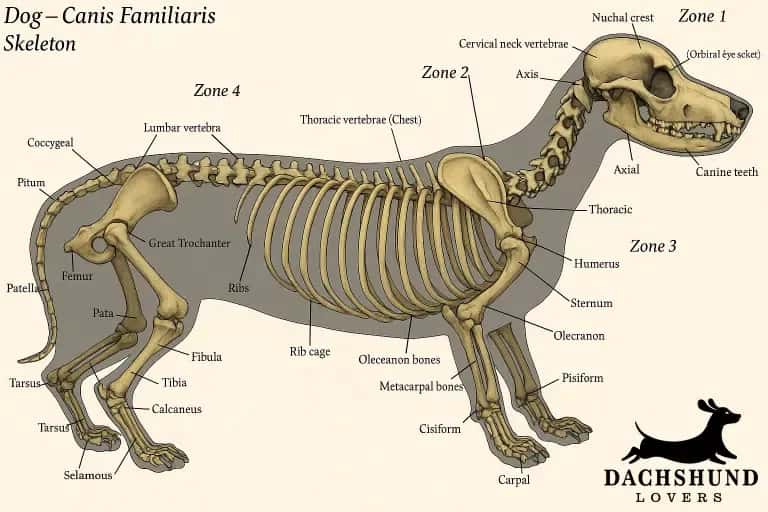
Dachshunds, like most dog breeds, have 13 pairs of ribs — that’s 26 in total. The rib cage is made up of:
- True ribs (first 9 pairs) — attached directly to the sternum by cartilage.
- False ribs (next 3 pairs) — attached indirectly to the sternum via cartilage.
- Floating ribs (last pair) — not attached to the sternum at all, making them more flexible but also easier to feel.
Because of the dachshund’s elongated torso, the rib cage extends further back compared to other small breeds. This gives them a barrel-shaped chest, which not only supports vital organs like the lungs and heart but also acts as a structural counterbalance to their long spine.
The American Kennel Club (AKC) breed standard emphasises that a dachshund’s chest should be deep and well-developed, reaching close to the elbows. A flat or shallow rib cage is considered a fault, as it doesn’t provide the same level of spinal support.
Why Ribs Look More Visible in Dachshunds
It’s common for owners to worry that their dachshund’s ribs are “sticking out.” But often, this is simply the result of their unique body shape:
- Short coat breeds make rib outlines more obvious.
- Leaner body types show ribs more when stretching or lying on their side.
- Movement and posture — when they roll, twist, or arch their backs, ribs appear sharper.
As a rule of thumb: you should be able to feel your dachshund’s ribs easily but not see them prominently at rest. If the ribs are very sharp or always visible, your doxie may be underweight. If you can’t feel the ribs at all under a layer of fat, they may be overweight. Both extremes increase risk of health issues, particularly spinal stress.
Floating Ribs in Dachshunds
Dachshunds, like all dogs, have a pair of floating ribs — the last ribs in the cage that are attached only to the vertebrae and not to the sternum. These ribs are:
- More flexible than the others.
- Easier to feel during a rib check.
- Sometimes mistaken by owners as “extra ribs” or even a lump.
Floating ribs are completely normal, but in lean dachshunds, they can feel sharper. If you notice sudden swelling, tenderness, or asymmetry in this area, a vet check is still advised to rule out injury or illness.
Common Rib Concerns in Dachshunds
Because of their unique build, dachshunds’ rib cages are often a point of curiosity — and sometimes worry — for owners. From visible ribs to weight issues and occasional injuries, understanding what’s normal and what’s not is key to keeping your doxie healthy.
Why Are My Dachshund’s Ribs Showing?
For many owners, the first concern is visible ribs. In most cases, this is normal — especially when your dachshund stretches, rolls on their side, or has a short coat. Dachshunds naturally carry less body fat along their sides compared to barrel-bodied breeds like pugs or bulldogs.
However, ribs that are consistently sharp or protruding may suggest your dachshund is underweight. Causes include:
- Dietary imbalance – Not enough calories or poor nutrient absorption.
- Parasites – Worms and other intestinal parasites can prevent weight gain.
- Underlying illness – Conditions like diabetes or kidney disease may lead to weight loss.
- Over-exercise – Active young dachshunds may burn more energy than they take in.
The RSPCA NSW notes that an easy way to check weight is the “rib test”: you should feel ribs without pressing hard, but they shouldn’t be visibly protruding at rest.
When Ribs Are Too Hard to Feel
On the opposite end, some dachshunds carry too much weight, making ribs difficult to feel. Obesity is a major health risk for the breed, as it increases the likelihood of back problems and joint strain. A dachshund with an overly padded rib cage may seem “cuddly,” but that extra weight places real stress on their spine.
Floating Rib Confusion
As mentioned earlier, floating ribs are normal, but owners sometimes confuse them with lumps or injuries. If you feel a sharper rib further back toward the hips, that’s usually the floating rib. Concern is only warranted if there’s swelling, pain on touch, or asymmetry.
Rib Injuries or Deformities
While less common, rib injuries can occur from:
- Falls or trauma – Dachshunds who jump from furniture are prone to chest impact.
- Congenital rib deformities – Rare, but may affect chest shape and breathing.
- Scoliosis or spinal misalignment – Can make ribs appear uneven.
If your dachshund yelps when touched around the chest or shows reluctance to move, a vet visit is essential. X-rays may be required to rule out fractures.
Owner Insight
When Harvey was a puppy, his ribs seemed constantly visible, which made us worry. Our vet reassured us that as long as his weight stayed steady and his energy was high, it was completely normal. Years later, we had the opposite problem: post-desexing, his ribs became harder to feel as he gained a little “padding.” That experience taught us that ribs are one of the simplest health indicators — they tell you if your dachshund is in the right condition or veering off balance.
Lifestyle & Rib Health Care Tips

A dachshund’s rib cage isn’t just about anatomy, it’s a daily health marker. From weight management to exercise, paying attention to the ribs can help prevent bigger problems down the line.
Maintain a Healthy Weight
The ribs are one of the easiest ways to monitor body condition. The general rule of thumb:
- Feel, don’t see – You should be able to feel your dachshund’s ribs without pressing too hard, but not see them sticking out at rest.
- Visible ribs = underweight – May point to poor diet, parasites, or illness.
- Ribs hidden under fat = overweight – Increases risk of back problems, joint issues, and diabetes.
Regular weigh-ins (monthly at home or at the vet) help catch changes early.
Exercise the Right Way
Dachshunds need regular activity, but too much impact can strain their backs and rib cage. To keep their ribs strong:
- Stick to daily walks on grass or even ground.
- Avoid frequent jumping on/off furniture, which jars both ribs and spine.
- Use a harness instead of a collar to prevent pressure on the rib cage during walks.
The American Kennel Club (AKC) recommends controlled exercise for dachshunds to balance their natural energy with their orthopedic sensitivities.
Nutrition & Rib Health
A balanced diet keeps ribs healthy by maintaining optimal body condition. Some tips:
- Feed a diet rich in protein for muscle development around the chest.
- Monitor portion sizes — dachshunds gain weight quickly.
- Watch for food allergies, which can lead to poor absorption and visible ribs.
If ribs remain visible despite a solid diet, your vet may suggest testing for parasites or metabolic conditions.
Regular Vet Checks
Routine vet visits are essential to:
- Confirm healthy weight through a body condition score.
- Rule out issues if ribs suddenly become more visible or harder to feel.
- Assess for congenital rib deformities or breathing issues.
If ribs appear uneven or if your dachshund shows discomfort when touched around the chest, X-rays may be needed.
Home Rib Checks
Make rib checks part of your weekly routine:
- Run your hands along your dachshund’s rib cage.
- You should feel ribs with light pressure, but not see sharp outlines.
- Note changes over time — a dog that suddenly looks leaner or rounder around the ribs needs monitoring.
This quick habit is one of the best early-warning systems for dachshund health.
With Harvey, rib checks have become second nature. After walks or play, I’ll give his chest a quick feel while patting him down. When his ribs felt sharper than usual once, it turned out he needed a calorie boost to balance his higher activity. Another time, when his ribs felt too padded, we realised we’d been a bit generous with treats. Both moments showed me that ribs are a built-in health gauge — one you can monitor at home without any special tools.
Dachshund Ribs Across Life Stages
Puppyhood (0–12 months)
In puppies, ribs are often more visible because they haven’t filled out with muscle and fat yet. This can make new owners worry their pup is too thin. As long as energy levels are high and growth is steady, visible ribs in young dachshunds are often normal. Still, routine vet weigh-ins are important to ensure proper development. Puppies with ribs that remain overly sharp may need a diet adjustment.
Adulthood (1–7 years)
Adult dachshunds typically reach a balance where ribs are easy to feel but not prominent. This stage is also where weight management matters most. Too-thin adults may have visible ribs due to allergies or parasites, while overweight adults may develop a “barrel” that hides ribs completely. Both extremes can increase the risk of health issues, especially orthopedic strain.
Senior Years (8+ years)
Older dachshunds may experience changes in muscle mass and fat distribution, making ribs more noticeable again. At this stage, visible ribs can sometimes reflect muscle loss (sarcopenia) rather than underweight. Seniors are also more prone to back problems and arthritis, which can alter posture and rib appearance. Keeping them lean but not underweight is key — extra weight on the rib cage puts unnecessary strain on already fragile joints.
Owner Insight
When Harvey was a puppy, his ribs stuck out no matter what we fed him — our vet reassured us it was normal. In adulthood, his ribs have been a reliable guide: if we can see them too sharply, we know to adjust his diet; if we struggle to feel them, it’s time to ease back on the treats. I expect that as he moves into his senior years, those weekly rib checks will become even more important for spotting changes early.
FAQs on Dachshund Ribs How many ribs does a dachshund have?
More from This Series
Explore more guides in our Dachshund Health Series:
- Dachshund Eye Problems
- CDA in Dachshunds
- Dachshund Brain Size
- Dachshund Back Surgery
- Dachshund Dragging Back Legs
- Dachshund Neck Size
- Dachshund Back Brace
- Dachshund Back Problems
- Dachshund Skin Issues
- Dachshund Health Issues
- Dachshund Feet
- Dachshund Ribs
- Overweight Dachshund
- Dachshund Teeth
- Dachshund Allergies
- Dachshund Ears
- Dachshund Hip Dysplasia
- Dachshund Constipation
- Dachshund Bad Breath
Authored by
James
James is the founder of Dachshund Lovers and the proud human of Harvey, a mini dapple with a big personality. He writes to empower and connect the dachshund community, blending founder insights with honest, experience-based stories about life with this incredible and special breed. James brings candid, experience-backed opinions to the community and always focused on fewer, better products and ideas that genuinely improve life for dachshunds and their people.
Read moreJames is the founder of Dachshund Lovers and the proud human of Harvey, a mini dapple with a big personality. He writes to empower and connect the dachshund community, blending founder insights with honest, experience-based stories about life with this incredible and special breed. James brings candid, experience-backed opinions to the community and always focused on fewer, better products and ideas that genuinely improve life for dachshunds and their people.
Read moreDisclaimer
This content is for informational purposes only and should not be considered veterinary advice. Always consult with a licensed veterinarian regarding your dog’s health and wellbeing.
There are no comments yet
Leave a comment