Dachshund Neck Size
Dachshund Neck Size
Mini or standard, your dachshund’s neck size matters for safety and comfort. Here’s the exact sizing and why fit is everything.
James
Posted on November 2, 2025.
Updated on July 21, 2026.
Table of Contents
- 1.Key Takeaways
- 2.Average Dachshund Neck Size & How to Measure Properly
- •Average Neck Size for Dachshunds
- •Why Accurate Measurement Matters
- •How to Measure Your Dachshund’s Neck
- •Table: Neck Size Reference Guide
- •Harvey’s Example
- •Harness vs Collar Considerations
- 3.Collar vs Harness: What’s Best for Dachshunds?
- •The Risks of Collars
- •The Advantages of Harnesses
- •When Collars Still Have a Role
- •Choosing the Right Harness
- •Table: Collar vs Harness for Dachshunds
- •Owner Perspective
- 4.Health Risks of Wrong Neck Fit
- •Trachea Compression
- •Cervical Spine Strain
- •Escape Risks
- •Skin & Coat Irritation
- •Behavioural Impacts
- •Table: Health Risks of Wrong Neck Fit
- •Harvey’s Experience
- 5.Prevention & Care Tips for Neck Safety
- •Harness Before Collar: The Non-Negotiable
- •Regular Measuring & Rechecking
- •Smart Product Choices
- •Daily Walking Habits
- •Skin & Coat Maintenance
- •Home Adjustments That Support Neck Safety
- •Table: Everyday Neck Safety Checklist
- •Harvey’s Routine
- •Final Perspective
- •More from This Series
- -Disclaimer
Share

When Harvey was a puppy, I remember walking out of our local pet store with a “small dog” collar I thought would fit him perfectly. Within minutes of trying it on, it was obvious — dachshunds don’t follow the usual sizing rules. His neck was slimmer and longer than the tag suggested, and the collar looked awkward and unsafe. That’s when I learned the importance of measuring dachshund neck size properly.
For dachshunds, neck size isn’t just a number on a product label, it’s directly tied to their comfort, mobility, and long-term spinal health. A collar that’s too tight risks damaging the trachea, while one that’s too loose can slip off during a walk. More importantly, dachshunds are one of the few breeds where harnesses are strongly preferred over collars because of their back and neck structure.
Key Takeaways
Problem | Summary | Key Notes |
|---|---|---|
What is the average dachshund neck size? | Usually between 25–30cm (10–12 inches), depending on weight and coat. | Mini dachshunds may be smaller; standards larger. |
How do you measure correctly? | Use a soft tape around the base of the neck, leaving two fingers’ space. | Accuracy prevents choking or slipping. |
Collar vs harness | Harnesses reduce neck and spine strain, collars can be risky. | Harnesses are best for walks; collars for ID tags only. |
Health risks | Tight collars can cause trachea pressure; loose ones create escape risks. | See Dachshund Back Problems. |
Owner perspective | Correct sizing prevents injuries and improves comfort. | Harvey only uses a harness now, never a collar for walking. |
Average Dachshund Neck Size & How to Measure Properly
One of the quirks of owning a dachshund is realising that “small dog” sizing rarely applies to them. Their unique proportions — long backs, deep chests, slender necks — mean collars and harnesses designed for terriers or pugs often fit poorly. Measuring your dachshund’s neck correctly ensures comfort, safety, and prevents strain on both the trachea and spine.
Average Neck Size for Dachshunds
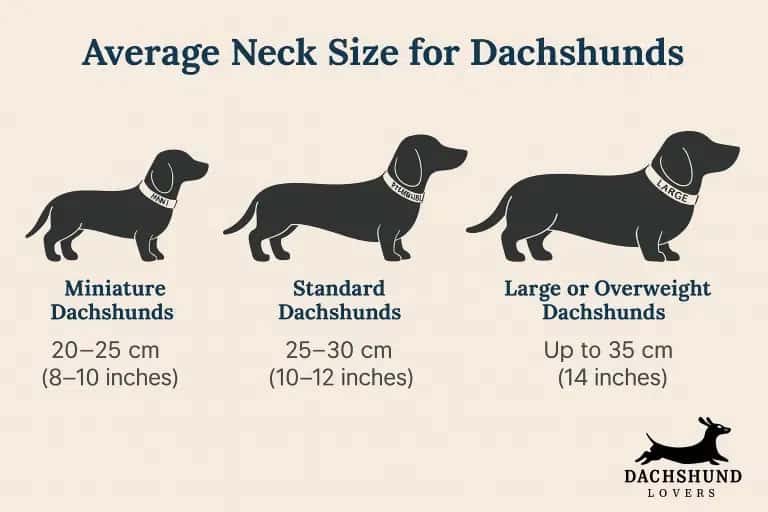
Most dachshunds fall into the following neck-size ranges:
- Miniature Dachshunds: 20–25 cm (8–10 inches).
- Standard Dachshunds: 25–30 cm (10–12 inches).
- Large or overweight dachshunds: Up to 35 cm (14 inches).
Coat type (smooth, long-haired, wire-haired) doesn’t significantly change the underlying neck size but can affect how snug a collar feels. Long-haired dachshunds, for example, may need an extra centimetre of allowance to avoid matting fur.
As AKC notes, dachshunds are “small but muscular,” which often means their chest and neck size are more robust than their short legs suggest. This is why collars labelled “toy breed” are often too tight, while “small breed” sizes can be too loose.
Why Accurate Measurement Matters
An incorrect collar size isn’t just a comfort issue — it can be dangerous.
- Too tight: Can compress the trachea, restrict breathing, and create long-term damage.
- Too loose: Increases the risk of slipping out during a walk, especially when dachshunds lunge after scents.
- Ill-fitted harnesses: Can rub under the arms or put pressure on the chest, leading to soreness.
Given dachshunds’ susceptibility to back problems, a poor fit around the neck can amplify strain on the cervical (neck) vertebrae, adding unnecessary risk.
How to Measure Your Dachshund’s Neck
Accurate measurement is simple but often overlooked. Here’s the process:
- Use a soft measuring tape. Wrap it around the base of the neck, where a collar would naturally rest.
- Leave breathing space. Insert two fingers under the tape — this ensures the collar isn’t too tight.
- Note the range. If your dachshund’s neck measures 28 cm, look for collars or harnesses adjustable between 26–30 cm.
- Double-check during growth. Puppies grow quickly, and even adult dachshunds can fluctuate if they gain or lose weight.
If you don’t have a tape, a piece of string and a ruler work just as well.
Table: Neck Size Reference Guide
Dachshund Type | Average Neck Size | Collar/Harness Fit Notes | Cluster Link |
|---|---|---|---|
Miniature | 20–25 cm (8–10 in) | Best with lightweight harnesses. | |
Standard | 25–30 cm (10–12 in) | Collars only for ID tags, harness for walking. | |
Large/Overweight | Up to 35 cm (14 in) | Weight loss often reduces collar size. |
Harvey’s Example
When Harvey first wore a collar, it was a standard “small breed” at 30 cm. It looked fine at first, but within minutes he slipped right out of it on a walk. After re-measuring, we realised his neck was closer to 26 cm, meaning the collar was too loose. Since then, Harvey has used a properly fitted harness — safer for his neck and far more secure.
That experience reminded me how easy it is to misjudge dachshund sizing based on appearance. They’re compact, but their proportions don’t follow typical breed standards.
Harness vs Collar Considerations
Though this article is focused on neck size, it’s worth noting that for dachshunds, a harness is almost always the better choice for walking. Collars can be useful for ID tags but place unnecessary pressure on the cervical spine during leash pulls.
See Dachshund Back Brace for how supportive gear can assist dachshunds with existing back or neck issues.
Final Note on Measuring: Neck size isn’t just about fit — it’s about safety. By measuring carefully and choosing equipment suited to dachshunds, you reduce risks of trachea damage, back strain, and escape incidents. Accurate sizing is one of the simplest but most effective parts of dachshund care.
Collar vs Harness: What’s Best for Dachshunds?
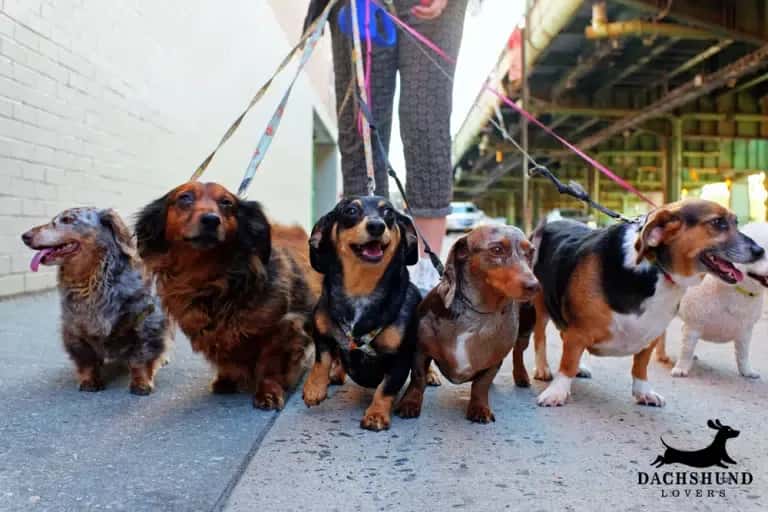
For most breeds, collars are the default choice for walking. But dachshunds aren’t most breeds. Their long backs and fragile spines make them more vulnerable to injury when pressure is applied to the neck. While collars still have a role particularly for carrying ID tagg, harnesses are the safer, healthier option for daily walks.
The Risks of Collars
Collars may look stylish, but they come with significant risks for dachshunds.
- Neck strain: When a dachshund pulls on a leash, the force transfers directly to the cervical spine. Over time, this pressure can contribute to neck and back problems.
- Trachea damage: A tight or poorly fitted collar can compress the trachea, leading to coughing, difficulty breathing, or long-term damage.
- Slipping out: Dachshunds have tapered heads and strong chests. A collar that fits the neck may still slip off when they back up or pull hard.
- Injury risk during sudden pulls: Lunging after a scent is part of dachshund DNA. A sudden tug on the neck increases the chance of spinal injury.
The Advantages of Harnesses
Harnesses distribute pressure across the chest and shoulders instead of concentrating it on the neck. This makes them especially suitable for dachshunds.
- Spinal safety: A well-fitted harness avoids direct stress on the cervical vertebrae, protecting against issues that could contribute to dragging legs later in life.
- Better control: Harnesses give owners more leverage without risking injury, useful for excitable dachshunds on walks.
- Escape prevention: Unlike collars, harnesses are much harder for dachshunds to slip out of due to their snug chest fit.
- Reduced pressure on the trachea: This makes walks more comfortable, especially for dachshunds prone to coughing or gagging with collars.
As PetMD explains, harnesses are generally better for small breeds with delicate necks or respiratory sensitivities — a category dachshunds fit perfectly.
When Collars Still Have a Role
While collars aren’t ideal for walking, they still serve a purpose.
- ID tags: Quick identification if your dachshund ever escapes.
- Home wear: Lightweight collars can be worn indoors without risk, as long as they fit correctly.
- Style or personalisation: Many owners still like collars for aesthetics, but they should never replace a harness for leash use.
See Dachshund Health Issues for more on how even small lifestyle choices can impact long-term wellbeing.
Choosing the Right Harness
Not all harnesses are created equal, and dachshunds require specific considerations due to their long bodies and deep chests.
Key features to look for:
- Adjustability: Around the chest and neck for a secure but comfortable fit.
- Low-profile design: Avoid bulky harnesses that rub under the armpits.
- Padding: Prevents irritation, especially for long-haired dachshunds.
- Step-in or over-the-head options: Choose whichever your dachshund tolerates best.
Harvey, for instance, wears a padded step-in harness. The first time I walked him with it, I noticed how much more comfortable he looked compared to a collar — no coughing, no slipping, and much better control.
Table: Collar vs Harness for Dachshunds
Feature | Collar | Harness | Cluster Link |
|---|---|---|---|
Pressure distribution | Concentrated on neck | Across chest/shoulders | |
Spinal safety | Risk of cervical strain | Reduces strain significantly | |
Escape risk | High (tapered heads) | Low (secure chest fit) | |
Use Case | ID tags, indoor wear | Daily walks, training |
Owner Perspective
For dachshunds, the debate between collar and harness isn’t really a debate at all. Harnesses are the safer, healthier option, while collars should be reserved for ID tags and occasional indoor wear.
Harvey only wears his collar at home for identification. Every walk, no matter how short, is with a harness. I learned quickly that the risks of using a collar for leash walking weren’t worth it and Harvey is far more comfortable with the right harness.
Health Risks of Wrong Neck Fit

A poorly fitted collar or harness may seem like a small mistake, but for dachshunds, it can have serious consequences. Their elongated spines, fragile discs, and narrow necks mean that even subtle pressure in the wrong place can lead to long-term health issues. Understanding these risks helps owners make smarter choices about equipment and reinforces why measuring correctly is so important.
Trachea Compression
The dachshund’s trachea, or windpipe, is particularly vulnerable to pressure from collars that are too tight or placed incorrectly.
- Signs of trachea compression: Coughing, gagging, wheezing, or sudden reluctance to walk on a leash.
- Long-term damage: Repeated strain can cause chronic irritation, scarring, or even tracheal collapse in severe cases.
- Why it matters for dachshunds: With their small frames and strong prey drive, dachshunds often lunge forward when they catch a scent. If that energy is absorbed by a collar around the trachea, the risk of injury multiplies.
According to VCA Hospitals, tracheal collapse is most common in small breeds, particularly those with narrow windpipes. While dachshunds aren’t as predisposed as toy breeds, poorly fitted collars can still trigger long-term respiratory issues.
Cervical Spine Strain
The cervical (neck) vertebrae in dachshunds are under constant stress because of their body proportions. A collar that sits too high or applies uneven pressure can strain this sensitive area.
- Increased risk of IVDD: Pressure on the cervical spine can accelerate disc degeneration, linking neck strain directly to the same condition that causes dragging back legs.
- Pain signals: A dachshund may yelp when lifted or touched around the neck, showing early signs of discomfort.
- Behavioural changes: Dogs in pain often mask their discomfort, but subtle avoidance — resisting the leash or pulling away from touch — may reveal spinal strain.
For more on spinal risks, see Dachshund Back Problems, which explains how small, repeated stresses build into major issues over time.
Escape Risks
An ill-fitted collar that is too loose poses its own dangers. Dachshunds have tapered heads and deep chests, meaning collars can slip off more easily than in other breeds.
- Safety concerns: A loose collar can result in escapes near traffic or in unsafe environments.
- Harness fit issues: Harnesses that sit too loose can rub under the arms or allow the dog to back out completely.
- Overweight dachshunds: Those carrying extra weight may need frequent re-sizing, as changes in fat distribution can alter how secure collars and harnesses feel.
See Overweight Dachshund for how fluctuating body condition can impact fit.
Skin & Coat Irritation
Neckwear that doesn’t fit properly can also lead to irritation.
- Chafing: A collar that’s too tight or rubs in one place can cause raw patches.
- Matting: For long-haired dachshunds, collars that don’t sit smoothly can tangle fur, creating painful knots.
- Infections: Open sores from rubbing can allow bacteria to enter, particularly around sensitive areas like the throat.
Owners often overlook this risk, but daily friction builds quickly in a breed that wears a collar or harness most of the day.
Behavioural Impacts
Health risks aren’t limited to the physical. An uncomfortable collar or harness can affect a dachshund’s behaviour.
- Reluctance to walk: If a dog associates pain or discomfort with a collar, they may resist going outside altogether.
- Increased pulling: Ironically, a poor fit can lead to worse pulling behaviour, as the dog tries to relieve pressure or escape.
- Stress responses: Anxiety, shaking, or whining when the harness is brought out may signal discomfort rather than stubbornness.
This overlap between health and behaviour highlights why correct fit is about more than numbers, it shapes a dachshund’s confidence and wellbeing.
Table: Health Risks of Wrong Neck Fit
Risk | How It Happens | Signs to Watch For | Related Resource |
|---|---|---|---|
Trachea Compression | Collar too tight or high on neck | Coughing, wheezing, gagging | |
Cervical Spine Strain | Pressure on neck vertebrae | Pain when lifted, reluctance to walk | |
Escape Risks | Collar too loose, harness gaps | Slipping out of equipment | |
Skin Irritation | Constant rubbing, poor material | Redness, fur loss, sores | |
Behavioural Impacts | Discomfort during use | Resistance, anxiety, pulling | Dachshund Dragging Back Legs |
Harvey’s Experience
When Harvey was younger, we bought him a collar that seemed fine in the shop but turned out too snug once he wore it for a full day. By the end of the week, he had developed a faint cough every time he pulled against the leash. Switching him to a properly fitted harness solved the issue immediately — no cough, no strain, and far more control. It was a lesson I won’t forget: a small measurement error can have a big impact on a dachshund’s health.
Final Perspective on Health Risks:
Wrongly fitted collars and harnesses create risks that ripple far beyond comfort. For dachshunds, even minor pressure in the wrong place can mean trachea issues, spinal strain, or escape risks. Owners who take the time to measure accurately, choose appropriate equipment, and monitor for subtle signs of discomfort will protect their dachshund’s health in ways that last a lifetime.
Prevention & Care Tips for Neck Safety
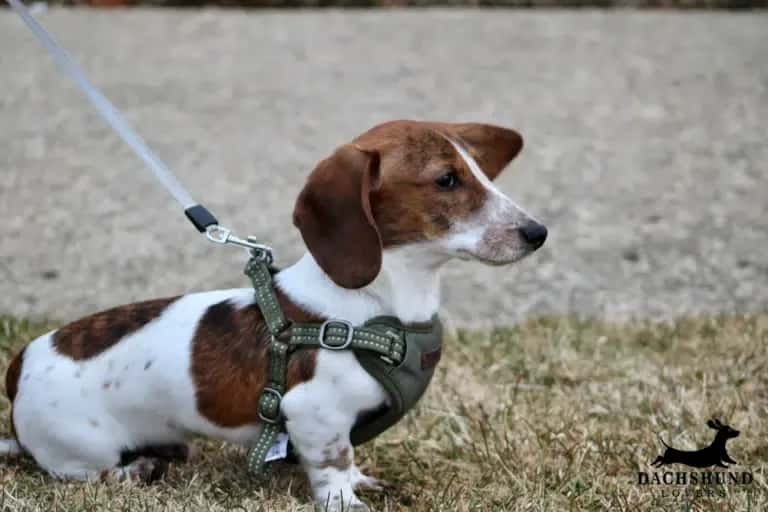
Protecting a dachshund’s neck goes beyond choosing the right collar or harness. It’s about building a lifestyle that supports their unique body structure every day. Their long spines and short legs make them especially vulnerable to injury, and even small mistakes — like a collar fitted too tightly or walks with too much pulling — can have long-term consequences. With consistent attention to fit, routine checks, and training, you can dramatically reduce the risks of trachea pressure, cervical strain, and back-related complications.
Harness Before Collar: The Non-Negotiable
The simplest and most effective preventative measure is to use a harness for walking. Collars concentrate force on the neck, while harnesses distribute pressure across the chest and shoulders.
- Spinal protection: Harnesses minimise direct stress on the cervical vertebrae, which helps reduce the risk of back problems.
- Prevents trachea injury: No matter how carefully fitted, collars always apply some pressure to the windpipe. Harnesses avoid this.
- Security: Harnesses are harder to slip out of — a big advantage with dachshunds’ tapered heads and powerful pulling instincts.
As AKC notes, harnesses are recommended for small breeds with delicate necks and a tendency to pull, making them especially appropriate for dachshunds.
Collars can still play a role for ID tags or indoor wear, but they should never be the primary tool for leash walking.
Regular Measuring & Rechecking
A dachshund’s body is rarely static. Puppies grow rapidly, and adult dogs can fluctuate with weight gain, seasonal coat changes, or age-related muscle loss. Measuring once isn’t enough, rechecking ensures ongoing safety.
- Every 3–6 months: Use a soft tape measure around the base of the neck and chest.
- Weight gain/loss: Even a 1–2 kg change can shift equipment fit (see Overweight Dachshund).
- Long-haired coats: Extra fur may make harnesses feel snug; seasonal trimming or brushing can help.
- Senior dachshunds: Muscle tone can decrease, meaning equipment that once fit snugly may now be loose.
Harvey, for instance, is measured every six months. We’ve noticed his harness needs adjusting in winter when his coat thickens and loosening slightly when he sheds in summer.
Smart Product Choices
Not all harnesses or collars are created equal. Choosing the right product makes a huge difference to long-term neck health.
What to look for in a harness:
- Adjustable around both neck and chest.
- Padded but lightweight to prevent rubbing.
- Step-in or over-the-head depending on your dog’s tolerance.
- Low-profile design for dachshunds’ deep chests.
What to avoid in collars:
- Narrow straps that dig into the neck.
- Heavy buckles that add pressure.
- “Choke” or “prong” designs, which are unsafe for any breed but especially damaging for dachshunds.
See Dachshund Health Issues for more on how seemingly small choices in equipment can have broader health impacts.
Daily Walking Habits
Even with the best harness, poor walking habits can create strain. Training your dachshund to walk calmly is as important as the equipment itself.
- Loose leash training: Reward your dog for walking beside you rather than pulling ahead.
- Short, frequent walks: Two or three 15–20 minute walks are better than one exhausting session.
- Flat terrain: Avoid steep hills, rough trails, and stairs, which increase strain.
- Stop lunging: Dachshunds love to chase scents. Anticipate distractions and redirect with treats before they bolt.
These habits not only protect the neck but also prevent flare-ups of conditions like CDA in Dachshunds, where joint stress can magnify neck and back problems.
Skin & Coat Maintenance
Harnesses and collars sit against sensitive skin for hours at a time. Without regular checks, irritation can creep up unnoticed.
- Inspect weekly: Look for redness, fur thinning, or sores under straps.
- Rotate equipment: Using two harnesses allows each to rest, reducing pressure points.
- Brush regularly: Especially for long-haired dachshunds, which are prone to matting under straps.
- Wash gear: Sweat, oils, and dirt can build up, causing irritation over time.
If irritation persists, see Dachshund Skin Issues for guidance on treatment and prevention.
Home Adjustments That Support Neck Safety
A safe home environment is one of the strongest forms of prevention. Dachshunds’ long bodies are constantly under strain, and poor environments amplify the risk.
- Ramps: For beds, couches, and cars. This reduces the jolts that stress both spine and neck.
- Non-slip flooring: Rugs or mats prevent sliding, which can cause awkward neck twists (see Dachshund Feet).
- Low resting areas: Beds or crates that are easy to step into without jumping.
- Safe lifting: Always support both chest and rear, never lift from under the front legs.
These adjustments protect the whole musculoskeletal system, reducing the strain that eventually affects the neck.
Table: Everyday Neck Safety Checklist
Risk Area | Prevention Step | Cluster Resource |
|---|---|---|
Collar Pressure | Harness for walks, collar for ID only | |
Wrong Fit | Re-measure every 3–6 months | |
Skin Irritation | Rotate harnesses, brush coat | |
Pulling on Lead | Train for calm walking | |
Slipping/Falling | Use ramps & non-slip mats |
Training as Prevention
Good training is one of the most underrated ways to protect dachshund necks. Teaching your dog to walk calmly and not pull makes every piece of equipment safer.
- Positive reinforcement: Reward your dog when the leash stays loose.
- Short sessions: Dachshunds lose focus quickly; train in 5–10 minute bursts.
- Redirect behaviour: Instead of yanking, use treats or toys to guide attention.
- Consistency: Everyone in the household should follow the same rules.
Training doesn’t just reduce neck strain — it also strengthens the bond between owner and dog, creating a calmer walking experience overall.
Harvey’s Routine
After Harvey developed a cough from his first ill-fitted collar, we made prevention a permanent part of his care. He’s measured every six months, wears a padded harness on every walk, and has a second harness to rotate for comfort. Indoors, we’ve laid rugs across tiled areas to prevent slips, and ramps by the lounge and bed mean he never needs to jump. These small habits don’t take much effort but have saved us from bigger health problems down the line.
Final Perspective
Neck safety for dachshunds isn’t about perfection, it’s about consistency. Choosing harnesses, rechecking fit, training for calmer walks, and making simple home adjustments all add up. Each measure alone may feel minor, but together they protect the most vulnerable part of a dachshund’s body. With these practices, you’re not just preventing neck strai, you’re supporting a healthier, more comfortable life for your dog.
FAQs About Dachshund Neck Size
More from This Series
Explore the full Dachshund Health Content Cluster:
- Dachshund Eye Problems
- CDA in Dachshunds
- Dachshund Brain Size
- Dachshund Back Surgery
- Dachshund Dragging Back Legs
- Dachshund Neck Size
- Dachshund Back Brace
- Dachshund Back Problems
- Dachshund Skin Issues
- Dachshund Health Issues
- Dachshund Feet
- Dachshund Ribs
- Overweight Dachshund
- Dachshund Teeth
- Dachshund Allergies
- Dachshund Ears
- Dachshund Hip Dysplasia
- Dachshund Constipation
- Dachshund Bad Breath
Authored by
James
James is the founder of Dachshund Lovers and the proud human of Harvey, a mini dapple with a big personality. He writes to empower and connect the dachshund community, blending founder insights with honest, experience-based stories about life with this incredible and special breed. James brings candid, experience-backed opinions to the community and always focused on fewer, better products and ideas that genuinely improve life for dachshunds and their people.
Read moreJames is the founder of Dachshund Lovers and the proud human of Harvey, a mini dapple with a big personality. He writes to empower and connect the dachshund community, blending founder insights with honest, experience-based stories about life with this incredible and special breed. James brings candid, experience-backed opinions to the community and always focused on fewer, better products and ideas that genuinely improve life for dachshunds and their people.
Read moreDisclaimer
This content is for informational purposes only and should not be considered veterinary advice. Always consult with a licensed veterinarian regarding your dog’s health and wellbeing.
There are no comments yet
Leave a comment