Dachshund Dragging Back Legs
Dachshund Dragging Back Legs
If your dachshund is suddenly dragging their back legs, it could signal IVDD or spinal damage. Here’s how to spot symptoms and what to do next. Must read.
James
Posted on November 2, 2025.
Updated on July 19, 2026.
Table of Contents
- 1.Key Takeaways
- 2.Causes of Dachshund Dragging Back Legs
- •Intervertebral Disc Disease (IVDD)
- •Spinal Trauma
- •Hip Dysplasia & Orthopaedic Issues
- •Muscle & Joint Strain
- •Table: Common Causes of Dragging Back Legs in Dachshunds
- •Harvey’s Experience
- 3.Emergency Response: What to Do If Your Dachshund Drags Their Back Legs
- •Restrict Movement Immediately
- •Call Your Vet Immediately
- •Do Not Attempt Home Remedies
- •Transporting Your Dachshund Safely
- •How Vets Assess Dragging
- •Table: Emergency Response Steps
- •Harvey’s Emergency
- 4.Treatment Options for Dachshunds Dragging Back Legs
- •Conservative Management
- •Surgical Treatment
- •Recovery & Rehabilitation
- •Prognosis by IVDD Grade
- •When Owners Should Expect Surgery
- •Harvey’s Outcome vs Surgical Cases
- •Owner’s Role in Recovery
- 5.Prevention & At-Home Care
- •Weight Management
- •Movement Control: Ramps, Steps & Barriers
- •Exercise the Smart Way
- •Supportive Bedding & Flooring
- •Early Warning Monitoring
- •Table: Everyday Prevention Checklist
- •Harvey’s Adjustments
- -Disclaimer
Share

The first time I saw Harvey stumble, my heart sank. His back legs wobbled, then gave way entirely as he tried to stand. Within hours, his walk looked more like a shuffle. That frightening moment was my introduction to just how quickly dachshunds can deteriorate with IVDD (Intervertebral Disc Disease), the condition most often behind the terrifying symptom of dragging back legs.
For dachshunds, dragging or weakening back legs is never “just old age.” It almost always signals a serious spinal issue that needs immediate veterinary attention. In Harvey’s case, he was graded as IVDD Grade 2 — still mobile, but deteriorating quickly. With strict crate rest and anti-inflammatories, he was able to recover. But for many dachshunds, dragging legs are the first sign that back surgery is unavoidable.
According to VCA Hospitals, time is critical: dogs who lose mobility may recover if treated promptly, but delays of even 24–48 hours can drastically reduce the chances of walking again.
Key Takeaways
Problem | Summary | Key Notes |
|---|---|---|
Why do dachshunds drag back legs? | Most cases are due to IVDD compressing the spinal cord. | Less common causes include trauma, hip dysplasia, or nerve disease. |
Is it an emergency? | Yes — dragging legs should be treated as urgent. | Immediate vet care can mean the difference between recovery and paralysis. |
Treatment options | Ranges from crate rest (early grades) to surgery (severe grades). | Recovery depends on severity and speed of treatment. |
Can dachshunds recover? | Many regain mobility if treated quickly. | Grade 5 (paralysis, no pain sensation) has a guarded prognosis. |
Prevention tips | Weight control, ramps, avoiding jumping, regular vet checks. | Prevention reduces strain but can’t eliminate genetic risk. |
Causes of Dachshund Dragging Back Legs
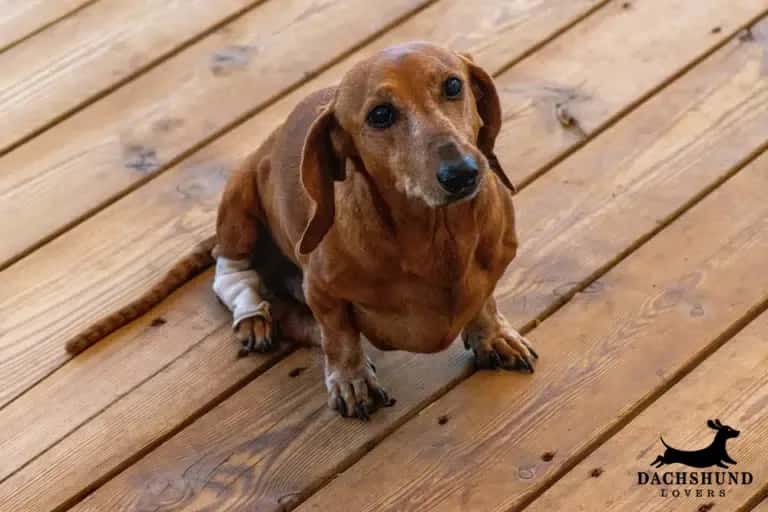
When a dachshund starts dragging its back legs, it’s more than a limp — it’s a sign that something is disrupting the spinal cord, nerves, or muscles. The causes range from the breed’s most common condition, IVDD, to less frequent issues like trauma, hip dysplasia, or neurological disease. Whatever the cause, dragging legs are always a red flag for urgent veterinary attention.
Intervertebral Disc Disease (IVDD)
By far the leading cause of dragging back legs in dachshunds is IVDD (Intervertebral Disc Disease). Dachshunds are 10–12 times more likely to develop IVDD than most breeds due to their elongated spines and short legs.
- What happens: The cushioning discs between the vertebrae harden and bulge, pressing on the spinal cord.
- How it shows: Weakness in the hind legs, wobbling, shuffling, or complete dragging.
- Severity: Graded from 1–5 (see Dachshund Back Surgery for the grading system). Grade 2 (Harvey’s case) causes wobbliness, while Grade 5 means complete paralysis with no pain response.
- Why it matters: Without fast intervention, the spinal cord damage may become irreversible.
According to petMD, dogs with IVDD who lose the ability to walk may still recover if treated promptly, but delays even within 24–48 hours can drastically reduce outcomes.
Spinal Trauma
Not all dragging legs are IVDD — sometimes, trauma is the culprit.
- Falls or accidents: A jump from a high couch, a tumble down stairs, or being stepped on can damage the spine.
- Car accidents or rough handling: Even seemingly minor impacts can cause nerve compression in fragile dachshund spines.
- Symptoms: Sudden paralysis or dragging legs after a clear incident, usually accompanied by pain.
Related reading: Dachshund Back Problems covers lifestyle risks and how to minimise trauma in everyday settings.
Hip Dysplasia & Orthopaedic Issues
Although less common than IVDD, hip dysplasia can cause hind-leg weakness and instability.
- What it is: A misalignment of the hip joint where the ball and socket don’t fit properly.
- Signs: Wobbliness, reluctance to climb stairs, stiffness, or dragging when severe.
- Connection to dragging: Usually milder than IVDD, but can overlap with arthritis, making movement difficult.
See Dachshund Hip Dysplasia for more details on how this condition develops and how it affects mobility.
Neurological Conditions
The nervous system plays a huge role in coordination. When nerves fail to communicate properly between the brain and hind legs, dragging can occur.
- Degenerative Myelopathy: Rare in dachshunds but possible — progressive spinal cord disease leading to paralysis.
- Seizure disorders: Aftereffects of seizures can sometimes cause temporary weakness.
- Brain & spinal tumours: Very rare, but possible cause if symptoms develop gradually rather than suddenly.
For neurological insight, see Dachshund Brain Size, where we cover how brain structure ties into overall health.
Muscle & Joint Strain
Sometimes dragging is not purely neurological but linked to muscle weakness, arthritis, or chronic joint disease:
- Chronic Degenerative Arthritis (CDA): Can reduce stability in hips and legs.
- Arthritis: Ongoing joint inflammation leads to stiffness and uneven gait.
- Overexertion: After vigorous play, temporary weakness may appear, though it usually resolves quickly.
Table: Common Causes of Dragging Back Legs in Dachshunds
Cause | How It Happens | Typical Symptoms | Urgency |
|---|---|---|---|
IVDD | Disc herniation compresses spinal cord | Wobbly walk → dragging → paralysis | Emergency (hours matter) |
Spinal Trauma | Fall, accident, rough handling | Sudden dragging after incident | Emergency |
Hip Dysplasia | Malformed hip joint, arthritis | Stiffness, weakness, dragging | Important but less acute |
Neurological Disease | Degenerative myelopathy, tumours | Gradual decline, coordination loss | Serious; vet referral |
Muscle/Joint Strain | Arthritis, overexertion | Mild dragging, stiffness | Non-emergency, but needs management |
Harvey’s Experience
Harvey’s Grade 2 IVDD case was a textbook example of how quickly dragging legs can appear. One day he was sprinting around the yard, the next he struggled to walk straight. Our vet warned us that if he slipped into Grade 3 or worse, surgery at VSOS Sydney would be the only real option.
Fortunately, we caught it early. With strict crate rest, medication, and zero movement for 6 weeks, Harvey recovered without needing surgery. But the takeaway is clear: dragging legs in dachshunds are always urgent — even if they seem mild at first.
Key Reminder for Owners: Dragging legs are never normal. They are one of the clearest indicators of IVDD or spinal injury. Immediate veterinary care can make the difference between a dachshund walking again or facing permanent paralysis.
Emergency Response: What to Do If Your Dachshund Drags Their Back Legs
Seeing a dachshund drag its back legs is one of the most frightening moments an owner can experience. Unlike stiffness or occasional limping, dragging almost always signals a serious spinal event. The most important thing to understand is that time matters — delays in treatment can drastically reduce the chance of recovery.
Restrict Movement Immediately
The first step is to stop your dachshund from moving any further. Every step taken while the spinal cord is compressed risks more permanent damage. Owners often make the mistake of waiting to “see if it gets better overnight.” In dachshunds, that hesitation can cost their ability to walk.
- Pick your dachshund up gently, always supporting both chest and rear.
- Place them in a crate or confined area with soft bedding.
- Do not allow stairs, jumping, or walking around “just for a stretch.”
For more detail on safe lifting and movement control, see Dachshund Neck Size, which explains why supporting both ends of their body is so critical.
Call Your Vet Immediately
Dragging back legs should be treated as an emergency. Call your vet or a 24-hour emergency centre straight away and describe the symptoms. Mention that you own a dachshund and suspect IVDD — most vets know this breed’s risks well and will prioritise cases like this.
If your local clinic cannot handle spinal cases, ask for referral to a specialist centre. In Sydney, VSOS offers advanced imaging and back surgery expertise, which can make all the difference if your dog requires urgent decompression.
According to VCA Hospitals, dogs who have lost mobility may still recover if surgery is performed quickly, but once deep pain sensation is gone, outcomes worsen dramatically within 24–48 hours.
Do Not Attempt Home Remedies
In panic, some owners try massage, heat packs, or even online “spinal adjustment” advice. Unfortunately, these can make things worse. Only a vet can assess whether conservative treatment (crate rest, anti-inflammatories) is possible or if immediate surgery is necessary.
Conservative treatment may work for lower grades of IVDD, as Harvey experienced, but if dragging has already started, surgery is often the only effective option. See Dachshund Back Surgery for details on when rest works versus when surgery is required.
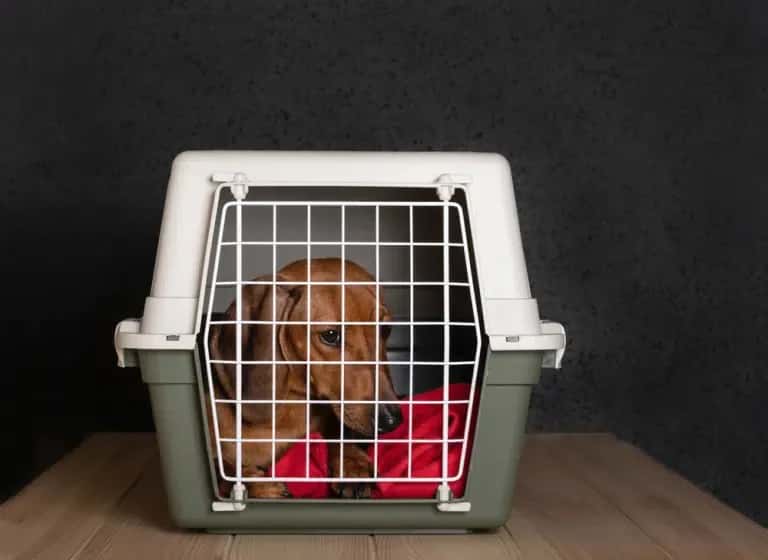
Transporting Your Dachshund Safely
If you need to take your dachshund to an emergency vet, transport them with care:
- Use a crate, basket, or box lined with soft towels.
- Keep their spine as level as possible during the journey.
- Limit handling — the fewer times they’re lifted in and out, the safer.
- Drive steadily to avoid jolts and bumps.
Some owners wrap their dachshund gently in a blanket to stop wriggling, but always ensure the spine remains supported.
How Vets Assess Dragging
When you arrive at the clinic, the vet will perform a neurological exam. This usually involves:
- Checking reflexes in the hind legs.
- Testing whether your dachshund can feel pain when toes are pinched.
- Observing gait and posture (if safe).
- Recommending advanced imaging (MRI or CT) to confirm diagnosis.
Grading the severity of IVDD helps decide whether surgery is needed immediately or if crate rest could still work. Dogs dragging their legs are often between Grade 3 and Grade 5, where surgery is strongly recommended.
Table: Emergency Response Steps
Situation | What Owners Should Do | Why It Matters |
|---|---|---|
Back legs suddenly dragging | Restrict movement immediately | Prevents further spinal damage |
Need vet care | Call your vet or emergency clinic at once | Dragging is an emergency symptom |
Unsure what to do | Assume IVDD until proven otherwise | Fast action improves prognosis |
Transporting | Use crate/towel, keep spine level | Reduces risk during travel |
Considering home remedies | Avoid massage, heat, or waiting | Only delays proper treatment |
Harvey’s Emergency
When Harvey began wobbling, the shift to dragging felt like it could happen at any moment. We restricted his movement immediately headed over to VSOS. He was lucky,caught at Grade 2, his legs hadn’t started dragging yet but we felt he was on that trajectory. With six weeks of strict crate rest, he recovered. But had we waited even a few days, surgery would almost certainly have been required.
Owner’s Role in Emergencies
The owner’s response is the most critical factor in these situations. Dachshunds don’t have the luxury of time when spinal compression begins. Prompt action can:
- Reduce further spinal cord injury.
- Give vets more options (rest vs surgery).
- Increase the likelihood of full recovery.
For dachshund owners, it’s best to prepare before an emergency happens. That means knowing the signs, having a plan for restricting movement, and knowing which local clinics or specialists (like VSOS Sydney) are equipped to handle spinal cases.
Final Reminder: If your dachshund is dragging their back legs, treat it as you would a human emergency — immediate restriction, urgent vet contact, and safe transport. Hours, not days, make the difference between recovery and paralysis.
Treatment Options for Dachshunds Dragging Back Legs
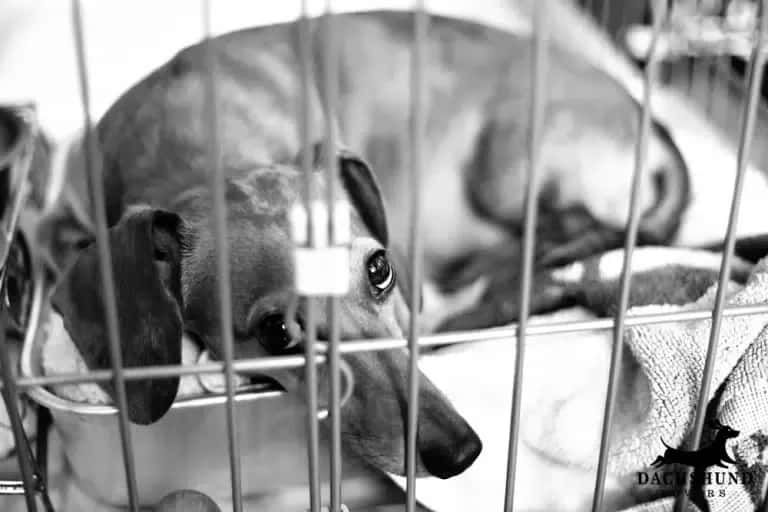
Once a dachshund begins dragging its back legs, treatment decisions need to happen quickly. For many owners, the word “surgery” immediately comes to mind — and often rightly so. But not every case leads to the operating table. The treatment path depends on the severity of the spinal injury, the dog’s IVDD grade, and how rapidly the symptoms developed.
Conservative Management
For dachshunds in the earlier stages of IVDD (Grades 1–2), conservative management is often possible. This involves:
- Strict Crate Rest: Typically 4–6 weeks of almost complete immobility. Dogs are only carried outside to toilet.
- Medication: Vets prescribe anti-inflammatories and pain relief to reduce swelling around the spinal cord.
- Controlled Return to Movement: Once the rest period ends, short leash walks are introduced gradually.
Conservative care can also apply to mild dragging cases if the dog still retains mobility and pain sensation. Harvey’s case was a good example — his back legs were wobbly, but he wasn’t yet dragging. With strict rest, he recovered without surgery.
However, if dragging has already begun, conservative care often isn’t enough. Many dogs in Grades 3–5 deteriorate without surgical intervention. See CDA in Dachshunds for how arthritis complicates mobility issues and may overlap with IVDD recovery.
Surgical Treatment
Surgery becomes necessary when the spinal cord is significantly compressed. This is common in Grades 3–5 IVDD, where dragging or paralysis has already started.
The most common procedure is a hemilaminectomy, where part of the vertebra is removed to access and decompress the spinal cord. Sometimes surgeons also perform fenestration, removing damaged disc material to reduce recurrence risk.
At centres like VSOS Sydney, MRI or CT imaging is used to locate the exact disc causing compression. According to VCA Hospitals, timely surgery can restore mobility in many dogs, but outcomes decline the longer compression continues.
Recovery & Rehabilitation
Whether treated conservatively or surgically, recovery is a long process that demands owner patience and strict adherence to guidelines.
For conservative cases:
- 4–6 weeks of crate rest.
- Controlled leash walks after rest period.
- Long-term management with ramps, weight control, and joint supplements.
For surgical cases:
- 6–12 weeks of crate rest.
- Hydrotherapy or physiotherapy to rebuild strength.
- Pain management during recovery.
- Permanent home adjustments (ramps, non-slip flooring).
Supportive tools like a dachshund back brace may also be used during rehab, though they should always be recommended by a vet.
Prognosis by IVDD Grade
IVDD Grade | Conservative Recovery | Surgical Recovery | Outlook |
|---|---|---|---|
Grade 1 | Excellent | Rarely needed | Rarely needed Pain only, great prognosis |
Grade 2 | Good, relapse possible | Excellent | Dogs like Harvey often recover with rest |
Grade 3 | Poor | Good if surgery is early | Timing is critical |
Grade 4 | Very poor | Guarded | Recovery depends on speed of surgery |
Grade 5 | Not effective | Guarded to poor | Deep pain loss drastically lowers success |
When Owners Should Expect Surgery
Dragging legs is often the dividing line. Once a dachshund can no longer walk normally or starts dragging, surgery is usually the only option. Conservative care might stabilise mild cases, but without decompression, nerve damage can become permanent.
Owners should also prepare for the financial and emotional realities. At VSOS, surgery may cost several thousand dollars, and recovery requires round-the-clock commitment. But for many, it’s the difference between lifelong paralysis and giving their dachshund a second chance at mobility.
Harvey’s Outcome vs Surgical Cases
Harvey’s story shows that conservative management can work — but it’s not typical once dragging has started. His IVDD was caught early enough to respond to rest. Many owners aren’t as fortunate. In community groups and vet case studies, dachshunds dragging their back legs often require immediate surgery, and the difference in outcome depends almost entirely on how quickly they reach a specialist.
Owner’s Role in Recovery
Whether surgery is chosen or not, owners are at the heart of recovery. Crate rest is emotionally draining, hydrotherapy requires dedication, and adjusting the home takes planning. See Dachshund Back Problems for a guide on lifestyle adjustments that help protect against future flare-ups.
What matters most is recognising that recovery is rarely quick, but it is possible. Many dachshunds go on to live full, active lives after surgery — as long as owners are prepared for the long haul of rehabilitation.
Prevention & At-Home Care

While no amount of prevention can completely eliminate the risk of back issues in dachshunds, thoughtful home adjustments and daily routines can significantly reduce the likelihood of dragging episodes. Prevention is not about overprotecting your dog — it’s about giving their spine and joints the best chance of staying healthy.
Weight Management
Excess weight is one of the most controllable risk factors for dachshund back problems. Every extra kilo places more stress on their long spines and fragile discs.
- Body condition: You should be able to feel your dachshund’s ribs but not see them.
- Controlled portions: Use measured meals rather than free-feeding.
- Low-calorie snacks: Swap fatty treats for vegetables like carrots or cucumbers.
- Routine weigh-ins: Regular vet checks help track progress.
For more detail, see Overweight Dachshund, which explores diet adjustments and exercise strategies.
Movement Control: Ramps, Steps & Barriers
Jumping is one of the most damaging movements for a dachshund’s spine. Each leap off a couch or bed compresses their discs.
- Ramps or pet steps: Install them for beds, couches, and cars.
- Barriers: Block stairs with baby gates to stop climbing.
- Early training: Teach your dachshund to use ramps before back problems develop so it becomes natural behaviour.
These adjustments not only protect healthy dogs but are also essential for those recovering from surgery. See Dachshund Back Problems for more on long-term home adaptations.
Exercise the Smart Way
Dachshunds need exercise for muscle tone and mental health, but certain types of activity increase the risk of dragging.
- Safe: Short, frequent walks on flat surfaces; gentle play; scent games.
- Risky: Ball chasing, rough play with large dogs, repeated jumping.
- Therapeutic: Swimming or hydrotherapy builds strength without strain, often recommended after surgery.
Dogs with conditions like hip dysplasia benefit particularly from low-impact activities that strengthen without worsening joint instability.
Supportive Bedding & Flooring
Since dachshunds spend so much time resting, their environment plays a major role in back health.
- Orthopedic beds: Memory-foam options cushion joints and spines.
- Low beds: Ensure they can step in and out easily without jumping.
- Non-slip flooring: Rugs or mats on tiles/wood prevent dangerous slips.
Some recovering dogs may also use a back brace under veterinary guidance to stabilise their spine.
Early Warning Monitoring
Prevention also means catching small changes early. Subtle signs such as stiffness, hesitation to jump, or reluctance to climb stairs often precede dragging episodes.
- Check gait regularly: A wobbly walk is a red flag (see Dachshund Feet).
- Listen for crying: Pain when lifted is often an early indicator.
- Vet visits: Annual exams, and twice yearly for seniors, give vets a chance to test reflexes and catch neurological issues early.
According to VCA Hospitals, dogs that receive early treatment for IVDD recover more successfully than those that are left until dragging becomes severe.
Table: Everyday Prevention Checklist
Risk Factor | To Avoid | Safer Alternative | Related Resource |
|---|---|---|---|
Jumping | Beds, couches, stairs | Ramps, steps, barriers | |
Obesity | Overfeeding, fatty treats | Portion control, lean snacks | |
Slippery Floors | Tiles, polished wood | Non-slip rugs, runners | |
Rough Exercise | Ball chasing, high jumps | Short walks, scent games | |
Ignoring Stiffness | “Waiting to see” if it passes | Immediate vet visit |
Harvey’s Adjustments
After Harvey’s Grade 2 IVDD diagnosis, we changed his lifestyle permanently:
- Ramps by the couch and bed.
- No access to stairs anywhere in the house.
- Daily weight checks to prevent creeping gain.
- Short, flat walks twice a day instead of occasional long ones.
- His crate is still used when needed — not punishment, but a safe place for rest.
These changes weren’t dramatic, but they’ve given him the stability to live confidently without a relapse into dragging.
Final Perspective on Prevention:
Dragging back legs in dachshunds may not always be preventable, but owners have enormous influence over how often these episodes occur and how severe they become. Weight management, smart exercise, ramps, and regular vet checks are not luxuries — they are essential parts of dachshund care. By acting early and designing a home with their spine in mind, you give your dachshund the best chance at long, comfortable mobility.
FAQs About Dachshund Dragging Back Legs Why is my dachshund dragging its back legs?
Explore the full Dachshund Health Content Cluster for in-depth guides:
- Dachshund Eye Problems
- CDA in Dachshunds
- Dachshund Brain Size
- Dachshund Back Surgery
- Dachshund Dragging Back Legs
- Dachshund Neck Size
- Dachshund Back Brace
- Dachshund Back Problems
- Dachshund Skin Issues
- Dachshund Health Issues
- Dachshund Feet
- Dachshund Ribs
- Overweight Dachshund
- Dachshund Teeth
- Dachshund Allergies
- Dachshund Ears
- Dachshund Hip Dysplasia
- Dachshund Constipation
- Dachshund Bad Breath
Authored by
James
James is the founder of Dachshund Lovers and the proud human of Harvey, a mini dapple with a big personality. He writes to empower and connect the dachshund community, blending founder insights with honest, experience-based stories about life with this incredible and special breed. James brings candid, experience-backed opinions to the community and always focused on fewer, better products and ideas that genuinely improve life for dachshunds and their people.
Read moreJames is the founder of Dachshund Lovers and the proud human of Harvey, a mini dapple with a big personality. He writes to empower and connect the dachshund community, blending founder insights with honest, experience-based stories about life with this incredible and special breed. James brings candid, experience-backed opinions to the community and always focused on fewer, better products and ideas that genuinely improve life for dachshunds and their people.
Read moreDisclaimer
This content is for informational purposes only and should not be considered veterinary advice. Always consult with a licensed veterinarian regarding your dog’s health and wellbeing.
There are no comments yet
Leave a comment