Dachshund Back Brace
Dachshund Back Brace
Not all dachshund back braces are equal. Here’s how to choose the right one for your dachshund and how to spot the ones that do more harm than good.
James
Posted on November 2, 2025.
Updated on July 18, 2026.
Table of Contents
- 1.Key Takeaways
- 2.What Is a Dachshund Back Brace & When Vets Recommend One
- •When Vets Recommend a Back Brace
- •The Benefits of Using a Back Brace
- •Risks and Limitations
- •Types of Dachshund Back Braces
- •Harvey’s Experience
- 3.Risks and Limitations of Dachshund Back Braces
- •Why a Brace Is Not a Cure
- •Discomfort and Fit Issues
- •Masking Symptoms
- •When a Brace Can Make Things Worse
- •Table: Risks and Limitations of Dachshund Back Braces
- •Harvey’s Experience
- •Final Thoughts on Risks and Limits
- 4.How to Fit a Dachshund Back Brace Correctly
- •Measuring Before Buying
- •Introducing the Brace Gradually
- •Checking for Comfort
- •Daily Monitoring and Adjustments
- •Table: Fitting Checklist
- •Harvey’s Perspective
- •Final Thoughts on Fit
- 5.Prevention & Lifestyle Adjustments
- •Weight Management
- •Ramps and Home Adjustments
- •Exercise That Protects the Spine
- •Using Braces as Part of Recovery
- •Daily Monitoring
- •Table: Lifestyle Adjustments and Braces
- •Harvey’s Adjustments
- •More from This Series
- -Disclaimer
Share

When Harvey was first diagnosed with IVDD, we explored every option. Surgery was the big decision on the table, but before committing, our vet suggested we try a dachshund back brace. It wasn’t a cure, and it wasn’t going to reverse the damage, but it did give him extra stability during recovery. Seeing him supported, less wobbly on walks, more confident when standing,was reassuring.
That experience taught me that back braces have a role, but they’re not magic. They can help reduce strain, especially for dachshunds with back problems or recovering from procedures like back surgery. Still, they should always be part of a larger care plan, crate rest, weight management, ramps at home and used under veterinary guidance.
In Sydney, specialists at places like VSOS explained that braces are best thought of as “supportive tools,” not solutions. They can help stabilise the spine, prevent further injury, and make recovery more comfortable, but they can’t replace surgery or long-term lifestyle changes.
Key Takeaways
Problem | Summary | Key Notes |
|---|---|---|
What is a dachshund back brace? | A supportive device that stabilises the spine and reduces strain. | Not a cure; a management tool. |
When to use one | Mild IVDD, post-surgery recovery, or preventative support for at-risk dogs. | Always under veterinary guidance. |
Risks and limitations | Overreliance can mask symptoms; discomfort possible if fitted poorly. | Cannot replace surgery or crate rest. |
Choosing the right brace | Fit and comfort are critical; avoid one-size-fits-all designs. | Consult your vet before purchasing. |
Harvey’s story | We tried a back brace before committing to surgery. | It gave stability, but wasn’t a fix-all. |
What Is a Dachshund Back Brace & When Vets Recommend One
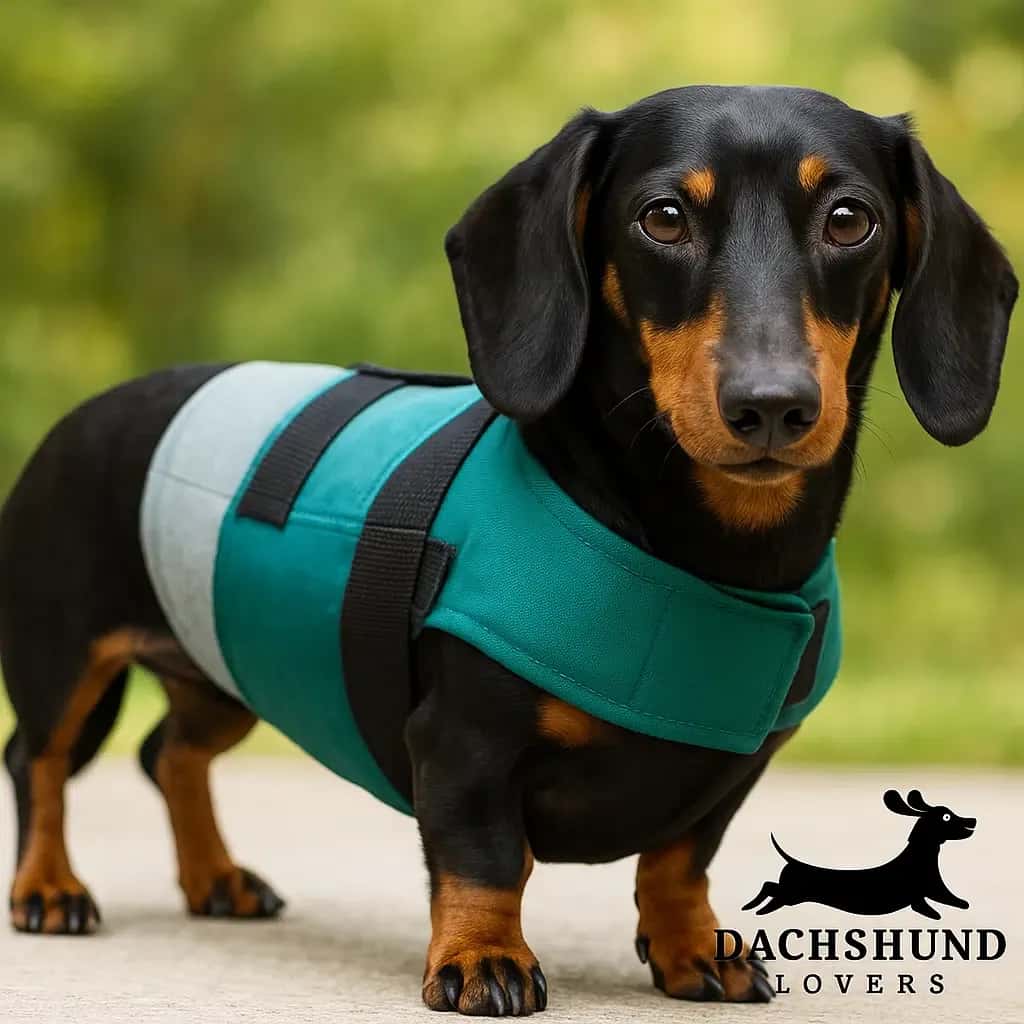
A dachshund back brace is a supportive device designed to stabilise the spine, reduce strain on intervertebral discs, and provide comfort for dogs dealing with back issues. It wraps around the torso and is usually fitted with adjustable straps that sit along the back, keeping the spine supported while allowing limited mobility.
For a breed so prone to back problems, braces can sound like the perfect solution. But the reality is more nuanced. They are not cures for IVDD or spinal disease. Instead, they are best thought of as part of a broader management plan — alongside crate rest, weight management, ramps at home, and in some cases, surgery.
According to Walkin Pets, braces can provide relief for dogs recovering from spinal injury or living with chronic back instability. The goal is not to fix the problem but to give the dog more comfort and stability as part of a longer term care strategy.
When Vets Recommend a Back Brace
Not every dachshund with IVDD or spinal issues will need a brace. In fact, many vets are cautious about recommending them too early. Here are the most common situations where a brace may be considered:
- Mild IVDD cases
- A brace may be used to provide additional support for dachshunds recovering from lower grade IVDD.
- It helps limit sudden twisting movements that can worsen spinal damage.
- Always used alongside crate rest and medication.
- Post surgery recovery
- After dachshund back surgery, some vets recommend a brace during rehabilitation.
- It helps keep the spine aligned while muscles strengthen again.
- It should only be introduced under veterinary supervision, never as a substitute for rest.
- Senior dachshunds
- Older dachshunds with chronic back issues may benefit from braces to maintain mobility and reduce discomfort.
- They are especially useful for dogs who are no longer surgical candidates.
- Prevention in at risk dogs
- For active dachshunds with early warning signs of spinal stress, a brace may be recommended as a preventative tool.
- This is less common, but some owners use braces during exercise or travel for added stability.
The Benefits of Using a Back Brace
Owners often ask whether a brace is worth it, or if it will simply frustrate their dachshund. While every dog responds differently, braces can provide clear benefits when used appropriately.
- Spinal stability: Helps reduce micro movements that can worsen IVDD.
- Pain management: By stabilising the spine, some dogs show reduced signs of discomfort.
- Mobility support: Dogs who wobble or tire easily may regain confidence when wearing a brace.
- Peace of mind: Owners often feel reassured knowing their dachshund is supported.
It is important to note, however, that these benefits only come when the brace is properly fitted and introduced gradually.
Risks and Limitations
While braces have a role, they also have clear limitations:
- Not a cure: A brace will not heal IVDD or replace surgery where it is needed.
- Overreliance: Some owners mistakenly use braces as a substitute for crate rest or lifestyle changes.
- Discomfort: Poorly fitted braces can rub, restrict movement, or cause irritation.
- Masking symptoms: In some cases, a brace can hide worsening symptoms until they are severe.
For these reasons, most vets stress that braces should be used only under professional guidance. They are a tool, not a solution.
Types of Dachshund Back Braces
There are a few variations in design, each with different uses:
- Rigid braces: Offer the most stability, usually used in post surgical cases.
- Flexible braces: Allow more natural movement, often chosen for long term support.
- Hybrid designs: Combine rigid and soft panels for balanced support.
Not all braces are equal, and one size does not fit all. Fit and adjustability are the most important considerations.
Harvey’s Experience
When Harvey was first diagnosed with IVDD, our vet mentioned a back brace as an option before surgery. We tried one for short periods, mainly to give him stability on toilet breaks. It helped him feel steadier but quickly became clear that it was not a fix on its own. Crate rest and strict activity control were what allowed him to recover. For Harvey, the brace was a supportive extra, not the core of his treatment.
Risks and Limitations of Dachshund Back Braces
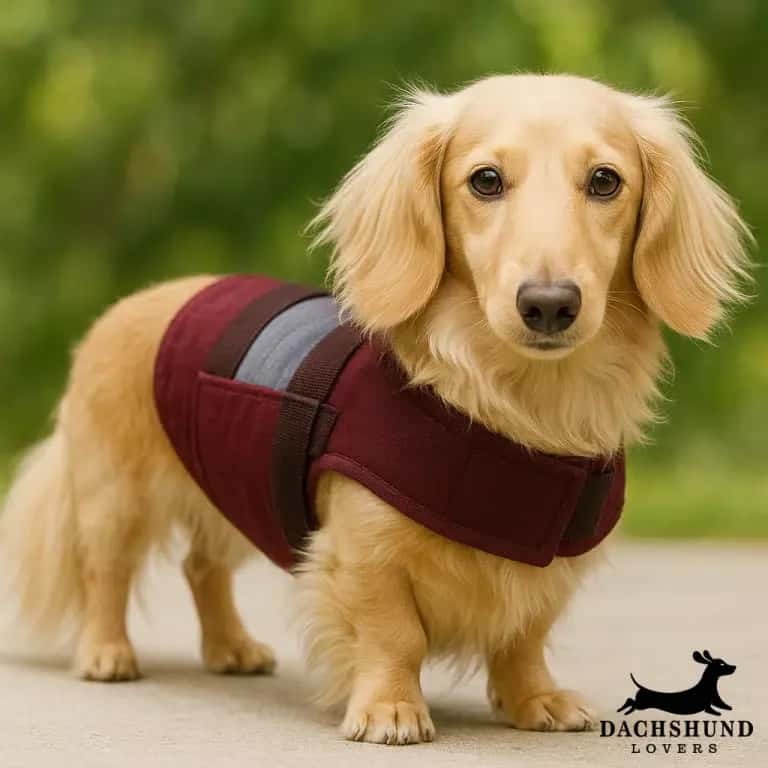
Back braces can seem like the perfect answer when your dachshund is struggling with mobility. The idea of stabilising their spine and giving them confidence is appealing, and many owners turn to braces hoping for a simple solution. The reality, however, is that back braces have limits. They can be helpful in the right circumstances, but they should never be seen as replacements for veterinary treatment, crate rest, or back surgery when required.
Why a Brace Is Not a Cure
A brace cannot reverse IVDD or repair damaged discs. It can only support the spine externally to reduce strain. This is why most vets stress that braces are management tools, not medical treatments. According to VCA Hospitals, dogs with moderate to severe IVDD often require surgery for the best chance of recovery. In these cases, a brace on its own would not prevent further damage.
Braces may help during mild cases or recovery phases, but they should never delay proper veterinary care. Waiting too long while relying on a brace can allow the condition to progress, sometimes irreversibly.
Risk of Overreliance
One of the biggest limitations of dachshund back braces is the temptation for owners to use them as shortcuts. It can be reassuring to see your dog looking more stable with a brace on, but this often masks the underlying issue.
- Some owners may avoid crate rest because the brace appears to help.
- Others may continue longer walks or allow activities that should be restricted.
- Over time, this can worsen spinal damage and reduce recovery chances.
For a broader look at how lifestyle factors contribute to long-term issues, see Dachshund Back Problems.
Discomfort and Fit Issues
Another limitation is comfort. Not every dachshund tolerates wearing a brace, especially if it is bulky or poorly fitted.
- Chafing: Straps that rub against the skin can cause sores or irritation.
- Restricted movement: Some dogs find braces too restrictive, leading to frustration.
- Heat build-up: In warm climates, padded braces can cause overheating.
This is why proper measuring and gradual introduction are essential. A badly fitted brace can create more problems than it solves.
Masking Symptoms
A brace may stabilise the spine enough that symptoms look improved, but the underlying problem remains. This can delay owners from recognising worsening IVDD or other spinal issues. By the time the condition is obvious again, options may be fewer.
This masking effect is one of the reasons why braces are rarely recommended as standalone solutions. They must be combined with veterinary supervision and regular monitoring.
When a Brace Can Make Things Worse
Although uncommon, there are cases where braces may actually worsen a situation:
- If used without a vet’s advice, they may restrict blood flow or create new pressure points.
- If worn for too long, they can weaken muscles by reducing natural movement.
- If used on dogs with severe IVDD instead of surgery, they may give false reassurance while damage continues internally.
Table: Risks and Limitations of Dachshund Back Braces
Limitation | What It Means | Impact on Dachshund | Related Resource |
|---|---|---|---|
Not a cure | Braces cannot heal IVDD or disc damage | May delay surgery or proper treatment | |
Overreliance | Owners may skip crate rest or vet visits | Condition can worsen silently | |
Discomfort | Poor fit causes rubbing, irritation, or overheating | Dog resists wearing brace | |
Masking symptoms | Stability hides underlying decline | Delays detection of severe IVDD | |
Potential harm | Improper use weakens muscles or restricts blood flow | May add to long-term health risks |
Harvey’s Experience
When Harvey wore a back brace briefly during his Grade 2 IVDD recovery, it gave him some stability, especially during toilet breaks. But it also highlighted the limitations. He disliked wearing it for long periods, and our vet reminded us that the brace couldn’t replace crate rest. For him, the brace was a short-term aid — not a long-term fix. What truly helped was enforced rest, medication, and permanent changes at home, like ramps and restricted jumping.
Final Thoughts on Risks and Limits
Dachshund back braces can play a role in recovery and management, but they come with risks if misunderstood or misused. They cannot cure spinal disease, and they should never replace veterinary care. Used carefully and under guidance, they can provide stability and comfort. Used in isolation, they may delay the treatment a dachshund truly needs.
How to Fit a Dachshund Back Brace Correctly
Even the best-designed back brace can cause more harm than good if it doesn’t fit properly. For dachshunds, whose proportions are very different from most small dogs, correct fit is absolutely essential. A brace that’s too loose won’t provide support, while one that’s too tight can create pressure points, chafing, or even restrict breathing. Getting the fit right requires careful measuring, patience, and consistent monitoring once your dachshund begins wearing the brace.
Measuring Before Buying
A back brace should never be chosen based only on your dachshund’s weight or generic “small dog” sizing. Dachshunds have long torsos, deep chests, and narrow necks that don’t fit into standard size charts.
- Chest girth: Measure around the widest part of the chest, just behind the front legs.
- Back length: Measure from the base of the neck to the base of the tail.
- Neck circumference: Measure at the base of the neck, where collars sit.
As AKC highlights in its advice on dog gear, accurate measurement is the only way to ensure a safe and comfortable fit. This is especially true for dachshunds, who rarely fit into “one-size-fits-all” categories.
Introducing the Brace Gradually
Most dachshunds won’t accept a brace straight away. It can feel bulky or strange at first, and forcing them into long wear immediately can create stress.
- Step one: Let your dachshund sniff and inspect the brace before trying it on.
- Step two: Put it on for a few minutes indoors, using treats and praise to build positive associations.
- Step three: Gradually extend wear time over several days.
- Step four: Introduce movement — short walks, toilet breaks, or gentle indoor activity.
For more guidance on acclimating dachshunds to new equipment, see Dachshund Neck Size, which covers how to introduce collars and harnesses without stress.
Checking for Comfort
Once the brace is on, comfort checks are essential.
- Two-finger rule: You should be able to slide two fingers under each strap.
- Movement: Your dachshund should be able to walk naturally without awkward steps.
- Skin check: Inspect daily for redness, sores, or fur loss under straps.
- Heat: In warmer weather, ensure the brace doesn’t trap excessive heat against the body.
Signs of discomfort include scratching at the brace, whining, or resisting walks. Never ignore these signals — they are often the first sign of poor fit.
Daily Monitoring and Adjustments
Back braces are not “set and forget” devices. As your dachshund moves, gains or loses weight, or recovers from back problems, fit will change.
- Recheck weekly: Especially if your dachshund is in crate rest or restricted activity.
- Adjust straps regularly: Materials can stretch over time.
- Rotate with rest: Avoid leaving the brace on 24/7 — allow breaks to prevent chafing.
- Seasonal adjustments: Winter coats and summer shedding both affect fit.
Table: Fitting Checklist
Step | What to Do | Why It Matters | Related Resource |
|---|---|---|---|
Measure | Chest, back, neck accurately | Ensures correct size | |
Introduce slowly | Build comfort with short sessions | Prevents resistance | |
Comfort check | Use two-finger rule, monitor skin | Stops rubbing and irritation | |
Monitor regularly | Re-measure and adjust | Fit changes with recovery or weight |
Harvey’s Perspective
When Harvey trialled a brace during his IVDD recovery, we learned the importance of gradual introduction the hard way. The first time I put it on, he froze and refused to walk. But when we slowed down — letting him sniff it, rewarding him with treats, and keeping wear short — he became more comfortable. After a few days, he walked more confidently, and we could see how the brace supported his back. Still, we never used it for long stretches, and our vet stressed it was only one part of his care plan.
Final Thoughts on Fit
A dachshund back brace can only help if it fits correctly. Proper measurement, slow introduction, daily monitoring, and veterinary guidance are non-negotiables. Rushing the process or relying on generic sizes is a recipe for discomfort and wasted effort. Think of the brace as a tailored support — one that works only when adjusted with care and attention.
Prevention & Lifestyle Adjustments
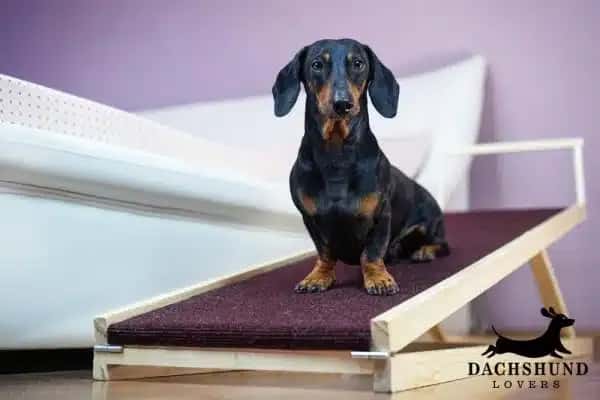
A dachshund back brace can provide stability, but it’s only one piece of the puzzle. Preventing flare-ups of IVDD or supporting recovery requires a full lifestyle approach. Braces help in the short term, but daily habits, home adaptations, and long-term care are what protect a dachshund’s spine.
Weight Management
Excess weight is one of the strongest risk factors for spinal issues. Each extra kilo adds pressure to fragile discs and increases the chance of IVDD flare-ups.
- Keep your dachshund lean: You should feel ribs easily without them being visible.
- Measure food portions: Avoid free feeding or relying on treats for training.
- Low-calorie snacks: Vegetables like carrots or cucumbers are healthier alternatives.
See Overweight Dachshund for more detail on weight control and why it’s so important for back safety.
Ramps and Home Adjustments
One of the biggest day-to-day risks for dachshunds is jumping. Every leap off the sofa or bed puts strain on the spine, which even a brace cannot fully prevent.
- Install ramps: For beds, couches, and cars.
- Block stairs: Baby gates prevent dangerous climbs and falls.
- Non-slip flooring: Rugs and mats reduce sliding that can twist the back or neck.
For a deeper dive into these strategies, see Dachshund Back Problems.
Exercise That Protects the Spine
Regular activity is vital for keeping muscles strong enough to support the spine. But the wrong type of exercise can undo all your hard work.
- Safe: Short, frequent walks on flat ground.
- Avoid: Ball chasing, jumping, and rough play with bigger dogs.
- Rehabilitation: Swimming or hydrotherapy can rebuild strength after injury.
For dachshunds with arthritis or chronic conditions, see CDA in Dachshunds for how controlled exercise supports joint health.
Using Braces as Part of Recovery
Braces may be introduced during recovery from dachshund back surgery or after crate rest to add stability. But they should always be combined with:
- Strict rest periods.
- Gradual return to exercise.
- Veterinary guidance on duration and frequency of wear.
Daily Monitoring
Lifestyle prevention also means keeping a close eye on your dachshund’s behaviour.
- Watch for stiffness: Early signs may indicate IVDD recurrence.
- Check gait: Wobbling or dragging needs immediate vet care (see Dachshund Dragging Back Legs).
- Inspect the skin: Daily checks under the brace stop irritation before it worsens.
Consistency is key — prevention only works when habits become routine.
Table: Lifestyle Adjustments and Braces
Risk Factor | Lifestyle Adjustment | Role of Brace | Cluster Resource |
|---|---|---|---|
Excess weight | Portion control, lean treats | ||
Jumping | Use ramps, block stairs | ||
Weak Muscles | Controlled walks, hydrotherapy | ||
Post surgery | Crate rest, physiotherapy |
Harvey’s Adjustments
We didn’t rely on a back brace long term for Harvey, but we made plenty of other changes that continue to protect his spine today. Ramps by the lounge and bed, non-slip rugs across the tiled hallway, and strict portion control have become part of our routine. The brace was useful for short periods, especially when he was weak after his IVDD diagnosis, but the lifestyle changes have been far more important in keeping him stable and comfortable.
FAQs About Dachshund Back Braces
More from This Series
- Dachshund Eye Problems
- CDA in Dachshunds
- Dachshund Brain Size
- Dachshund Back Surgery
- Dachshund Dragging Back Legs
- Dachshund Neck Size
- Dachshund Back Brace
- Dachshund Back Problems
- Dachshund Skin Issues
- Dachshund Health Issues
- Dachshund Feet
- Dachshund Ribs
- Overweight Dachshund
- Dachshund Teeth
- Dachshund Allergies
- Dachshund Ears
- Dachshund Hip Dysplasia
- Dachshund Constipation
- Dachshund Bad Breath
Authored by
James
James is the founder of Dachshund Lovers and the proud human of Harvey, a mini dapple with a big personality. He writes to empower and connect the dachshund community, blending founder insights with honest, experience-based stories about life with this incredible and special breed. James brings candid, experience-backed opinions to the community and always focused on fewer, better products and ideas that genuinely improve life for dachshunds and their people.
Read moreJames is the founder of Dachshund Lovers and the proud human of Harvey, a mini dapple with a big personality. He writes to empower and connect the dachshund community, blending founder insights with honest, experience-based stories about life with this incredible and special breed. James brings candid, experience-backed opinions to the community and always focused on fewer, better products and ideas that genuinely improve life for dachshunds and their people.
Read moreDisclaimer
This content is for informational purposes only and should not be considered veterinary advice. Always consult with a licensed veterinarian regarding your dog’s health and wellbeing.
There are no comments yet
Leave a comment