Silky Wire Haired Dachshund: A Softer Spin on a Scruffy Classic
Silky Wire Haired Dachshund: A Softer Spin on a Scruffy Classic

Ellie
Posted on July 30, 2025.
Updated on July 19, 2026.
Table of Contents
- 1.Key Takeaways on Silky Wire Haired Dachshund
- 2.What Is a Silky Wire Haired Dachshund?
- 3.How the Coat Is Different
- 4.Silky Wire Haired Dachshund Grooming
- •Weekly Routine
- •Every 6–10 Weeks
- 5.Temperament and Behavior
- •Common Traits
- •Ideal for:
- 6.Training and Socialization Tips
- •Getting Started with Training
- •Socialization Matters
- •Watch for:
- 7.Coat Colors and Textures
- 8.Health and Maintenance
- •Common Health Concerns
- •Preventative Care Tips
- 9.Wire Haired Dachshund Puppies
- •What You’ll Notice Early On
- •Tips for Raising a Silky Wire Puppy
- 10.Finding a Reputable Breeder
- 11.Living with a Silky Wire
- -More From This Series:
- -Disclaimer
Share

A few years ago, during a misty Saturday stroll through Centennial Parklands in the heat of Sydney, I came across what I thought was a long-haired dachshund — but something felt different. His coat was less flowing, more textured. His beard and brows gave him a dignified, slightly scruffy look, but his fur was undeniably soft. His human, laughing at my curiosity, introduced him as Ludo — a silky wire haired dachshund, and “the only thing that sheds more charm than fur.” The silky wirehair coat type is the result of a cross between wire-haired and long-haired dachshunds, giving Ludo a unique combination of soft, wavy fur and a distinct, easy-to-groom texture.
That encounter stuck with me. Since then, I’ve kept an eye out for these rarer coat types, and I’ve learned that you only occasionally see a silky wire haired mini dachshund, making each sighting a special event. I’ve spoken with breeders, groomers, and fellow dachshund lovers to understand what makes this variation so special and rare to see about regarding the wire haired dachshund. If you’ve found yourself drawn to their textured-yet-soft look, this guide is for you — especially when it comes to silky wire haired dachshund grooming, which is equal parts art and routine.
Key Takeaways on Silky Wire Haired Dachshund
Topic | Summary |
|---|---|
Cost Type | A mix of wire and long hair traits — a softer, often wavier coat with a classic beard and eyebrows. |
Grooming Needs | Requires regular brushing and light trimming, with some coats needing professional grooming every 8–10 weeks. |
Temperament | Bold, clever, and alert — with a softer touch. Often described as confident but cuddly. |
Training Style | Intelligent and food-motivated. Thrive on gentle, consistent routines. |
Best For | Owners who love a bit of texture, personality, and time in the grooming chair. |
What Is a Silky Wire Haired Dachshund?
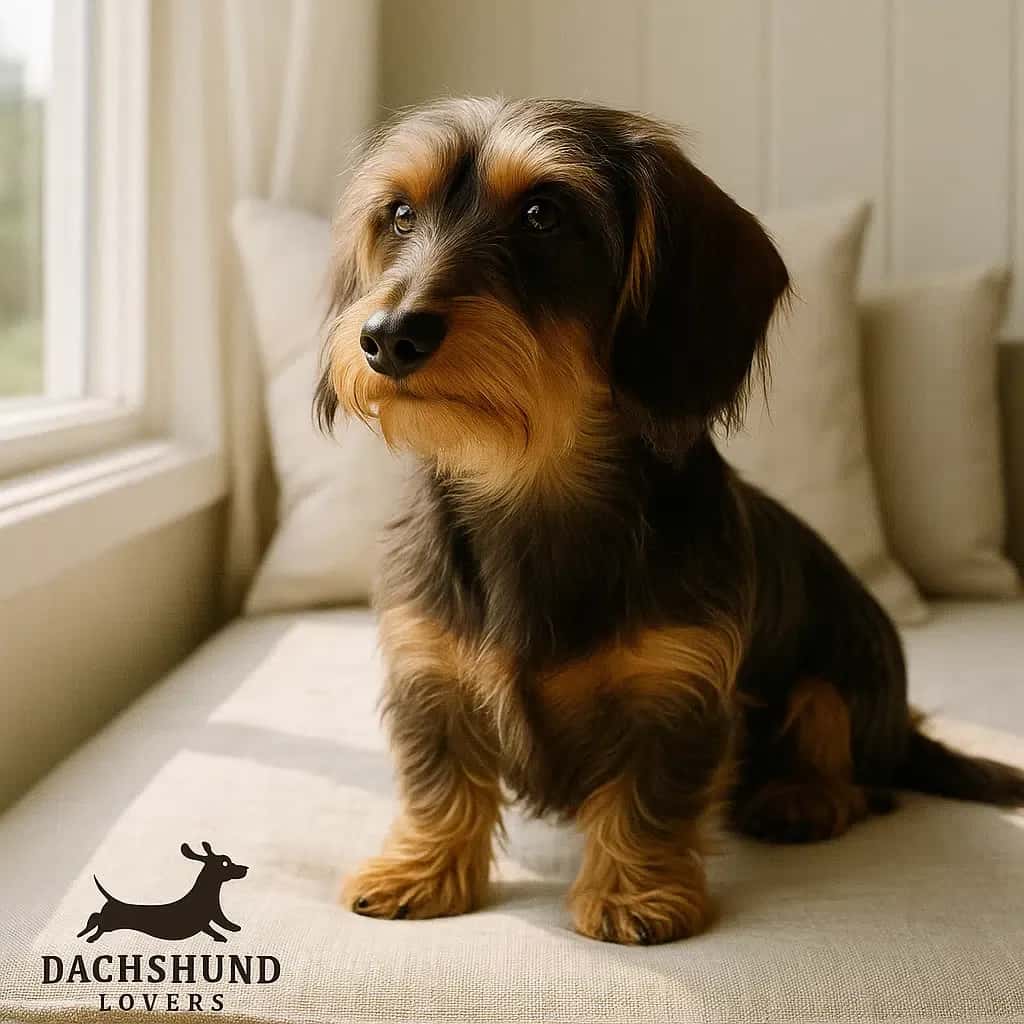
A silky wire haired dachshund is a charming, lesser-known coat variation that blends the wiry texture of traditional wirehaired dachshunds with the softer strands of their long-haired cousins. While not officially recognized as a separate variety by major kennel clubs, silky wires are well-loved for their unique coats and balanced temperaments.
Their fur is smoother than a true wire’s, but still has that tousled, textured look — especially around the face. You’ll often notice the signature beard and eyebrows, but softened slightly. When the light hits just right, the coat has a natural sheen that can look almost iridescent. Each individual hair in the coat can feel softer, wavier, or more feathered than a standard wire, giving the silky wire haired mini dachshund its distinctive texture.
These dachshunds are often the result of intentional or accidental pairings between wirehaired and long-haired parents. When a parent is said to carry longhair, it means they possess a genetic trait inherited from a longhair ancestor, which can influence the coat’s length and softness in their puppies. The silky wirehair is a specific coat type that results from this cross, combining the unique appearance, softer feel, and easier grooming needs compared to traditional wirehair coats.
They’re especially popular with people who love the rugged look of a wire coat, but want something a little easier on the hands — and the furniture.
Many ethical breeders advise against intentional breeding of the silky wire-haired variation due to concerns about the coat’s function and its ability to provide proper protection.
Learn more about coat types in our Wirehaired Dachshund guide.
How the Coat Is Different
The silky wire coat sits somewhere between a tousled beard and a soft wave — and that blend makes it distinct from both traditional wirehaired and long-haired dachshunds. While wire coats are known for their rugged, bristly feel, and long-haired coats for their flowing elegance, the silky wire coat manages to pull characteristics from both — without fully belonging to either.
Let’s break it down clearly:
Feature | Traditional Wire | Silky Wire |
|---|---|---|
Texture | Harsh, coarse, weatherproof | Softer to the touch with a subtle wave |
Undercoat | Dense and insulating | Present, but often lighter and less woolly |
Beard & Brows | Prominent, wiry, rugged | Present but finer, with a feathered softness |
Shedding | Low to moderate | Moderate — may shed more, especially seasonally |
Maintenance | Requires hand-stripping for texture upkeep | Trimming and brushing preferred |
Grooming techniques for silky wire haired mini dachshunds are similar to those used for other wirehaired or longhaired breeds, such as Schnauzers, making the routine familiar and manageable for many owners. Unlike a classic wire’s rough edges, the silky variation often has a touch of feathering — especially around the ears, chest, and hindquarters. You might find that your silky wire’s coat changes subtly with age or seasons, becoming fluffier or darker depending on the time of year.
When it comes to shedding, while silky wire haired mini dachshunds are moderate shedders, you may notice that loose hairs can end up on furniture or around the house, especially during seasonal changes. Their softer coat can also be more prone to tangling or matting, particularly if it gets wet or if your dog romps through brush, so regular brushing is important to keep their coat in good condition.
Ellie’s Tip: If you’re unsure whether your pup has a silky wire coat, try brushing their back lightly. A true wire will resist and spring back; a silky wire tends to glide through more gently — but still with some texture. The difference is all in the feel.
Silky Wire Haired Dachshund Grooming
Caring for a silky wire haired dachshund’s coat is a delicate balance — not quite the intense hand-stripping needed for a true wire, but certainly more than the brush-and-go routine of a short-haired doxie. Thanks to their unique coat, silky wire haired mini dachshunds shed minimally and are easy to keep tidy, making them especially well-suited for life in the house as a comfortable, family-oriented companion. This coat has character, movement, and, yes, a bit of sass. Getting it right is part of the bond you’ll build with your dachshund.
Weekly Routine
To keep their coat healthy and free of tangles:
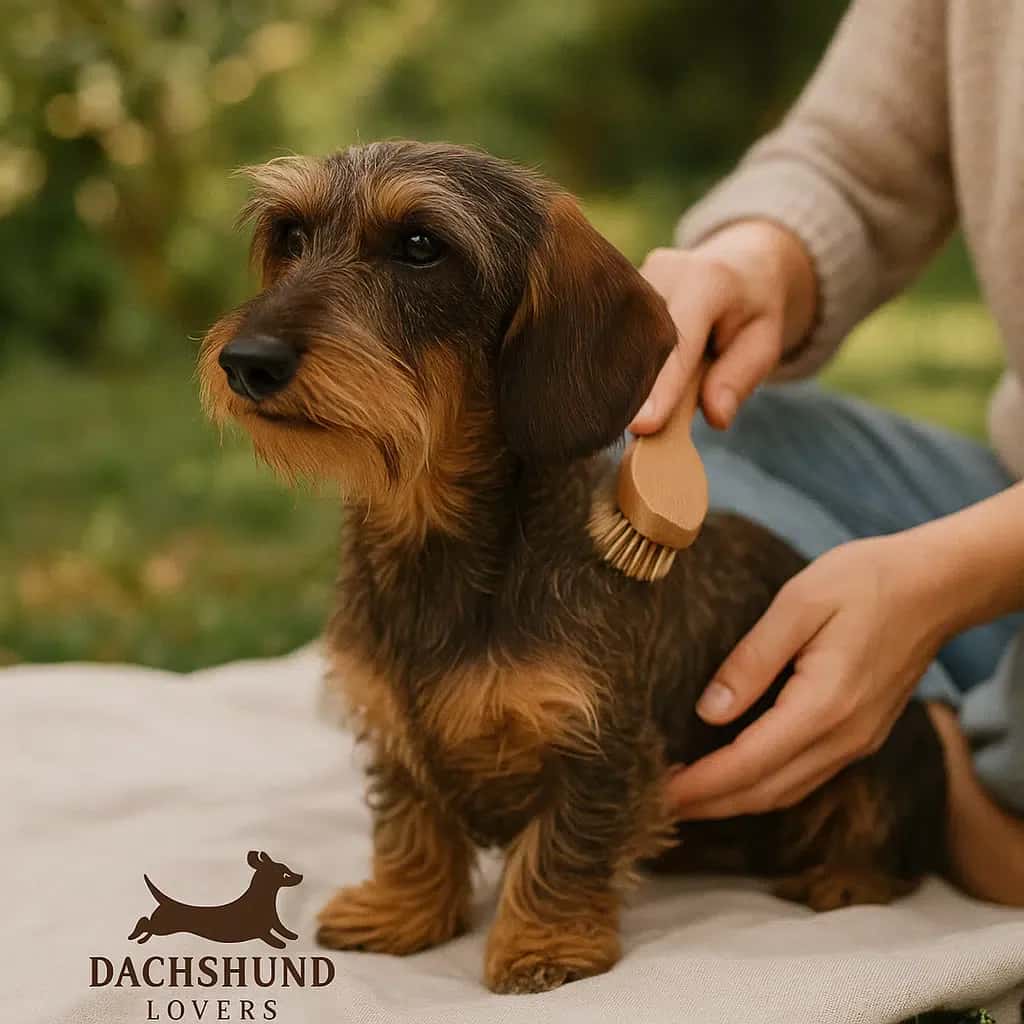
- Brush 2–3 times a week using a slicker or pin brush. This helps distribute natural oils and keeps the coat glossy without matting.
- Target mat-prone areas like behind the ears, armpits, belly feathering, and under the tail.
- Use a metal comb to gently work through small knots or tangles. Don’t yank — a gentle tease with the comb is all you need.
- Wipe the face and beard regularly with a damp cloth. Food, water, and the occasional mystery find tend to collect here.
Ellie’s Tip: A spritz of coat conditioning spray before brushing can make all the difference. Look for one that’s natural and fragrance-free.
Every 6–10 Weeks
Silky wires benefit from a tidy-up every couple of months:
- Bath using a gentle, sulfate-free shampoo — this protects the softness of the coat and avoids stripping it of natural oils.
- Trim around feet, hocks, and sanitary areas to prevent knots and tangles.
- Shape the beard and brows carefully with scissors or thinning shears. Keep the natural expression, but don’t let it get unruly.
- Avoid full-body stripping — it can alter the coat texture permanently. A soft scissor trim is the way to go.
If grooming feels overwhelming, a groomer with experience in wirehaired terrier-type coats (not just poodles!) is a smart investment.
Ellie’s Tip: Maple’s not a silky wire, but I treat her belly and ear feathering the same way. We keep a small grooming kit tucked by the window seat — brushing there, with the afternoon light, is one of her favorite rituals.
Temperament and Behavior
Silky wire haired dachshunds are more than just a pretty face — they’re full of charm, curiosity, and a surprising emotional depth. Because they often come from a blend of long-haired and wirehaired lineage, their personalities can lean toward either side or land somewhere delightfully in between.
Common Traits
Here’s what you’ll often see in a silky wire’s temperament:
- Alert and attentive — these dachshunds make exceptional watchdogs. They’ll let you know if a leaf moves the wrong way.
- Playful and inventive — especially when bored. They love toys that make them work (snuffle mats, puzzle feeders, squeakers hidden inside plush).
- Affectionate — many silky wires enjoy being near their people, resting against your leg or curling up beside you on the couch.
- Independent streak — they may ignore your recall command in favor of chasing a butterfly or investigating a new scent.
- Slightly softer than true wires — often more cuddly or sensitive to tone, thanks to their long-haired influence.
You’ll notice they don’t just exist in the room — they observe it, assess it, and respond with surprising nuance. It’s part of what makes them feel so deeply present.
Ideal for:
- People who work from home or enjoy companionable silence (they’ll snooze near your desk).
- Active households that still appreciate downtime.
- Owners who enjoy training challenges — because this dachshund will keep you guessing.
- Families that can be consistent. Inconsistent boundaries? A silky wire will walk right through them.
Ellie’s Note: The silky wires I’ve met in Sydney’s Inner West — particularly at places like Camperdown Commons — have been soulful and slightly dramatic. One spent 15 minutes ignoring everyone until his favorite human showed up, and then the tail didn’t stop. That’s the silky wire in a nutshell — discerning, devoted, and a little extra.
Training a silky wire haired dachshund isn’t always straightforward — but it is deeply rewarding. These dogs are smart, expressive, and often very food-motivated, but they can also have a will of their own. Early, positive training is key to unlocking their full potential without triggering a battle of stubbornness.
Getting Started with Training
Here’s how to set your silky wire up for success:
- Start early. The earlier you begin, the easier it is to shape positive behaviors before habits form.
- Use positive reinforcement. Treats, verbal praise, and affection go much further than correction with these sensitive types.
- Keep sessions short and upbeat. 5–10 minutes, 2–3 times a day works beautifully — especially when paired with a bit of play.
- Clicker training works well. It creates clear feedback and can help fast-track learning for commands like sit, wait, or come.
- Crate train from day one. It helps with boundaries, toilet training, and gives your dachshund a space to decompress.
Because silky wires can be a bit more emotionally tuned in than their classic wire counterparts, thoughtful socialization is extra important.
- Introduce new people gradually. Let your dog observe first — they’ll usually approach when ready.
- Walk in varied environments. Footpaths, parks, dog-friendly cafes — all help build confidence.
- Use neutral spaces for dog introductions. Dog parks can be overwhelming early on — quiet walks with a well-mannered friend are often better.
- Noise exposure. Get them used to common sounds early: vacuums, hairdryers, traffic, rainstorms.
Watch for:
- Resource guarding. Some silky wires are possessive with toys or food. Use trade-up techniques early.
- Barking at the window. A common outlet for boredom. Give them better jobs to do.
- Separation anxiety. These dachshunds love company. Start alone-time training in short bursts.
Ellie’s Tip: At around six months, Maple went through a phase where she refused to sit if we were outside — she’d just look at me like I’d asked her to write a thesis. I learned to pivot: reward calm rather than forcing obedience. That subtle shift made all the difference.
Coat Colors and Textures
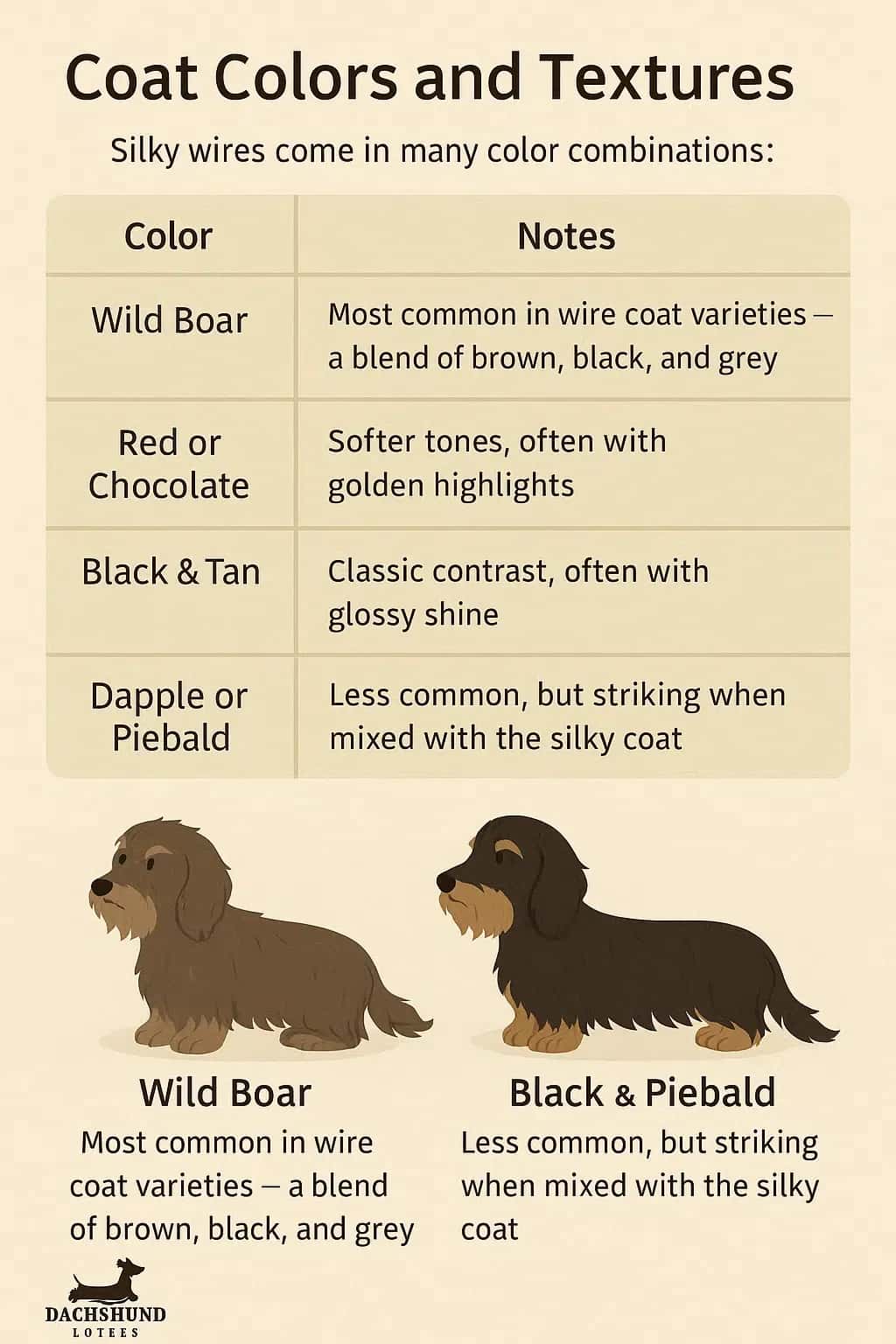
One of the most enchanting parts of the silky wire haired dachshund is how their coat texture interacts with color. Because the hairs are finer than traditional wires, there’s a subtle shimmer — like someone softly airbrushed their outline. It’s especially noticeable in natural light, where highlights and lowlights come through depending on the color and undercoat.
These dogs can come in almost any dachshund shade, but a few pair especially well with the silky texture.
Because of their mixed coat heritage, silky wires often carry unpredictable color genes. You might notice a pup that starts red and slowly develops dark tips or faint dappling as their adult coat comes in.
Health and Maintenance
While silky wire haired dachshunds might look effortlessly elegant, they come with the same health considerations as any dachshund — plus a few extra things to watch, especially due to their unique coat.
Common Health Concerns
These aren’t problems every silky wire will have, but they’re conditions you should be mindful of as a responsible owner:
- IVDD (Intervertebral Disc Disease):
Dachshunds of all coat types are prone to spinal issues because of their long backs. Keep your silky wire at a healthy weight, avoid high-impact activities like jumping off furniture, and consider using ramps or steps indoors. - Ear Infections:
Long, floppy ears can trap moisture and debris. Regular ear cleaning is essential — especially after baths or rainy walks. - Dental Problems:
Smaller breeds often struggle with plaque buildup. Brush their teeth 2–3 times a week with dog-safe toothpaste, or use dental chews if brushing isn’t an option. - Skin Sensitivities:
The finer silky coat can sometimes signal more sensitive skin. Choose mild, hydrating shampoos and avoid over-washing. - Allergies:
Silky wires may be more likely to develop environmental or food-related allergies. Signs include itching, paw licking, or frequent ear flare-ups.
Preventative Care Tips
- Schedule annual vet visits — even if everything seems fine
- Feed a high-quality, balanced diet rich in omega-3s
- Keep nails trimmed to avoid joint strain
- Use sun protection for fair-coated pups during long outdoor sessions
- Handle them gently, especially around the spine
Ellie’s Tip: I keep a small dachshund first-aid kit in the pantry — with ear wipes, paw balm, and a gentle detangler spray. It’s part of how I show up for Maple, and it means I can catch small issues before they become big ones.
Wire Haired Dachshund Puppies
Silky wire haired dachshund puppies are particularly charming — often fluffier and softer than traditional wire pups, with an air of mystery about how their coats will develop. Because of the mixed genetic influence from wirehaired and long-haired parents, their final coat texture and pattern can take months to reveal itself.
Before purchasing a silky wire haired mini dachshund puppy, always check breeder credentials and health testing to ensure you are supporting responsible breeding practices. Some breeders may advertise a silky wire-haired dachshund for sale to attract pet homes, so it's important to verify all information and ask questions about the puppy's background.
What You’ll Notice Early On
- Puppy Coat Texture:
Most silky wire pups start with a softer, fluffier coat that feels more like a long-haired dachshund puppy. It may not be immediately clear that they’re a wirehaired variety. - Delayed Beard and Brows:
The signature wirehaired facial features (beard, brows, and whiskers) can take time to emerge — often developing fully between 6 and 12 months. - Subtle Color Shifts:
Many silky wires lighten or darken slightly as they age. For example, a chocolate pup may develop more red or silver undertones over time. - Coat Personality:
By the time they’re 4–6 months old, you’ll start to see the true “personality” of their coat: whether it leans wiry, silky, or somewhere in between.
Tips for Raising a Silky Wire Puppy
- Start Grooming Early:
Even if the coat is soft now, build a positive brushing routine from the beginning. Use gentle tools and keep sessions short and calm. - Socialization Matters:
Introduce your pup to a variety of people, sounds, surfaces, and environments between 8 and 16 weeks. Silky wires can be vocal and cautious, so confident exposure helps. - Watch for Digging:
Many silky wire pups retain the strong digging instinct of wirehaired dachshunds. Redirect this with puzzle toys or digging boxes. - Bedding Choices:
Opt for supportive, washable bedding with sides. Many silky wires like to “nest” in their beds — a trait likely passed down from their wire parent.
Ellie’s Tip: I’ve seen a few silky wire pups change so much between puppyhood and their first birthday — one even looked like a smooth at 3 months and grew into a full silky beard by 10 months. Patience is part of the magic.
For full care tips, visit our Wire Haired Dachshund Puppies guide.
Finding a Reputable Breeder
When searching for your perfect silky wire haired dachshund, patience and diligence are your best friends. Start by seeking out breeders who are registered with respected kennel clubs and have a proven track record with wirehaired dachshunds. These breeders understand the nuances of the silky wire hair and are transparent about the genetic cross that creates this unique coat—typically pairing a wire haired parent (Parent A) who carries the longhair gene with a longhair or longhair-carrying parent (Parent B).
A reputable breeder will happily introduce you to the parent dogs, explain their lineage, and show you how the silky wire coat is passed down. They’ll also be upfront about the grooming needs of these pups, since silky wire haired dachshunds tend to develop tangles and require regular brushing to keep their coats in top shape. Look for breeders who prioritize the health, temperament, and socialization of their dogs, and who are willing to answer all your questions about care, conformation, and what to expect as your pup grows.
Don’t be afraid to ask for references or to visit the breeder’s home to see how the dogs are raised. A good breeder will want to ensure their puppies go to loving, informed homes just as much as you want a healthy, happy companion. By taking the time to find a registered, knowledgeable breeder, you’ll set yourself—and your future silky wire haired dachshund—up for a lifetime of joy and soft, scruffy cuddles.
Living with a Silky Wire
Bringing a silky wire haired dachshund into your home is like adding a dash of sunshine to your daily routine. These pups are adored for their soft, fluffy coats and their affectionate, lively personalities. While they share many traits with other dachshunds, their silky wire hair brings a unique twist—both in looks and in care.
Owners quickly learn that regular grooming is a must. The silky wire coat, while gorgeous, tends to form tangles if left unchecked, so a consistent brushing routine is essential to keep your pup looking and feeling their best. The good news? Many silky wirehaired dachshunds shed less dander than other breeds, making them a bit easier on sensitive noses and furniture alike.
Life with a silky wire is filled with plenty of love and laughter. These dogs thrive on attention and are happiest when they’re part of the family action, whether that’s curling up on the couch or joining you for a stroll. Their natural conformation and unique coats often draw compliments from fellow dog lovers, and they’re generally recognized for their adorable, almost storybook appearance.
To keep your silky wire haired dachshund happy and healthy, provide lots of affection, a balanced diet, and regular grooming sessions. With the right care, you’ll enjoy the company of a pup who’s as lovely in spirit as they are in looks—a true testament to the charm and individuality of this special breed.
FAQs
More From This Series:
Authored by
Ellie
Ellie is a lifelong dachshund lover and the proud human of Maple, a long-haired brown doxie with a regal side-eye. While not a vet, Ellie brings honest, researched, and experience-based insights into every article she writes for the Dachshund Lovers community.
Read moreEllie is a lifelong dachshund lover and the proud human of Maple, a long-haired brown doxie with a regal side-eye. While not a vet, Ellie brings honest, researched, and experience-based insights into every article she writes for the Dachshund Lovers community.
Read moreDisclaimer
This article is for informational purposes only and should not replace advice from a qualified groomer, vet, or breeder.
There are no comments yet
Leave a comment