Dachshund Dalmatian Mix Puppies: Early Care & Training
Dachshund Dalmatian Mix Puppies: Early Care & Training
Curious about Dachshund Dalmatian mix puppies? Here’s everything I’ve learned, from energy levels to coat quirks and how they fit into family life.
James
Posted on October 17, 2025.
Updated on July 16, 2026.
Table of Contents
- •Introduction: Why Dachshund Dalmatian Puppies Are Special
- 1.Key Takeaways on Dachshund Dalmatian Mix Puppies
- 2.Choosing a Healthy Puppy: Signs & Tips
- -Where to Start Your Search
- -Price Guide: US, UK, and Australia
- -Red Flags to Watch Out For
- -Health Checks for Puppies
- -Temperament Testing
- -James’ Note
- -Why Breeder Transparency Matters
- 3.Early Puppy Training and Socialization
- -Why Early Training Matters
- -Puppy Socialization Goals
- -Housebreaking and Crate Training
- -Basic Obedience Training
- -Managing Stubbornness
- -Leash Training
- -Preventing Problem Behaviors
- -Puppy Classes and Professional Help
- -James’ Take
- 4.Feeding Guide for Dachshund Dalmatian Mix Puppies
- 5.Exercise Recommendations for Dachshund Dalmatian Mix Puppies
- -How Much Exercise Does a Puppy Need?
- -Safe Indoor Activities
- -Outdoor Play & Socialization
- -Avoiding Injury: Spinal and Joint Care
- -Exercise by Age
- -Mental Exercise Counts Too
- -Exercise Costs and Tools
- -James’ Advice
- 6.Grooming a Young Dachshund Dalmatian Mix
- -Why Start Grooming Early?
- -Coat Care for Puppies
- -Bathing Your Puppy
- -Ear Care
- -Nail Trimming
- -Dental Care
- -Paw and Pad Care
- -Shedding and Seasonal Grooming
- -Professional Grooming
- -Puppy Grooming Kit Essentials
- -More From This Series:
- -Disclaimer
Share

Introduction: Why Dachshund Dalmatian Puppies Are Special
Bringing home a dachshund Dalmatian mix puppy is like welcoming a one-of-a-kind personality into your family. With the playful independence of the dachshund and the athletic charm of the Dalmatian, these puppies have a mix of boldness and sweetness that makes them endlessly fascinating.
Unlike popular hybrids, such as labradoodles or cockapoos, Dalmatian dachshund puppies are rare. Most come from small-scale breeders, accidental litters, or rescues rather than mass breeding programs. This rarity means you’ll often be one of the few people in your area with this unique crossbreed, which can feel like having a little celebrity at the dog park.
What makes them so captivating? It’s the contrast between the two parent breeds:
- Dachshunds bring curiosity, independence, and that unmistakable “big personality in a small frame.”
- Dalmatians add loyalty, stamina, and a fun-loving, family-oriented temperament.
These puppies tend to be outgoing but not overwhelming, and they thrive in environments where training, play, and mental stimulation are part of the daily routine. However, because they can inherit the stubborn streak of a dachshund, early training is key.
This guide will cover everything you need to know about raising a healthy and happy dachshund Dalmatian puppy, including:
- How to choose a healthy puppy from breeders or rescues.
- Feeding schedules tailored for their unique build.
- Early training and socialization tips to shape a well-mannered dog.
- Grooming and care essentials for their first year.
- Common puppy FAQs like “How much should I feed a Dachshund Dalmatian puppy?” or “What’s the cost of a puppy?”
If you’re still considering whether this hybrid is right for your home, I’d also recommend starting with our Breed Overview for a detailed look at their adult size, temperament, and unique appearance.
Key Takeaways on Dachshund Dalmatian Mix Puppies
Topic | Summary |
|---|---|
Rarity | Dalmatian dachshund puppies are uncommon, often available through small breeders or rescues. |
Temperament | A playful mix of dachshund independence and Dalmatian loyalty — best suited for active, engaged homes. |
Training Focus | Early socialization and positive reinforcement are essential to manage stubbornness. |
Feeding Schedule | Small, frequent meals (3–4 per day) during the first 6 months to support steady growth. |
Exercise Needs | Gentle, age-appropriate exercise — avoid stairs and jumping to protect developing joints and spine. |
Grooming | Weekly brushing and routine ear, nail, and dental care from an early age build lifelong habits. |
Family Suitability | Great with older children and other pets when socialized early; thrives on companionship. |
Cost | Puppies can range from $800–$2,000 USD depending on breeder reputation, location, and demand. |
Choosing a Healthy Puppy: Signs & Tips

Finding a dachshund Dalmatian mix puppy is an exciting step, but it’s also one that requires careful research. Because this hybrid is relatively rare, many puppies are found through small-scale breeders or accidental litters rather than large, established programs. The key is to prioritize health, ethical practices, and early care over convenience or appearance.
Where to Start Your Search
- Ethical Breeders
A reputable breeder will always put the health and well-being of the dogs first. According to the American Kennel Club (AKC), a good breeder will:
- Provide health clearances for both parent dogs.
- Allow you to meet the puppy’s mother (and sometimes the father).
- Offer a detailed puppy care plan, including early socialization and feeding schedules (AKC Puppy Buyer’s Guide).
In the UK, the Kennel Club Assured Breeder Scheme sets high standards for responsible breeders (The Kennel Club UK). While the dachshund Dalmatian mix is not a Kennel Club-registered crossbreed, you can still use these guidelines to vet breeder practices.
- Rescues & Pet Adoption Sites
Mixed breeds like this are occasionally available through adoption platforms.
- US: Petfinder and local rescues often list hybrids, sometimes at lower costs than breeders.
- UK: Dogs Trust or RSPCA may have Dalmatian or dachshund crosses.
- Australia: PetRescue is a national hub for finding mixed breed dogs.
Price Guide: US, UK, and Australia
Because this mix is rare, prices can vary widely depending on breeder reputation, demand, and whether the litter is accidental or planned.
- United States: $800 – $2,000 USD.
Ethical breeders may charge closer to the higher range, particularly if health screenings are included. - United Kingdom: £700 – £1,200 GBP.
Prices tend to be slightly lower than in the US, but hybrids with distinctive Dalmatian markings may fetch more. - Australia: $1,200 – $2,500 AUD.
Costs can rise due to limited availability, especially in major cities like Sydney or Melbourne.
Adoption fees (for rescues) are generally lower, ranging from $200–$500 USD, £150–£300 GBP, or $250–$500 AUD.
Red Flags to Watch Out For
The RSPCA warns against “puppy farms” or unethical breeders who prioritize profit over animal welfare (RSPCA Puppy Advice).
Avoid breeders who:
- Refuse to show the mother or the living environment.
- Have multiple litters of different breeds on-site.
- Can’t provide vaccination or health screening records.
- Push for immediate payment or “reserve fees” without transparency.
Health Checks for Puppies
When choosing your puppy, ask the breeder (or rescue) about vet checks and vaccinations. Key things to look for:
- Clear Eyes and Nose: No discharge, redness, or cloudiness.
- Healthy Coat and Skin: No bald patches, sores, or excessive dandruff.
- Clean Ears: A healthy puppy’s ears are free from wax build-up or strong odors.
- Steady Weight: Puppies should feel firm but not overweight.
- Alert and Social Behavior: A healthy puppy is curious, playful, and responsive.
Tip: Ask if the puppy’s parents have been tested for conditions common to both breeds, such as hip dysplasia (Dalmatian) or intervertebral disc disease (dachshund).
Temperament Testing
A reputable breeder will often perform early temperament tests to help match puppies with the right families. Look for:
- Puppies that engage confidently with toys or people.
- Calm curiosity rather than excessive fear or hyperactivity.
- Willingness to be handled gently.
James’ Note
When meeting a puppy for the first time, I like to see how they respond to touch and voice. Do they come over, wagging their tail with curiosity? Are they comfortable being picked up or gently examined? These small interactions tell you a lot about early socialization and future trainability
Why Breeder Transparency Matters
An ethical breeder will happily answer questions like:
- “How have the puppies been socialized so far?”
- “What are they being fed, and how often?”
- “Have they had their first vaccinations and deworming?”
They should also provide puppy packs with food samples, a care sheet, and health records.

The first few months with your dachshund Dalmatian mix puppy are critical for shaping their personality, behavior, and confidence. Both parent breeds are intelligent but can show streaks of independence or stubbornness, which means starting training and socialization early is non-negotiable. A well-socialized puppy grows into a dog that’s not just obedient but also calm, well-mannered, and happy in new environments.
Why Early Training Matters
Dachshunds are known for their determined, sometimes stubborn nature, while Dalmatians thrive on structure and mental challenges. The American Kennel Club (AKC) notes that “early socialization and puppy training classes are essential” for any breed that’s intelligent and energetic (AKC Puppy Training Tips). This is especially true for hybrids like the Dalmatian Doxie, where balancing both personalities takes intentional guidance.
By starting training at 8–12 weeks, you build positive habits before bad ones develop. This period is also known as the “socialization window,” when puppies are naturally curious and open to new experiences.
Socialization is about gently exposing your puppy to the sights, sounds, and people they’ll encounter throughout their life.
- Meet new people: Invite friends and family over for calm introductions.
- Experience safe environments: Carry them around markets, parks, or busy streets before they’re fully vaccinated.
- Expose them to sounds: Gradually introduce common noises like doorbells, vacuums, or traffic.
- Interact with other dogs: Puppy playdates or supervised time with calm, vaccinated dogs build social confidence.
The RSPCA UK emphasizes that socialization reduces the risk of behavioral issues later on, noting that “dogs that are well-socialized from a young age are less likely to develop fear-based aggression” (RSPCA Puppy Advice).
Housebreaking and Crate Training
House training can take patience, especially with dachshund genetics involved. These dogs are smart but can be independent thinkers when it comes to potty routines.
Tips for Housebreaking:
- Set a schedule: Take your puppy out every 2–3 hours, plus immediately after waking, eating, or playing.
- Reward success: Offer a treat and enthusiastic praise when they go in the right spot.
- Crate as a safe space: Use a crate for short naps and overnight — dogs naturally avoid soiling their sleeping area.
- Avoid punishment: Accidents are part of the process; redirect rather than scold.
PetMD notes that crate training “is one of the most effective tools for housebreaking and building a dog’s confidence” (PetMD Puppy Crate Training).
Basic Obedience Training
Your first focus should be on core commands like sit, stay, come, down, and leave it.
- Use positive reinforcement (treats, praise, or toys).
- Keep sessions short — 5 to 10 minutes — and always end on a success.
- Practice in low-distraction areas before moving to busier environments.
Dalmatians are naturally eager learners, while dachshunds respond best when training feels like a game. Mix short bursts of training with play to keep them engaged.
Managing Stubbornness
The dachshund side of this mix can show stubborn tendencies. If your puppy seems to “ignore” you:
- Make training sessions more fun and highly rewarding.
- Use high-value treats (like tiny bits of chicken) for motivation.
- Avoid harsh corrections; this can damage trust and slow progress.
The AKC stresses that “training based on rewards rather than punishment creates a positive learning environment where the dog wants to participate” (AKC Training Insights).
Leash Training
Dalmatians have a history of running alongside carriages, and dachshunds are natural hunters — which means your puppy might pull on the leash if not trained early.
How to Begin:
- Start with a lightweight harness to protect the spine.
- Practice short sessions in the yard or inside your home.
- Reward for walking calmly by your side, even for a few steps.
- Gradually increase distance and distractions.
Preventing Problem Behaviors
Without guidance, these puppies can develop habits like excessive barking, digging, or chewing. These behaviors are often rooted in boredom or lack of mental stimulation.
Solutions:
- Offer puzzle feeders or interactive toys during downtime.
- Create a daily routine with training, play, and calm time.
- Redirect chewing to safe toys instead of punishing.
Puppy Classes and Professional Help
Puppy classes are an excellent investment, especially for first-time owners. They provide:
- Structured socialization with other dogs.
- Professional guidance on training basics.
- A controlled environment for practicing commands.
Look for trainers who use force-free, reward-based methods. In the US, you can find certified trainers through APDT. In the UK, the Association of Pet Dog Trainers (APDT UK) has a directory of positive reinforcement trainers.
James’ Take
Training a dachshund Dalmatian puppy feels like raising a clever child — they’re constantly learning, testing, and surprising you. I’ve found that when you treat training as a conversation rather than a command, you get better results and a stronger bond.
Feeding Guide for Dachshund Dalmatian Mix Puppies
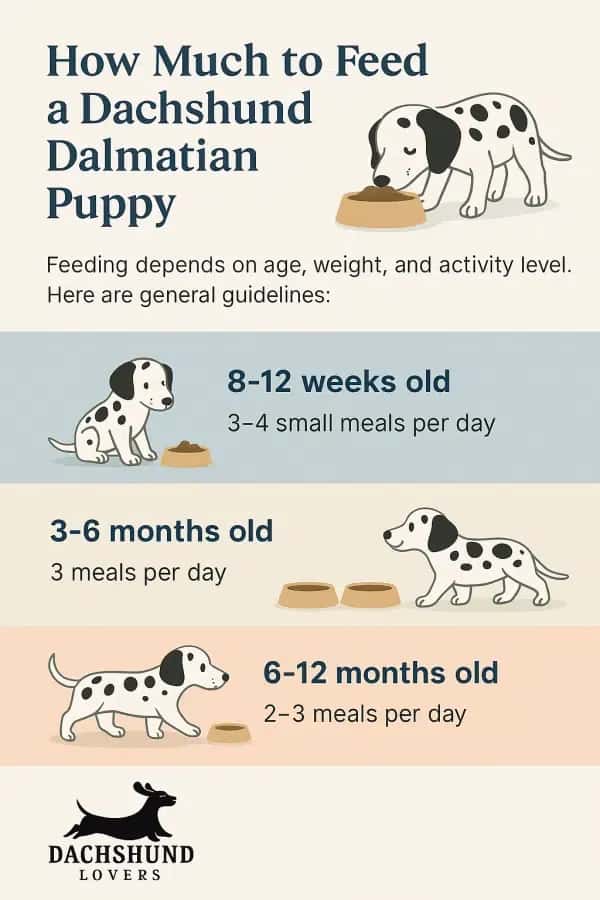
Feeding a dachshund Dalmatian mix puppy requires more than just filling a bowl — it’s about creating a diet that supports healthy growth, balanced energy levels, and long-term joint and spinal health. Both parent breeds have unique dietary considerations, so a well-planned approach will set your puppy up for a healthy future.
How Much to Feed a Dachshund Dalmatian Puppy
The amount you feed depends on your puppy’s age, weight, and activity level. According to PetMD, puppies need “about twice as many calories per pound of body weight compared to adult dogs,” due to their rapid growth and energy demands (PetMD Puppy Feeding Guide).
General Guidelines:
- 8–12 weeks old: 3–4 small meals per day.
- 3–6 months old: 3 meals per day.
- 6–12 months old: 2–3 meals per day.
A typical 10–15 lb puppy will require around 350–500 calories per day, but larger puppies (20–25 lbs) may need 500–700 calories daily. Always adjust portion sizes based on body condition — you should feel your puppy’s ribs without pressing hard, but they shouldn’t be visible.
Best Types of Puppy Food
- High-Quality Dry Kibble:
Choose a puppy-specific formula with real meat as the first ingredient. Avoid fillers like corn or soy, which offer limited nutritional value. - Wet Food (Optional):
Can be mixed with kibble for picky eaters, but watch portion sizes as wet food is higher in calories. - Fresh or Raw Diets:
Some owners prefer gently cooked or raw feeding. If you choose this route, ensure the diet is balanced and vet-approved.
The American Kennel Club (AKC) recommends feeding “high-quality commercial puppy foods that meet AAFCO guidelines,” especially during the first year when nutritional precision is critical (AKC Puppy Nutrition).
Key Nutrients for Healthy Growth
- Protein: At least 22–30% for puppies to support muscle and bone development.
- Fats: 8–12% to provide energy and support coat health.
- Calcium & Phosphorus: Crucial for proper bone growth — particularly important for preventing joint problems.
- Omega-3 Fatty Acids: Found in salmon oil, they help reduce inflammation and improve skin and coat health.
Foods to Avoid
Some foods are toxic or harmful to puppies, including:
- Chocolate, caffeine, grapes, raisins.
- Onions and garlic.
- Excess fatty scraps or processed human foods (risk of pancreatitis).
- Excess dairy products, which can upset digestion.
Sample Feeding Schedule
8–12 weeks:
- Morning: ½ cup dry puppy food with a tablespoon of wet food.
- Midday: ½ cup dry kibble.
- Afternoon: Small snack (like a few training treats or carrots).
- Evening: ½ cup dry puppy food.
6 months and older:
- Morning: 1 cup high-quality puppy kibble.
- Evening: 1 cup high-quality puppy kibble with a spoon of wet food or boiled chicken for variety.
Cost of Puppy Food (US, UK, AUS)
Feeding a medium-sized puppy like a Dalmatian dachshund mix typically costs:
- United States: $40–$60 USD per month for premium brands like Blue Buffalo or Wellness.
- United Kingdom: £30–£45 per month for brands like Lily’s Kitchen or James Wellbeloved.
- Australia: $60–$90 AUD per month for quality brands like Black Hawk or Ivory Coat.
Treats and Training Snacks
Treats should make up no more than 10% of daily calories. Opt for:
- Small training treats (low-calorie).
- Fresh veggies (carrots, green beans).
- Freeze-dried meat treats for high-value rewards.
James’ Note
Feeding a puppy isn’t just about nutrition — it’s about creating routine and reassurance. I’ve found that sticking to the same feeding times each day not only helps with digestion but also sets a rhythm that makes training easier. A puppy that knows what to expect is a puppy that feels secure.
Exercise Recommendations for Dachshund Dalmatian Mix Puppies
A dachshund Dalmatian mix puppy may be small and charming, but it’s also full of energy and curiosity. Both parent breeds — the active Dalmatian and the playful dachshund — are known for being alert and adventurous. However, it’s crucial to provide the right kind of exercise during the puppy phase to ensure healthy bone and joint development while avoiding injuries, particularly because the dachshund’s elongated spine is prone to strain.
How Much Exercise Does a Puppy Need?
The American Kennel Club (AKC) suggests following the “5-minute rule” for puppies — offering around 5 minutes of structured exercise per month of age, up to twice a day (AKC Puppy Exercise Guidelines).
- 2-month-old puppy: 10 minutes of gentle exercise, twice a day.
- 4-month-old puppy: 20 minutes, twice a day.
- 6 months and older: 30 minutes, twice a day (combined with indoor play).
Why this matters: Too much exercise at a young age can stress developing joints and soft tissue, while too little can lead to pent-up energy and unwanted behaviors.
Safe Indoor Activities
For puppies that aren’t fully vaccinated, indoor play is a safe and effective way to burn energy and build confidence.
- Soft Fetch: Use a plush toy or lightweight ball in a hallway or carpeted space.
- Puzzle Toys: Mental exercise is just as important as physical activity. Puzzle feeders or snuffle mats keep your puppy engaged and slow down eating.
- Tug Games: Use soft, puppy-safe ropes for short sessions — always teach “drop it” to avoid possessiveness.
- Training Play: Incorporate basic commands (sit, come, stay) into play sessions for a mental workout.
PetMD notes that short bursts of mental and physical stimulation are far better than long, exhausting sessions, especially for breeds prone to back strain (PetMD Puppy Exercise).
Once your puppy is fully vaccinated, short outdoor walks and socialization sessions are essential for building confidence.
- Leash Walks: Begin with short 5–10 minute strolls around the block.
- Gentle Exploration: Let your puppy sniff, explore, and observe — this is as mentally stimulating as it is physical.
- Controlled Playdates: Organize safe meetups with calm, fully vaccinated dogs to encourage positive social habits.
Tip: Avoid dog parks during early puppyhood — unpredictable encounters with larger, energetic dogs can overwhelm or injure a young puppy.
Avoiding Injury: Spinal and Joint Care
Because the dachshund side of this mix carries a risk of intervertebral disc disease (IVDD), it’s vital to avoid activities that put excessive pressure on the spine.
- No Stairs: Use baby gates to block staircases.
- No Jumping on Furniture: Train your puppy to wait for help or use ramps.
- Low-Impact Play: Focus on controlled activities rather than roughhousing or high jumps.
Exercise by Age
8–12 Weeks:
- Short play sessions, soft fetch indoors, and basic training.
- Multiple short potty walks (5–10 minutes each).
3–6 Months:
- Gradually increase structured walks to 15–20 minutes twice a day.
- Introduce longer training games (basic commands, scent play).
6–12 Months:
- Up to 30–40 minutes of total exercise daily, split into two or three sessions.
- Introduce safe agility elements, like tunnels or weave poles, for mental stimulation.
Mental Exercise Counts Too
A tired puppy isn’t just the result of physical play — mental challenges tire them out faster. This is especially true for hybrids like the Dalmatian Doxie, which are naturally smart and curious.
Great mental exercises:
- Hide small treats around the room for “find it” games.
- Rotate toys every few days to keep interest levels high.
- Teach fun tricks, like “spin” or “high five,” which also strengthen your bond.
Exercise Costs and Tools
Investing in a few quality exercise tools pays off:
- US: Puzzle feeders or interactive toys range from $10–$25 USD.
- UK: Popular brands like KONG or Lickimat cost around £8–£15.
- AUS: Durable toys like Aussie Dog Fetch cost $15–$30 AUD.
James’ Advice
Puppies don’t need endless running — they need structured, gentle activity with moments of curiosity and rest. Think of exercise as building a foundation for confidence, not just burning energy. One of the most rewarding moments is watching your puppy master the basics, like walking calmly by your side or responding to “come,” because you know it’s setting them up for a balanced, happy life.
Grooming a Young Dachshund Dalmatian Mix
The dachshund Dalmatian mix typically inherits a short, smooth coat, making grooming relatively simple compared to long-haired breeds. However, grooming isn’t just about appearance — it’s an early opportunity to build trust, routine, and bonding with your puppy. Starting grooming habits during the first few months ensures that your dog grows into a confident adult that is comfortable with being handled.
Why Start Grooming Early?
The American Kennel Club (AKC) emphasizes that early grooming habits — brushing, ear checks, nail trims, and dental care — “help prevent anxiety and resistance later in life” (AKC Puppy Grooming Guide). For a hybrid like the Dalmatian Doxie, who may inherit the dachshund’s sensitive nature or Dalmatian’s energetic temperament, early introductions to grooming make all the difference.
Coat Care for Puppies
The coat of a dachshund Dalmatian mix is typically short, smooth, and low-shedding, though weekly brushing is still recommended. Regular brushing removes loose hair, spreads natural oils, and keeps the coat shiny.
Brushing Tips:
- Use a soft-bristle brush or rubber grooming mitt designed for smooth-coated breeds.
- Start with gentle strokes while offering treats to build positive associations.
- A quick 5–10 minute brush once or twice a week is usually enough.
If your puppy inherits any longer feathering from the dachshund side, a slicker brush can help prevent tangles around the ears and tail.
Bathing Your Puppy
Dachshund Dalmatian puppies don’t require frequent baths, as over-bathing can strip natural oils from their coat.
- Frequency: Every 4–6 weeks, or when visibly dirty.
- Products: Use a mild puppy shampoo free from harsh chemicals or strong scents.
- Technique: Wet with lukewarm water, lather gently, and rinse thoroughly. Puppies have delicate skin, so ensure all soap is removed to avoid irritation.
Cost of Puppy Shampoos:
- US: $10–$15 for premium puppy-safe shampoos (e.g., Burt’s Bees, Earthbath).
- UK: £6–£10 for brands like Animology or Pet Head.
- AUS: $12–$20 AUD for gentle options such as Rufus & Coco.
Ear Care
Floppy or semi-floppy ears — common in dachshund crosses — can trap moisture and wax, leading to infections.
- Check ears weekly for redness, dirt, or odor.
- Use a vet-approved ear cleaner and a soft cotton ball (never insert cotton buds deep into the ear).
- Reward your puppy with praise or a treat during ear cleaning to make it a positive experience.
Nail Trimming
Puppy nails grow quickly, and long nails can affect gait and cause discomfort.
- Trim nails every 3–4 weeks.
- Use puppy-sized nail clippers or a grinder for smooth results.
- If unsure, ask your vet or groomer to demonstrate the correct technique.
Tool Costs:
- US: Nail clippers $8–$15 USD.
- UK: £5–£10.
- AUS: $10–$18 AUD.
Dental Care
Dachshund crosses can be prone to dental issues due to smaller jaw structures. Start brushing your puppy’s teeth early:
- Use a dog-specific toothbrush and enzymatic toothpaste (never human toothpaste).
- Begin with short, gentle sessions 2–3 times a week.
- Dental chews or rubber chew toys can complement brushing.
Paw and Pad Care
Introduce your puppy to paw handling early on. Check paws weekly for debris or dryness, especially after outdoor walks. For puppies living in areas with hot pavements or icy conditions, consider paw balms or booties to protect their pads.
Shedding and Seasonal Grooming
While the dachshund Dalmatian mix is generally a low-to-moderate shedder, seasonal changes may increase shedding slightly. Brushing during these times (spring and autumn) 2–3 times a week can keep hair under control.
PetMD notes: “Regular brushing not only removes loose fur but reduces allergens and improves skin circulation” (PetMD Dog Grooming Tips).
Professional Grooming
This hybrid rarely requires professional grooming due to its short coat, but you might opt for a bath-and-tidy service every 3–4 months.
- Cost Estimate: $30–$50 USD, £25–£40 in the UK, or $50–$70 AUD per session.
Puppy Grooming Kit Essentials
A starter kit should include:
- Soft-bristle brush or grooming mitt.
- Puppy shampoo and conditioner.
- Nail clippers or grinder.
- Ear-cleaning solution and cotton pads.
- Puppy toothbrush and enzymatic toothpaste.
Estimated Kit Cost:
- US: $40–$70 for a full kit.
- UK: £35–£50.
- AUS: $60–$90 AUD.
FAQs About Dachshund Dalmatian Mix Puppies
More From This Series:
Raising a dachshund Dalmatian mix puppy is just the beginning of a journey that spans from early training to adult care and health management. To give you a complete resource, we’ve built a series of articles covering every stage of life, temperament traits, and practical tips for this unique hybrid.
- About Dachshund Dalmatian Mix
Read Here →
Start here for a comprehensive breed overview, including their history, appearance, temperament, and why this hybrid is so rare and captivating.
- Full Grown Dachshund Dalmatian Mix: Size & Growth
Read Here →
Wondering how big your puppy will get? This guide offers growth timelines, weight expectations, and personality changes as they transition into adulthood.
- Dachshund Dalmatian Mix for Sale & Adoption Guide
Read Here →
Learn how to find this rare hybrid ethically — from choosing reputable breeders to exploring rescue options in the US, UK, and Australia, plus an overview of costs.
- Dachshund Dalmatian Mix Temperament & Personality
Read Here →
This in-depth guide dives into behavior traits, family suitability, and energy levels, helping you understand if this hybrid’s personality is the right fit for your lifestyle.
- Dachshund Dalmatian Mix Health & Lifespan
Read Here →
Discover the most common health issues affecting this mix, how to prevent them, and what you can do to extend your dog’s lifespan through nutrition, exercise, and vet care.
Authored by
James
James is the founder of Dachshund Lovers and the proud human of Harvey, a mini dapple with a big personality. He writes to empower and connect the dachshund community, blending founder insights with honest, experience-based stories about life with this incredible and special breed. James brings candid, experience-backed opinions to the community and always focused on fewer, better products and ideas that genuinely improve life for dachshunds and their people.
Read moreJames is the founder of Dachshund Lovers and the proud human of Harvey, a mini dapple with a big personality. He writes to empower and connect the dachshund community, blending founder insights with honest, experience-based stories about life with this incredible and special breed. James brings candid, experience-backed opinions to the community and always focused on fewer, better products and ideas that genuinely improve life for dachshunds and their people.
Read moreDisclaimer
This content is for informational purposes only and should not be considered veterinary advice. Always consult with a licensed veterinarian regarding your dog’s health and wellbeing.
There are no comments yet
Leave a comment