Dachshund Dalmatian Mix Temperament & Personality
Dachshund Dalmatian Mix Temperament & Personality
Curious about how big a Dalmachshund gets? I break down size, weight, and the unexpected traits of this unique Dachshund Dalmatian mix. Learn more.

James
Posted on October 16, 2025.
Updated on July 21, 2026.
Table of Contents
- •A Personality That’s as Unique as Its Spots
- 1.Key Takeaways on Dachshund Dalmatian Mix Temperament
- 2.Understanding Their Temperament
- -Inherited Traits from the Dachshund
- -Inherited Traits from the Dalmatian
- -Energy and Activity Levels
- -Behavior with Families
- -Behavior with Other Pets
- -Are They Easy to Train?
- -Quirks and Personality Highlights
- -Temperament in Different Homes
- -James’ Note
- 3.Personality Traits Inherited from Dachshunds
- -Playfulness and Mischief
- -Loyalty and Bonding
- -Confidence and Stubbornness
- -Vocal Tendencies
- -Prey Drive and Curiosity
- -How the Dachshund Side Shapes the Hybrid
- -James’ Note
- 4.Personality Traits Inherited from Dalmatians
- -Loyalty and Family Focus
- -High Energy Levels
- -Sociability
- -Intelligence and Trainability
- -Protective Nature
- -Emotional Sensitivity
- -Potential Challenges
- -How the Dalmatian Side Shapes the Hybrid
- -James’ Note
- 5.Behavior Around Children and Other Pets
- -Behavior Around Children
- -Training for Kid-Friendly Behavior
- -Behavior Around Other Dogs
- -Behavior Around Smaller Pets
- -Early Socialization is Key
- -Family Dynamics and Suitability
- -Managing Energy and Behavior
- -James’ Note
- 6.Exercise & Mental Stimulation
- -Daily Exercise Needs
- -Low-Impact Activities for Dachshund-Inspired Builds
- -The Importance of Mental Stimulation
- -Interactive Play Sessions
- -Social Activities
- -Exercise for Puppies
- -Balancing Physical and Mental Energy
- -Weather Considerations
- -Benefits of Regular Exercise
- -James’ Note
- 7.Common Behavioral Traits & Challenges
- -1. Barking and Alertness
- -2. Prey Drive
- -3. Stubbornness and Independence
- -4. Separation Anxiety
- -5. Energy Bursts
- -6. Social Sensitivities
- -7. Chewing and Digging
- -8. Sensitivity to Tone
- -Managing Challenges Through Structure
- -Start Early – The Puppy Window
- -Positive Reinforcement Works Best
- -Short, Focused Sessions
- -Key Commands to Prioritize
- -Leash Training
- -House Training Tips
- -Mental Enrichment as Training
- -Socialization Training
- -Handling Stubbornness
- -Professional Training Support
- 8.Behavioral Enrichment & Games
- -Why Enrichment Matters
- •Types of Enrichment
- -1. Scent Games
- -2. Puzzle Toys and Interactive Feeders
- -3. Training as Play
- -4. Outdoor Adventure Activities
- -5. Tug and Fetch
- -6. DIY Indoor Challenges
- -7. Social Play
- •Weekly Enrichment Plan (Sample)
- •Behavioral Benefits of Enrichment
- -More From This Series:
- -Disclaimer
Share

A Personality That’s as Unique as Its Spots
The dachshund Dalmatian mix (sometimes affectionately called the Dalmatian Doxie) is a hybrid that combines two of the most distinctive canine personalities. On one side, you have the dachshund: bold, curious, and full of determination. On the other, the Dalmatian: outgoing, loyal, and built for endurance. Together, these breeds create a dog that’s playful yet protective, independent yet loving.
If you’ve ever met one of these hybrids, you’ll notice they have an energy that fills a room — not in a chaotic way, but in the kind of curious, attentive way that makes them deeply connected to their surroundings. Whether curled up on the sofa or leading the way on a walk, they’re dogs that love to engage with their family.
In this guide, we’ll explore the personality traits that make this hybrid unique, how they interact with children and other pets, and what kind of training or mental stimulation brings out their best qualities. We’ll also touch on the quirks they inherit from both parents, because while this mix can be loving and loyal, they may have stubborn moments or bursts of high energy that require consistent, positive reinforcement.
If you’re still deciding whether this breed is right for you, I’d suggest pairing this guide with our About Dachshund Dalmatian Mix and Full Grown Dachshund Dalmatian Mix Guide. Together, they give a full picture — from their early years to adult temperament.
Key Takeaways on Dachshund Dalmatian Mix Temperament
Trait | Details |
|---|---|
Energy Levels | Moderate-to-high. Expect daily walks (45–60 minutes) and mental stimulation like puzzle games. |
Personality Type | Playful, curious, and alert. They’re affectionate with family but can be wary of strangers if not socialized early. |
Family Suitability | Great with families, especially those with older children who understand respectful handling. |
Training Style | Respond well to positive reinforcement and short, engaging sessions. A firm but gentle approach works best. |
Independence Level | Moderate. They enjoy companionship but can entertain themselves for short periods with toys or scent games. |
Behavior Around Pets | Generally good with other dogs, especially if socialized young. May chase smaller animals due to dachshund prey drive. |
Quirks | They can be vocal (like dachshunds) and have bursts of Dalmatian-like energy that require proper outlets. |
Affection Level | High. They form strong bonds with their owners and enjoy being part of family routines. |
If I had to sum up this hybrid in one word, it would be “engaging.” They’re dogs that keep you on your toes, but in the best possible way. With the right balance of structure, exercise, and affection, the dachshund Dalmatian mix becomes more than a pet — they become a part of your family rhythm, seamlessly woven into everyday life.
Understanding Their Temperament
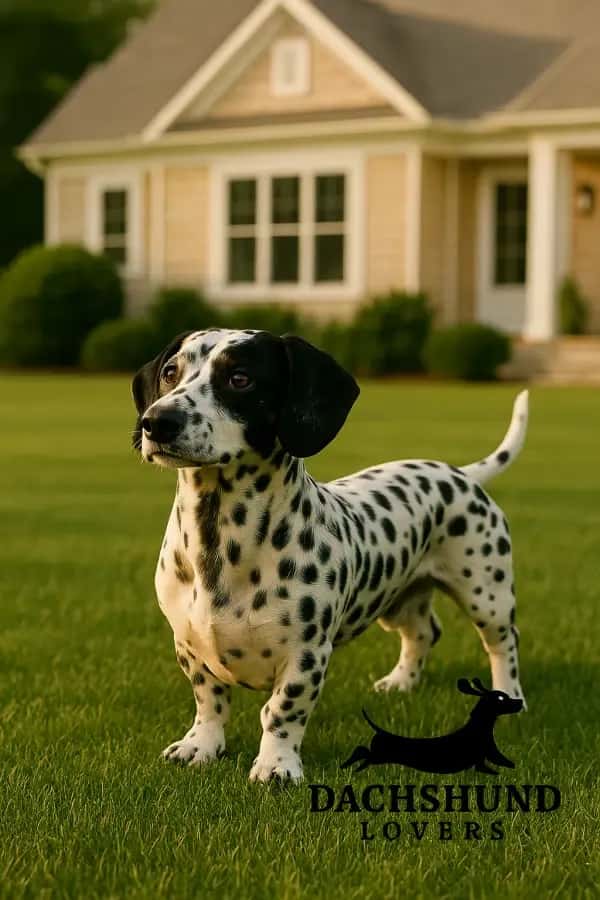
The dachshund Dalmatian mix is one of those hybrids that feels like a happy contradiction — both independent and people-focused, playful yet composed, protective but deeply affectionate. Their temperament is shaped by a fascinating mix of genetics: the dachshund’s fearless, curious nature paired with the Dalmatian’s loyalty and high energy.
To understand this hybrid’s personality, it helps to break down what each parent breed contributes and how they combine.
Inherited Traits from the Dachshund
Dachshunds are well-known for their confidence and determination. Bred as hunters, their strong prey drive and sense of independence are traits that often shine through in hybrids.
From the dachshund side, you can expect:
- Stubborn Intelligence: They’re quick learners but may choose when they want to listen. Positive reinforcement is key.
- Protectiveness: They’re alert and can be a bit vocal when they sense something unusual, making them natural watchdogs.
- Loyalty: Dachshunds form close bonds with their favorite people and often show a strong preference for family time.
This streak of independence means you might need to work a little harder on recall and leash training. For practical tips, see our Dachshund Dalmatian Mix Puppies Guide, which covers early training essentials.
Inherited Traits from the Dalmatian
Dalmatians bring a lively, social energy that balances the dachshund’s stubborn streak. Known historically as carriage dogs, they are intelligent, protective, and always alert.
From the Dalmatian side, you can expect:
- People-First Attitude: Dalmatians thrive on human interaction, making this hybrid particularly affectionate and family-oriented.
- High Energy Levels: They enjoy longer walks, play sessions, and mentally stimulating games.
- Gentle Loyalty: They’re protective without being overly dominant, which makes them wonderful companions for both adults and older children.
This Dalmatian influence often makes the hybrid more outgoing and easy to socialize, provided it’s started young.
Energy and Activity Levels
The Dalmatian Doxie is not a couch potato. Expect 45–60 minutes of daily exercise once they’re full grown, split between:
- Walks or hikes (low-impact routes are ideal to protect dachshund-influenced spines).
- Interactive games like fetch, scent work, or puzzle toys.
- Training sessions — their intelligence makes them eager to learn, and mental challenges can tire them out faster than running.
For advice on safe activity for young dogs, you can refer to the exercise section in our Full Grown Size & Growth Guide, which explains activity levels at different ages.
Behavior with Families
One of the biggest advantages of this hybrid is its adaptability to family life. With older children who understand how to handle dogs respectfully, they can be playful, gentle, and endlessly entertaining.
- They enjoy being part of everyday routines — whether that’s morning school runs or evening family time.
- They thrive on consistent attention and structure.
- They’re affectionate and will happily curl up beside you after an active day.
Families with toddlers or very young children should supervise interactions, as dachshund genes can make them a bit sensitive to rough handling.
Behavior with Other Pets
The dachshund’s hunting instinct means some hybrids might chase small animals like rabbits or guinea pigs. However, with early socialization, they tend to do well with other dogs — especially those of similar size or energy.
- Tip: Introduce them to other pets during their 8–12 week puppy window to avoid issues later on.
- Supervised playdates and positive reinforcement can help build confidence around other animals.
Are They Easy to Train?
Yes, but training needs to be consistent, positive, and creative. While Dalmatians are eager to please, dachshunds can be stubborn. The best approach is to keep sessions:
- Short: 5–10 minutes of focused training works better than long sessions.
- Reward-Based: High-value treats or toys keep their attention.
- Varied: Mix obedience training with games like scent work or hide-and-seek to prevent boredom.
If training from scratch feels overwhelming, our Puppies Guide offers beginner-friendly methods for building solid foundations.
Quirks and Personality Highlights
Every hybrid has quirks, and the Dalmatian Doxie is no exception:
- “Velcro Dog” Behavior: They may follow you around the house — a Dalmatian trait amplified by the dachshund’s loyalty.
- Vocal Tendencies: Some can be quite vocal, barking when excited or when strangers approach.
- Playful Mischief: Expect bursts of clever, cheeky behavior — like figuring out how to open toy boxes or nudge doors.
Temperament in Different Homes
- Apartments: They can adapt well to smaller living spaces if they get daily walks and play sessions.
- Active Families: Perfect match — they’ll thrive in homes where they can join outdoor adventures.
- First-Time Owners: Manageable with proper guidance, especially if owners invest in training and mental enrichment.
James’ Note
What I love most about this hybrid is that they feel like “companions with character.” They’re not dogs you can ignore — they want to be part of your day, your conversations, your routines. With patience and structure, they become loyal, joyful family members that surprise you with how emotionally in tune they are.
Personality Traits Inherited from Dachshunds

The dachshund side of this hybrid brings a bold, mischievous charm that can easily steal your heart. Dachshunds were bred as fearless hunting dogs, known for their ability to track and dig out small game, which means they are naturally curious, determined, and sometimes stubborn. According to the American Kennel Club (AKC), dachshunds are described as “clever, lively, and courageous to the point of rashness” (AKC Dachshund Breed Profile). These qualities influence many aspects of the dachshund Dalmatian mix’s personality.
Playfulness and Mischief
Dachshunds are playful by nature, often inventing their own games or engaging in clever problem-solving to get what they want. For a hybrid like the Dalmatian Doxie, this can mean:
- Figuring out puzzle toys faster than you expect.
- Finding creative ways to reach snacks or toys you thought were out of reach.
- A love of “digging,” whether it’s in the backyard or under the blankets on your bed.
These playful quirks are endearing but also require structured training to avoid unwanted behaviors like digging in the wrong places or chewing on furniture. For tips on managing these habits, you can refer to our Dachshund Dalmatian Mix Puppies Guide, which outlines early enrichment activities.
Loyalty and Bonding
Dachshunds are famously loyal, often forming a deep attachment to one or two family members. This loyalty translates into the hybrid’s temperament, where they may:
- Follow you around the house like a shadow.
- Be particularly protective of their favorite person (sometimes showing a bit of “jealousy” around strangers).
- Show strong separation anxiety if left alone for long periods.
PetMD highlights that dachshunds are “highly devoted and thrive in households where they receive consistent attention and interaction” (PetMD Dachshund Overview). For this reason, the hybrid does best in homes where someone is around for at least part of the day, or where mental stimulation and chew toys can fill the gap.
Confidence and Stubbornness
Dachshunds have a “big dog” personality in a small body. They’re confident, determined, and sometimes selectively obedient. If they sense inconsistency in training, they may try to test the rules — not out of defiance, but because they have an independent streak.
Training Tip:
- Use positive reinforcement with high-value treats (like small bits of chicken or cheese).
- Keep sessions short (5–10 minutes) — dachshunds can become bored with repetitive commands.
- Avoid harsh corrections, which can damage trust.
The hybrid often inherits this determination, which can make them brilliant learners when training is fun and engaging.
Vocal Tendencies
Dachshunds are known for their alert, sometimes loud bark — a trait that can carry over to the hybrid. They may bark to:
- Alert you when someone is at the door.
- Express excitement during play.
- Signal boredom or frustration when left alone.
The AKC notes that dachshunds are “watchful and vocal, but not aggressive by nature” (AKC Dachshund Temperament Guide). With the hybrid, early training of “quiet” commands and regular exercise helps minimize excessive barking
Prey Drive and Curiosity
The hunting background of dachshunds means they’re scent-driven and curious. A hybrid may show:
- A love of following scents during walks (keep them on a leash to avoid distractions).
- A strong interest in smaller animals like squirrels or rabbits.
- A tendency to dig or burrow — traits inherited from generations of hunting instincts.
To channel this energy positively, consider scent-based games like hiding treats around the house or using snuffle mats to satisfy their natural hunting drive.
How the Dachshund Side Shapes the Hybrid
In the dachshund Dalmatian mix, these traits often combine with the Dalmatian’s energy and social nature to create a confident, playful dog that thrives on attention. While the hybrid may have moments of independence, they’re also eager for family connection and mental stimulation.
James’ Note
One of my favorite things about dachshund personality traits is how expressive they are. They’ll tilt their head, sigh dramatically, or “talk” with little grumbles as if they’re part of the conversation.
Personality Traits Inherited from Dalmatians
The Dalmatian side of this hybrid adds a layer of grace, loyalty, and sociability that complements the dachshund’s spirited independence. Known for their iconic spotted coats and energetic nature, Dalmatians are not just visually striking — they are highly intelligent, people-oriented dogs with a strong work ethic and an innate sense of loyalty.
The American Kennel Club (AKC) describes the Dalmatian as “intelligent, dignified, and outgoing,” with a personality that makes them “devoted companions and natural protectors” (AKC Dalmatian Overview). These characteristics often influence the temperament of a dachshund Dalmatian mix in wonderful ways.
Loyalty and Family Focus
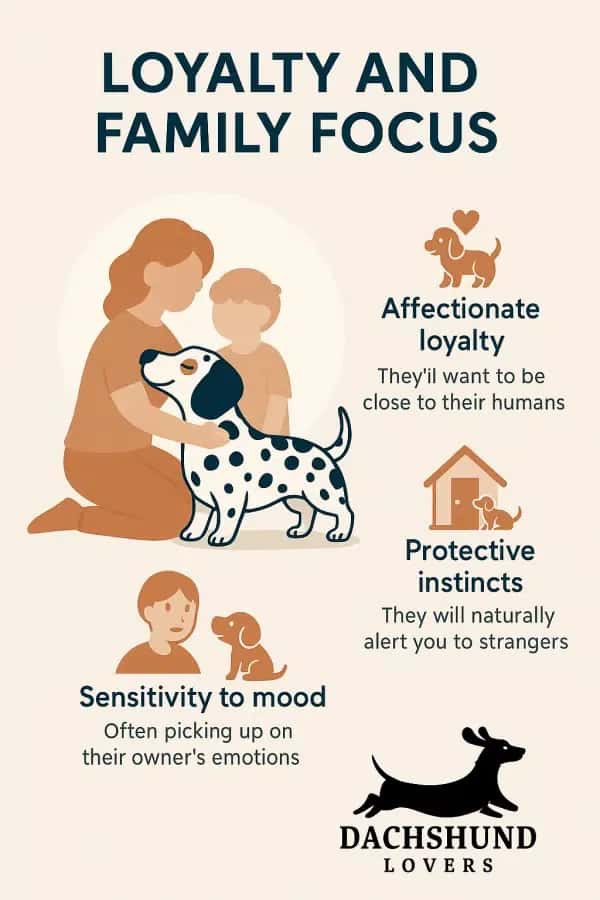
Dalmatians are known for forming deep emotional bonds with their families. Unlike the dachshund’s occasional independence, a Dalmatian thrives on being part of daily life and will want to follow you from room to room. This means the hybrid often inherits:
- Affectionate loyalty: They’ll want to be close to their humans, both during active play and quiet moments.
- Protective instincts: While not overly aggressive, they will naturally alert you to strangers and can act as gentle watchdogs.
- Sensitivity to mood: Dalmatians are emotionally intelligent, often picking up on their owner’s tone or energy.
According to PetMD, Dalmatians are “highly social and happiest when included in family activities, making them excellent companions for active households” (PetMD Dalmatian Guide).
High Energy Levels
Dalmatians were bred as carriage dogs, designed to run alongside horses for long distances. This heritage gives them endurance and enthusiasm for outdoor activity.
- Daily exercise needs: The hybrid often requires 45–60 minutes of daily walks, combined with play sessions or agility games.
- Mental stimulation: Without tasks or games, they can become bored, leading to destructive behavior.
- Outdoor adventures: They thrive on hikes, fetch games, and interactive training.
This energy pairs surprisingly well with the dachshund’s alertness and curiosity, creating a dog that’s playful but not hyperactive — provided their daily needs are met.
Sociability
Dalmatians are generally friendly and love meeting new people when properly socialized. They tend to bring a confident, outgoing streak to the hybrid, making the dog more adaptable to new environments and situations.
- They’re often less reserved around strangers than dachshunds.
- Early socialization ensures they stay approachable and well-mannered.
Intelligence and Trainability
The Dalmatian’s intelligence is one of its standout traits. While dachshunds can be a little willful, the Dalmatian side often balances this by being eager to please.
- Quick learners: They pick up commands, routines, and house rules quickly.
- Best training approach: Short, engaging sessions that mix obedience with interactive games work best.
- Problem-solving: The hybrid often enjoys puzzle toys and learning new tricks — mental stimulation is as important as physical exercise.
Protective Nature
While not as “guard dog” oriented as some breeds, Dalmatians have a natural instinct to look after their home and family. They’re likely to alert you when someone is at the door or if they hear an unusual noise. However, they’re not overly aggressive — with proper introductions, they warm up to guests quickly.
Emotional Sensitivity
Dalmatians are known for being emotionally tuned in. This means the hybrid may:
- Respond to your tone of voice: Harsh or loud corrections can make them shut down.
- Thrive on praise: A cheerful tone and gentle reinforcement build trust.
- Be sensitive to changes in environment or routine: They value consistency and stability.
Potential Challenges
Dalmatians can be prone to separation anxiety, as they love being around their people. The hybrid may inherit this trait, making crate training or gradual alone-time training essential to prevent stress.
Additionally, their high intelligence means they can outsmart owners if not given structure — for instance, figuring out how to open doors or cupboards!
How the Dalmatian Side Shapes the Hybrid
When combined with the dachshund’s confidence, the Dalmatian side often softens the stubbornness, making the hybrid affectionate, playful, and more adaptable to new experiences. They are dogs that:
- Love routine outdoor activities with their family.
- Form strong social bonds with other pets (when introduced properly).
- Have the stamina for active lifestyles but also appreciate downtime with their humans.
James’ Note
The Dalmatian traits bring a sense of balance and charm to the hybrid. While the dachshund side might be the “troublemaker,” the Dalmatian side feels like the “social butterfly” — warm, loyal, and always ready to engage. Together, these qualities create a dog that’s as dynamic as it is lovable.
Behavior Around Children and Other Pets
The dachshund Dalmatian mix is often described as family-oriented, loyal, and playful, but like any hybrid, its behavior around children and other animals is shaped by both genetics and early experiences. With the Dalmatian’s sociable nature and the dachshund’s affectionate loyalty, this mix can become a fantastic family companion when properly trained and socialized.
Behavior Around Children
The Dalmatian Doxie can be a wonderful family dog, especially with older children who know how to interact respectfully with pets. They often enjoy the energy and playfulness of kids, which matches their own curiosity and love for games.
Positives:
- Playful Companions: Their moderate size and energy make them perfect partners for active children who enjoy outdoor games like fetch or gentle agility tasks.
- Protective Instincts: They tend to be naturally watchful, often alerting you if they sense something unusual — a trait inherited from both parent breeds.
- Affectionate Nature: These dogs often seek out family interaction, preferring to be in the middle of household activities.
Considerations:
- Sensitivity to Rough Play: Dachshunds can be sensitive to being handled incorrectly (e.g., pulled tails, rough hugs), and this trait may pass on to the hybrid.
- Supervision for Young Children: According to the RSPCA, children under 5 should always be supervised when interacting with dogs, as unpredictable movements can lead to accidental nips or stress for the dog (RSPCA Dog Safety with Kids).
- Early Socialization: Exposing puppies to children early ensures they grow up comfortable with their energy and unpredictable behavior.
Training for Kid-Friendly Behavior
To encourage good behavior around children:
- Teach “Gentle” Commands: Reward calm interactions to ensure they don’t jump or nip during play.
- Create Safe Spaces: Provide a crate or quiet corner where the dog can retreat if overwhelmed by noise or activity.
- Involve Kids in Training: Simple commands like sit or stay can be taught by older children under supervision, strengthening the bond.
Behavior Around Other Dogs
The dachshund Dalmatian mix is generally good with other dogs, especially if socialized from an early age. The Dalmatian’s pack-friendly temperament helps, while the dachshund’s independent streak means they won’t necessarily cling to other dogs but will enjoy playing.
- Positive Playmates: They do well with dogs of similar size and energy levels.
- Caution with Larger Dogs: If the hybrid is smaller (miniature dachshund parent), play with large dogs should be supervised to avoid accidental injury.
- Dog Park Etiquette: Introduce them gradually to off-leash environments. Their vocal dachshund side can sometimes cause misunderstandings with other dogs if left unchecked.
Behavior Around Smaller Pets
The dachshund’s hunting instinct means this hybrid may show curiosity or chase behavior toward smaller animals like rabbits or guinea pigs. However, with careful introductions and training, they can learn to coexist peacefully.
Tips for Homes with Small Pets:
- Always introduce in controlled settings with the dog on a leash at first.
- Use commands like leave it or stay and reward calm behavior.
- Never leave them unsupervised with small animals, especially if their prey drive is strong.
Both AKC and RSPCA emphasize that early socialization (8–16 weeks) is crucial for all breeds, and it’s especially important for hybrids with mixed instincts like the Dalmatian Doxie.
- Arrange playdates with other dogs in controlled environments.
- Expose them to different people, sounds, and environments so they develop confidence and adaptability.
- Enroll in puppy training classes to encourage polite behavior around other dogs and humans.
The American Kennel Club (AKC) notes that early exposure reduces fear and helps prevent reactive behavior as adults (AKC Socialization Guide).
Family Dynamics and Suitability
This hybrid thrives in active, loving households. They’re not dogs that do well being left alone all day — they crave companionship and routine. Families who enjoy regular walks, play sessions, and spending time outdoors will find this hybrid particularly rewarding.
- Great for Older Kids: They can handle moderate play, join in family games, and learn commands from children aged 7+.
- Better for Multi-Dog Homes: They often enjoy the company of another dog, particularly if the companion is balanced and well-socialized.
- Less Ideal for Very Busy Homes: Without proper engagement, they can become vocal or resort to mischievous behaviors.
Managing Energy and Behavior
Both parent breeds are energetic in different ways. Dalmatians have stamina, while dachshunds have bursts of determined playfulness. A combination of 45 minutes of exercise daily, interactive toys, and short training sessions will keep their energy balanced. Families who neglect exercise might find this hybrid barking or digging out of boredom.
James’ Note
What stands out about the Dalmatian Doxie in family life is their emotional intelligence. They often know when to play and when to quietly sit by your side. With the right socialization, they can handle the lively chaos of family life — all while adding their own playful, heartwarming energy to the mix.
Exercise & Mental Stimulation
The dachshund Dalmatian mix is a hybrid with moderate-to-high energy levels, meaning they thrive on a mix of physical activity and mental engagement. Without proper outlets, this hybrid may become bored, leading to behaviors like digging, barking, or chewing. With the right balance, however, they become calm, well-mannered companions both indoors and outdoors.
Daily Exercise Needs
Once fully grown (12–18 months), this mix generally needs 45–60 minutes of daily exercise. This doesn’t need to be one long session — breaking it into two or three shorter walks or play sessions works best, especially for hybrids with dachshund-style spines that benefit from low-impact activity.
The American Kennel Club (AKC) emphasizes that active breeds like the Dalmatian benefit from structured walks and interactive play to maintain both body and mind (AKC Exercise Advice).
Suggested Routine:
- Morning: A 20-minute brisk walk or light jog.
- Afternoon: A 15-minute play session (fetch or scent games).
- Evening: A slow-paced walk (20 minutes) or indoor enrichment activities.
Low-Impact Activities for Dachshund-Inspired Builds
Because dachshunds are prone to intervertebral disc disease (IVDD), high-impact exercise like jumping from furniture or climbing steep stairs should be avoided. For the hybrid, consider:
- Flat-surface walks or gentle trails over rocky or hilly terrains.
- Swimming or hydrotherapy, which provides excellent low-impact exercise.
- Fetch with soft toys at ground level instead of jumping activities.
The Importance of Mental Stimulation
The Dalmatian side brings sharp intelligence that needs mental engagement to prevent boredom. According to PetMD, “intelligent breeds require as much mental exercise as physical activity” (PetMD on Mental Stimulation).
Mental Workout Ideas:
- Puzzle toys and feeders: Food-dispensing toys (e.g., KONGs or treat balls) keep them engaged during mealtimes.
- Scent work games: Hide treats around the house or garden to tap into their natural hunting instincts.
- Training refreshers: Teaching new tricks or practicing commands for 5–10 minutes daily strengthens focus and obedience.
- DIY Challenges: Create indoor obstacle courses using cushions, chairs, and blankets.
Interactive Play Sessions
A hybrid like the Dalmatian Doxie thrives on interactive play that engages both body and mind:
- Fetch: Use lightweight toys or balls that encourage short sprints.
- Hide-and-seek: Hide around the house and let them “find” you.
- Tug games: Fun but structured — teach a “drop it” command to maintain control.
This hybrid enjoys being around people and other dogs. Regular trips to dog parks (in controlled environments) or playdates with other dogs can provide valuable socialization.
- Dalmatian influence means they’re usually confident in group play.
- Dachshund traits might make them a bit bossy — monitor early interactions to ensure balanced play.
Exercise for Puppies
Puppies under 12 months need careful exercise to protect their growing joints and spines. Follow the 5-minute rule: 5 minutes of exercise per month of age, twice daily.
- For example, a 4-month-old pup should have no more than 20 minutes per session.
- Focus on short, positive play sessions over long walks.
Our Puppies Guide covers early exercise plans and safe ways to burn energy without overexertion.
Balancing Physical and Mental Energy
A tired dog is a happy dog, but with this hybrid, it’s not just about wearing them out physically. Mental stimulation can be just as tiring.
- 15 minutes of puzzle solving (like using a snuffle mat) can mentally exhaust them as much as a 30-minute walk.
- Mixing physical activities with brain games prevents behavioral problems like barking or destructive chewing.
Weather Considerations
Both dachshunds and Dalmatians are sensitive to extreme weather:
- Hot climates: Walk early in the morning or later in the evening to avoid overheating.
- Cold or wet weather: Short walks with a dog coat may be needed. Dalmatians have short, fine coats that don’t insulate well.
Benefits of Regular Exercise
Proper exercise helps prevent:
- Obesity: A common issue for dachshund mixes, which adds pressure to their spine.
- Anxiety or boredom behaviors: Chewing, barking, or digging often reduce with adequate activity.
- Muscle tone and flexibility: Keeping their core strong supports the spine and joints.
James’ Note
What I’ve learned with active hybrids and my very own Harvey is these Doxies is that exercise is as much about connection as it is about activity. A game of fetch or a walk in the park isn’t just exercise — it’s a chance for your dog to read your mood, bond with you, and feel part of your world. That’s when their temperament truly shines.
Common Behavioral Traits & Challenges
The dachshund Dalmatian mix is a blend of intelligence, curiosity, and loyalty — but like any hybrid, these traits can sometimes lead to quirky behaviors or challenges if not managed correctly. With consistent training, exercise, and socialization, most issues are easy to address, but it’s helpful to know what to expect.
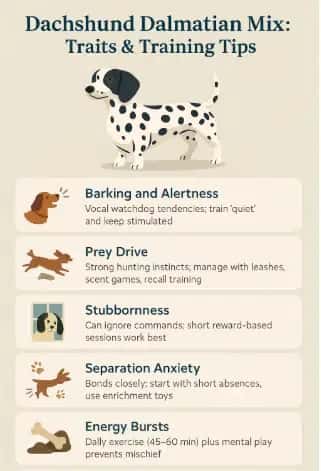
1. Barking and Alertness
Dachshunds are famously vocal, and this hybrid often inherits their watchdog tendencies. While this can be useful for alerting you to visitors, it can become excessive if not addressed early.
- Why they bark: Excitement, boredom, or as a way to signal that something has caught their attention.
- Managing barking:
- Teach a “quiet” command by rewarding silence.
- Ensure they’re mentally stimulated — bored dogs bark more.
- Offer chew toys or puzzle feeders to distract them during known trigger times.
According to the American Kennel Club (AKC), barking is “a natural behavior for many breeds, but with early training, it can be directed in a positive way” (AKC on Barking).
2. Prey Drive
The dachshund’s history as a hunting dog means this hybrid may show a strong prey drive. They might:
- Chase squirrels, rabbits, or even small neighborhood pets.
- Fixate on scents during walks.
How to manage prey instincts:
- Keep them on a secure leash or long line during outdoor adventures.
- Use scent games or snuffle mats to redirect their natural instincts.
- Practice strong recall training using high-value rewards (tiny pieces of cooked chicken or freeze-dried treats).
3. Stubbornness and Independence
While the Dalmatian side brings an eagerness to please, the dachshund influence can make this hybrid stubborn at times.
- They might “pretend” not to hear commands if something more exciting is happening.
- Consistency and positive reinforcement training work better than harsh corrections, which can damage trust.
Training Tip: Keep sessions short (5–10 minutes) and mix in play to keep them engaged.
The RSPCA advises that stubborn breeds thrive with “reward-based training and gentle persistence” (RSPCA Training Guide).
4. Separation Anxiety
Because both parent breeds bond closely with their families, this mix can develop separation anxiety if left alone for long periods. Signs include barking, pacing, or destructive chewing.
- Solutions:
- Start with short absences, gradually increasing alone time.
- Provide enrichment toys like frozen KONGs.
- Consider a dog walker or daycare if you work long hours.
5. Energy Bursts
While they’re not as hyperactive as some working breeds, the Dalmatian Doxie has moments of “zoomies” or playful bursts. Without structured outlets for their energy, they can resort to mischief like digging in the garden or tipping over their toy basket.
Prevention:
- Ensure they get 45–60 minutes of daily activity.
- Alternate physical activities with mental games like hide-and-seek or trick training.
Some dachshund Dalmatian mixes can be a little reserved with strangers, particularly if the dachshund side dominates. Socializing them early and often helps them become more confident and relaxed around new people and dogs.
Socialization Checklist:
- Expose them to different environments (parks, outdoor cafes, short car rides).
- Introduce them to friendly, well-behaved dogs.
- Use praise and treats to reward calm, positive interactions.
7. Chewing and Digging
Both dachshunds and Dalmatians have a natural drive to dig or chew, which might show up in the hybrid.
- Chewing Fix: Offer a rotation of chew toys — from rubber bones to rope toys — to keep them engaged.
- Digging Fix: If you have a backyard, consider a “designated digging area” (like a sandbox) where they can dig without ruining your garden.
8. Sensitivity to Tone
One of the more endearing traits of this hybrid is their emotional sensitivity. The Dalmatian’s people-focused personality means they can be affected by your tone of voice or mood. A harsh correction can make them shy or less responsive.
Instead, focus on calm but firm communication, paired with consistent praise when they get things right. This positive approach helps them flourish emotionally and behaviorally.
Managing Challenges Through Structure
A well-exercised and mentally stimulated Dalmatian Doxie is less likely to develop problem behaviors.
- Daily Routine: Dogs thrive on structure — feeding, walking, and playtime at regular intervals helps build security.
- Training Sessions: 5–10 minutes of training daily can help reinforce good habits.
- Family Involvement: Everyone in the household should follow the same rules and commands to prevent confusion.
Training a dachshund Dalmatian mix is all about balancing patience, consistency, and fun. This hybrid inherits two intelligent yet distinct personalities: the dachshund’s independent streak and the Dalmatian’s eagerness to engage with their family. When these traits are channeled correctly, they make exceptional learners who thrive on structured training.
The American Kennel Club (AKC) emphasizes that “positive reinforcement and early socialization are the most effective ways to train intelligent breeds” (AKC Training Basics). Here’s how to tailor these methods for your Dalmatian Doxie.
Start Early – The Puppy Window
Training is most effective when it begins during the critical socialization period (8–16 weeks). During this window, puppies are more receptive to new experiences, sounds, and people.
- Expose them to safe environments (parks, car rides, pet-friendly cafes).
- Introduce basic commands like sit, stay, and come with plenty of rewards.
- Use short sessions (3–5 minutes) multiple times a day to keep them engaged.
For detailed puppy training routines, refer to our Dachshund Dalmatian Mix Puppies Guide.
Positive Reinforcement Works Best
This hybrid responds exceptionally well to reward-based training. Instead of focusing on punishment, reward the behaviors you want to encourage.
- Use treats sparingly but strategically: Small, high-value treats (like chicken or cheese) work best.
- Verbal praise and affection: A happy “good job!” combined with petting or play is highly motivating.
- Consistency is key: Use the same command words and reward timing each time.
The RSPCA highlights that positive reinforcement “builds trust, strengthens the bond between dog and owner, and leads to more reliable training results” (RSPCA Training Advice).
Short, Focused Sessions
Dachshunds can lose interest quickly, while Dalmatians thrive on variety. To keep training productive:
- Limit sessions to 5–10 minutes but repeat them 2–3 times per day.
- Mix up training exercises — alternate obedience (sit, stay) with fun tricks (roll over, shake paw).
- Use play breaks as rewards to maintain enthusiasm.
Key Commands to Prioritize
Certain commands are particularly useful for this hybrid’s temperament:
- “Come” (Recall): Crucial due to their prey drive. Practice in enclosed areas with a long line, rewarding every successful return.
- “Leave it”: Helps control their natural curiosity and protect them from harmful objects.
- “Quiet”: Especially helpful to manage dachshund-style barking.
- “Stay” and “Wait”: Build impulse control, useful during walks or around food.
Leash Training
Dalmatians are strong and dachshunds are determined, so teaching good leash manners early is essential.
- Start with a no-pull harness for better control and reduced strain on their neck or spine.
- Reward loose-leash walking with treats or praise every few steps.
- Use short, structured walks instead of long, uncontrolled sessions during early training.
House Training Tips
Housebreaking can take slightly longer with dachshund hybrids due to their independent streak.
- Establish a routine: Take them outside after meals, naps, or play.
- Use positive reinforcement: Praise and reward the moment they toilet in the correct place.
- Avoid scolding accidents: Instead, clean thoroughly to remove any scent markers.
Mental Enrichment as Training
This hybrid’s intelligence means they thrive on mental challenges.
- Puzzle feeders: Engage their problem-solving skills while slowing down eating.
- Scent-based games: Hide treats around the house or garden to tap into their hunting instincts.
- Training “tricks” as mental exercise: Teach commands like spin, high-five, or find it to keep sessions engaging.
Socialization is just as important as obedience. Without it, this mix may develop wariness of strangers or reactivity toward other dogs.
- Introduce them to a variety of people and pets from an early age.
- Arrange supervised playdates with dogs of similar energy levels.
- Reward calm, positive interactions with praise and treats.
Handling Stubbornness
The dachshund influence means this hybrid may occasionally test your patience.
- Stay calm and consistent: Never escalate with harsh corrections.
- Make training fun: Incorporate games and toys to keep their attention.
- End sessions on a high note: Always finish training with a command they know well, followed by a reward.
Professional Training Support
If stubbornness or behavioral challenges persist, consider:
- Puppy classes or group training: These provide structure and social exposure.
- One-on-one sessions with a trainer: Ideal for issues like recall or barking.
- Look for trainers who specialize in positive reinforcement techniques (avoid those using dominance-based methods, which can harm trust).
Behavioral Enrichment & Games
For a dachshund Dalmatian mix, physical exercise is only half the story. These dogs are highly intelligent and curious, meaning they thrive when their minds are challenged just as much as their bodies. Without proper enrichment, they can become bored or mischievous — a natural byproduct of their hunting heritage (dachshund) and working background (Dalmatian).
The American Kennel Club (AKC) highlights that “mental stimulation is as important as physical exercise, particularly for intelligent and active breeds” (AKC Mental Enrichment Guide). Enrichment is what helps channel their natural instincts — sniffing, problem-solving, and exploring — into positive, rewarding behaviors.
Why Enrichment Matters
This hybrid inherits:
- A scent-driven nose from the dachshund.
- A love for problem-solving and patterns from the Dalmatian.
Providing mental stimulation prevents unwanted behaviors like digging, barking, or chewing. It also builds confidence and strengthens the bond between you and your dog.
Types of Enrichment
1. Scent Games
Dachshunds were bred to follow scents, so tapping into this instinct is both natural and satisfying for them.
Ideas:
- Find It Game: Hide treats around the house or garden and encourage your dog to “find it.”
- Snuffle Mats: These mats mimic foraging behavior, keeping them mentally engaged during mealtimes.
- Scent Trails: Drag a favorite toy across the yard and reward them for following the scent path.
2. Puzzle Toys and Interactive Feeders
Puzzle feeders slow down eating and encourage problem-solving. Look for toys that require your dog to nudge, push, or paw compartments to release treats.
- KONG toys filled with frozen treats are excellent for keeping them occupied.
- Interactive ball feeders are great for small spaces or rainy days.
According to PetMD, puzzle feeders not only improve mental engagement but also reduce the risk of obesity by slowing down mealtimes (PetMD Puzzle Toys Benefits).
3. Training as Play
Incorporate training into your games. This mix learns best when commands are part of fun, structured activities.
- Teach commands like spin, roll over, or find the toy.
- Combine short obedience drills with interactive rewards (treats or a favorite toy).
- Use training games like “Simon Says” where they perform random known commands in sequence.
4. Outdoor Adventure Activities
The Dalmatian side loves outdoor exploration. When it’s safe to do so:
- Short, flat hikes (perfect for dachshund-shaped backs).
- Visits to dog-friendly beaches or parks.
- Fetch games on soft grass to prevent impact stress on joints.
For safe activity levels based on age and size, check our Full Grown Size & Growth Guide.
5. Tug and Fetch
These classic games help with bonding and burn off energy.
- Tug games: Use soft, sturdy toys and always include a “drop it” cue to keep the game structured.
- Fetch: Best on soft surfaces like grass; keep throws short for younger dogs to avoid spinal strain.
6. DIY Indoor Challenges
When outdoor activity isn’t possible, indoor games can keep them busy:
- Obstacle Courses: Use cushions, low chairs, or tunnels (kids’ play tunnels work perfectly).
- Hide-and-Seek: Hide in different rooms and call their name — reward them when they find you.
- Muffin Tin Game: Place treats in a muffin tray and cover them with tennis balls for your dog to figure out.
Playdates with other dogs provide both mental and physical enrichment. The Dalmatian Doxie often enjoys group settings but may show a “small dog bossiness” (inherited from dachshunds).
- Monitor early interactions.
- Pair them with similar-sized dogs to avoid accidental bumps or injuries.
- Use structured games like fetch with two or three dogs to encourage teamwork and focus.
Weekly Enrichment Plan (Sample)
Monday: Puzzle feeder at breakfast + 20-minute evening walk.
Tuesday: Hide-and-seek (indoors) + 15 minutes of trick training.
Wednesday: Fetch session + 30-minute walk.
Thursday: Scent trail games + puzzle toy challenge.
Friday: Social playdate or visit to the dog park.
Saturday: Short hike + snuffle mat feeding.
Sunday: Training review + relaxed play (cuddle and tug-of-war).
This kind of variety keeps them mentally sharp and physically satisfied, reducing boredom-driven behaviors.
Behavioral Benefits of Enrichment
- Reduced Anxiety: Mental activities provide a calming outlet for high energy.
- Fewer Destructive Habits: Engaged dogs chew less and dig less.
- Improved Confidence: Enrichment activities (like puzzle-solving) make them more self-assured.
- Strengthened Bond: Shared activities create trust and deepen your connection
FAQs About Dachshund Dalmatian Mix Temperament
More From This Series:
The dachshund Dalmatian mix is a hybrid that’s as rare as it is captivating. From their playful temperament to their striking appearance, there’s a lot to love about this crossbreed — but understanding them fully means exploring every stage of their life, from puppyhood to adulthood. This series of guides has been designed to give you comprehensive, trustworthy information on every aspect of caring for and living with a Dalmatian Doxie.
- About Dachshund Dalmatian Mix
Read Here →
If you’re new to this hybrid, start here. This pillar article covers their history, origin, physical characteristics, and personality traits. It’s the perfect overview to understand why this mix is so unique.
- Dachshund Dalmatian Mix Puppies
Read Here →
Bringing home a puppy? This guide includes feeding schedules, early socialization tips, crate training strategies, and exercise routines for young dogs. It’s especially helpful for first-time hybrid owners.
- Full Grown Dachshund Dalmatian Mix: Size & Growth
Read Here →
Curious about how big they’ll get, their growth milestones, or adult behavior patterns? This guide maps out their size, weight, exercise needs, and personality changes from puppyhood to adulthood.
- Dachshund Dalmatian Mix for Sale & Adoption Guide
Read Here →
If you’re searching for this rare hybrid, this article offers price breakdowns (US, UK, AUS), tips for avoiding scams, and a list of trusted breeder and rescue resources. It’s an essential read before committing to a purchase or adoption.
- Dachshund Dalmatian Mix Health & Lifespan
Read Here →
Learn about common genetic conditions, preventive vet care, and dietary needs that can improve your dog’s health and extend their lifespan. It also includes a checklist for routine wellness checks.
Authored by
James
James is the founder of Dachshund Lovers and the proud human of Harvey, a mini dapple with a big personality. He writes to empower and connect the dachshund community, blending founder insights with honest, experience-based stories about life with this incredible and special breed. James brings candid, experience-backed opinions to the community and always focused on fewer, better products and ideas that genuinely improve life for dachshunds and their people.
Read moreJames is the founder of Dachshund Lovers and the proud human of Harvey, a mini dapple with a big personality. He writes to empower and connect the dachshund community, blending founder insights with honest, experience-based stories about life with this incredible and special breed. James brings candid, experience-backed opinions to the community and always focused on fewer, better products and ideas that genuinely improve life for dachshunds and their people.
Read moreDisclaimer
This content is for informational purposes only and should not be considered veterinary advice. Always consult with a licensed veterinarian regarding your dog’s health and wellbeing.
There are no comments yet
Leave a comment