About Dachshund Dalmatian Mix
About Dachshund Dalmatian Mix
Ever seen spots on a sausage dog? Meet the Dachshund Dalmatian mix—an energetic, eye-catching crossbreed you won’t forget. Here’s what to know.
James
Posted on October 20, 2025.
Updated on July 18, 2026.
Table of Contents
- •Why the Dachshund Dalmatian Mix Is Rare & Fascinating
- 1.Key Takeaways on About Dachshund Dalmatian Mix
- 2.Breed Overview: What Makes This Cross Unique
- -The Rarity Factor
- -Appearance: A Striking Blend
- -Personality: A Dynamic Balance
- -Energy Levels & Lifestyle
- -Trainability
- -Why This Mix Stands Out
- -James’ Note
- 3.History of Both Parent Breeds
- -The Dachshund: The “Badger Dog” of Germany
- -The Dalmatian: From Carriage Dog to Icon
- -Shared Traits and Historical Parallels
- -The Rise of Designer Dogs
- -Influence on the Hybrid’s Personality
- -Why Their History Matters
- 4.Appearance: Size, Coat, and Color Patterns
- -Size and Build
- -Coat Texture and Length
- -Color and Markings
- -Eyes, Ears, and Tail
- -Height and Weight Expectations
- -Shedding and Allergies
- -Overall Look and Presence
- •Personality Traits and Temperament
- -The Influence of the Dachshund
- -The Influence of the Dalmatian
- -Energy Levels and Playfulness
- -Trainability
- -Behavior Around Children and Families
- -Independence vs. Loyalty
- -Personality Quirks
- -Mental Stimulation
- -James’ Take
- 5.Exercise & Grooming Needs
- -Daily Exercise Requirements
- -Low-Impact Activities
- -Puppy Exercise
- -Mental Stimulation
- -Grooming Needs
- -Shedding and Allergies
- -Seasonal Care
- -Professional Grooming
- 6.Training Tips for a Mixed Breed
- -Understanding the Hybrid’s Learning Style
- -Key Training Principles
- -Housebreaking and Crate Training
- -Obedience Basics
- -Curbing Barking and Stubbornness
- -Leash Training and Recall
- -Advanced Training and Tricks
- -Socialization Tips
- -Training Tools and Techniques
- -When to Seek Professional Help
- 7.FAQs About Dachshund Dalmatian Mix
- -More From This Series:
- -Disclaimer
Share

Why the Dachshund Dalmatian Mix Is Rare & Fascinating
The dachshund Dalmatian mix — sometimes playfully nicknamed the “Dalmatian Doxie” — is one of the rarest and most intriguing designer dogs you’ll come across. With the playful, spirited energy of the dachshund and the athletic, loyal nature of the Dalmatian, this crossbreed combines two distinct personalities in one compact yet lively package.
Both parent breeds have storied histories. The dachshund, with its unmistakable long body and short legs, was originally bred in Germany for badger hunting, prized for its fearless and independent nature. The Dalmatian, known for its striking spotted coat and strong build, has a history that spans from carriage dogs in Europe to firehouse mascots in the United States (AKC Dalmatian Breed Info). Together, they create a hybrid that is both visually unique and temperamentally fascinating.
Because this mix is relatively uncommon, finding accurate information can be challenging. Many prospective owners have questions such as:
- What does a dachshund Dalmatian mix look like as an adult?
- Are they good with kids and other pets?
- How easy are they to train, given the dachshund’s independent streak?
In this guide, we’ll answer these questions and more. You’ll discover:
- What makes this crossbreed’s appearance and coat patterns stand out.
- A deep dive into their personality traits and exercise needs.
- How to train and groom them effectively.
- Expert advice on health, lifespan, and preventive care.
If you’re curious about raising this mix from puppyhood, check out our upcoming article on Dachshund Dalmatian Mix Puppies, which covers feeding schedules, early training, and socialization.
Key Takeaways on About Dachshund Dalmatian Mix
Trait | Summary |
|---|---|
Rarity | This hybrid is rare, with few breeders specializing in the cross. Most are found through rescues or accidental litters. |
Appearance | Medium-sized, often with a spotted coat and the dachshund’s signature elongated frame. |
Personality | A mix of Dalmatian loyalty and dachshund independence — playful, affectionate, and clever. |
Energy Levels | Moderate to high — requires daily walks and interactive play sessions. |
Trainability | Intelligent but can be stubborn; thrives on positive reinforcement and short, engaging sessions. |
Grooming Needs | Low to moderate — weekly brushing is usually enough, with occasional baths. |
Family Suitability | Great with families, especially older children; early socialization is key for multi-pet homes. |
Health Considerations | May inherit conditions like IVDD (from dachshunds) or Dalmatian-related deafness. Preventive care is vital. |
Breed Overview: What Makes This Cross Unique
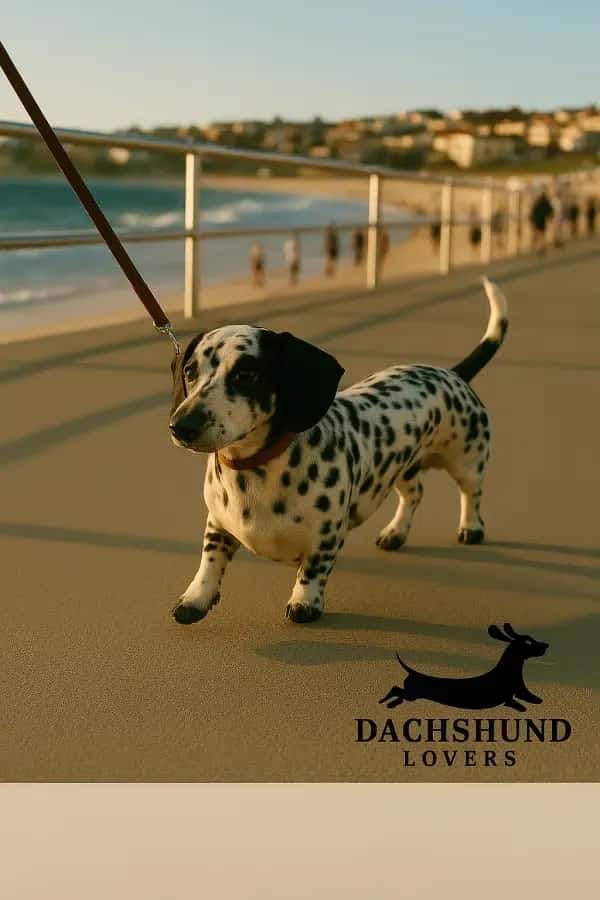
The dachshund Dalmatian mix is a rare hybrid that captures the best of two very different worlds. It’s not just about appearance; this mix brings together the bold independence of the dachshund and the athletic loyalty of the Dalmatian. Both breeds have strong personalities and deep historical roots, which shape this crossbreed into a dog that’s as unique in temperament as it is in looks.
The Rarity Factor
While designer breeds such as labradoodles or goldendoodles have become mainstream, the Dalmatian dachshund mix remains something of a hidden gem. This cross is uncommon partly because of the structural differences between the breeds. Breeders who specialize in this mix often do so on a small scale, prioritizing health and temperament over aesthetics.
According to the American Kennel Club (AKC), “Dachshunds are bold and curious, always up for adventure” (AKC Dachshund), while Dalmatians are known for being “alert, active, and extremely intelligent” (AKC Dalmatian). When these traits blend, you get a hybrid that is equal parts playful, loyal, and clever — with a surprising capacity to adapt to various family settings.
Appearance: A Striking Blend
The physical traits of this mix are one of its greatest appeals. While no two Dalmatian dachshund mixes look the same, most have a compact, medium-sized build that balances the elongated body of the dachshund with the sturdiness of the Dalmatian.
- Size: Typically 20–40 lbs depending on whether a miniature or standard dachshund was used in breeding.
- Coat: Smooth, short hair is common, requiring minimal grooming.
- Patterns: Many inherit the Dalmatian’s iconic black or liver spots, sometimes appearing as speckled or dapple-like patterns on a dachshund-style frame.
The UK Kennel Club describes the Dalmatian as a dog with a “distinctive spotted coat and strong, symmetrical body” (UK Kennel Club – Dalmatian), while the dachshund is praised for its “unique shape, courage, and playfulness” (UK Kennel Club – Dachshund). These traits merge into a dog that feels visually timeless yet quirky — something you can’t mistake for any other hybrid.
Personality: A Dynamic Balance
The dachshund Dalmatian mix personality is multi-layered. Dachshunds are known for their independence and mischievous side, often described as having a “big dog attitude in a small frame.” On the other hand, Dalmatians are loyal family companions with a history as carriage dogs and firehouse mascots — roles that demanded both intelligence and courage.
The AKC highlights that Dalmatians are “highly energetic and thrive on activity and human companionship,” which balances the dachshund’s sometimes aloof behavior. Together, these traits create a dog that is:
- Affectionate — They enjoy being part of the family and tend to form deep bonds.
- Playful — Their curiosity and high energy make them engaging pets for active households.
- Independent but Trainable — While the dachshund side may resist commands, the Dalmatian’s eagerness to please often shines through.
Energy Levels & Lifestyle
While not as demanding as a pure Dalmatian, this mix has moderate-to-high exercise needs. Expect 30–45 minutes of daily activity, such as walks, light jogs, or games of fetch. Mental stimulation is just as crucial, as both parent breeds are intelligent problem-solvers that can become bored easily.
PetMD notes that Dalmatians require mental engagement as much as physical activity to prevent destructive behaviors (PetMD Dalmatian Overview). The same applies to this hybrid. Interactive toys, scent games, and basic training sessions all go a long way in keeping them content.
Trainability
Training a dachshund Dalmatian mix can be a test of patience, but also highly rewarding. Dachshunds, with their hunting background, are known to be stubborn and strong-willed, while Dalmatians are generally eager learners when motivated with positive reinforcement.
Key training strategies:
- Keep sessions short (5–10 minutes) to avoid boredom.
- Use high-value treats and enthusiastic praise.
- Start socialization early to prevent wariness toward strangers.
As the AKC emphasizes, “Dalmatians respond best to positive, reward-based training” — a principle that holds true for this hybrid’s success as well.
Family & Home Compatibility
The Dalmatian dachshund mix can thrive in a variety of living spaces, from apartments (with daily walks) to homes with fenced yards. They do well with families that offer structure and time, but they also make great companions for singles or couples.
- With Kids: Older children tend to be a better match, as this hybrid can have a dachshund’s protective streak.
- With Pets: They generally coexist with other dogs, but smaller animals like rabbits or guinea pigs might trigger their prey drive.
Our Temperament & Personality Guide dives deeper into how these traits play out day-to-day and offers tips for families.
Why This Mix Stands Out
Few crossbreeds are as visually unique and character-rich as the Dalmatian dachshund mix. From the striking coat patterns to the blend of independence and loyalty, they offer the best of both worlds. Their rarity means they’re not for everyone — you’ll need patience, time, and a sense of humor — but for the right owner, they’re unforgettable companions.
James’ Note
I think this hybrid appeals to those who want a dog with both personality and style. They’re the type of dog that makes you laugh with their dachshund mischief and melt with their Dalmatian devotion. Whether curled up on the sofa or trotting beside you on a walk, they carry a sense of character that’s impossible to ignore.
History of Both Parent Breeds
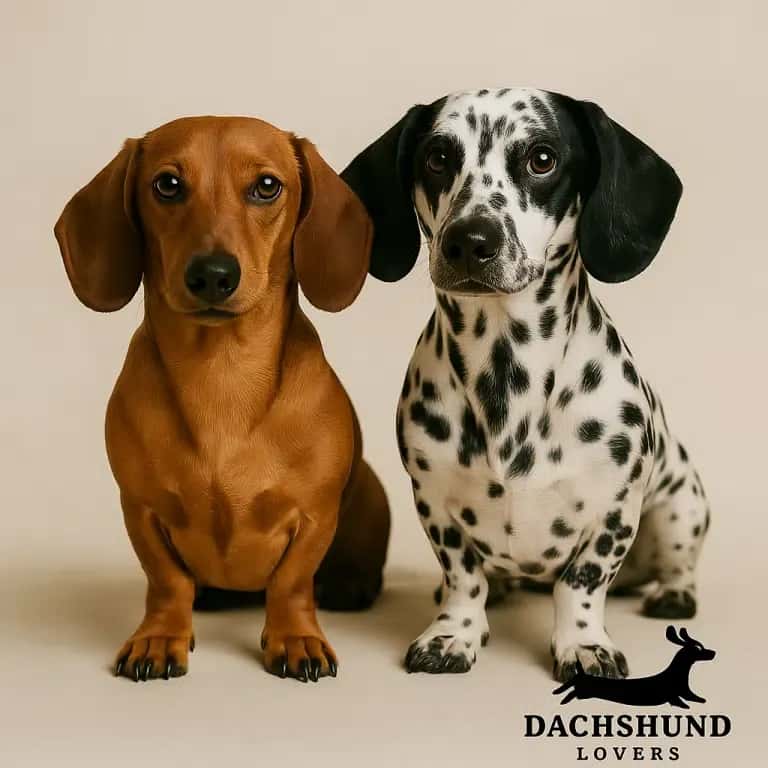
To truly appreciate the dachshund Dalmatian mix, it’s worth understanding the stories of the two parent breeds. Both the dachshund and Dalmatian carry legacies that span centuries, shaped by their roles as hunters, guardians, and companions. Their histories explain not only their physical traits but also the personality quirks and instincts that this hybrid inherits.
The Dachshund: The “Badger Dog” of Germany
The dachshund is one of the most recognizable breeds in the world, thanks to its distinctively long body and short legs. According to the American Kennel Club (AKC), the dachshund’s origins date back over 600 years, where they were bred in Germany to hunt burrowing animals such as badgers — hence their name, which literally translates to “badger dog” (AKC Dachshund History).
The breed’s unique structure was no accident. Their long, low frame allowed them to dig into tunnels, while their fearless nature made them tenacious hunters. The UK Kennel Club adds that dachshunds were “favored by hunters for their courage, intelligence, and versatility,” with some lines even being bred for hunting larger prey such as wild boar (UK Kennel Club – Dachshund).
Beyond their hunting legacy, dachshunds have always been companion animals, known for their loyalty and bold personality. PetMD describes them as “curious, clever, and sometimes stubborn,” a combination that continues to define the breed today (PetMD Dachshund Overview). These traits contribute to the hybrid’s playful independence and fearless attitude.
The Dalmatian: From Carriage Dog to Icon
The Dalmatian is equally fascinating but for entirely different reasons. While its exact origins remain somewhat mysterious, historians trace the breed back to Central Europe and the Dalmatian coast (modern-day Croatia). The AKC describes the Dalmatian as “a breed of remarkable endurance and versatility, historically used as a carriage dog to guard horses and accompany travelers” (AKC Dalmatian).
The Dalmatian’s iconic black-and-white spotted coat set it apart, but it was their intelligence and stamina that made them indispensable. In the 18th and 19th centuries, Dalmatians were known as “coach dogs,” trotting alongside carriages to protect both passengers and horses. This role required them to be alert, loyal, and highly trainable — qualities that remain part of their DNA.
The breed gained further cultural significance in the United States, where Dalmatians became closely associated with firehouses. Their strong, confident nature and ability to work alongside horses made them a symbol of protection and loyalty.
Though dachshunds and Dalmatians might seem worlds apart in appearance, they share a history of purposeful breeding for work. Both were designed for specific roles — the dachshund for underground hunting, the Dalmatian for guarding and running alongside carriages — which means both are energetic, clever, and driven by instinct.
This work ethic translates directly to the dachshund Dalmatian mix. You’ll find these hybrids thrive when they have tasks or structured activities to complete, whether it’s puzzle games, agility exercises, or simply being part of a daily walking routine.
The Rise of Designer Dogs
While neither the dachshund nor the Dalmatian was originally bred as a companion-only dog, modern crossbreeding trends have shifted their roles. The dachshund Dalmatian mix is part of a newer generation of hybrids, sometimes bred intentionally for their distinctive look, but more often appearing as the result of accidental pairings.
The American Veterinary Medical Association (AVMA) notes that “mixed-breed dogs often benefit from greater genetic diversity, which can result in fewer inherited conditions” (AVMA Mixed Breed Insights). This concept of hybrid vigor is particularly appealing for owners who love the personality of both parent breeds but want a mix that’s potentially healthier and more adaptable.
Influence on the Hybrid’s Personality
- From the dachshund, the hybrid inherits its tenacity, independence, and playful mischief. These traits can be traced back to the breed’s original hunting roles, where self-confidence and problem-solving were essential.
- From the Dalmatian, the hybrid gains loyalty, endurance, and a family-focused temperament. Dalmatians were bred to work closely with humans, making them naturally affectionate and attentive.
The result is a dog that’s alert but not overly reactive, intelligent but not unmanageable. For families who want a dog with a bit of character and charm, the history of both parents is reflected in every quirk and wag of the tail.
Why Their History Matters
Understanding the heritage of both parent breeds isn’t just trivia — it’s the key to understanding this hybrid’s needs.
- Exercise: Both breeds have energetic pasts, so daily activity is essential to keep them balanced.
- Training: The independent streak from dachshunds and the alertness from Dalmatians mean positive reinforcement training works best.
- Family Roles: Historically, both breeds were close to humans, which explains the hybrid’s affectionate, people-focused personality.
James’ Comments
I love looking at the backstory of a breed because it tells you everything about why they are the way they are. With this mix, you can almost see the history playing out — the Dalmatian’s elegance and protective instincts blended with the dachshund’s fearless charm. They’re not just pets; they’re little storytellers of their lineage.
Appearance: Size, Coat, and Color Patterns
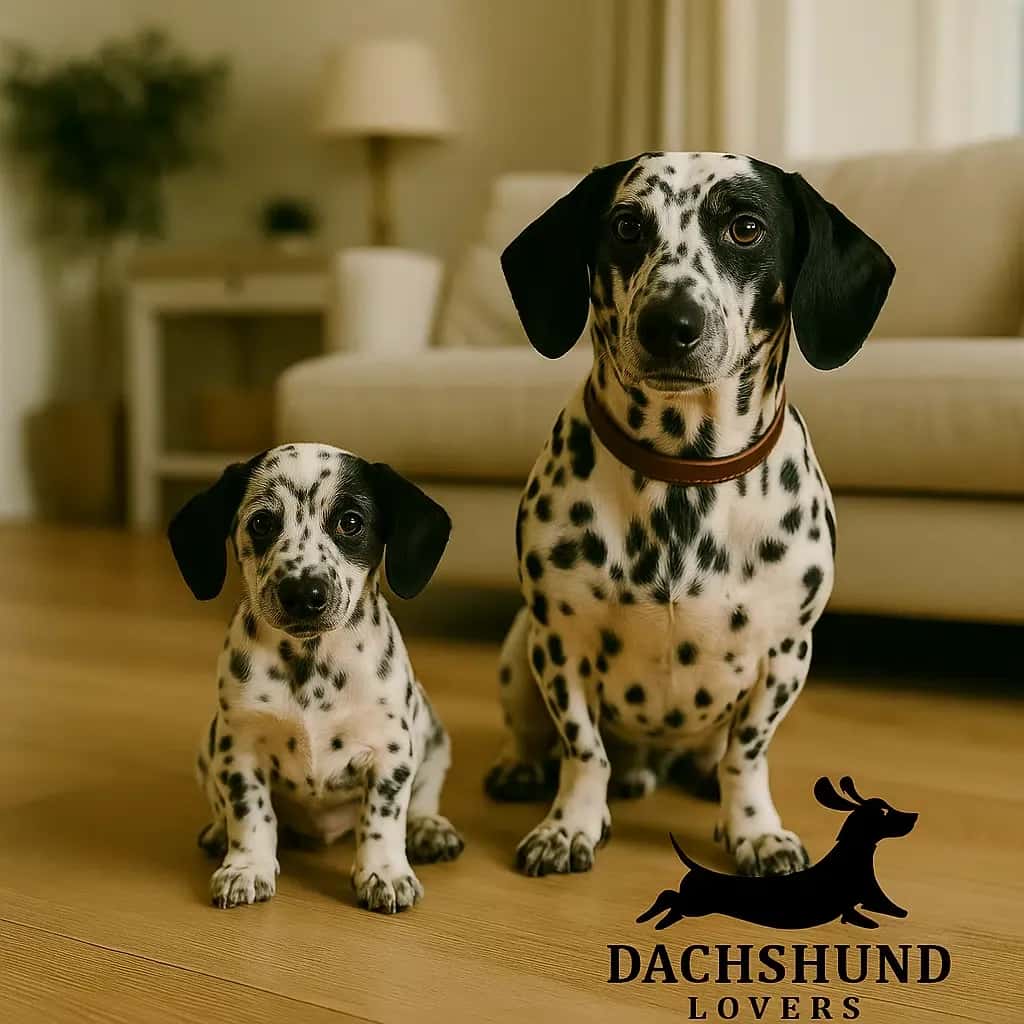
The dachshund Dalmatian mix is a striking hybrid with a look that often stops people in their tracks. Combining the dachshund’s iconic long body and short legs with the Dalmatian’s unmistakable spots and athletic elegance, this mix has a unique charm that sets it apart from other designer dogs. While every Shepherd-Dox (or “Dalmatian Doxie”) has its own distinct appearance, certain features tend to stand out across the breed.
Size and Build
The size of a dachshund Dalmatian mix varies depending on whether the dachshund parent is miniature or standard. Most mixes are considered small-to-medium-sized dogs, with a healthy adult typically weighing between 20 and 40 pounds. Their height ranges from 10 to 16 inches at the shoulder, making them larger than most dachshunds but smaller and more compact than a purebred Dalmatian.
- Body Shape: Many inherit the elongated torso and short legs of the dachshund, though some have a more balanced, proportionate frame resembling a “miniature Dalmatian.”
- Musculature: The Dalmatian’s athleticism often gives these hybrids a leaner, more defined build compared to purebred dachshunds.
- Head and Face: The face can vary widely, with some dogs showcasing the longer muzzle of the Dalmatian, while others have the slightly elongated but narrower features of the dachshund.
As the American Kennel Club (AKC) notes about Dalmatians, they are “distinctly spotted and well-balanced, with strong and symmetrical outlines” (AKC Dalmatian Overview). This symmetry often adds a touch of elegance to the hybrid’s playful dachshund frame.
Coat Texture and Length
The coat of a dachshund Dalmatian mix is generally short and smooth, but it may inherit slight variations depending on the dachshund parent’s coat type.
- Smooth-Coated Mixes: Most have the sleek, shiny fur of both parents, which is easy to maintain and only needs weekly brushing.
- Longer Coats: If the dachshund parent is long-haired, the hybrid may develop slightly longer feathering around the ears, legs, or tail, adding an extra layer of charm.
- Double Coats: Some mixes may have a slightly denser undercoat, especially if the dachshund parent was a wire-haired variety.
Grooming Needs: Regardless of coat type, the hybrid’s grooming needs are minimal. Weekly brushing keeps shedding under control, and occasional baths (every 4–6 weeks) help maintain a healthy shine.
Color and Markings
The coat color and markings are where this hybrid truly stands out. The Dalmatian’s signature black or liver spots often appear in some form, sometimes blending with dachshund coat colors and patterns like red, tan, or dapple.
- Classic Spotted Pattern: Many hybrids feature the black-and-white spotted look, but the spots can be larger, fewer, or appear as patches rather than even markings.
- Liver Spotted Variants: Some inherit the brown or liver-colored spots from the Dalmatian parent.
- Unique Hybrids: When combined with dachshund colors (such as chocolate, cream, or black-and-tan), the result is a spotted or dapple-like fusion that looks completely unique.
According to the UK Kennel Club, the Dalmatian’s spots are “the defining feature of the breed,” and they “begin to appear at about 2 weeks of age and continue to develop over time” (UK Kennel Club Dalmatian). This trait often carries over to the hybrid, although the distribution and intensity of spots can vary.
Eyes, Ears, and Tail
- Eyes: Eye color typically ranges from dark brown to amber, with a lively, intelligent expression. Some hybrids may inherit the distinctive eye shape of the Dalmatian — slightly almond-shaped and expressive.
- Ears: Dachshund influence often leads to floppy, low-set ears, while some mixes have ears that are slightly higher or shorter, resembling a toned-down Dalmatian look.
- Tail: The tail is usually medium-length, carried with a gentle curve. It often has markings or spots that echo the Dalmatian heritage.
Height and Weight Expectations
To give a clearer picture of what to expect, here’s a typical size breakdown:
- Weight Range: 20–30 lbs for a miniature dachshund mix, 30–40 lbs for a standard dachshund mix.
- Height: 10–12 inches for smaller crosses, up to 16 inches for larger crosses.
- Build: A mix of lean muscle (Dalmatian) and compact sturdiness (dachshund).
Owners looking for predictable sizing should ask breeders about the parent dogs’ sizes and weight, as this is often the best indicator of the hybrid’s adult size. Our Full Grown Dachshund Dalmatian Mix Guide explores growth stages in detail.
Shedding and Allergies
Dachshund Dalmatian mixes are generally low to moderate shedders. While neither parent breed is hypoallergenic, the short coat is easy to manage with a regular brushing routine.
PetMD highlights that “regular brushing and a balanced diet are the keys to reducing shedding and maintaining a healthy coat” (PetMD Grooming Tips). Adding omega-3 fatty acids (found in fish oil) can further enhance coat health and reduce loose hair.
Overall Look and Presence
This mix tends to have an expressive, curious appearance. Their eyes are bright and alert, their posture confident but playful. Whether spotted like a Dalmatian or with a unique patchwork of colors, they stand out without trying too hard.
Their look is best described as “athletic with a dash of quirk” — the Dalmatian influence adds elegance, while the dachshund side contributes a touch of mischief in their stance and expressions.
Personality Traits and Temperament
The dachshund Dalmatian mix temperament is a fascinating combination of independence, loyalty, and playful energy. It’s a hybrid that inherits both the dachshund’s bold curiosity and the Dalmatian’s affectionate, family-focused nature. This balance creates a companion that is equal parts entertainer and loyal friend — but also a dog that thrives on structure, engagement, and positive reinforcement.
The Influence of the Dachshund
Dachshunds are famously described by the American Kennel Club (AKC) as “clever, lively, and courageous to the point of rashness” (AKC Dachshund). These traits are easy to see in the hybrid. The dachshund’s hunting heritage, bred to track and dig out badgers, means they often have a strong prey drive and an independent streak. This independence doesn’t mean they’re aloof; rather, they like to approach life on their own terms.
From the dachshund side, you can expect:
- Stubborn Brilliance: They’re intelligent but will test boundaries to see if rules are flexible.
- Playful Mischief: Dachshunds love games and puzzles, often finding creative (sometimes sneaky) ways to entertain themselves.
- Strong Bonds: While independent, they are deeply affectionate with their favorite humans.
The Influence of the Dalmatian
The Dalmatian contributes loyalty, athletic energy, and intelligence to this hybrid’s temperament. Historically, Dalmatians served as carriage dogs and firehouse companions, requiring them to be alert, people-oriented, and able to learn complex tasks. The AKC notes that Dalmatians are “outgoing, dignified, and highly trainable” (AKC Dalmatian) — qualities that balance the dachshund’s stubborn streak.
From the Dalmatian side, you can expect:
- Family Focus: Dalmatians are known for being loyal companions who thrive in active households.
- Athletic Drive: They love movement — from brisk walks to playful sprints in the yard.
- Alert Watchfulness: They’re natural protectors, often making them great watchdogs.
Energy Levels and Playfulness
The dachshund Dalmatian mix has moderate-to-high energy levels, making daily activity a must. While they’re not as hyper as a pure Dalmatian, they do need around 30–45 minutes of exercise per day, split between walks, play, and mental challenges. Without proper outlets for their energy, they may resort to barking, digging, or chewing — all traits inherited from their working and hunting heritage.
To keep them happy:
- Offer interactive toys and puzzle feeders to stimulate their problem-solving skills.
- Provide structured playtime such as fetch, scent games, or agility exercises.
- Mix physical exercise with mental tasks — these dogs love a challenge.
Trainability
Training this hybrid can be both rewarding and occasionally frustrating. The Dalmatian’s eagerness to please often counterbalances the dachshund’s independent side. However, as PetMD advises, both breeds respond best to positive reinforcement methods (PetMD Training Insights).
Training Tips:
- Keep sessions short and engaging — 5 to 10 minutes is plenty.
- Use high-value rewards, such as small treats or favorite toys.
- Start early with socialization to prevent timidity or over-guarding behavior.
- Avoid harsh correction; this can backfire with sensitive but strong-willed hybrids like this one.
Behavior Around Children and Families
With proper socialization, the dachshund Dalmatian mix is an excellent family dog. They inherit the Dalmatian’s affectionate, people-oriented nature, which pairs beautifully with the dachshund’s playful streak. They’re usually very good with older children who understand how to handle dogs respectfully.
However, like many small-to-medium hybrids, they can be protective of their family and may act cautiously around unfamiliar faces. Introducing them to new people and environments early is key.
Family Suitability Snapshot:
- Best For: Active families, couples, or singles who have time for training and daily walks.
- Kids: Great with older children; supervised play recommended for toddlers.
- Other Pets: Generally good with other dogs but may chase smaller animals due to the dachshund’s prey drive.
Independence vs. Loyalty
One of the most charming aspects of this hybrid is its balance between independence and devotion. From the dachshund side, they inherit a sense of “I can do this myself,” but from the Dalmatian side, they gain a deep connection to their family. It’s a combination that makes them confident without being overly clingy.
This mix does not thrive when left alone for long periods. Without enough human interaction or mental stimulation, they may develop separation anxiety, leading to unwanted behaviors like chewing furniture or excessive barking.
Personality Quirks
Every dachshund Dalmatian mix has its quirks — and that’s part of their charm. Some love to “talk” (bark or whine) when they’re excited or want attention. Others may become self-appointed guardians of the home, watching the door or alerting you to any movement outside.
It’s worth noting that Dalmatians are known for their intelligence and curiosity, while dachshunds are natural diggers. If you have a yard, you might find your hybrid creating its own “projects” unless provided with designated play areas or activities.
Mental Stimulation
For this hybrid, mental enrichment is as important as exercise. Boredom often manifests in destructive behavior, so puzzle toys, hide-and-seek games, and new training challenges go a long way.
PetMD advises that breeds with high problem-solving intelligence “benefit from interactive games and structured learning sessions” (PetMD Mental Enrichment). Shepherd-Doxes fit this description perfectly — they thrive when you engage both their body and brain.
James’ Take
The personality of this hybrid feels like a conversation between the two parent breeds: the Dalmatian brings warmth and loyalty, while the dachshund brings mischief and individuality. Together, they make a dog that’s as engaging as it is unpredictable — in the best way. They’re the kind of dog that will make you laugh one minute and melt your heart the next.
Exercise & Grooming Needs
The dachshund Dalmatian mix is a dog that thrives on routine activity and light but consistent grooming. Both parent breeds are known for being lively and energetic, so this hybrid is no exception. While not as demanding as a purebred Dalmatian, the mix needs regular exercise and mental enrichment to prevent boredom and undesirable behaviors. When it comes to grooming, their coat is typically low-maintenance but still benefits from a consistent care routine.
Daily Exercise Requirements
Both the dachshund and Dalmatian were historically bred for work — the dachshund as a fearless hunter and the Dalmatian as a carriage and guard dog. This heritage means your hybrid will naturally enjoy activity, problem-solving, and exploring. A sedentary lifestyle isn’t suited to this crossbreed.
Recommended Exercise Plan:
- Daily Walks: 30–45 minutes of moderate walking, split into two sessions, works well for most adults.
- Playtime: At least 15–20 minutes of interactive play each day, such as fetch or hide-and-seek.
- Mental Challenges: Puzzle toys or scent games (hiding treats around the home) 3–4 times per week to keep their mind active.
The American Kennel Club (AKC) advises that Dalmatian mixes, in particular, need consistent but balanced exercise to avoid restlessness or destructive behavior (AKC Dalmatian Exercise Needs). Too little exercise can lead to barking or digging — behaviors inherited from both parent breeds.
Low-Impact Activities
Because the dachshund’s elongated spine can make them susceptible to intervertebral disc disease (IVDD), it’s important to avoid high-impact or repetitive jumping activities. Instead, opt for:
- Gentle hikes on flat terrain.
- Short agility courses using tunnels or low hurdles that don’t involve heavy landings.
- Indoor scent tracking games, which satisfy their hunting instincts.
If you have a yard, you may want to create a designated digging area or use a sandbox to allow natural behaviors without damaging your lawn.
Puppy Exercise
Exercise for puppies should be age-appropriate. Over-exercising during their growth period can stress developing joints and cause long-term issues.
- Rule of Thumb: 5 minutes of structured exercise per month of age, twice a day.
- Play Focus: Soft toy play, short walks, and supervised exploration.
- Avoid stairs and jumping off furniture until your puppy’s growth plates have closed (usually around 12–15 months).
For a detailed early activity plan, see our Dachshund Dalmatian Mix Puppies Guide.
Mental Stimulation
Exercise alone isn’t enough for this hybrid. Both the dachshund and Dalmatian are intelligent problem-solvers, and mental challenges are just as important as physical workouts. Without mental enrichment, these dogs can become bored, vocal, or destructive.
Mental Game Ideas:
- Puzzle feeders and treat-dispensing toys.
- Basic training refreshers (sit, stay, paw, roll).
- Advanced tricks like find it or touch.
- Hide-and-seek with family members or toys.
As PetMD notes, mental enrichment “keeps intelligent breeds from becoming frustrated and helps prevent behavioral issues” (PetMD Mental Enrichment).
Grooming Needs
When it comes to grooming, the dachshund Dalmatian mix is relatively low-maintenance. Both parents typically have short, smooth coats, so weekly brushing and occasional baths are enough to keep their coat clean and healthy.
Grooming Checklist:
- Brushing:
- Use a soft-bristle brush or grooming glove once or twice a week.
- Brushing helps remove loose hair and stimulates natural oils in the coat.
- Use a soft-bristle brush or grooming glove once or twice a week.
- Bathing:
- Bathe every 4–6 weeks or as needed.
- Use a mild, dog-specific shampoo to prevent skin dryness.
- Bathe every 4–6 weeks or as needed.
- Ears:
- Clean floppy ears weekly to prevent wax buildup and infections, which dachshunds can be prone to.
- Clean floppy ears weekly to prevent wax buildup and infections, which dachshunds can be prone to.
- Nails:
- Trim every 3–4 weeks or as needed. If you can hear clicking on the floor, it’s time for a trim.
- Trim every 3–4 weeks or as needed. If you can hear clicking on the floor, it’s time for a trim.
- Teeth:
- Brush 2–3 times per week. Dental chews or toys help reduce tartar between brushings.
- Brush 2–3 times per week. Dental chews or toys help reduce tartar between brushings.
The UK Kennel Club highlights that Dalmatians are “generally low maintenance for grooming, but regular brushing keeps the coat glossy” (UK Kennel Club Dalmatian). This holds true for the hybrid.
Shedding and Allergies
Shedding levels for the dachshund Dalmatian mix are low to moderate. While neither parent breed is hypoallergenic, their short coat means hair management is relatively simple. A healthy diet, regular brushing, and adding omega-3 fatty acids (from salmon oil or fish-based dog food) can improve coat condition and reduce loose hair.
PetMD advises: “A dog’s diet is just as important as brushing when it comes to coat health and reducing shedding” (PetMD Grooming Tips).
Seasonal Care
- Winter: Although Dalmatians can tolerate cooler weather, the dachshund side may make your hybrid more sensitive to cold. A lightweight dog jacket or sweater can help during winter walks.
- Summer: Their spotted coats may offer little protection from the sun, so avoid midday heat and ensure plenty of water during warmer months.
Professional Grooming
Most owners find they don’t need frequent professional grooming, but an occasional bath-and-trim session every few months can be a good reset, especially if your hybrid enjoys rolling around outdoors or develops seasonal shedding.
Training Tips for a Mixed Breed
Training a dachshund Dalmatian mix is a rewarding experience but requires patience, consistency, and an understanding of the hybrid’s unique personality traits. Both parent breeds are highly intelligent, but each brings its quirks: the dachshund is famously independent (sometimes stubborn), while the Dalmatian is eager to learn but thrives on variety and positive interaction. When trained well, this hybrid becomes a responsive, well-mannered, and confident companion.
Understanding the Hybrid’s Learning Style
Dachshunds have what the AKC describes as a “big dog bark and a big dog attitude” (AKC Dachshund). This means they approach life fearlessly but on their own terms, often deciding whether a command is “worth” following. Dalmatians, on the other hand, are described by the AKC as “intelligent, outgoing, and dignified,” with a natural eagerness to please (AKC Dalmatian).
When combined, these traits create a dog that:
- Learns quickly when motivated with rewards.
- Responds well to positive reinforcement (treats, toys, or verbal praise).
- Gets bored with repetitive drills — training sessions should be short and engaging.
Key Training Principles
- Start Early:
Training should begin as soon as your puppy comes home. This sets boundaries and establishes good habits before stubborn tendencies develop. - Positive Reinforcement:
Both parent breeds respond best to rewards, not harsh corrections. According to PetMD, “Positive reinforcement builds trust and strengthens the human-animal bond, making dogs more willing to learn” (PetMD Training Guide). Use high-value treats, like small bits of chicken or cheese, paired with enthusiastic praise. - Consistency Matters:
Consistent commands, tone of voice, and rules prevent confusion. Ensure all family members use the same cues (e.g., “sit” vs. “down”). - Short, Fun Sessions:
Keep training sessions to 5–10 minutes, 2–3 times per day. Both dachshunds and Dalmatians can lose interest quickly, so variety is key. - Socialization:
Introduce your hybrid to new sights, sounds, and people during the first 16 weeks. Well-socialized dogs are less prone to anxiety or over-guarding.
Housebreaking and Crate Training
Housebreaking can take longer with the dachshund’s independent streak.
- Crate Training: A crate provides structure and helps prevent accidents. Make it a positive space with comfortable bedding and chew toys.
- Scheduled Breaks: Take your dog out after meals, naps, and play sessions. Reward them immediately after they go outside.
- Patience and Routine: It may take several weeks to fully house-train, but consistency pays off.
Obedience Basics
Teaching core commands like sit, stay, come, down, and leave it helps establish control and trust.
- Start with sit and stay, using treats to guide them.
- Gradually increase the difficulty by adding distractions.
- Practice recall (“come”) in a safe, enclosed area — Dalmatians can be easily distracted, and dachshunds may follow their nose if left off-leash.
Curbing Barking and Stubbornness
The dachshund side of this mix can lead to alert barking. While this makes them excellent watchdogs, it can become a nuisance if unchecked.
- Teach “Quiet” Command: Reward silence with treats or praise.
- Redirect Attention: Give them a task when they’re barking unnecessarily, like sitting or fetching a toy.
- Mental Stimulation: Boredom is often the root of problem barking. Puzzle feeders and scent games work wonders.
Leash Training and Recall
Dalmatians have a history as carriage dogs, which gives them a natural tendency to trot ahead, while dachshunds may pull due to their hunting instincts.
- Use a no-pull harness to prevent strain on their spine and neck.
- Train “heel” in short bursts with treats as a reward for staying by your side.
- Practice recall in low-distraction environments, building up to busier settings.
Advanced Training and Tricks
This hybrid’s intelligence makes them great candidates for advanced tricks and agility — as long as the agility equipment is low-impact.
- Teach fun commands like shake, roll over, or find it.
- Agility exercises such as weave poles or tunnels are mentally engaging but avoid tall jumps to protect their back.
Without early exposure, this hybrid can become cautious or overly protective. Socialization builds confidence.
- Introduce Gradually: Start with quiet settings, then move to busier environments.
- Positive Associations: Pair new experiences with rewards.
- Dog Parks: Controlled play with friendly dogs improves social skills, but monitor interactions due to the dachshund’s assertive nature.
Training Tools and Techniques
- Clicker Training: This method works well for hybrids with sharp intelligence. The click sound marks the exact moment they perform a desired behavior.
- Interactive Toys: Toys that dispense treats encourage problem-solving and keep them occupied.
- Leash and Harness: Always choose a harness (not a collar) for walking to protect the spine, especially if the dog has a dachshund-like build.
When to Seek Professional Help
If training challenges persist — such as reactivity, anxiety, or excessive stubbornness — enrolling in a positive reinforcement group class or working with a certified trainer is worthwhile. Dalmatians, in particular, benefit from structured training environments due to their outgoing personalities.
FAQs About Dachshund Dalmatian Mix
More From This Series:
Exploring the dachshund Dalmatian mix is just the beginning. To give you a complete picture of this rare and fascinating hybrid, we’ve created a series of detailed guides covering every stage of life, from puppyhood to adulthood, as well as temperament, health, and where to find them.
- Dachshund Dalmatian Mix Puppies: Early Care & Training
Read Here →
Starting with a puppy? This guide offers practical advice on feeding, housebreaking, and early socialization. It also includes tips for choosing a healthy puppy, recognizing reputable breeders, and navigating the early months of training.
- Full Grown Dachshund Dalmatian Mix: Size, Weight & Growth
Read Here →
Curious about how big this mix gets? This article takes you through their growth stages, weight expectations, and personality changes from puppyhood to adulthood. It’s particularly useful for understanding exercise needs as they mature.
- Dachshund Dalmatian Mix for Sale & Adoption Guide
Read Here →
Finding a Dalmatian dachshund mix can be challenging due to its rarity. This guide explains where to look (breeders vs. rescues), what to expect when it comes to price, and how to ensure you’re adopting ethically.
- Dachshund Dalmatian Mix Temperament & Personality
Read Here →
This in-depth look explores behavior, family compatibility, and training tips for the hybrid. Whether you have children, other pets, or a busy household, this guide helps you understand if this mix is the right fit for your lifestyle.
- Dachshund Dalmatian Mix Health & Lifespan
Read Here →
Health is crucial for this hybrid, given the dachshund’s susceptibility to IVDD and the Dalmatian’s potential for deafness or urinary issues. This guide covers preventive care, diet, and exercise routines to maximize their lifespan and quality of life.
Authored by
James
James is the founder of Dachshund Lovers and the proud human of Harvey, a mini dapple with a big personality. He writes to empower and connect the dachshund community, blending founder insights with honest, experience-based stories about life with this incredible and special breed. James brings candid, experience-backed opinions to the community and always focused on fewer, better products and ideas that genuinely improve life for dachshunds and their people.
Read moreJames is the founder of Dachshund Lovers and the proud human of Harvey, a mini dapple with a big personality. He writes to empower and connect the dachshund community, blending founder insights with honest, experience-based stories about life with this incredible and special breed. James brings candid, experience-backed opinions to the community and always focused on fewer, better products and ideas that genuinely improve life for dachshunds and their people.
Read moreDisclaimer
This content is for informational purposes only and should not be considered veterinary advice. Always consult with a licensed veterinarian regarding your dog’s health and wellbeing.
There are no comments yet
Leave a comment