Full Grown Dachshund Dalmatian Mix
Full Grown Dachshund Dalmatian Mix
What does a full grown Dachshund Dalmatian mix look like? Here’s what to expect in size, weight, coat, and temperament, from someone who's seen a few!
James
Posted on October 14, 2025.
Updated on July 21, 2026.
Table of Contents
- •From Puppy to Full Grown — What to Expect
- 1.Key Takeaways
- 2.Growth Stages from Puppy to Adult
- -0–3 Months: The Foundation Stage
- -4–6 Months: Rapid Growth & Exploration
- -7–12 Months: Adolescence to Young Adult
- -12–18 Months: Adulthood
- -Growth Timeline Snapshot
- -Behavioral Changes During Growth
- -James’ Note
- 3.Full Grown Size, Weight & Height
- -Average Adult Size
- -Body Proportions
- -Miniature vs. Standard Mixes
- -Growth vs. Final Size
- -Comparison to Other Dachshund Mixes
- -Maintaining a Healthy Adult Weight
- -Coat & Appearance at Adulthood
- -James’ Take
- 4.Physical and Personality Changes Over Time
- -1–2 Years: Young Adulthood
- -2–4 Years: Maturity Sets In
- -5–7 Years: Prime Adulthood
- -8+ Years: Senior Stage
- -Coat and Appearance Over Time
- -Behavioral Changes as They Age
- -James’ Note
- 5.Exercise & Diet for Adult Dogs
- 6.Behavior Traits and Quirks
- -How Much Exercise Do They Need?
- -Low-Impact Exercise
- -Mental Stimulation
- -Adult Diet & Feeding Plan
- -Meal Frequency
- -Best Foods for a Dalmatian Doxie
- -Weight Management
- -Supplements to Consider
- -James’ Note
- 7.Behavior & Temperament as Adults
- -Core Personality Traits
- -Behavior with Family Members
- -Interaction with Other Pets
- -Energy Levels and Playfulness
- -Adult Training Reinforcement
- -Common Behavioral Challenges
- -Temperament Over Time
- -Family Lifestyle Compatibility
- -More From This Series:
- -Disclaimer
Share

From Puppy to Full Grown — What to Expect
Watching a dachshund Dalmatian mix grow from a clumsy, curious puppy into a confident adult is one of the most rewarding parts of dog ownership. This hybrid, often called the Dalmatian Doxie, blends two breeds with very different builds: the long, low frame of the dachshund and the sleek, athletic body of the Dalmatian. By adulthood, most dogs of this mix fall into the small-to-medium size category, but their exact height, weight, and shape can vary widely.
Why? Because the parent breeds are so different. The dachshund, according to the American Kennel Club (AKC), is “long and low to the ground, with an alert expression and a surprisingly bold personality” (AKC Dachshund Overview). Meanwhile, the Dalmatian is known for its “distinctive spots, graceful build, and high energy levels” (AKC Dalmatian Overview). A cross between the two produces a dog that’s often compact but athletic, with a weight that typically ranges between 20 and 40 pounds once fully grown.
This guide will take you through:
- How big a full grown dachshund Dalmatian mix gets (height, weight, and proportions).
- Growth stages from puppyhood to adulthood and when they stop growing.
- Behavioral changes that occur as they mature.
- Feeding and exercise tips to maintain a healthy adult weight.
- How their build influences health risks like spinal care or joint strain.
If you’re raising a puppy and want to track their development, pair this guide with our Puppies Care & Training Guide for early diet, exercise, and socialization advice.
Key Takeaways on Full Grown Dachshund Dalmatian Mix
Topic | Summary |
|---|---|
Adult Weight | Most adults weigh 20–40 lbs depending on whether the dachshund parent is miniature or standard. |
Height | Typically 10–16 inches at the shoulder — taller if Dalmatian genes dominate, shorter if dachshund build prevails. |
Growth Timeline | Reaches most of their adult height and weight by 12 months, with final filling out by 18 months |
Body Shape | Compact, lean, and slightly elongated, often with a spotted coat and expressive stance. |
Exercise Needs | 45 minutes of daily activity for adults, including low-impact exercise to protect the spine. |
Behavioral Maturity | More settled and focused by 2 years, though playful energy remains throughout adulthood. |
Health Considerations | Weight management and spinal care are essential due to the dachshund influence. |
Life Expectancy | 11–14 years with proper care, diet, and preventive vet checkups. |
There’s something remarkable about watching a Dalmatian Doxie “find itself” during the growth phase. One month they look like a spotted dachshund, and the next they have a leaner, Dalmatian-like shape. By adulthood, they’ve often taken on a balanced, athletic silhouette that feels unique — a dog that’s unmistakably stylish, but still has that classic dachshund spirit.
Growth Stages from Puppy to Adult

A dachshund Dalmatian mix goes through a fascinating transformation during its first 18 months, shifting from a soft, playful bundle of energy into a sleek, confident adult. Because this hybrid combines two breeds with very different body shapes and growth rates, their development is less predictable than purebreds — but that’s part of the charm.
While dachshunds typically mature by 12 months, Dalmatians can continue filling out until 16–18 months. This means your Dalmatian Doxie might reach its full height by one year but still develop muscle tone and weight for a few months afterward.
0–3 Months: The Foundation Stage
This is the most critical period for setting healthy growth and behavior patterns.
- Size: Puppies weigh around 4–6 lbs at 8 weeks (slightly heavier if the dachshund parent is standard-sized).
- Feeding: Small, frequent meals (3–4 times a day). A high-quality puppy formula that meets AAFCO standards is essential (AKC Puppy Nutrition).
- Behavior: Puppies are highly curious but easily tired. Early crate training, gentle handling, and basic commands like sit and stay should begin now.
- Growth Tip: Avoid overfeeding — excess weight can strain developing joints and the dachshund-like spine.
4–6 Months: Rapid Growth & Exploration
This is the “teenage” phase, where your puppy becomes more independent and starts to grow rapidly.
- Size: Expect a 4–8 lb weight gain each month during this period.
- Exercise: The “5-minute rule” (5 minutes of exercise per month of age, twice a day) still applies. Focus on low-impact walks and play (AKC Puppy Exercise Guidelines).
- Behavior: This is when stubbornness can surface. Be consistent with training and reward-based reinforcement.
- Socialization: Introduce your puppy to new sights, sounds, and people — the RSPCA stresses that positive early experiences reduce fear-based behaviors later (RSPCA Puppy Advice).
7–12 Months: Adolescence to Young Adult
Your puppy will begin looking more like an adult but will still act like a playful, mischievous youngster.
- Size: Most Dalmatian Doxies reach 70–80% of their adult weight by 9–10 months.
- Height: Growth in height slows after 10 months, but muscle tone continues to develop.
- Feeding: Reduce meals to 2–3 times daily. Adjust calories to maintain a healthy weight (check the ribs test: you should feel ribs but not see them).
- Behavior: Adolescence can bring boundary testing — this is when consistent training pays off.
- Health Tip: Schedule a vet check to ensure growth is on track and discuss transitioning to adult food around 12 months.
12–18 Months: Adulthood
By one year, your Dalmatian Doxie is mostly full grown, but they may fill out and gain muscle until 18 months.
- Weight Range:
- Miniature-cross adults: 18–25 lbs.
- Standard-cross adults: 25–40 lbs.
- Exercise: Increase activity to 45 minutes daily — mix walks with mentally stimulating games.
- Behavior: Most dogs become calmer and more focused around 2 years old, though they’ll always retain a playful streak.
Growth Timeline Snapshot
Age | Weight (Avg.) | Height | Key Milestones |
|---|---|---|---|
8 weeks | 4-6 lbs | 5-7 inches | Socialization starts |
4 months | 8-12 lbs | 7-9 inches | Basic training & teething |
6 months | 12-18 lbs | 9-11 inches | First rapid growth plateau |
12 months | 20-35 lbs | 10-15 inches | Transition to adult diet |
18 months | 20-40 lbs | 10-16 inches | Full muscle development |
Behavioral Changes During Growth
As puppies mature, their energy levels and focus shift.
- 3–6 months: Playful chaos — teething can lead to chewing habits, so safe chew toys are a must.
- 6–12 months: Adolescence brings testing behaviors (like ignoring commands).
- 12–18 months: Adult behavior sets in — calmer, but still playful when engaged.
The AKC advises using consistent routines and positive training methods during adolescence, as dogs are prone to distraction and boundary testing (AKC Training Advice).
James’ Note
Watching a Dalmatian Doxie grow is like watching a designer piece evolve over time. Each stage has its quirks — from the wobbly curiosity of a puppy to the confident stride of a young adult. If I could give just one piece of advice, it’s this: be patient during the teenage months. With structure, they emerge as beautifully balanced dogs.
Full Grown Size, Weight & Height
One of the most common questions about the dachshund Dalmatian mix is, “How big will they get?” Because this hybrid pairs two very different breeds, there can be considerable variation in adult size. While some Dalmatian Doxies take after the smaller, elongated dachshund build, others lean toward the taller, athletic frame of the Dalmatian.
The good news? Even with this variation, most fall into a small-to-medium size category, making them adaptable for apartments, suburban homes, or country living — provided they get the exercise and stimulation they need.
Average Adult Size
By adulthood (12–18 months), most dachshund Dalmatian mixes will weigh between 20 and 40 pounds, with a shoulder height of 10 to 16 inches.
- Weight Range:
- Miniature-cross (using a mini dachshund parent): 18–25 lbs.
- Standard-cross: 25–40 lbs.
- Miniature-cross (using a mini dachshund parent): 18–25 lbs.
- Height:
- Typically 10–12 inches for smaller mixes.
- Up to 15–16 inches if Dalmatian genetics dominate.
- Typically 10–12 inches for smaller mixes.
As the American Kennel Club (AKC) notes, dachshunds are classified into miniature (under 11 lbs) and standard (16–32 lbs), while Dalmatians weigh 45–70 lbs (AKC Breed Standards). The mix often lands right in the middle.
Body Proportions
The body shape of this hybrid is what makes it stand out.
- Elongated Frame: Many inherit the long back and short legs of the dachshund, though often less exaggerated.
- Athletic Build: Dalmatian genes add muscle tone and a slightly taller stance.
- Head Shape: A blend of the dachshund’s narrow muzzle and the Dalmatian’s broader skull creates a unique, expressive face.
These proportions mean owners need to be mindful of spinal health. While the mix is often more balanced than a pure dachshund, jumping from high surfaces or frequent stair climbing can still pose risks of intervertebral disc disease (IVDD).
Miniature vs. Standard Mixes
The size of the dachshund parent significantly impacts the adult size of the mix:
- Miniature Doxie Cross: These dogs are smaller and lighter, often topping out at 18–25 lbs. They’re a good fit for smaller homes and urban environments.
- Standard Doxie Cross: With a standard dachshund parent, adult weights typically range from 25–40 lbs, making them closer to a compact Dalmatian in stature.
For comparison, a standard dachshund stands about 8–9 inches tall, while a Dalmatian can reach 19–24 inches. The hybrid’s height usually sits between these two extremes.
Growth vs. Final Size
Your puppy’s size at 6 months can give clues to its final adult size.
- Miniature-cross: At 6 months, expect 50–60% of adult weight (around 10–15 lbs).
- Standard-cross: At 6 months, expect 60–70% of adult weight (15–25 lbs).
The AKC recommends regular vet check-ups during the growth phase to ensure puppies grow at a healthy rate and avoid becoming overweight (AKC Growth Guidelines).
Comparison to Other Dachshund Mixes
The dachshund Dalmatian mix tends to be larger and more athletic compared to other dachshund hybrids:
- Chiweenie (Chihuahua + Dachshund): 5–12 lbs, 6–10 inches tall.
- Dachsador (Labrador + Dachshund): 30–60 lbs, 15–20 inches tall.
- Dalmatian Doxie: Falls comfortably in the middle — 20–40 lbs and 10–16 inches tall, with a balanced mix of athleticism and compactness.
Maintaining a Healthy Adult Weight
Weight management is vital, as excess pounds can stress the spine and joints. According to PetMD, overweight dogs are at risk of developing arthritis and mobility issues much earlier than leaner dogs (PetMD on Dog Obesity).
Tips for Weight Management:
- Measure meals instead of free-feeding.
- Use low-calorie treats (carrots, green beans) during training.
- Ensure at least 30–45 minutes of exercise daily for adult dogs.
Coat & Appearance at Adulthood
The full grown Dalmatian Doxie often has a short, smooth coat with Dalmatian-inspired spots, but coat color can include:
- Black and white spotted (most common).
- Liver-spotted or brindle blends.
- Rare dapple patterns from the dachshund side.
The UK Kennel Club describes Dalmatian coats as “short, dense, and fine-textured” (UK Kennel Club – Dalmatian). This is usually inherited by the hybrid, making coat care minimal but still essential for shine and health.
James’ Take
When a Dalmatian Doxie reaches adulthood, there’s often a sense of visual balance — the long body softens slightly, the legs feel more proportional, and the coat pattern comes into its own. I’ve seen dogs that look like miniature Dalmatians with just a hint of dachshund quirkiness. That blend of strength and charm is what makes this hybrid stand out.
Physical and Personality Changes Over Time
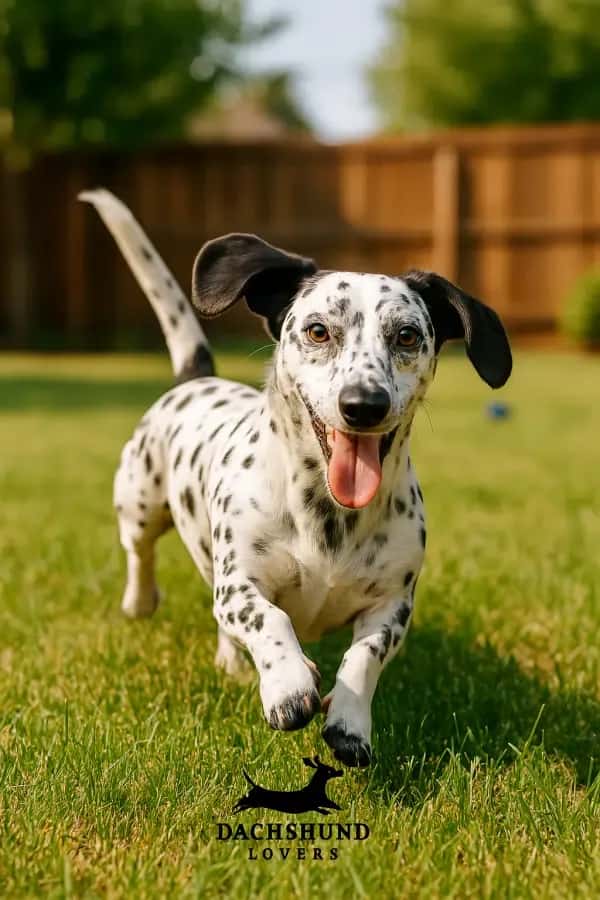
The dachshund Dalmatian mix is a hybrid that never stops surprising you. From the puppy months into adulthood and through their senior years, their appearance and personality evolve in subtle and endearing ways. While the first 18 months are marked by rapid growth and boundless curiosity, the years that follow bring a balance of energy, maturity, and loyalty.
1–2 Years: Young Adulthood
By the time your Dalmatian Doxie is 12–18 months old, they’ll have reached most of their adult height and weight. However, this stage — often referred to as young adulthood — is when muscle tone sharpens, and coat patterns become more defined.
- Physical Changes:
- Their proportions feel more “settled,” with the long dachshund torso balancing with the Dalmatian’s leaner frame.
- Coats often appear shinier and richer in color compared to the puppy stage.
- Teeth and nails need regular care as they shift into adult growth cycles.
- Their proportions feel more “settled,” with the long dachshund torso balancing with the Dalmatian’s leaner frame.
- Personality Traits:
This stage is often the most playful yet challenging. They’re brimming with confidence and curiosity, but they might test boundaries. This is when training really pays off. The AKC highlights that adolescence in dogs can mimic a “teenage phase,” where structure and consistent routines help dogs stay focused (AKC Training Advice).
2–4 Years: Maturity Sets In
By two years old, most Dalmatian Doxies have reached a behavioral maturity. They’ll still enjoy play sessions, but you’ll notice a more balanced energy.
- Energy Levels: They often require 45 minutes to 1 hour of daily activity, but they’re better at relaxing afterward.
- Appearance: They tend to “fill out” with lean muscle, especially if they enjoy active play or low-impact agility.
- Temperament: Loyalty and attachment to their family deepen. They become less excitable with strangers but remain friendly when properly introduced.
This stage is often the “sweet spot” for owners — they’re past the chaos of puppyhood but still lively and youthful.
5–7 Years: Prime Adulthood
This is when the dachshund Dalmatian mix is in their prime years, both physically and mentally. They are generally calmer, more predictable, and fully settled into family life.
- Physical Health: It’s crucial to maintain weight control during these years to prevent joint and spinal strain, particularly if they inherited the dachshund’s longer body.
- Behavioral Traits: Their stubborn streak tends to fade with age, and they become more eager to please.
- Bonding: By now, they’ve often developed a deep intuition about their owners — they know your routines, moods, and habits.
PetMD emphasizes that maintaining a consistent routine for exercise and mental stimulation during this stage is key to preventing weight gain and cognitive decline later (PetMD Adult Dog Care).
8+ Years: Senior Stage
By eight years of age, the dachshund Dalmatian mix is considered a senior, although many live to 11–14 years with proper care. This stage requires gentle adjustments in exercise and diet to support their health.
- Physical Changes:
- Graying around the muzzle and eyes.
- Slower recovery after play sessions.
- Reduced stamina — shorter, more frequent walks are better than long outings.
- Graying around the muzzle and eyes.
- Health Focus:
- Weight management is crucial. Carrying extra pounds can significantly strain the spine and joints.
- Introduce joint supplements like glucosamine and omega-3s, which can help maintain mobility.
- Weight management is crucial. Carrying extra pounds can significantly strain the spine and joints.
- Personality Shifts:
Many senior Dalmatian Doxies become even more affectionate and relaxed, preferring calm companionship over constant play.
Coat and Appearance Over Time
One unique trait of this hybrid is how their coat patterns may soften or shift slightly with age. Spots may fade a bit, or the contrast between colors can become less sharp. This natural change, often seen in Dalmatians, gives older dogs a soft, distinguished look.
Regular grooming — including weekly brushing, teeth cleaning, and nail trims — helps maintain their appearance. The UK Kennel Club advises that even low-maintenance coats benefit from consistent brushing to “promote skin circulation and distribute oils for a healthy shine” (UK Kennel Club Grooming Advice).
Behavioral Changes as They Age
- Puppy Stage (0–6 months): Mischievous, exploratory, and eager to test limits.
- Adolescence (6–18 months): Energetic, stubborn, but highly trainable.
- Adulthood (2–6 years): Balanced, confident, and playful with structured routines.
- Senior Stage (8+ years): Slower, but incredibly affectionate and intuitive.
Many owners note that their dachshund Dalmatian mix seems to develop a deeper “emotional connection” in the senior years, almost like they know every rhythm of the household.
James’ Note
One of the things I adore about this mix is how they age gracefully — they never lose their sparkle. Even as seniors, there’s a playful glint in their eyes that feels very dachshund, balanced by the Dalmatian’s gentle dignity. Watching this journey — from an energetic pup to a wise, affectionate adult — feels like watching a beloved character grow with your family.
Exercise & Diet for Adult Dogs
Behavior Traits and Quirks
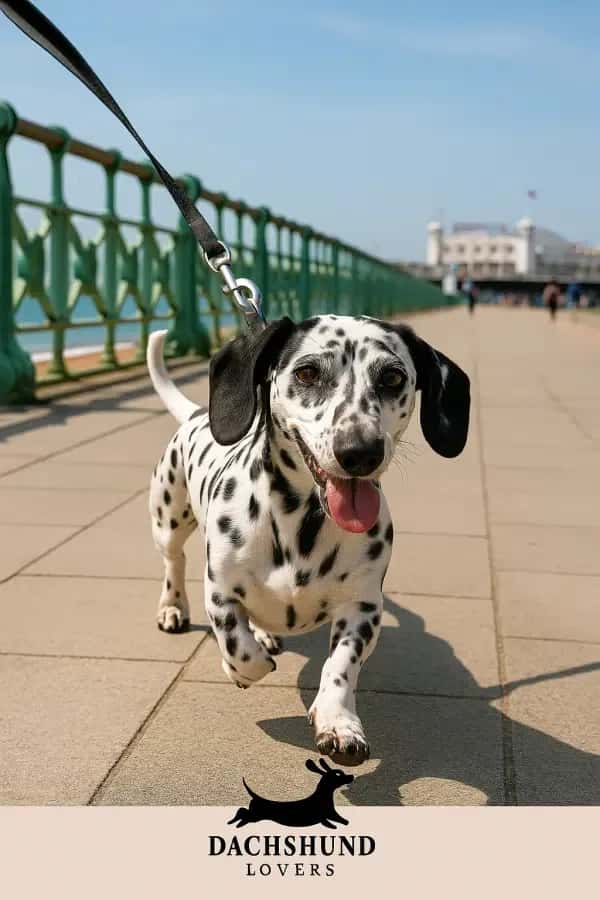
The dachshund Dalmatian mix is an active, intelligent hybrid that thrives on routine exercise and a carefully managed diet. Adult dogs need the right balance of physical activity, mental stimulation, and tailored nutrition to stay fit, avoid obesity, and prevent health issues like joint strain or spinal problems.
How Much Exercise Do They Need?
Once fully grown (12–18 months), a Dalmatian Doxie typically requires 45–60 minutes of daily exercise. Both parent breeds are energetic by nature, but their activity styles differ:
- The Dalmatian thrives on endurance-based activities like brisk walks or jogs.
- The dachshund enjoys shorter, focused bursts of activity — often involving scent tracking or digging.
The mix benefits from a blend of both approaches.
Suggested Daily Routine:
- Morning: 20–30 minutes of brisk walking or light jogging.
- Evening: 15–20 minutes of interactive play or a slower-paced walk.
- Mental Games: 5–10 minutes of puzzle toys or scent games throughout the day.
The AKC emphasizes that regular activity prevents obesity and reduces behavioral issues in active breeds (AKC Exercise Guide).
Low-Impact Exercise
Because the dachshund side of this hybrid can make them prone to intervertebral disc disease (IVDD), high-impact activities like jumping on and off furniture or running up steep stairs should be avoided. Instead, focus on low-impact, spine-friendly exercise:
- Gentle fetch with a soft ball or toy.
- Controlled tug games with breaks.
- Flat-terrain hikes with plenty of sniffing time.
- Swimming or hydrotherapy (excellent for muscle building with zero spinal stress).
Mental Stimulation
Physical activity is only half the story — mental enrichment is equally vital for this smart hybrid.
Ideas for Mental Workouts:
- Puzzle feeders and treat-dispensing toys.
- Hide-and-seek games with favorite toys or treats.
- Training new commands or tricks (even 5 minutes a day helps).
- Rotating toys weekly to keep playtime exciting.
According to PetMD, mental stimulation can be as tiring as physical exercise, helping prevent destructive habits such as barking or chewing (PetMD Puppy and Adult Dog Exercise).
Adult Diet & Feeding Plan
An adult Dalmatian Doxie needs a balanced, high-quality diet that maintains lean muscle mass while preventing weight gain.
- Calories: 500–700 calories per day (depending on activity level and size).
- Protein: At least 18–22% protein to support muscle tone.
- Healthy Fats: 5–8% fat, with omega-3s for coat and joint health.
- Carbs: Moderate, focusing on digestible grains (brown rice, oats) or grain-free alternatives.
The AKC recommends feeding dogs based on activity levels, adjusting portions if your dog gains or loses weight (AKC Feeding Guidelines).
Meal Frequency
Adult dogs (12 months+) should be fed twice a day — once in the morning and once in the evening — to avoid overeating and reduce the risk of gastrointestinal issues.
Sample Daily Plan (for a 25 lb dog):
- Morning: 1 cup of premium dry kibble (or ½ cup kibble + ½ cup wet food).
- Evening: 1 cup of kibble, with added veggies like carrots or green beans as a low-calorie filler.
- Snacks: Training treats (under 10% of daily calories).
Best Foods for a Dalmatian Doxie
When selecting food, choose a premium adult formula that is rich in animal protein and free from unnecessary fillers.
Recommended Brands:
- US: Blue Buffalo, Wellness Core, Merrick.
- UK: Lily’s Kitchen, James Wellbeloved, Burns.
- Australia: Ivory Coat, Black Hawk, Ziwi Peak.
Weight Management
Both dachshunds and Dalmatians are prone to obesity, which can significantly impact spinal health and joints.
- Portion Control: Use a measuring cup or kitchen scale to avoid overfeeding.
- Healthy Treats: Opt for low-calorie rewards like apple slices, cucumber, or small pieces of cooked chicken.
- Regular Weigh-Ins: Monthly weigh-ins at home or at the vet ensure your dog stays within a healthy range.
PetMD notes that keeping dogs lean is one of the best ways to extend their lifespan and reduce the risk of chronic conditions (PetMD on Dog Weight Management).
Supplements to Consider
To support joint and spine health:
- Glucosamine and Chondroitin: For joint lubrication and cartilage health.
- Omega-3 Fatty Acids: For anti-inflammatory benefits and coat shine.
- Probiotics: To support digestion, particularly if feeding a high-protein diet.
Always consult your vet before adding supplements to your dog’s routine.
James’ Note
What I’ve learned from my own dachshund Harvey (and countless hybrids I’ve met) is that diet and exercise work hand in hand. A well-fed dog with the right energy outlets is calmer, healthier, and far less prone to behavioral issues. It’s all about finding balance — a rhythm that suits your dog’s personality and energy.
Behavior & Temperament as Adults
The dachshund Dalmatian mix is as much about personality as it is about looks. By adulthood, this hybrid settles into a temperament that blends the mischievous charm of the dachshund with the loyal, people-focused nature of the Dalmatian. This balance creates a dog that is confident, affectionate, and playful — but still appreciates structure and routine.
Core Personality Traits
The temperament of a full grown Dalmatian Doxie is often described as spirited yet dependable. They are smart and eager to engage with their family but can show an independent streak inherited from the dachshund side.
From the dachshund, they inherit:
- Curiosity: A tendency to follow scents, explore, and get into mischief if unsupervised.
- Boldness: They approach the world with a confident, sometimes fearless energy.
- Stubbornness: Training might require patience, especially with recall.
From the Dalmatian, they inherit:
- Affection and Loyalty: They love being around their family and often form strong attachments.
- Playfulness: Their high-energy nature means they enjoy games and active play.
- Alertness: They are naturally good watchdogs, often barking to announce visitors or unusual sounds.
As the American Kennel Club (AKC) notes, Dalmatians are “intelligent, outgoing, and dignified” (AKC Dalmatian), while dachshunds are “lively and courageous to the point of rashness” (AKC Dachshund). Together, these traits produce a hybrid that is both fun and highly adaptable.
Behavior with Family Members
Adult Dalmatian Doxies make excellent family companions when given early training and consistent boundaries. They tend to be:
- Affectionate with owners: Expect a dog that enjoys snuggling, following you around the house, and being part of family activities.
- Playful with older kids: They are great with children who understand how to interact respectfully with dogs.
- Selective with strangers: They may be cautious around new people, but early socialization helps them remain friendly and calm.
Interaction with Other Pets
When raised with other pets, this mix can live harmoniously with dogs and even cats. However, their dachshund hunting instincts can make them more interested in smaller animals like rabbits or guinea pigs.
- Introduce them to new pets slowly and under supervision.
- Reward calm, positive interactions.
- Consider professional guidance if introducing them to a household with small prey animals.
Energy Levels and Playfulness
Even as adults, this hybrid remains moderately to highly energetic. While they may not demand the intense exercise of a pure Dalmatian, they still need at least 45 minutes of activity each day — and ideally a mix of mental and physical exercises.
Great activities for adults include:
- Interactive play: Fetch, tug games, or hide-and-seek.
- Training games: Teaching tricks or practicing obedience commands.
- Scent work: Let them use their dachshund-like nose to search for hidden treats.
PetMD notes that breeds with strong hunting or working instincts need mental enrichment to prevent boredom-driven behaviors like chewing or digging (PetMD Dog Enrichment).
Adult Training Reinforcement
Even if your Dalmatian Doxie was well-trained as a puppy, adult reinforcement is crucial. Dogs often test boundaries during their “teenage” months (6–18 months), and consistent refreshers keep them sharp.
Tips for Adult Training:
- Daily Mini-Sessions: Practice commands like sit, stay, come, and leave it for 5 minutes per day.
- Reward Good Behavior: Use small treats or enthusiastic praise to keep training positive.
- Focus on Recall: Their nose may lead them astray — a strong recall command is vital for off-leash play.
- Leash Manners: Use a no-pull harness to prevent tugging, particularly if they’ve inherited Dalmatian stamina.
Common Behavioral Challenges
Like all intelligent hybrids, the dachshund Dalmatian mix may develop certain behaviors if under-stimulated.
- Barking: Both parent breeds are known to be vocal. Teach the “quiet” command early and reward silence.
- Chewing: Provide durable chew toys (like KONGs) to prevent furniture damage.
- Digging: A sandbox or digging pit in the yard can give them an outlet for this instinct.
Temperament Over Time
The temperament of this mix evolves with age:
- 2–4 years: They’re in their prime — playful, active, and highly trainable.
- 5–7 years: Energy levels moderate slightly, but they remain sharp and loyal.
- 8+ years: They become more relaxed, preferring calm walks and cozy rest over intense play.
Family Lifestyle Compatibility
The dachshund Dalmatian mix is a great fit for:
- Active singles or couples who enjoy daily walks and interactive games.
- Families with older children who can engage in supervised play.
- Multi-pet homes (with proper introductions).
This hybrid may not suit households with very long workdays unless they have access to dog walkers or interactive toys to prevent loneliness.
FAQs About Full Grown Dachshund Dalmatian Mix
More From This Series:
Understanding your full grown Dachshund Dalmatian mix is just one part of the journey. Whether you’re starting with a curious puppy or caring for an active adult, our series of in-depth guides will help you navigate every stage of ownership. Each article is written with practical advice, research-backed insights, and James Duffy’s warm, design-focused perspective.
- About Dachshund Dalmatian Mix
Read Here →
This pillar guide introduces the hybrid’s history, temperament, and appearance. It’s perfect for anyone wanting to know what makes this crossbreed unique — from its rare coat patterns to its blend of loyalty and independence.
- Dachshund Dalmatian Mix Puppies
Read Here →
Planning to raise a puppy? This guide covers early training, feeding, socialization, and the first-year essentials to help your puppy grow into a confident, well-behaved adult. It’s a must-read for first-time hybrid owners.
- Dachshund Dalmatian Mix for Sale & Adoption
Read Here →
Finding a reputable breeder or exploring adoption? This article walks you through ethical sourcing, price comparisons (US, UK, AUS), and what to ask breeders before committing.
- Dachshund Dalmatian Mix Temperament & Personality
Read Here →
Dive deeper into behavior traits, family compatibility, and how the dachshund and Dalmatian personalities combine. If you’re wondering how they’ll fit into your household, this is the article to read.
- Dachshund Dalmatian Mix Health & Lifespan
Read Here →
Health is key to a long, happy life. This guide covers common genetic concerns, preventive care, diet tips, and lifespan expectations to keep your Dalmatian Doxie thriving.
Authored by
James
James is the founder of Dachshund Lovers and the proud human of Harvey, a mini dapple with a big personality. He writes to empower and connect the dachshund community, blending founder insights with honest, experience-based stories about life with this incredible and special breed. James brings candid, experience-backed opinions to the community and always focused on fewer, better products and ideas that genuinely improve life for dachshunds and their people.
Read moreJames is the founder of Dachshund Lovers and the proud human of Harvey, a mini dapple with a big personality. He writes to empower and connect the dachshund community, blending founder insights with honest, experience-based stories about life with this incredible and special breed. James brings candid, experience-backed opinions to the community and always focused on fewer, better products and ideas that genuinely improve life for dachshunds and their people.
Read moreDisclaimer
This content is for informational purposes only and should not be considered veterinary advice. Always consult with a licensed veterinarian regarding your dog’s health and wellbeing.
There are no comments yet
Leave a comment