Full Grown German Shepherd Dachshund Mix: Size & Growth Guide
Full Grown German Shepherd Dachshund Mix: Size & Growth Guide
Full grown German Shepherd Dachshund mixes are unlike any dog I’ve met—curious shape, bold personality. Here’s what to expect as they mature.
James
Posted on October 11, 2025.
Updated on July 21, 2026.
Table of Contents
- 1.Key Takeaways on Full Grown German Shepherd Dachshund Mix
- 2.What Impacts the Size of a Full Grown German Shepherd Dachshund Mix?
- -1. Parent Breed Genetics
- -2. Gender Differences
- -3. Diet and Nutrition
- -4. Exercise and Activity Levels
- -5. Timing of Spaying/Neutering
- -6. Health Factors
- -7. Coat and Build
- •James’ Note
- 3.German Shepherd Dachshund Mix Growth Stages
- -Growth Phases
- -Month-by-Month Growth Chart
- -Factors Influencing Growth
- -When Do They Stop Growing?
- -Why Monitoring Growth Matters
- -James’ Note
- 4.Average Size and Weight at Adulthood
- -Average Weight and Height
- -Regional Insights: US, AUS, UK
- -Comparing Shepherd-Dox Size to Similar Hybrids
- -Body Structure and Proportions
- -Why Weight Management is Crucial
- -Ideal Weight for Adults
- 5.Comparisons with Other Hybrid Breeds
- -Shepherd-Dox vs. Other Dachshund Mixes
- -Shepherd-Dox vs. German Shepherd Mixes
- -Exercise & Grooming Comparisons
- -Temperament Differences
- -Why the Shepherd-Dox Might Be Right for You
- 6.Nutrition and Exercise Tips for Healthy Growth
- -Nutrition for Optimal Growth
- -Exercise Guidelines for Shepherd-Dox Dogs
- -Exercise for Puppies and Young Dogs
- -Weight Management Through Exercise
- -Mental Stimulation
- -Seasonal and Regional Considerations
- -More From This Series:
- -Disclaimer
Share

When I first met a full grown German Shepherd Dachshund mix, I was amazed by how much it looked like a scaled-down German Shepherd with a hint of dachshund’s quirky proportions. This hybrid, often called the Shepherd-Dox, combines the athletic build and alert expression of the German Shepherd with the long body or shorter legs of the dachshund. The result is a dog that often weighs less than a standard German Shepherd but is still robust enough for active families.
The size and appearance of a full grown German Shepherd Dachshund mix can vary widely. Some lean toward the German Shepherd side, standing taller and more muscular, while others take after the dachshund, with a compact frame and elongated torso. On average, most full-grown Shepherd-Dox dogs weigh 20–60 lbs (9–27 kg) and stand 12–20 inches (30–50 cm) at the shoulder, but these numbers depend heavily on the size of the parent breeds.
Understanding their growth patterns, weight milestones, and exercise needs is critical for maintaining a healthy adult Shepherd-Dox. Overfeeding during puppyhood, for instance, can lead to joint stress and back issues, while insufficient activity can affect muscle tone and behavior. In this guide, we’ll explore:
- How genetics influence size and build.
- Typical growth stages from puppy to adulthood.
- Tips for maintaining a healthy weight and muscle structure.
- Comparisons with other dachshund and Shepherd hybrids.
If you’re raising a Shepherd-Dox puppy or considering adopting an adult, this guide will give you all the insights you need to understand their full-grown potential.
Key Takeaways on Full Grown German Shepherd Dachshund Mix
Topic | Summary |
|---|---|
Adult Weight Range | 20–60 lbs (9–27 kg) depending on which parent’s size dominates. |
Adult Height | 12–20 inches (30–50 cm) at the shoulder. |
Growth Timeline | Most Shepherd-Dox dogs reach full height by 10–12 months, but fill out until 15 months. |
Body Type | Can vary from a “mini German Shepherd” to a longer, dachshund-style body with shorter legs. |
Exercise Needs | 45–60 minutes daily for adults, focusing on low-impact activities to protect the spine. |
Grooming | Moderate shedding; brush 2–3 times a week to keep the coat healthy. |
Health Risks | Watch for hip dysplasia (Shepherd) and IVDD (dachshund). |
Best Diet For Growth | A balanced, high-quality diet with appropriate portions to prevent obesity. |
Lifespan | 10–14 years with proper care and weight management. |
What Impacts the Size of a Full Grown German Shepherd Dachshund Mix?
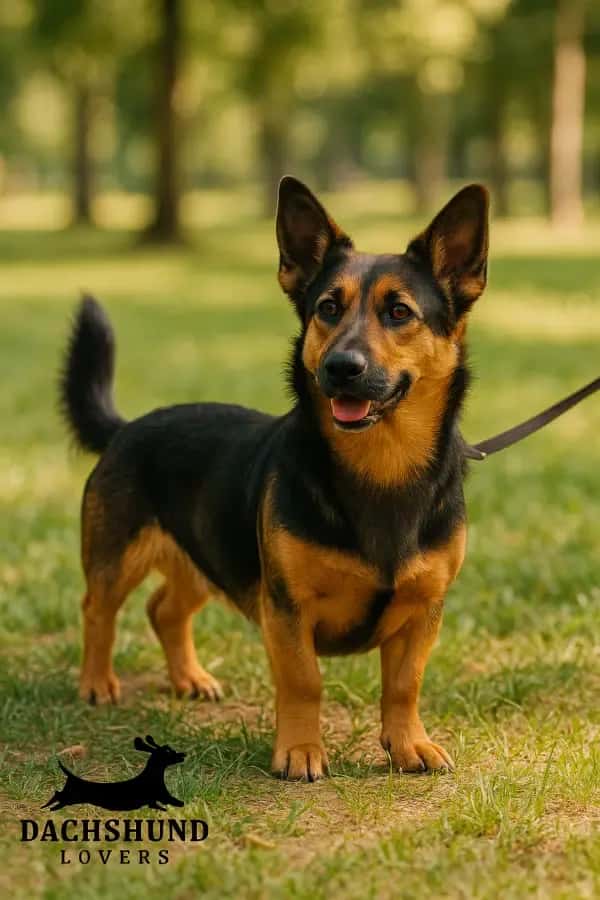
The size of a full grown German Shepherd Dachshund mix is shaped by a complex combination of genetics, early life nutrition, exercise, and health factors. Unlike purebred dogs with standardized size expectations, Shepherd-Dox hybrids can vary significantly — some resemble compact German Shepherds, while others look like elongated, muscular dachshunds with a slightly larger frame.
1. Parent Breed Genetics
Genetics play the most critical role in determining size. A German Shepherd, as outlined by the American Kennel Club (AKC), is considered a large breed, standing 22–26 inches tall at the shoulder and weighing 50–90 lbs (23–41 kg). By contrast, the dachshund, a small hunting breed, is significantly smaller. Standard dachshunds weigh 16–32 lbs (7–14 kg) and stand 8–9 inches tall, while miniature dachshunds weigh under 11 lbs (5 kg) (AKC Dachshund Profile).
A Shepherd-Dox puppy’s adult size largely depends on which parent breed’s traits dominate:
- Standard Dachshund x German Shepherd: These puppies often grow to 30–60 lbs (14–27 kg) and stand 15–20 inches tall, appearing like “mini German Shepherds” with a slightly elongated torso.
- Miniature Dachshund x German Shepherd: These hybrids tend to be on the smaller side, averaging 20–30 lbs (9–14 kg) and 12–16 inches tall.
Because this hybrid is unpredictable, even puppies from the same litter can differ in build and coat type. Genetics also influence features like ear shape (erect vs. floppy), leg length, and muscle density.
2. Gender Differences
Gender also affects size. In both German Shepherds and dachshunds, males are typically 5–10% larger than females. Male Shepherd-Dox mixes often have broader shoulders, a thicker neck, and a slightly heavier build. Female Shepherd-Dox dogs are usually lighter and may have a narrower chest and face.
For example, a male full grown German Shepherd Dachshund mix from standard dachshund lineage might weigh 35–50 lbs (16–23 kg), while a female from the same litter may only reach 30–40 lbs (13–18 kg). While these differences are subtle, they can influence the type of harness, crate, or diet plan you choose.
3. Diet and Nutrition
A puppy’s diet directly impacts its growth trajectory. Overfeeding a growing Shepherd-Dox puppy can lead to rapid weight gain, which is particularly dangerous for this hybrid because both German Shepherds and dachshunds are prone to joint problems and obesity. Excess weight can stress developing joints and worsen conditions like hip dysplasia or intervertebral disc disease (IVDD).
According to PetMD’s Complete Puppy Feeding Guide, puppies need a balanced diet with 22–32% protein and 8–12% fat to support healthy muscle development and bone growth. Portion control is essential. Divide the daily food allowance into 3–4 smaller meals for puppies under 6 months to prevent digestive issues and energy spikes.
4. Exercise and Activity Levels
Activity levels significantly shape a Shepherd-Dox’s adult size and muscle tone. A puppy that receives consistent but controlled exercise will build lean muscle and maintain a healthy weight. However, over-exercising, particularly involving jumping or stair climbing, can harm their long, dachshund-like spine and fragile joints.
- Puppies (under 6 months): Limit exercise to 5 minutes per month of age per session. For example, a 4-month-old Shepherd-Dox should have no more than 20 minutes of gentle play at a time.
- Adults: Once fully grown, they thrive on 45–60 minutes of daily exercise, mixing walks, mental games, and low-impact activities like swimming or tug-of-war.
The balance of exercise during growth stages is crucial. Too little exercise may lead to muscle underdevelopment, while too much can increase the risk of joint or spinal injuries.
5. Timing of Spaying/Neutering
The timing of spaying or neutering can have subtle effects on growth. When dogs are altered before full skeletal maturity, growth plates may remain open slightly longer, leading to taller but often less muscular dogs. According to AKC research on growth plates, delaying these procedures until 12–18 months can support optimal joint and muscle development in medium to large breeds like the Shepherd-Dox.
6. Health Factors
Health issues can influence size, weight, and posture. For example:
- IVDD (common in dachshunds) can lead to spinal discomfort, affecting a dog’s posture and overall muscle tone.
- Hip and elbow dysplasia (from the German Shepherd side) can slow mobility during puppyhood if not addressed early.
- Thyroid or metabolic issues can also cause unusual weight fluctuations.
Regular vet checkups — particularly during the first year — ensure that puppies grow steadily and healthily. Many vets recommend adding joint-support supplements (glucosamine, chondroitin, and omega-3 fatty acids) for breeds with high orthopedic risks.
7. Coat and Build
While genetics primarily dictate size, coat type and build can create the illusion of a larger or smaller dog. Shepherd-Dox dogs with a thicker double coat (from the Shepherd parent) may appear bulkier, while those with the sleek coat of a dachshund may look more slender despite having similar body weights.
James’ Note
When I met my first full grown Shepherd-Dox, I remember being surprised at how much its build resembled a German Shepherd, yet with dachshund-like proportions. It’s this unpredictable blend of traits that makes size such an important topic for owners — not just for curiosity, but for choosing the right diet, exercise routines, and health care plans.
German Shepherd Dachshund Mix Growth Stages

The growth of a full grown German Shepherd Dachshund mix is not as predictable as that of purebred dogs. This hybrid’s development depends heavily on the parent breeds’ size, diet, and activity levels. While most Shepherd-Dox dogs reach 75% of their adult size by 6–8 months, they often continue filling out — developing muscle tone and finishing bone growth — until around 12–15 months.
Growth Phases
- Newborn to 8 Weeks:
During the first two months, Shepherd-Dox puppies are entirely dependent on their mother. They typically weigh 1–2 lbs (0.5–1 kg) at birth and gain 5–10% of their body weight daily. Breeders usually begin gentle socialization (handling, exposure to household sounds) around 4 weeks, which is critical for confident development. - 2 to 3 Months:
By 8 weeks, Shepherd-Dox puppies usually weigh 5–12 lbs (2.2–5.4 kg), depending on the dachshund parent’s size. This is the time when most puppies are ready to leave their breeder or foster home. Early crate training and housebreaking should begin here. For detailed puppy care, see our German Shepherd Dachshund Mix Puppies Guide. - 3 to 6 Months:
Rapid growth occurs during this stage, with puppies gaining 2–4 lbs (0.9–1.8 kg) per month. By 6 months, they often weigh between 12–25 lbs (5.4–11 kg). While they start to look more like mini adults, they still have a lanky, playful “adolescent” phase. - 6 to 12 Months:
Growth slows, but muscle and bone density continue to increase. Most Shepherd-Dox dogs reach 75–90% of their adult height and weight during this time. A healthy 12-month-old typically weighs 20–50 lbs (9–23 kg). - 12 to 15 Months:
By 15 months, most Shepherd-Dox hybrids are fully grown in both height and weight. Larger mixes (with standard dachshund parents) can reach 50–60 lbs (23–27 kg), while smaller ones (with miniature dachshund parents) average 20–30 lbs (9–14 kg).
Month-by-Month Growth Chart
Age | Weight Range | Growth Notes |
|---|---|---|
8 weeks | 5–12 lbs (2.2–5.4 kg) | Transition to puppy food and crate training. |
3 months | 8–18 lbs (3.6–8 kg) | Rapid growth; start socialization and training. |
4 months | 10–20 lbs (4.5–9 kg) | Adult coat starts to form; teething begins. |
6 months | 12–25 lbs (5.4–11 kg) | ~75% of adult height; adolescent behavior. |
9 months | 15–35 lbs (6.8–16 kg) | Energy peaks; consistent exercise is vital. |
12 months | 20–50 lbs (9–23 kg) | Reaching adult size, though muscle may develop further. |
15 months | 20–60 lbs (9–27 kg) | Full-grown adult weight and build. |
Factors Influencing Growth
- Parent Breed Size: A Shepherd-Dox puppy with a miniature dachshund parent will remain smaller compared to one bred from a standard dachshund.
- Diet: A nutrient-rich, portion-controlled diet supports healthy bone growth and prevents obesity, which can strain the spine.
- Exercise: Low-impact activities (short walks, play) during early months help strengthen muscles without damaging joints.
- Spaying/Neutering: Timing can slightly influence height and muscle density. As discussed in our German Shepherd Dachshund Mix Health Guide, consult your vet about the optimal age.
When Do They Stop Growing?
Most full grown German Shepherd Dachshund mixes reach their maximum height by 10–12 months, but their bodies continue to develop muscle tone until about 15 months. Larger Shepherd-Dox dogs, particularly those with strong Shepherd genetics, may take slightly longer to “fill out.”
Why Monitoring Growth Matters
Tracking your Shepherd-Dox puppy’s growth helps:
- Spot early health issues: Sudden weight gain or loss can signal dietary imbalances or health concerns.
- Prevent joint and back problems: Maintaining a healthy weight reduces the risk of IVDD and hip dysplasia.
- Tailor exercise plans: Puppies with a dachshund-like frame need careful exercise to avoid strain.
James’ Note
With mixed breeds like the Shepherd-Dox, growth patterns can feel unpredictable. Some puppies stay lean and compact for months before suddenly bulking up, while others grow steadily. I’ve always found that weigh-ins every 2–3 weeks during puppyhood and keeping a simple growth chart on the fridge helps catch early issues and ensures they’re developing at a healthy pace.
Average Size and Weight at Adulthood
The average size of a full grown German Shepherd Dachshund mix is heavily influenced by which parent breed’s traits dominate, making this hybrid more variable than most crossbreeds. While German Shepherds are considered large, powerful dogs and dachshunds are much smaller and lower to the ground, the Shepherd-Dox typically lands in the medium-sized category once fully mature.
Average Weight and Height
Most full grown Shepherd-Dox dogs weigh between 20–60 lbs (9–27 kg) and stand 12–20 inches (30–50 cm) at the shoulder.
- Larger Shepherd-Doxes (from standard dachshund parents) tend to weigh 40–60 lbs (18–27 kg) with a slightly taller, more German Shepherd-like stance.
- Smaller Shepherd-Doxes (from miniature dachshund parents) are closer to 20–30 lbs (9–14 kg), often resembling elongated, compact mini Shepherds.
Regional Insights: US, AUS, UK
United States:
In the US, where German Shepherds are widely bred, Shepherd-Dox mixes often lean toward the larger end of the spectrum due to the prevalence of standard-sized dachshunds. Owners commonly report their full-grown mixes reaching 35–50 lbs (16–23 kg). Urban families, however, sometimes prefer smaller Shepherd-Doxes for apartment living, which is why miniature dachshund pairings have become more common.
Australia:
In Australia, Shepherd-Doxes are less common, and mixes often come from miniature dachshund lines to accommodate smaller living spaces in cities like Sydney or Melbourne. As a result, many Australian Shepherd-Doxes remain in the 20–35 lb (9–16 kg) range, which makes them a more practical size for families living in apartments or townhouses.
United Kingdom:
The UK tends to favor compact, mid-sized hybrids due to urban environments and smaller homes. Shepherd-Dox mixes here are generally 25–40 lbs (11–18 kg) and around 12–18 inches (30–45 cm) in height. UK breeders often focus on producing mixes that have a “mini Shepherd” look without exceeding medium size.
Comparing Shepherd-Dox Size to Similar Hybrids
When compared to other popular dachshund or Shepherd hybrids, the Shepherd-Dox falls somewhere in the middle in terms of size:
- Chiweenie (Chihuahua x Dachshund): 5–12 lbs (2.2–5.4 kg).
- Golden Dox (Golden Retriever x Dachshund): 30–50 lbs (13–23 kg).
- Beagle Dachshund Mix (Doxle): 18–30 lbs (8–13.5 kg).
- German Shepherd Corgi Mix: 30–60 lbs (13–27 kg), similar to a Shepherd-Dox in size but with a stockier build.
If you’re looking for a “medium Shepherd” look that’s easier to manage than a 70+ lb purebred German Shepherd, the Shepherd-Dox offers a more compact but still sturdy frame.
Body Structure and Proportions
Most full grown Shepherd-Doxes have:
- A broad chest and strong shoulders from the Shepherd side.
- A slightly elongated body and shorter legs from the dachshund side.
- A tail that is medium-length and often bushy like a Shepherd’s.
Some mixes have semi-erect ears that hint at their German Shepherd lineage, while others retain the floppy ears of the dachshund. This unpredictability adds to their charm but can also impact grooming and exercise needs.
Why Weight Management is Crucial
Because of their mixed body structure, Shepherd-Dox dogs are vulnerable to joint and spine-related health issues if they become overweight. Maintaining a healthy adult weight is key to preventing:
- Hip and elbow dysplasia (common in German Shepherds).
- IVDD (Intervertebral Disc Disease), particularly if they inherit a longer spine.
Our German Shepherd Dachshund Mix Health & Lifespan Guide offers a detailed breakdown of common health risks and how proper diet and exercise can minimize them.
Ideal Weight for Adults
The ideal weight for a Shepherd-Dox depends on height and bone structure:
- Smaller mixes (12–14 inches tall): 20–30 lbs (9–14 kg).
- Medium mixes (15–17 inches tall): 30–45 lbs (14–20 kg).
- Larger mixes (18–20 inches tall): 40–60 lbs (18–27 kg).
Keeping them lean — with visible waistlines and ribs that can be felt but not seen — is the best way to ensure a long, healthy life.
Comparisons with Other Hybrid Breeds

The full grown German Shepherd Dachshund mix, often known as the Shepherd-Dox, occupies a unique space in the world of hybrid breeds. While there are many popular crossbreeds, few have the striking blend of athleticism, intelligence, and personality quirks that this mix provides. To truly appreciate where the Shepherd-Dox fits, it’s worth comparing its size, build, temperament, and care needs with other well-known hybrids — particularly those involving German Shepherds or dachshunds.
Shepherd-Dox vs. Other Dachshund Mixes
Dachshund mixes, affectionately called “designer doxies,” tend to be compact, spirited, and bold. However, most remain on the smaller side, which makes the Shepherd-Dox stand out as one of the largest dachshund-based hybrids.
- Chiweenie (Chihuahua x Dachshund): These dogs are tiny, usually weighing 5–12 lbs (2.2–5.4 kg). While adorable and easy to carry, Chiweenies lack the sturdy, athletic frame of a Shepherd-Dox and can be more fragile. They’re also more prone to stubbornness, often inheriting the Chihuahua’s feisty temperament.
- Doxle (Beagle x Dachshund): Weighing around 18–30 lbs (8–13.5 kg), the Doxle is closer in size but less muscular than a Shepherd-Dox. Beagles tend to add a playful, scent-driven personality, while the Shepherd-Dox leans toward protective loyalty due to the German Shepherd influence.
- Golden Dox (Golden Retriever x Dachshund): The Golden Dox is larger, ranging from 30–50 lbs (13–23 kg), and shares some traits with the Shepherd-Dox, like affectionate loyalty. However, Golden Doxes usually have a softer, fluffier coat that requires more grooming compared to the moderate-shedding, short-to-medium coat common in Shepherd-Dox hybrids.
The Shepherd-Dox’s muscle tone and alert stance set it apart from other dachshund mixes. While most doxie hybrids lean heavily toward a smaller, lapdog personality, the Shepherd-Dox feels like a mini working dog — agile, trainable, and always ready for a challenge.
Shepherd-Dox vs. German Shepherd Mixes
When comparing the Shepherd-Dox to larger German Shepherd crossbreeds, it stands out as a more manageable alternative in terms of size and exercise requirements.
- Sheprador (German Shepherd x Labrador): Typically weighing 50–80 lbs (23–36 kg), the Sheprador is almost double the size of many Shepherd-Doxes. While Shepradors make excellent family dogs, they require far more space and exercise — something the Shepherd-Dox manages with just 45–60 minutes of daily activity.
- Gerberian Shepsky (German Shepherd x Siberian Husky): These stunning hybrids can weigh 60–90 lbs (27–41 kg) and need 1–2 hours of high-intensity exercise daily. For owners who don’t have time for this level of activity, a Shepherd-Dox is much easier to handle.
- German Shepherd x Corgi: This mix, like the Shepherd-Dox, has a longer body and shorter legs, but usually falls between 30–50 lbs (13–23 kg). While Corgi hybrids share a similar playful energy, Shepherd-Dox hybrids often exhibit a more watchful, protective streak inherited from the German Shepherd.
If you love the brains and loyalty of a German Shepherd but want a smaller, apartment-friendly option, the Shepherd-Dox is an appealing alternative. It’s essentially a “downsized” Shepherd with added personality quirks from the dachshund.
Exercise & Grooming Comparisons
Compared to larger Shepherd mixes, the Shepherd-Dox’s exercise needs are moderate. While a Sheprador or Shepsky might require long jogs or intense hikes, the Shepherd-Dox thrives on daily walks, mental games, and short play sessions. It’s a great option for families or singles who want an active dog without the time commitment of a high-energy large breed.
In terms of grooming, Shepherd-Dox dogs often inherit a medium coat with moderate shedding. They require brushing 2–3 times a week but don’t have the heavy seasonal “blowouts” common in Huskies or some Shepherd crosses. This makes them more manageable for busy owners who don’t want a high-maintenance grooming schedule.
Temperament Differences
Temperament is another area where the Shepherd-Dox shines.
- Compared to smaller dachshund mixes like the Chiweenie, the Shepherd-Dox is generally less yappy and more even-tempered, thanks to the calming influence of the German Shepherd parent.
- Compared to larger Shepherd mixes, it’s often less intense and easier to train because its energy levels are slightly lower. However, it still inherits enough intelligence to excel in obedience and interactive training games.
As discussed in the German Shepherd Dachshund Mix Temperament & Personality Guide, this hybrid is best described as loyal, watchful, and affectionate, with a dash of dachshund independence. It’s the perfect balance of companion and watchdog without being overwhelming in size or demeanor.
Why the Shepherd-Dox Might Be Right for You
The Shepherd-Dox appeals to owners who want:
- A dog that’s smaller and more manageable than a purebred German Shepherd.
- A quirky personality and unique look that stands out from typical dachshund mixes.
- A loyal, protective dog that doesn’t require excessive grooming or hours of daily exercise.
It’s not for everyone — particularly if you want a “predictable” size or coat type — but for those who love mixed breeds, the Shepherd-Dox is a perfect blend of intelligence, playfulness, and adaptability.
Nutrition and Exercise Tips for Healthy Growth
Raising a full grown German Shepherd Dachshund mix to be healthy and strong requires a careful balance of diet, exercise, and preventive care. Because this hybrid is prone to both dachshund back issues (IVDD) and German Shepherd joint conditions (hip or elbow dysplasia), owners must take extra care during the first 12–15 months of growth. Proper nutrition, low-impact exercise, and early training will set the foundation for a healthy, active adult.
Nutrition for Optimal Growth
The Shepherd-Dox’s growth and muscle development depend heavily on its diet during puppyhood and adolescence. According to the AKC Puppy Feeding Guide, puppies require a high-quality diet formulated with 22–32% protein and 8–12% healthy fats to build lean muscle and support bone density.
Feeding Schedule by Age:
- 2–6 months: Feed 3–4 smaller meals per day to maintain stable energy levels and avoid bloat.
- 6–12 months: Transition to 2–3 meals daily, depending on activity levels.
- 12+ months: Adult Shepherd-Doxes do well on 2 meals per day, with portion sizes based on their weight and exercise routine.
Portion Control:
One of the most common mistakes is overfeeding. Both German Shepherds and dachshunds are prone to weight gain, which can put extra strain on their spine and joints. Owners should regularly monitor their dog’s Body Condition Score (BCS) — you should be able to feel but not see the ribs, and there should be a visible waistline when viewed from above.
Food Quality:
Choose a premium kibble or fresh food brand that lists real meat as the first ingredient, supplemented with omega-3 fatty acids for joint health. Avoid low-quality foods with fillers like corn, soy, or artificial additives, which offer little nutritional value. Our German Shepherd Dachshund Mix Health Guide explains how diet directly affects joint health and long-term weight control.
Supplements:
Joint supplements containing glucosamine and chondroitin are often recommended by veterinarians for breeds prone to hip dysplasia or IVDD. Additionally, probiotics and fish oil can support digestion, coat health, and inflammation control.
Exercise Guidelines for Shepherd-Dox Dogs
A full grown German Shepherd Dachshund mix is an active dog that thrives on 45–60 minutes of daily exercise. However, because of its dachshund heritage, activities should be low-impact to protect the spine.
Best Activities for Shepherd-Dox Adults:
- Brisk walks (2–3 per day): Regular walks help maintain muscle tone without over-stressing joints.
- Interactive play: Games like fetch or tug-of-war keep them mentally and physically engaged.
- Puzzle toys and snuffle mats: Mental stimulation is just as important as exercise for this intelligent hybrid.
- Gentle agility or obedience exercises: These build focus and confidence, but avoid repetitive jumping.
Exercise for Puppies and Young Dogs
Young Shepherd-Dox dogs (under 12 months) require controlled exercise to prevent joint and spinal damage. The 5-minute rule — 5 minutes of activity per month of age — is a good guideline. For example, a 4-month-old puppy should have no more than 20 minutes of structured play at a time.
Activities like climbing stairs or jumping off furniture should be strictly limited until growth plates are fully developed (around 12–15 months). Use ramps or low platforms instead, as discussed in our Puppies Guide.
Weight Management Through Exercise
While the Shepherd-Dox doesn’t require hours of high-intensity activity like a Husky or Sheprador, consistent daily movement is crucial to prevent obesity. Even a 10-lb weight gain on a medium-sized dog can drastically increase the risk of IVDD or arthritis. Combining two brisk walks with 10–15 minutes of indoor play is often enough to maintain a healthy weight and energy balance.
Mental Stimulation
This hybrid is highly intelligent and can become bored easily, leading to destructive behavior if not given mental challenges. Training sessions, puzzle toys, and scent games can help prevent this. Short obedience sessions — teaching commands like sit, stay, and leave it — not only reinforce good manners but also mentally tire out the dog.
Seasonal and Regional Considerations
In hot climates (e.g., Australia), outdoor exercise should be done in the early morning or late evening to prevent overheating. In colder regions like the UK, winter walks may require a coat to keep them warm, particularly for dogs with thinner dachshund-like coats.
FAQs About the Full Grown German Shepherd Dachshund Mix
More From This Series:
Understanding the growth, size, and unique characteristics of a full grown German Shepherd Dachshund mix is only one piece of the puzzle. To gain a complete picture of this fascinating hybrid — from puppyhood to adulthood — we’ve built a series of in-depth guides that cover every stage of life, behavior, and care requirement.
1. German Shepherd Dachshund Mix: The Ultimate Breed Guide
Read Here →
This is the foundation for understanding the Shepherd-Dox breed. It explores the history, temperament, appearance, and key care requirements for this unique mix. If you’re curious about how this hybrid compares to its parent breeds, or if you’re deciding whether it’s the right dog for your family, this guide is a must-read.
2. German Shepherd Dachshund Mix Puppies: Buying, Raising & Care Tips
Read Here →
The puppy stage is where good habits are built. This article walks you through everything you need to know — from finding healthy puppies (whether through breeders or adoption) to feeding, early training, and socialization. If you’re raising a Shepherd-Dox puppy now, this resource will help you avoid the most common mistakes new owners make.
3. German Shepherd Dachshund Mix for Sale & Adoption Guide
Read Here →
Thinking about buying or adopting? This guide provides price comparisons for the US, Australia, and UK, along with practical advice on spotting ethical breeders and reputable rescues. It also explains why adoption can be a rewarding and cost-effective choice.
4. German Shepherd Dachshund Mix Temperament & Personality
Read Here →
The Shepherd-Dox has a unique blend of loyalty, playfulness, and independence. This guide helps you understand their behavioral tendencies, how to train them effectively, and how to ensure they fit well into family life or multi-pet households.
5. German Shepherd Dachshund Mix Health & Lifespan
Read Here →
Every hybrid has its health considerations, and the Shepherd-Dox is no exception. This article covers the most common health issues, preventative care tips, and what you can do to ensure your dog lives a long and active life. It’s an excellent follow-up to this Size & Growth Guide, especially if you’re concerned about weight-related issues or back and joint health.
Authored by
James
James is the founder of Dachshund Lovers and the proud human of Harvey, a mini dapple with a big personality. He writes to empower and connect the dachshund community, blending founder insights with honest, experience-based stories about life with this incredible and special breed. James brings candid, experience-backed opinions to the community and always focused on fewer, better products and ideas that genuinely improve life for dachshunds and their people.
Read moreJames is the founder of Dachshund Lovers and the proud human of Harvey, a mini dapple with a big personality. He writes to empower and connect the dachshund community, blending founder insights with honest, experience-based stories about life with this incredible and special breed. James brings candid, experience-backed opinions to the community and always focused on fewer, better products and ideas that genuinely improve life for dachshunds and their people.
Read moreDisclaimer
This content is for informational purposes only and should not be considered veterinary advice. Always consult with a licensed veterinarian regarding your dog’s health and wellbeing.
There are no comments yet
Leave a comment