German Shepherd Dachshund Mix Temperament & Personality
German Shepherd Dachshund Mix Temperament & Personality
Curious about the personality of this bold little mix? Here's what to expect living with a German Shepherd Dachshund cross, from loyalty to stubborn streaks.

James
Posted on October 12, 2025.
Updated on July 20, 2026.
Table of Contents
- 1.Key Takeaways on German Shepherd Dachshund Mix Temperament
- •The Temperament of a Dachshund German Shepherd Mix
- -A Blend of Brains and Boldness
- -Loyal to a Fault
- -Energy Levels and Playfulness
- -Confidence with a Dash of Sass
- 2.Behavior Traits and Quirks
- -Vocal Nature
- -Protective Instincts
- -Playfulness and Hunting Instincts
- -Independence Meets Devotion
- -Family Suitability
- -Energy Management
- 3.Family Suitability: Kids, Pets, and Lifestyle
- -Living with Children
- -Interaction with Other Pets
- -Apartment vs. House Living
- -Active vs. Quiet Lifestyles
- -Training & Family Involvement
- -Best Home Environment
- 4.Training Tips for Shepherd-Dox Temperament
- -Start Training Early
- -Positive Reinforcement Works Best
- -Mental Stimulation Is Key
- -Socialization from Day One
- -Handling Stubbornness
- -Training for Family Settings
- -Managing Barking and Alertness
- -Professional Training Support
- -James’ Note
- 5.Common Personality Challenges (and Solutions)
- -1. Separation Anxiety
- -2. Guarding and Over-Protectiveness
- -3. Stubbornnes
- -4. Barking and Vocalization
- -5. Digging and Chewing
- -6. Prey Drive
- -More From This Series:
- -Disclaimer
Share

When you combine the loyal, intelligent German Shepherd with the independent, bold dachshund, you get a mix that’s as unique in personality as it is in appearance. The dachshund German Shepherd mix temperament is a fascinating blend of traits that can range from playful and affectionate to stubborn and protective. This hybrid, often called the Shepherd-Dox, is not a dog that fades into the background — it’s a companion with strong character and an even stronger bond with its family.
German Shepherds are renowned for their trainability, loyalty, and protective instincts. They’re working dogs at heart, eager to learn and always tuned in to their owner’s emotions. Dachshunds, on the other hand, are independent thinkers with a mischievous streak, originally bred as hunting hounds with fearless determination. When these two personalities meet, the result is a dog that is both clever and lively, with a personality that thrives on mental and physical stimulation.
This article explores the temperament, behavior patterns, and training needs of the Shepherd-Dox. Whether you’re considering adopting one or simply want to understand what living with this hybrid is like, we’ll cover:
- Key personality traits (both positive and challenging).
- How this mix interacts with children, families, and other pets.
- Training strategies that work best for this intelligent but sometimes stubborn hybrid.
- Tips for managing energy levels and behavior quirks.
Key Takeaways on German Shepherd Dachshund Mix Temperament
Trait | Summary |
|---|---|
Loyalty | Extremely loyal, often bonding closely with one or two family members. |
Intelligence | Quick learners due to the German Shepherd side, but may test boundaries like a dachshund. |
Energy Levels | Moderate to high; needs 45–60 minutes of exercise daily. |
Behavior Quirks | Can be vocal, protective, and a little stubborn without proper socialization. |
Family Compatibility | Great with older children; thrives in active households that can provide consistent training. |
Socialization Needs | Early exposure to people and pets reduces over-protectiveness or shyness. |
Trainability | Responds well to positive reinforcement but can be independent-minded. |
Personality Challenges | May inherit a strong prey drive from the dachshund or a guarding instinct from the Shepherd. |
The Temperament of a Dachshund German Shepherd Mix
The dachshund German Shepherd mix temperament is a study in contrasts — and that’s exactly what makes this hybrid so fascinating. On one hand, you have the German Shepherd, known for its intelligence, loyalty, and work ethic. On the other, the dachshund, a smaller but fiercely independent hunter with a playful, curious nature. The Shepherd-Dox inherits a unique combination of these traits, resulting in a personality that’s lively, alert, and often just a little bit cheeky.
A Blend of Brains and Boldness
German Shepherds are often described as “thinking dogs.” They’re problem-solvers and quick learners, which is why they excel in roles like police work, search and rescue, and service tasks. That sharp intelligence definitely carries over to the Shepherd-Dox. These dogs pick up on training cues quickly and thrive on learning new commands, provided you make training sessions engaging and positive.
The dachshund’s influence adds a playful streak — and sometimes a stubborn one. They have a knack for deciding what they do and don’t feel like doing, which can be a challenge during training. It’s not that they’re ignoring you; it’s that they’re evaluating whether your command is worth their time. This independent thinking can frustrate first-time owners, but for those who appreciate a dog with character, it’s part of their charm.
Loyal to a Fault
Shepherd-Dox dogs form strong bonds with their families. They’re the type of dog that always knows where you are, often choosing to shadow their favorite person around the house. This loyalty makes them excellent watchdogs — they’re naturally alert and protective — but it also means they don’t like being left alone for long periods. Without proper training or mental stimulation, separation anxiety can set in.
Unlike some small breeds that bond with one person and ignore the rest, Shepherd-Dox dogs are family-oriented. They’ll happily play with kids (especially older children who understand boundaries) and enjoy being part of the household routine.
Energy Levels and Playfulness
This mix tends to have moderate to high energy levels. A daily routine of 45–60 minutes of exercise is ideal, split between walks, interactive play, and mental enrichment (like puzzle toys). The Shepherd side loves purposeful activity, while the dachshund side enjoys a good sniffing adventure, whether it’s on a walk through the park or a game of “find the treat” in the backyard.
If under-exercised or left bored, they can turn that energy inward — digging, chewing, or barking for attention. They’re happiest when they have a mix of both physical and mental stimulation.
Confidence with a Dash of Sass
While German Shepherds are naturally confident, dachshunds bring a fearless attitude that’s almost comical at times. Don’t be surprised if your Shepherd-Dox tries to “boss around” much larger dogs at the park — the dachshund heritage gives them a big-dog mindset in a smaller frame. That said, they can also inherit a Shepherd’s cautious side, especially around strangers. Early socialization is crucial to balance out these traits.
Training Personality
Training a Shepherd-Dox requires a mix of patience and creativity. They respond exceptionally well to positive reinforcement (treats, toys, and verbal praise). Harsh training methods or repetitive drills can backfire, especially if they inherit the dachshund’s stubborn streak. Short, upbeat sessions work best.
For owners who enjoy teaching tricks or agility exercises, this hybrid is surprisingly capable. They may not be as fast as a Border Collie, but they make up for it with enthusiasm and focus — as long as you keep things interesting.
One of the things I love about the Shepherd-Dox temperament is how full of personality they are. They’re not just obedient robots or stubborn mavericks — they sit somewhere in between, which makes living with them so rewarding. When you build trust and make training fun, you’ll see just how clever and loyal they can be. But they’ll also make you laugh with their quirks — a mix of Shepherd discipline and dachshund mischief.
Behavior Traits and Quirks
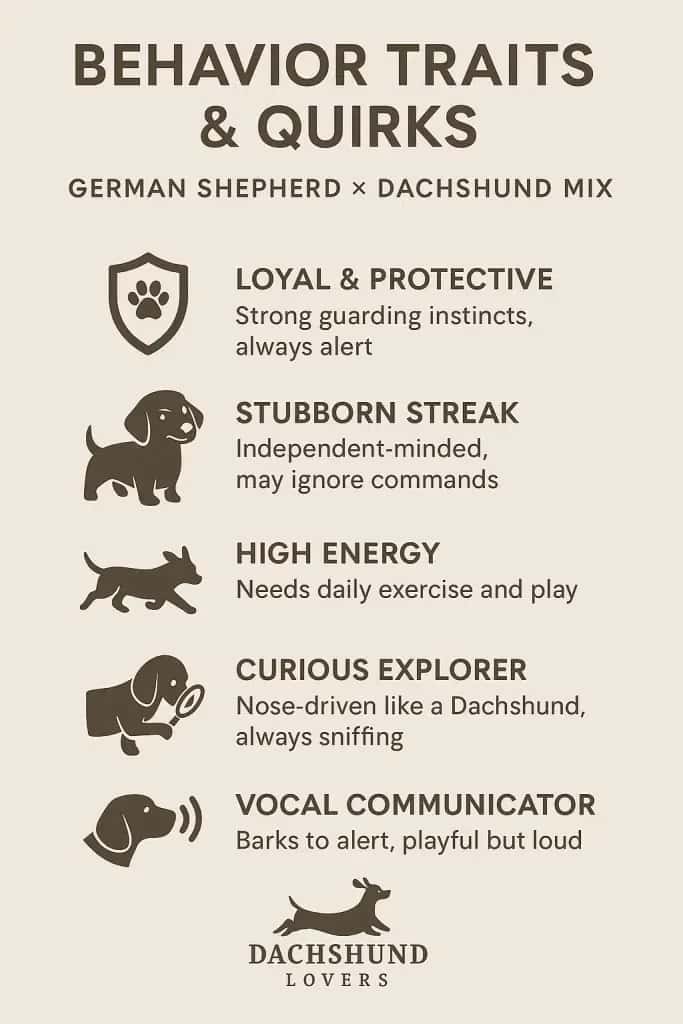
The dachshund German Shepherd mix temperament is as unpredictable as it is endearing. Each dog may lean more toward one parent’s personality, resulting in unique behavioral quirks. Understanding these tendencies will help you train, socialize, and engage your Shepherd-Dox effectively.
Vocal Nature
Both parent breeds are known for being vocal. German Shepherds use barking to alert or communicate, while dachshunds often bark out of excitement or curiosity. As a result, Shepherd-Dox dogs can be chatty, especially if they’re bored or trying to protect their territory.
- Expect alert barking when strangers approach your home — a trait inherited from the German Shepherd side.
- Dachshund influence means they may bark during play or when left alone for too long.
Tip: Use positive reinforcement training to teach the “quiet” command early on. For training advice, see our Puppies Guide, which includes early obedience strategies to manage vocal habits.
Protective Instincts
Shepherd-Dox dogs are naturally watchful, thanks to the German Shepherd’s protective nature. While this makes them great watchdogs, it can also lead to over-guarding if not balanced with early socialization. Expose your dog to new people, sounds, and environments during the first 16 weeks (or immediately after adoption) to prevent fear-based behaviors.
For families with kids or other pets, we recommend structured introductions. This hybrid is usually affectionate and loyal with family members, but they can be wary of strangers until they feel secure.
Playfulness and Hunting Instincts
The dachshund heritage adds a playful, almost clown-like streak to this mix. These dogs love games like fetch, hide-and-seek, or puzzle toys that engage their intelligence and sniffing skills. However, their hunting background means they may chase smaller animals — including cats or wildlife — if not trained to focus.
- Use scent-based games (like snuffle mats) to channel their natural hunting drive productively.
- Combine mental challenges with physical activity to prevent boredom. For more ideas, see our Size & Growth Guide, which includes safe exercise tips tailored to their unique build.
Independence Meets Devotion
Shepherd-Dox dogs have a dual personality — fiercely loyal yet sometimes independent. The German Shepherd side thrives on direction and leadership, while the dachshund side prefers doing things its own way. This combination can make them appear stubborn, but it’s more about having a strong mind than defiance.
Tip: Consistency is key. Set clear boundaries from day one, but balance structure with affection. A Shepherd-Dox that feels trusted and understood is incredibly eager to please.
Family Suitability
The behavioral adaptability of this hybrid is what makes it such a standout choice for families. They generally bond deeply with older children who understand how to interact with dogs respectfully. For households with younger kids, supervision during play is recommended, as their protective instincts may kick in if they perceive rough play as a threat.
For homes with other pets, early introductions and consistent training are crucial. The Shepherd-Dox can coexist well with other dogs and even cats when socialized from a young age. More tips on integrating them into a multi-pet household can be found in our Health & Lifespan Guide, where we cover mental and emotional well-being.
Energy Management
One of the quirks of the Shepherd-Dox is its unpredictable bursts of energy. They’ll alternate between being calm lap dogs and suddenly wanting to sprint around the yard or chase a toy. This is why they thrive with structured daily routines — walks, play sessions, and mental stimulation keep them balanced.
According to PetMD, medium-sized active hybrids like the Shepherd-Dox should get 45–60 minutes of exercise per day, split into multiple sessions to avoid fatigue or strain on their dachshund-like spine.
Family Suitability: Kids, Pets, and Lifestyle
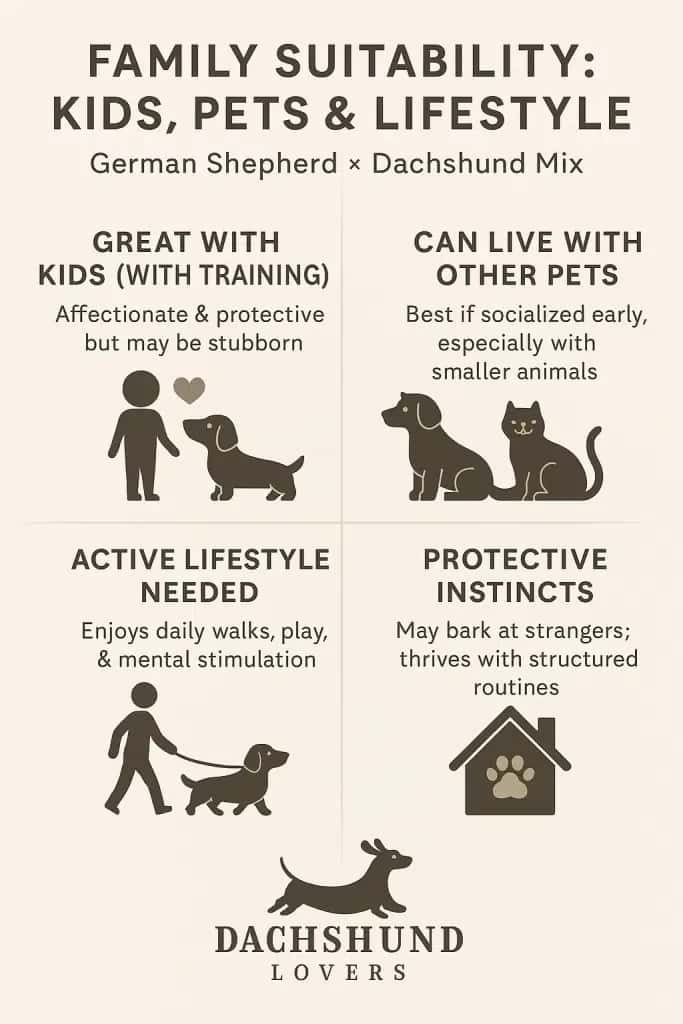
The dachshund German Shepherd mix temperament makes this hybrid a surprisingly versatile companion for many types of households. With the right training and early socialization, the Shepherd-Dox can thrive in family homes, single-person households, and even urban apartments — provided its exercise and mental stimulation needs are met.
Living with Children
Shepherd-Dox dogs often form strong bonds with children, especially older kids who know how to respect a dog’s space. The German Shepherd side brings protective instincts and a desire to “watch over” younger family members, while the dachshund side contributes a playful, clownish personality that children love.
However, like any dog, they have limits. Young children should be supervised during playtime, as the Shepherd-Dox may misinterpret roughhousing or loud behavior as a threat. Teaching children basic dog etiquette — like not pulling ears or interrupting meals — ensures a safe and happy environment for everyone.
Tip: If you have toddlers or babies, invest in early crate training (see our Puppies Guide) to give your Shepherd-Dox a secure space where they can retreat when they need downtime.
Interaction with Other Pets
With proper introductions, the Shepherd-Dox is generally good with other dogs and can coexist peacefully with cats. The German Shepherd influence brings a sense of order and social awareness, while the dachshund’s hunting background means they may initially chase smaller pets. Early socialization is key to teaching them appropriate behavior around other animals.
- For multi-dog households: Introduce your Shepherd-Dox on neutral ground, like a park, before bringing them home.
- For homes with cats: Use slow, controlled introductions. Reward calm behavior and avoid forcing interaction.
More detailed tips on integrating Shepherd-Dox dogs with other pets can be found in our Health & Lifespan Guide, which includes advice on mental enrichment and managing stress.
Apartment vs. House Living
Despite their medium size, Shepherd-Dox dogs can adapt to apartment living, as long as they receive daily exercise. They are not couch potatoes — they need at least 45–60 minutes of outdoor activity plus mental enrichment (puzzle toys, obedience games) to stay content.
For houses with fenced yards, the Shepherd-Dox will happily explore and patrol the boundaries, but yard time is no substitute for structured walks or training. Like their German Shepherd parent, they crave purpose and thrive on interactive activities with their owners.
Active vs. Quiet Lifestyles
The Shepherd-Dox fits best into active households that enjoy outdoor adventures, regular walks, or casual weekend hikes. They are not as high-energy as Huskies or Shepherd-Lab mixes, but they need consistent movement to stay healthy.
For quieter households or older owners, the Shepherd-Dox can adapt if their exercise needs are met with shorter, structured walks and play sessions. Their moderate size and adaptable temperament make them a good choice for semi-retired individuals or couples who want a dog that enjoys both snuggle time and occasional bursts of energy.
Training & Family Involvement
Because Shepherd-Dox dogs are intelligent but sometimes stubborn, training should be a family effort. Consistency across all family members — using the same commands, tone, and rewards — prevents confusion. The German Shepherd side thrives on learning, while the dachshund side enjoys problem-solving, so short, fun training sessions (5–10 minutes) are highly effective.
Our Ultimate Breed Guide offers more insight into how training impacts this hybrid’s personality and long-term behavior.
Best Home Environment
A Shepherd-Dox is happiest in an environment where:
- Someone is home often or can include them in daily routines.
- There is time for interactive exercise, not just backyard access.
- They receive mental challenges (training, scent games, puzzle feeders).
- They have clear boundaries and socialization from puppyhood.
If you work long hours or travel frequently, consider doggy daycare or hiring a walker — Shepherd-Dox dogs are people-oriented and may develop separation anxiety if left alone for too long.
Training Tips for Shepherd-Dox Temperament
The dachshund German Shepherd mix temperament is intelligent and eager but can also be stubborn — a combination that makes training both rewarding and occasionally challenging. This hybrid thrives on structured routines, clear leadership, and positive reinforcement, which bring out the best in its personality.
Start Training Early
Whether you’re bringing home a puppy or an adopted adult Shepherd-Dox, training should begin as soon as they settle in. For puppies, this means focusing on housebreaking, crate training, and basic commands within the first few weeks. For adult dogs, start with trust-building exercises and simple obedience work to create structure.
- Housebreaking: Establish a regular potty schedule and use rewards immediately after they go outside. Dachshund genetics can make housebreaking slower, so patience and consistency are key.
- Crate Training: A crate serves as both a training tool and a safe retreat. Start with short sessions and use treats or toys to create positive associations.
For more puppy-specific strategies, check out our Puppies Guide, which includes step-by-step tips for crate and potty training.
Positive Reinforcement Works Best
The Shepherd-Dox responds best to reward-based training, which uses treats, praise, and play to reinforce desired behaviors. According to AKC’s Positive Reinforcement Guide, this approach is particularly effective for intelligent breeds like German Shepherds and for stubborn ones like dachshunds.
- Keep sessions short and fun (5–10 minutes) to prevent boredom.
- Use high-value rewards (small pieces of chicken or cheese) during initial training.
- Gradually replace treats with verbal praise or toys to maintain long-term obedience.
Mental Stimulation Is Key
Training isn’t just about obedience; it’s also about keeping the mind active. Shepherd-Dox dogs have sharp problem-solving skills and love challenges. Without enough mental stimulation, they can become destructive or develop unwanted behaviors like barking or digging.
Ideas for mental enrichment include:
- Puzzle toys or treat-dispensing games.
- Scent work: Hide treats around the house or yard for your dog to find.
- Trick training: Teach fun commands like spin, paw, or play dead.
- Interactive play: Tug-of-war, hide-and-seek, and fetch with variable commands (“drop it” or “wait”) keep their minds engaged.
A Shepherd-Dox that isn’t socialized may develop overprotective or wary behavior around strangers. Early socialization is critical to shaping a balanced, confident adult dog. Introduce your puppy (or newly adopted adult) to:
- Different people: Men, women, children, and individuals wearing hats or glasses.
- Other animals: Controlled interactions with other dogs, cats, or pets.
- Environments: Parks, cafes, busy streets, and car rides.
Use positive reinforcement during these interactions to create good associations. The Ultimate Breed Guide offers additional tips on how early socialization shapes Shepherd-Dox temperament.
Handling Stubbornness
The dachshund side of this hybrid means you may encounter moments where your dog “pretends” not to hear you. This isn’t disobedience — it’s an independent streak. The trick is to keep training varied and interesting.
- Rotate commands and mix up the rewards.
- Avoid repeating commands over and over; it teaches them to tune you out.
- Use a firm but kind tone — harsh corrections can create mistrust.
Training for Family Settings
If you have children or other pets, involve them in training. Kids can learn to give simple commands (sit, stay, shake) with supervision. Family participation ensures the dog understands that rules apply universally, not just when a single person is in charge.
For households with multiple dogs, group training sessions help establish harmony. Keep training consistent and avoid rewarding one dog for behaviors that others are corrected for.
Managing Barking and Alertness
Shepherd-Dox dogs can inherit vocal tendencies from both parents. Training them to bark on cue (“speak”) and then quiet on command is a fun way to manage this habit. Reward silence with treats or praise, gradually extending the quiet intervals.
Professional Training Support
For first-time dog owners or anyone struggling with stubborn behavior, consider enrolling your Shepherd-Dox in basic obedience classes. Group classes provide:
- Socialization with other dogs and owners.
- Hands-on guidance from experienced trainers.
- A structured setting to reinforce good habits.
James’ Note
I’ve seen firsthand how Shepherd-Dox dogs thrive on structure, just like my own Harvey. When training is consistent, positive, and a bit playful, they become incredibly attentive and eager to learn. Think of training as a way to deepen your connection with them — it’s as much about building trust as it is about teaching commands.
Common Personality Challenges (and Solutions)

The dachshund German Shepherd mix temperament is undeniably charming, but like any hybrid, it comes with certain challenges. By understanding these potential issues upfront, you can take proactive steps to prevent them from becoming long-term habits.
1. Separation Anxiety
The Challenge:
Shepherd-Dox dogs often form intense bonds with their owners. While this loyalty is a plus, it can lead to separation anxiety if they’re left alone for long periods. Signs of anxiety include barking, whining, destructive chewing, or pacing when you’re away.
The Solution:
- Gradual Independence Training: Start by leaving your dog alone for short periods, gradually increasing the duration. Reward calm behavior when you return.
- Interactive Toys: Use puzzle toys or treat-dispensing gadgets to keep them occupied during alone time.
- Routine Matters: Consistent meal times, walks, and training sessions give them a sense of security.
- Professional Help: For severe cases, consider consulting a trainer or behaviorist who specializes in separation anxiety.
Our Puppies Guide includes crate-training techniques that help prevent anxiety from developing in young dogs.
2. Guarding and Over-Protectiveness
The Challenge:
German Shepherds are natural protectors, and this trait often surfaces in the Shepherd-Dox. Without early socialization, they might become wary or overly protective around strangers or new situations.
The Solution:
- Early Socialization: Expose them to a variety of people, places, and sounds from a young age.
- Controlled Greetings: When guests arrive, reward calm behavior with treats or praise.
- Redirected Focus: Teach commands like “look at me” or “place” to distract them from potential triggers.
- Positive Associations: Pair new experiences with rewards — for instance, offer a treat when they calmly meet someone new.
The Ultimate Breed Guide outlines how structured exposure to the world can help balance their protective instincts.
3. Stubbornnes
The Challenge:
The dachshund side of this hybrid can bring a streak of independence. While they’re highly intelligent, they may choose to ignore commands if they find something more interesting to focus on (like a scent trail).
The Solution:
- Short, Engaging Sessions: Limit training to 5–10 minutes and end on a positive note.
- High-Value Rewards: Use irresistible treats (like cooked chicken or cheese) during training sessions.
- Mix It Up: Rotate training exercises to keep them engaged and avoid repetition fatigue.
- Firm Consistency: Ensure all family members use the same commands and reward structure.
4. Barking and Vocalization
The Challenge:
Shepherd-Dox dogs inherit alert barking tendencies from both parents. While this can be great for security, it can also become disruptive if not managed early.
The Solution:
- Teach “Quiet” on Command: Reward silence immediately after a bark, using treats or praise.
- Exercise & Enrichment: A tired dog is a quiet dog. Ensure they have enough mental and physical stimulation.
- Identify Triggers: If barking is caused by external stimuli (like passing cars or neighbors), use training to redirect their attention.
5. Digging and Chewing
The Challenge:
The dachshund’s hunting instincts may cause digging in the yard or chewing when bored.
The Solution:
- Provide Alternatives: Offer chew toys or puzzle feeders to keep them occupied.
- Designated Digging Zones: For yard owners, create a small area where digging is allowed and reward them for using it.
- Supervised Play: Redirect destructive behaviors immediately and consistently.
6. Prey Drive
The Challenge:
With the dachshund’s history as a badger hunter, some Shepherd-Dox dogs have a high prey drive and may chase smaller animals.
The Solution:
- Leash Training: Keep them on a leash during walks until reliable recall is established.
- Impulse Control Commands: Teach “leave it” and “come” from an early age.
Scent Work: Channel their instincts into structured games like treat-hiding or “find it” challenges.
FAQs About Dachshund German Shepherd Mix Temperament
More From This Series:
The German Shepherd Dachshund mix is a unique blend of intelligence, loyalty, and boldness. To help you get the full picture of this hybrid — from choosing a puppy to caring for an adult — we’ve created a series of detailed guides. These resources complement what you’ve just read about temperament and will give you practical advice at every stage of ownership.
- German Shepherd Dachshund Mix: The Ultimate Breed Guide
Read Here →
This all-in-one guide provides a deep dive into the Shepherd-Dox’s history, physical traits, temperament, and care needs. It’s the best place to start if you’re new to this hybrid and want a clear understanding of what to expect.
- German Shepherd Dachshund Mix Puppies: Buying, Raising & Care Tips
Read Here →
Puppies require extra attention and structure, especially when they inherit the dachshund’s independent streak and the German Shepherd’s energy. This guide covers everything from housebreaking and early training to finding reputable breeders or adoption options.
- Full Grown German Shepherd Dachshund Mix: Size & Growth Guide
Read Here →
Curious about how large your Shepherd-Dox will get? This article includes growth charts, weight ranges, and exercise tips for maintaining a healthy, active adult dog.
- German Shepherd Dachshund Mix for Sale & Adoption Guide
Read Here →
Finding a Shepherd-Dox can take some time due to its rarity. This guide explains where to look for puppies and rescues in the US, Australia, and the UK, plus a detailed cost breakdown of breeders vs. adoption.
- German Shepherd Dachshund Mix Health & Lifespan
Read Here →
Health is a critical topic for this hybrid, as both parent breeds are prone to conditions like hip dysplasia and IVDD. This article gives you preventive care tips, signs to watch for, and advice on how to keep your dog thriving for 10–14 years or more.
Authored by
James
James is the founder of Dachshund Lovers and the proud human of Harvey, a mini dapple with a big personality. He writes to empower and connect the dachshund community, blending founder insights with honest, experience-based stories about life with this incredible and special breed. James brings candid, experience-backed opinions to the community and always focused on fewer, better products and ideas that genuinely improve life for dachshunds and their people.
Read moreJames is the founder of Dachshund Lovers and the proud human of Harvey, a mini dapple with a big personality. He writes to empower and connect the dachshund community, blending founder insights with honest, experience-based stories about life with this incredible and special breed. James brings candid, experience-backed opinions to the community and always focused on fewer, better products and ideas that genuinely improve life for dachshunds and their people.
Read moreDisclaimer
This content is for informational purposes only and should not be considered veterinary advice. Always consult with a licensed veterinarian regarding your dog’s health and wellbeing.
There are no comments yet
Leave a comment