German Shepherd Dachshund Mix Health & Lifespan
German Shepherd Dachshund Mix Health & Lifespan
Wondering if a German Shepherd Dachshund mix is healthy? Here's what I’ve learned about their lifespan, common issues, and how to keep them thriving.
James
Posted on October 15, 2025.
Updated on July 21, 2026.
Table of Contents
- 1.Key Takeaways on German Shepherd Dachshund Mix Health
- 2.Average Lifespan of a Shepherd-Dox
- -Lifespan Comparisons with Parent Breeds
- -Life Stages of a Shepherd-Dox
- -Factors That Influence Lifespan
- -James’ Note
- 3.Common Health Issues (and How to Prevent Them)
- -1. Intervertebral Disc Disease (IVDD)
- -2. Hip and Elbow Dysplasia
- -3. Obesity
- -4. Allergies and Skin Issues
- -5. Degenerative Myelopathy (DM)
- -6. Dental Disease
- -7. Ear Infections
- •Proactive Health Strategies
- 4.Diet and Nutrition for Long-Term Health
- -Caloric Needs
- -Feeding Frequency
- -Protein and Fat Balance
- -Carbohydrates and Digestibility
- -Joint-Friendly Diet Additions
- -Avoiding Obesity
- -Special Diets for Seniors
- -Foods to Avoid
- -James’ Take
- 5.Exercise and Mobility Care
- -How Much Exercise Does a Shepherd-Dox Need?
- -Exercise for Puppies and Young Dogs
- -Senior Dog Mobility Tips
- -Mental Enrichment as Exercise
- 6.Preventive Vet Care & Screenings
- -Annual Checkups
- -Key Screenings for Shepherd-Doxes
- -At-Home Preventive Care
- -Parasite Prevention
- -When to See a Vet Immediately
- -More From This Series:
- -Disclaimer
Share

The health and lifespan of a German Shepherd Dachshund mix are shaped by the contrasting genetics of its parent breeds. German Shepherds, as noted by the American Kennel Club (AKC), have an average lifespan of 9–13 years and are prone to conditions such as hip and elbow dysplasia, degenerative myelopathy, and digestive issues (AKC German Shepherd Health). Dachshunds, on the other hand, live longer — typically 12–16 years — but face a higher risk of intervertebral disc disease (IVDD), with studies suggesting up to 25% of dachshunds experience disc-related back problems during their lifetime (PetMD on IVDD).
When these breeds are combined, the Shepherd-Dox often inherits a mix of both strengths and vulnerabilities, with an expected lifespan of 10–14 years when given proper care. This hybrid benefits from balanced exercise, joint-friendly activities, and a nutritious diet, but it’s particularly important to manage its weight — as both German Shepherds and dachshunds can gain weight easily, leading to joint stress and spinal issues.
Data from the American Veterinary Medical Association (AVMA) indicates that over 50% of all dogs in the US are overweight or obese, which can reduce life expectancy by up to 2.5 years due to increased risk of conditions like arthritis, diabetes, and cardiovascular problems (AVMA Pet Obesity Data). This statistic highlights the need for weight management as a key component of Shepherd-Dox care.
This guide explores:
- The average lifespan and life stages of the Shepherd-Dox.
- Common health issues (e.g., IVDD, hip dysplasia, allergies) and how to prevent them.
- Diet and exercise routines designed to improve longevity.
- Preventive veterinary care and health screenings.
For more context on their build and development, see our Full Grown Size & Growth Guide or start with the Ultimate Breed Overview.
Key Takeaways on German Shepherd Dachshund Mix Health
Topic | Summary |
|---|---|
Average Lifespan | 10–14 years, depending on size, weight, and genetics. |
Major Health Risks | IVDD (dachshund), hip/elbow dysplasia (Shepherd), obesity, and allergies. |
Dietary Needs | High-quality, balanced diet with protein and omega-3 fatty acids for joint support. |
Exercise | 45–60 minutes daily — low-impact activities like walking and gentle play. |
Preventive Care | Annual vet checkups, regular dental care, and early screening for spinal and joint issues. |
Warning Signs | Limping, reluctance to climb stairs, sudden weight gain, or digestive upsets. |
Longevity Tips | Keep weight in check, avoid high-impact exercise, and use supplements like glucosamine. |
Average Lifespan of a Shepherd-Dox

The average lifespan of a German Shepherd Dachshund mix typically falls between 10 and 14 years, which places this hybrid slightly above the average for medium-sized dogs. Their longevity depends on multiple factors, including genetics, nutrition, exercise, and the quality of preventive healthcare they receive throughout their life.
Lifespan Comparisons with Parent Breeds
- German Shepherds
German Shepherds generally live 9–13 years (AKC German Shepherd Health). Their shorter lifespan compared to smaller breeds is often linked to joint issues, degenerative myelopathy, and heart conditions. - Dachshunds
Dachshunds have a much longer lifespan, often 12–16 years, with some individuals living beyond 17 years if they avoid spinal injuries and maintain a healthy weight. However, their long bodies make them prone to intervertebral disc disease (IVDD), which can severely impact quality of life if not managed properly (PetMD on IVDD).
The Shepherd-Dox often benefits from hybrid vigor — a genetic diversity that can reduce the severity of inherited conditions — but this is not a guarantee. Owners should still monitor for issues common to both breeds, such as hip dysplasia, obesity, and spinal concerns
Life Stages of a Shepherd-Dox
Understanding the key stages of a Shepherd-Dox’s life helps you adapt their care at the right time:
- Puppyhood (0–12 months):
Rapid growth and high energy define this stage. Puppies need a balanced diet, low-impact exercise (to avoid joint strain), and early socialization. Training should focus on crate habits, basic commands, and building trust. See our Puppies Guide for detailed tips. - Adolescence (1–3 years):
By 18–24 months, most Shepherd-Doxes reach full maturity. Energy levels remain high, and mental enrichment is just as important as physical activity. Obedience training during this phase shapes long-term temperament and behavior. - Adulthood (4–8 years):
At this stage, their metabolism slows slightly. Exercise routines should remain consistent (45–60 minutes daily), and weight monitoring becomes crucial to prevent strain on the back and joints. Supplements like glucosamine or fish oil can support joint health. - Senior Years (9+ years):
As Shepherd-Doxes enter their golden years, they require gentler exercise, more frequent vet checkups, and a diet tailored to senior dogs. Signs of aging include stiffness, reduced mobility, and changes in appetite. Regular blood work and annual dental cleanings can extend both lifespan and quality of life.
Factors That Influence Lifespan
- Weight Management:
Excess weight is one of the biggest threats to a Shepherd-Dox’s longevity. According to the Association for Pet Obesity Prevention, overweight dogs have a shorter lifespan by up to 2.5 years. - Genetics:
Dogs from health-tested parents are less likely to develop hereditary conditions. This is why choosing a reputable breeder (if buying) or working with a trusted rescue is so important. See our For Sale & Adoption Guide for advice on sourcing a healthy Shepherd-Dox. - Preventive Vet Care:
Regular checkups help detect problems early, from dental disease to joint issues. Most vets recommend at least annual exams for adults and biannual exams for senior dogs. - Lifestyle and Environment:
Dogs that are mentally and physically stimulated live happier, healthier lives. A mix of structured exercise, enrichment games, and social interaction is essential for the Shepherd-Dox.
James’ Note
In my opinion, the Shepherd-Dox lifespan is highly influenced by the owner’s habits. Dogs that maintain a healthy weight, stay active, and see the vet regularly can thrive well into their teenage years. I’ve met a Shepherd-Dox named “Luna” who’s 13 years old and still sprightly — her owner swears by joint supplements and daily short walks as the secret to her longevity.
Common Health Issues (and How to Prevent Them)
Like all mixed breeds, the German Shepherd Dachshund mix can inherit a combination of health risks from its parent breeds. Understanding these potential problems allows you to take preventive measures early, ensuring your Shepherd-Dox lives a long, comfortable life.
1. Intervertebral Disc Disease (IVDD)
What It Is:
IVDD is a degenerative spinal condition where the discs between vertebrae weaken or rupture, leading to pain, mobility issues, or even paralysis. This condition is especially common in dachshunds due to their long backs, and Shepherd-Doxes with a similar body structure are at higher risk.
Signs to Watch For:
- Reluctance to jump or climb stairs.
- Crying or whining when picked up.
- Hunched posture or difficulty walking.
Prevention Tips:
- Weight Management: Keeping your dog lean is the single most effective way to reduce IVDD risk (PetMD on IVDD).
- Use Ramps or Stairs: Avoid jumping on or off furniture. A simple ramp or step system can protect their spine.
- Low-Impact Exercise: Focus on controlled walks and mental games rather than high-impact activities.
For more on spine-friendly exercises, refer to our Full Grown Size & Growth Guide, where we outline exercise routines suited to this mix’s build.
2. Hip and Elbow Dysplasia
What It Is:
A genetic condition where the hip or elbow joints develop abnormally, leading to arthritis and pain. This is common in German Shepherds, and Shepherd-Doxes can inherit this vulnerability.
Signs to Watch For:
- Limping or stiffness, especially after rest.
- Difficulty rising, climbing, or jumping.
- A swaying or “bunny-hopping” gait.
Prevention Tips:
- Controlled Growth: Avoid overfeeding puppies, as rapid weight gain can worsen joint problems (AKC on Hip Dysplasia).
- Joint Supplements: Adding glucosamine, chondroitin, or fish oil can help maintain joint health.
- Moderate Exercise: Gentle activities like swimming (if your dog enjoys water) can strengthen muscles without putting stress on the joints.
3. Obesity
What It Is:
Excessive weight gain can lead to a range of health issues, including diabetes, joint strain, and reduced lifespan. According to the Association for Pet Obesity Prevention, over 50% of dogs in the US are overweight, which can shorten a dog’s life by up to 2.5 years.
Prevention Tips:
- Portion Control: Follow vet-recommended feeding guidelines based on your dog’s weight and activity level.
- Daily Exercise: Even short, structured walks can prevent weight gain.
- Healthy Treats: Use vegetables like carrots or green beans as low-calorie rewards.
4. Allergies and Skin Issues
What It Is:
Both German Shepherds and dachshunds are prone to allergies — whether environmental (dust, pollen), food-related, or caused by fleas. Allergies can manifest as itchy skin, ear infections, or digestive problems.
Prevention Tips:
- High-Quality Diet: Avoid fillers like corn, soy, or artificial additives that can trigger reactions.
- Regular Grooming: Brush 2–3 times a week to remove allergens from the coat.
- Vet Testing: A veterinarian can perform allergy tests to identify triggers and recommend treatments.
5. Degenerative Myelopathy (DM)
What It Is:
A progressive spinal cord disease similar to ALS in humans. DM is particularly prevalent in German Shepherds and can be passed on to mixes.
Signs to Watch For:
- Weakness in the hind legs.
- Dragging of the feet or unsteady gait.
- Gradual loss of coordination.
Prevention Tips:
- Genetic Testing: If buying from a breeder, ask for DNA tests on the parents to ensure they’re clear of DM genes.
- Regular Vet Checkups: Early detection allows for physical therapy and mobility aids to slow progression.
6. Dental Disease
What It Is:
Smaller or mixed breeds often have crowded teeth, which can lead to plaque buildup and gum disease. Untreated dental problems can affect the heart, liver, and kidneys.
Prevention Tips:
- Daily Brushing: Use a dog-safe toothbrush and toothpaste.
- Dental Chews: Chewing toys and treats help reduce plaque.
- Annual Cleanings: Professional dental exams and cleanings once a year are highly recommended.
7. Ear Infections
What It Is:
Dogs with floppy or semi-erect ears (common in Shepherd-Doxes) are prone to moisture buildup, which can lead to ear infections.
Prevention Tips:
- Regular Ear Cleaning: Use vet-approved solutions once a week.
- Dry After Baths or Swimming: Always dry the ears to prevent yeast or bacterial growth.
Proactive Health Strategies
The best way to minimize these risks is with preventive care:
- Annual Vet Exams: These detect early signs of joint, dental, or skin issues.
- Weight Tracking: Monitor your dog’s weight every month to catch unhealthy trends early.
- Joint Support: Start joint supplements around 1 year of age, especially for mixes with a longer back or heavier frame.
For more detail on long-term health planning, see our For Sale & Adoption Guide, which highlights the importance of choosing puppies from health-tested parents
Diet and Nutrition for Long-Term Health

A well-balanced diet is one of the most powerful tools for extending the lifespan of a German Shepherd Dachshund mix. Proper nutrition supports healthy weight, protects joints and spinal health, and ensures the immune system functions at its best. Because both parent breeds are prone to weight-related issues — such as IVDD in dachshunds and hip dysplasia in German Shepherds — maintaining a lean body condition is critical.
Caloric Needs
The Shepherd-Dox is considered a medium-sized hybrid, with daily caloric needs ranging from 600 to 1,000 calories, depending on age, size, and activity level. Active adults on the larger side (40–60 lbs) will require more calories, while smaller mixes (20–30 lbs) should stay closer to the lower end of that range.
Tip: Use the “rib test” — you should be able to feel your dog’s ribs without pressing hard but not see them visibly protruding. If you can’t feel the ribs easily, your dog may be overweight.
Feeding Frequency
- Puppies (2–6 months): 3–4 small meals daily to support growth and stable energy levels.
- Adolescents (6–12 months): Transition to 2–3 meals per day, monitoring weight closely.
- Adults (1 year+): 2 balanced meals daily. Avoid free-feeding (leaving food out all day), which can lead to weight gain.
- Seniors (9 years+): 2 smaller meals with reduced calories and added joint support.
For puppy feeding tips, see our Puppies Guide, which includes advice on transitioning from puppy to adult diets.
Protein and Fat Balance
The American Kennel Club (AKC) recommends that adult dogs get a diet with at least 18% protein and 5% fat, while puppies need 22–32% protein and 8–12% fat (AKC Dog Nutrition Guidelines).
- Protein: Look for real meat (chicken, beef, turkey, lamb, or fish) as the first ingredient. Protein supports lean muscle and joint stability.
- Healthy Fats: Sources like salmon oil or flaxseed oil provide omega-3 fatty acids, which reduce inflammation and support skin and coat health.
Carbohydrates and Digestibility
Shepherd-Dox dogs do best on diets with digestible carbohydrates, such as sweet potatoes, oats, or brown rice. Avoid foods that rely on fillers like corn or soy, which offer little nutritional value and may trigger allergies.
Joint-Friendly Diet Additions
Because this hybrid is prone to joint and spinal conditions, adding joint-supporting supplements to their diet can be beneficial:
- Glucosamine and Chondroitin: Helps maintain cartilage health and reduce joint inflammation.
- Omega-3 Fatty Acids: Found in fish oil, these reduce inflammation and support overall mobility.
- Green-Lipped Mussel Powder: A natural source of joint-supporting compounds.
Avoiding Obesity
Obesity is one of the biggest health threats to Shepherd-Dox dogs. Even a few extra pounds can add strain to their back and hips.
Strategies to Avoid Weight Gain:
- Use low-calorie treats like baby carrots or apple slices.
- Measure meals with a cup or scale instead of guessing.
- Combine short daily training sessions with their meals — it keeps them mentally engaged while controlling calorie intake.
Special Diets for Seniors
As Shepherd-Dox dogs age, their metabolism slows, and joint issues may arise. Senior diets should:
- Be lower in calories but rich in high-quality protein to maintain muscle mass.
- Include added antioxidants (e.g., blueberries, spinach) for immune support.
- Be supplemented with joint support and probiotics for digestion.
Foods to Avoid
Certain foods are toxic or harmful to dogs, including:
- Grapes and raisins: Can cause kidney failure.
- Chocolate and caffeine: Contain toxic theobromine.
- Onions and garlic: Can damage red blood cells.
- Excess fatty scraps: Increase the risk of pancreatitis.
James’ Take
I’ve seen how a balanced diet can transform a dog’s health. A Shepherd-Dox on the right nutrition plan not only lives longer but enjoys a better quality of life. For Harvey (our dachshund), switching to a grain-free diet with fish oil supplements made a world of difference in his coat and joint flexibility. The same approach works beautifully for Shepherd-Dox hybrids.
Exercise and Mobility Care
The German Shepherd Dachshund mix has a unique build that requires a thoughtful approach to exercise. With the German Shepherd’s athletic energy and the dachshund’s elongated spine, striking a balance between adequate activity and joint protection is crucial. The right routine not only improves physical health but also reduces the risk of common conditions such as IVDD and hip dysplasia.
How Much Exercise Does a Shepherd-Dox Need?
A healthy adult Shepherd-Dox typically requires 45–60 minutes of daily exercise, split into multiple shorter sessions to prevent overexertion. While they don’t have the extreme stamina of purebred German Shepherds, they still need moderate, consistent activity to keep weight in check and prevent behavioral issues caused by boredom.
According to AKC guidelines, dogs with medium-to-high energy levels benefit from a combination of walks, playtime, and mental enrichment each day. For Shepherd-Dox dogs, variety is key — mixing physical and mental activities keeps their intelligent, problem-solving nature engaged.
Low-Impact Exercise Ideas
Because the dachshund side of this mix increases the risk of back injuries, it’s important to avoid repetitive high-impact movements like frequent jumping or intense stair climbing. Instead, focus on exercises that are gentle on the spine and joints:
- Brisk Walks: 2–3 moderate-paced walks per day are ideal.
- Scent Walks: Allow your Shepherd-Dox to sniff and explore — this provides both mental and physical stimulation.
- Interactive Play: Games like fetch (with controlled throws), tug-of-war, or toy puzzles engage their mind and body.
- Swimming: A fantastic low-impact exercise, swimming builds muscle without stressing joints. If your dog isn’t a natural swimmer, consider a canine hydrotherapy pool.
For safe, structured routines tailored to their growth stage, see our Full Grown Size & Growth Guide.
Exercise for Puppies and Young Dogs
Puppies are particularly vulnerable to joint and spinal strain, so exercise must be carefully managed. Follow the “5-minute rule” — five minutes of structured exercise per month of age. For example, a 4-month-old Shepherd-Dox should have no more than 20 minutes of activity per session.
Activities for Puppies:
- Short, gentle walks on flat surfaces.
- Play sessions with soft toys or puzzle feeders.
- Early basic obedience training (sit, stay, come) as mental stimulation.
Avoid running on hard surfaces, jumping on and off furniture, or navigating steep stairs until your dog’s joints are fully developed (around 12–15 months).
Senior Dog Mobility Tips
As Shepherd-Dox dogs age, mobility naturally declines due to joint wear and tear. Maintaining mobility is key to preserving quality of life.
Tips for Senior Shepherd-Doxes:
- Shorter, More Frequent Walks: Replace one long walk with 2–3 shorter strolls.
- Supportive Gear: Use ramps for getting on furniture or into cars.
- Joint Supplements: Add glucosamine, chondroitin, and omega-3s to their diet to maintain cartilage health.
- Gentle Stretches and Massage: Light stretching (recommended by a vet) or massages can improve circulation and flexibility.
Mental Enrichment as Exercise
Mental stimulation is just as important as physical activity for the dachshund German Shepherd mix temperament. Without it, boredom can lead to destructive behaviors like digging or barking.
- Training Games: Teach commands like “find it” or “touch.”
- Puzzle Feeders: Engage problem-solving skills during mealtime.
- Scent Games: Hide treats around the house for them to track down.
Preventive Vet Care & Screenings
For a German Shepherd Dachshund mix, proactive veterinary care is key to preventing health problems and ensuring a long, active life. Both parent breeds are predisposed to specific conditions — such as IVDD (dachshund) and hip dysplasia (German Shepherd) — which require early monitoring. A consistent health routine, including regular vet visits, vaccinations, and screenings, can add years to your Shepherd-Dox’s lifespan.
Annual Checkups
Adult Shepherd-Dox (1–7 years):
- Vet Visits: At least once a year for a full wellness exam.
- Vaccinations: Core vaccines (rabies, distemper, parvo) should be kept up-to-date, while non-core vaccines (e.g., kennel cough) depend on lifestyle and exposure.
- Weight Monitoring: Keep a record of your dog’s weight during each visit — even a 5-lb gain can stress their spine and joints.
Senior Shepherd-Dox (8 years+):
- Vet Visits: Every 6 months to monitor age-related changes.
- Blood Tests: Annual or biannual blood panels help detect early signs of kidney, liver, or thyroid issues.
- Mobility Assessments: Joint checks and gait analysis can catch arthritis or hip dysplasia early.
According to PetMD, regular checkups improve early detection of chronic conditions, which can reduce treatment costs and improve quality of life (PetMD Preventive Care).
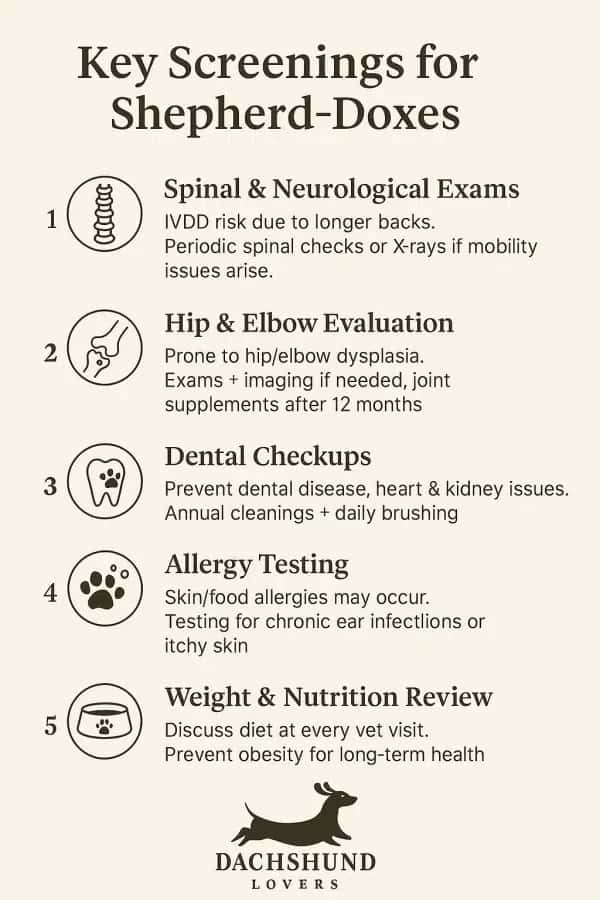
Key Screenings for Shepherd-Doxes
- Spinal and Neurological Exams:
Since IVDD is a concern, especially for Shepherd-Doxes with longer backs, your vet may recommend periodic spinal checks or X-rays if mobility issues arise.
- Hip and Elbow Evaluation:
German Shepherd genes make this mix prone to hip and elbow dysplasia. A physical exam, combined with imaging if necessary, can detect joint laxity early. Starting joint supplements around 12 months can also help prevent degeneration.
- Dental Checkups:
Dental disease can affect overall health, leading to heart and kidney complications. Annual dental cleanings, combined with daily brushing, keep oral health in check.
- Allergy Testing:
Shepherd-Doxes can inherit skin or food allergies. If your dog has chronic ear infections or itchy skin, your vet may recommend tests to identify triggers.
- Weight and Nutrition Review:
Discuss your dog’s diet at every visit. Obesity is one of the most preventable yet damaging conditions for this hybrid.
At-Home Preventive Care
Vet visits are important, but everyday habits at home play an equally significant role in your dog’s health.
- Weekly Grooming Checks: Regular brushing prevents matting and allows you to check for lumps, skin irritation, or fleas.
- Mobility Observation: Pay attention to how your Shepherd-Dox walks, jumps, or climbs stairs. Sudden reluctance or stiffness can be early warning signs of IVDD or arthritis.
- Dental Hygiene: Brushing your dog’s teeth 2–3 times a week, combined with dental chews, prevents plaque buildup.
For a detailed breakdown of daily care, see our Puppies Guide — many of these routines are most effective when started early.
Parasite Prevention
- Flea and Tick Control: Monthly treatments prevent skin irritation and tick-borne illnesses.
- Heartworm Prevention: A year-round heartworm preventive is strongly recommended in warmer climates.
- Deworming: Regular deworming (especially for puppies) is essential for digestive health.
When to See a Vet Immediately
Early intervention can prevent small health problems from becoming serious. Contact your vet if you notice:
- Sudden limping or reluctance to move (possible IVDD or joint issues).
- Excessive scratching or skin changes (possible allergies or infections).
- Changes in appetite, weight, or water intake.
- Unusual behavior — lethargy, aggression, or confusion can indicate underlying illness.
FAQs About German Shepherd Dachshund Mix Health & Lifespan
More From This Series:
Caring for a German Shepherd Dachshund mix is about more than managing health — it’s about understanding the breed from puppyhood to adulthood. If you found this health and lifespan guide helpful, you’ll want to explore our other in-depth resources that cover every aspect of Shepherd-Dox ownership.
- German Shepherd Dachshund Mix: The Ultimate Breed Guide
Read Here →
This guide is the starting point for understanding the Shepherd-Dox. It offers a complete overview of their history, appearance, personality, and care needs. Perfect for anyone considering this hybrid for the first time.
- German Shepherd Dachshund Mix Puppies: Buying, Raising & Care Tips
Read Here →
Puppyhood is when health foundations are built. This article covers everything from choosing a reputable breeder or rescue to early diet, socialization, and vet visits. It’s a must-read if you’re preparing to bring home a young Shepherd-Dox.
- Full Grown German Shepherd Dachshund Mix: Size & Growth Guide
Read Here →
Curious about how big your Shepherd-Dox will get? This guide features growth charts, weight milestones, and exercise recommendations, helping you understand how size and health are closely linked.
- German Shepherd Dachshund Mix for Sale & Adoption Guide
Read Here →
Finding a healthy Shepherd-Dox starts with choosing the right source. This guide walks you through where to find reputable breeders and adoption platforms across the US, Australia, and UK, while comparing costs and highlighting red flags to avoid.
- German Shepherd Dachshund Mix Temperament & Personality
Read Here →
Temperament plays a big role in a dog’s long-term well-being. This article explores how behavior, training, and socialization influence the Shepherd-Dox’s personality, ensuring they’re a great fit for your family and lifestyle.
Authored by
James
James is the founder of Dachshund Lovers and the proud human of Harvey, a mini dapple with a big personality. He writes to empower and connect the dachshund community, blending founder insights with honest, experience-based stories about life with this incredible and special breed. James brings candid, experience-backed opinions to the community and always focused on fewer, better products and ideas that genuinely improve life for dachshunds and their people.
Read moreJames is the founder of Dachshund Lovers and the proud human of Harvey, a mini dapple with a big personality. He writes to empower and connect the dachshund community, blending founder insights with honest, experience-based stories about life with this incredible and special breed. James brings candid, experience-backed opinions to the community and always focused on fewer, better products and ideas that genuinely improve life for dachshunds and their people.
Read moreDisclaimer
This content is for informational purposes only and should not be considered veterinary advice. Always consult with a licensed veterinarian regarding your dog’s health and wellbeing.
There are no comments yet
Leave a comment