Wild Boar Dachshund – The Most Natural Wire Coat
Wild Boar Dachshund – The Most Natural Wire Coat
Wild boar dachshunds stand out with their coarse, textured coat and earthy coloring. Learn why this type is favored by hunters and purists alike.
James
Posted on August 25, 2025.
Updated on July 18, 2026.
Table of Contents
- 1.Key Takeaways: Wild Boar Wire-Haired Dachshund
- 2.Wild Boar Coat Genetics
- •How the Agouti Gene Creates Wild Boar Coloring
- •Why Wild Boar is Considered Rare
- 3.Wild Boar vs Other Rare Dachshund Colors
- •Wild Boar vs Blue Dachshunds
- •Wild Boar vs Isabella Dachshunds
- •Wild Boar vs Brindle Dachshunds
- •Wild Boar vs Dapple Dachshunds
- •Wild Boar vs Red or Black & Tan
- •Why Wild Boar is a Favorite Among Wire-Haired Owners
- •Historical Perspective on Wild Boar Dachshunds
- •Owner Insights: Wild Boar vs Other Rares
- •Should You Choose a Wild Boar Dachshund?
- -More from This Series
- -Disclaimer
Share

A wild boar dachshund is defined by its distinctive coat color — a natural, rugged blend of black, brown, and grey that gives a slightly “wild” appearance. This coloring is most common in wire-haired dachshunds, thanks to the unique combination of genes that control both coat texture and pigment banding.
The wild boar pattern is created by agouti genes, which produce banded hairs with alternating light and dark pigments. Each individual hair is multi-colored, giving the coat a textured, layered look that shifts subtly in different lighting.
Historically, this coat color was prized in hunting dogs because of its camouflage-like effect, blending well into outdoor environments like forests and fields.
“The wild boar color is a result of the agouti gene, which creates banded hairs with multiple shades of pigment — producing a coat that looks natural and rugged.”
— American Kennel Club
For a more detailed overview of this coat variety, see our dedicated article on the wild boar dachshund.
Key Takeaways: Wild Boar Wire-Haired Dachshund
Aspect | Key Insight | Why It Matters |
|---|---|---|
Color Definition | Wild boar is a natural blend of black, brown, and grey tones with banded hairs | Creates a rugged, outdoor-ready appearance |
Common Coat Type | Most frequently seen in wire-haired dachshunds | Wire coats enhance the layered, multi-tonal effect |
Genetic Basis | Driven by agouti genes that produce multiple pigment layers on each hair | Explains the unique depth and variation of color |
Rarity | Considered one of the rare dachshund colors | Highly sought after by dachshund enthusiasts |
Personality Link | Wire-haired dachshunds, including wild boar colors, are known for playful, confident temperaments | Personality traits often match their bold, textured look |
Care Needs | Requires hand-stripping and regular brushing to maintain coat health | Prevents matting and preserves color vibrancy |
Wild Boar Coat Genetics
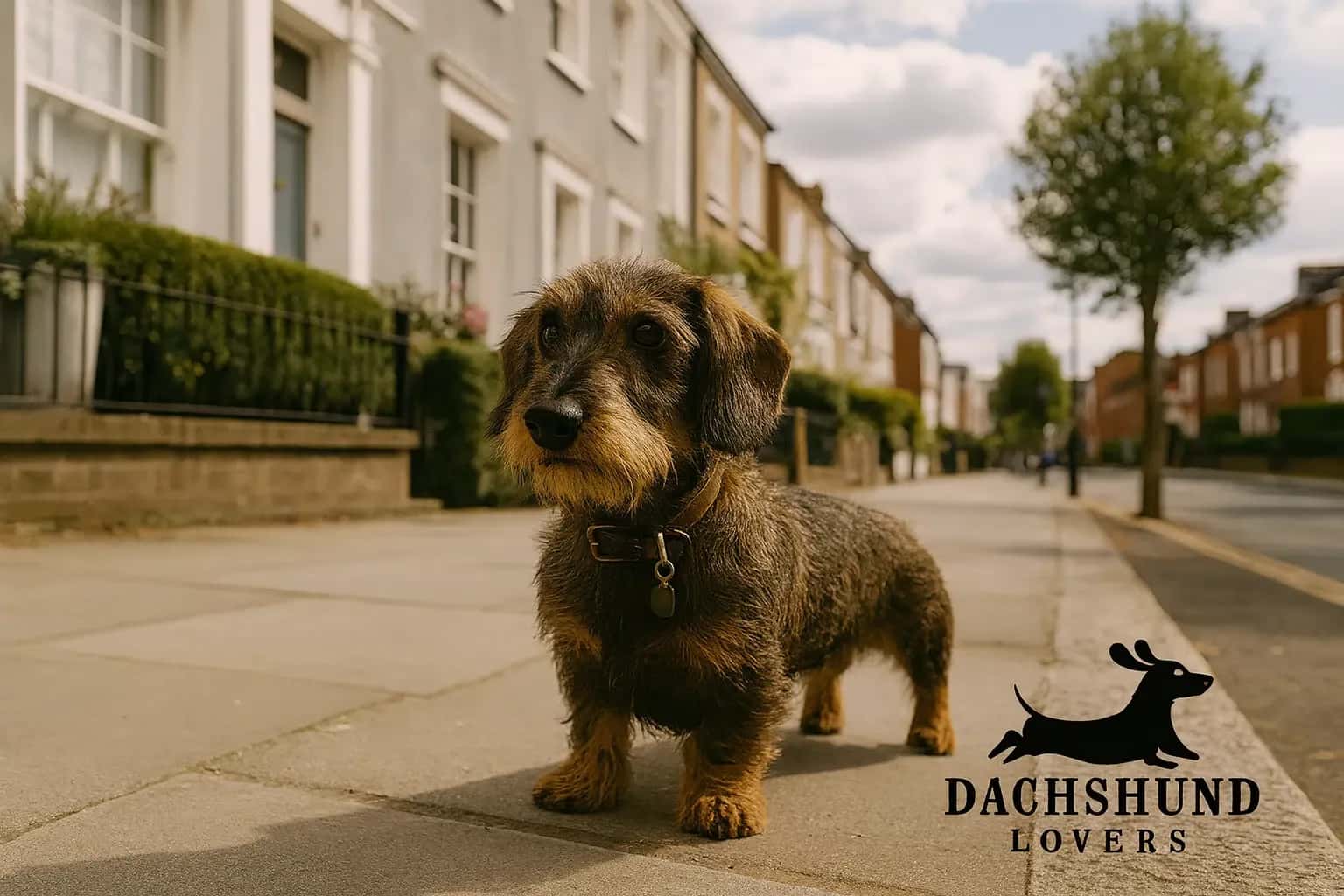
The wild boar coat color in dachshunds is a unique blend of genetics that results in a striking, earthy tone — a mix of black, brown, and grey that can appear almost “textured” in natural light. Unlike solid-colored dachshunds, whose hairs are typically uniform in color, wild boar coats feature individual hairs that are banded with multiple shades of pigment. This layered effect is a direct result of the agouti gene, which controls how melanin (pigment) is distributed along the hair shaft.
How the Agouti Gene Creates Wild Boar Coloring
- Pigment Banding: Each strand of hair alternates between dark and light pigment, typically starting with black or dark brown at the tip, fading to lighter brown or grey in the middle, and transitioning to a pale tan or cream near the root. This gives the coat a rugged, natural look.
- Wire-Haired Influence: Wild boar coloring is most commonly associated with wire-haired dachshunds, whose coarse, wiry coat texture enhances the multi-tonal banding. Smooth or long-haired dachshunds rarely display true wild boar coloring because the same agouti patterns appear more blended in softer fur types.
- Genetic Pairings: Breeding two wire-haired dachshunds often increases the likelihood of producing wild boar coloring, especially when both parents carry agouti-related genes.
- Expression Variability: Some wild boar dachshunds have a darker overall appearance, while others lean toward lighter shades with silvery undertones, depending on the exact pigment mix.
Why Wild Boar is Considered Rare
Compared to common colors like red, black & tan, or chocolate, wild boar is a rarer genetic expression. This is because:
- Wire-haired dachshunds, which most frequently carry the wild boar coat, are less common than smooth-coated dachshunds.
- Many breeders have historically focused on solid colors or flashy patterns like dapple or piebald, which means wild boar has often been overlooked.
- The color’s subtlety — which is less “showy” compared to dapples — makes it less likely to be the primary breeding goal, even though it’s a highly valued coat among enthusiasts who love its natural, “working dog” appearance.
A Coat with History
The wild boar pattern isn’t just visually striking — it’s also historically linked to traditional hunting lines of dachshunds. In Europe, particularly in Germany where the breed originated, the wild boar coat was prized because it offered natural camouflage in forests and fields. It’s often seen as a nod to the breed’s original purpose as a determined and rugged hunting dog.
“The wild boar pattern is a form of agouti, where hairs are banded with multiple pigments. This effect is most visible in coarse, wire-haired coats and is historically linked to working dachshund lines.”
— American Kennel Club
For more about this unique coat, check out our dedicated guide: wild boar dachshund, where we explore its appearance, care, and personality traits in more depth.
Wild Boar vs Other Rare Dachshund Colors
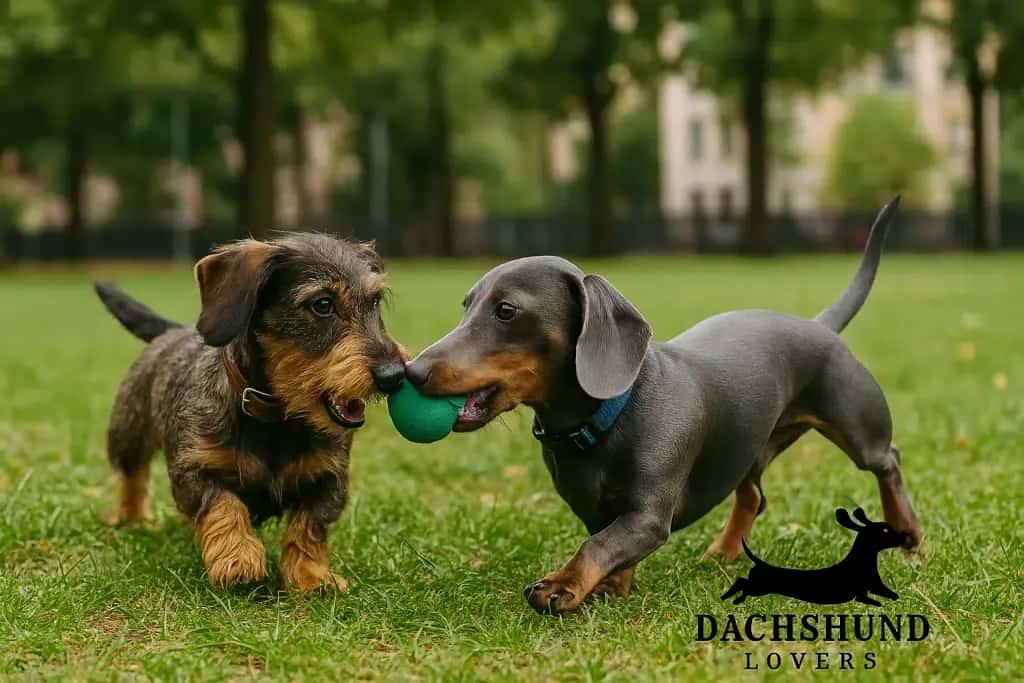
The wild boar coat is one of the most understated yet fascinating dachshund colors. While most rare dachshund shades — like dapple, brindle, blue, or Isabella — grab attention with bold patterns or striking hues, wild boar has an earthy sophistication. It is subtle yet complex, with each hair displaying a layered gradient of black, brown, and grey that looks natural and almost “weathered.” This color has historical roots in the breed’s working heritage, particularly among wire-haired dachshunds bred for outdoor hunting.
When comparing wild boar to other rare dachshund colors, several key factors stand out: appearance, genetic makeup, historical context, and maintenance. Here’s how wild boar stacks up against other notable rare coat types.
Wild Boar vs Blue Dachshunds
- Appearance: Blue dachshunds have a striking, steel-grey hue, created by the dilution gene (d/d), which lightens black pigment. In contrast, wild boar coloring comes from the agouti gene, which creates multi-banded hairs with naturally blended tones.
- Texture: Blue is more commonly seen on smooth-coated dachshunds, where the coat is sleek and uniform, while wild boar is almost always seen on wire-haired coats with a rugged, textured feel.
- Maintenance: Blue coats can be prone to color dilution alopecia (CDA) — a condition where pigment clumping causes hair thinning or skin issues. Wild boar coats don’t carry this genetic risk, as the color results from a different gene entirely.
- Overall Impression: Blue is bold and modern; wild boar is rustic and timeless.
Wild Boar vs Isabella Dachshunds
- Appearance: Isabella (also known as fawn) is a diluted version of chocolate, resulting in a taupe or pale caramel hue. It’s soft and warm, while wild boar has a darker, more “outdoorsy” palette of greys and browns.
- Genetics: Isabella’s color stems from the same dilution gene that produces blue coats. Wild boar’s genetics are linked to traditional hunting lines, which is why it’s frequently associated with wire-haired dachshunds.
- Health Considerations: Like blue, Isabella may be prone to CDA if poorly bred. Wild boar coats are robust and tend to age gracefully.
- Aesthetic Appeal: Isabella is often described as “delicate” and elegant, while wild boar is admired for its raw, natural beauty.
Wild Boar vs Brindle Dachshunds
- Appearance: Brindle is a striking pattern of striped light and dark bands, often described as “tiger-striped.” Wild boar, however, is not patterned but rather layered, with each strand of hair containing multiple shades that create depth rather than contrast.
- Coat Type: Brindle can appear across all coat types (smooth, long, wire), while wild boar is almost exclusively tied to wire-haired coats.
- Visual Impact: Brindle is bold and eye-catching, whereas wild boar is more understated, appealing to those who prefer a subtler aesthetic.
Wild Boar vs Dapple Dachshunds
- Appearance: Dapple (or merle) coats feature irregular patches of lighter and darker areas, creating a marbled effect. Wild boar lacks any spots or patches; its complexity lies in gradual pigment transitions along each individual hair.
- Genetics: Dapple coloring comes from the merle gene (M), which is dominant and can pose health risks if two dapples are bred together (resulting in double dapples). Wild boar does not share this risk because it doesn’t involve the merle gene.
- Aesthetic Appeal: Dapple coats are dramatic and varied, while wild boar’s beauty is in its uniform yet richly textured look.
Wild Boar vs Red or Black & Tan
- Common vs Rare: Red and black & tan dachshunds are among the most common coat colors. While they’re beautiful in their own right, wild boar stands apart due to its rarity and heritage connection.
- Visual Character: A red dachshund has a warm, fox-like tone, while black & tan is sharp and high-contrast. Wild boar, with its layered earthy tones, has a “wild” character that feels closer to the breed’s original working roots.
Why Wild Boar is a Favorite Among Wire-Haired Owners
Owners of wild boar wire-haired dachshunds often describe the color as low-maintenance and forgiving, especially when it comes to dirt or seasonal shedding. Unlike solid or dilute coats, the natural mix of shades tends to mask debris and dirt, which is a nod to its hunting-dog heritage. Many breeders consider wild boar to be the signature wire-haired color, much like red is iconic for smooth coats.
The wire-haired texture also plays a huge role in enhancing the look of wild boar. When freshly hand-stripped, the coat’s layered colors stand out, with subtle highlights that catch the light. This textured aesthetic sets wild boar apart from smoother, more uniform coat colors like blue or cream.
Historical Perspective on Wild Boar Dachshunds
The wild boar color is historically linked to German hunting dachshunds, particularly those bred for resilience and outdoor work. The natural blending of colors provided camouflage in wooded environments, making it a practical as well as beautiful coat.
While many modern dachshund owners choose rare colors for their novelty or aesthetic appeal, wild boar has a functional origin — its muted tones and wire texture offered durability and protection, especially in rough terrains.
Owner Insights: Wild Boar vs Other Rares
Having met many dachshunds around the Sutherland Shire, I’ve noticed a distinct personality overlap in wire-haired wild boars. They tend to be:
- Lively and outgoing, a trait often linked to wire-haired temperament.
- Easier to maintain, as their coat doesn’t show marks or dirt as quickly as lighter dilute colors like Isabella or cream.
- Highly unique, as no two wild boar coats are identical. The exact balance of black, brown, and grey varies by dog, giving each one a custom “signature look.”
When I compare wild boar dachshunds to other rare dachshund colors, I see them as the “classic outdoorsmen” of the breed — rugged, confident, and distinctly tied to the breed’s working heritage. They may not be as flashy as dapples or as elegant as creams, but they have a timeless character that many enthusiasts admire.
Should You Choose a Wild Boar Dachshund?
If you’re drawn to natural, earthy aesthetics and a dog with a bit of personality to match its coat, a wild boar wire-haired dachshund is an excellent choice. While they are slightly rarer than common colors, they tend to have fewer coat-related health concerns compared to dilute shades like blue or Isabella.
As always, if you’re interested in adding a wild boar dachshund to your family, work with a breeder who values health and temperament over color trends. For more detailed information, see our main resource on the wild boar dachshund.
FAQs About Wild Boar Wire-Haired Dachshunds
.
More from This Series
- Continue exploring the genetics, colors, and unique traits that shape the dachshunds we love:
- Mini vs Standard Dachshund
Understand how size influences health, personality, and care needs. - Dachshund Coat Types
Compare smooth, long, and wire coats — and what to expect with each. - Dachshund Coat Colors
From red and black to the rarer shades — a visual guide with genetic insights. - Dapple vs Piebald Dachshund
Learn how to tell them apart, and why it matters for breeding and health. - Dachshund Eye Problems by Color
Discover how eye and coat color can affect your dachshund’s vision. - Tweenie Dachshund
Not quite mini, not quite standard — what it means to have a “tweenie.” - Rare Dachshund Colors
Lilac, isabella, tricolor and more — including risks behind the rare. - Dachshund Coat Change with Age
Why your pup’s color or texture may shift over time. - Wire-Haired Dachshund Temperament
A closer look at the feisty, fun, and sometimes stubborn wire-haired variety. - Dilution Alopecia Dachshund
What to know about this genetic cause of hair loss and how to manage it. - Inbred Dachshund Health Risks
A calm, factual look at what inbreeding means for health and longevity. - Color Dilution Dachshund
What happens when pigment genes are suppressed — and what to watch for. - Hidden Dapple Dachshund
When dapple genes aren’t visible — but still pose risks in breeding. - Dachshund DNA Test
What a DNA test can (and can’t) tell you — and when it’s worth doing. - Dachshund Wire Coat
Everything you need to know about wire-haired grooming, genetics, and quirks. - Isabella Color Dachshund
A closer look at this rare lilac-grey coat — and its potential health concerns. - Wild Boar Color Dachshund
One of the most unique and naturally blended coat types. - Tri Color Long-Haired Dachshund
Is tricolor real in dachshunds? And how does it show up in long coats? - Why Dachshunds Are the Worst Breed
A tongue-in-cheek but honest reflection on dachshund challenges (and why we still love them). - Dachshund Breed Mixes
Doxie + what? Explore popular crossbreeds — from Doxiepoos to Chiweenies. - Dachshund Genetics
Your friendly, vet-backed intro to dachshund DNA, inheritance, and health
Authored by
James
James is the founder of Dachshund Lovers and the proud human of Harvey, a mini dapple with a big personality. He writes to empower and connect the dachshund community, blending founder insights with honest, experience-based stories about life with this incredible and special breed. James brings candid, experience-backed opinions to the community and always focused on fewer, better products and ideas that genuinely improve life for dachshunds and their people.
Read moreJames is the founder of Dachshund Lovers and the proud human of Harvey, a mini dapple with a big personality. He writes to empower and connect the dachshund community, blending founder insights with honest, experience-based stories about life with this incredible and special breed. James brings candid, experience-backed opinions to the community and always focused on fewer, better products and ideas that genuinely improve life for dachshunds and their people.
Read moreDisclaimer
This content is for informational purposes only and should not be considered veterinary advice. Always consult with a licensed veterinarian regarding your dog’s health and wellbeing.
There are no comments yet
Leave a comment