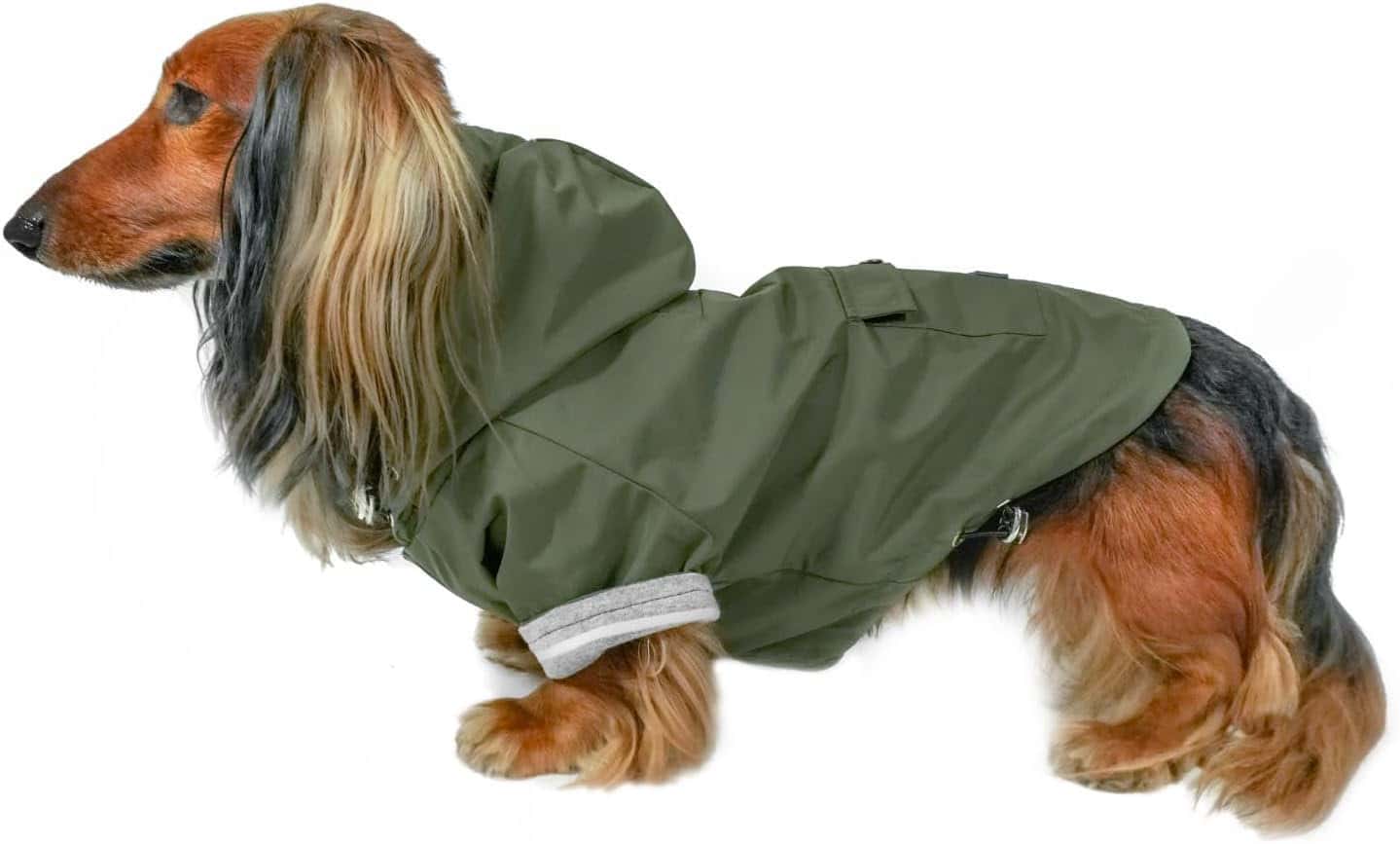
Dachshund Coat Types: What to Know Before You Brush
Dachshund Coat Types: What to Know Before You Brush
Dachshund coat types affect more than just looks — they change grooming, shedding, and temperament. Discover which one is right for your lifestyle.
James
Posted on August 28, 2025.
Updated on July 20, 2026.
Table of Contents
- 1.Key Takeaways: Dachshund Coat Types
- 2.Smooth-Coat Dachshund: Low-Maintenance, High Shine
- •The Feel of a Smooth Coat
- •Grooming Needs: Simple, but Not Skippable
- •Smooth Coat Personality: Confident and Slightly Spicy
- •Common Mistakes to Avoid
- 3.Long-Haired Dachshund: Gentle, Gorgeous, and High-Maintenance
- •The Look & Feel of a Long Coat
- •Personality Patterns in Long-Haired Doxies
- •Common Mistakes with Long Coats
- 4.Wire-Haired Dachshund: Bold Brows, Big Personality
- •The Look & Feel of a Wire Coat
- •Grooming Wire-Haired Dachshunds
- •Personality Traits of Wire-Haired Doxies
- •Common Mistakes with Wire Coats
- 5.Mixed or Unusual Coats: What Happens in Breed Blends and Designer Litters
- •Where Mixed Coats Come From
- •Grooming Tips for Mixed Coats
- •What Coat Type May Say About Mixes
- 6.Coat Type and Allergies: What to Know if You’re Sensitive to Shedding or Dander
- •Best Dachshund Coat Types for Allergy-Sensitive Households
- •Cleaning & Product Tips
- 7.Does Coat Type Influence Behavior or Temperament?
- •Personality Patterns We’ve Noticed
- •Why Temperament Might Vary by Coat
- -More from This Series
- -Disclaimer
Share

I’ll never forget the moment we realised not all dachshunds shed the same.
Harvey, our smooth-coated mini, had always been a breeze. Quick bath, towel-dry, maybe a brush every now and then — and even then, mostly just to make him feel fancy. We thought that was just how dachshunds were. Low-maintenance, low-fuss, and happily velvety.
That illusion crumbled during a weekend catch-up at the Brick Pit Espresso in Kirrawee, where a friend brought along their wire-haired dachshund named Otto. Otto had these wiry eyebrows that gave him the most comically serious expression — like a little professor — and his coat was thick and bristly. Not in a bad way, but in a “this dog has opinions” kind of way. Turns out he did — and he also required hand-stripping, special brushes, and a totally different kind of coat care.
We’d opened a door we didn’t know existed.
Since then, I’ve learned that dachshund coat type affects more than just grooming. It shapes your dog’s personality, energy level, exercise preferences, and even how often you vacuum your couch. Some types are better for allergy-sensitive households. Some carry slightly different care risks. And others — especially long-haired dachshunds — need a bit more planning when it comes to wet weather, matting, and seasonal shedding.
Whether you’re choosing a dachshund for the first time, curious about your current pup’s mix, or navigating the daily fur tumbleweeds with frustration — this guide breaks it all down calmly, clearly, and with plenty of real-life insight.
We’ll cover:
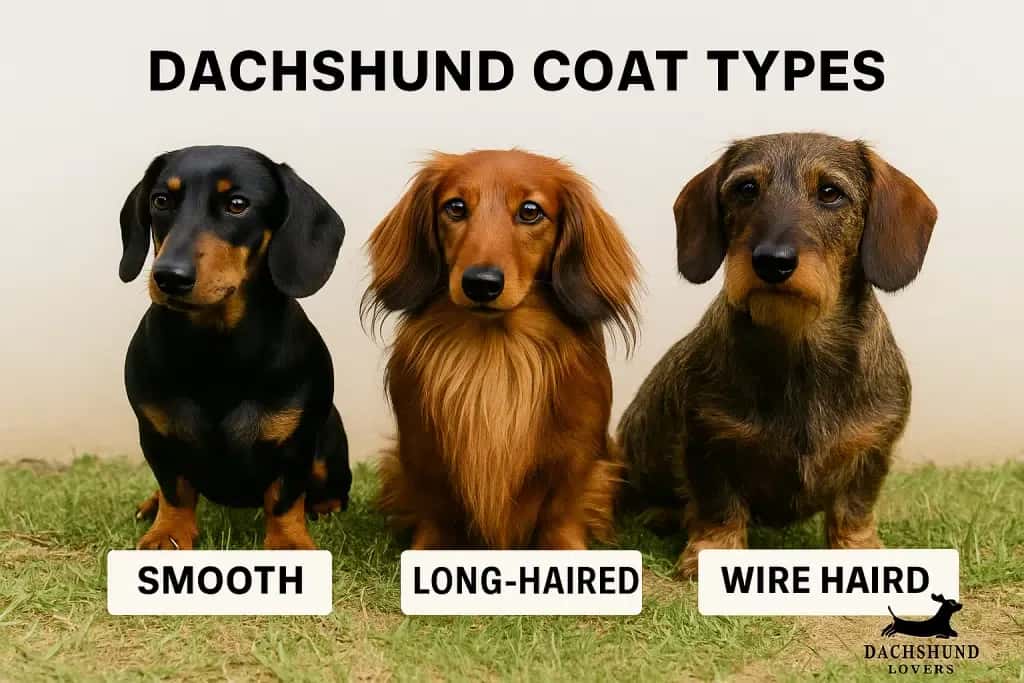
- The three official dachshund coat types (smooth, long-haired, wire-haired)
- What grooming really looks like day-to-day
- How coat type can influence temperament and energy
- What to know about allergies, shedding, and mixed coat varieties
- Common mistakes we see (and made ourselves)
According to the UK’s Kennel Club:
“Each coat type reflects generations of selective breeding for different environments and purposes — from burrow hunting to lap companionship.”
That historical purpose still shows up today — in how they behave, what they need, and how they communicate.
Key Takeaways: Dachshund Coat Types
Coat Type | Texture & Look | Grooming Needs | Personality Traits | Shedding Level |
|---|---|---|---|---|
Smooth | Short, shiny, lies flat against the body | Low — wipe-downs, occasional brushing | Alert, confident, may be more vocal | Low–moderate |
Long-Haired | Soft, feathered, often wavy on ears and belly | High — daily brushing, detangling, trims | Gentle, sensitive, often calmer than other types | Moderate–high |
Wire-Haired | Thick, coarse, bearded with bushy brows | Moderate — hand-stripping or trimming needed | Bold, cheeky, terrier-like energy | Low–moderate |
If you’re already thinking, “I’m not sure which coat mine has,” don’t worry — we’ll also explain mixed coats, how to identify them, and what that means for grooming routines.
Smooth-Coat Dachshund: Low-Maintenance, High Shine
Harvey, our smooth-coated mini, is the very definition of this coat type. His fur is sleek, short, and sits so tightly against his body that it almost looks painted on. When he’s freshly bathed and sunning himself near the kitchen window, he gives off this soft, natural sheen — like he’s perpetually camera-ready.
But don’t let that elegant finish fool you into thinking smooth-coated dachshunds are zero-maintenance. What they are is low-effort, not no-effort — and they still shed more than most people expect.
The Feel of a Smooth Coat
- Texture: Silky and flat, often likened to velvet or satin
- Visual Sheen: Especially noticeable on darker coats like black & tan, chocolate, or red
- Touch Sensitivity: Skin is more exposed, so these dogs are often more sensitive to cold, rough surfaces, or direct sun
- Shed Visibility: Individual hairs are fine and needle-like — they don’t clump, but they do embed in fabrics
Harvey’s fur doesn’t mat or tangle, but it’s sneaky. After a weekend on the lounge or a few car rides, we usually find a fine dusting of hair on our clothes — even though we barely notice it coming off.
Grooming Needs: Simple, but Not Skippable
The main appeal of the smooth coat is that you don’t need an elaborate grooming routine. But “easy” doesn’t mean “ignore it entirely.”
Recommended weekly routine:
- Brush 1–2 times per week using a rubber curry brush or mitt
- Wipe down after muddy or sandy walks with a damp cloth
- Bathe every 4–6 weeks, or more often if your dog is prone to skin oils or rolling in mystery smells
- Nail trims and ear checks — smooth coats don’t mask issues the way longer coats can
We also like to use a moisturising dog-friendly conditioner spray (coconut or aloe-based) during winter when the skin can dry out. This helps with dander and makes brushing feel like a spa moment rather than a chore.
Smooth Coat Personality: Confident and Slightly Spicy
There’s growing anecdotal evidence — and breeder lore — that smooth-coated dachshunds tend to be:
- More independent
- Confident and watchful
- Faster to alert-bark
- Resilient, but sensitive to routine disruption
Harvey fits this profile exactly. He’s sharp, smart, and a little dramatic. He’ll make a big fuss over a neighbour walking past the window but forget about it a minute later. He loves routine. Breakfast and dinner must arrive at the same time each day — or there will be stares.
Smooth coats also tend to have a bit more terrier-like boldness compared to long-haireds, though not quite as much as the wire-haired variety.
Common Mistakes to Avoid
- Assuming smooth coats don’t shed — they do, just in smaller, finer amounts
- Skipping baths too long — oils can build up, especially around the tail and underarms
- Ignoring dry or flaky skin — often a sign of poor diet or dehydration; we talk more about this in Dachshund Coat Change With Age
No sun protection in summer — thin fur offers limited UV defense; look into a pet-safe sunscreen or lightweight dog shirt for beach days
Long-Haired Dachshund: Gentle, Gorgeous, and High-Maintenance
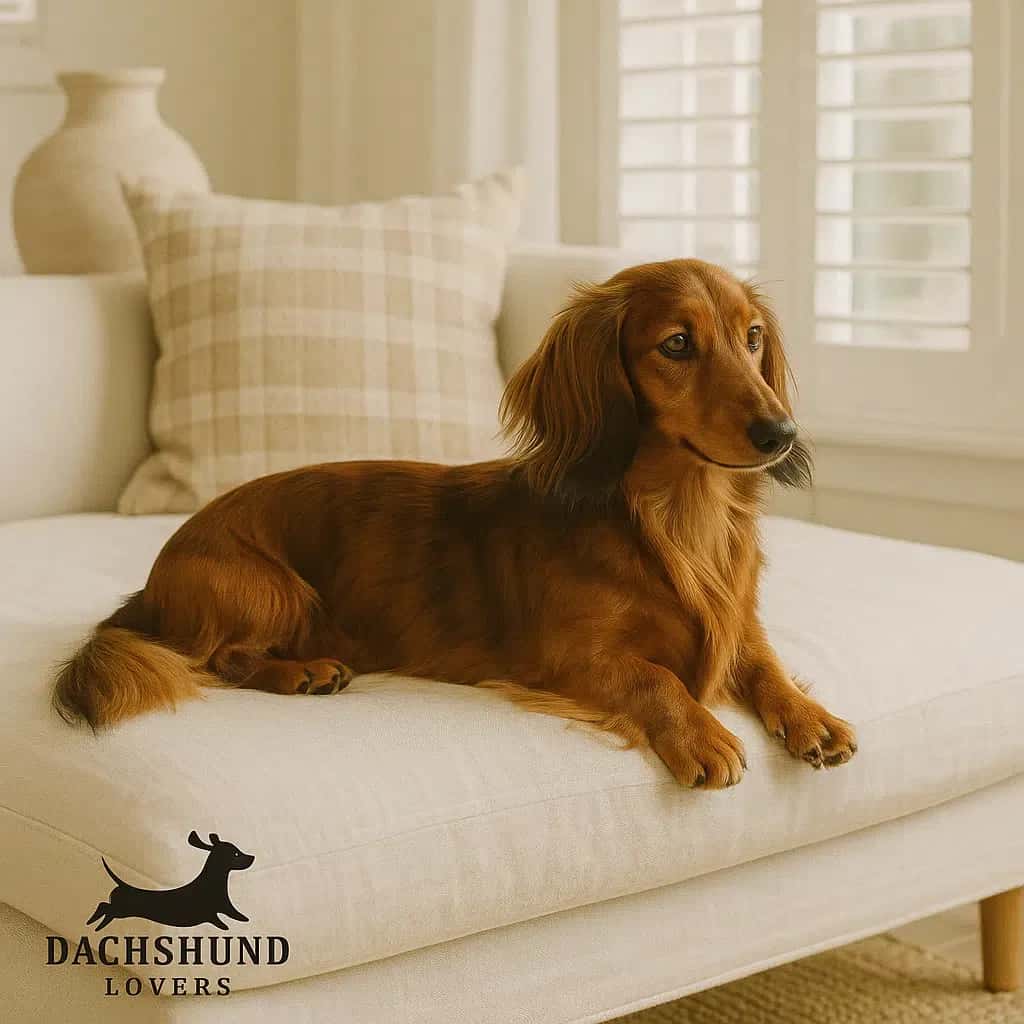
The first time we saw a long-haired dachshund up close — it was Hank’s cousin at a Christmas picnic in South Hurstville Park — we were floored. Long, wavy fur trailed from her ears like she was wearing feathery earrings. Her tail moved like a silk ribbon, and her chest hair had this dramatic, regal sweep. If Harvey is sleek and practical, she was pure glamour.
But as we quickly learned from her owner, that glamour comes at a cost — grooming, detangling, and regular trimming are all part of the long-haired life.
The Look & Feel of a Long Coat
- Texture: Soft, flowing, sometimes with a natural wave
- Feathering: Noticeable on the ears, chest, belly, legs, and tail
- Growth Cycle: Longer, slower to shed, but prone to matting
- Water Retention: Holds onto water and mud — needs drying after every wet walk
This coat is often what people fall in love with — it gives dachshunds a soft, almost Spaniel-like elegance. But unlike smooth coats, you can’t skip brushing days. Mats form quickly behind the ears and in the “armpits,” especially if your dog rolls on carpet or plays with other dogs.
Grooming Needs: A Daily Habit
To keep a long-haired dachshund healthy and knot-free, aim for:
- Daily brushing with a pin brush or slicker
- Weekly comb-throughs with a wide-tooth metal comb, especially behind ears and legs
- Monthly trims (or as needed) for feet, hocks, and feathered areas
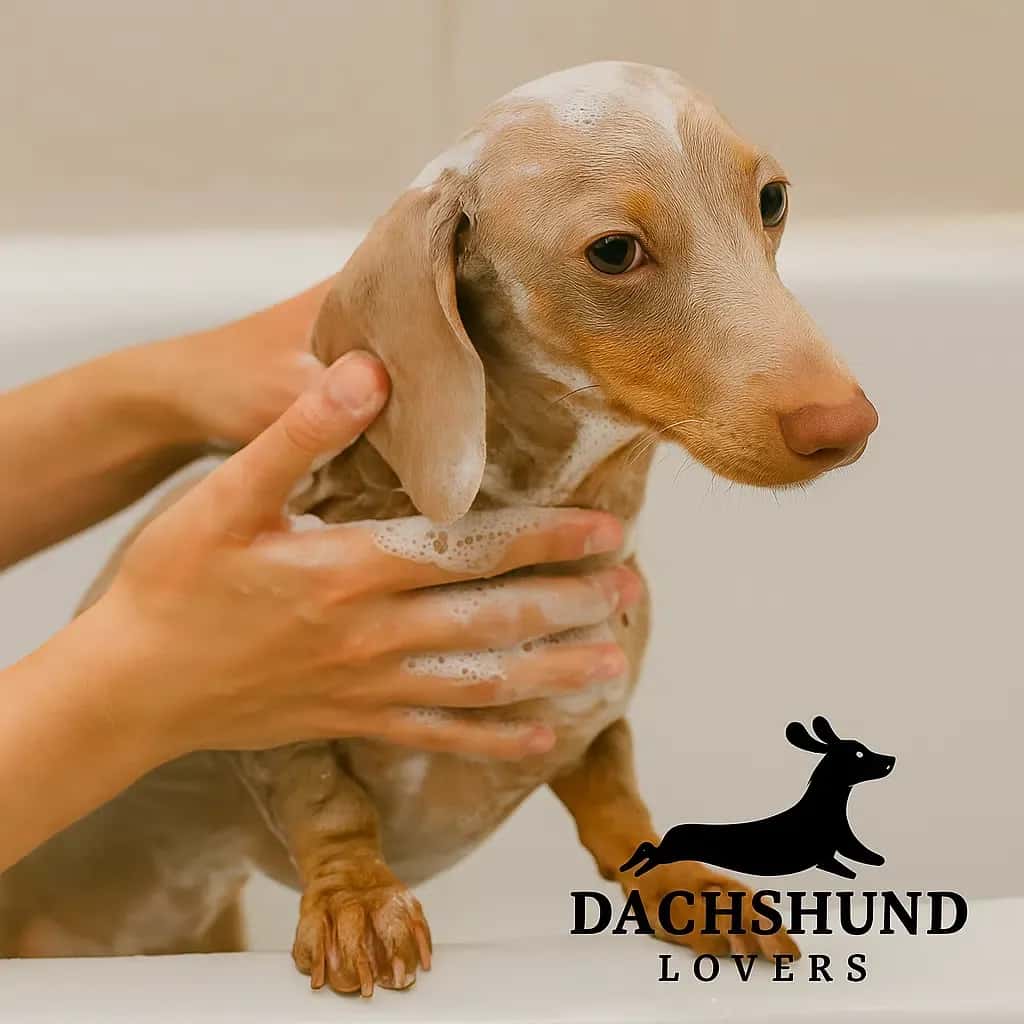
- Baths every 3–4 weeks using a coat-nourishing shampoo and conditioner
- Thorough drying with a towel or low-heat dryer to prevent hotspots
We’ve seen long-haired dachshunds develop painful skin irritation from trapped moisture — especially in Sydney’s humid summer months. If your dog gets wet on a walk (hello, unexpected rain in Como or bush track puddles), dry them fully.
According to the American Kennel Club, long-haired dachshunds were originally bred for cooler climates and show-quality appearance, which is why their coats are softer, longer, and more luxurious.
— AKC Dachshund Breed Info
Personality Patterns in Long-Haired Doxies
While every dog is unique, many owners report that long-haired dachshunds are:
- Gentler and more easygoing
- Slightly less reactive or barky
- More sociable with strangers
- Highly bonded, but a bit more tolerant of alone time
That softer coat seems to mirror a softer temperament. Of course, they’re still dachshunds — so expect some stubbornness and drama when it suits them. But in our experience, long-haired doxies tend to be less high-strung than their smooth or wire-haired cousins
Common Mistakes with Long Coats
- Not brushing daily — mats can form in under 48 hours and be painful to remove
- Skipping trims on the feet and rear — long fur here collects dirt, debris, and even urine
- Assuming they don’t shed — they shed less frequently, but in greater volume (think tumbleweeds)
- Bathing without detangling first — always brush before water; wet mats tighten
Wire-Haired Dachshund: Bold Brows, Big Personality
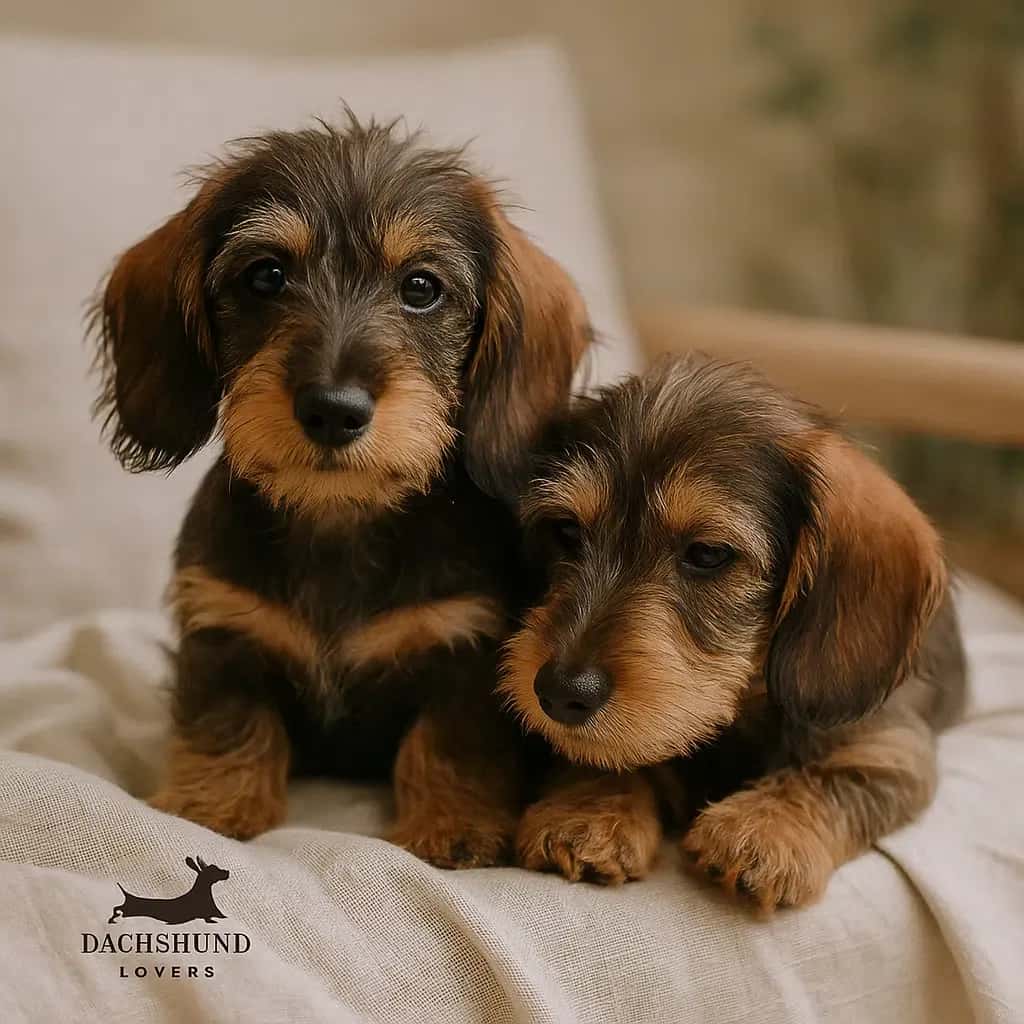
Wire-haired dachshunds are often described as the rebels of the group — and with good reason. Between their scruffy coats, expressive eyebrows, and big dog energy in a small frame, they feel like the dachshund version of a charming troublemaker.
We first met one properly at a dog-friendly café in Burraneer Bay – Our Father , and his presence was unmistakable — animated, vocal, unbothered by bigger dogs, and full of charisma. His coat had this tousled texture, almost like bed hair, and his human swore by weekly hand-stripping and regular visits to a specialty groomer.
That’s when we learned that owning a wire-haired dachshund is part grooming commitment, part comedy show, and part terrier-level energy management.
The Look & Feel of a Wire Coat
- Texture: Harsh, coarse outer coat with soft undercoat beneath
- Distinctive Features: Bushy beard, thick eyebrows, and a “jacketed” body
- Weather Tolerance: Best of all three types — their coat is naturally protective
- Grooming Needs: Moderate to high depending on coat quality and thickness
Wire-haired coats evolved for durability — they were bred for bramble-filled hunts, and their fur reflects that. It’s the most terrier-like of the dachshund types, both in texture and temperament.
Not all wire-haired dachshunds will have the full “furnishings” (the beard and brows), especially if they’re mixed or from non-show lines — but even partial wiry coats need regular maintenance.
Grooming Wire-Haired Dachshunds
- Brushing 2–3 times per week with a slicker or pin brush
- Hand-stripping every 2–3 months, or clipping if not showing
- Baths every 4–6 weeks, followed by gentle towel drying
- Pay attention to ear hair, which can trap moisture and wax
Hand-stripping, while intimidating at first, is essential for maintaining coat texture and health — especially if your wire-haired doxie has a harsh outer coat. It removes dead hairs without damaging the follicle, helping the coat stay rough rather than turning soft or woolly.
According to Dogs Australia (ANKC), correct coat maintenance in wire-haired dachshunds includes “routine stripping by hand to preserve the coat’s waterproofing and function.”
— ANKC Breed Standard
If you’re local, we recommend The Grooming Table in Caringbah, which has experience with terrier coats and can advise on whether hand-stripping or clippering is better for your dog’s lifestyle.
Personality Traits of Wire-Haired Doxies
Wire-haired dachshunds are often:
- Playful and extroverted, with boundless curiosity
- Quick learners, though sometimes stubborn for sport
- Bold with other dogs, especially in group settings
- Better in cooler weather, thanks to their protective coat
They’re the most energetic of the coat types, with a personality that matches their scruff. If you like a dachshund with a bit of mischief and a terrier edge, this is the coat for you.
Common Mistakes with Wire Coats
- Skipping hand-stripping — leads to coat softening, matting, or skin irritation
- Bathing too frequently — can dry out the coat or cause the undercoat to become dense
- Neglecting ear and beard hygiene — food, debris, and wax build-up quickly here
Confusing coat types — many people misidentify wiry dachshunds as “just scruffy” smooth coats
Mixed or Unusual Coats: What Happens in Breed Blends and Designer Litters
Not all dachshunds fall neatly into the smooth, long, or wire-haired categories — especially in today’s world of designer breeding and rescue crossovers. Whether you’ve adopted a dachshund mix or you’re noticing your pup’s coat doesn’t quite match what you expected, mixed or unusual coat types are increasingly common.
We’ve met doxies with wavy-but-not-long hair, slightly wiry backs but smooth bellies, and one memorable pup at Centennial Park who looked like a wire-haired on top and a smooth on the sides — a coat mullet, basically.
These coats are more than aesthetic quirks. They can affect grooming needs, allergy potential, and even hint at underlying genetics.
Where Mixed Coats Come From
- Intentional breeding (e.g. mixing smooth and long-haired dachshunds for temperament or look)
- Designer mixes, like a Doxiepoo or Chiweenie, where coat traits blend
- Accidental pairings or puppy litters from parents with different coat types
- Incomplete furnishings, where a wire-haired parent doesn’t pass on the full trait set
Some of these coats are soft and manageable; others become mat-prone, oily, or inconsistent without a grooming plan.
Grooming Tips for Mixed Coats
- Start with weekly brushing using a flexible slicker or dual-sided brush
- Monitor for mats in hidden spots — especially under the collar or behind the ears
- Adjust your products based on feel:
- Oily coat? Use a clarifying shampoo.
- Dry or flaky coat? Try an oatmeal-based formula.
- Thick and fuzzy? Consider a detangler or light conditioner.
- Oily coat? Use a clarifying shampoo.
Because mixed coats don’t have a standard texture or grooming chart, it’s helpful to book a consult with a local groomer — someone who can assess what kind of blend you’re working with and suggest a tailored care routine.
What Coat Type May Say About Mixes
Unusual coats can sometimes point to a mix, especially if:
- You see curling or patchiness on the back or tail
- The ears are feathered but the rest is smooth
- The fur grows at different lengths across the body
This doesn’t mean your dachshund isn’t purebred — just that there may be variation in their line. If you’re curious, a dog DNA test (we compare them in Dachshund DNA Test) can give you insight into their lineage and coat genetics.
Coat Type and Allergies: What to Know if You’re Sensitive to Shedding or Dander
If you or someone in your home has pet-related allergies, coat type is more than just an aesthetic choice — it can directly impact comfort, sneezing, and how manageable your life with a dachshund becomes.
While no dachshund is truly hypoallergenic, some coat types shed less dander and are easier to keep clean, which may reduce allergen build-up. That said, it’s often not the hair that triggers reactions — it’s the skin flakes, saliva, and urine proteins that attach to the fur and get released into the environment.
Best Dachshund Coat Types for Allergy-Sensitive Households
- Wire-haired dachshunds often shed the least and have a more “contained” coat, especially when hand-stripped
- Smooth-coated dachshunds are easy to clean and bathe frequently, but shed fine hair that can embed in clothes
- Long-haired dachshunds shed in volume — soft fur collects allergens and can be harder to manage indoors
If allergies are a serious concern, wire-haired doxies — with regular hand-stripping and limited indoor furniture access — may be the most manageable option.
Cleaning & Product Tips
In Australia:
We’ve had success with Aloveen Oatmeal Shampoo (by Dermcare) — it’s vet-recommended, gentle on skin, and keeps Harvey’s coat soft without irritation. We pair it with a pet air purifier at home (we use the Breville Smart Air Plus).
In the UK:
We’ve heard excellent things about the Animology Hypoallergenic Dog Shampoo — it’s made for sensitive skin and used widely by professional UK groomers.
In the US:
US owners often rave about Earthbath Natural Pet Shampoo — it’s sulphate-free, pH-balanced, and comes in an oatmeal & aloe version for sensitive pups.
Grooming & Allergy Support
Brushing outdoors can help minimize hair and dander indoors. We also recommend:
- Lint rollers or pet vacs for sofas and bedding
- HEPA-filter air purifiers in high-traffic areas
Weekly bathing or wipe-downs with vet-approved pet cloths (we like Petkin wipes for quick clean-ups)
Does Coat Type Influence Behavior or Temperament?
Ask any long-time dachshund owner and you’ll likely hear this: “You can tell their coat type by their personality.” While it’s not a hard science, there’s plenty of anecdotal consistency — and some emerging research — that coat type may correlate with certain behavioral tendencies.
It’s not about the hair itself. It’s about how different coats were historically bred for different purposes — and how those purposes shaped temperament traits that still linger today.
Personality Patterns We’ve Noticed
Coat Type | Typical Temperament Traits |
|---|---|
Smooth | Confident, sharp, more reactive, thrives on routine |
Long-Haired | Gentle, affectionate, softer temperament, slower to react |
Wire-Haired | Cheeky, bold, inquisitive, with a noticeable terrier streak |
Harvey, our smooth-coated mini, is a textbook “bossy boots.” He’s deeply affectionate, but also highly alert and routine-bound. By contrast, the long-haired doxie we see at Carss Park off-leash area is far more relaxed — she’ll greet anyone, isn’t fussed by unfamiliar dogs, and trots happily along without needing much supervision.
Our friends’ wire-haired dachshund, Otto, is the wildcard. He’s funny, stubborn, and always up for a dig — in the sandpit, the garden, or your laundry basket.
Why Temperament Might Vary by Coat
- Smooths were bred primarily for warm climates and home companionship. Their low-maintenance coat often coincided with high-alert watchdog behavior.
- Long-hairs often have Spaniel or Setter ancestry woven into early breeding lines — which explains their softer nature and more sociable energy.
- Wire-haireds were developed with terrier traits — making them feisty, clever, and more independent-minded.
A 2016 survey published in the journal Applied Animal Behaviour Science found that coat type may have a moderate association with reactivity and social comfort levels in small breeds — including dachshunds.
— Source (ScienceDirect)
Of course, every dog is an individual. Training, environment, and early socialisation will always have more impact than hair. But if you’re someone who wants a lap dog, a travel companion, or a confident trail walker — coat type might give you a useful starting point when choosing your match.
Frequently Asked Questions (FAQs)
More from This Series
- Continue exploring the genetics, colors, and unique traits that shape the dachshunds we love:
- Mini vs Standard Dachshund
Understand how size influences health, personality, and care needs. - Dachshund Coat Types
Compare smooth, long, and wire coats — and what to expect with each. - Dachshund Coat Colors
From red and black to the rarer shades — a visual guide with genetic insights. - Dapple vs Piebald Dachshund
Learn how to tell them apart, and why it matters for breeding and health. - Dachshund Eye Problems by Color
Discover how eye and coat color can affect your dachshund’s vision. - Tweenie Dachshund
Not quite mini, not quite standard — what it means to have a “tweenie.” - Rare Dachshund Colors
Lilac, isabella, tricolor and more — including risks behind the rare. - Dachshund Coat Change with Age
Why your pup’s color or texture may shift over time. - Wire-Haired Dachshund Temperament
A closer look at the feisty, fun, and sometimes stubborn wire-haired variety. - Dilution Alopecia Dachshund
What to know about this genetic cause of hair loss and how to manage it. - Inbred Dachshund Health Risks
A calm, factual look at what inbreeding means for health and longevity. - Color Dilution Dachshund
What happens when pigment genes are suppressed — and what to watch for. - Hidden Dapple Dachshund
When dapple genes aren’t visible — but still pose risks in breeding. - Dachshund DNA Test
What a DNA test can (and can’t) tell you — and when it’s worth doing. - Dachshund Wire Coat
Everything you need to know about wire-haired grooming, genetics, and quirks. - Isabella Color Dachshund
A closer look at this rare lilac-grey coat — and its potential health concerns. - Wild Boar Color Dachshund
One of the most unique and naturally blended coat types. - Tri Color Long-Haired Dachshund
Is tricolor real in dachshunds? And how does it show up in long coats? - Why Dachshunds Are the Worst Breed
A tongue-in-cheek but honest reflection on dachshund challenges (and why we still love them). - Dachshund Breed Mixes
Doxie + what? Explore popular crossbreeds — from Doxiepoos to Chiweenies. - Dachshund Genetics
Your friendly, vet-backed intro to dachshund DNA, inheritance, and health.
Authored by
James
James is the founder of Dachshund Lovers and the proud human of Harvey, a mini dapple with a big personality. He writes to empower and connect the dachshund community, blending founder insights with honest, experience-based stories about life with this incredible and special breed. James brings candid, experience-backed opinions to the community and always focused on fewer, better products and ideas that genuinely improve life for dachshunds and their people.
Read moreJames is the founder of Dachshund Lovers and the proud human of Harvey, a mini dapple with a big personality. He writes to empower and connect the dachshund community, blending founder insights with honest, experience-based stories about life with this incredible and special breed. James brings candid, experience-backed opinions to the community and always focused on fewer, better products and ideas that genuinely improve life for dachshunds and their people.
Read moreDisclaimer
This content is for informational purposes only and should not be considered veterinary advice. Always consult with a licensed veterinarian regarding your dog’s health and wellbeing.
There are no comments yet
Leave a comment