What Does ‘Color Dilution’ Mean in Dachshunds?
What Does ‘Color Dilution’ Mean in Dachshunds?
Learn how color dilution in dachshunds works, what causes it, and how it’s linked to certain skin and coat conditions like CDA and alopecia.
James
Posted on August 27, 2025.
Updated on July 22, 2026.
Table of Contents
- 1.Key Takeaways: Color Dilution in Dachshunds
- 2.What Is Color Dilution in Dachshunds?
- •How the Dilute Gene Works
- •Dilution Is Not “Rare Color Breeding”
- •Why Dilute Coats Look Unique
- 3.Dilute Dachshund Colors Explained
- •Blue Dachshunds
- •Isabella Dachshunds
- •Other Dilute Patterns and Mixes
- •Are Dilute Colors Rare?
- 4.How Genetic Dilution Affects Coat Pigment
- •What Happens to the Hair?
- •Why This Matters for Health
- •Genetic Predictability
- 5.Color Dilution vs. Regular Coat Colors
- •Appearance Differences
- •Texture and Maintenance
- •Health and Durability
- •Are Dilute Dachshunds Harder to Care For?
- 6.Health Implications of Dilute Coats
- •Color Dilution Alopecia (CDA)
- •Skin Sensitivity and Environmental Factors
- •Allergies and Irritations
- •The Role of Breeding
- 7.How to Care for a Dilute Dachshund’s Coat and Skin
- •1. Gentle Grooming Routine
- •2. Nutrition for a Healthy Coat
- •3. Sun and UV Protection
- •4. Hydration and Moisturizing
- •5. Regular Health Check-Ups
- -More from This Series
- -Disclaimer
Share

A few weeks ago, while walking Harvey along Cronulla Esplanade, I met a blue dachshund named Luna. Her coat was unlike anything I’d seen in the breed — a cool, silvery-grey sheen that caught the morning light like polished steel. Naturally, I stopped to chat with her owner, who explained that Luna’s color was the result of something called color dilution, a genetic trait that transforms standard coat colors like black or chocolate into paler, softer shades.
Color dilution is both fascinating and complex. While it produces some of the rarest and most striking dachshund colors — like blue (diluted black) and Isabella (diluted chocolate) — it also brings certain considerations. Dilute coats are known for their unusual pigment structure, which can sometimes make the hair more fragile and the skin more sensitive. This doesn’t mean dilute dachshunds are unhealthy, but it does mean they benefit from gentler grooming, dietary support, and a watchful eye for conditions like Color Dilution Alopecia (CDA).
The science behind color dilution lies in the MLPH (melanophilin) gene, which affects how melanin, the pigment responsible for hair and skin color, is distributed in each hair shaft. When a dachshund inherits two copies of the dilute gene (one from each parent), the pigment is spread differently, resulting in a muted, soft-toned coat color.
“Color dilution is a genetic trait that alters pigment distribution in the hair shaft, creating lighter coat shades such as blue or fawn.”
— American Kennel Club
In this article, we’ll dive into the world of dilute dachshund colors, explain the genetics behind them, explore potential health implications, and share tips for keeping these unique coats healthy and strong.
Key Takeaways: Color Dilution in Dachshunds
Aspect | Key Insight | What It Means for Owners |
|---|---|---|
Definition | Color dilution occurs when the pigment gene (MLPH) lightens the natural coat color | Results in shades like blue (diluted black) and Isabella (diluted chocolate) |
Dilute Colors | Blue, Isabella, and other pale tones are considered “dilute” | These coats have a softer, silvery finish |
Genetics | A recessive gene (d/d) affects how melanin is distributed in hair shafts | Can create weaker hair prone to thinning |
Health Risks | Dilute colors may be linked to Color Dilution Alopecia (CDA) | Early skin care and vet checks help manage risks |
Care Needs | Gentle grooming, omega-rich diet, and sun protection | Dilute coats need more maintenance to stay healthy |
What Is Color Dilution in Dachshunds?
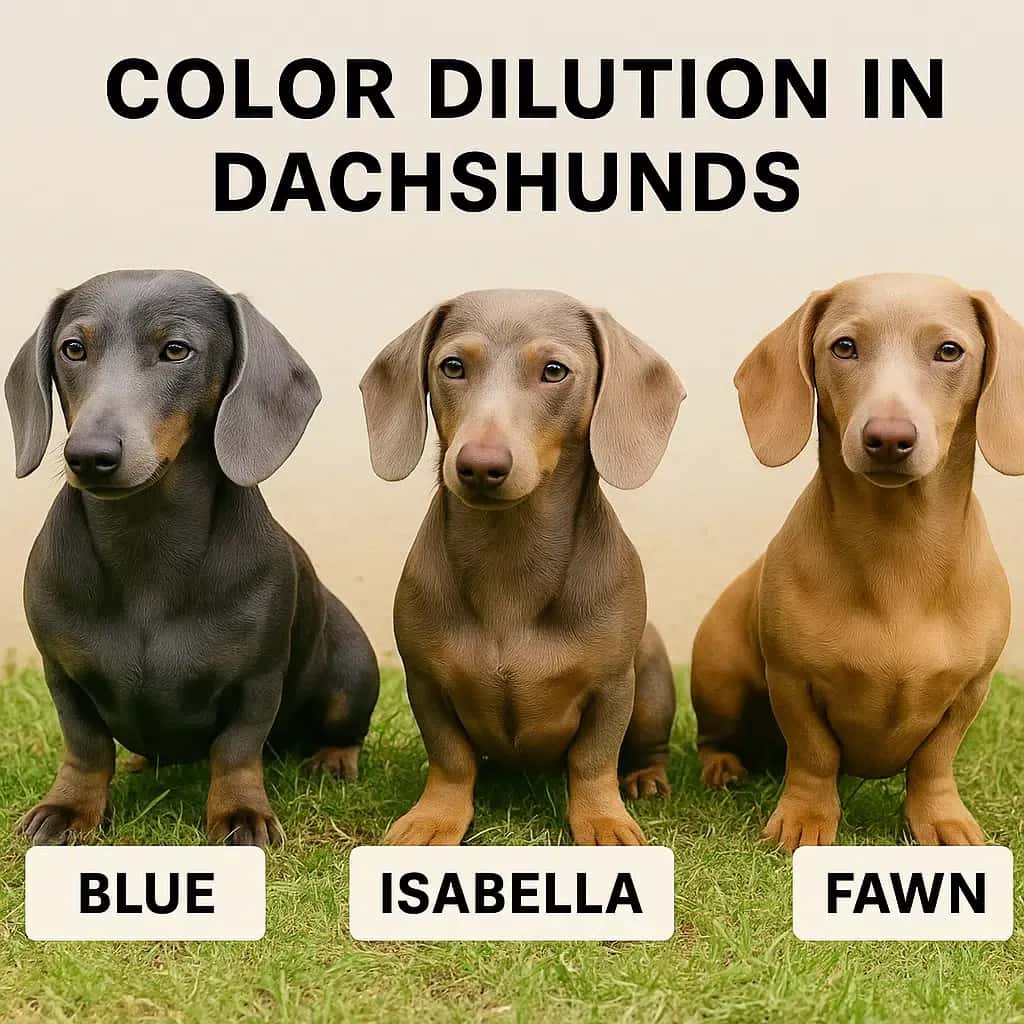
Color dilution in dachshunds refers to a genetic trait that lightens the dog’s natural coat color. Instead of a deep, saturated black or chocolate, the coat appears as a softer, muted version — commonly referred to as blue (diluted black) or Isabella (diluted chocolate). These colors are not created through selective breeding for a “new shade,” but rather through a specific recessive gene known as the melanophilin (MLPH) gene.
How the Dilute Gene Works
Every dog has two copies of the MLPH gene — one from each parent. For a dachshund to display a dilute color, it must inherit two recessive “d” genes (d/d). This gene affects how melanin (pigment) is distributed along each hair shaft. Instead of an even spread of pigment, the melanin clusters into tiny clumps. This uneven distribution causes light to reflect differently, resulting in the paler, silvery tones we see in dilute coats.
Dilution Is Not “Rare Color Breeding”
While dilute coats like blue and Isabella are less common, they are not a separate breed or type of dachshund. They’re simply standard-colored dachshunds (black or chocolate) with the dilution gene at play.
“The dilute gene doesn’t create new colors but modifies existing ones, resulting in soft pastel-like shades.”
— UC Davis Veterinary Genetics Laboratory
Why Dilute Coats Look Unique
The reduced pigment density often gives dilute coats a soft metallic sheen, especially under natural sunlight. Blue coats appear like a stormy steel grey, while Isabella coats look almost like pale cocoa or lavender. These colors are particularly eye-catching, which is why they’ve become popular among dachshund enthusiasts.
Here’s an expanded version of “Dilute Dachshund Colors Explained,” with more depth, examples, and descriptions to add richness and length.
Dilute Dachshund Colors Explained
Dachshunds are known for their incredible variety of coat colors and patterns, but dilute colors — such as blue and Isabella — are among the most eye-catching and rare. These coats don’t just appear by chance. They’re the result of a recessive genetic trait that softens and mutes the original pigment, giving the coat a pastel-like appearance. While these colors are stunning, they are less common in the breed, which adds to their appeal (and sometimes, their price tag).
Blue Dachshunds
A blue dachshund is essentially a black dachshund whose coat color has been lightened by the dilution gene. Instead of the deep, glossy black seen in standard coats, the color is transformed into a cool steel-grey. This silvery tone often has a subtle metallic sheen, especially when the dog is outdoors in natural sunlight.
Blue dachshunds come in several variations:
- Solid Blue: The entire coat is a uniform slate-grey, with no tan points.
- Blue & Tan: A muted version of the classic black and tan pattern, where the black is replaced by blue-grey while the tan points (above the eyes, chest, and paws) remain.
- Blue Dapple: A marbled coat combining patches of pale blue and silver-grey, often mixed with cream or tan.
In the Sutherland Shire, I’ve noticed that blue dachshunds often turn heads on walks — they look almost “otherworldly” compared to the standard black and tan. It’s a color that tends to shine especially during early morning walks when the sunlight catches their metallic hue.
Isabella Dachshunds
Isabella, also known as fawn, is the dilute version of chocolate. Instead of the rich, deep brown typical of chocolate dachshunds, Isabella coats have a soft taupe or silvery-caramel tone. Under certain lighting, they can even appear to have a faint lavender or beige shimmer.
Common Isabella variations include:
- Isabella & Tan: A light taupe coat with the signature tan markings (eyebrows, chest, paws).
- Isabella Dapple: A soft marbled pattern of taupe and cream tones that often looks like swirls of coffee and milk.
- Isabella Piebald: A taupe base coat combined with large patches of white — a combination that’s particularly rare and unique.
Other Dilute Patterns and Mixes
The dilution gene can also mix with other coat patterns like piebald or dapple, creating combinations that are visually striking and highly sought after:
- Blue Piebald: A steel-grey base coat with large white patches across the body.
- Isabella Piebald: A taupe coat with bold white markings — sometimes resembling a soft watercolor painting.
- Dilute Dapple Mixes: When dilution meets the dapple pattern, the result is a softer, pastel-toned marbling, often with subtle silvery highlights.
Are Dilute Colors Rare?
Yes — dilute colors like blue and Isabella are much rarer than traditional black and tan or red dachshunds. This is because both parent dogs must carry the recessive d/d gene for a puppy to display a dilute coat. While rarity adds to the visual appeal, it’s important to remember that dilute coats are not automatically “better.” In some cases, the same genetics that produce the dilution can make the coat more fragile and prone to conditions like Color Dilution Alopecia (CDA).
“Dilute dachshunds are genetically identical to standard-colored dachshunds — the only difference is the way pigment is expressed, which changes the appearance of the coat.”
— American Kennel Club
How Genetic Dilution Affects Coat Pigment
Color dilution is the result of how melanin (the pigment that gives hair its color) is distributed along each hair shaft. In a normal coat, pigment granules are evenly spaced, creating a solid, rich color. In dilute dachshunds, the melanophilin (MLPH) gene alters this process, causing the pigment to clump together in uneven patches.
What Happens to the Hair?
- Reduced Pigment Density: With fewer pigment granules spread evenly, the coat appears lighter, softer, and less vibrant.
- Light Reflection: Because pigment is less uniform, light reflects differently off the hair, giving blue and Isabella coats their unique metallic sheen.
- Weaker Hair Shafts: In some dilute dachshunds, the irregular pigment distribution can make the hair shafts more brittle, leading to increased breakage and thinning.
Why This Matters for Health
While the color itself isn’t harmful, the structural weakness of diluted hair can increase the risk of Color Dilution Alopecia (CDA) — a condition where the hair breaks easily and fails to grow back properly. Not all dilute dachshunds develop CDA, but it is a known risk, especially in blue coats.
“Dilute pigmentation doesn’t just change color; it can affect the strength of the hair, making some dogs prone to hair loss or skin irritation.”
— UC Davis Veterinary Genetics Laboratory
Genetic Predictability
Because color dilution is a recessive trait, a dachshund must inherit two copies of the d gene (one from each parent) to display a dilute coat. Breeders who specialize in dilute colors often perform DNA testing to ensure they are not introducing other unwanted genetic risks.
Color Dilution vs. Regular Coat Colors
While all dachshund coats share the same iconic shape and charm, dilute coats have unique characteristics that set them apart from traditional colors like black & tan, red, or chocolate. These differences aren’t just visual — they can also affect grooming routines and, in some cases, long-term coat health.
Appearance Differences
- Regular Colors: Black & tan, chocolate, and red dachshunds have a deep, rich pigment that holds its shine and resists fading over time.
- Dilute Colors: Blue and Isabella coats appear softer, lighter, and have a metallic or silvery tone under sunlight. Dilute coats can also show faster sun fading compared to darker shades.
Texture and Maintenance
- Standard Coats: Regular dachshunds typically have strong, resilient hair shafts that require basic brushing and grooming.
- Dilute Coats: Blue and Isabella coats can feel slightly softer or more fragile, especially if the dog has a smooth coat. Owners often find that dilute dachshunds benefit from gentler grooming, like using soft bristle brushes and mild, moisturizing shampoos.
Health and Durability
- Regular Coats: While all dachshunds are prone to shedding and seasonal coat changes, regular coat colors rarely face structural hair issues.
- Dilute Coats: The altered pigment structure in dilute coats can lead to brittleness or thinning, especially if the dog develops Color Dilution Alopecia (CDA). This doesn’t happen to every dilute dachshund, but the risk is more common compared to traditional colors.
Are Dilute Dachshunds Harder to Care For?
Not necessarily. The difference lies in being proactive with coat care: using omega-rich diets, UV protection, and avoiding harsh grooming products helps maintain the integrity of the hair. A dilute dachshund may need slightly more attention than a regular-colored dachshund, but the difference is manageable with good habits.
“While color dilution creates striking coat shades, it may require extra grooming attention compared to standard dachshund colors.”
— American Kennel Club
Health Implications of Dilute Coats
Color dilution in dachshunds creates some of the breed’s most striking shades — but it also requires a level of awareness from owners. While not every dilute dachshund will experience coat or skin problems, the genetic factors that create colors like blue and Isabella can predispose some dogs to weaker hair shafts and skin sensitivities. Understanding these risks allows owners to take proactive steps to keep their dachshund’s coat healthy and vibrant.
Color Dilution Alopecia (CDA)
CDA is the condition most closely linked to dilute coats, and it can range from mild thinning to more pronounced bald spots.
- How It Happens: In dilute coats, pigment granules (melanin) clump unevenly along the hair shaft. These weak points cause the hair to break more easily, particularly in high-friction areas like the back or flanks.
- Early Symptoms: A coat that starts looking patchy, dull, or brittle, sometimes combined with small areas of hair loss that don’t regrow.
- Progression: CDA doesn’t happen overnight — it’s gradual and often begins between 6 months and 2 years of age.
- Long-Term Management: While CDA can’t be reversed, regular care helps manage it. This includes using hydrating shampoos, essential fatty acid supplements, and avoiding over-brushing. Regular vet check-ups can also prevent secondary infections, which are common when hair loss leaves skin exposed.
“Dilute colors are beautiful but can require careful grooming and dietary support to reduce the effects of hair fragility.”
— PetMD
Skin Sensitivity and Environmental Factors
Dilute dachshunds often have thinner or finer hair, which means their skin is more exposed to UV rays, temperature changes, and environmental irritants. Owners commonly notice:
- Sunburn Risk: Blue and Isabella dachshunds can be more prone to sunburn, particularly on areas with thinner fur like the ears and belly.
- Coat Fading: UV exposure can cause the silvery tones of a blue coat to dull or fade, especially during harsh Australian summers.
- Dry or Irritated Skin: Strong shampoos, frequent bathing, or swimming in saltwater (common around the Sutherland Shire beaches) can strip natural oils, leading to itching or flaking.
Allergies and Irritations
While not directly caused by the dilute gene, skin sensitivities are sometimes amplified in dilute dachshunds. Owners may find that their dog reacts more strongly to certain shampoos, fabrics (like rough harness straps), or even certain foods. Using hypoallergenic grooming products and maintaining a balanced, omega-rich diet can help minimize flare-ups.
The Role of Breeding
Dilution itself is not harmful when responsibly bred. However, poor breeding practices — such as prioritizing rare colors over health — can increase the risk of genetic issues, including skin problems. A responsible breeder will provide genetic testing records to ensure their dogs aren’t at higher risk for inherited conditions.
Here’s the “How to Care for a Dilute Dachshund’s Coat and Skin” section, with a detailed care routine and practical tips for owners.
How to Care for a Dilute Dachshund’s Coat and Skin
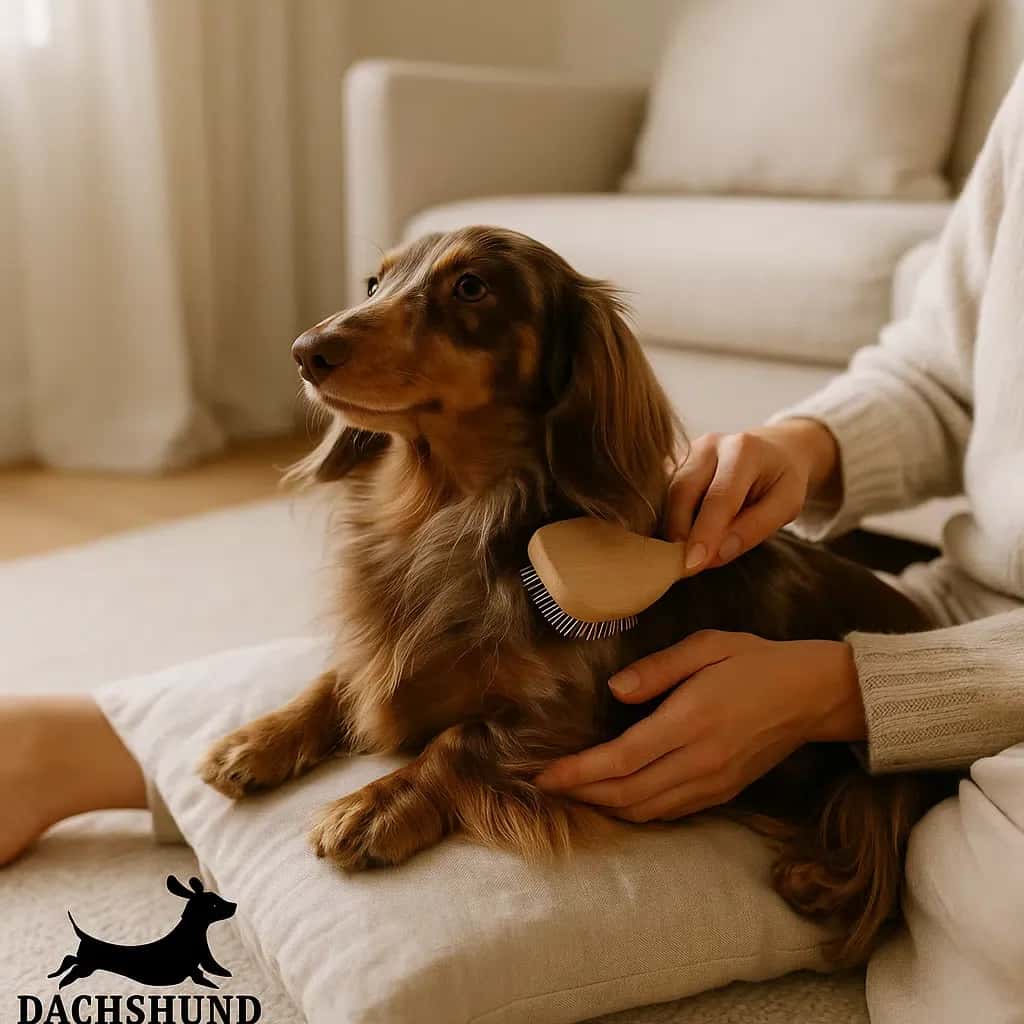
Dilute dachshunds, especially blue and Isabella, can have coats that are both visually stunning and slightly more delicate than traditional colors. While these dogs don’t require an overly complicated grooming routine, a thoughtful, proactive approach can make a huge difference in keeping their skin healthy and coat shiny.
1. Gentle Grooming Routine
- Use a Soft Brush: Over-brushing can damage brittle hairs. A soft bristle brush or grooming mitt, used 2–3 times a week, helps remove loose fur without causing breakage.
- Skip Harsh Grooming Tools: Avoid slicker brushes or hard combs that can damage thinner hairs.
- Bathe Sparingly: Bathing too frequently strips natural oils, which protect both coat and skin. A 4–6 week interval is ideal unless your dog is muddy or swims often.
- Choose Hydrating Shampoos: Look for oatmeal-based, aloe-infused, or hypoallergenic shampoos that nourish rather than dry out the coat.
2. Nutrition for a Healthy Coat
A high-quality diet rich in healthy fats is one of the best ways to support dilute dachshund coats.
- Omega-3 and Omega-6 Fatty Acids: These are essential for preventing dryness and maintaining a glossy coat. Supplements like salmon oil or sardine oil can be added to meals.
- Protein Quality: Lean animal proteins like chicken, turkey, or fish help build stronger, healthier hair shafts.
- Antioxidant-Rich Foods: Ingredients like blueberries, sweet potatoes, and carrots (in moderation) support skin cell repair and reduce inflammation.
“Diet plays a major role in coat health. Adding omega-rich supplements can improve shine and reduce brittleness in dilute-colored dogs.”
— American Kennel Club
3. Sun and UV Protection
Dilute coats are more sensitive to sun bleaching and UV damage:
- Limit Midday Sun: Shorter walks in early morning or late afternoon reduce exposure to strong UV rays.
- Lightweight Dog Shirts: A breathable cotton or sun-protective shirt can shield the coat and skin from direct sunlight during longer outdoor activities.
- Dog-Safe Sunscreens: For thin-furred areas like the ears or belly, a vet-approved dog sunscreen can prevent redness and irritation.
4. Hydration and Moisturizing
- Coconut Oil Rubs: A light rub of organic coconut oil (approved by your vet) can keep skin hydrated and reduce dryness.
- Leave-In Coat Sprays: Aloe and vitamin E sprays help maintain coat softness and prevent breakage between baths.
- Humidified Air: During winter or in air-conditioned homes, a humidifier can help prevent dry skin.
5. Regular Health Check-Ups
Since Color Dilution Alopecia (CDA) and other coat conditions can develop over time, schedule biannual vet check-ups for skin and coat health. A vet can recommend topical treatments, supplements, or medicated shampoos if early thinning is detected.
FAQs About Color Dilution in Dachshunds
More from This Series
- Continue exploring the genetics, colors, and unique traits that shape the dachshunds we love:
- Mini vs Standard Dachshund
Understand how size influences health, personality, and care needs. - Dachshund Coat Types
Compare smooth, long, and wire coats — and what to expect with each. - Dachshund Coat Colors
From red and black to the rarer shades — a visual guide with genetic insights. - Dapple vs Piebald Dachshund
Learn how to tell them apart, and why it matters for breeding and health. - Dachshund Eye Problems by Color
Discover how eye and coat color can affect your dachshund’s vision. - Tweenie Dachshund
Not quite mini, not quite standard — what it means to have a “tweenie.” - Rare Dachshund Colors
Lilac, isabella, tricolor and more — including risks behind the rare. - Dachshund Coat Change with Age
Why your pup’s color or texture may shift over time. - Wire-Haired Dachshund Temperament
A closer look at the feisty, fun, and sometimes stubborn wire-haired variety. - Dilution Alopecia Dachshund
What to know about this genetic cause of hair loss and how to manage it. - Inbred Dachshund Health Risks
A calm, factual look at what inbreeding means for health and longevity. - Color Dilution Dachshund
What happens when pigment genes are suppressed — and what to watch for. - Hidden Dapple Dachshund
When dapple genes aren’t visible — but still pose risks in breeding. - Dachshund DNA Test
What a DNA test can (and can’t) tell you — and when it’s worth doing. - Dachshund Wire Coat
Everything you need to know about wire-haired grooming, genetics, and quirks. - Isabella Color Dachshund
A closer look at this rare lilac-grey coat — and its potential health concerns. - Wild Boar Color Dachshund
One of the most unique and naturally blended coat types. - Tri Color Long-Haired Dachshund
Is tricolor real in dachshunds? And how does it show up in long coats? - Why Dachshunds Are the Worst Breed
A tongue-in-cheek but honest reflection on dachshund challenges (and why we still love them). - Dachshund Breed Mixes
Doxie + what? Explore popular crossbreeds — from Doxiepoos to Chiweenies. - Dachshund Genetics
Your friendly, vet-backed intro to dachshund DNA, inheritance, and health
Authored by
James
James is the founder of Dachshund Lovers and the proud human of Harvey, a mini dapple with a big personality. He writes to empower and connect the dachshund community, blending founder insights with honest, experience-based stories about life with this incredible and special breed. James brings candid, experience-backed opinions to the community and always focused on fewer, better products and ideas that genuinely improve life for dachshunds and their people.
Read moreJames is the founder of Dachshund Lovers and the proud human of Harvey, a mini dapple with a big personality. He writes to empower and connect the dachshund community, blending founder insights with honest, experience-based stories about life with this incredible and special breed. James brings candid, experience-backed opinions to the community and always focused on fewer, better products and ideas that genuinely improve life for dachshunds and their people.
Read moreDisclaimer
This content is for informational purposes only and should not be considered veterinary advice. Always consult with a licensed veterinarian regarding your dog’s health and wellbeing.
There are no comments yet
Leave a comment