What Can Dachshunds Eat? Safe & Unsafe Foods Explained
What Can Dachshunds Eat? Safe & Unsafe Foods Explained
Not sure what’s safe to feed your dachshund? This thoughtful guide walks through everyday foods they can eat and what to absolutely avoid. Must read.

James
Posted on September 22, 2025.
Updated on July 21, 2026.
Table of Contents
- •We Learned the Hard Way at Leaf Café…
- 1.Key Takeaways on What Dachshunds Can Eat
- 2.Fruits That Are Safe for Dachshunds (In Moderation)
- 3.Vegetables That Are Safe for Dachshunds (and Ones to Avoid)
- 4.Proteins Dachshunds Can Safely Eat (And How to Prepare Them)
- 5.Foods to Never Feed a Dachshund (Toxic & Dangerous List)
- 6.How Much Human Food Is Too Much for a Dachshund?
- 7.How Much Human Food Is Too Much for a Dachshund?
- 8.How Dachshunds Digest Food Differently
- 9.Fruits That Are Safe for Dachshunds (In Moderation)
- •Vet-Backed Tip:
- 10.Grains and Dairy Products Dachshunds Can (and Can’t) Eat
- •Vet-Backed Tip:
- •Pro Tip:
- -More from This Series
- -Disclaimer
Share

We Learned the Hard Way at Leaf Café…
A few months ago, Caitlin and I were having a lazy Saturday morning coffee at Leaf Café in Cronulla, Harvey curled up under the table like the good boy he is. As usual, he was eyeballing us while we shared a slice of banana bread—those soulful doxie eyes doing their usual emotional blackmail.
I caved. Gave him a tiny piece. It’s just banana, right?
Well, by that evening, Harvey was lethargic, bloated, and had a seriously upset stomach. We ended up calling the vet and giving him plain rice and boiled chicken for two days. Turns out, it wasn’t the banana—it was everything else baked into the bread. The butter, sugar, maybe even a sneaky artificial sweetener.
That moment sparked a deep dive. What else were we feeding him that might’ve been a problem?
And it turns out, a lot of the “healthy” scraps we give out of love can do real damage to dachshunds’ uniquely sensitive digestive systems. Their long, low bodies come with long, delicate guts that make them more prone to gastrointestinal upset, pancreatitis, and toxic food reactions.
According to VCA Animal Hospitals, “Even small amounts of certain foods—like grapes or onions—can cause serious problems for dogs, including kidney or liver failure.” The American Kennel Club agrees: “Dogs process foods differently than humans do. Some human foods can be downright dangerous.”
So I created this article—a no-BS guide on what’s actually safe for dachshunds, what’s a hard no, and what’s okay in moderation. It’s backed by vet-approved sources and my own lessons from trial, error, and a few very expensive vet bills.
Whether you’re a first-time sausage dog owner or you’ve had your furry shadow for years, this guide will help you make better feeding decisions—and hopefully avoid another midnight bathroom emergency like we had at Leaf.
Key Takeaways on What Dachshunds Can Eat
Topic | Summary |
|---|---|
Safe Foods | Lean meats, most fruits (like blueberries), plain veggies, pumpkin, rice. |
Unsafe Foods | Chocolate, grapes, onions, garlic, xylitol (artificial sweetener), fatty table scraps. |
Moderation is Key | Even healthy foods can cause issues if overfed or improperly prepared. |
Doxie Digestive Sensitivity | Their long digestive tract makes them prone to GI upset and pancreatitis. |
Vet-Backed Info | Research from AKC and VCA confirms many foods that are toxic or risky. |
Fruits That Are Safe for Dachshunds (In Moderation)
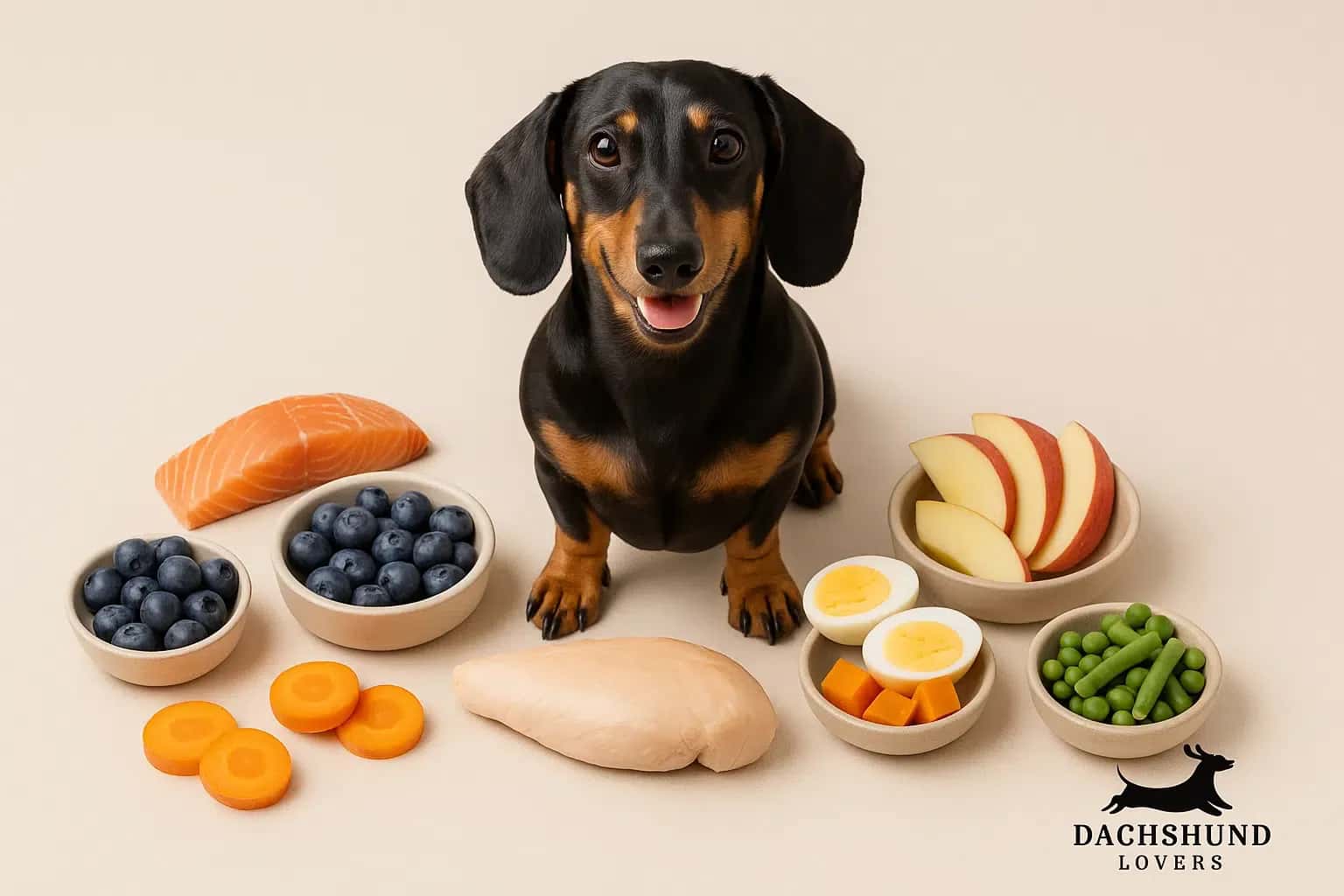
If you’ve ever tried to eat a piece of fruit in peace around your dachshund, you’ll know the look — the slow head tilt, the patient stare, and the tail wag that says, “I’ll be your best friend forever if you just drop one grape.” But not all fruits are dachshund-safe, and a few are downright dangerous. That’s why it’s important to know which ones are okay, and in what quantity.
Harvey, has a real thing for blueberries. I started adding them as toppers to his meals after diving into some research on antioxidant-rich snacks for dogs (spoiler: there’s some solid science behind it). We now keep a small tub in the fridge labeled “Harvey’s Berries.” But even with the safe stuff, moderation is key — especially for a breed known for sensitive stomachs.
Here’s a breakdown of fruits that are safe, and how to serve them:
Fruit | Safe? | Benefits & Cautions |
|---|---|---|
Blueberries | ✅ | Rich in antioxidants and low in sugar. Excellent as training rewards or a crunchy topper. Refer to our Top Supplements for Dachshunds for more on how antioxidants support joint health. |
Bananas | ✅ | High in potassium and fiber, but sugary. Use sparingly — a few slices max, especially for weight-conscious doxies. If you’re managing calories, our Dachshund Weight Loss guide has low-cal treat swaps. |
Apples | ✅ | Full of vitamin A and C. Just remove the seeds and core first — the seeds contain cyanide, which is harmful to dogs. Crisp texture makes it a great dental-friendly snack too. |
Watermelon | ✅ | Mostly water, making it a great hydration booster in summer. Remove all seeds and rind to avoid digestive upset. A tip from our Hydration & Dachshunds article: frozen watermelon cubes are perfect on hot days. |
Strawberries | ✅ | Contain enzymes that may support dental hygiene. But high in natural sugars, so limit to occasional use. |
Cantaloupe | ✅ | Fiber-rich and hydrating, but too much can lead to soft stools. Scoop the flesh clean and offer in cubes for easy portion control. |
Vet-backed tip: According to VCA Animal Hospitals and the American Kennel Club, fruits like blueberries, apples, and bananas can be excellent supplemental snacks for dogs — as long as they’re served in small, infrequent portions. Overfeeding even “healthy” fruit can lead to GI upset or contribute to long-term weight gain in small breeds like dachshunds.
Dachshunds’ unique body shape and long torsos put extra stress on their spine and joints, meaning excess weight is a serious concern. If you’re already exploring home-cooked options (like we cover in our Homemade Dog Food for Dachshunds), fruits can be a great vitamin-boosting addition — just don’t forget the “less is more” rule.
Vegetables That Are Safe for Dachshunds (and Ones to Avoid)
When Harvey was a puppy, he’d sneak into the kitchen every time we chopped carrots — not for meat scraps, but for the orange peels bouncing off the cutting board. I used to think it was odd… until I realized how many veggies can actually be safe (and beneficial) for dachshunds. Now, we treat him to a few crunchy bites after meal prep — and not just for the cuteness.
That said, not all vegetables are created equal. Some are packed with nutrients that support digestion, immunity, and weight management — while others (like onions or garlic) are straight-up toxic. Knowing the difference can help you boost your dachshund’s bowl without the risk.
Here’s a table of vet-approved vegetables you can add to your doxie’s diet — plus a few to steer clear of:
Vegetable | Safe? | Benefits & Cautions |
|---|---|---|
Carrots | ✅ | Crunchy, low-calorie, high in beta-carotene and fiber. Great for dental health. Chop into small sticks or steam for older dogs. If you’re watching weight, carrots make an excellent treat alternative — see our Dachshund Weight Loss guide. |
Green Beans | ✅ | Full of vitamins C and K. Low in calories, filling, and ideal for overweight doxies. Plain and unsalted only. |
Pumpkin (plain) | ✅ | Excellent for digestion. Helps firm up loose stools or relieve mild constipation. Used regularly in our Feeding Guide as a tummy-friendly topper. |
Peas | ✅ | Rich in fiber and protein. Serve fresh or frozen — never canned due to sodium. Avoid if your dachshund has kidney issues. |
Sweet Potatoes | ✅ | High in fiber and great for energy. Must be cooked and plain — no spices or oils. A common base in Homemade Dog Food. |
Broccoli | ✅ (in small amounts) | High in fiber and vitamin C, but can cause gas. Give sparingly — too much can lead to stomach upset. |
Onions | ❌ | Toxic to dogs. Can damage red blood cells and lead to anemia, even in small doses. Completely avoid. |
Garlic | ❌ | Like onions, garlic is harmful — raw, cooked, or powdered. Steer clear in all forms. |
Vet-backed tip: According to both PetMD and the AKC, vegetables like carrots, pumpkin, and green beans are not only safe — they’re often recommended for small breeds prone to weight gain and digestive issues. But preparation matters. Always serve them plain, cut small, and cooked when needed to prevent choking or upset stomachs.
If you’re exploring custom meal prep (see our Homemade Dog Food guide), vegetables can be a great foundation — just skip the seasoning and remember: no alliums (that’s the onion/garlic family) allowed.
Proteins Dachshunds Can Safely Eat (And How to Prepare Them)
Harvey’s entire personality changes when there’s chicken involved. He goes from snoozy couch potato to full alert, tail-thumping tornado the second he hears the fridge open. But while protein is a cornerstone of any dachshund’s diet, not all sources — or preparations — are safe.
Dachshunds thrive on high-quality protein, but they also have sensitive digestive systems and a tendency toward pancreatitis if given too much fat. That’s why understanding what protein to feed (and how to cook it) is just as important as the source itself.
Here’s our go-to list of safe proteins — with tips on how to serve them and what to avoid:
Protein | Safe? | Benefits & Cautions |
|---|---|---|
Chicken (skinless) | ✅ | Lean, easy to digest, and ideal for sensitive stomachs. Always cooked plain — no seasoning or oils. Shred into small bites. A staple in our Homemade Dog Food. |
Turkey (lean cuts) | ✅ | Another lean meat rich in protein and amino acids. Avoid deli meats (too much salt). Best served boiled or baked with no skin. |
Beef (lean cuts) | ✅ (occasionally) | Offers iron and B vitamins. Must be fully cooked and trimmed of fat. Ground beef is fine if drained of grease. Too much fat can trigger GI issues — especially in dachshunds. |
Eggs (cooked) | ✅ | Excellent source of protein, selenium, and vitamins. Scrambled or hard-boiled — never raw (risk of salmonella). Useful for picky eaters. |
Fish (salmon, whitefish) | ✅ | Rich in omega-3s, great for skin and coat health. Always deboned and fully cooked. Avoid high-mercury fish like tuna. We explore this more in our Supplements for Dachshunds. |
Pork | ⚠️ | Safe if lean, fully cooked, and unseasoned — but high in fat, so serve rarely. Bacon and ham are a hard no. |
Processed Meats (hot dogs, sausages) | ❌ | Loaded with sodium, preservatives, and spices. Can upset the gut or even cause toxicity. Avoid entirely. |
Vet-backed tip: According to VCA Animal Hospitals, lean animal protein should be the foundation of your dog’s meals — but for small breeds like dachshunds, excess fat can lead to serious issues like pancreatitis. Stick to plain, unseasoned, and appropriately portioned cuts to keep your pup healthy.
If you’re concerned about balancing protein with other macros, our Dachshund Feeding Guide breaks down how much to serve based on weight and activity level — and how to adjust portions if you’re also using commercial kibble.
Foods to Never Feed a Dachshund (Toxic & Dangerous List)
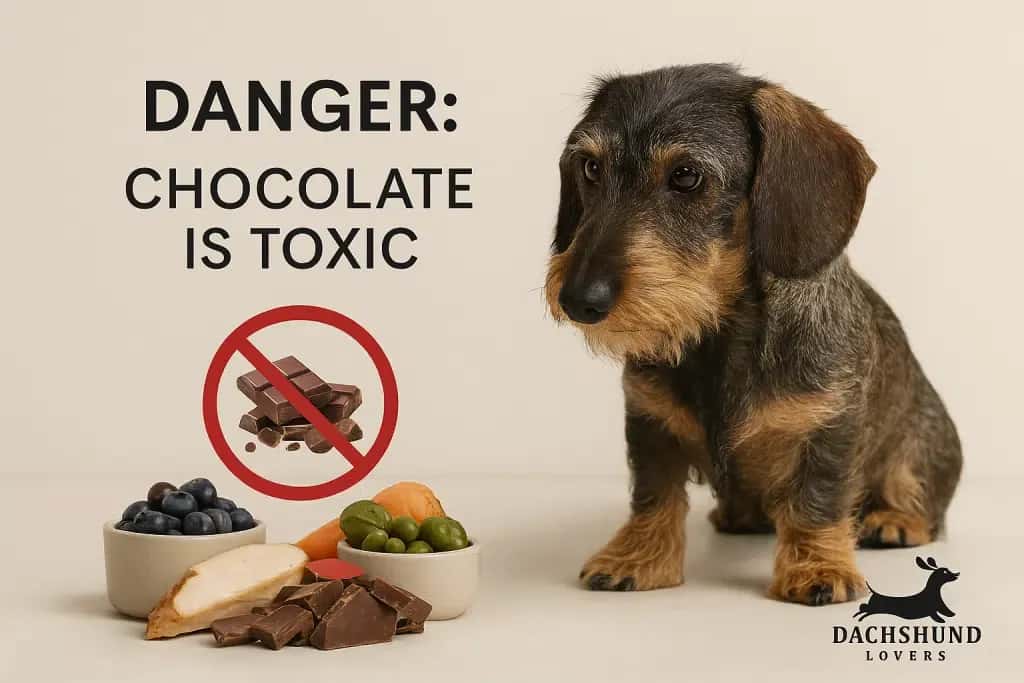
Every dachshund owner knows the panic that sets in when you realize your pup just licked up something questionable. With Harvey, it was a grape that rolled off the cutting board — and I swear time froze as we rushed to Google whether a single grape could hurt him (it can). That emergency vet visit ended with a gut flush and a big reminder: dachshunds are not built to handle certain foods.
Some items we eat daily can be toxic to dogs, even in small amounts. And because dachshunds are so small, just a bite can do damage. Their long torsos and compact digestive systems make it even more important to avoid anything risky.
Below is a vet-backed list of no-go foods for dachshunds:
Food | Toxic? | Why It’s Dangerous |
|---|---|---|
Grapes & Raisins | ❌ | Can cause acute kidney failure in dogs — even a small amount. Zero tolerance. |
Chocolate | ❌ | Contains theobromine, which is highly toxic. Dark chocolate is worst. |
Onions & Garlic | ❌ | Damages red blood cells and can lead to anemia. Watch out for seasoning in cooked food. |
Avocado | ⚠️ | Contains persin, which can be toxic to some dogs — especially the skin and pit. |
Xylitol (found in sugar-free gum, peanut butter) | ❌ | Can cause insulin release, leading to hypoglycemia, seizures, and liver failure. Always read labels. |
Cooked Bones | ❌ | They can splinter and puncture your dog’s intestines or throat. Raw bones are sometimes used under supervision but consult a vet. |
Alcohol or Caffeine | ❌ | Both can cause vomiting, tremors, and organ damage. Even trace amounts are harmful. |
Macadamia Nuts | ❌ | Toxic to dogs and can cause muscle tremors, weakness, and vomiting. |
Fatty Table Scraps | ⚠️ | Can lead to pancreatitis, especially in dachshunds. High-fat meats and fried foods are a no. |
Yeast Dough | ❌ | Can expand in your dog’s stomach and cause bloating or alcohol poisoning from fermentation. |
Vet-backed tip: According to the American Kennel Club and Pet Poison Helpline, these foods rank among the most common causes of canine poisoning emergencies. When in doubt, skip it — or check first.
If you’re ever unsure about an ingredient or you’re feeding a home-cooked diet (like we explain in our Homemade Dog Food Guide), always double-check the ingredient list. Dachshunds’ small size means even “a nibble” could have major consequences.
How Much Human Food Is Too Much for a Dachshund?
So here’s the truth: dachshunds are professional beggars. Harvey has a habit of planting himself next to the highchair at dinnertime, just waiting for our toddler to “accidentally” drop food. And sure, a bite here or there might seem harmless — but over time, those little extras add up.
The challenge with dachshunds is that they’re small-bodied but big on appetite. Even one extra slice of cheese or a spoonful of peanut butter can tip them into a calorie surplus for the day. That’s where weight creep begins — and with it, risks to their back, joints, and overall health.
If you’re feeding table scraps daily (even healthy ones like cooked veggies or plain rice), you might be unintentionally throwing off your dachshund’s nutrition balance.
Here’s a simple way to stay on track:
Guideline | Details |
|---|---|
10% Rule | Human food and treats combined should make up no more than 10% of your dachshund’s daily calorie intake. |
Stick to Low-Calorie Options | Reach for blueberries, carrots, or small cubes of apple instead of processed snacks. (See our Dachshund Treats Guide for more healthy ideas.) |
Watch for “Silent Additions” | Cheese toppers, toast crusts, or lick-the-plate moments can quietly rack up calories. |
Track Weight Regularly | A sudden jump could mean it’s time to cut back. Refer to our Dachshund Weight Loss Guide if you’re noticing creeping kilos. |
Pro Tip: If you’re offering fresh food regularly — whether it’s fruits, meats, or veggie toppers — make sure to adjust the main meal portions to keep calories in check. Our Feeding Guide has a great breakdown of daily portion recommendations based on size and activity level.
Because with dachshunds, every bite counts — and the line between “treat” and “too much” is thinner than you think.
How Much Human Food Is Too Much for a Dachshund?
Let’s be honest — dachshunds are masters of manipulation when food is involved. Harvey, our long-haired mini, doesn’t beg. He politely rests his chin on your lap and stares into your soul until you wonder, “Would one bite hurt?” But the truth is, that tiny bite could be a lot more than you think.
Because of their small size, dachshunds have low daily caloric requirements. One extra cube of cheese or crust of bread can unbalance their nutritional intake. And unfortunately, weight gain isn’t just a vanity issue for doxies — it’s a serious health risk.
Dachshunds are one of the breeds most prone to obesity, and it’s closely linked to conditions like intervertebral disc disease (IVDD). A 2022 study published in Frontiers in Veterinary Science concluded that:
“Excessive body weight has been shown to significantly increase the risk of IVDD in dachshunds. Even moderate overweight status correlated with higher incidence and severity of back injury.”
— Front Vet Sci, 2022
It’s not just about fat — it’s about inflammation, strain on the spine, and long-term joint health. That’s why portion control is so essential, especially when offering anything beyond their standard meals.
Here’s how to manage human food safely:
Guideline | Details |
|---|---|
10% Rule | Treats (including human food) should make up no more than 10% of your dachshund’s daily calorie intake — roughly 30–50 calories for a mini. |
Stick to Whole, Low-Calorie Items | Think blueberries, carrots, cucumber slices. See our Dachshund Treats Guide for safe snack ideas. |
Avoid “Sneaky Add-Ons” | Buttered toast crusts, yogurt licks, or peanut butter slivers add sugar and fat fast. |
Adjust Meals Accordingly | If your dachshund had scrambled egg with breakfast, consider trimming their dinner slightly. Use our Feeding Guide to help rebalance. |
Weigh Regularly | Weekly weigh-ins help track trends. If the number’s creeping up, explore our Weight Loss Guide for structured advice. |
Expert Note: According to VCA Animal Hospitals, even just a few “extra” bites a day can push small dogs like dachshunds into dangerous weight categories. Their advice: “Treats should never replace a nutritionally balanced diet.“
So yes — your dachshund can enjoy the occasional snack, but with intention and moderation. Trust us, it’s worth it in the long run — for their back, their belly, and their zoomie potential.
How Dachshunds Digest Food Differently
Dachshunds may be small, but their digestive systems are surprisingly unique — and not always in a good way. Their long torsos don’t just make them cute; they also mean food has a longer distance to travel. Combine that with a genetic predisposition to GI sensitivity, and it’s no wonder dachshunds are prone to upset stomachs, diarrhea, and food intolerances.
When Harvey was a pup, we thought a bit of leftover roast chicken would be harmless. What followed was a sleepless night of pacing, burping, and what we now call “the dachshund belly shuffle.” That was the beginning of our deep dive into breed-specific digestion — and it turns out there’s science behind it.
According to research published in the Journal of Veterinary Internal Medicine, small breed dogs like dachshunds have significantly faster gastrointestinal transit times compared to large breeds. However, this fast movement can also mean reduced nutrient absorption and increased sensitivity to high-fat or processed foods.
“Small breed dogs showed increased frequency of GI signs when fed high-fat commercial diets,” the study notes.
— J Vet Intern Med, 2019
But it’s not just about fat content. Dachshunds also have a higher likelihood of food intolerances and allergies, particularly to common fillers like corn, wheat, and artificial preservatives found in low-quality kibble.
If your dachshund frequently shows signs like vomiting, gas, excessive licking, or inconsistent stools, it might be worth exploring gentler food options or even hypoallergenic diets. You can find a full list of breed-friendly options in our Best Dog Food for Dachshunds article, including limited-ingredient and sensitive stomach formulas.
Here are a few digestion-related red flags to look for:
Symptom | What It Might Mean |
|---|---|
Frequent soft stools | Possible intolerance to grains or high-fat foods |
Burping or gurgling | Excess air from fast eating or indigestion |
Vomiting after meals | Too rich, too fast, or food sensitivities |
Scooting or anal licking | Digestive discomfort or low fiber intake |
Excessive grass eating | GI distress or lack of key micronutrients |
Vet Tip: Chronic digestive issues shouldn’t be brushed off. According to PetMD, “Even mild but consistent GI symptoms may indicate an allergy or sensitivity that, if ignored, can worsen over time.”
If you’re experimenting with homemade meals, check out our Homemade Food Guide for gentle, nutrient-dense recipes that are kinder on sensitive tummies.
Fruits That Are Safe for Dachshunds (In Moderation)
If you’ve ever tried to enjoy fruit around a dachshund, you know how persuasive their puppy eyes can be. However, not all fruits are safe for doxies—and even some “healthy” options can cause trouble in excess.
A few years ago, Harvey developed mild diarrhea after sneaking melon rind during a walk at Greenhills Park, and I realized I needed to learn more about canine fruit safety. Since then, I’ve done my homework to ensure he only gets treats that are as digestible as they are delicious.
Research supports this cautious approach: small-breed dogs like dachshunds can have faster gut transit times, which may reduce nutrient absorption and heighten sensitivity to high-fat or fibrous foods. That makes it even more critical to monitor portion size and frequency.
Here’s a breakdown of fruits that are safe—plus how to serve them thoughtfully:
Fruit | Safe? | Benefits & Cautions |
|---|---|---|
Blueberries | ✅ | Antioxidant-packed and low in sugar—great as training rewards or meal toppers. Linked to joint support, too. Check our [Top Supplements for Dachshunds] for more on antioxidants. |
Bananas | ✅ | High in potassium & fiber, but also sugar—best kept to a few slices, especially for weight-conscious pups. (See our upcoming Dachshund Weight Loss guide for low-cal alternatives.) |
Apples | ✅ | Provide vitamins A & C; make sure to remove seeds & core (cyanide risk). Crisp texture also supports dental health. |
Watermelon | ✅ | Mainly water, great for summer hydration; remove rind & seeds to avoid stomach upset. Frozen cubes can double as cooling treats—see our [Hydration & Dachshunds] article. |
Strawberries | ✅ | Contain enzymes helpful for teeth, but are naturally sugary. Offer occasionally. |
Cantaloupe | ✅ | Fibre-rich and hydrating—good in moderation; too much may cause loose stools. |
Vet-Backed Tip:
According to VCA Animal Hospitals and the American Kennel Club, fruits such as blueberries, apples, and bananas can complement a dog’s diet—but only in small, infrequent portions . Overdoing “healthy” treats can still lead to GI upset or weight gain—especially in small breeds like dachshunds, whose unique body shape and metabolism put additional strain on their spine and joints. Portion control is key.
Grains and Dairy Products Dachshunds Can (and Can’t) Eat
Grains and dairy are two of the most misunderstood parts of a dog’s diet—especially when you’re raising a dachshund with a famously fussy stomach like Harvey. We’ve been there: one day you’re adding a splash of milk to his kibble to make it more “fun,” and the next you’re googling “is goat milk toxic to dogs” at 1 a.m. with a whimpering pup.
Turns out, the answer isn’t black and white.
According to PetMD, while grains have developed a bad reputation thanks to the grain-free dog food trend, not all grains are created equal. Whole grains like brown rice, oats, and barley actually contain fiber and nutrients that can help support digestion—especially in small breeds prone to upset stomachs.
But when it comes to refined grains like cornmeal or wheat fillers often found in commercial kibble, the benefits quickly disappear. Many dachshunds show signs of food sensitivity or even allergies, including itchy skin, recurring ear infections, or inconsistent stools. We noticed Harvey had recurring ear flare-ups when he was on a mid-tier kibble loaded with wheat and corn—once we swapped it for a grain-free formula with oats and sweet potato, things finally settled down.
Dairy is even trickier. Most adult dogs are lactose intolerant, meaning they lack the enzyme needed to digest lactose in milk and cheese. VCA Animal Hospitals notes that even small amounts of dairy can cause gas, bloating, or diarrhea in dogs with lactose sensitivity.
Still, some low-lactose dairy options can be used sparingly as treats—if your dachshund can tolerate them.
Here’s a breakdown of common grains and dairy foods, and how to handle them:
Food | Safe? | Notes & Cautions |
|---|---|---|
Brown Rice | ✅ | Gentle on the stomach and useful during GI recovery. |
Oats | ✅ | A great source of soluble fiber—especially helpful for digestion and coat health. Cooked plain only (no milk or sugar). |
Barley | ✅ | Low-glycemic and nutritious, great in small amounts for dogs without grain sensitivities. |
White Rice | ✅ | A classic bland food that pairs well with boiled chicken during stomach upset. Easily digestible. |
Corn (and cornmeal) | ⚠️ | Often used as filler. Some dachshunds tolerate it, but many don’t. Monitor for itching or soft stools. |
Wheat / Gluten | ❌ | A common trigger for skin allergies and digestive distress. Especially risky if your dachshund already has sensitivities. |
Cheese (e.g. cheddar, cottage) | ⚠️ | Low in lactose but high in fat and salt. A tiny cube here and there is okay—just don’t make it a habit. |
Plain Yoghurt | ✅ (small amt) | Can provide probiotics that support gut health—but only if unsweetened and unflavored. Avoid fruit yoghurts or those with xylitol. |
Milk | ❌ | Most adult dogs are lactose intolerant. Can cause bloating, loose stools, and discomfort. |
Ice Cream | ❌ | Loaded with sugar and dairy, and often contains chocolate or artificial sweeteners like xylitol. Hard no. |
Vet-Backed Tip:
According to PetMD, “Whole grains can offer nutritional benefits for dogs, including fiber, vitamins, and minerals. However, food sensitivities are common, and some dogs may benefit from a grain-free or limited-ingredient diet.”
Likewise, VCA Animal Hospitals confirms that dairy digestion varies significantly from dog to dog. “Most adult dogs have decreased levels of lactase,” the enzyme that breaks down lactose. This means many will experience GI upset after consuming milk, cheese, or ice cream—even in small quantities.
Pro Tip:
If you’re experimenting with home-cooked meals, opt for gentle, vet-approved grains like oats and brown rice. Avoid adding butter, milk, or cream, even if they seem harmless. When in doubt, keep it bland and clean.
If your dachshund experiences regular itching, vomiting, or soft stools, it may be worth switching to a limited-ingredient or grain-free diet.
Because when it comes to dachshunds and digestion, less is usually more.
Frequently Asked Questions (FAQs)
More from This Series
Explore our full series on dachshund nutrition, digestion, and diet—written with real-life stories and vet-backed research to help you make the best choices for your doxie:
- What Can Dachshunds Eat? Safe & Unsafe Foods Explained
- Best Dog Food for Dachshunds in 2025
- Dachshund Feeding Guide: How Much & How Often?
- Top Supplements for Dachshunds: What’s Worth It?
- Hydration & Dachshunds: Why Water Intake Matters
- Homemade Dog Food for Dachshunds
- Dachshund Weight Loss: A Vet-Approved Guide
- Best Treats for Dachshunds
- Best Dog Food for Miniature Dachshunds vs Standard Dachshunds
- Raw vs Cooked Food for Dachshunds
Authored by
James
James is the founder of Dachshund Lovers and the proud human of Harvey, a mini dapple with a big personality. He writes to empower and connect the dachshund community, blending founder insights with honest, experience-based stories about life with this incredible and special breed. James brings candid, experience-backed opinions to the community and always focused on fewer, better products and ideas that genuinely improve life for dachshunds and their people.
Read moreJames is the founder of Dachshund Lovers and the proud human of Harvey, a mini dapple with a big personality. He writes to empower and connect the dachshund community, blending founder insights with honest, experience-based stories about life with this incredible and special breed. James brings candid, experience-backed opinions to the community and always focused on fewer, better products and ideas that genuinely improve life for dachshunds and their people.
Read moreDisclaimer
This content is for informational purposes only and should not be considered veterinary advice. Always consult with a licensed veterinarian regarding your dog’s health and wellbeing.
There are no comments yet
Leave a comment