Double Dapple Dachshund: What You Need to Know Before Falling for the Pattern
Double Dapple Dachshund: What You Need to Know Before Falling for the Pattern
Wondering what a double dapple dachshund is? Learn how to spot one and why ethical breeding matters.

Ellie
Posted on July 22, 2025.
Updated on July 17, 2026.
Table of Contents
Share

I once met a double dapple dachshund at the Glebe Markets, situated in the inner west of Sydney on a blissful summer Saturday morning. His name was Charlie. He had one milky-blue eye, a blaze of white down his nose, and was as sweet and affectionate as any dachshund I’ve met. But I later learned he was completely deaf, and partially blind in one eye—something his owner gently explained was tied to the way he was bred.
That conversation stuck with me. Because double dapple dachshunds often look incredibly unique—but they carry risks that every potential owner needs to understand. If you’ve ever searched for “how to spot a double dapple dachshund” or wondered if a double dapple mini dachshund might suit your lifestyle, this guide is for you.
Key Takeaways on Double Dapple Dachshund
Topic | Summary |
|---|---|
Double Dapple Defined | A dachshund with two copies of the merle (dapple) gene, often leading to increased white patches and health issues. |
How to Spot One | Look for large white areas on the face, chest, and body, plus blue eyes or irregular eye pigment. |
Health Risks | Double dapples are at a higher risk of congenital deafness, blindness, and microphthalmia (small or missing eyes). |
Miniature Varieties | Double dapple mini dachshunds have the same risks—size doesn’t change the genetics. |
Responsible Breeding | Ethical breeders never intentionally breed two dapples together. |
What Is a Double Dapple Dachshund?
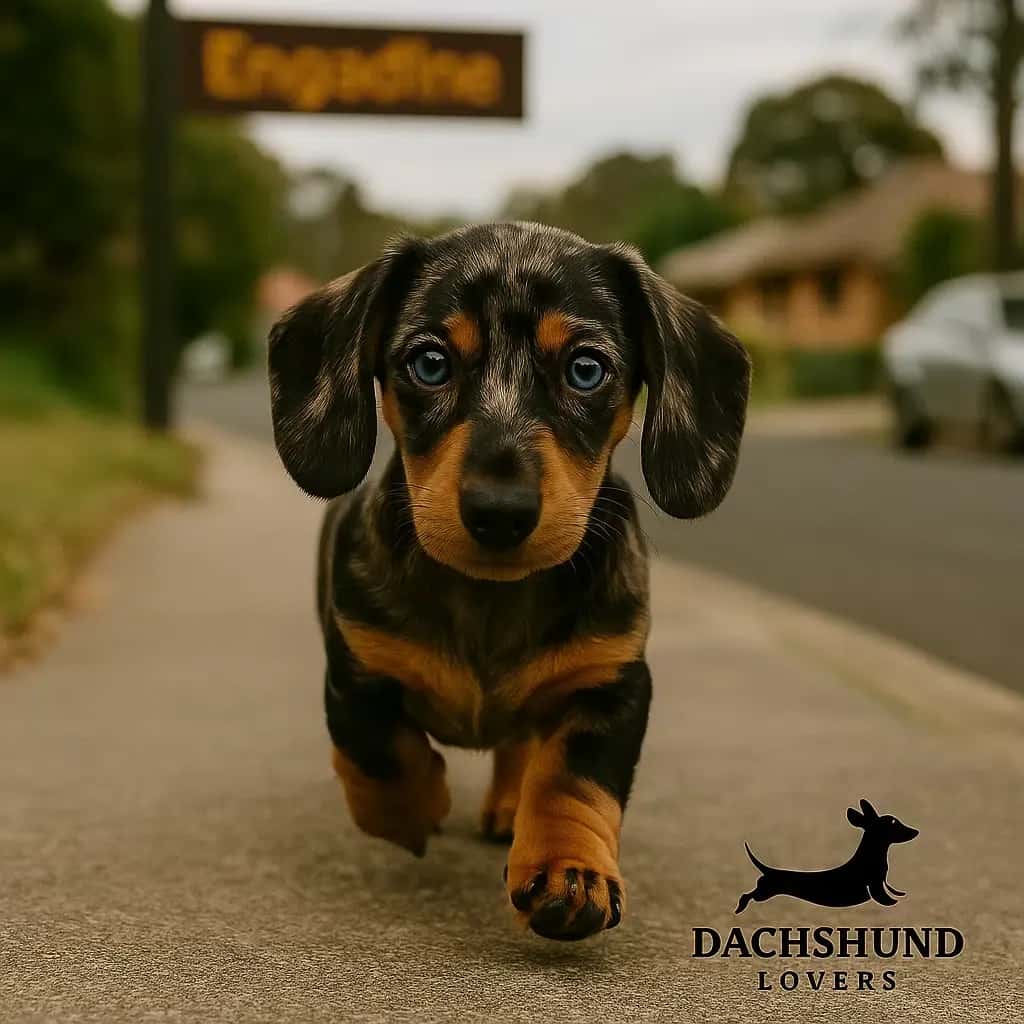
A double dapple dachshund is born when two dapple dachshunds are bred together, each carrying one copy of the merle gene. When those two genes combine, the result is striking—but often comes at a cost.
Double dapples typically have:
- Large white patches across the coat
- Blue or mismatched (odd-colored) eyes
- Pigment loss around the nose, eyelids, and ears
- A higher chance of congenital issues like hearing loss or eye malformation
While their coat can look unique—sometimes even beautiful—this pattern isn’t a fashion statement. It’s a byproduct of a risky genetic pairing that most ethical breeders avoid for good reason.
If you’re new to this pattern, it’s worth reading our full Dapple Dachshund overview first—it breaks down what’s safe, what’s not, and how to tell the difference.
The Genetics Behind the Coat
Double dapple dachshunds don’t come with warning labels—but their coats often do.
While the dapple pattern itself is beautiful and varied, double dapples tend to have exaggerated markings that can signal deeper health concerns. Some of these markings may seem unique or eye-catching at first glance, but they are often linked to pigment loss and underlying genetic issues.
Here’s what to look for:
- Unusually large white patches, particularly over the nose, neck, chest, or tip of the tail. While a little white can be normal, too much—especially when paired with dapple markings—may indicate double dapple genetics.
- Blue or mismatched eyes, such as one brown and one blue. While not exclusive to double dapples, this trait often appears alongside other warning signs.
- Pink pigmentation on the nose, lips, or eyelids. This may look cute, but it can reflect a lack of healthy pigment development—especially around sensitive areas like the eyes and ears.
- Disjointed or uneven coat pattern. Instead of a balanced swirl, double dapples often look irregular or patchy, sometimes with sections of solid white cutting through the merle pattern.
The hard part? Many of these puppies are striking to look at. But behind those ice-blue eyes and marbled coats can be a lifetime of extra needs, vet appointments, and careful support.
Ellie’s Tip: I once met a puppy at a community dog fair in Marrickville who had the most captivating coat—cloudy white with charcoal swirls. But as soon as I learned both parents were dapples, it all clicked. Beauty, yes. But also a responsibility. Ask the questions. Always.
Need a primer? Visit Dapple Dachshund Puppies to see how dapples typically present at birth.
Double Dapple Mini Dachshund
A double dapple mini dachshund is not a different breed or a separate category—it’s simply a miniature dachshund (under 11 lbs full grown) that has inherited two copies of the dapple gene. The “mini” part refers solely to size, but the genetic risks remain just as real.
People are often drawn to these dogs for their compact build and rare coat pattern, but it’s important to know: size doesn’t protect them from the health challenges that come with double dappling.
Here’s what to keep in mind:
- Hearing and vision impairments are just as likely in miniatures as in standards. The risks don’t shrink with the dog.
- They may appear more fragile due to their smaller frames, but the complications they face are internal—not always visible at first glance.
- Many mini double dapples are sold by backyard breeders trying to market them as “rare” or “unique,” despite the ethical red flags.
When you compare a double dapple mini dachshund to a healthy blue dapple or brown dapple, the differences become clearer: those single dapple coats retain rich pigment, balanced patterns, and fewer associated health concerns.
Ellie’s Note: A neighbor once shared photos of a “miniature dapple” she was considering adopting. When I looked closely, I noticed heavy white patches around the ears and a pale pink nose. I gently encouraged her to ask if both parents were dapples. They were. She ended up adopting a healthy single dapple instead—and they’re now inseparable.
Compare with Blue Dapple Dachshunds or Brown Dapple Dachshunds to see the difference.
Health Considerations
When it comes to double dapple dachshunds, the most important thing to understand is that their eye-catching coat comes with very real health risks. This isn’t just a case of “some dogs have more vet visits than others”—these are inherited genetic conditions that can impact quality of life from the moment they’re born.
Let’s break it down:
Condition | Likelihood in Double Dapples |
|---|---|
Deafness | High — especially with white ears |
Blindness or eye issues | Moderate to high |
Skin sensitivity | Slightly elevated |
Overall vitality | Variable — depends heavily on breeder care |
Congenital deafness is one of the most common issues. It often affects one or both ears, particularly when white fur surrounds the ear area. In many cases, owners don’t realize their pup is partially deaf until behavior seems “off.”
Eye abnormalities can range from light sensitivity and limited vision to a rare condition called microphthalmia, where one or both eyes are unusually small or absent. This can also lead to complications like ulceration or chronic infections.
Skin sensitivity tends to be more manageable, often manifesting as a reaction to sun exposure in lighter-pigmented areas. These dogs may need extra sunscreen (yes, pet-safe sunscreen exists) or UV-protective clothing if you live in a sunny climate.
To help ensure a dog’s well-being, early health screenings are essential:
- BAER testing (Brainstem Auditory Evoked Response) for hearing
- CERF eye exams by a veterinary ophthalmologist
Without these, there’s no way to confirm a puppy’s sensory health. Reputable breeders and rescues will often include results in their paperwork—but always ask directly.
Ellie’s Note: Maple doesn’t carry any dapple genes, but I once fostered a gentle, sweet double dapple named Tilly. She was partially deaf and had limited peripheral vision, but she was sharp, affectionate, and full of personality. She needed a quieter home, soft lighting, and a daily routine—and she absolutely thrived with the right setup.
Ethical Breeding & What to Ask
Despite how striking a double dapple may appear, no responsible breeder sets out to create one. Double dapples are the result of breeding two dapple dachshunds together—a practice that increases the risk of serious health conditions and is considered unethical by most breed standards and registries.
A good breeder knows this. A great breeder avoids it entirely.
When speaking to breeders or scanning puppy listings, here are non-negotiable questions you should ask:
- Are both parents dapple?
The only acceptable answer is no. A breeder who knowingly pairs two dapples together is either unaware of the risks or is putting appearance over health. - Has this puppy had hearing and vision tests?
Look for BAER and CERF results, ideally conducted by veterinary specialists. These are critical tools—not optional extras. - Can I see photos of both parents and their coats?
Visual confirmation helps you avoid breeders who may mislabel coat types or hide risky pairings.
If a breeder dodges these questions or downplays your concerns, it’s a red flag. You’re not just choosing a pet—you’re choosing a life you’ll be responsible for.
For contrast, explore ethical coat pairings like the ones outlined in our Long-Haired Dapple Dachshund guide. These pups still showcase that beautiful marbled look, but come from safer genetic lines.
Ellie’s Take: Transparency isn’t optional. I’ve met incredible breeders in both AUS, US and UK who prioritize education over sales—and their puppies reflect that care. Look for small-scale, hands-on environments where dogs are raised in the home, not in kennels. The difference shows.
What If You Already Have One?
If you’ve found yourself caring for a double dapple dachshund—whether through adoption, inheritance, or rescue—know this: you’re not alone, and your pup deserves all the love in the world.
Many double dapples are surrendered not because of temperament, but due to their complex medical needs. With the right knowledge and support, they can thrive.
Here’s what to keep in mind:
- Find a vet experienced in congenital conditions
Regular vets are wonderful, but specialists—especially in ophthalmology and audiology—can offer deeper insight and care planning. - Use hand signals, light cues, and routines
If your dog is deaf or hard of hearing, teaching visual cues early helps reduce anxiety and build connection. - Screen for eye health, even if symptoms aren’t obvious
Some eye conditions worsen gradually. A veterinary ophthalmologist can spot subtle signs before they become serious. - Create a safe, sensory-considerate environment
Avoid sudden movements, keep furniture layouts consistent, and offer textured toys your pup can explore in different ways.
Seek out community
Facebook groups, Instagram accounts, and local rescue networks can offer advice, gear recommendations, and emotional support. We’ve found some wonderful UK-based and US-based dachshund rescue communities that offer tailored resources for pups with special needs.
FAQs
More From This Series:
- Dapple Dachshund
- Dapple Dachshund Puppies
- Long-Haired Dapple Dachshund
- Blue Dapple Dachshund
- Brown Dapple Dachshund
Authored by
Ellie
Ellie is a lifelong dachshund lover and the proud human of Maple, a long-haired brown doxie with a regal side-eye. While not a vet, Ellie brings honest, researched, and experience-based insights into every article she writes for the Dachshund Lovers community.
Read moreEllie is a lifelong dachshund lover and the proud human of Maple, a long-haired brown doxie with a regal side-eye. While not a vet, Ellie brings honest, researched, and experience-based insights into every article she writes for the Dachshund Lovers community.
Read moreDisclaimer
This article is for informational purposes only and does not substitute for veterinary advice. Always consult a licensed vet or registered breeder when making decisions about your dog’s care or purchase.
There are no comments yet
Leave a comment