Blue Dapple Dachshund: Rare Coat, Loyal Heart
Blue Dapple Dachshund: Rare Coat, Loyal Heart
Curious about blue dapple dachshunds? Discover their unique coat, temperament, care tips, and why ethical breeding really matters—from Ellie & Maple.

Ellie
Posted on June 14, 2025.
Updated on July 21, 2026.
Table of Contents
- 1.Introduction to Blue Dapple Dachshund
- 2.Key Takeaways
- 3.What Is a Blue Dapple Dachshund?
- 4.Are Blue Dapple Dachshunds Rare?
- 5.Blue Dapple vs. Blue Merle Dachshund
- 6.Coat Types & Appearance
- •• Smooth Coat
- •• Long-Haired
- •• Wire-Haired
- 7.The Genetics Behind the Color
- 8.Personality Traits
- 9.Grooming & Skin Care Tips
- 10.Health Considerations
- 11.What to Know Before Adopting
- •More From This Series:
Share

Introduction to Blue Dapple Dachshund
I once met a blue dapple dachshund named Pebble, curled up at the edge of a farmer’s market stall beside a crate of fresh lavender at the Camden Produce Market. She looked like the petals had rubbed off on her coat—soft swirls of silver and slate with pale blue eyes that seemed far too mystical for a sausage dog. She wasn’t barking or squirming—just calmly taking it all in, like she was part of the art installation.
It was one of those quiet moments where I thought, What a special kind of dog.
Blue dapple dachshunds are rare, yes—but they’re also deeply lovable, curious, and completely dachshund in spirit. If you’re thinking of adding one to your life (or just trying to learn more), this guide will walk you through everything you need to know—from their genetics to personality, health, and grooming tips.
Key Takeaways
Topic | Summary |
|---|---|
What Is a Blue Dapple Dachshund? | A dachshund with a diluted black coat (blue) and dapple patterning caused by the merle gene |
Is It the Same as Blue Merle? | Yes—”merle” and “dapple” are used interchangeably in dachshunds |
Coat Types | Found in smooth, long-haired, and wire-haired varieties |
Health Watchouts | Possible risk of Color Dilution Alopecia (CDA) and vision/hearing issues if poorly bred |
Common Temperament | Loyal, alert, affectionate, slightly stubborn—classic doxie charm with extra flair |
What Is a Blue Dapple Dachshund?
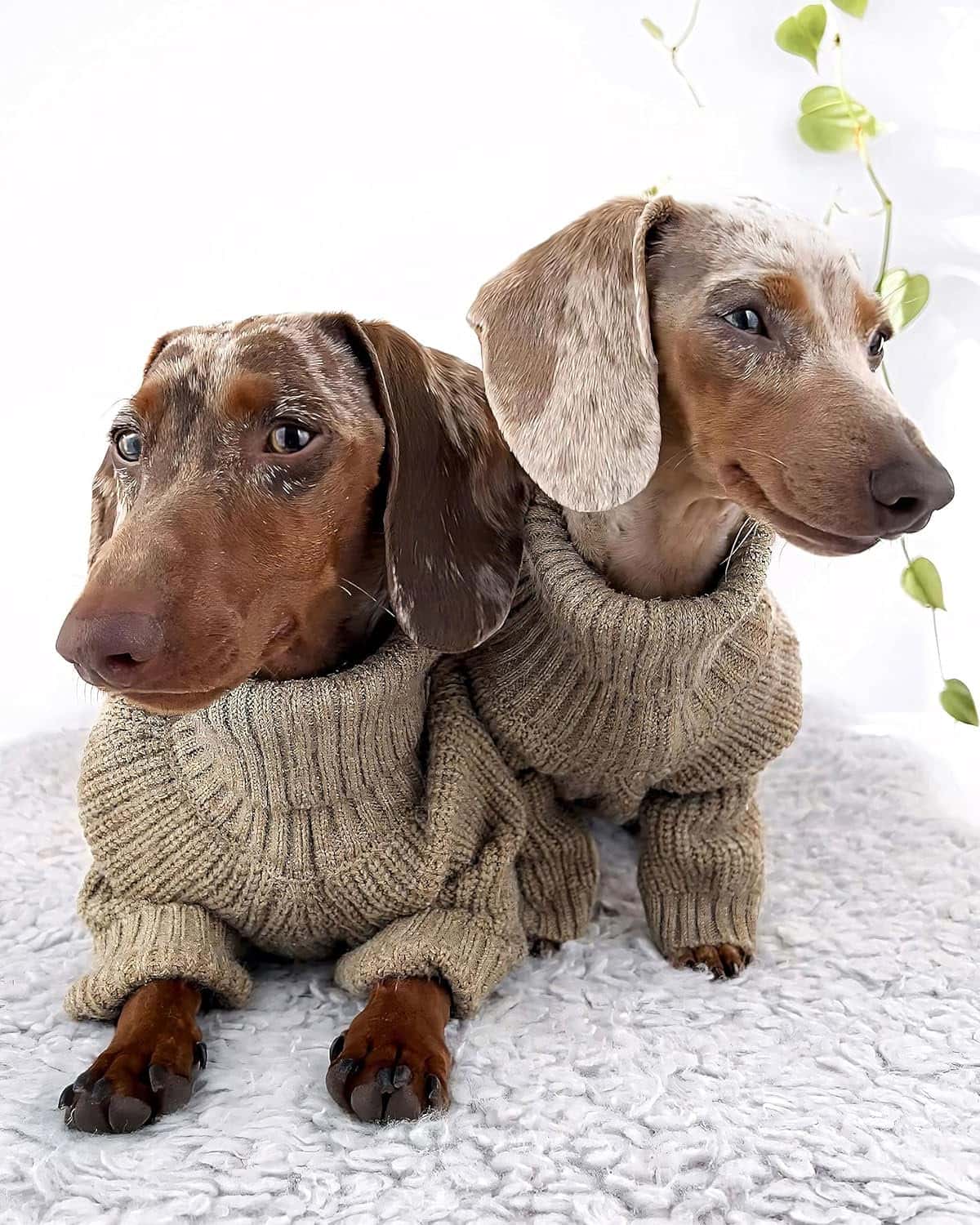
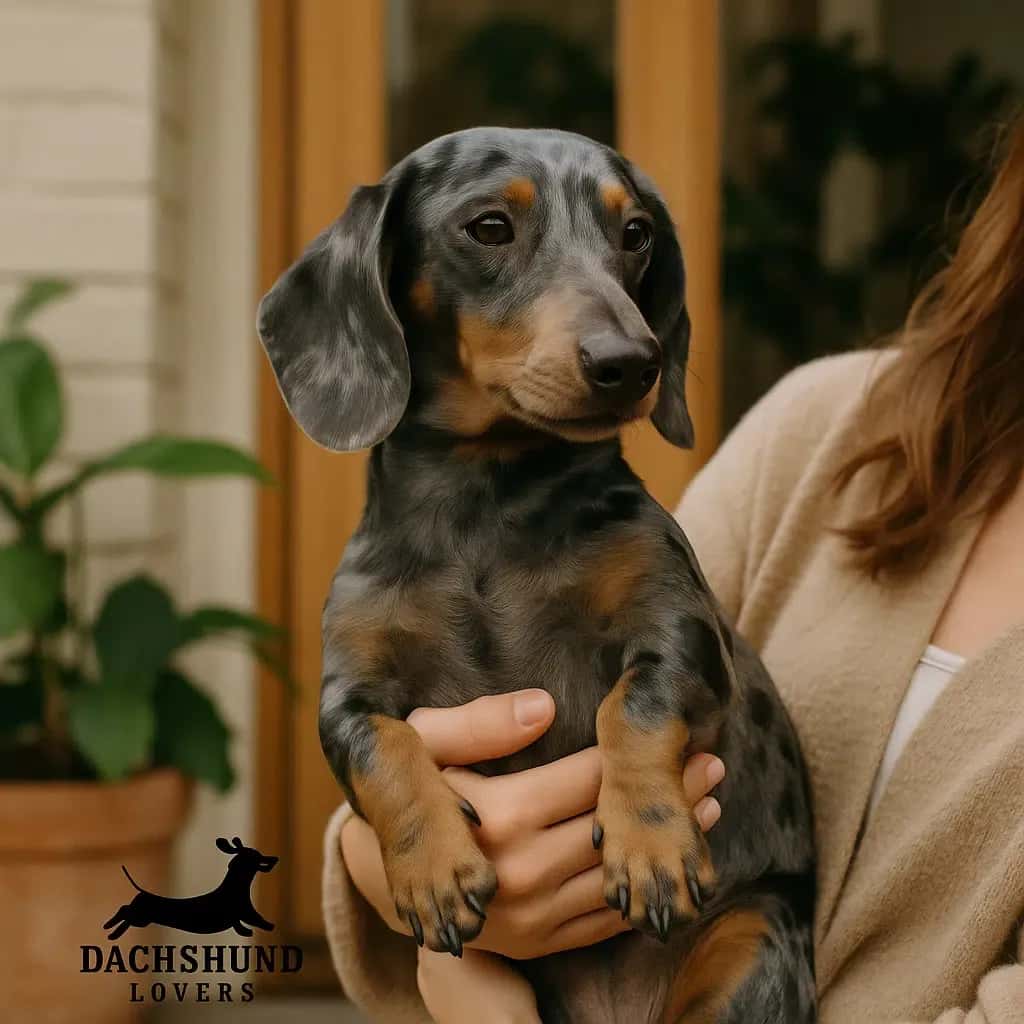
A blue dapple dachshund is essentially a work of genetic artistry. Their coat starts with a blue base—which in dachshund language means a diluted black that appears as soft grey or steel. Over that, the merle (or dapple) gene lays down irregular patches of lighter coloring: cream, silver, or even pale tan.
The result? A swirled, speckled pattern that’s never the same twice. Some look like they’ve been dusted with ash and stardust. Others have larger marbled sections, almost like they’ve stepped out of a charcoal sketchbook.
It’s not just aesthetic, though. The genes behind this coat come with both beauty and responsibility—particularly when it comes to ensuring your dachshund isn’t the result of risky breeding (we’ll get to that).

Are Blue Dapple Dachshunds Rare?
Yes—and it’s more than just Instagram rarity. The blue dapple coat requires two specific genetic factors:
- The recessive dilution gene (to create the blue base), and
- The dominant merle gene (to overlay the dapple pattern).
Most dachshunds have neither or only one of these. So when both align in the same puppy? You’ve got something truly unique.
That said, rarity shouldn’t be the main reason you fall in love. What matters is understanding their health needs, temperament, and ensuring their breeder made choices rooted in ethics—not just aesthetics.
Want to dive deeper into the blue base? Explore our guide to the blue dachshund for a breakdown on color dilution and why it matters.
Blue Dapple vs. Blue Merle Dachshund
This part trips people up all the time.
Here’s the short version:
Dapple = Merle. Same gene. Different word.
“Merle” is commonly used across breeds like collies, border collies, or Aussies. In dachshund circles, we say “dapple.” So when you hear “blue merle,” it’s simply another way of saying “blue dapple.”
The terminology might vary, but the risk factors and care requirements remain the same. What you really want to avoid is a double dapple—a pup who inherits the merle gene from both parents. As lovely as some may look, double dapples face a much higher risk of blindness, deafness, and other birth defects.
Ellie’s rule: Ask about the parents. Always.
Coat Types & Appearance
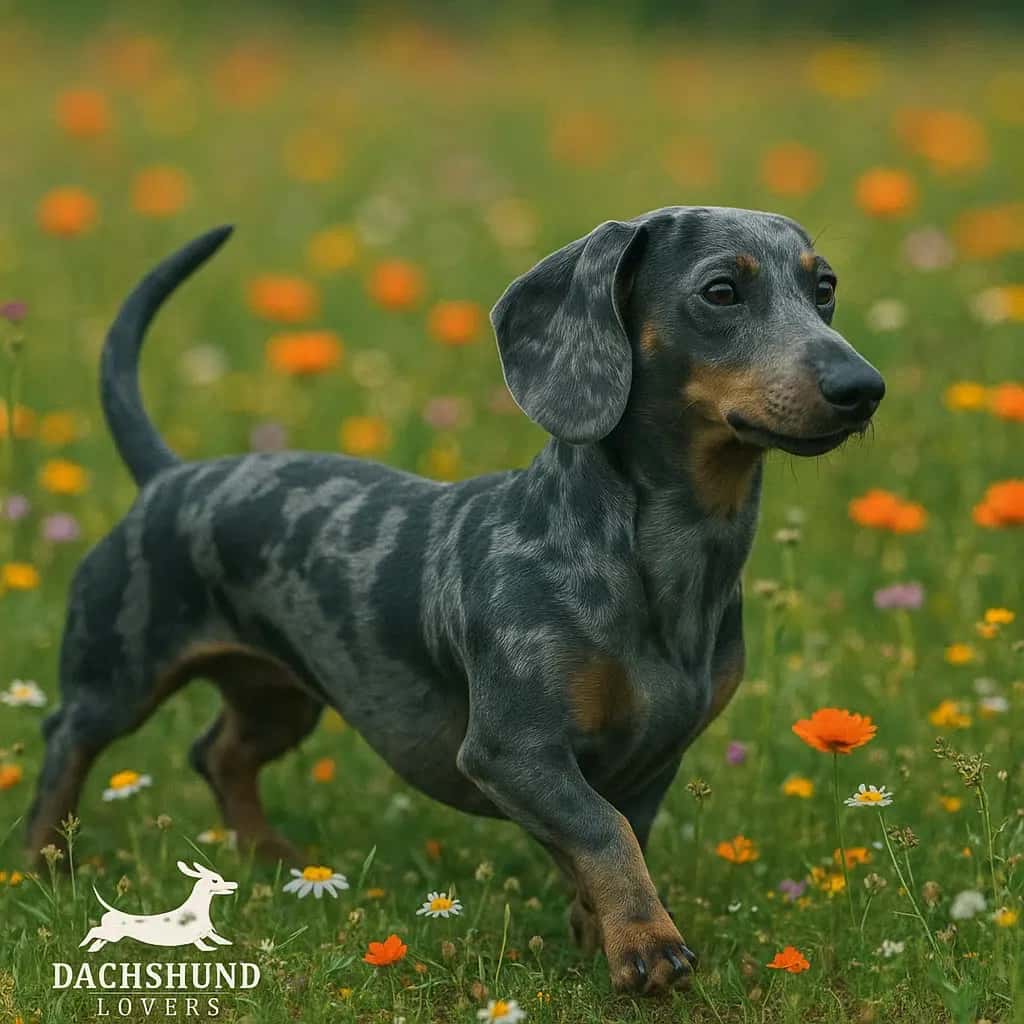
Blue dapple dachshunds come in all three coat types, and the pattern expresses itself differently on each.
• Smooth Coat
Clean, short, and glossy. The dapple pattern shows up most clearly here—think ink swirls on polished stone. It’s also the lowest maintenance in terms of grooming.
• Long-Haired
Dreamy and soft. The merle pattern diffuses into flowing strokes that look almost like watercolors. Long-haired blue dapples often stop people in their tracks—especially if they’ve got contrasting blue eyes.
• Wire-Haired
Less common, but full of character. The dapple pattern appears slightly rugged or speckled, giving them a scruffier, fox-like look. A blue dapple wire-haired feels like a little forest creature crossed with a storybook painting.
The Genetics Behind the Color
Let’s demystify the science—without going full textbook.
- The blue coat comes from a recessive dilution gene. Both parents must carry it to produce a blue pup.
- The dapple pattern is caused by the merle gene, which is dominant. Only one parent needs to pass it on.
That’s how you get a blue dapple—a combination of recessive dilution and dominant merle.
But if both parents are dapple, the pup can inherit two copies of the merle gene, which results in a double dapple—and that’s where the risks appear.
Double dapples may be born with:
- Missing eyes or abnormally small eyes (microphthalmia)
- Full or partial deafness
- Neurological issues
- Increased vet costs and care needs for life
It’s why ethical breeding matters more than ever when it comes to dapples.
Personality Traits
Underneath the swirls and sparkle is a classic doxie: bold, clever, and just the right amount of stubborn.
Most blue dapples I’ve met—including Pebble—have an air of calm curiosity. They’re alert but not frantic, engaged but never overwhelming.
Here’s what to expect:
- Loyalty: They tend to bond deeply with their humans.
- Playfulness: Even older dogs have bursts of zoomies.
- Stubborn streaks: It’s part of the charm (and the training challenge).
- Sensitivity: Some blue dapples are more noise-averse or reactive to change—this may be linked to vision or hearing differences.
They’re thinkers. Observers. And occasionally dramatic nap specialists who act like royalty when you try to move them off your pillow.
Grooming & Skin Care Tips
Grooming a blue dapple dachshund isn’t difficult—but it does require thoughtfulness, especially because of the risk of Color Dilution Alopecia (CDA).
This inherited condition affects diluted coats (like blue) and can lead to:
- Thinning hair
- Itchy or flaky skin
- Bald patches, especially along the spine or ears
General grooming tips:
- Use soft brushes or grooming gloves to avoid irritating the skin
- Stick with gentle, natural shampoos—look for oatmeal, aloe, or coconut oil
- Don’t over-bathe; every 4–6 weeks is plenty
- Check for dry patches or irritation weekly
- Keep nails short to protect their back and posture
- Brush their teeth 2–3 times a week—dachshunds are prone to dental issues
Ellie’s pick: A once-weekly full-body check during cuddle time. It’s how I spotted Maple’s first dry patch—and made our vet proud.
Health Considerations
Like all dachshunds, blue dapples are predisposed to a few breed-specific concerns.
Key health watch-outs:
- Color Dilution Alopecia (CDA): As above, especially in smooth and long-haired blues
- Intervertebral Disc Disease (IVDD): Due to their long spine and short legs
- Patellar Luxation: A kneecap that slips out of place—watch for skipping steps
- Obesity: A very common issue in doxies that puts pressure on the spine
- Dental disease: Tight jaws = more crowded teeth = tartar risk
Preventive tips:
- Use dog ramps for beds and couches
- Avoid stairs where possible
- Stick to a healthy weight with portioned meals
- Don’t skip annual vet visits—especially eye and hearing checks
What to Know Before Adopting
A blue dapple dachshund might seem like the dream—but before you go all in, make sure you’re ready for the responsibility that comes with the coat.
Ask your breeder:
- Is the puppy not a double dapple? (Ask to see the parents or DNA test results)
- Are the parents health-tested?
- Is there a contract or health guarantee?
- Do they understand and openly discuss CDA?
Red flags:
- “Rare blue dapple” being used as a marketing gimmick
- No mention of health risks
- No vet references or photos of the parents
- Puppies raised in isolated or kennel conditions
You can also consider rescue or rehoming. Some blue dapples are surrendered due to care needs or life changes, and they deserve a second chance. Local dachshund rescue groups often have dapple beauties looking for quiet homes.
FAQs
More From This Series:
Authored by
Ellie
Ellie is a lifelong dachshund lover and the proud human of Maple, a long-haired brown doxie with a regal side-eye. While not a vet, Ellie brings honest, researched, and experience-based insights into every article she writes for the Dachshund Lovers community.
Read moreEllie is a lifelong dachshund lover and the proud human of Maple, a long-haired brown doxie with a regal side-eye. While not a vet, Ellie brings honest, researched, and experience-based insights into every article she writes for the Dachshund Lovers community.
Read moreThere are no comments yet
Leave a comment