Why Are Dachshunds So Long
Why Are Dachshunds So Long
From hunting tunnels to couch cuddles, here’s why dachshunds have that iconic long shape, and what it reveals about their past.
James
Posted on October 31, 2025.
Updated on July 12, 2026.
Table of Contents
- -The Back That Launched a Thousand Questions
- 1.Key Takeaways on Why Dachshunds Are So Long
- 2.Built for Burrows: A Body Designed to Hunt
- 3.Chondrodysplasia: The Gene Behind the Shape
- 4.How Their Shape Affects Daily Life
- •1. Furniture is a hazard.
- •2. Walks need moderation, not marathons.
- •3. Harnesses are non-negotiable.
- •4. Their bodies affect how they play.
- •5. Weight gain hits different.
- 5.The Modern Impact: From Badger Dens to Sofa Cushions
- •Burrowing never went away.
- •They’re alert — and loud.
- •They need jobs — or they’ll make one.
- 6.A Breed That Stretched the Standard
- •A globally iconic silhouette
- •Standardized — but never typical
- 7.The Risks of Going Long
- •What makes them so prone to it?
- •What prevention looks like in real life
- •Other issues to keep in mind
- -More from This Series
- -Disclaimer
Share

The Back That Launched a Thousand Questions
I remember the first time someone asked it — a stranger at the café near Wanda Beach. Harvey had just wriggled under a chair with his usual flair, and the woman laughed and said, “That’s a lot of dog… horizontally.” Not untrue.
It’s one of those features that stops people in their tracks — the long, low silhouette, the slightly exaggerated waddle, the way their body seems to stretch well past where you’d expect it to end. If you’re new to the breed, it feels almost comical. But once you’ve lived with a dachshund, you stop seeing it as strange — and start seeing it as purposeful.
Because it is. Dachshunds aren’t long by accident. They’re long by design.
That long body — paired with those short, stout legs — is part of one of the most specific functional builds in the canine world. It’s not just about cuteness or quirk. It’s about what these dogs were bred to do, what environments they were built for, and how their unique form influences everything from posture to play style.
Even the American Kennel Club notes that “the breed’s long, low body was developed to help them pursue prey into tight tunnels” — a form shaped by function, honed by centuries of selective breeding. Source: AKC – Dachshund Breed History
But the question remains: why exactly are dachshunds so long?
That’s what we’re unpacking. And like most things with doxies, the answer is layered — part history, part evolution, part modern mystery. So if you’ve ever looked at your dachshund and thought, “How did this sausage-shaped situation happen?” you’re in the right place.
Let’s stretch into it.
Key Takeaways on Why Dachshunds Are So Long
Fact | Why It Matters |
|---|---|
Dachshunds were bred to be long for a reason. | Their elongated frame allowed them to enter narrow tunnels and flush out prey like badgers. |
The word “dachshund” means “badger dog” in German. | It reflects their original purpose as scent hounds built for underground hunting. |
Their short legs come from chondrodysplasia — a type of dwarfism. | This condition gives them their iconic low profile, but also impacts joint and spine health. |
That long back comes with risk — especially IVDD. | Intervertebral Disc Disease affects 1 in 4 dachshunds. Preventive care (like ramps and no stairs) is essential. |
Despite their shape, dachshunds are agile and powerful in tight spaces. | Their build helped them thrive as hunters — proof that form followed function. |
Built for Burrows: A Body Designed to Hunt

When you live with a dachshund, you see flashes of their original job in the most unlikely places. Harvey doesn’t just nose around the couch cushions — he commits to it. Head buried, back legs kicking, tail straight out like an antenna. He’s not just searching for crumbs. He’s reenacting centuries of instinct.
That instinct — to burrow, to tunnel, to chase — explains exactly why dachshunds are shaped the way they are.
Originally developed in 15th-century Germany, dachshunds were bred to track and hunt burrowing animals like badgers, rabbits, and foxes. Hunters needed a dog small enough to enter tight underground tunnels, but tough enough to hold its own once inside. Enter the dachshund: long in body, short in leg, loud in bark.
Their physical traits weren’t ornamental — they were essential:
- Elongated torso: Allowed them to maneuver through winding burrows and tight spaces underground.
- Short, powerful legs: Helped them dig quickly and maintain a low profile.
- Deep chest and strong lungs: Gave them the stamina to bark and breathe while underground for long stretches.
- Loose skin and curved tail: Reduced snagging and gave handlers something to grab if a dog got stuck.
- Loud, deep bark: Carried well above ground, helping hunters locate them during a chase.
These weren’t lapdogs. They were working dogs — rugged, fearless, and physically built for a very specific task.
Modern dachshunds still carry those traits, even if their “burrows” now involve under-bed storage or the back of the couch. The instincts remain. So does the design.
The challenge now — especially for owners — is honoring that design while protecting their health. Because what made dachshunds ideal badger hunters can, without care, lead to back problems, anxiety, and frustration in a domestic setting.
Chondrodysplasia: The Gene Behind the Shape
You don’t need a genetics degree to spot a dachshund. The body shape is unmistakable — long, low, and completely unapologetic. But behind that silhouette is a very specific genetic quirk: chondrodysplasia.
It’s a type of dwarfism — and it’s the reason dachshunds look the way they do.
Chondrodysplasia (sometimes called “CDPA”) affects the growth plates in a dog’s limbs. Instead of bones growing to their usual proportions, they stay short and slightly curved. The result? Those signature squat legs. Combine that with a full-length spine and you’ve got the dachshund — or, as some researchers put it, “disproportionately elongated.”
This trait isn’t unique to dachshunds. It also shows up in basset hounds, corgis, and some terriers. But dachshunds lean into it more than most — both literally and genetically.
In fact, a 2009 study published in Science confirmed that chondrodysplasia in dog breeds is linked to an extra copy of a growth-regulating gene called FGF4 — found inserted on chromosome 18. Source: Science Journal – FGF4 Retrogene and Chondrodysplasia in Domestic Dogs
So, this isn’t a random trait. It’s a selective mutation — one bred into the dachshund on purpose to help them do their job.
But here’s where it gets real.
The same gene that gave dachshunds their underground superpower is also what makes them prone to spinal issues — especially IVDD (Intervertebral Disc Disease). When your spine is stretched out over short legs, and you’re jumping on and off furniture daily, there’s a cost.
We’ve written about this more in our article on Guinness World Record Dachshunds — where the longest documented doxie lived a bold, back-protecting lifestyle thanks to early intervention, ramps, and strict no-stair rules.
So while chondrodysplasia might sound clinical, it’s one of the most defining (and misunderstood) parts of dachshund life. It’s what gives them their edge — and what requires our care.
How Their Shape Affects Daily Life
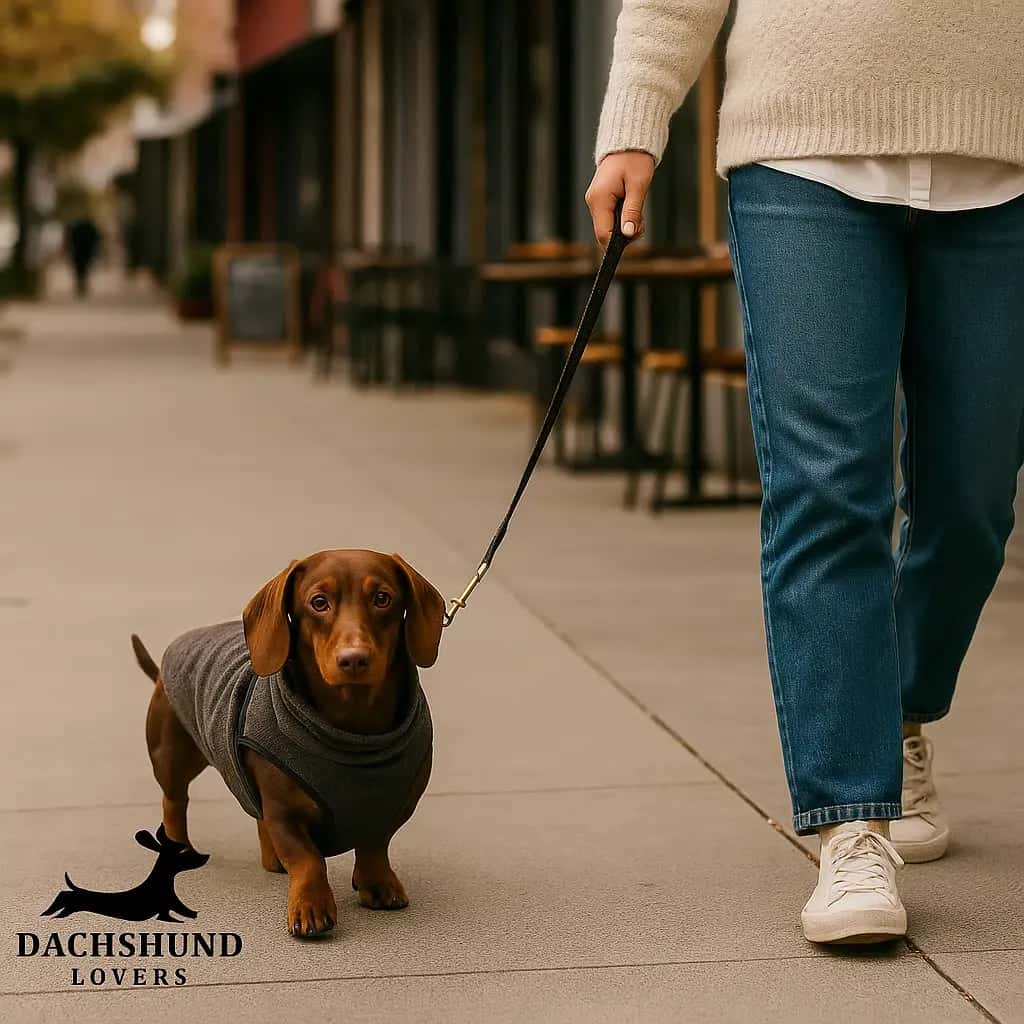
If you’ve ever watched a dachshund try to jump onto a couch, you’ve seen the conflict: confidence meets physics. Harvey thinks he’s a kelpie — until he mistimes a leap and ends up wedged between the ottoman and rug. Every time.
Living with a long-backed, short-legged dog isn’t just about aesthetics — it changes the way you do everyday life. And if you’re not careful, it can also change the health trajectory of your dog.
Here’s how the dachshund shape shows up in daily living:
1. Furniture is a hazard.
That spine wasn’t designed for impact. Every time a dachshund jumps down from a height — bed, couch, stairs — they’re absorbing shock through a body that’s structurally vulnerable. The more they jump, the higher the risk of IVDD or disc herniation.
Small change, big payoff: We installed a ramp for the couch when Harvey was six months old. He didn’t love it at first — but now it’s just part of the room. No jumping, no guesswork, no regrets.
2. Walks need moderation, not marathons.
Dachshunds love a trot, but long backs plus short strides mean fatigue sets in earlier than you’d expect. Add heat or hills and things get risky fast. They’ll keep going for you, but they’ll feel it later.
Rule of thumb: multiple short walks > one long one. And if it’s hot? Stick to grass and shade. Long dogs overheat fast.
3. Harnesses are non-negotiable.
Collars might look cute, but they put unnecessary strain on a dachshund’s neck and back. A proper no-pull harness that distributes weight across the chest is essential — especially when walking a young, enthusiastic pup who doesn’t yet understand pacing.
4. Their bodies affect how they play.
You’ll notice dachshunds rarely play the same way as labradors or spaniels. They burrow under blankets. They chase low. They pivot fast. Tug-of-war? Only if they’re in control of the angle. Their play reflects their build — close to the ground, agile, but with built-in fragility.
5. Weight gain hits different.
Excess weight doesn’t just make a dachshund pudgy — it puts added pressure on a spine that’s already doing more than its fair share. Keeping them lean isn’t about vanity. It’s about protection.
According to the Royal Veterinary College, dachshunds are among the top five breeds most prone to IVDD — and weight is one of the modifiable risk factors. Source: RVC – IVDD in Dachshunds
The Modern Impact: From Badger Dens to Sofa Cushions
It’s a long way from the forests of 16th-century Germany to a living room in the Sutherland Shire. But the dachshund made the journey — and brought every inch of its original design with it.
What’s fascinating (and occasionally frustrating) is how little that design has changed — even though their lifestyle has.
Today, most dachshunds aren’t working dogs. They’re companions. Apartment dwellers. Blanket hogs. But their instincts and structure remain firmly intact. And that gap — between what their bodies were built for and what modern life looks like — creates a unique tension for owners.
It’s also what makes living with a dachshund so specific. If you try to treat them like any other small dog, you’ll miss what’s really going on.
Burrowing never went away.
You can take the dachshund out of the tunnel, but you can’t take the tunnel out of the dachshund. Harvey doesn’t dig in dirt — he digs in bedding. Every night, without fail. He’ll root around in a doona like he’s trying to resurface in Berlin. I’ve seen him spend ten full minutes rearranging one throw blanket.
Burrowing is more than quirky behavior — it’s an outlet. It’s part of who they are. It’s why products like snuffle mats or soft-sided dens aren’t gimmicks; they’re functional. They let the dog do something with that buried instinct. Without it, they’ll find their own substitute — usually something inconvenient.
They’re alert — and loud.
That famously deep bark? It wasn’t just for show. It was bred to help hunters hear their dog underground. It had to carry through soil, roots, and meters of tunnel. That same vocal design now gets applied to delivery drivers and falling leaves.
Modern owners often mistake this as “bad behavior.” It’s not. It’s legacy design. A barky dachshund isn’t broken — they’re just misunderstood. They’ve got radar-level hearing and a bark designed for broadcast. The key isn’t trying to stop it, but redirecting it.
Training cues like “thank you” or quiet praise when they stop barking go further than “no” ever will. And more importantly, they need other things to focus on. Mental stimulation isn’t optional — it’s management.
They need jobs — or they’ll make one.
Without the physical and mental work of hunting, dachshunds get bored. And a bored dachshund isn’t passive. They get creative.
Chewed table legs. Excavated garden beds. Barking competitions with invisible enemies. It’s not disobedience — it’s an unemployed hunter trying to self-direct. This is why a tired dachshund is a good dachshund.
You don’t need to simulate a badger chase, but you do need to provide outlets. That could mean:
- Nose work games in the backyard
- Hide-and-seek with treats
- Short obedience sessions
- Puzzles and feeders that make them “work” for a reward
One of the most underrated tips I give new owners is this: treat your dachshund like they still have a job. Just make that job something modern. Something they can win. It’s not about tiring them out. It’s about giving that ancient operating system something to do.
A Breed That Stretched the Standard
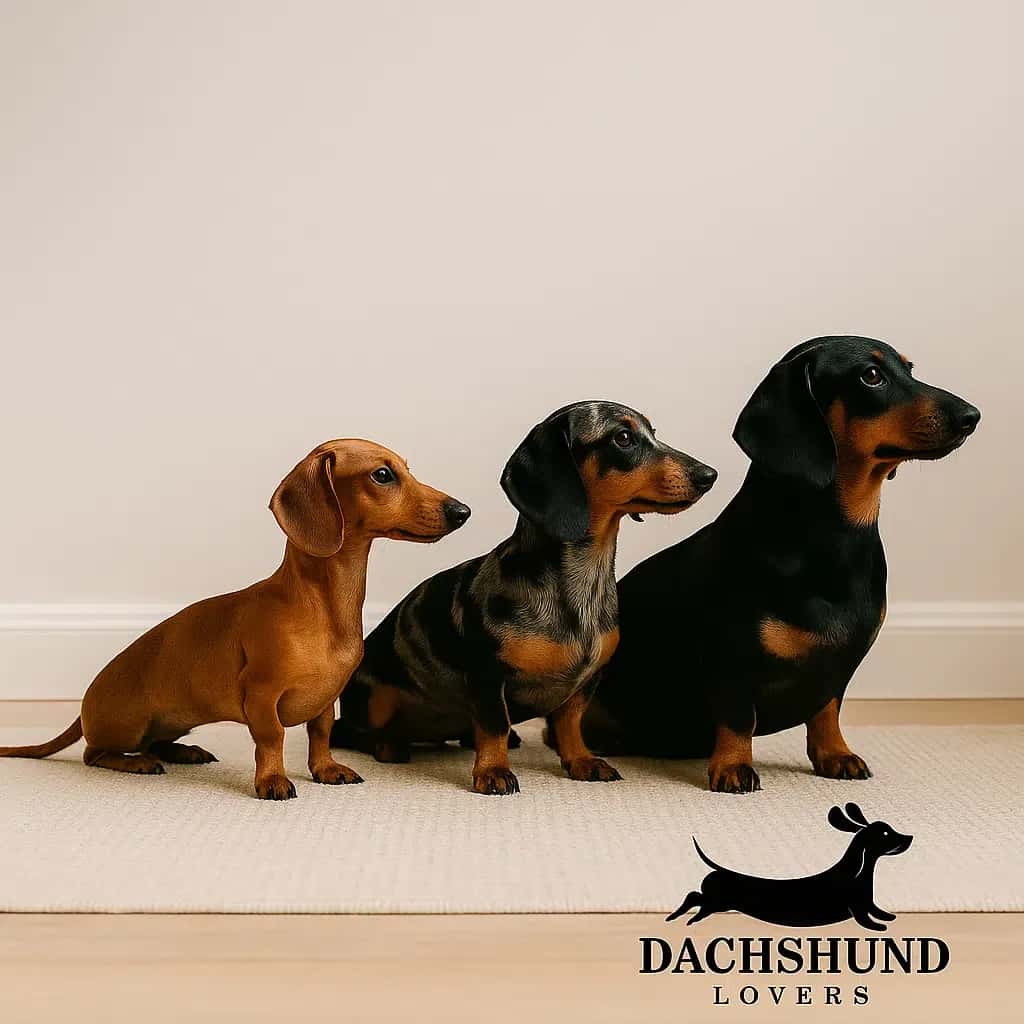
When you look at a dachshund, you’re not just looking at a dog — you’re looking at a breed that disrupted the blueprint.
Most dog breeds were developed within fairly predictable lines: hunting, herding, guarding, companionship. They followed proportional rules. Symmetry. Functionality.
Then came the dachshund — with a body that looked like someone zoomed out on the torso and left the legs behind.
And yet, against all odds, it worked. So well, in fact, that the dachshund became one of the most recognisable and beloved dog breeds on the planet — not in spite of their shape, but because of it.
A globally iconic silhouette
That long-backed profile isn’t just familiar — it’s iconic. It’s been sketched, parodied, sculpted, and printed onto everything from tote bags to tea towels. You could argue no dog has been more commodified in silhouette form. (The only competition might be the Frenchie.)
But cultural icon status didn’t just happen. It was earned.
Dachshunds have appeared in everything from war-time propaganda posters to fashion editorials. They’ve been muses for artists like Picasso and beloved pets of figures like Andy Warhol. Even Queen Victoria owned them — helping cement their place in history.
We break this down more in our roundup of Famous Dachshunds in History — where names like Lump, Archie, and Waldi (the first Olympic mascot) make a strong case for the breed’s cross-era appeal.
Standardized — but never typical
In 1888, the American Kennel Club officially recognised the dachshund breed. Over time, standards developed for size (mini vs standard), coat type (smooth, long, wire), and color.
But what’s always remained consistent is the body: long, low, and agile.
Interestingly, the dachshund’s physical proportions have become more exaggerated over the decades. Older breed illustrations show a sturdier, more balanced shape. Today’s dachshunds — especially in show lines — are longer, lower, and more curved in chest and spine. It’s a shift that’s sparked debate among breeders and veterinarians alike, with some arguing for a return to the more “functional” proportions of the past.
It’s a reminder that even iconic forms are shaped by more than just genetics — they’re shaped by culture, commerce, and collective taste.
The Risks of Going Long
There’s a reason most dog breeds don’t look like dachshunds.
When you stretch a spine that far over such short support, you get something unique — and something vulnerable. That long-backed design, while brilliant in a hunting tunnel, comes with structural compromises in modern life. The most well-known? IVDD — Intervertebral Disc Disease.
It’s a condition where the discs between the vertebrae begin to bulge, slip, or rupture. In dachshunds, it’s alarmingly common — with studies suggesting that 1 in 4 will experience some form of IVDD in their lifetime.
What makes them so prone to it?
A few things:
- Chondrodysplasia, the same gene responsible for their short legs, affects cartilage development — including spinal discs.
- Their long torsos increase the mechanical stress on the vertebral column.
- Everyday things — like stairs, jumping on/off furniture, and rough play — can add up to chronic strain or acute injury.
When it happens, it’s not always subtle. IVDD can cause anything from stiffness and reluctance to walk… to full-blown paralysis. In some cases, surgery is required. In others, crate rest and rehab can help. But recovery is never guaranteed.
What prevention looks like in real life
This is where ownership shifts from cute Instagram stories to considered lifestyle design.
In our house, prevention is a daily practice. Harvey doesn’t do stairs. We use a ramp for the couch. He wears a harness on walks — never a collar. We lift him in and out of the car. We keep his weight lean. We don’t skip this stuff. Not once.
It’s not fear — it’s strategy. Because the reality is: the longer the dog, the more support they need.
Other issues to keep in mind
IVDD gets the spotlight, but long-bodied dogs can also face:
- Hip and knee strain, especially in overweight dachshunds
- Arthritis from years of subtle repetitive impact
- Core weakness, which affects mobility and balance
What helps?
- Controlled exercise (short walks, gentle hill climbs)
- Puzzle feeding (engagement without high-impact movement)
- Soft bedding that supports the spine without sinking
- And if you’re unsure? A vet check. Early.
Because while you can’t change a dachshund’s shape — you can change how you support it.
FAQs About Why Dachshunds Are So Long
More from This Series
Here are more bite-sized deep dives and culture-forward curiosities from our Fun Facts & Trivia collection:
- When is National Dachshund Day?
Why the longest day of the year is the perfect time to celebrate the longest dog. - Movies About Dachshunds
From indie cameos to animated stars — the doxie’s subtle takeover of film. - Famous Dachshunds
Real dachshunds who’ve inspired artists, walked with royalty, and even shaped Olympic history. - Dachshund World War II
The role of dachshunds in wartime propaganda — and how they were rebranded during conflict. - World’s Longest Dachshund
Fact or folklore? A look into the longest dachshunds ever recorded. - Funny Dachshund Sayings
Short legs, long wit — timeless expressions only doxie people will understand. - Dachshund Jokes
A gently ridiculous collection of jokes you’ll probably end up sharing with your vet. - Dachshund Names
200+ dachshund-approved names — clever, classic, and oddly specific. - Dachshund Meme
One place. Every meme. No apologies.
Authored by
James
James is the founder of Dachshund Lovers and the proud human of Harvey, a mini dapple with a big personality. He writes to empower and connect the dachshund community, blending founder insights with honest, experience-based stories about life with this incredible and special breed. James brings candid, experience-backed opinions to the community and always focused on fewer, better products and ideas that genuinely improve life for dachshunds and their people.
Read moreJames is the founder of Dachshund Lovers and the proud human of Harvey, a mini dapple with a big personality. He writes to empower and connect the dachshund community, blending founder insights with honest, experience-based stories about life with this incredible and special breed. James brings candid, experience-backed opinions to the community and always focused on fewer, better products and ideas that genuinely improve life for dachshunds and their people.
Read moreDisclaimer
This content is for informational purposes only and should not be considered veterinary advice. Always consult with a licensed veterinarian regarding your dog’s health and wellbeing.
There are no comments yet
Leave a comment