Best Dog Food for Miniature Dachshunds vs Standard Dachshunds
Best Dog Food for Miniature Dachshunds vs Standard Dachshunds
What your mini dachshund eats shapes everything their energy, mood, and health. Here's a feeding guide rooted in real routines, not trends. Learn more.
James
Posted on September 19, 2025.
Updated on July 21, 2026.
Table of Contents
- 1.Key Takeaways on Mini Dachshund Food
- 2.Nutritional Differences Between Miniature and Standard Dachshunds
- •1. Size Impacts Caloric Needs
- •2. Portion Size Is More Sensitive in Minis
- •3. Fat and Protein Ratios May Need Adjusting
- •4. Digestive Sensitivities Vary
- •5. Activity Level Should Drive Feeding Decisions
- 3.How Much Food Should a Mini Dachshund Eat?
- •General Feeding Guidelines for Mini Dachshunds
- •Meal Frequency for Minis
- •Visual + Tactile Feeding Feedback
- 4.Best Commercial Dog Foods for Miniature vs Standard Dachshunds
- •What to Look for (No Matter the Size)
- •Best Dog Food for Miniature Dachshunds
- •Best Dog Food for Standard Dachshunds
- •Our Real Rotation
- •Mini Dachshunds: More Sensitive to Meal Timing
- •Standard Dachshunds: Slightly More Meal Flexibility
- •Feeding Schedule by Life Stage (Both Sizes)
- •How We Time Harvey’s Meals
- 5.Transitioning Dog Food for Dachshunds
- 6.Common Feeding Mistakes for Mini and Standard Dachshunds
- •1. Using the Same Feeding Chart for Minis and Standards
- •2. Overfeeding Based on Cup Size Instead of Calories
- •3. Feeding “Diet” Kibble That's High in Fillers
- •4. Skipping Joint-Supportive Nutrients
- •5. Not Adjusting for Life Stage or Activity Changes
- -More from This Series
- -Disclaimer
Share

Choosing the right mini dachshund food shapes everything about their energy, mood, and health. This guide is for mini dachshund owners who want to understand the best feeding practices, nutritional needs, and food options for their dogs. We’ll cover feeding, nutrition, and food recommendations specifically tailored for Miniature Dachshunds, so you can confidently support your dog’s health at every stage.
Adult Miniature Dachshunds typically need 3/4 to 1 cup of high-quality food daily, divided into two meals. Daily portions for most adult Miniature Dachshunds require about 300–400 calories, which is split into two meals to prevent overeating. Miniature Dachshunds thrive on high-quality, protein-rich diets that are low in fillers, fat, and carbohydrates to maintain a lean weight, which is critical for preventing spinal issues (IVDD). High-quality kibble for Miniature Dachshunds should be small-sized, nutrient-dense, with real meat as the first ingredient, avoiding fillers like corn, soy, or artificial colors.
The first time we overfed Harvey, it wasn’t because we didn’t care. It was because we trusted the bag.
“Feed ¾ cup daily for small breeds.” Simple enough — except Harvey’s a miniature dachshund, not just a small dog. He weighs just over 5 kg, prefers naps to jogs, and will happily eat until his belly brushes the floor. Within a few weeks, he was visibly heavier. Slower. Less playful. And the food that was supposed to “support healthy weight” had become part of the problem.
Mini dachshunds have a unique body shape, including their long backs and stubby legs, which means they require precise nutrition to support their bone, joint, and overall health.
That’s when we learned: feeding a mini is not the same as feeding a standard. And neither should be fed based on generic dog charts. For mini dachshunds, precise nutrition is essential to meet their specific needs and help prevent health issues related to their distinctive build. Providing balanced nutrition—ensuring their food meets established nutritional standards and delivers essential nutrients in the right proportions—is key to supporting their overall health and development.
According to VCA Animal Hospitals, “Small breed dogs like dachshunds are particularly prone to obesity, and even slight overfeeding can result in weight gain that strains their spine and joints.” Dachshunds thrive on a diet high in meat-based protein and low in carbohydrates to help maintain a healthy weight and prevent obesity-related issues.
It’s not just about size — it’s about:
- How many calories per day each type needs
- What ingredients they actually digest well
- How active they are (or aren’t)
- And how much food should a mini dachshund eat if you want to avoid weight gain and support joint and back health
Over the past two years, we’ve rotated through:
- Premium kibble brands (some great, some gimmicky)
- Vet-suggested portioning plans
- Lightly cooked meals portioned to the gram
- And even tested a few subscription services that claimed to “do the math for us”
Some worked. Some didn’t. A few made Harvey gassy or disinterested. One nearly caused a spike in his weight that took 8 weeks to reverse.
This guide shares (and expands on what we cover in our broader piece on feeding a mini dachshund):
- Exactly how we now feed Harvey based on weight, age, and activity
- The real differences between mini dachshund food and standard dachshund food
- The commercial brands that passed our “Harvey test”
- And how to read food labels like someone who’s watched their dachshund gain 500g from too many “healthy” treats
We still buy from PetO in Taren Point when we need to stock up — but now we go in with a plan, not just a hope and a cute bag design.
Key Takeaways on Mini Dachshund Food
Topic | Summary |
|---|---|
Mini vs. Standard Needs Differ | Mini dachshunds often need 30–50% fewer calories than standards — even if active. |
Feeding by Weight, Not Bag Labels | Generic feeding charts often overfeed minis and underfeed active standards. |
Ingredient Quality > Marketing Terms | Look for named proteins, low fat, and minimal fillers — avoid “diet” formulas with junk carbs. |
Feeding Schedule Matters | Both minis and standards benefit from 2-meal schedules to support digestion and prevent overeating. Adjust food type and portion size as your dachshund moves through different life stages (puppy, adult, senior). |
Monitor Weight Monthly | Even a 0.5 kg gain in a mini is significant — adjust portions proactively, especially as your dog's life stage changes. |

Nutritional Differences Between Miniature and Standard Dachshunds
If you’re looking for a bigger-picture view of dachshund wellness beyond food alone, our hub on dachshund health and nutrition foundations pulls together everything we’ve learned about keeping these dogs thriving long term.
Miniature and standard dachshunds may share the same basic shape — long body, short legs, always hungry — but nutritionally, they live in different worlds. Because of their unique build, especially the long backbone and short legs, dachshunds require an appropriate combination of nutrients to maintain bone and joint health as their delicate spine develops, particularly during puppyhood.
We learned this quickly with Harvey. He’s 5.3 kg and on the lazier side of life. When we followed a popular kibble’s chart for “small breed dogs,” we ended up feeding him nearly 30% too much. His weight crept up, his energy dipped, and his poop — well, it told the whole story.
Here’s what matters when feeding mini vs. standard dachshunds: both need nutrition that supports healthy joints and helps maintain bone integrity, especially as dachshund puppies grow and develop.
Side note: you can always start with our miniature dachshund food calculator.
1. Size Impacts Caloric Needs
This seems obvious — but it’s more extreme than you think. Minis don’t just eat less — they eat far less than most food companies suggest.
Dachshund Type | Avg. Weight | Daily Calories (Maintenance) |
|---|---|---|
Miniature | 4.5–5.5 kg (10–12 lbs) | 200–300 kcal/day |
Standard | 8–14 kg (17–30 lbs) | 350–600 kcal/day |
That means a standard dachshund may eat nearly twice the calories of a mini — even though their bodies aren’t twice as big.
2. Portion Size Is More Sensitive in Minis
A small overfeed in a mini dachshund adds up fast. Just an extra ¼ cup of kibble or two dense treats can equal 15–20% overfeeding — which can cause weight gain, soft stools, and higher IVDD risk.
This is why we weigh Harvey’s meals to the gram. Measuring cups left too much room for error.
3. Fat and Protein Ratios May Need Adjusting
Minis often thrive on slightly lower fat formulas, especially if they’re not highly active. Standards — particularly those who get regular exercise — can handle more calories from fat without tipping into weight gain.
Dachshund Type | Suggested Protein % | Suggested Fat % |
|---|---|---|
Miniature | 22–30% | 8–12% |
Standard | 25–32% | 10–15% |
Protein is an essential nutrient for muscle development and overall health. These ranges assume high-quality protein and highly digestible proteins, not filler-heavy kibble blends. Formulas that include both high-quality and highly digestible proteins help promote optimal nutrient absorption, healthy digestion, and better stool quality. High-quality protein for Miniature Dachshunds should be 18%-25%, using real meat like chicken, turkey, or fish as the first ingredient.
4. Digestive Sensitivities Vary
From personal experience, minis seem more sensitive to:
- High-fat diets
- Sudden food changes
- Low-fiber commercial food
- Rich toppers or multiple proteins in one meal
Maintaining digestive health is especially important for mini dachshunds, as their sensitive stomachs benefit from diets that support healthy digestion and promote optimal stool quality. Complex, digestible carbohydrates like sweet potatoes or brown rice should be preferred over fillers like corn or soy for better health.
Harvey does best on:
- A single protein source per meal
- A base of gently cooked food or limited-ingredient kibble
- Steamed pumpkin or green beans for fiber and satiety—choosing foods with precise fiber content and ingredients like dried plain beet pulp can further promote optimal stool quality and support digestive health
See our full Homemade Dog Food Guide for how we structure balanced, low-fat meals at home.
5. Activity Level Should Drive Feeding Decisions
Standard dachshunds typically have a bit more stamina — longer walks, more muscle mass — and therefore need more calories per gram of food.
Minis, especially seniors or couch-loving types like Harvey, burn fewer calories daily and require precise feeding to avoid creeping weight gain.
Energetic wiener dogs, known for their playful and lively nature, may require more calories to support their activity levels, but careful weight control is essential to maintain optimal health and prevent obesity.
Always adjust based on your dog’s current condition — not just their breed type.
If your mini is doing beach walks and enrichment games every day, they’ll need more food than a sedentary standard who sleeps 20 hours and patrols the backyard twice.
Here’s the next section, optimized for the secondary keyword “how much food should a mini dachshund eat” while keeping the tone grounded and practical:
How Much Food Should a Mini Dachshund Eat?
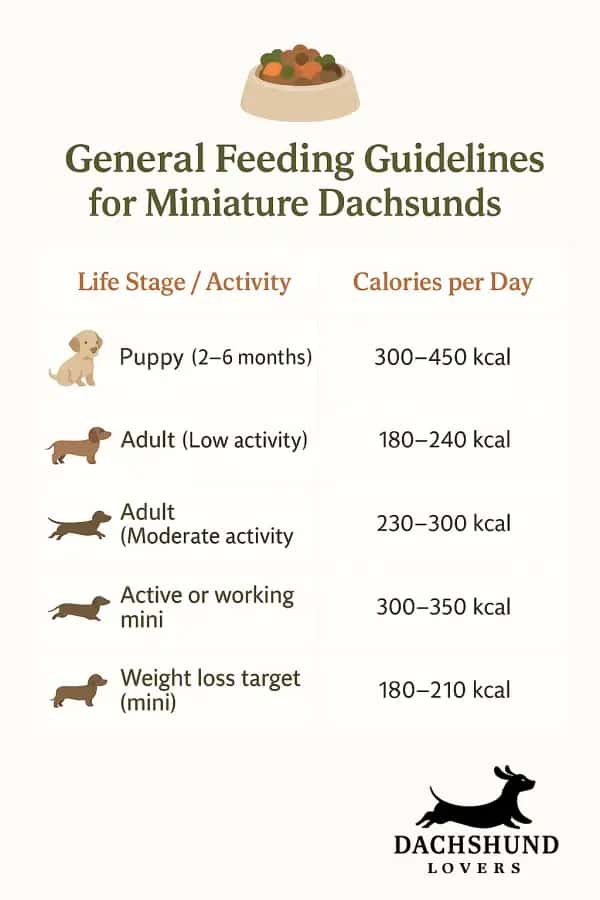
Short answer? Less than you think.
Long answer? It depends on your dog’s weight, age, activity level, health status, and the caloric density of the food you’re feeding. Caloric values on dog food labels are often listed on an as fed basis, which means the energy content includes the moisture in the food and reflects what your dog actually consumes.
When Harvey was 5.3 kg and moderately active, we calculated his needs at around 230–250 kcal/day. When we fed just 40–50 kcal more — even from “healthy” treats — his weight started creeping up within 2 weeks.
For miniature dachshunds, portion precision isn’t optional — it’s essential. If you’re feeding a puppy, look for the right growth formula to support healthy development, including immune system, bone, and joint health, and make sure you’re not repeating the common mistakes we break down in our deep dive on dachshund nutrition fundamentals.
General Feeding Guidelines for Mini Dachshunds
Life Stage / Activity | Calories per Day | Food Volume (Dry Food) | Notes |
|---|---|---|---|
Puppy (2–6 months) | 300–450 kcal | ¾ to 1¼ cups* | Split into 3 meals. For dachshund puppies, choose breed-specific dry dog food, such as Royal Canin Dachshund Puppy dry dog food, which is formulated to meet the nutritional needs of purebred Dachshunds from 8 weeks to 10 months old. This dry dog food contains an exclusive mix of antioxidants and vitamin E to support the developing immune system of puppies, and the kibble is designed with small-shaped pieces to make it easy for Dachshund puppies to pick up and chew. |
Adult (Low activity) | 180–240 kcal | ½ to ¾ cup | Ideal for seniors or homebody doxies |
Adult (Moderate activity) | 230–300 kcal | ¾ to 1 cup | Harvey’s current plan |
Active or working mini | 300–350 kcal | 1 – 1¼ cups | Add extra fat or protein carefully |
Weight loss target (mini) | 180–210 kcal | ~½ cup | Reduce calories, not nutrients |
*Assumes kibble at ~350 kcal per cup. Always check your brand’s label.
Want to be precise? Use this formula:
Target weight (kg) × 30 + 70 = daily kcal
For Harvey at 5.2 kg:
5.2 × 30 + 70 = 226 kcal/day
We measure every meal with a digital kitchen scale — and pre-portion weekly to avoid creeping overfeeding.
Meal Frequency for Minis
Miniature dachshunds do best with:
- 2 meals per day once over 6 months of age
- 3 meals per day if under 6 months or prone to blood sugar dips
Spreading meals reduces bloating risk, stabilizes energy, and makes portion control easier. Plus, it helps avoid excessive begging — something Harvey perfected early.
Visual + Tactile Feeding Feedback
Don’t just rely on numbers. Watch your dog.
- Can you feel their ribs with light pressure?
- Do they have a visible waist from above?
- Is their belly gently tucked when viewed from the side?
If not, they’re likely getting too much.
For more on how weight impacts back health, visit our Dachshund Weight Loss Guide
Now that you know how much to feed, let's look at the best commercial food options for mini and standard dachshunds.
Best Commercial Dog Foods for Miniature vs Standard Dachshunds
Choosing the right dog food for mini dachshunds involves considering their unique nutritional needs and preferences. We’ve tested over a dozen brands with Harvey — not because we love change, but because we were trying to solve a specific set of problems: soft stools, weight gain, lack of interest in food, and occasionally, excessive scratching after a new formula.
Choosing the best food for your mini dachshund is crucial—ideally, an exclusive breed specific diet that is uniquely formulated and tailor made nutrition created for dachshunds. These formulas are designed to provide precise nutrients and support the unique needs of the breed.
In our testing, we included a variety of commercial dog foods, including canned food, which is often a high-protein, grain-free option that can be used as a complete meal or as a supplement for mini dachshunds.
Through trial, error, and a lot of close label reading, we learned that dachshunds — both miniature and standard — need more from their food than the average “small breed” label promises. High-quality dog food should be rich in meat-based protein and low in carbohydrates for mini dachshunds.
TTheir food needs to support:
- Long-term joint health
- Stable, lean weight
- Sensitive digestion
- And for minis in particular — strict calorie control
- Plus, customized small shaped kibble designed for dachshunds makes it easier for them to pick up and chew their food.
A standard can usually tolerate slightly higher fat content and richer formulas if active. Minis? Not so much. One bad bag of food can lead to months of slow, corrective feeding just to get things back on track.
What to Look for (No Matter the Size)
These are our non-negotiables now when choosing any commercial food for Harvey:
- Named protein first (e.g., “chicken,” “lamb,” or “salmon” — not “poultry meal” or “meat derivatives”)
- Moderate fat content:
- 8–12% for minis
- 10–15% for standards
- No corn, soy, or vague fillers
- Added glucosamine + chondroitin (important for IVDD-prone spines)
- Small kibble size (to avoid gulping and reduce choking risk)
- Fiber content around 3–5% to support digestion
And importantly: around 350–400 kcal per cup — this lets us portion accurately without guessing.
Look for foods that feature an exclusive complex or exclusive mix of nutrients—such as vitamin E, niacin supplement, trace minerals, and mixed tocopherols—designed to provide immune system support and help your puppy’s developing immune system. These essential nutrients and antioxidants are often part of breed-specific formulas to promote overall health and resilience.
High-quality mini dachshund food formulas also commonly include natural flavors, chicken fat, vegetable oil, wheat gluten, brewers rice, and brown rice as part of a balanced ingredient profile to support energy, digestion, and healthy growth.
Best Dog Food for Miniature Dachshunds
These are the formulas we trust, have tested, and would recommend without hesitation for smaller doxies (4–6 kg range), with a special focus on pure breed dachshund puppy needs:
Brand / Formula | Why We Like It |
|---|---|
Specifically designed for purebred dachshunds, including both miniature or standard dachshund varieties. The kibble is crafted for a tiny jaw and small breed's pointed muzzle, making it easy for Dachshunds to pick up and chew. Larger kibble options are available for bigger dogs. Includes tailored nutrients for bone and muscle tone. | |
Gentle on digestion, well-balanced, and Harvey’s go-to during recovery periods. | |
Air-dried raw option. Very clean, nutrient dense, ideal for dogs with limited appetite or grain sensitivities. | |
Great stool quality, ethical sourcing, and not too rich for a mini. | |
Meals for Mutts (AUS) | Grain-free, Australian-made, and includes omega-3s from fish oil. Harvey’s skin and coat improved on this one. |
We pick up most of these from our local at PetO in Taren Point, where staff are actually helpful when you’re reading ingredient panels for the third time.
Best Dog Food for Standard Dachshunds
Standards are more forgiving, but that doesn’t mean they can eat anything. As your mini dachshund enters their adult years (typically around 10 months old), it’s important to transition to formulas designed specifically for adult dogs to support ongoing health and development. If they’re active, you can get away with slightly higher fat or larger meals, just keep an eye on long-term spine and joint health.
Brand / Formula | Why We Like It |
|---|---|
Standard-sized kibble, plus tailored support for bones and joints. | |
Higher protein, no grains, and great for maintaining lean muscle. |
Harvey can’t tolerate high-fat or high-liver formulas (especially raw or organ-heavy air-dried blends). If your dog tends to get greasy stools or itchy skin, consider doing a 2-week elimination trial with a single-protein food and no new treats.
Our Real Rotation
We now rotate between:
- A trusted kibble base (usually Open Farm or Meals for Mutts)
- Homemade batches of chicken, rice, and veg (2–3 days per week)
- Occasional raw or air-dried topper (like Ziwi Peak) for variety
Including raw food and practicing raw feeding—such as offering a balanced raw diet with raw meat and real meat—can provide natural nutrition, support healthy digestion, and add variety to your mini dachshund's meals, but we unpack the pros, cons, and safety concerns in detail in our piece on whether you should feed your dachshund a raw diet.
This keeps Harvey engaged, maintains digestion, and lets us pivot if he ever loses interest.
You can find our full home meal breakdown in the Homemade Dog Food Guide.
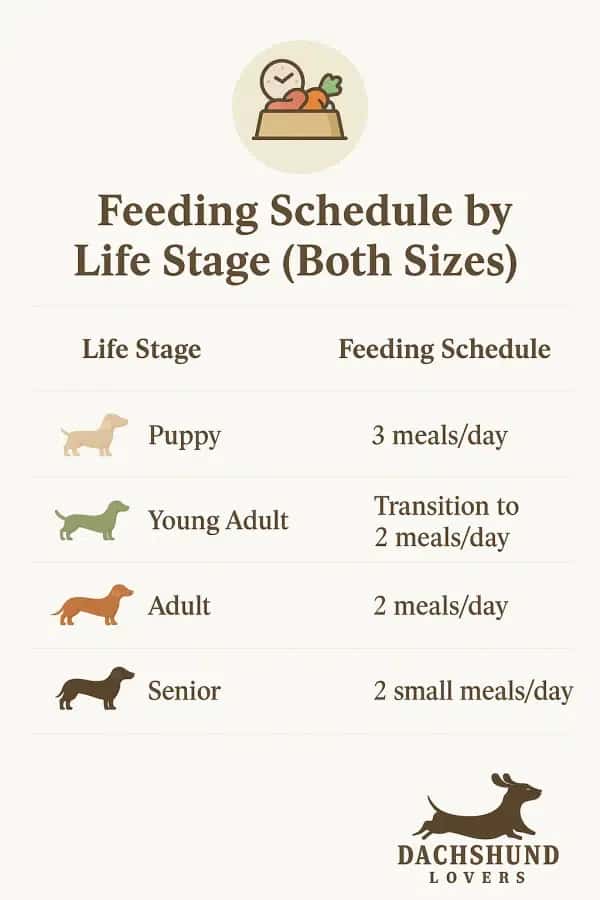
Feeding your dachshund the right amount is only half the equation — when and how often you feed them can make just as much of a difference. A consistent schedule helps regulate digestion, reduces begging, and prevents overeating, especially in food-driven breeds like dachshunds.
The right schedule also changes as they move through life — from wiggly puppy to lounging senior.
And yes, there are clear differences between miniature and standard dachshunds when it comes to how much and how often they should eat.
Mini Dachshunds: More Sensitive to Meal Timing
Because of their small size and faster metabolism, minis benefit from:
- Two meals per day once fully grown (6+ months)
- Three meals per day if under 6 months or very active
- Occasional midday toppers if blood sugar dips are an issue (seen more in underweight or senior minis)
When Harvey was a pup, we stuck to 3 meals a day — 7:30 am, 12:30 pm, 6:00 pm — and noticed fewer crashes and less evening restlessness.
Now at 5.3 kg, he does best on:
- 7:30 AM breakfast (gently cooked or ½ cup kibble)
- 6:00 PM dinner (home-prepped mix or ½ cup kibble + veg)
Standard Dachshunds: Slightly More Meal Flexibility
Standards, especially active ones, often have stronger energy reserves and less sensitivity to small fasting periods — but they still benefit from:
- Two regular meals per day (no free feeding)
- Extra portions split throughout the day if on high-activity regimens
Puppies and working adults may do well with a midday snack or third mini meal, especially if they’re lean or highly active.
Feeding Schedule by Life Stage (Both Sizes)
Life Stage | Feeding Schedule | Notes |
|---|---|---|
Puppy (2–6 months) | 3 meals/day | Small, evenly spaced meals; prevent sugar dips; adjust portions and schedule as your puppy grows and develops |
Young Adult (6–12m) | Transition to 2 meals/day | Watch for appetite changes during growth spurt; continue to adapt feeding as the puppy grows into adulthood |
Adult (1–7 years) | 2 meals/day | Stick to consistent times; portion by weight |
Senior (7+ years) | 2 small meals/day | Lighter meals, softer food, adjusted for lower activity |
Don’t forget: treats count. For a mini on 230 kcal/day, just 2–3 extras can throw things off. Visit our Best Treats for Dachshunds guide for smart low-cal options.
How We Time Harvey’s Meals
Here’s what’s worked well for us, especially during weight maintenance phases:
7:30 AM: Breakfast (dry + veg or home-cooked)
Midday (optional): Training treats / puzzle feeder (~20 kcal total)
6:00 PM: Dinner (wet or dry, portioned precisely)
8:00 PM: Small “wind-down” treat (1–2 blueberries or green beans only if dinner was light)
Transitioning Dog Food for Dachshunds
Below are key pointers to know about before transitioning certain dog food types for your dachshund
- Transitioning to a new dog food should be done gradually over 7 to 10 days to avoid digestive upset.
- Mixing the new food with the old food can help ease the transition for your dachshund.
- Some dogs may develop allergies to certain ingredients in their food, so it's important to monitor for any adverse reactions during the transition.
- Dachshunds can benefit from a variety of protein sources to avoid developing food allergies over time.
- Adding wet food to a dry kibble diet can help maintain hydration and improve palatability for dachshunds.
- Rotating dog food can help foster a diverse gut microbiome in dogs.
- Dogs can develop food allergies through overexposure to a single food, making rotation beneficial.
- Royal Canin Dachshund Puppy Dry Dog Food is formulated to meet the nutritional levels established by the AAFCO Dog Food Nutrient Profiles for growth.
- Royal Canin Dachshund Puppy Dry Dog Food contains highly digestible proteins and precise fiber content to promote healthy digestion and optimal stool quality.
- Royal Canin Dachshund Puppy Dry Dog Food helps maintain bone and joint health with appropriate levels of calcium and phosphorus.
- The first five ingredients on a dog food label provide a good snapshot of the overall quality and type of ingredients used.
- Hydration and nutrients can be provided with wet or raw food, which may be better for picky eaters.
- Avoid feeding miniature dachshunds toxic foods like chocolate, grapes, onions, or garlic.
- Consulting with a veterinarian is important to determine the best diet based on an individual dog's age, activity level, and health needs.
- High-quality protein should constitute 18-25% of an adult dachshund's diet, with around 15% fat content.
- Look for dog food containing real meat, like chicken, lamb, or fish, as the first ingredient.
- Key nutrients for miniature dachshunds include omega fatty acids for skin and coat health, glucosamine for joints, and limited fillers.
- Dachshunds require a diet that supports their unique body structure, including their long spine and short legs.
- Dachshunds benefit from a diet that includes appropriate levels of calcium and phosphorus to support bone and joint health.
- The first five ingredients on a dog food label are the most important as they make up the majority of the food.
- Dachshunds are considered facultative carnivores, meaning they thrive on a meat-based diet but can also digest some plant-based foods
- Rotating dog food brands can help prevent allergies and provide a variety of nutrients for Dachshunds.
- Adult miniature dachshunds should eat twice daily with portion control to avoid weight gain.
- Royal Canin Dachshund Puppy dry dog food is formulated to meet the nutritional needs of purebred Dachshunds 8 weeks to 10 months old.
- Royal Canin Dachshund Puppy food contains an exclusive mix of antioxidants and vitamin E to support the developing immune system of puppies.
- The appropriate combination of calcium and phosphorus in Royal Canin Dachshund Puppy food helps develop strong bones and healthy joints.
Common Feeding Mistakes for Mini and Standard Dachshunds
Even with good intentions, feeding mistakes happen — and with dachshunds, small missteps can lead to big consequences, especially around weight, digestion, and spinal health.
Stool inconsistencies and digestive issues are common signs that your mini dachshund’s food may not be optimal. Choosing foods formulated to support healthy digestion can help reduce unpleasant stool odors and prevent unpleasant stool odors by improving digestibility and stool quality. Here are the most common mistakes we’ve made (and corrected), plus the ones we’ve seen in countless other dachshund households.
1. Using the Same Feeding Chart for Minis and Standards
- Many commercial foods lump “small breeds” into one category, but a mini dachshund and a 12 kg standard should never be fed the same amount per bodyweight.
- Miniature dachshunds often need 30–50% fewer calories per kilogram than standards due to their lower muscle mass and metabolic rate.
2. Overfeeding Based on Cup Size Instead of Calories
- We used to feed “half a cup” without checking what that meant in calories. Some kibble is 350 kcal/cup, others are 480+ kcal — that's a huge swing.
- Solution: Use a digital kitchen scale, not a scoop. Measure meals by grams or kcal/day based on your dog's target weight.
3. Feeding “Diet” Kibble That's High in Fillers
- Low-fat, high-carb formulas are often marketed as “weight management” but are packed with:
- Corn
- Pea protein
- Potato starch
- Wheat flour
- These may cause bloating, stool inconsistencies, and increased hunger. Harvey gained weight on a “healthy weight” formula because he was always hungry and over-ate.
- For safer alternatives, see Dachshund Weight Loss Guide.
4. Skipping Joint-Supportive Nutrients
- Dachshunds of all sizes need long-term support for back and joint health. Feeding high-quality food without glucosamine, chondroitin, and omega-3s misses a major opportunity for prevention.
- These nutrients not only support healthy joints but also help your pup develop strong bones, especially when combined with essential minerals like calcium and phosphorus.
- Either choose food with these added OR supplement smartly — we break it down in our Top Supplements for Dachshunds.
5. Not Adjusting for Life Stage or Activity Changes
- A mini who's just been desexed? Drop calories 10–15%.
- A standard who's recovering from IVDD and on crate rest? Lower portions immediately.
- A senior mini sleeping 16 hours/day? Switch to a lighter food.
- Dachshunds gain weight quietly, and they carry it right where it counts — in the spine and belly.
- One of the vets when we had to get to the Veterinary Specialists of Sydney with Harvey for when he swallowed my mums earring (that's a story for another day) told us:
“Most dachshunds we see with early disc issues also have mild weight creep. Even 300–400 grams can add strain in the wrong place.”
Frequently Asked Questions (FAQs)
More from This Series
Looking to build the ultimate supplement and feeding routine for your doxie?
- What Can Dachshunds Eat? Safe & Unsafe Foods Explained
- Best Dog Food for Dachshunds in 2025
- Dachshund Feeding Guide: How Much & How Often?
- Top Supplements for Dachshunds: What’s Worth It?
- Hydration & Dachshunds: Why Water Intake Matters
- Homemade Dog Food for Dachshunds
- Dachshund Weight Loss: A Vet-Approved Guide
- Best Treats for Dachshunds
- Best Dog Food for Miniature Dachshunds vs Standard Dachshunds
- Raw vs Cooked Food for Dachshunds
Authored by
James
James is the founder of Dachshund Lovers and the proud human of Harvey, a mini dapple with a big personality. He writes to empower and connect the dachshund community, blending founder insights with honest, experience-based stories about life with this incredible and special breed. James brings candid, experience-backed opinions to the community and always focused on fewer, better products and ideas that genuinely improve life for dachshunds and their people.
Read moreJames is the founder of Dachshund Lovers and the proud human of Harvey, a mini dapple with a big personality. He writes to empower and connect the dachshund community, blending founder insights with honest, experience-based stories about life with this incredible and special breed. James brings candid, experience-backed opinions to the community and always focused on fewer, better products and ideas that genuinely improve life for dachshunds and their people.
Read moreDisclaimer
This content is for informational purposes only and should not be considered veterinary advice. Always consult with a licensed veterinarian regarding your dog’s health and wellbeing.
There are no comments yet
Leave a comment