Brindle Long Haired Dachshund: Graceful, Rare & Devoted
Brindle Long Haired Dachshund: Graceful, Rare & Devoted
Discover the charm of the brindle long haired dachshund — a rare beauty with a soft coat, loyal heart, and an elegantly striped personality.

James
Posted on July 4, 2025.
Updated on July 16, 2026.
Table of Contents
- 1.The Softest Surprise in the Dachshund World
- 2.Key Takeaways
- 3.What Is a Brindle Long Haired Dachshund?
- 4.Where the Stripes Show Up
- 5.The Genetics Behind Brindle Long Hair
- 6.Long Coat Dachshund Grooming: Keeping That Feathered Beauty in Its Prime
- 7.Seasonal Coat Management: Adapting to Nature’s Rhythms, One Brush at a Time
- •Spring & Autumn: The Shedding Transitions
- •Winter: Fluff Meets Function
- •Summer: Simpler, But Still Strategic
- 8.Temperament & Lifestyle Fit: A Gentle Soul in a Bold Little Frame
- •Calm, but Not Shy
- •Loyal to the Core
- •A Good Fit for Thoughtful Homes
- 9.Exercise Needs & Playtime: Gentle Adventures for a Feathered Friend
- •Walks with Purpose
- •Indoor Play That Feels Like Bonding
- •Don’t Skip Mental Stimulation
- 10.Brindle vs Brindle Piebald: Decoding Two Beautifully Uncommon Coats
- •The Look: All-Over Stripes vs Spotted Artistry
- •The Genetics: Different Puzzle Pieces
- •Coat Type: More Variation with Piebald
- •Table Summary:
- 11.Is This the Right Doxie for You?
- •A Heart for Connection
- •Grooming as a Ritual, Not a Chore
- •Good for Households That Are…
- 12.Related Articles
Share

The Softest Surprise in the Dachshund World
One morning in Paddington walking past Jackies restaurant , I met a dachshund named Hugo. He was strolling and I had to stop. His coat shimmered like earl grey silk — long, flowing, and streaked with subtle dark stripes that moved like shadows across caramel.
He was a brindle long haired dachshund. And he was the kind of dog that makes you stare a little longer.If you’re intrigued by long-haired dachshunds and captivated by the stripe pattern dachshund look, this guide unpacks what makes the brindle version such a standout — from genetics to grooming to personality.
Key Takeaways
Topic | Summary |
Coat Type | Long, silky hair with tiger-like dark striping over a red or fawn base |
Pattern | Brindle — striping appears across legs, back, chest, or tail |
Grooming Needs | Moderate to high; weekly brushing and seasonal care required |
Temperament | Gentle, slightly calmer than smooth coats, with affectionate loyalty |
Secondary Keywords | long coat dachshund grooming, stripe pattern dachshund |
What Is a Brindle Long Haired Dachshund?
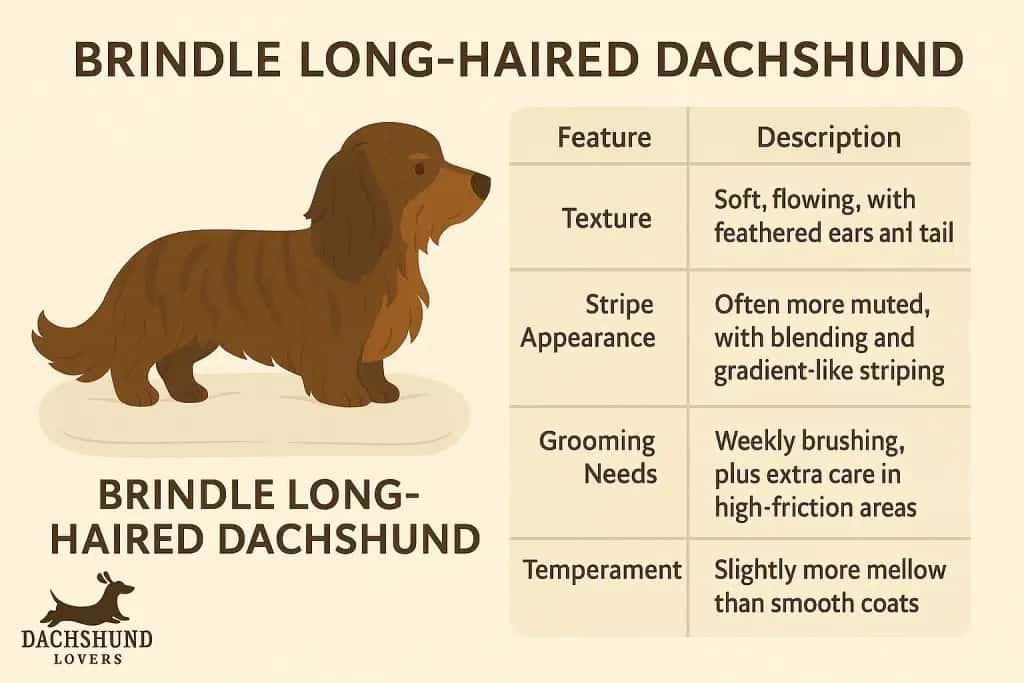
A brindle long haired dachshund has a coat that combines the feathered texture of long hair with the striped brindle pattern, usually seen in shades of deep brown or black overlaying a red or tan base.
The long coat adds a softness to the stripe effect — more like brushstrokes than bold bands. It’s almost like the pattern has been watercolored in, rather than painted with precision. This softness gives them a distinct visual rhythm when they move — especially when a breeze catches those feathered ears or tail.
In person, the effect is hard to describe. It’s both elegant and unexpected. If you spot one on a walk, you’ll likely pause — not because they’re flashy, but because they seem touched by something rare.
Because this is a combination of two rarer traits (long coat + brindle pattern), it’s not something you’ll see at every dog park. Brindle long-haired dachshunds are a bit of a collector’s piece in the doxie world — and all the more cherished for it.
Want to understand the foundation first? Start with our Brindle Dachshund overview.

A long-haired dachshund relaxes indoors, showcasing its soft, flowing coat and calm temperament.
Where the Stripes Show Up
Brindle striping appears only on the red or tan parts of a dachshund’s coat — never on black, cream, or white. In long-haired dachshunds, the length and softness of their fur give the brindle pattern a diffused look, almost like light passing through a curtain.
You’ll most commonly see these stripes:
- Behind the shoulders, where the coat naturally parts and flows
- Along the back and sides, catching the sun as they trot
- Down the legs and tail, where the hair is often finer and more feathered
- Occasionally across the ears or muzzle, especially in lighter-based coats
The expression of brindle varies wildly. Some pups wear it boldly, with defined streaks across their entire frame. Others have faint, almost whispered stripes — visible only when you get close or see them in motion.
It’s also worth noting that in long-haired coats, patterns shift visually as the dog grows. What looks subtle at 8 weeks may become more pronounced at 2 years. This evolution is part of the charm — you don’t just get a brindle doxie, you get a story unfolding in stripes.
Ellie’s Tip: Long hair makes the brindle pattern softer. Don’t expect crisp tiger stripes — think more Monet than modernist.
The Genetics Behind Brindle Long Hair
To end up with a brindle long haired dachshund, nature needs to do a bit of choreography. Two distinct genetic traits have to come together in one tiny, squirmy, perfect pup.
First, the long hair gene — a recessive trait. That means both parent dogs must carry (and pass on) this gene for a puppy to have a long, silky coat. If just one parent has it, the trait won’t appear, though the puppy might still carry it.
Then comes the brindle gene, labeled K<sup>br</sup> in genetic shorthand. It’s a dominant gene, which means only one parent needs to pass it down for the pattern to show. But — and here’s the nuance — brindle only expresses itself visibly on red or tan base coats. If your dachshund is black and tan, or cream, the stripes might be genetically there but hidden in plain sight.
When both genes align — a recessive long coat and a dominant brindle pattern — the result is something truly special: a dog with a painterly, flowing coat brushed with tiger-like streaks. And because the long coat softens the brindle pattern, each dog looks a little different, even within the same litter.
Interesting twist: Even if both parents are brindle long haired dachshunds, there’s no guarantee every puppy will inherit both traits. Genetics plays by its own rules — part science, part surprise.
Long Coat Dachshund Grooming: Keeping That Feathered Beauty in Its Prime
Caring for a brindle long haired dachshund isn’t about constant upkeep — it’s about rhythm, touch, and knowing what that beautiful coat needs through the week and the seasons. Once you settle into the routine, grooming becomes less of a chore and more of a bonding ritual. Maple and I treat it like a weekly check-in — brush, breathe, connect.
Brushing Schedule & Tools
Start with a soft pin brush or a slicker brush two to three times per week, more often if your doxie is active outdoors. These brushes help prevent tangles and remove debris while keeping the coat smooth and glossy. Follow with a metal comb to gently check under the arms, behind the ears, and around the tail — areas prone to sneaky matting.
Bathing Essentials
Bathing doesn’t need to be frequent — every 4 to 6 weeks is ideal unless your dachshund is a mud enthusiast. Choose a mild, hydrating dog shampoo, preferably color-safe to preserve those delicate brindle tones. A leave-in spray conditioner can help with detangling between baths.
Trimming & Tidy-Ups
Focus on light trimming around the paws, ears, and sanitary areas. You don’t want to interfere with the natural flow of the long coat, but keeping the feathering neat helps your dachshund stay clean and comfortable. Paw fur can trap everything from grass seeds to crumbs — trimming helps, especially during muddy seasons.
Everyday Touch-Ups
Keep a soft cloth or grooming wipe on hand after walks. Long coats pick up bits of nature — leaves, sticks, even the occasional burr. A quick post-walk wipe-down keeps your furniture (and your bed, if they sleep there) a little cleaner too.
Ellie’s Tip: Grooming isn’t just functional — it’s emotional. It’s a quiet moment to check their skin, notice any changes, and offer gentle praise. Dachshunds might be independent, but they melt under calm attention.
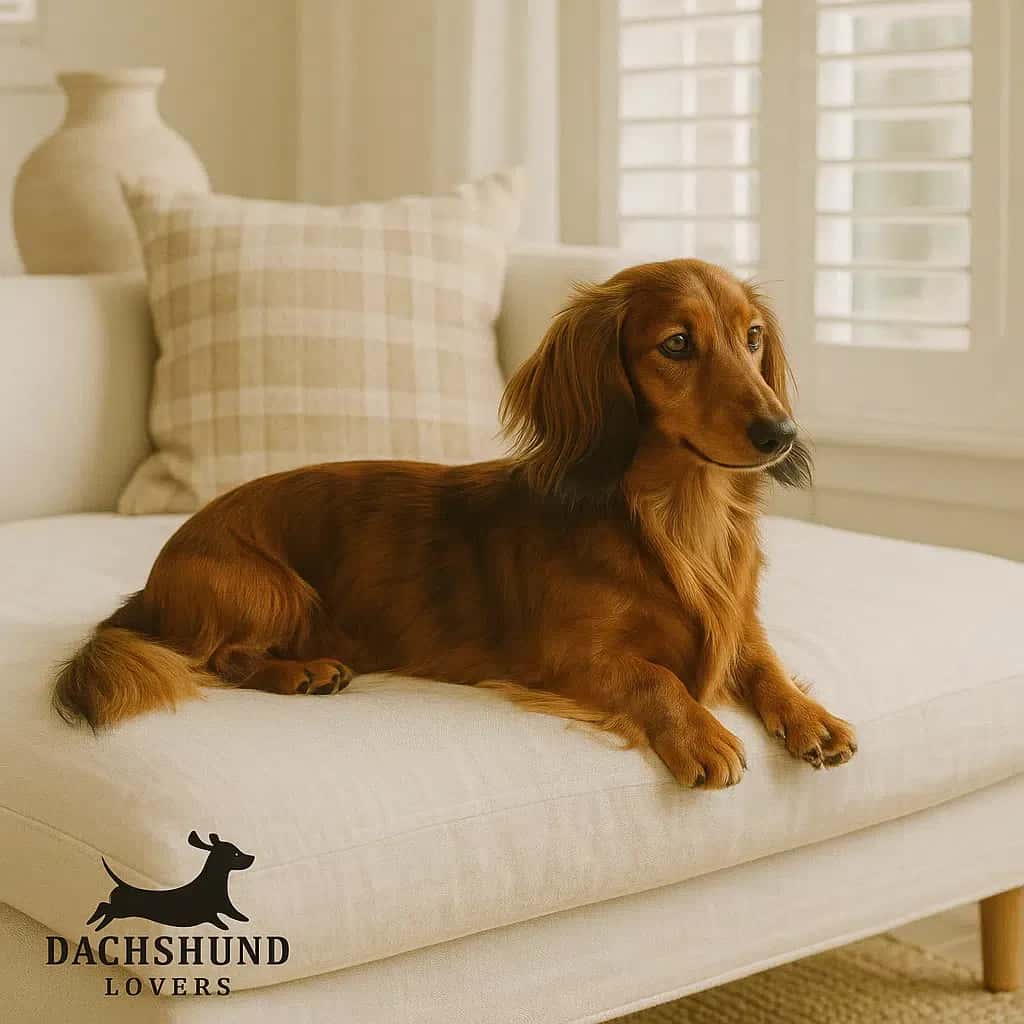
Brindle long-haired dachshund lying on a white sofa in a bright Hamptons-style sunroom
Seasonal Coat Management: Adapting to Nature’s Rhythms, One Brush at a Time
If you’ve ever watched a long-haired dachshund trot through a park in autumn, you’ll understand why grooming isn’t just cosmetic. Their coat changes with the seasons — thicker in winter, lighter in summer, and often more dramatic than you’d expect from such a small dog. Understanding how to care for this seasonal shift makes all the difference in keeping your brindle beauty healthy, tangle-free, and comfortable.
Spring & Autumn: The Shedding Transitions
These are the big coat-change months — like clockwork, your dachshund will start to shed their undercoat to prepare for warmer or colder weather. It can catch new owners off guard.
- Daily brushing is your best friend here. A deshedding rake or an undercoat comb helps lift loose fur without pulling.
- Check the feathering behind the ears and “pants” (the flowing fur around their thighs), where mats form quickly during these months.
- You might notice an increase in dander too — so a weekly bath with an oatmeal or hypoallergenic shampoo can soothe skin and reduce itchiness.
Ellie’s Note: I keep a lint roller near every soft surface during these seasons. It’s a love language for long-haired dachshund owners.
Winter: Fluff Meets Function
Long-haired dachshunds wear their coats like a built-in scarf — insulating and elegant. But that doesn’t mean you can ignore grooming.
- Moisture is the enemy — rain, frost, and even dew can cling to long fur, leading to cold spots and tangles.
- A lightweight water-resistant coat on walks helps prevent soaked fur and keeps your brushing routine from turning into a detangling marathon.
- Trim paw feathering regularly to prevent ice balls or mud clumps from forming between pads.
Ellie’s Note: Maple once tracked half of Bronte Beach into my hallway. Lesson learned — towel by the door, always.
Summer: Simpler, But Still Strategic
It might seem logical to trim everything back in summer, but don’t reach for the clippers just yet. That long coat plays a role in temperature regulation.
- Never shave a dachshund’s coat unless medically necessary — their fur acts as a barrier from both heat and sunburn.
- Focus on shade, airflow, and hydration instead. Indoors with fans or air conditioning, and early morning or evening walks are best.
- Use a detangling spray if your doxie swims — salt or chlorine can dry out their coat.
Ellie’s Tip: A damp cloth wipe-down after summer strolls can remove dust and pollen while keeping their coat soft and cool.
Temperament & Lifestyle Fit: A Gentle Soul in a Bold Little Frame
There’s something quietly surprising about a brindle long haired dachshund’s temperament. People often expect fiery energy from their bold coloring — and yes, they do have their spirited side — but what you actually find is a deeply affectionate, thoughtful companion who reads the room better than some humans.
Calm, but Not Shy
Brindle long hairs tend to carry a softer energy than their smooth-coated cousins. They’re alert but not anxious, expressive but not overwhelming. Maple has this way of settling beside me, head tucked just under my arm, and staying perfectly still until I move — her way of saying “I’m with you.”
They’re curious, yes, but they’re not whirlwind explorers. Think more observer than instigator — watching the birds from the window, following the sun around the room, or choosing the quietest corner of the cafe patio.
Loyal to the Core
Dachshunds are known for attaching deeply to their people, and brindle long hairs are no exception. This isn’t a dog that floats around the party — this is the one who chooses you, and stays close. That loyalty brings a real emotional depth to the relationship. They notice your mood, mirror your pace, and become a comforting constant in the background of your day.
A Good Fit for Thoughtful Homes
If your household leans loud or chaotic, they may need their own peaceful corner to retreat to. But for homes that value slower mornings, soft blankets, shared routines, and calm consistency, this breed fits beautifully.
- Families with older kids tend to match their emotional intelligence well.
- Singles and couples will appreciate the closeness and quiet companionship.
- Seniors or those working from home may find them ideal — gentle, affectionate, and low-maintenance with a daily walk and cuddle session.
Ellie’s Note: I often joke that Maple would’ve made an excellent librarian. She’s happiest when things are in order and the people she loves are nearby.
Exercise Needs & Playtime: Gentle Adventures for a Feathered Friend
A brindle long haired dachshund won’t beg for a marathon — but they will quietly expect daily adventures. Think of them less as high-octane athletes and more as graceful roamers. Their long coats aren’t just for show; they sway beautifully on strolls and seem to gather stories in every step.
Walks with Purpose
Most thrive with one or two moderate walks a day, around 20–30 minutes each. A familiar neighborhood route is just fine, but they’ll absolutely light up for weekend variety — grassy parks, leaf-covered trails, or sandy shorelines if you’re lucky enough to live near one. Maple loves the Glebe Foreshore Walk — part sniffing mission, part people-watching.
Brindle long hairs are more scent-driven than you might expect. Give them space to investigate lampposts and flowerbeds. It’s not laziness — it’s thoughtful exploration.
Indoor Play That Feels Like Bonding
They adore toys with texture — plush squeakers, hide-and-seek puzzles, soft tug toys. These aren’t just for burning energy; they’re invitations to engage. A short game of fetch in the hallway or a slow afternoon of “find the treat” can be more enriching than a rushed jog.
If you have a backyard, they’ll enjoy occasional zoomies — just keep an eye on their long coats picking up leaves, burrs, or little mysteries from the garden beds.
Don’t Skip Mental Stimulation
They’re clever. Almost sneakily so. Regular training (even just refreshers of known commands), interactive feeding toys, or simple scent games help keep their minds content. When understimulated, dachshunds can get creative in less charming ways — barking at passersby, rearranging laundry, or protesting their boredom by burrowing under your pillows.
Brindle vs Brindle Piebald: Decoding Two Beautifully Uncommon Coats
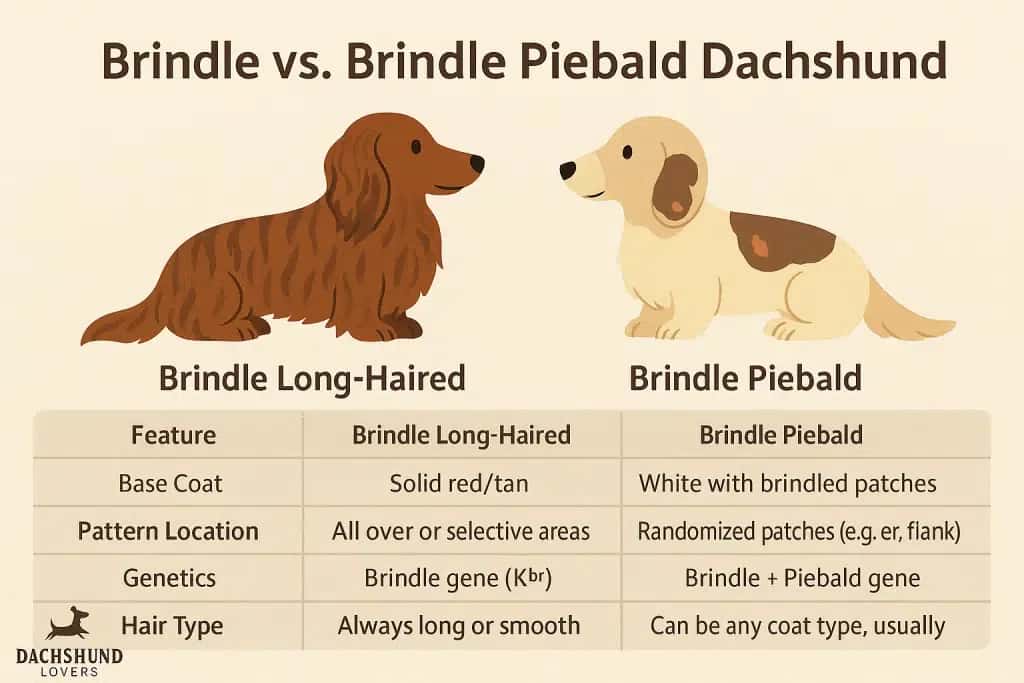
Side-by-side comparison of brindle long-haired and brindle piebald dachshunds, highlighting key differences in coat type, color, and patterning.
While both brindle and brindle piebald dachshunds are undeniably eye-catching, they’re not quite the same visual experience — or genetic story. If you’ve ever done a double-take at a dachshund and wondered, “Is that brindle… or something else?” — you’re not alone.
Let’s break down how these two patterns differ, beyond just the obvious.
The Look: All-Over Stripes vs Spotted Artistry
A classic brindle long haired dachshund typically has a consistent striped pattern across red or fawn fur — almost like subtle tiger stripes painted with a fine brush. The long coat softens the contrast, making it feel fluid and velvety.
Brindle piebalds, on the other hand, have irregular white patches over their body, with brindled areas appearing only within those patches. You might see a white body with a brindled ear or patch across the shoulder — like nature played with negative space.
I once saw a brindle piebald at a Sunday market in Newtown with a single striped patch over her eye, like a pirate’s bandana. The rest of her was white. Unforgettable.
The Genetics: Different Puzzle Pieces
Brindle comes from a dominant allele (K^br), while piebald is recessive. A brindle piebald dachshund carries both. This pairing is rare because breeders tend to focus on showcasing one pattern at a time, and combining them requires a specific understanding of how these genes interact.
Not every brindle piebald will show the striping clearly — it only appears in areas with red or tan pigment. So, if the brindled patches fall on cream or chocolate tones, the effect may be faint or hidden altogether.
Coat Type: More Variation with Piebald
Brindle long haired dachshunds, by definition, have long coats. Brindle piebalds, however, come in any coat type — smooth, long, or wire-haired. Smooth is the most common. The coat type shifts the aesthetic dramatically: smooth brindle piebalds can look sharper and more contrasted, while long hairs soften the edges and create more visual movement.
Table Summary:
Feature | Brindle Long Haired | Brindle Piebald |
|---|---|---|
Base Coat | Solid red or tan | Predominantly white |
Pattern Location | Across body (back, legs, tail) | In brindled patches only |
Genetics | Brindle gene (K^br) | Brindle + Piebald genes |
Hair Type | Always long | Any coat type |
Is This the Right Doxie for You?
Choosing a brindle long haired dachshund isn’t just about how beautiful they look in morning light (though they truly do). It’s about temperament, care, and lifestyle. These aren’t dogs you simply own — they become a rhythm in your home.
A Heart for Connection
This variety tends to be especially sensitive and intuitive. Their long coats seem to amplify their softness — not just to the touch, but in temperament. They’ll follow you from room to room, not to be needy, but because they genuinely want to be near you. If you’re someone who values quiet companionship over high-energy chaos, you’re likely to adore this type of dachshund.
That said, they can be a little more reserved with strangers, especially compared to their smooth-coated cousins. Not shy — just selective with their affection. It’s a kind of quiet dignity you come to admire.
Grooming as a Ritual, Not a Chore
They do need more brushing than other coat types. But this can become something lovely. A few minutes each evening with a pin brush, a soft word, and maybe a treat — it turns into connection, not just upkeep. If you enjoy slow routines and tactile care, this won’t feel like a burden.
If you’re someone who prefers a no-fuss pet — or travels a lot without access to grooming — they may be trickier to keep tidy.
Good for Households That Are…
- Calm but structured. They don’t need chaos, but they do like knowing what to expect.
- Emotionally aware. These dogs pick up on moods. If your home is full of raised voices or unpredictability, it may overwhelm them.
- Happy to walk and cuddle. A balance of gentle exercise and lap time is perfect.
FAQs

Authored by
Ellie
Ellie is a lifelong dachshund lover and the proud human of Maple, a long-haired brown doxie with a regal side-eye. While not a vet, Ellie brings honest, researched, and experience-based insights into every article she writes for the Dachshund Lovers community.
Read moreEllie is a lifelong dachshund lover and the proud human of Maple, a long-haired brown doxie with a regal side-eye. While not a vet, Ellie brings honest, researched, and experience-based insights into every article she writes for the Dachshund Lovers community.
Read moreThere are no comments yet
Leave a comment