Brindle Dachshund Puppy: Growing Into Their Stripes
Brindle Dachshund Puppy: Growing Into Their Stripes
Not sure when brindle dachshund puppy stripes appear? Learn how these unique dachshunds change, how to care for their coats, & how to support early development.
James
Posted on June 23, 2025.
Updated on July 17, 2026.
Table of Contents
Share

The Cutest Mystery in the Whelping Box
You don’t always spot a brindle dachshund puppy right away. Some arrive with obvious stripes, like miniature tigers in dachshund form. Others are a soft red or fawn, with barely a hint of pattern like the one I saw recently at Next Door Cafe shop on my esplanade walk in Cronulla. And then — sometime around 6 to 12 weeks — those magical little stripes start to appear.
That’s the joy (and surprise) of brindle: it often emerges gradually.If you’ve recently welcomed a brindle pup — or you’re searching for one — this guide covers everything you need to know, from early development to how dachshund puppy coat changes can shape their look over time.
Key Takeaways
Topic | Summary |
Pattern Expression | Brindle often intensifies as puppies grow |
Coat Types Available | Smooth, long-haired, occasionally piebald combinations |
Grooming | Minimal at first, becomes more important as coat length and texture evolve |
Common Variations | Brindle long-haired, brindle piebald |
Development Notes | Coat color and markings may shift over the first 6–12 months |
What Is a Brindle Dachshund Puppy?
A brindle dachshund puppy is born with — or gradually develops — a coat pattern of dark stripes over a lighter base color, usually red or tan. These stripes, which resemble the markings of a tiger, are caused by the dominant brindle gene. That means only one parent needs to pass on the gene for a puppy to inherit the pattern.
What makes brindle dachshund puppies especially intriguing is how subtle or dramatic the striping can be at first. Some are born with clear, defined stripes, while others appear plain at birth and surprise their owners weeks later with emerging markings. It’s not uncommon for new dachshund parents to think they’ve brought home a red or tan puppy, only to discover brindling unfolding on the legs, face, or tail.
The brindle pattern can occur across all coat types — smooth, long-haired, and wire-haired — and can even appear alongside other coat patterns like piebald. However, it’s most recognizable on short, smooth coats, where the contrast is strongest.
It’s important to know that brindle is purely a cosmetic trait. It doesn’t affect temperament, health, or behavior. A brindle dachshund puppy will be just as clever, curious, and strong-willed as any other doxie. But their striking appearance often draws extra attention — and questions — at the dog park.
For more on how this pattern appears in adult dachshunds, you can explore our full brindle dachshund guide, which breaks down everything from genetics to grooming tips.
How Dachshund Puppy Coat Changes Work
Dachshund puppies are born with what breeders lovingly call their “puppy coat” — a soft, often slightly fuzzy layer of fur that’s not yet their final texture or color. This early coat is more about keeping them warm than making a fashion statement. If you’ve brought home a brindle dachshund puppy, you may notice their stripes are faint, uneven, or even completely hidden at first. That’s entirely normal.
Between 8 to 16 weeks of age, dachshund coats begin to change. The transition can be subtle or dramatic depending on the puppy’s genetics and coat type. As the adult coat starts to come in, the fur becomes glossier, denser, and begins to reflect its true pattern. Brindle stripes often intensify during this stage, appearing more defined across the legs, chest, back, or even tail.
Smooth-coated brindles tend to show their stripes earlier — often by 8 weeks — whereas long-haired puppies may not reveal clear brindling until 12 to 16 weeks, once the coat has lengthened and settled into its natural texture. In piebald mixes, brindle patches may emerge slowly or appear on only one side of the body, making them feel like little living art pieces in progress.
Color shifts can also occur. What once looked like a warm fawn may deepen into rich tan. Areas that were once plain might develop new contrast as pigmentation sets in. This is why dachshund puppy coat changes are often compared to a photo developing in a darkroom — it takes time to see the full picture.
When Will the Stripes Appear?
Brindle stripes are one of the most fascinating transformations in a dachshund puppy’s early months. Some pups enter the world already looking like little tigers, while others begin their journey with barely a whisper of a pattern. The timing of when those stripes become visible depends on a few key factors: coat type, genetics, and pigment distribution.
For smooth-coated brindle dachshunds, stripes can be visible almost immediately — especially in well-lit settings. You might notice them as faint shadows along the legs or shoulders at just a few days old. By 8 to 10 weeks, those markings typically become bold and defined, creating the classic striped look we associate with brindles.
Long-haired brindles, on the other hand, are a slower reveal. Their fluffy baby coats tend to soften any early striping, making them appear red, tan, or even golden at first. As their adult coat grows in — often between 10 to 16 weeks — the stripes begin to emerge more clearly, particularly around the ears, legs, and tail. In some cases, the full brindle pattern won’t be obvious until the puppy is six months or older.
Now, if you have a brindle piebald puppy, things get even more unique. The piebald gene causes white spotting, which can mask brindle entirely in certain areas. Sometimes, only one ear or a patch on the back will carry the striped pattern, and it may take several weeks for it to surface. These pups often feel like walking surprises — no two are ever alike.
The placement and strength of brindle markings are also influenced by lighting, nutrition, and even stress during development. Don’t worry if your puppy’s pattern looks inconsistent at first — brindle can take its time to show up, and that slow reveal is part of what makes it so special.
Still unsure what you’re seeing? Our article on the Brindle Piebald Dachshund breaks down how stripe visibility plays out when combined with white coats.

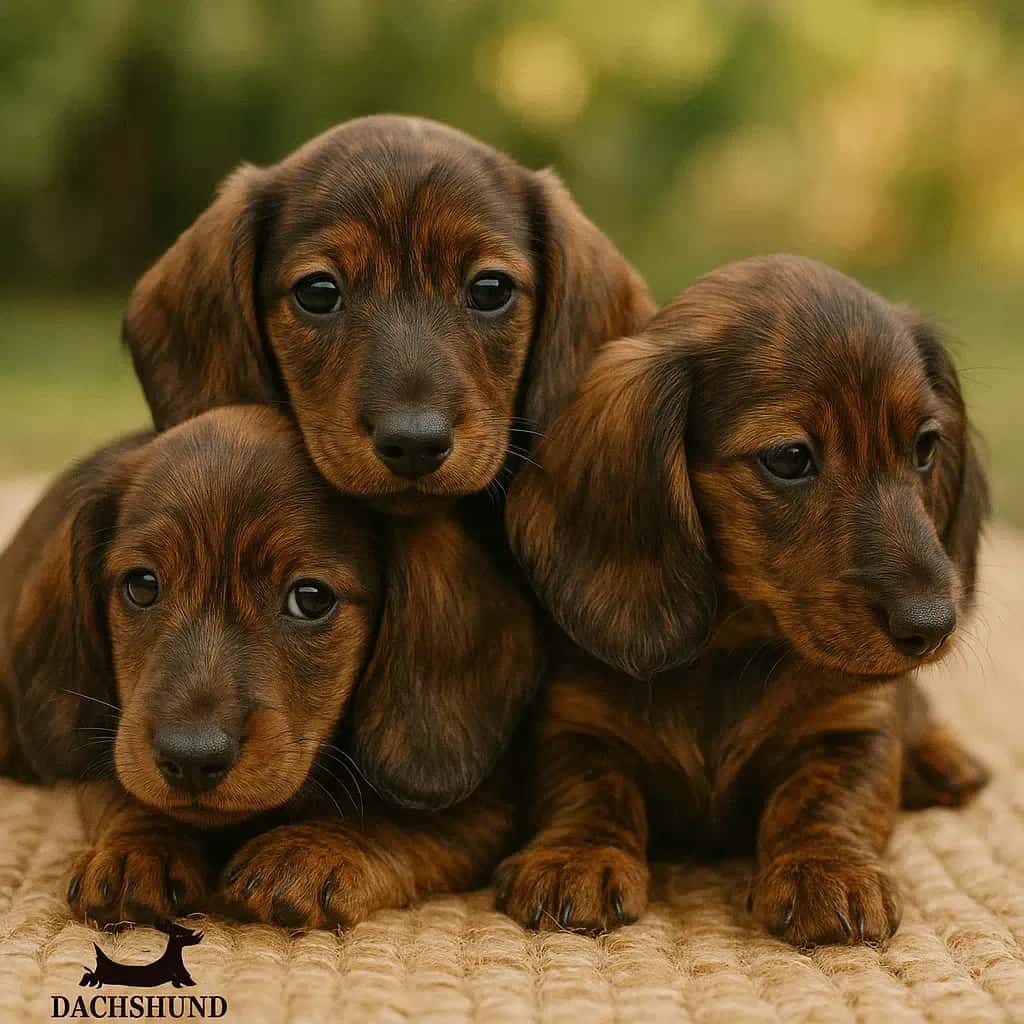
A brindle dachshund puppy sits calmly on a cushion, blending comfort and cuteness in one perfect pose.
How to Care for a Brindle Puppy
Caring for a brindle dachshund puppy starts with understanding their coat type and building daily rituals that feel calm and consistent. The brindle pattern itself doesn’t need any special treatment, but how you care for the coat it appears on — smooth, long-haired, or piebald — can make all the difference in their comfort and appearance.
For smooth-coated brindle pups, a soft-bristled grooming mitt or rubber curry brush used once or twice a week is ideal. It helps loosen dead hair and gently stimulates the skin without disrupting those emerging stripes. Smooth coats often show the pattern most clearly, so it’s important not to over-groom — stripping oils can make the coat look dull.
Long-haired brindle puppies need a little more time and patience. Their striping tends to appear more subtly and can blend into feathered areas around the ears, chest, and tail. Use a pin brush for daily maintenance, especially behind the ears and along the legs, where mats can form. A gentle comb through once a week helps prevent tangles as their adult coat grows in.
If your pup has piebald spotting, keep an eye on any pink skin exposed in the white patches — particularly on the nose, belly, and paws. A natural sunscreen or lightweight dog-safe balm can help prevent sunburn in warmer months.
Bathing should be limited to every 4–6 weeks unless your pup gets into mischief. Always choose a puppy-formulated shampoo, ideally one that’s moisturizing and pH-balanced. Avoid whitening shampoos with optical brighteners, as they may dry out the coat or mask the natural brindle development.
And finally, start these grooming habits early. Even if your puppy doesn’t need a full brush-out yet, the experience builds trust. Future you — and your dachshund — will be grateful.
Training & Temperament Notes
If there’s one thing most dachshund owners agree on, it’s this: these dogs come with personality. Brindle puppies are no exception. While the coat pattern itself doesn’t change behavior, you may notice your little striped shadow struts with an extra sense of style — and garners more than a few admirers during walks.
From the start, brindle dachshund puppies are known for being sharp, curious, and highly bonded to their humans. But they’re also independent thinkers — which is a polite way of saying stubborn. That makes early training essential.
Foundational training goals include:
- Name recognition — Use positive reinforcement, and don’t overuse their name in correction. You want it to feel safe.
- Potty training — Stick to a schedule, praise immediately after success, and be patient with setbacks.
- Crate training — Not just for sleeping — crates provide a safe retreat and support housebreaking.
- Leash training and socialization — Once vaccinated, introduce your pup to new places, people, and other dogs in calm, positive environments.
Dachshunds, including brindles, respond best to gentle structure and high-value rewards (tiny bits of boiled chicken usually work wonders). Avoid harsh corrections — they tend to shut down or dig in their heels.
Don’t underestimate their emotional intelligence either. These pups pick up on your tone, routines, and moods — and they often develop strong opinions of their own.
With time, clear boundaries, and consistent love, you’ll raise a brindle dachshund who’s confident, curious, and every bit as charming as their one-of-a-kind coat suggests.
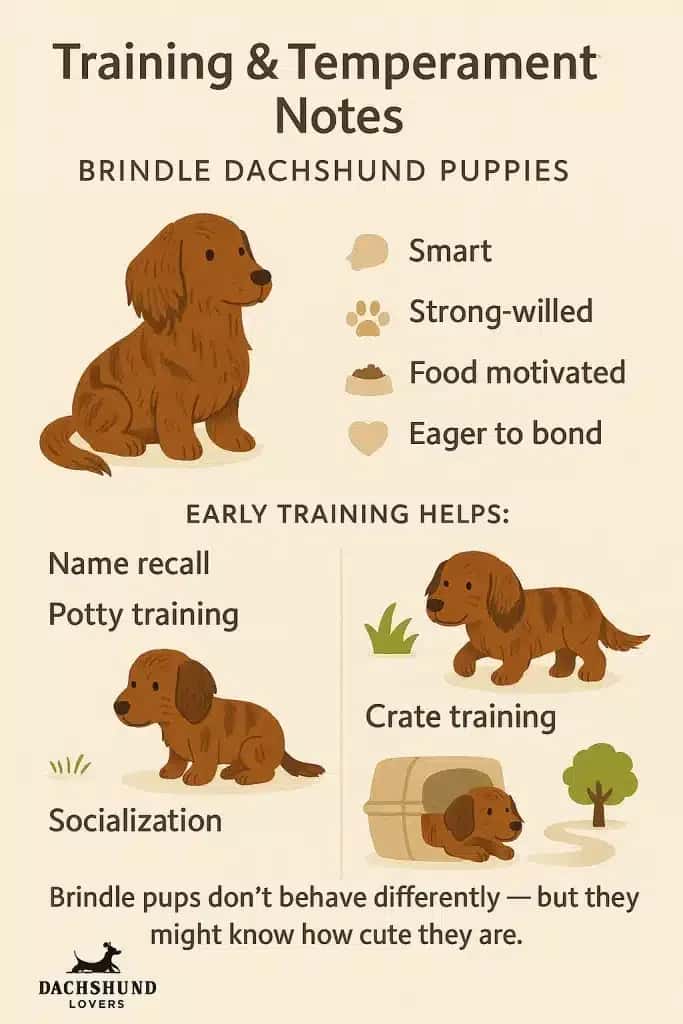
Training and temperament tips tailored to brindle dachshund puppies, designed for new and seasoned dachshund owners alike.
FAQ’s
There are no comments yet
Leave a comment