Brindle Dachshund Guide: Rare Stripes, Big Personality
Brindle Dachshund Guide: Rare Stripes, Big Personality
Discover the rare and beautiful brindle dachshund. Learn how their bold coat, genetics, and care needs set them apart—from puppyhood to senior years.

James
Posted on June 14, 2025.
Updated on July 17, 2026.
Table of Contents
- 1.Key Takeaways on About Brindle Dachshund
- 2.Snapshot: What Brindle Dachshunds Are Really Like
- 3.What Is a Brindle Dachshund?
- 4.Are Brindle Dachshunds Rare?
- 5.Brindle Dachshund Coat Genetic
- 6.Brindle Long Haired Dachshund
- •Brindle Piebald Dachshund
- 7.Brindle Dachshund Puppy Guide
- 8.Grooming for Brindle Dachshunds
- 9.Life Expectancy and Health of Brindle Dachshunds
- 10.Training and Exercise Needs
- 11.Nutrition and Diet Tips
- 12.Temperament & Personality
- 13.Owner Responsibilities
- 14.Are Brindle Dachshunds Right for You?
Share

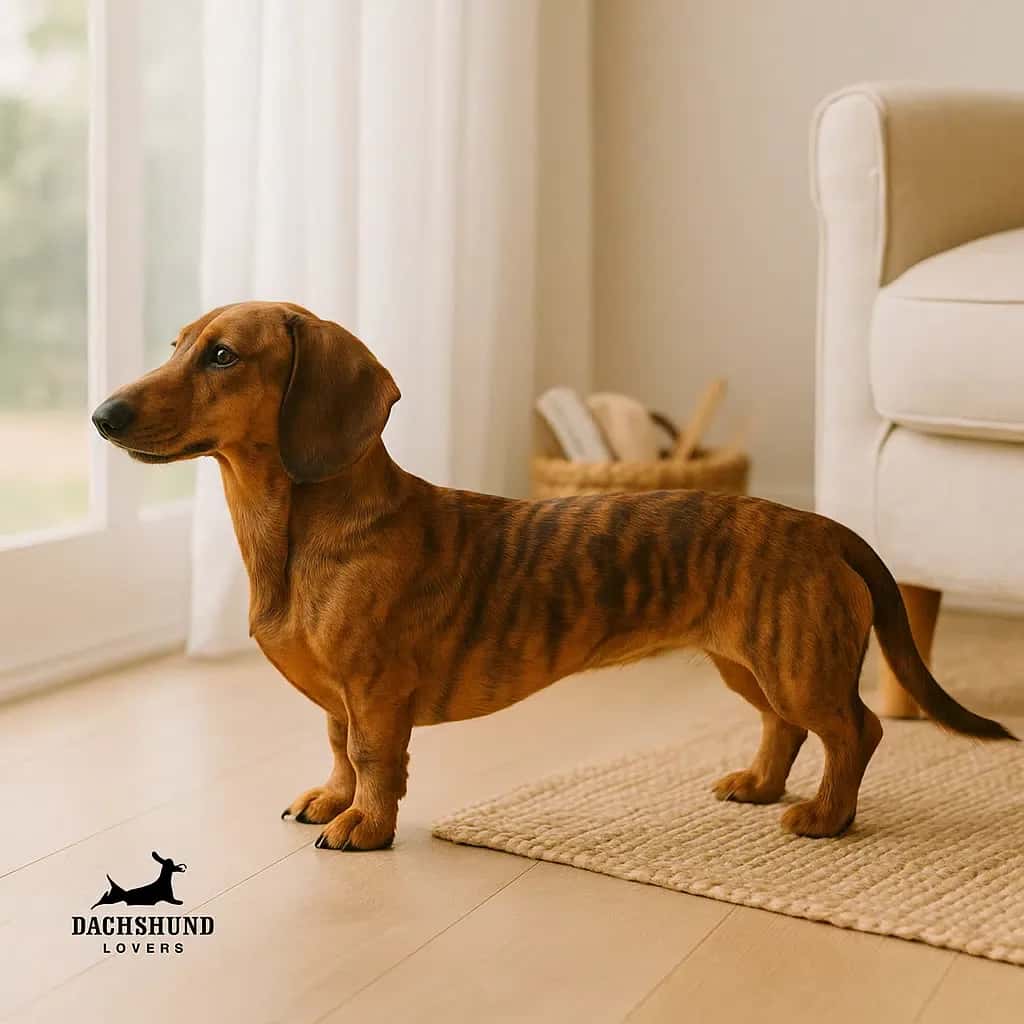
It was at Newtown dog park that I first saw a brindle dachshund in the wild. His name was Ziggy. From a distance, I thought he was wearing a tiger-striped jumper. But no — that was his coat. A warm brown with irregular dark stripes down his back and legs, like shadows cast through wooden blinds.
Like other weiner dogs, brindle dachshunds often attract attention and curiosity thanks to their unique appearance and the breed’s distinctive long body and short legs.
He had the classic dachshund shape, the same stubborn energy as Maple, but with a coat that felt… different. Special.
Brindle is one of those patterns that gets people talking — and Googling. Many readers search for pictures of brindle dachshunds to see their rare stripes for themselves. So if you’ve ever typed “are brindle dachshunds rare” or wondered whether those stripes are real, this guide is for you.
Key Takeaways on About Brindle Dachshund
Topic | Summary |
Coat Pattern | Brindle (tiger-striped effect), can appear on any base color and in various colors |
Common Types | Smooth, long-haired, piebald blends; found in both standard and miniature sizes |
Personality | Same lovable, spunky dachshund personality — coat doesn’t change temperament |
Rarity | Yes — brindle is one of the more rare dachshund coat colors |
Appears In | Puppies, long-haired varieties, and coat combinations like brindle piebald; found in both standard and miniature sizes |
Snapshot: What Brindle Dachshunds Are Really Like
These scores are based on average experiences across the breed. Every Brindle Dachshund is a little different, but this will give you a head start.
- Brindle Dachshunds, like all dachshunds, are known for being brave, showing boldness and courage despite their small size.
Dachshunds are among the most popular breeds worldwide, especially in the United States, and the brindle pattern is considered rare and highly sought-after.
What Is a Brindle Dachshund?
A brindle dachshund has a coat marked with dark stripes across a lighter base color — usually red, tan, or fawn. The pattern resembles tiger stripes but varies widely in intensity. Some brindles have subtle hints on their legs and chest; others have bold, full-body markings that demand attention. The word 'dachshund' comes from the German word meaning 'badger dog', reflecting the breed's original purpose to hunt badgers.
Importantly, brindle is a pattern, not a color. It overlays an existing base coat, meaning it can appear across smooth, long-haired, and even piebald dachshunds. For example, brindle stripes may appear over a red or fawn base, or even on a piebald dachshund's white patches. It’s entirely natural and completely one of a kind — no two brindles are ever alike.
Dachshunds were developed in Germany as hunting dogs, specifically bred to hunt badgers. The breed is recognized in many countries and is part of the broader group of canines known for their hunting abilities. Historically, dachshunds were classified into two sizes before the current standard and miniature sizes.
Brindle Dachshunds make great pets and are perfect for indoor conditions due to their smaller size. Brindle Dachshunds can suffer from separation anxiety if left alone for extended periods.
Read more about the brindle miniature dachshund and how this pattern expresses across smaller varieties.
Are Brindle Dachshunds Rare?
Yes — brindle dachshunds are one of the rarer coat patterns in the breed. Dachshunds are frequently referred to as 'weiner dogs' or 'sausage dogs' due to their distinctive shape.
Here’s why:
- The brindle gene is dominant, but not commonly selected for in standard breeding programs
- It’s often mistaken for other coat types in photos (like shaded red)
- Some brindle puppies don’t fully reveal their striping until weeks or months after birth
- Ethical breeders tend to focus on health and temperament first, so brindle is rarely produced on demand
Despite their rarity, brindle dachshunds are fully recognized and loved across companion households — and once you’ve met one, you won’t forget them. Despite being a rare pattern, dachshunds are consistently ranked among the most popular dogs in the United States and worldwide.
Learn more about brindle dachshund puppies, including how the pattern develops as they grow.
Brindle Dachshund Coat Genetic
The brindle pattern is produced by the K^br allele at the K locus. It’s a dominant gene, which means a puppy only needs one copy to express striping — but the degree of visibility depends on the coat’s base color, length, and other modifying genes.
- Brindle usually appears on red or fawn coats, where the contrast is most visible
- Brindle can also appear on other base colors, including blue, black, and tan
- In long-haired dachshunds, the pattern tends to soften and blend
- Wire haired dachshunds and wirehaired varieties also display the brindle pattern, though it may appear differently due to their rough coat texture
- Brindle is also seen in longhaired dachshunds as another coat type
- It’s genetically distinct from dapple, sable, or shaded red — though it’s sometimes mislabelled
- The double dapple pattern is a separate genetic pattern, sometimes confused with brindle, but it is genetically different and can lead to health issues
- When paired with piebald, it creates unique multi-patterned coats
The brindle pattern developed through selective breeding for unique coat appearances, reflecting the breed's evolving diversity.
Explore the brindle piebald dachshund to see how these genes interact.
If you’re curious about coat patterns more broadly, Embark Vet’s guide to dog coat genetics is a great visual reference.
Brindle Long Haired Dachshund
This variety is for those who love a little drama — in the best way. A brindle long haired dachshund pairs the soft flow of long fur with striking (or sometimes subtle) tiger striping.
Feature | Description |
|---|---|
Texture | Silky, feathered, and flowing |
Stripe Appearance | Muted and watercolor-like, especially around the ears and legs |
Grooming Needs | 2–3x weekly brushing, plus coat spray for detangling. Longhaired dachshunds often have feathering on their paws, which requires extra attention during grooming. |
Personality | Often a little more laid-back than smooth-coats |
Longhaired dachshunds are generally easy to train for grooming routines, making coat care more manageable. Discover care tips and more in our brindle long-haired dachshund guide.
Longhaired brindle dachshunds make excellent pets for families who appreciate their unique look and affectionate nature.
Brindle Piebald Dachshund
A brindle piebald dachshund is a rarity among rarities. These dogs have a white base coat from the piebald gene and brindle patches that create a layered, abstract appearance — like paint strokes on canvas.
Dachshunds were originally bred to hunt small animals, such as rabbits and badgers, which influenced the development of their unique coat patterns for camouflage and function. In the past, breeders often selected for distinctive markings like brindle piebald to create visually striking dogs that stood out both in the field and as companions.
You might see:
- One brindled ear and one white
- Large striped patches on the back or near the eyes
- Symmetrical or asymmetrical patterns — each one unique
This combination is purely aesthetic, but requires careful breeding to avoid excessive white coverage, which in some breeds has been linked to hearing concerns.
See real examples in our article on the brindle piebald dachshund.
Brindle Dachshund Puppy Guide
If you’re looking for a brindle dachshund puppy, you’ll need patience — and a sharp eye.
Here’s what to expect:
- Brindle markings might not be visible at birth — they often darken and develop with age
- Some breeders may list brindle puppies as red or fawn — always ask for photos of the parents
- Reputable breeders will focus on health and temperament first, not just coat pattern
- Brindle dachshund puppies thrive when raised as part of the family and are known for bonding closely with family members.
- Early socialization is important to help brindle dachshund puppies feel comfortable around strangers.
- Encourage your puppy to try out new things and experiences to support their development and confidence.
- Ethical pricing matters — rarity shouldn’t inflate cost unfairly
For more advice, explore our brindle dachshund puppy guide.
Grooming for Brindle Dachshunds
The brindle pattern doesn’t require special care — but keeping the coat healthy helps that striping stay vibrant.
Coat Type | Brushing Frequency | Ellie’s Tip |
|---|---|---|
Smooth | 1x per week | Use a rubber mitt for shine and to reduce shedding |
Long-Haired | 2–3x per week | Lightly mist before brushing to avoid breakage |
Wire-Haired | 1–2x per week | Seasonal hand-stripping enhances texture |
Additional Tips:
- Use color-safe dog shampoo to maintain contrast in the coat
- Limit excessive sun exposure, which can fade the darker stripes
- Clean white areas on piebalds with a damp cloth to avoid staining
- Some brindle dachshunds may bark during grooming sessions, so patience and positive reinforcement are important.
- Grooming standards for dachshunds are recognized by kennel clubs around the world.
Grooming is also bonding time. It’s how I discovered Maple’s first tangle behind her ear — and a great excuse to slow down after a long walk.

Life Expectancy and Health of Brindle Dachshunds
Brindle Dachshunds, like their counterparts in other dachshund coat types, are known for their impressive life expectancy. According to the American Kennel Club (AKC), most dachshunds live between 12 and 16 years, with some brindle dachshunds reaching 18 years or more when given attentive care. As a breed, dachshunds—including brindle puppies—are prone to certain health concerns, such as intervertebral disk disease (IVDD), obesity, and patellar luxation. These issues are not unique to brindle dachshunds but are important for all owners to be aware of.
To help your brindle dachshund enjoy a long, healthy life, regular exercise, a balanced diet, and annual veterinary check-ups are essential. Working with reputable breeders who prioritize health and temperament over coat pattern is key—responsible breeders, often affiliated with the Dachshund Club of America or other kennel clubs, will provide health clearances and guidance for new owners. These clubs and the AKC offer valuable resources on breed health, recommended screenings, and best practices for dachshund care. By staying proactive and informed, owners can help their brindle dachshunds thrive well into their senior years. Brindle Dachshunds are commonly healthy as long as their parents do not have records of hereditary diseases.
Training and Exercise Needs
Training a brindle dachshund is both a challenge and a joy. Like other dachshunds, brindles are famously stubborn, but they’re also clever and eager to learn—especially when training is creative and rewarding. Consistency and positive reinforcement are your best tools. Early socialization and puppy training classes help brindle dachshunds build confidence and learn to interact positively with other dogs and humans.
When it comes to exercise, brindle dachshunds need daily activity to stay healthy and happy. Regular walks, gentle play sessions, and interactive toys keep their minds and bodies engaged. Because of their long backs, it’s important to avoid excessive jumping or strenuous exercise, especially in puppies, to reduce the risk of joint issues and IVDD. A balanced routine that combines physical activity with mental stimulation—think puzzle toys or scent games—will help your brindle dachshund burn off energy and stay content. Remember, a tired doxie is a happy (and less stubborn) companion!
Nutrition and Diet Tips
A healthy brindle dachshund starts with a nutritious, well-balanced diet. High-quality dog food, rich in protein, fiber, and essential vitamins and minerals, supports their energy needs and helps maintain a shiny, vibrant coat. Like other breeds, dachshunds can be prone to obesity, so it’s important to monitor food portions and avoid overfeeding. Choose a diet that includes a variety of protein sources, whole grains, and vegetables to keep your brindle’s coat healthy and their body in top shape.
Always provide fresh water and limit treats to prevent unnecessary weight gain. If you’re unsure about the best food for your brindle dachshund, consult your veterinarian or a canine nutritionist—they can help tailor a diet plan based on your dog’s age, size, and activity level. Good nutrition is the foundation for a long, healthy life and a beautiful brindle coat.
Temperament & Personality
Brindle dachshunds are, at heart, classic doxies — independent, clever, and absolutely in charge of the living room.
You can expect:
- Fierce loyalty (especially to one person)
- Bold, expressive energy
- Protective tendencies (toys, beds, even socks)
- An extra dose of confidence — or what some would call sass
- When meeting strangers, brindle dachshunds may be reserved at first but often warm up once they feel comfortable.
There’s no proven link between color and temperament, but many owners say brindles seem to “know” they’re a little different. They don’t just walk — they strut.
As part of the broader group of canines, dachshunds are known for their bold personalities and spirited nature.
Owner Responsibilities
Owning a brindle dachshund is a rewarding experience, but it comes with important responsibilities. As an owner, it’s your job to provide a safe, loving environment that meets all your dog’s physical and emotional needs. This means regular exercise, consistent training, and plenty of affection—dachshunds thrive on attention and love being part of the family.
Daily care includes feeding a healthy diet, keeping their coat clean and brushed, and scheduling regular veterinary visits. Don’t forget about grooming tasks like nail trimming and ear cleaning, which help prevent health issues and keep your brindle looking their best. Mental stimulation is just as important as physical activity, so make time for play, training, and new experiences together.
By being a responsible and attentive owner, you’ll help your brindle dachshund enjoy a long, happy, and healthy life. Whether you’re a first-time dachshund parent or a seasoned doxie lover, the bond you build with your brindle companion will be one of the most rewarding parts of your journey together.
Are Brindle Dachshunds Right for You?
If you’re drawn to dogs with personality and a unique look, a brindle dachshund might be your match.
They’re a great fit for:
- Families who value individuality
- People who love dachshund energy but want a less common coat
- Households ready to meet a few breeders or waitlists to find the right pup
But keep in mind:
- They’re not available everywhere, especially in long-haired or piebald combinations
- Ethical breeders won’t promise coat outcomes — temperament and health come first
- Rescue groups occasionally have brindles available — don’t overlook adoption
FAQ’s
Authored by
James
James is the founder of Dachshund Lovers and the proud human of Harvey, a mini dapple with a big personality. He writes to empower and connect the dachshund community, blending founder insights with honest, experience-based stories about life with this incredible and special breed. James brings candid, experience-backed opinions to the community and always focused on fewer, better products and ideas that genuinely improve life for dachshunds and their people.
Read moreJames is the founder of Dachshund Lovers and the proud human of Harvey, a mini dapple with a big personality. He writes to empower and connect the dachshund community, blending founder insights with honest, experience-based stories about life with this incredible and special breed. James brings candid, experience-backed opinions to the community and always focused on fewer, better products and ideas that genuinely improve life for dachshunds and their people.
Read moreThere are no comments yet
Leave a comment