Long-Haired Dachshund Grooming: What You Need to Know
Long-Haired Dachshund Grooming: What You Need to Know
Turn grooming into quality time. Keep your dachshund’s coat soft, healthy, and beautiful while strengthening your bond. Learn more.
James
Posted on September 26, 2025.
Updated on July 20, 2026.
Table of Contents
- 1.Key Takeaways on Long Haired Dachshund Grooming
- 2.Do Long-Haired Dachshunds Need Haircuts?
- •When Should You Consider a Haircut?
- •Bottom Line:
- 3.What Are the Different Long-Haired Dachshund Haircut Styles?
- •Our Go-To? The Feather Trim + Paw Tidy Combo
- 4.Brushing Long-Haired Dachshunds: Frequency, Tools & Tips
- •Recommended Brushing Schedule
- •Tools That Actually Work
- 5.How to Bathe a Long-Haired Dachshund (Without the Drama)
- •How Often Should You Bathe?
- •What Shampoo Should You Use?
- •Bathing Tips That Make Life Easier
- 6.Drying and Post-Bath Grooming Tips for Long-Haired Dachshunds
- •The Best Way to Dry a Long-Haired Dachshund
- •Optional Grooming After Drying
- 7.Detangling Tips & Tools for Long-Haired Coats
- •Best Detangling Tools for Long-Haired Dachshunds
- •How to Detangle Without Causing Stress
- •Detangling Frequency
- 8.Seasonal Grooming for Long-Haired Dachshunds
- •Spring & Autumn: The Heavy Shedding Months
- •Summer Grooming Tips
- •Winter Grooming Adjustments
- •Spring & Autumn: The Heavy Shedding Months
- •Summer Grooming Tips
- •Winter Grooming Adjustments
- 9.Best Brushes and Combs for Long-Haired Dachshunds
- •Slicker Brush
- •Stainless Steel Comb
- •Detangling Spray
- 10.What to Avoid: Grooming Mistakes with Long-Haired Coats
- •1. Shaving the Coat
- •2. Skipping Detangling Before Bathing
- •3. Using Human Shampoo
- •4. Neglecting Problem Areas
- •5. Rushing the Process
- 11.Grooming Schedule for Long-Haired Dachshunds
- -More from This Series
- -Disclaimer
Share

One Sunday morning, Caitlin and I loaded up Harvey and drove out to Silver Beach in Kurnell, one of our favorite quiet spots for a dog-friendly morning walk. The salty air, the sound of the waves, watching the planes flyer over botany bay, and a strong skim cappuccino from the famous Cook at Kurnell in hand — it was shaping up to be a perfect day. That is, until we bumped into a couple with a long-haired dachshund named Lulu. She looked immaculate: soft, flowing fur that shimmered in the sun like she was ready for a dog show. Harvey, on the other hand, had somehow transformed into a sand-covered fuzzball after digging half the beach up.
That moment hit me hard — grooming for long-haired dachshunds isn’t just about looking good. It’s about keeping them healthy, comfortable, and free from painful mats or irritants.
Unlike smooth-coated dachshunds, long-haired dachshunds have silky feathered coats that require consistent upkeep. Their fur tends to collect everything — burrs, grass seeds, sand, and even small twigs — especially behind the ears, under the belly, and around the paws and tail.
According to the American Kennel Club (AKC), “Long-haired dachshunds require regular brushing to avoid mats and tangles, particularly in the feathered areas.” Skipping even a few days of brushing can lead to uncomfortable matting, which not only pulls at the skin but can also conceal rashes, hotspots, or even parasites like fleas or ticks.
A 2023 article from PetMD reinforces that “regular maintenance is essential for long-haired breeds to maintain coat quality, reduce shedding, and prevent secondary skin issues.”
It’s not just about brushing either. Long-haired dachshunds may need trimming or professional grooming to keep their coat manageable — especially during the warmer months when they’re prone to overheating or matting around moisture-prone areas like the groin or armpits.
For anyone living an active beach lifestyle (like us down here in the Sutherland Shire, south of Sydney), grooming a long-haired dachshund is non-negotiable.
Key Takeaways on Long Haired Dachshund Grooming
Topic | Summary |
|---|---|
Why Grooming Matters | Prevents mats, skin issues, overheating, and discomfort in long-haired dachshunds. |
Dachshund-specific challenges | Their feathered coat collects sand, seeds, and debris — especially in outdoor settings like Kurnell. |
Grooming frequency | Brushing is needed several times a week; professional trims may be needed every 6–8 weeks. |
Seasonal grooming needs | Warmer months may require more frequent trims to prevent matting and heat stress. |
Health Benefits | Regular grooming helps spot fleas, ticks, and skin issues early. |
Professional vs at-home grooming | DIY brushing works well, but many owners opt for seasonal trims by groomers. |
Do Long-Haired Dachshunds Need Haircuts?
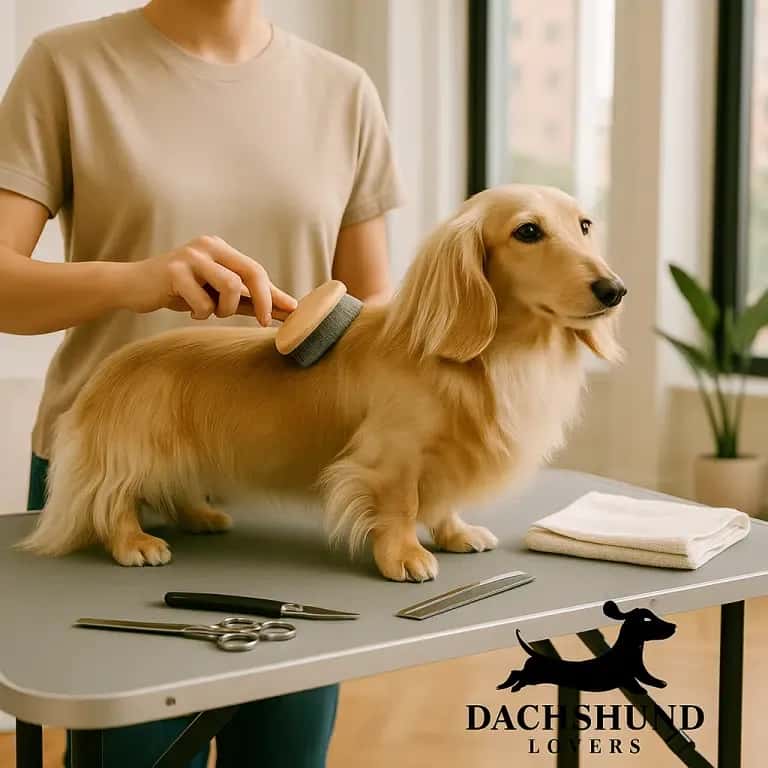
Short answer? Sometimes — but not always.
Unlike high-maintenance breeds like poodles or bichons, long-haired dachshunds aren’t born needing regular haircuts. Their coats are considered “self-shedding,” meaning they’ll naturally thin out during seasonal changes without requiring major trimming. That said, regular brushing and occasional touch-ups are essential to keep them healthy, especially in warmer climates or outdoor-loving households.
I know of a couple in Kurnell, right on the edge of Kamay Botany Bay National Park, Harvey is constantly adventuring — from sandy tracks to bushy trails. His long fur picks up everything: burrs, twigs, dry grass, sand, you name it. While he doesn’t need a full-body clip, we’ve learned that a strategic trim makes a world of difference, particularly around his paws, belly, tail, and ears.
According to the American Kennel Club (AKC), “Dogs with longer coats may benefit from light trimming in the summer to prevent matting, but shaving is rarely recommended unless medically necessary.”
When Should You Consider a Haircut?
You might want to book a groomer (or pick up the shears) if:
- Matting keeps appearing, especially behind the ears or around the tail
- Fur between the paw pads traps dirt or causes slipping
- Your pup is visibly uncomfortable in the heat, especially during Aussie summers
- Skin irritation or hot spots develop from lack of airflow
- Sand or grass seeds frequently get caught after walks (a big issue around Cronulla, Greenhills, and Silver Beach)
Harvey gets a “tidy-up” trim every couple of months — not a drastic haircut, but a gentle feathering on his legs, tummy, and chest. We especially make time for this before outings to places like Silver Beach in Kurnell, one of the best dog-friendly beaches in Sydney’s Sutherland Shire (view the off-leash map here).
A tip from PetMD reminds owners: “Trimming fur for hygiene and comfort is fine, but full shaving can remove your dog’s natural protection against sun and heat.”
Bottom Line:
- Haircuts aren’t mandatory, but strategic trimming is helpful
- Focus on comfort, hygiene, and coat health
- Avoid shaving unless directed by your vet
- Always use dog-specific grooming tools or visit a professional groomer
If in doubt, ask your groomer for a “sanitary trim” or “light feathering” — you’ll keep that signature long-haired look while making your dachshund’s life (and your vacuum’s job) much easier.
What Are the Different Long-Haired Dachshund Haircut Styles?
While you don’t have to give your long-haired dachshund a full haircut, knowing the different styles can be helpful — especially if you’re heading into warmer months, dealing with mats, or just want your pup looking sharp.
Here are the most common long-haired dachshund grooming styles:
Haircut Style | Description | Best For |
|---|---|---|
Feather Trim | Light shaping of feathered areas like legs, ears, chest, and tail | Everyday maintenance; keeping that classic long-haired look |
Sanitary Trim | Short trimming around the rear and genitals for cleanliness | Dogs prone to mess or irritation in those areas |
Paw & Pad Trim | Removing excess hair between the paw pads and around toes | Prevents slipping, matting, and burr collection on walks |
Tummy Tidy | Thinning the belly area to avoid tangling and overheating | Warm climates, active dogs |
Teddy Bear Cut (less common) | Even all-over trim to ~1–2 inches | Only recommended for extreme matting or heat relief |
Shave Down (not advised) | Total removal of fur using clippers | Medical issues only — not for style or summer comfort |
Important: Dachshunds have a double coat that offers protection from the sun, bugs, and minor injuries. Shaving this coat down can cause lasting damage and interfere with its ability to grow back properly. According to VCA Animal Hospitals, “Shaving a double-coated breed may do more harm than good and can lead to coat abnormalities.”
Our Go-To? The Feather Trim + Paw Tidy Combo
I know This combo has worked wonders for George Every 6–8 weeks, their owners give him a little DIY feather trim with thinning shears and tidy up the paws — especially if they are heading out to their regular places like the Kurnell boardwalk where loose sand and underbrush are tough on long coats.
A simple tidy-up helps him stay cooler, cleaner, and happier without losing his gorgeous flowy look.
James’s Tip: If you’re unsure which style is right for your dachshund, ask your groomer for a “light shaping” and specify areas like the ears, belly, and tail — they’ll know exactly what to do without going overboard.
Brushing Long-Haired Dachshunds: Frequency, Tools & Tips
If you’ve ever shared a lounge with a long-haired dachshund, you already know one thing: their fur gets everywhere. From velvet cushions to car seats to the throw blanket you swore was off-limits — that soft, feathery coat seems to leave a little trail of love wherever they go.
But aside from the fluff factor, regular brushing plays a critical role in your dachshund’s health. That long coat? It tangles easily, traps debris, and can lead to painful matting if not managed well — especially around high-friction areas like the armpits, ears, and back legs.
Living down here in the Sutherland Shire, where bush trails meet sandy dog beaches like Silver Beach and Greenhills, I see long-haired dachshunds regularly battling the elements. Twigs, seed pods, sand burrs — they love hitching a ride. One of our neighbors, Jo, has a stunning chocolate long-hair named Frankie. Without fail, Frankie’s coat picks up an entire ecosystem on every walk. Jo says, “The daily brush is our non-negotiable ritual now. It keeps Frankie clean, and me sane.”
So, how often should you brush?
Recommended Brushing Schedule
Coat Condition | Brushing Frequency |
|---|---|
Well-maintained coat | 3–4 times per week |
Moderate Shedding | Every 1–2 days |
Outdoor/adventurous dogs | Daily brushing |
During seasonal shedding | Daily or twice daily |
Tools That Actually Work
You don’t need a drawer full of gadgets — just a few high-quality, dachshund-friendly grooming tools. These are the essentials we recommend (and link to in our Grooming Tools Guide):
- Slicker Brush: For detangling and removing loose fur. Look for one with flexible bristles that won’t scratch the skin.
- Steel Comb: Great for getting into the undercoat, especially behind the ears and under the legs.
- Dematting Tool: A lifesaver for tough knots — especially helpful during “blowout” shedding seasons.
- De-shedding Tool (like the Furminator): Helps remove loose undercoat and reduce shedding.
Bonus: Add a grooming glove if your dachshund is anxious. Some pups love the feeling of being patted and brushed at once.
Best Brushing Tips
- Start young: Get your dachshund used to brushing as a puppy — keep sessions short and always reward.
- Be gentle: Work through tangles slowly, starting at the ends and moving toward the root.
- Use detangler sprays: A dog-safe conditioning mist can prevent breakage and make the job easier.
- Make it routine: Set a reminder if you need to — consistent brushing reduces shedding and prevents painful mats from forming.
A guide from the American Kennel Club emphasizes that:
“Brushing feels good and keeps the skin and hair healthy.”
Likewise, Petland Gahanna notes that brushing “removes loose hair before it shows up in your bed” and also “stimulates circulation and promotes bonding.”
How to Bathe a Long-Haired Dachshund (Without the Drama)
Bath time with a long-haired dachshund can either be a smooth, spa-like experience… or a chaotic splash fest that soaks your bathroom and tests your patience. The trick is in the prep — and knowing your dachshund’s limits.
While dachshunds don’t need frequent baths (over-bathing can dry out their skin), long-haired doxies do benefit from a regular wash every 4–6 weeks, especially if they spend time outdoors or tend to get that signature “dog smell” faster. Where we live which is costal and close to national parks, our coastal air mixed with bush trails means even our short-haired Harvey picks up grit quickly — so we know our long-haired neighbors are washing more often than they used to.
How Often Should You Bathe?
Lifestyle | Bath Frequency |
|---|---|
Mostly indoors | Every 6–8 weeks |
Regular outdoor walks & play | Every 4–6 weeks |
Beach/lake/swim adventures | As needed (rinse off salt & sand) |
Skin sensitivities or allergies | As recommended by your vet |
According to the American Kennel Club, “dogs generally shouldn’t be bathed more than once a month unless advised by a vet,” but double-coated and long-haired dogs like the dachshund may need it slightly more often if they’re prone to dirt and buildup (source).
What Shampoo Should You Use?
- pH-balanced dog shampoo – Never use human shampoo, as it disrupts your dachshund’s skin barrier
- Hypoallergenic or oatmeal formulas – Great for sensitive skin
- Conditioning shampoos – Help soften and detangle that long fur
- Deodorizing or anti-itch blends – Ideal for active pups or those prone to skin issues
Ellie — Dachshund Enthusiast, Maples Mum and has written some of our content on Dachshund Breeds & Dachshund Colors & Coats — swears by the Fur Love Itch Relief Shampoo, especially after her long-haired dachshund rolls in seaweed at Silver Beach. “It’s the only shampoo I’ve found that doesn’t leave her scratching afterward,” she told us.
Bathing Tips That Make Life Easier
- Brush before the bath: Wet tangles are ten times harder to deal with. Always de-knot first.
- Use a non-slip mat: Dachshunds don’t like slippery surfaces — it makes them nervous.
- Lukewarm water only: Their skin is sensitive, and hot water can irritate it.
- Shield the ears: Keep water out of the ear canal to avoid infections.
- Rinse thoroughly: Especially with long fur — residue can cause itching.
- Dry with a towel and low-heat blow-dryer: Avoid high heat, and brush while drying to prevent matting.
Bonus Tip: Try bathing your dachshund in a laundry sink or baby bath for more control and less back strain.
Drying and Post-Bath Grooming Tips for Long-Haired Dachshunds
Once the bath is over, the job’s only halfway done — especially if your dachshund has a lush, flowing coat. Long-haired dachshunds can take longer to dry, and without the right steps, you’re almost guaranteed to get mats, tangles, or that musty “wet dog” smell lingering longer than necessary.
We’ve learned from experience (and some soggy laps on the couch) that having a drying routine makes all the difference. It’s about more than just keeping them comfortable — it’s about preventing skin issues and maintaining that silky shine.
The Best Way to Dry a Long-Haired Dachshund
- Towel Blot First — Don’t Rub
- Use a microfiber towel to gently blot moisture out of their coat.
- Rubbing can cause tangling or damage to the outer coat.
- Use a microfiber towel to gently blot moisture out of their coat.
- Blow Dry on Low Heat with a Slicker Brush
- Use a pet-safe blow dryer or your own on the cool or low setting.
- Brush as you dry to prevent matting — especially behind the ears, under the arms, and around the tail.
- A slicker brush or pin brush works best for feathered coats.
- Use a pet-safe blow dryer or your own on the cool or low setting.
- Check for Damp Spots
- Common areas that stay damp: under the belly, between the toes, behind the ears.
- These spots can lead to hot spots or fungal infections if left wet.
- Common areas that stay damp: under the belly, between the toes, behind the ears.
- Reward Calm Behavior
- If your dachshund stays still or lets you brush calmly, offer praise or a treat.
- This helps turn post-bath time into a bonding experience (rather than a wrestling match).
- If your dachshund stays still or lets you brush calmly, offer praise or a treat.
- Avoid Over-Drying
- Don’t blast them with high heat — it can cause skin dryness or damage the coat’s natural oils.
- Once the coat feels just slightly damp, let the rest air dry in a warm spot.
- Don’t blast them with high heat — it can cause skin dryness or damage the coat’s natural oils.
We know a couple near Bundeena who groom their long-haired doxie weekly after beach swims and swear by towel wraps followed by a cool blow-dry in front of a pedestal fan. It’s low-stress and keeps their pup’s coat shiny and knot-free.
Optional Grooming After Drying
- Paw balm – Helps protect pads and keep them soft, especially after beach walks.
- Leave-in conditioner spray – Adds shine and detangles between washes.
- Ear check – Dry any moisture around the ears to prevent yeast buildup.
Trim any knots or feathers – This is a good time for a tidy-up trim if needed.
Detangling Tips & Tools for Long-Haired Coats
When it comes to grooming a long-haired dachshund, brushing isn’t just a cosmetic routine — it’s essential health care. Tangles and mats can quickly lead to skin irritation, hot spots, and even infections if left unchecked. And let’s be honest: once mats take hold, brushing turns from bonding time into a full-on battle.
If you’ve ever tried to detangle after a beach run at Silver Beach in Kurnell (a favorite local spot for long-haired dachshunds), you know how stubborn sand-packed knots can be. That’s why having the right tools and a gentle, consistent method is key.
Best Detangling Tools for Long-Haired Dachshunds
Tool | What It's Best For | Our Tip |
|---|---|---|
Slicker Brush | Removing loose fur and surface tangles | Use short, gentle strokes — especially behind ears and under legs |
Wide-Tooth Comb | Working through tougher tangles without pulling | Ideal for sensitive spots like the tail and chest |
Dematting Rake | Breaking up dense mats | Use only when necessary, and always follow up with a softer brush |
Detangling Spray | Softening and loosening knots | Apply before brushing to reduce discomfort and breakage |
Not sure what tools to buy? Check out our Dachshund Grooming Tools guide — we break down the best shampoos, brushes, clippers, and more, all dachshund-tested.
How to Detangle Without Causing Stress
- Start with the trouble zones
Focus on areas that mat fastest: behind ears, armpits, under the collar, and the tail base. Hold the fur above the tangle to avoid tugging at the skin. - Work in sections
Use your fingers to gently separate fur before brushing. This helps avoid large pulls that can startle your dachshund. - Use short sessions
Especially for puppies or anxious dogs, aim for 5–10 minute sessions a few times a week rather than a long ordeal. - End on a positive note
Finish each session with praise, a pat, or a treat. Over time, this helps your dachshund associate grooming with bonding — not punishment.
For a full grooming routine from head to tail, including brushing, ear checks, and bath time, you might also like our Ultimate Dachshund Grooming Guide.
According to the American Kennel Club, “Regular brushing prevents painful mats and gives you a chance to check for parasites, skin issues, or injuries.”
Detangling Frequency
- For active or outdoor dachshunds: Brush every 2–3 days
- For indoor or older dogs: 2–3 times per week
During shedding season (spring/autumn): Daily brushing may be needed
(More on this in our Dachshund Shedding Solutions article)
Seasonal Grooming for Long-Haired Dachshunds
Long-haired dachshunds don’t just shed year-round — they go through two major “coat-blow” periods each year, typically in spring and autumn. These seasons trigger your dachshund’s body to shed excess fur to prepare for warmer or cooler weather. If you’ve ever noticed your home suddenly covered in fluff, you’re not imagining things.
Spring & Autumn: The Heavy Shedding Months
During these peak times, brushing your dachshund daily is ideal — particularly if they’re outdoorsy. Long fur can trap dirt, pollen, burrs, and loose hair, making mats much more likely.
To help manage the seasonal coat change:
- Use a deshedding tool like the FURminator Long Hair deShedding Tool for Dogs — it’s a lifesaver for removing undercoat fur without damaging the topcoat
- Apply a conditioning spray to keep the coat slick and easier to brush through
- Switch to a gentle oatmeal or hypoallergenic shampoo during bath time to reduce skin irritation
For more details on tackling dachshund shedding year-round, see our article Dachshund Shedding Solutions — it’s packed with product suggestions and brushing strategies.
Summer Grooming Tips
In hot months, keep an eye on:
- Heat rashes and hot spots, especially in thick-coated or overweight dachshunds
- Fur between paw pads — trim lightly to help them grip surfaces and stay cool
- Excessive panting or lethargy — these can signal your dachshund is overheating
Always offer fresh water and groom in the morning or late afternoon to avoid heat stress.
And while it might be tempting to give your long-haired dachshund a summer shave, remember: their coat protects them from sunburn and heat. Instead, aim for light feathering — as discussed earlier — and regular brushing.
According to VCA Animal Hospitals, “Dogs regulate their temperature through panting and limited sweat glands. A full shave can remove their natural insulation, exposing them to heatstroke.”
Winter Grooming Adjustments
In colder months:
- Reduce bathing frequency to avoid drying out the skin
- Use a moisturizing conditioner after baths to retain coat softness
- Focus on brushing more, bathing less to preserve natural oils
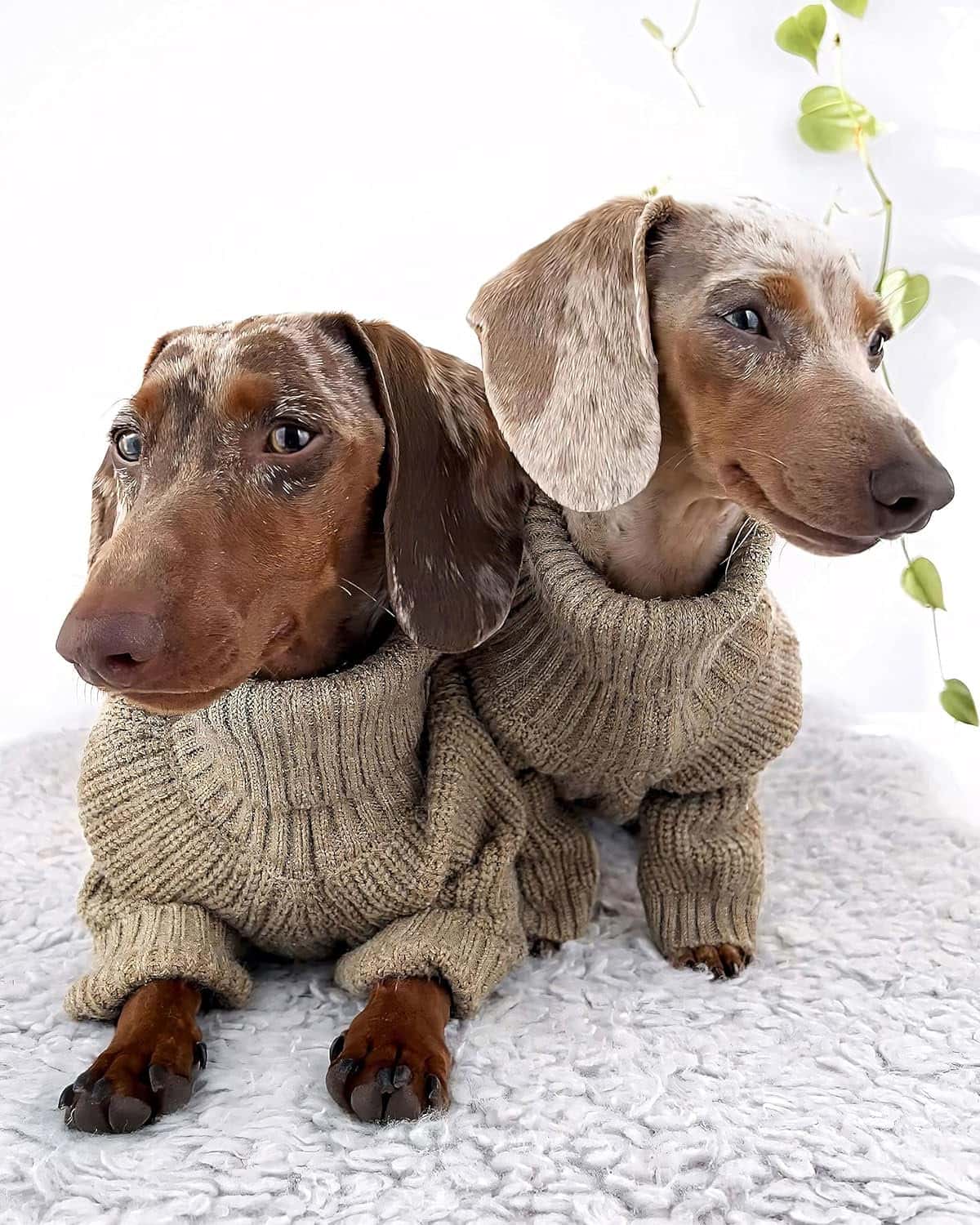
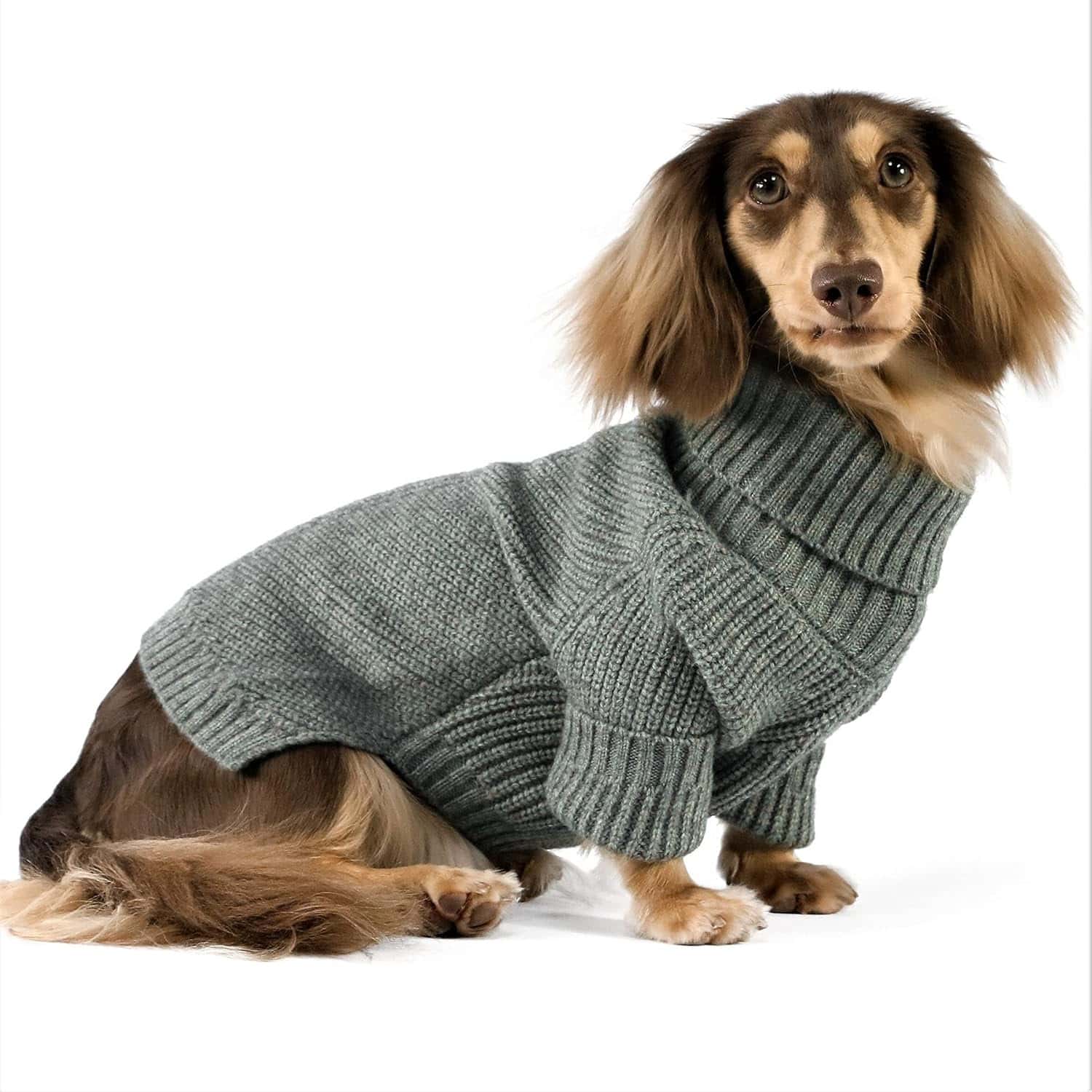
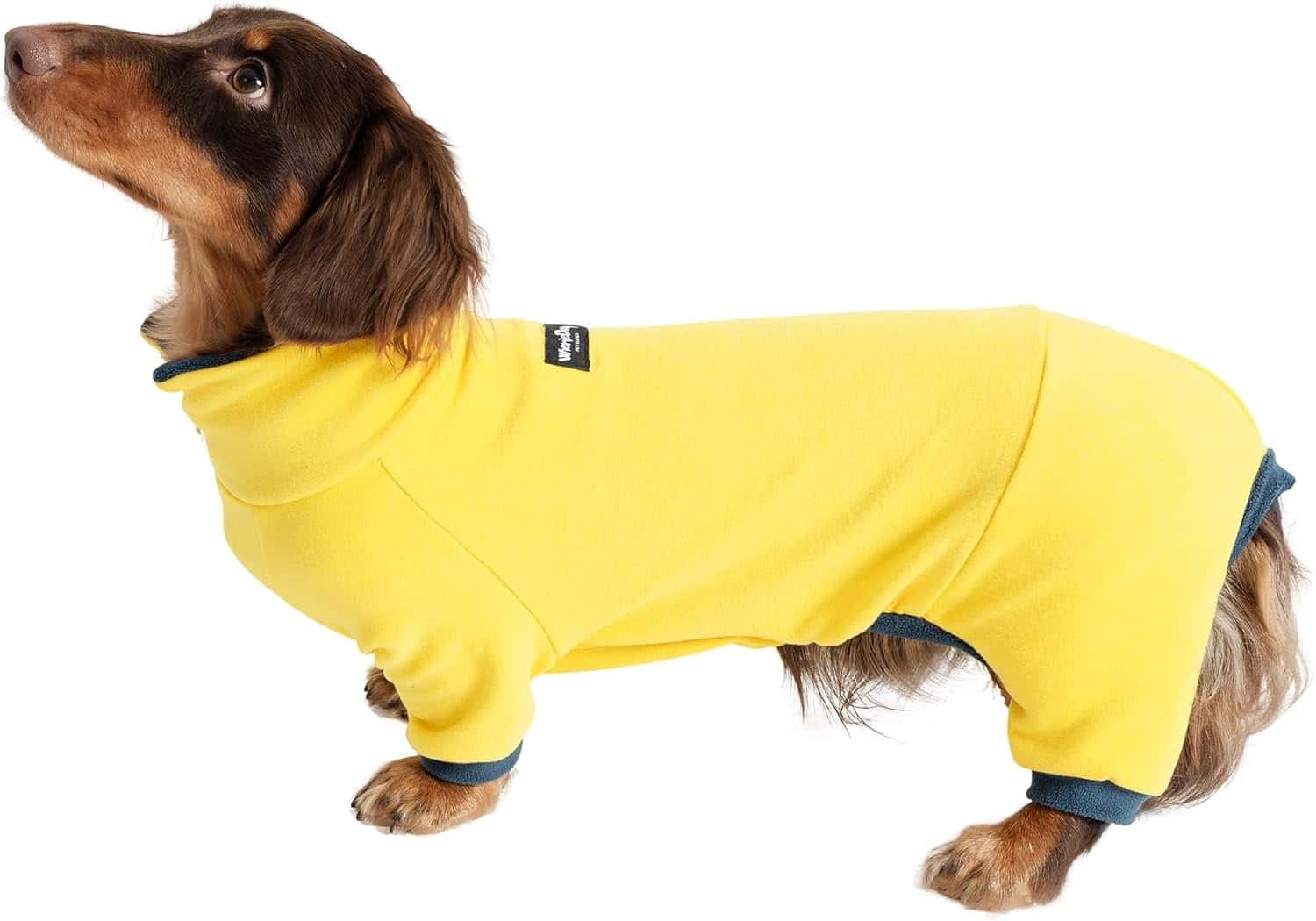
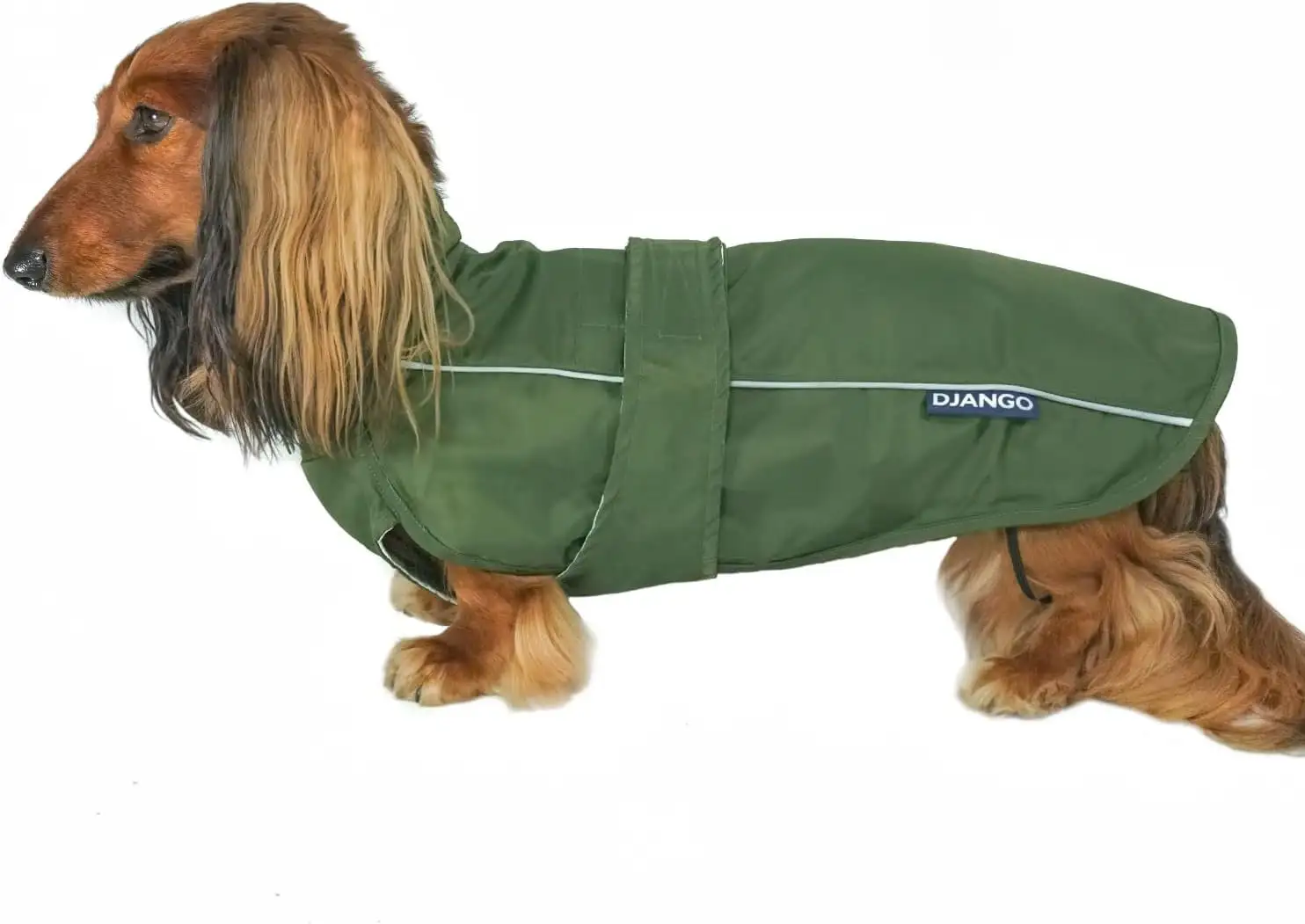
You might also want to invest in a cozy dog jacket or jumper for walks — especially if your dachshund has recently had a trim. Our personal favorite? Gooby Fleece Vest on Amazon, which fits well without matting their fur.
Long-haired dachshunds don’t just shed year-round — they go through two major “coat-blow” periods each year, typically in spring and autumn. These seasons trigger your dachshund’s body to shed excess fur to prepare for warmer or cooler weather. If you’ve ever noticed your home suddenly covered in fluff, you’re not imagining things.
Spring & Autumn: The Heavy Shedding Months
During these peak times, brushing your dachshund daily is ideal — particularly if they’re outdoorsy. Long fur can trap dirt, pollen, burrs, and loose hair, making mats much more likely.
To help manage the seasonal coat change:
- Use a deshedding tool like the FURminator Long Hair deShedding Tool for Dogs — it’s a lifesaver for removing undercoat fur without damaging the topcoat
- Apply a conditioning spray to keep the coat slick and easier to brush through
- Switch to a gentle oatmeal or hypoallergenic shampoo during bath time to reduce skin irritation
For more details on tackling dachshund shedding year-round, see our article Dachshund Shedding Solutions — it’s packed with product suggestions and brushing strategies.
Summer Grooming Tips
In hot months, keep an eye on:
- Heat rashes and hot spots, especially in thick-coated or overweight dachshunds
- Fur between paw pads — trim lightly to help them grip surfaces and stay cool
- Excessive panting or lethargy — these can signal your dachshund is overheating
Always offer fresh water and groom in the morning or late afternoon to avoid heat stress.
And while it might be tempting to give your long-haired dachshund a summer shave, remember: their coat protects them from sunburn and heat. Instead, aim for light feathering — as discussed earlier — and regular brushing.
According to VCA Animal Hospitals, “Dogs regulate their temperature through panting and limited sweat glands. A full shave can remove their natural insulation, exposing them to heatstroke.”
Winter Grooming Adjustments
In colder months:
- Reduce bathing frequency to avoid drying out the skin
- Use a moisturizing conditioner after baths to retain coat softness
- Focus on brushing more, bathing less to preserve natural oils
You might also want to invest in a cozy dog jacket or jumper for walks — especially if your dachshund has recently had a trim. Our personal favorite? Gooby Fleece Vest on Amazon, which fits well without matting their fur.
Best Brushes and Combs for Long-Haired Dachshunds
If you’ve ever tried brushing out a tangle behind a dachshund’s ear after a beach day at the beach or in nature, you’ll know why having the right grooming tools matters. Long-haired dachshunds aren’t just cute — their silky fur requires regular attention, especially around high-friction areas like the chest, ears, armpits, and tail.
Here’s our go-to lineup of brushes and combs we recommend for long-haired dachshund grooming:
Slicker Brush
Ideal for removing loose fur, surface-level tangles, and keeping the topcoat smooth.
- Why we love it: Gets into thick areas without pulling too hard.
- Use it: 2–3 times per week, especially after walks or outdoor play.
We personally use the Hertzko Self-Cleaning Slicker Brush — easy to clean and dachshund-safe.
Stainless Steel Comb
Great for working through knots behind the ears and under the belly.
- Look for: One with wide and narrow teeth for flexibility.
- Pro tip: Detangle with a comb after slicker brushing for a salon-worthy finish.
We’ve had good luck with the Andis Pet Steel Grooming Comb — especially for ear and tail feathering.
Detangling Spray
While not a brush, it’s your best friend when dealing with seasonal shedding or post-bath brushing. Spray a small amount before brushing to ease through tangles and reduce static.
Check out our full product recommendations in our Dachshund Grooming Tools guide — where we break down the best brushes, clippers, shampoos, and more, all dachshund-tested.
What to Avoid: Grooming Mistakes with Long-Haired Coats
Even with the best intentions, grooming a long-haired dachshund can go sideways if you’re not careful. These pups may be low to the ground, but their grooming needs aren’t. After chatting with a few local groomers in the Sutherland Shire and reflecting on what I’ve learned from Harvey’s long-haired dachshund mates, here are the most common pitfalls to avoid — and how to stay on track.
1. Shaving the Coat
Tempted to shave your dachshund in summer? Don’t. Long-haired dachshunds have a double coat that acts as insulation against both heat and cold. Shaving can disrupt their natural temperature regulation and increase the risk of sunburn.
According to PetMD, “Shaving double-coated breeds can do more harm than good. Their coat is designed to keep them cool by allowing air to circulate near the skin.”
2. Skipping Detangling Before Bathing
Brushing after the bath might seem logical — but with long-haired coats, it’s a recipe for mats. Water tightens knots, making them harder to remove and more painful for your pup.
Tip: Always detangle dry fur with a wide-toothed comb or slicker brush before bath time. For more detail, check our Detangling Tips & Tools section in this guide.
3. Using Human Shampoo
Human shampoos can strip the natural oils from your dog’s coat and disrupt their skin’s pH balance. This can lead to dryness, itching, or allergic reactions.
Stick to: Dog-specific, pH-balanced shampoos. We break down our favorites in Dachshund Grooming Tools.
4. Neglecting Problem Areas
The ears, belly, armpits, and tail tend to mat quickly but often go unnoticed. These are high-friction zones, especially in active dachshunds who love the beach or bush like Harvey’s friends do around coastal areas like Kurnell and Cronulla.
Regular touch-ups in these areas can prevent bigger grooming issues down the line.
5. Rushing the Process
Grooming takes patience. If you rush it — or only groom when your dog is squirmy or stressed — they’ll associate it with discomfort. Slow, calm sessions with rewards go a long way toward building grooming tolerance.
Grooming Schedule for Long-Haired Dachshunds
Here’s a quick-reference guide you can follow to stay on top of your dachshund’s grooming needs. Remember, this is a general schedule — adjust based on your pup’s lifestyle, coat condition, and the seasons.
Grooming Task | Frequency | Notes |
|---|---|---|
Brushing | 3–5 times per week | Use a slicker brush or comb to prevent mats and reduce shedding. |
Bathing | Every 4–6 weeks | Use a gentle, dog-specific shampoo. Detangle before washing. |
Trimming (Feathering) | Every 6–8 weeks | Lightly trim paws, ears, chest, and tail — or as needed. |
Nail Trimming | Every 2–3 weeks | Keep an ear out for clicking on hard floors. See our Nail Trimming Guide. |
Ear Cleaning | Weekly | Especially important for floppy-eared dachshunds prone to buildup. |
Teeth Brushing | 2–3 times per week | Use dog-safe toothpaste to maintain oral health. |
Professional Grooming | Every 2–3 months | A pro tidy-up can keep the coat in top shape, especially around shedding seasons. |
FAQs
More from This Series
Explore the rest of our Dachshund Grooming Collection — everything you need to keep your doxie looking sharp, smelling fresh, and feeling their best:
- Dachshund Shedding Solutions
Discover why dachshunds shed, how to manage it, and the best brushes and tools for coat care. - Dachshund Grooming Tools
Your go-to guide for the best shampoos, combs, clippers, and brushes — all dachshund-tested. - Dachshund Nail Trimming
Learn how often to trim, how to avoid the quick, and which tools make it stress-free. - Dachshund Ear Cleaning Guide
Step-by-step instructions for safe, effective ear care — especially for floppy-eared dachshunds. - Wire-Haired Dachshund Grooming
How to hand-strip, maintain texture, and avoid matting in these scruffier sausages. - The Ultimate Dachshund Grooming Guide
Your master guide to all things dachshund grooming — from bath time to ear checks and everything in between.
Authored by
James
James is the founder of Dachshund Lovers and the proud human of Harvey, a mini dapple with a big personality. He writes to empower and connect the dachshund community, blending founder insights with honest, experience-based stories about life with this incredible and special breed. James brings candid, experience-backed opinions to the community and always focused on fewer, better products and ideas that genuinely improve life for dachshunds and their people.
Read moreJames is the founder of Dachshund Lovers and the proud human of Harvey, a mini dapple with a big personality. He writes to empower and connect the dachshund community, blending founder insights with honest, experience-based stories about life with this incredible and special breed. James brings candid, experience-backed opinions to the community and always focused on fewer, better products and ideas that genuinely improve life for dachshunds and their people.
Read moreDisclaimer
This content is for informational purposes only and should not be considered veterinary advice. Always consult with a licensed veterinarian regarding your dog’s health and wellbeing.
There are no comments yet
Leave a comment