Dachshund Grooming Tools: What Every Doxie Owner Should Have in Their Kit
Dachshund Grooming Tools: What Every Doxie Owner Should Have in Their Kit
Not all brushes are equal. See which grooming tools keep your dachshund’s coat healthy — whether smooth, long-haired, or wirehaired.
James
Posted on September 23, 2025.
Updated on July 20, 2026.
Table of Contents
- •We Learned the Hard Way After a Trip to IKEA
- 1.Key Takeaways on Dachshund Grooming Tools
- 2.Why Grooming Tools Matter for Dachshunds
- 3.The Best Grooming Tools for Dachshunds (Amazon-Friendly Edition)
- •1. Deshedding Brush for All Coats
- •2. Slicker Brush for Long-Haired Coats
- •3. Double-Sided Comb for Detail Work
- •4. Nail Clippers (or Grinder)
- •5. Dog-Safe Shampoo & Detangler Spray
- •Dachshund Grooming Tools Table
- 4.How to Create a Stress-Free Grooming Routine
- •1. Start Slow and Stay Consistent
- •2. Create a Calm Space
- •3. Break It Into Chunks
- •4. Reward the Process, Not Just the Result
- •5. Know When to Stop
- 5.Signs You’re Using the Wrong Tool
- •Here’s what to watch out for:
- -1. Your Dachshund Flinches or Pulls Away
- -2. You’re Seeing Static, Breakage, or Dryness
- -3. Nails Splinter After Clipping
- -4. Mats Keep Coming Back
- -5. It Takes Forever
- 6.Best Grooming Tools by Coat Type
- •Smooth-Haired Dachshunds
- •Long-Haired Dachshunds
- •Wire-Haired Dachshunds
- •Tool Types: What You Really Need (and What You Don’t)
- -Essentials Every Dachshund Owner Should Have
- -Things We’ve Ditched (So You Don’t Waste Money)
- -More from This Series
- -Disclaimer
Share

We Learned the Hard Way After a Trip to IKEA
It was meant to be a quick dash into IKEA Tempe — you know, grab a storage bin, maybe some meatballs — but we made the rookie mistake of bringing Harvey without doing a proper pre-groom. After a play at the nearby Sydney Park dog area, his long coat was filled with leaves, tiny burrs, and enough mud to warrant its own IKEA mop section. The moment we loaded him back into the car, the back seat turned into a dirt-stained disaster. Caitlin just looked at me like: “Where’s the brush?” Spoiler: we didn’t have one.
That moment made us rethink everything we carried for Harvey’s grooming. Because when it comes to dachshunds — especially long-haired or wiry ones — a basic pet comb just doesn’t cut it.
Dachshunds need breed-specific care. Their compact frames, varied coat types, and low-to-the-ground adventures make grooming tools not just helpful — but essential. According to the American Veterinary Medical Association, regular brushing helps “remove dirt, debris, and loose hair, stimulates the skin’s natural oils, and strengthens the bond between you and your pet.” That’s especially true for dachshunds, who tend to trap everything from sand to lint in their coats.
This article will walk you through the exact tools we use and recommend — from brushes and combs to ear cleaning solutions and de-shedding sprays. Whether you’re a new dachshund owner or looking to upgrade your setup, you’ll find everything you need right here.
Let’s brush up (literally) on what works.
Key Takeaways on Dachshund Grooming Tools
Topic | Summary |
|---|---|
Grooming Needs by Coat Type | Long-haired, wire-haired, and smooth-coated dachshunds all need different grooming tools. |
Brushing Frequency | Long-haired: daily; Wire-haired: 2–3 times/week; Smooth: once a week. |
Essential Tools | Slicker brush, stainless steel comb, grooming mitt, dog-safe detangler, ear cleaner. |
Why It Matters | Regular brushing prevents mats, reduces shedding, and promotes skin health. |
Common Mistakes | Using human brushes, over-brushing, ignoring ears and tail areas. |
Budget vs. Quality | Mid-tier tools often outperform trendy or expensive options — we’ve tested both. |
When To Replace | Replace brushes every 6–12 months depending on usage and coat type. |
Why Grooming Tools Matter for Dachshunds
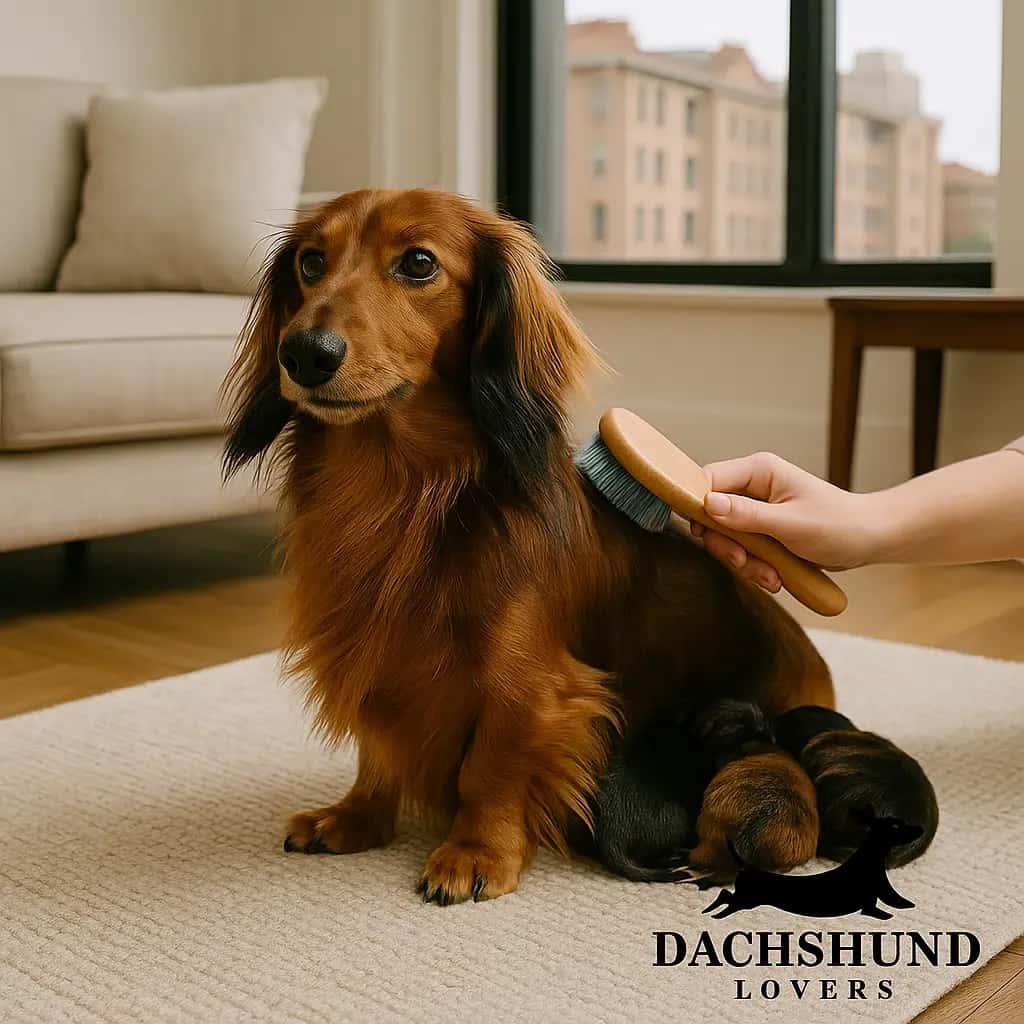
Dachshunds are low to the ground, long in the body, and stubbornly adventurous. That means they pick up everything — from leaves and dust to food crumbs and the occasional mystery gunk from under the couch.
But grooming isn’t just about keeping them clean. It’s a critical part of their health and comfort. According to a study published in Veterinary Dermatology, poor grooming practices are one of the top contributors to skin disorders in small breed dogs.
For dachshunds in particular, coat maintenance is about:
- Reducing matting and tangles, especially in long-haired varieties
- Controlling shedding, which varies depending on the coat type
- Avoiding ear infections, a common issue due to their floppy ears
- Keeping them comfortable, especially in warmer climates like here in Sydney
And for us owners? It’s about less fur on the couch, fewer tangles in the carpet, and far fewer awkward moments at the vet (“He hasn’t had a bath in how long?”).
Next up — let’s break down grooming tools based on coat type so you’re not wasting money on brushes that just don’t work for your sausage.
The Best Grooming Tools for Dachshunds (Amazon-Friendly Edition)
Let’s face it — not all grooming tools are created equal, especially when it comes to dachshunds. Their coats (whether smooth, long, or wiry) come with quirks that demand specific brushes, clippers, and combs. And if you’re like me, you’ve probably made a few poor purchases before finding the good stuff.
Here’s what I actually use — or what’s made it into our circle of trusted dachshund-owning friends — with a focus on tools you can easily grab from Amazon:
1. Deshedding Brush for All Coats
A deshedding tool like the FURminator Undercoat Deshedding Tool (Small Breed) is a favorite among dachshund parents. It gently pulls out loose undercoat fur without damaging the topcoat. This is a game-changer, especially during shedding season.
According to a study published in the Journal of Veterinary Dermatology, regular deshedding can significantly reduce household allergens caused by pet dander — win-win for sensitive noses and clean floors.
2. Slicker Brush for Long-Haired Coats
For long-haired dachshunds, a Hertzko Self-Cleaning Slicker Brush works wonders on tangles and mats, particularly behind the ears and around the tail. The retractable bristles make cleanup easy (a little too satisfying, honestly).
3. Double-Sided Comb for Detail Work
A fine-toothed Andis Steel Pet Comb is perfect for finishing touches. I use this when grooming Harvey’s ears and legs — places that collect twigs and random fluff after our walks through Kurnell bushland.
4. Nail Clippers (or Grinder)
A Boshel Dog Nail Clipper is sharp, safe, and built for small dogs. If you’re nervous about the quick (been there), consider a nail grinder like the Casfuy Dog Nail Grinder — less pressure, less chance of mistakes.
5. Dog-Safe Shampoo & Detangler Spray
Look for formulas designed for sensitive skin — Earthbath Oatmeal & Aloe Shampoo is our go-to, and a light detangler spray like Burt’s Bees Detangling Spray for Dogs.
Dachshund Grooming Tools Table
Product Name | Best For | Amazon Link |
|---|---|---|
FURminator Undercoat Deshedding Tool (Small Breed) | Removing loose fur and reducing shedding | |
Hertzko Self-Cleaning Slicker Brush | Detangling and de-matting long-haired coats | |
Andis Steel Pet Comb | Finishing touches and detail grooming (ears, legs) | Buy on Amazon |
Boshel Dog Nail Clipper | Safe trimming for small breed nails | |
Casfuy Dog Nail Grinder | Gentle filing for nervous dogs or dark nails | Buy on Amazon |
Earthbath Oatmeal & Aloe Shampoo | Gentle, itch-relieving dog shampoo | Buy on Amazon |
Burt’s Bees Detangling Spray for Dogs | Conditioning and easing out tangles | Buy on Amazon |
How to Create a Stress-Free Grooming Routine
Let’s be real — not every dachshund loves a bath or a brush. Harvey? He used to bolt the second he heard the spray nozzle. But with time, patience, and a bit of conditioning (both the canine and the Pavlovian kind), grooming became just another part of our weekly rhythm.
Here’s how we made it stress-free — for both of us.
1. Start Slow and Stay Consistent
Don’t wait until your dachshund is filthy to introduce grooming tools. Start with short sessions — just a couple of minutes with a soft brush, a gentle paw touch, or a quick peek in the ears. Praise and treats go a long way. According to the American Veterinary Medical Association (AVMA), early positive exposure to grooming helps prevent fear and aggression later on (source).
2. Create a Calm Space
Choose one spot in your home as the “grooming zone” — ideally somewhere quiet, well-lit, and non-slip. We use a soft mat in our laundry with a towel, his favorite toy, and a treat jar within arm’s reach. This helps Harvey associate the space with positive vibes.
3. Break It Into Chunks
Don’t try to do everything in one go — especially if your pup is new to grooming. A typical weekly routine could look like:
- Monday: Brushing (5–10 mins)
- Wednesday: Paw and nail check
- Saturday: Bath, dry, ear check
- Sunday: Detangle longer coat areas if needed
This kind of breakdown prevents overwhelm — for both ends of the leash.
4. Reward the Process, Not Just the Result
Dachshunds are smart — they know when the treats come out. Use praise, touch, and high-value treats during the process, not just after. A licky mat with a bit of peanut butter during brushing worked wonders for us.
5. Know When to Stop
If your dachshund starts wriggling, whining, or trying to escape — take a break. Forcing it often makes it worse next time. Grooming should build trust, not break it.
Signs You’re Using the Wrong Tool
There’s nothing worse than a brush that pulls, a shampoo that itches, or clippers that rattle like a power drill. Trust me — we’ve tried them all. Not every grooming tool is made for the dachshund’s unique coat, and using the wrong one can cause more harm than good.
Here’s what to watch out for:
1. Your Dachshund Flinches or Pulls Away
If your pup suddenly hates brushing, it might not be about attitude — it might be the tool. A too-harsh slicker brush on a smooth coat? Ouch. A dull clipper on sensitive paws? No thanks.
Try This Instead:
Switch to a soft-bristle grooming brush or a dual-sided comb like this gentle Amazon favorite designed for smaller breeds.
2. You’re Seeing Static, Breakage, or Dryness
If your long-haired dachshund looks like they’ve touched a balloon after brushing, your tool may be generating static or over-stripping oils.
Fix:
Use a conditioning spray before brushing (like this anti-static mist on Amazon) and follow with a boar bristle brush to redistribute natural oils.
3. Nails Splinter After Clipping
Cheap clippers often crush instead of cut, especially on thicker nails. Splintering = pain and possible infection.
Upgrade To:
A high-quality guillotine-style nail clipper or a cordless nail grinder like this top-rated option on Amazon.
4. Mats Keep Coming Back
If your long-haired doxie still mats despite regular brushing, it may be your brush is only skimming the surface.
Solution:
Use a dematting rake followed by a slicker brush, especially on common trouble spots — behind the ears, underarms, and tail. Check out this combo grooming set on Amazon that includes both.
5. It Takes Forever
If grooming feels like a full-time job, your tool probably isn’t efficient. Look for ergonomic handles, time-saving dual heads, and cordless gear to speed things up.
Efficiency Pick:
We’ve had great luck with this ergonomic deshedding tool that works across all coat types.
Best Grooming Tools by Coat Type
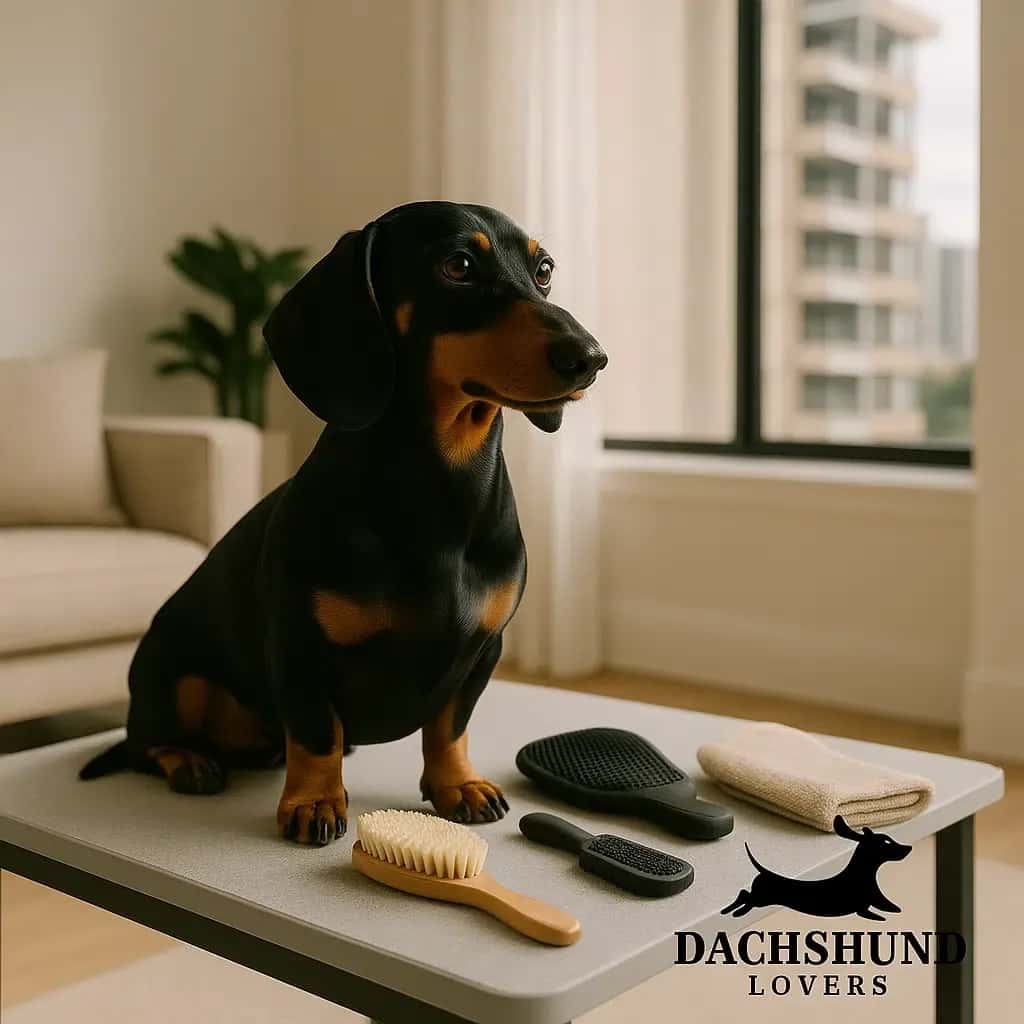
Why one brush doesn’t fit all when it comes to dachshunds
Dachshunds may share the same iconic sausage shape, but their coats couldn’t be more different. From the sleek shine of smooth coats to the silky tangle-prone strands of long-haired doxies, or the bristly charm of wire-haired varieties — each coat type calls for its own toolkit. Using the wrong brush or clipper isn’t just ineffective; it can actually damage their coat or hurt your pup.
Let’s break it down by coat type and get specific about what actually works — and what we’ve tested ourselves on Harvey (and friends of Harvey) across Sydney’s dog parks, beaches, and backyards.
Smooth-Haired Dachshunds
Less fluff, but still high-maintenance underneath
Smooth-coated dachshunds are often assumed to be low-maintenance — and while their short, shiny coats don’t mat like longer-haired cousins, they’re still prone to seasonal shedding, dry skin, and buildup from sunscreen, sand, and dust (especially after runs around the beach or coastal foot paths.
Top Grooming Tools for Smooth Coats:
- Rubber curry brush – Great for massaging while pulling up loose hairs. Harvey’s friend Miso gets brushed with the KONG ZoomGroom — it’s gentle, easy to clean, and dachshund-sized.
- Soft-bristle brush – Ideal for quick daily flicks to maintain shine and reduce skin irritation.
- Deshedding gloves – These double as cuddle time and work brilliantly post-bath when your pup’s coat is drying.
Want to manage hair before it ends up on your couch? Our Dachshund Shedding Solutions guide walks through the full grooming cycle for short coats.
Long-Haired Dachshunds
Beautiful, but prone to matting and seasonal blowouts
Long-haired dachshunds need more regular upkeep. Their flowing coats tangle quickly, especially behind the ears, under the legs, and on the tail — places that often get missed until it’s too late. After a beach visit or hike through Kamay Botany Bay National Park, it’s not uncommon to find burrs, sticks, or seeds caught deep in the fur.
Top Grooming Tools for Long Coats:
- Slicker brush – Ideal for daily brushing to loosen knots and remove debris. We’ve found the Hertzko Self-Cleaning Slicker to be one of the best — gentle on skin, tough on tangles.
- Steel comb – Perfect for finishing touches, especially around feathered areas like ears and hind legs.
- Dematting rake – For stubborn tangles, especially on pups who love bushwalks or sand digs. Use gently to avoid pulling.
For a full care routine, including trims and shampooing tips, head over to Long-Haired Dachshund Grooming.
Wire-Haired Dachshunds
Scruffy charm meets high technique
Wire-haired dachshunds are easily the most misunderstood coat type. Their coarse, double-layered fur requires a technique called hand-stripping, which removes dead hairs without damaging the texture. Skip this step and the coat can become dull, itchy, or matted.
Top Grooming Tools for Wire Coats:
- Stripping knife or comb – Tools like the Mars Coat-King help maintain texture without shaving. Use once every few weeks with care.
- Boar-bristle brush – Smooths out rough patches and distributes oils naturally. Great in between strip sessions.
- Dog clippers (with restraint) – For light sanitary trims, but don’t shave. Shaving wire coats can alter their natural regrowth and protection.
New to stripping? Check out our full walkthrough in the Wire-Haired Dachshund Grooming guide.
Tool Types: What You Really Need (and What You Don’t)
There’s no shortage of dog grooming tools out there. Just one trip down the pet aisle at Coles in Illawong — or a late-night scroll through Amazon — and you’re hit with a wave of slick brushes, high-end dryers, paw balms, and gimmicky combs promising to make grooming “effortless.”
But let’s cut through the fluff.
After trial and error (and a few too many dollars spent), here’s what we’ve learned: dachshunds — whether smooth, long, or wire-haired — only need a few well-chosen tools to stay fresh, clean, and healthy. Everything else? Marketing noise.
Essentials Every Dachshund Owner Should Have
- Slicker Brush: Ideal for long-haired and wire-haired dachshunds. It helps detangle knots, reduce shedding, and distribute natural oils. The Hertzko Self Cleaning Slicker Brush is a winner — we’ve used it for months on client dogs and it holds up well.
- Bristle Brush: Best for short-haired dachshunds. Gentle enough for daily use and perfect for removing surface debris.
- Fine-Tooth Comb: For finishing touches and checking for tangles behind the ears and under the legs (where matting hides).
- Dog Nail Clippers or Grinder: Refer back to our nail trimming guide — clippers are essential, especially for indoor dogs whose nails don’t wear down naturally.
- Ear Cleaner Solution + Cotton Pads: A non-negotiable. Dachshunds are prone to wax build-up and infections. We break it all down in our full ear cleaning guide.
Things We’ve Ditched (So You Don’t Waste Money)
- Deshedding Gloves: Great idea in theory. In practice? They spread loose hair around rather than contain it.
- Cheap 5-in-1 Grooming Kits: These usually contain poorly made tools that don’t last or perform well — especially on wire or thick long-haired coats.
- Scented Sprays and Perfumes: Often full of chemicals that irritate your dachshund’s sensitive skin or nose. Instead, opt for a gentle, natural deodorizing spray if needed.
Electric Trimmers for Home Use: Unless you’re trained, trimming your dachshund with clippers can go wrong fast. It’s better left to the pros unless you know exactly what you’re doing — especially for wire or long coats.
FAQs
More from This Series
Explore the full Dachshund Grooming Collection — your all-in-one toolkit for a cleaner, healthier, and happier doxie.
- Dachshund Shedding Solutions
Discover why dachshunds shed, how to manage it, and the best brushes and tools for coat care. - Dachshund Nail Trimming
Learn how often to trim, how to avoid the quick, and which tools make it stress-free. - Long-Haired Dachshund Grooming
From detangling to managing seasonal blowouts — tailored advice for the fluffier variety. - Wire-Haired Dachshund Grooming
How to hand-strip, maintain texture, and avoid matting in these scruffier sausages. - Dachshund Ear Cleaning
Step-by-step tips for keeping those iconic dachshund ears clean, dry, and infection-free. - The Ultimate Dachshund Grooming Guide
Your master guide to all things grooming — from bath time to ear checks and everything in between.
Authored by
James
James is the founder of Dachshund Lovers and the proud human of Harvey, a mini dapple with a big personality. He writes to empower and connect the dachshund community, blending founder insights with honest, experience-based stories about life with this incredible and special breed. James brings candid, experience-backed opinions to the community and always focused on fewer, better products and ideas that genuinely improve life for dachshunds and their people.
Read moreJames is the founder of Dachshund Lovers and the proud human of Harvey, a mini dapple with a big personality. He writes to empower and connect the dachshund community, blending founder insights with honest, experience-based stories about life with this incredible and special breed. James brings candid, experience-backed opinions to the community and always focused on fewer, better products and ideas that genuinely improve life for dachshunds and their people.
Read more
Disclaimer
This content is for informational purposes only and should not be considered veterinary advice. Always consult with a licensed veterinarian regarding your dog’s health and wellbeing.
There are no comments yet
Leave a comment