Chiweenie Lifespan
Chiweenie Lifespan
I looked into how long Chiweenies tend to live, what shortens their lifespan, and how to give them the healthiest, happiest life well into their teens.

Ellie
Posted on October 6, 2025.
Updated on July 21, 2026.
Table of Contents
- 1.Key Takeaways: Chiweenie Lifespan
- 2.What Affects a Chiweenie’s Lifespan?
- •1. Genetics and Breed Health
- •2. Diet and Weight Management
- •3. Exercise and Mental Stimulation
- •3. Preventive Veterinary Care
- •5. Environment and Lifestyle
- 3.Tips to Help Your Chiweenie Live Longer
- •1. Keep Their Weight Perfectly Managed
- •2. Daily Dental Care (Not Optional)
- •3. Low-Impact Exercise
- •4. Early Mental Enrichment
- •5. Preventive Veterinary Care
- •6. Protect Their Back
- •7. Feed a Quality Diet
- •8. Senior Care for Older Chiweenies
- 4.Common Health Issues in Chiweenies (and How to Prevent Them)
- •Intervertebral Disc Disease (IVDD)
- •Dental Disease
- •Hypoglycemia in Puppies
- •Allergies and Skin Sensitivities
- •Obesity
- 5.How to Care for a Senior Chiweenie
- •Adjusting Diet for Senior Health
- •Exercise and Mobility Support
- •Health Checks and Early Detection
- •Cognitive and Emotional Care
- 6.Common Behavioral Changes in Senior Chiweenies
- •How to Support Them
- 7.Chiweenie Lifespan vs. Other Breeds
- •What Sets Chiweenies Apart?
- •Comparison with Other Popular Designer Breeds
- 8.How to Increase Your Chiweenie’s Lifespan
- •Key Strategies to Extend Their Lifespan
- •More From This Series:
- •Disclaimer
Share

The first Chiweenie I ever met was outside the famous Next Door coffee shop in Cronulla, is a popular café spot for dog watchers in the Sutherland Shire. He was a small, wiry dog with the sharp, alert expression of a Chihuahua and the long, low frame of a dachshund — the kind of hybrid that turns heads because you can’t quite tell which parent he takes after more. His owner, a local regular, mentioned that he was already 13 years old and still eager for his morning walk along North Cronulla Beach. That conversation made me dig deeper: just how long do Chiweenies live, and what really influences their lifespan?
Chiweenies, like many mixed breeds, often benefit from what’s known as hybrid vigor — a genetic boost that can sometimes make them healthier than their purebred parents. According to PetMD, most Chiweenies live between 12–16 years, with some reaching 18 or older when given proper care. Their small size works in their favor; smaller dogs are known to have longer lifespans than larger breeds, a pattern supported by research published in The American Naturalist (2013) on dog longevity. But genetics is only part of the story. Diet, daily exercise, preventive veterinary care, and even mental stimulation play equally big roles.
Key Takeaways: Chiweenie Lifespan
Topic | Summary |
|---|---|
Breed Type | A designer crossbreed of the dachshund and Chihuahua, known for their compact size and playful yet alert temperament. AKC Guide |
Size | Typically 5–12 lbs (2.2–5.4 kg) and 6–10 inches tall at the shoulder — a small, apartment-friendly dog. PetMD Breed Data |
Temperament | Loyal, alert, and playful, with occasional stubborn streaks inherited from both parent breeds. They’re affectionate and form close bonds with family. |
Energy Levels | Moderate activity needs — best with 20–30 minutes of walking plus daily play. Mental stimulation like puzzle toys is highly recommended. VCA Animal Hospitals |
Coat & Colors | Can have short or medium coats, often in shades of black, brown, cream, chocolate, or merle patterns. Long-haired variations are possible. |
Lifespan | Average 12–16 years, with some living beyond 18 when given optimal care and regular veterinary checks. American Veterinary Medical Association |
Family Fit | Best suited for singles, couples, or families with older children who understand how to handle small dogs gently. |
Training Needs | Positive reinforcement and early socialization are key. They can be independent, so consistency and rewards work best. ASPCA Training Tips |
Health Considerations | Can be prone to back issues (IVDD) from the dachshund side and dental problems typical of small breeds. Preventive care is essential. |
Grooming | Low-to-moderate — weekly brushing, regular nail trims, and daily dental care keep them healthy and looking good. |
What Affects a Chiweenie’s Lifespan?
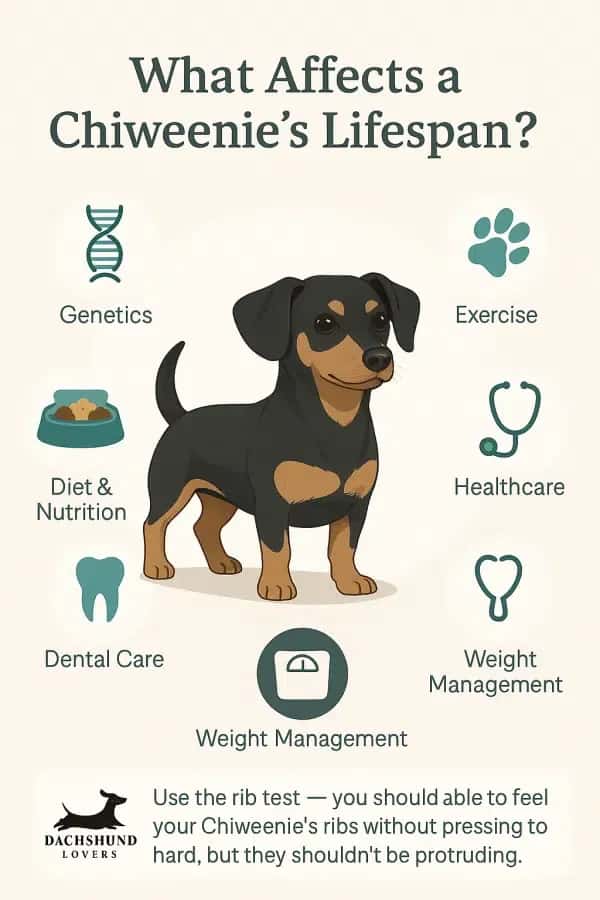
A Chiweenie’s lifespan, typically 12–16 years, is shaped by genetics, daily care, and environment. While they’re known to be relatively hardy compared to some purebreds, their dachshund heritage does bring unique considerations, especially when it comes to spinal health and mobility. The difference between a Chiweenie who thrives into their late teens and one who faces health issues early often comes down to preventive care and lifestyle choices.
1. Genetics and Breed Health
As a hybrid breed, Chiweenies benefit from hybrid vigor — they can be less susceptible to some breed-specific health issues compared to their purebred parents. However, they may inherit:
- Intervertebral Disc Disease (IVDD) from the dachshund side, a condition we discuss in more detail in our Wirehaired Dachshund article, since it affects all dachshund types.
- Dental issues from the Chihuahua side, such as overcrowded teeth and plaque build-up.
- Patellar luxation, where the kneecap slips out of place, common in small breeds.
According to VCA Animal Hospitals, maintaining a healthy weight is the single most effective way to reduce the risk of IVDD and prolong spinal health.
2. Diet and Weight Management
Diet plays a direct role in longevity. Chiweenies are small, but they gain weight quickly, and even half a kilogram of excess weight can place harmful pressure on their long back.
- Portion control: Avoid free feeding; measure meals carefully.
- Protein-rich diets: These help maintain lean muscle, which is critical for supporting the spine.
- Dental-friendly chews: Opt for vet-approved options that support oral health.
3. Exercise and Mental Stimulation
Chiweenies thrive on consistent, moderate exercise. Their ideal routine is 20–30 minutes of gentle walking paired with short indoor play sessions. Over-exercising, especially on stairs or uneven terrain, can strain their spine.
- Interactive toys and puzzle feeders prevent boredom and keep their minds sharp.
- Low-impact activities like short fetch games on flat surfaces are better than high jumping or roughhousing.
3. Preventive Veterinary Care
Routine vet care significantly increases lifespan.
- Dental cleanings: Regular check-ups and professional cleanings prevent periodontal disease, which can affect vital organs.
- Annual screenings: Blood tests and spinal exams help catch early signs of IVDD or arthritis.
- Vaccinations & parasite prevention: Keep them current to avoid preventable illnesses.
The American Veterinary Medical Association stresses that preventive medicine is one of the strongest predictors of a longer, healthier life.
5. Environment and Lifestyle
Chiweenies do best in safe, low-stress environments. Living in the Sutherland Shire, I often see Chiweenies strolling along the Esplanade at Cronulla, a perfect example of gentle exercise paired with a stimulating environment. Avoid high-risk activities like jumping on furniture or climbing stairs — using a dachshund ramp can reduce long-term back strain.
Their small size means they’re well-suited for apartment living, but they still need mental engagement — short training sessions, treat puzzles, and daily interaction help prevent anxiety and behavioral issues.
Tips to Help Your Chiweenie Live Longer

A Chiweenie’s 12–16 year lifespan is already impressive for a small dog, but with the right care, it’s possible to add years to their life. Long-lived Chiweenies are no accident — they are the product of balanced nutrition, preventive health care, and an environment that supports both their physical and mental needs. Here’s how to give them the best chance at a long, healthy life.
1. Keep Their Weight Perfectly Managed
Weight management is the single biggest factor in preventing spine and joint issues in Chiweenies. Research published in the Journal of Veterinary Internal Medicine shows that dogs at a healthy weight can live up to 2.5 years longer than their overweight counterparts (source).
- Feed portion-controlled meals based on their activity level and size.
- Avoid calorie-dense treats; opt for low-fat snacks or small bits of lean meat.
- Use slow feeders or puzzle bowls to prevent overeating.
2. Daily Dental Care (Not Optional)
Dental disease is common in small breeds, and according to the American Veterinary Dental College, most dogs show signs of gum disease by age three. Poor dental health can lead to heart, liver, and kidney issues if bacteria enter the bloodstream.
- Brush your Chiweenie’s teeth daily using dog-safe toothpaste.
- Include dental chews that are approved by the VOHC (Veterinary Oral Health Council).
- Schedule professional cleanings every 12–18 months, depending on vet recommendations.
3. Low-Impact Exercise
Chiweenies thrive on regular, moderate exercise — not too much, not too little. The VCA Animal Hospitals guidelines emphasize daily walks to maintain healthy weight and muscle tone.
- Stick to 20–30 minutes of walking or indoor play.
- Avoid activities that involve jumping or stair climbing, which can worsen the risk of IVDD (a condition prevalent in dachshund mixes).
- Use soft toys or gentle tug games to keep them engaged without causing strain.
4. Early Mental Enrichment
A Chiweenie’s mental health is just as important as their physical health. The American Kennel Club (AKC) notes that mental stimulation can reduce stress and increase overall well-being, which has a direct impact on longevity.
- Incorporate puzzle feeders, snuffle mats, or hide-and-seek games.
- Short training sessions (5–10 minutes) with positive reinforcement keep their mind sharp.
- Rotate toys weekly to maintain novelty.
5. Preventive Veterinary Care
Annual vet checkups are critical for detecting issues before they become life-threatening. A study by Banfield Pet Hospital found that preventive vet care can increase lifespan by up to 20% in small breeds.
- Schedule annual blood tests to monitor organ health.
- Ask for early spine screenings and joint checks, especially as they age.
- Keep all vaccinations and parasite prevention up to date.
6. Protect Their Back
The dachshund lineage in Chiweenies makes them vulnerable to spinal injuries. According to PetMD, even a small fall or awkward jump can trigger IVDD.
- Use ramps or low steps for sofas and beds.
- Discourage jumping down from high places.
- Lift them properly, supporting both the chest and rear.
7. Feed a Quality Diet
High-quality nutrition builds the foundation for longevity. The Association of American Feed Control Officials (AAFCO) recommends that small breeds receive nutrient-dense, high-protein food to maintain muscle mass and energy levels.
- Avoid fillers like corn or soy in kibble.
- Incorporate fresh, vet-approved foods like boiled chicken, carrots, or blueberries for added antioxidants.
- Monitor calorie intake closely — Chiweenies have small frames and can gain weight quickly.
8. Senior Care for Older Chiweenies
Once your Chiweenie hits 10+ years, care routines should adjust. AVMA recommends bi-annual vet visits for senior dogs, along with joint supplements like glucosamine to support mobility.
- Provide orthopedic bedding for added comfort.
- Maintain gentle exercise to prevent stiffness.
- Watch for signs of cognitive decline, like confusion or altered sleep patterns, and address them early.
Common Health Issues in Chiweenies (and How to Prevent Them)
Chiweenies are typically healthy dogs, but like all hybrids, they inherit specific traits — and potential risks — from their parent breeds. Understanding these conditions early can make a big difference to their quality of life and overall lifespan.
Intervertebral Disc Disease (IVDD)
Because of their dachshund lineage, Chiweenies are more prone to intervertebral disc disease, a spinal condition where discs can bulge or rupture, causing pain or even mobility loss. According to PetMD, IVDD is among the most common orthopedic conditions in long-backed breeds.
You can see how early back care matters in our Chiweenie Puppies guide, where we outline the importance of gentle play and avoiding stairs or jumping during growth stages.
How to reduce risk:
- Keep their weight lean to avoid strain on the spine.
- Use ramps or steps for beds, couches, and cars.
- Stick to low-impact, daily walks instead of high-impact running or jumping.
Dental Disease
Chiweenies often inherit the crowded teeth of Chihuahuas, which makes them prone to gum disease and plaque build-up. Left untreated, dental problems can lead to infections affecting the heart or kidneys. Research from the American Veterinary Dental College notes that 80% of dogs develop periodontal disease by age 3.
We highlight in Chiweenie Lifespan how dental hygiene directly affects longevity — and how simple routines can prevent costly treatments later.
Best practices for dental care:
- Brush teeth daily using a dog-safe toothbrush.
- Use VOHC-approved dental chews to reduce plaque build-up.
- Schedule professional cleanings every 12–18 months.
Luxating Patella
Another common issue in small breeds is luxating patella, where the kneecap slips out of place. It may present as an occasional skipping step or a sudden limp, but over time it can cause chronic discomfort or arthritis.
In our article Chiweenie vs. Other Dogs, we compare how joint issues like this stack up across small designer breeds.
Prevention tips:
- Maintain healthy weight to minimize joint pressure.
- Avoid repetitive jumping or harsh landings during play.
- Add joint supplements (like glucosamine) if recommended by your vet.
Hypoglycemia in Puppies
Chiweenie puppies have fast metabolisms and small energy reserves, which means they’re prone to drops in blood sugar, particularly if they skip meals. According to VCA Animal Hospitals, toy breeds are at a higher risk of hypoglycemia during the first 12 weeks of life.
As discussed in our Chiweenie Puppies guide, feeding frequency is key during this growth stage.
How to prevent hypoglycemia:
- Offer 3–4 small, balanced meals per day.
- Monitor energy levels after play — keep a glucose gel (or honey) for emergencies.
- Avoid over-exertion in young puppies.
Allergies and Skin Sensitivities
Chiweenies can inherit sensitive skin or food allergies. Symptoms include persistent itching, redness, or paw licking. PetMD lists allergies as one of the most common chronic issues for small mixed breeds.
Simple ways to manage allergies:
- Use gentle, hypoallergenic shampoos.
- Regularly wash bedding and soft toys to reduce allergens.
- Ask your vet about an elimination diet if food allergies are suspected.
Obesity
Because Chiweenies are small, even half a kilo of extra weight can significantly impact their back and joint health. The Association for Pet Obesity Prevention warns that over 50% of small dogs are overweight, increasing risks of IVDD, diabetes, and heart disease.
Weight management tips:
- Feed measured portions — avoid free-feeding.
- Use healthy, low-calorie treats like carrot sticks.
- Provide daily low-impact exercise (20–30 minutes of walking or gentle play).
How to Care for a Senior Chiweenie

Once your Chiweenie reaches around 10 years old, their needs begin to shift. Senior Chiweenies often remain spirited and playful, but they require gentler routines, targeted nutrition, and regular health checks to stay comfortable. Much like we discuss in Chiweenie Lifespan, the right adjustments during their senior years can add both quality and length to their life.
According to the American Veterinary Medical Association (AVMA), small dogs are considered seniors around age 9 or 10, and their care should focus on early detection of age-related issues, weight control, and joint support.
Adjusting Diet for Senior Health
Senior Chiweenies burn fewer calories but still need high-quality protein to maintain muscle and joint-supporting nutrients like omega-3s and glucosamine. Overfeeding can quickly lead to weight gain, which is especially harmful for a dog with a long back and small frame.
Tips for senior Chiweenie nutrition:
- Choose a small-breed senior formula with added joint supplements.
- Incorporate fresh foods like cooked lean chicken or pumpkin (vet-approved).
- Split meals into two or three smaller portions to prevent digestive strain.
- Limit calorie-dense treats — swap for crunchy vegetables like carrots.
Regular dental care is also critical in older dogs, as gum disease can worsen with age and impact their organs. This is something we also emphasize in Chiweenie Puppies, as dental health is best addressed from the start.
Exercise and Mobility Support
Senior Chiweenies still benefit from daily exercise, but the goal shifts from burning energy to maintaining mobility, muscle tone, and joint health. Overexertion or high-impact activities can cause pain or worsen conditions like IVDD or arthritis, which become more common with age.
Gentle, consistent activity keeps their weight under control while improving circulation and flexibility. A light walk along The Esplanade in Cronulla, for example, is perfect — flat surfaces and steady pacing are ideal for an aging spine. Studies published in the Journal of Veterinary Internal Medicine highlight that moderate exercise tailored to a senior dog’s condition can significantly slow age-related muscle loss and stiffness (source).
We expand on the importance of low-impact activity in Chiweenie Lifespan, particularly for preventing obesity and spinal stress.
Mobility care for seniors:
- Short, frequent walks (10–15 minutes) rather than one long session.
- Gentle stretching or massage to keep joints flexible.
- Use ramps or steps to access beds, couches, and cars.
- Joint supplements (glucosamine, chondroitin) — ask your vet about starting these around 7–8 years of age.
- Keep activities low-impact — no intense fetch or running on hard surfaces.
Health Checks and Early Detection
As Chiweenies age, regular veterinary care becomes crucial for catching age-related issues before they become serious. Senior check-ups should ideally happen every 6–12 months, as early detection of conditions like heart murmurs, arthritis, or kidney disease can add years to their life. The American Veterinary Medical Association (AVMA) recommends annual senior blood panels for dogs over the age of 7–8, which can reveal hidden problems such as liver or kidney dysfunction long before symptoms appear.
Our article on Chiweenie Lifespan highlights how preventive healthcare — particularly dental cleanings, weight checks, and bloodwork — directly influences longevity.
What to prioritize at senior vet visits:
- Comprehensive physical exam: Checking heart, lungs, joints, and mobility.
- Senior bloodwork: Monitoring kidney, liver, and thyroid health.
- Dental assessments: Older dogs are at higher risk of periodontal disease.
- Weight checks: Even a small gain can increase the risk of spinal strain.
- Arthritis and pain management: Early treatment (e.g., anti-inflammatory supplements or laser therapy) can improve quality of life.
Regular grooming also plays a role here — skin checks during brushing can reveal lumps, bumps, or irritations that are worth mentioning at vet visits.
Cognitive and Emotional Care
Senior Chiweenies don’t just face physical changes — their mental sharpness and emotional well-being can shift too. Some may show signs of cognitive decline, like confusion, pacing at night, or forgetting familiar routines. According to research published in Frontiers in Veterinary Science, cognitive dysfunction affects up to 28% of senior dogs over 11 years old, but mental exercise and routine can slow this decline (source).
In Chiweenie Lifespan, we touch on how daily stimulation — from simple puzzle toys to gentle training sessions — supports brain health and strengthens the bond between you and your dog.
Ways to support cognitive health:
- Keep a consistent routine: Feeding and walking at the same times reduce anxiety.
- Mental stimulation: Puzzle feeders, scent games, or learning easy new tricks.
- Short, positive training sessions: Reinforce old commands with rewards.
- Quality time: Quiet walks or cuddle sessions provide reassurance as they age.
- Calm environments: Avoid overstimulation and give them a safe, quiet space to retreat when needed.
Emotional care is equally important. Senior Chiweenies often grow more attached and may develop mild separation anxiety. Creating a predictable daily structure, and spending focused, calm time together, helps them feel secure and loved.
Common Behavioral Changes in Senior Chiweenies
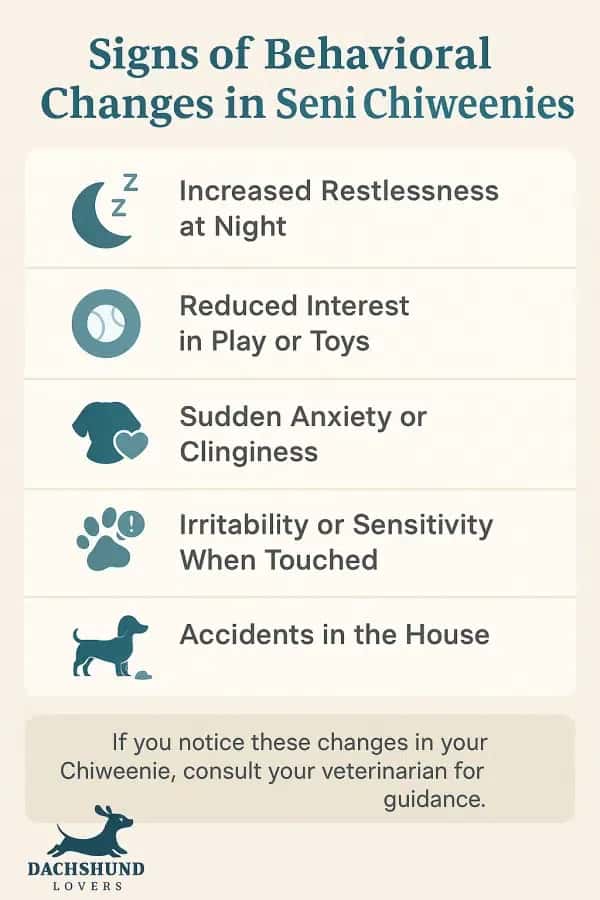
As Chiweenies enter their senior years, their behavior often shifts. Some changes are subtle — slower reactions or extra naps — while others are more noticeable, like increased anxiety, restlessness, or vocalization. These changes are often linked to aging, cognitive decline, or discomfort from health conditions like arthritis.
Behavioral changes are explored in our Chiweenie Lifespan article, where we highlight how mental and emotional health can directly impact their quality of life. Research published in The Journal of Veterinary Behavior suggests that senior dogs with a structured routine, mental stimulation, and early intervention for cognitive changes are less likely to develop anxiety or destructive habits (source).
Signs of Behavioral Changes
- Increased restlessness at night (potential sign of cognitive dysfunction).
- Reduced interest in play or toys they once loved.
- Sudden anxiety or clinginess, especially when left alone.
- Irritability or sensitivity when touched (can indicate pain).
- Accidents in the house despite being previously housetrained.
How to Support Them
- Keep a predictable routine: Consistency with feeding, walking, and bedtime helps reduce confusion.
- Offer mental enrichment: Simple scent games, puzzle feeders, or hiding treats can engage their brain.
- Check for underlying health issues: Sudden behavior changes can signal pain or discomfort.
- Create safe spaces: A quiet corner with soft bedding can give them comfort and security.
Positive reinforcement: Reward calm and desired behaviors instead of scolding.
Chiweenie Lifespan vs. Other Breeds
Chiweenies are known for their impressive lifespan of 12–16 years, which often outpaces that of many other small designer breeds. This longevity is partly due to their size — smaller dogs tend to live longer — and the hybrid vigor they gain from being a cross between a dachshund and a Chihuahua. When compared to breeds like the Puggle (beagle-pug mix, typically 10–15 years) or the Cockapoo (cocker spaniel-poodle mix, typically 12–15 years), Chiweenies often rank among the longest-living designer dogs.
Our article Chiweenie vs. Other Dogs highlights how their lifespan stacks up against similar hybrid breeds, breaking down the role of genetics, lifestyle, and preventive care. According to data collected by the American Kennel Club (AKC), Chihuahuas can live up to 20 years, and this longevity gene often benefits Chiweenies.
What Sets Chiweenies Apart?
- Smaller body size reduces stress on organs and joints, contributing to longer life.
- Hybrid vigor means they may inherit fewer genetic disorders than purebreds.
- Moderate exercise needs reduce the risk of overexertion compared to high-energy breeds.
- Dental and spine health are the key focus areas, while some other designer breeds are more prone to heart or breathing issues (e.g., brachycephalic breeds like pugs).
Comparison with Other Popular Designer Breeds
- Puggle (Beagle-Pug Mix): Average 10–15 years, with common respiratory and joint issues.
- Cavoodle (Cavalier-Poodle Mix): Average 12–14 years, but prone to heart conditions like mitral valve disease.
- Cockapoo (Cocker Spaniel-Poodle Mix): Average 12–15 years, generally healthy but can face ear infections and hip issues.
- Maltipoo (Maltese-Poodle Mix): Average 12–15 years, with dental health as a primary concern.
Chiweenie: Average 12–16 years, with IVDD and dental issues as the main health focus but often living longer due to small size and hardy genetics.
How to Increase Your Chiweenie’s Lifespan
While Chiweenies already have a strong life expectancy of 12–16 years, the right care can often help them live closer to the upper end of this range — and sometimes beyond. It comes down to consistent preventive health practices, quality nutrition, and an environment that supports both physical and mental well-being. Our Chiweenie Lifespan article outlines how these factors combine to make the difference between a good life and a great one.
According to the American Veterinary Medical Association (AVMA), dogs receiving routine veterinary checkups, dental care, and a balanced diet live significantly longer and healthier lives compared to those without structured care routines.
Key Strategies to Extend Their Lifespan
- Weight Control: Obesity is one of the biggest threats to Chiweenies, contributing to back strain, diabetes, and joint problems. Regularly monitor their weight and stick to portion-controlled meals.
- Balanced Diet: Choose a high-quality small-breed dog food rich in lean proteins, omega-3 fatty acids, and antioxidants to support their immune system and joint health.
- Dental Care: Daily brushing and routine vet cleanings prevent periodontal disease, which is linked to heart and kidney problems.
- Gentle, Regular Exercise: Short, controlled walks and light indoor play help maintain muscle tone without overstraining the spine.
- Preventive Vet Visits: Senior blood panels, vaccinations, and annual dental assessments help detect health issues before they become serious.
- Back Protection: Use ramps or pet stairs and avoid letting your Chiweenie jump from furniture, which reduces the risk of IVDD.
Mental Stimulation: Puzzle toys, scent games, and short training sessions keep their mind sharp and reduce age-related cognitive decline.
Additional Resources
- Chiweenie Cost & Adoption Guide – Price ranges and adoption advice.
- Chiweenie Puppies Guide – Tips for raising and socializing puppies.
- How Long Do Chiweenies Live – Lifespan and senior care.
Frequently Asked Questions About Chiweenie Lifespan
More From This Series:
Explore our complete Chiweenie collection for in-depth guides on temperament, care, and breed-specific tips:
- Chiweenie: The Complete Guide
Your all-in-one introduction to Chiweenies — from history to personality traits. - Chiweenie Temperament: Is the Doxie Mix Right for You?
Learn about their personality, quirks, and how they fit into family life. - How Long Do Chiweenies Live?
Discover their lifespan and how to keep them healthy well into their senior years. - Chiweenie Puppies: What New Owners Should Know
Practical tips on raising a Chiweenie puppy, from feeding schedules to early training. - Chiweenie Size & Growth Chart
Track your puppy’s growth and learn what to expect as they mature. - Chiweenie Cost & Adoption Guide
A breakdown of price ranges, adoption resources, and trusted breeders. - Chiweenie Health Guide
Everything you need to know about common health issues and preventative care. - Chiweenie Training Guide
Proven techniques for housebreaking and teaching core commands. - Chiweenie Shedding & Coat Care
Grooming routines for every coat type, plus tips for managing seasonal shedding. - Long-Haired Chiweenie
Coat care tips and insights into this beautiful Chiweenie variety. - Blue Merle Chiweenie
A closer look at this rare and stunning coat pattern. - Chiweenie vs. Other Designer Dogs
Compare Chiweenies to other popular small-breed mixes to find your best fit.
Authored by
Ellie
Ellie is a lifelong dachshund lover and the proud human of Maple, a long-haired brown doxie with a regal side-eye. While not a vet, Ellie brings honest, researched, and experience-based insights into every article she writes for the Dachshund Lovers community.
Read moreEllie is a lifelong dachshund lover and the proud human of Maple, a long-haired brown doxie with a regal side-eye. While not a vet, Ellie brings honest, researched, and experience-based insights into every article she writes for the Dachshund Lovers community.
Read moreDisclaimer
This article was written by Ellie, a dachshund owner and enthusiast — not a veterinarian. Please consult your vet for personalized guidance.